Production of Sulfuric Acid (H2SO4) in Industrial and Laboratory Settings

Tóm tắt nội dung
  1. An Overview of Sulfuric Acid (H2SO4)
  2. Preparation of Sulfuric Acid in the Laboratory:
  3. Industrial Preparation of Sulfuric Acid:
  4. Comparison of H₂SO₄ Preparation Methods
  5. Notes on Preparing Sulfuric Acid:
  6. Where to Buy Quality Sulfuric Acid (H2SO4)?
  7. Does the preparation of H₂SO₄ have negative environmental impacts?
  8. Why is the dilution of H₂SO₄ process need to be cautious?
  9. Is there any alternative method to the "contact method" for producing H₂SO₄?
  10. Why does SO₂ need to be converted into SO₃ before producing H₂SO₄?
  11. Why is H₂SO₄ called "the most important chemical in industry"?


Do you know how to prepare H₂SO₄ in the laboratory and the industrial production process of sulfuric acid? How does SO₂ form H₂SO₄? Join Loc Thien Chemicals to explore the preparation methods, advantages and disadvantages of each process, and how to optimize the production efficiency of H₂SO₄ in industry!


An Overview of Sulfuric Acid (H2SO4)


Sulfuric Acid (H₂SO₄) is an inorganic compound with distinctive chemical properties. With its strong acidity and high oxidizing ability, H₂SO₄ plays a crucial role in many fields, especially in the chemical industry and fertilizer production processes. In industry, 98% Sulfuric Acid is commonly used to convert SO₂ into SO₃, an important intermediate step in the industrial production scheme of H₂SO₄.


Sulfuric Acid (H₂SO₄) is an inorganic compound with strong acidity and high oxidizing ability. It is one of the most important chemicals in industry and has widespread applications in:


  • Fertilizer production (accounting for over 60% of global H₂SO₄ demand).


  • Metallurgy, lead-acid battery manufacturing.


  • Wastewater treatment, detergent production.


  • Organic chemical synthesis and petroleum processing.


  • In industry, concentrated sulfuric acid such as 98% Sulfuric Acid is widely used in fertilizer production, wastewater treatment, and other chemical applications.


  • Sulfuric Acid (H2SO4) has strong oxidizing properties and can react with many substances, such as metals, salts, and organic compounds. It is also a major component of many acid solutions primarily used in chemical experiments and industry.


In industry, 98% Sulfuric Acid is the most concentrated form and is commonly used in the process of converting SO₂ into SO₃, an important intermediate step in the industrial production scheme of H₂SO₄.


📊 Actual Data:


  • Global H₂SO₄ production capacity is estimated at 270 million tons/year (2023).


  • Major production plants: The Mosaic Company (USA), BASF (Germany), and OCP Group (Morocco) each have a capacity of over 5 million tons/year.


Next, let’s explore the industrial preparation of sulfuric acid and the laboratory preparation of sulfuric acid to better understand this chemical!


You may be interested: 


Preparation of Sulfuric Acid in the Laboratory:


The method of preparing H₂SO₄ in the laboratory is usually based on the oxidation of sulfur, followed by the conversion of SO₂ into H₂SO₄. The method of preparing H2SO4 in the laboratory includes the following steps:


  • Step 1: Burn sulfur to produce SO₂  S+O2→SO2S + O₂ → SO₂ SO₂ is generated during the combustion of pure sulfur or sulfur-containing fuels.


  • Step 2: Oxidize SO₂ into SO₃ 2SO2+O2→2SO3 This process requires V₂O₅ catalyst (vanadium oxide) to increase reaction efficiency.


  • Step 3: Dissolve SO₃ in H₂SO₄ to form oleum SO3+H2SO4→H2S2O7 Oleum is a form of high-concentration sulfuric acid, helping to stabilize the preparation process.


  • Step 4: Dilute oleum with water to produce H₂SO₄ H2S2O7+H2O→2H2SO4 Note when diluting: Always add acid to water, avoid doing the reverse to ensure safety.


<


Oleum is diluted with water to produce the desired sulfuric acid (H2SO4). This process must be performed carefully because water can react strongly with oleum.


📌 Limitations:


  • Only small quantities can be produced, not suitable for industrial scale.


  • Strict control of temperature & pressure is required to ensure reaction efficiency.


Industrial Preparation of Sulfuric Acid:


The process of industrial preparation of H₂SO₄ is carried out using the contact method, which includes the following main steps:


  • Step 1: Burn sulfur or refine pyrite ore to produce SO₂ S+O2→SO2 Or use iron ore FeS₂: 4FeS2+11O2→2Fe2O3+8SO2


  • Step 2: Oxidize SO₂ into SO₃ under high temperature conditions (450°C) 2SO2+O2→2SO3 Use V₂O₅ catalyst to accelerate the reaction.


  • Step 3: Absorb SO₃ with concentrated sulfuric acid to form oleum SO3+H2SO4→H2S2O7 This is an important step to safely convert SO₃.


  • Step 4: Dilute oleum to produce commercial sulfuric acid H2S2O7+H2O→2H2SO4


Note: In industrial production, controlling temperature and pressure is crucial to ensure high efficiency and reduce SO₂ emissions into the environment.
Thus, the preparation of sulfuric acid in industry is carried out in 4 steps. However, when preparing H2SO4in industry, temperature and pressure factors are very important. Strict monitoring is required to ensure safety and product quality.


📊 H₂SO₄ Production Efficiency:


  • SO₂ → SO₃ conversion rate: 98-99%.


  • Production capacity per plant: 500,000 - 2,000,000 tons/year.


Comparison of H₂SO₄ Preparation Methods


CriteriaLaboratoryIndustry (Contact Method)
ScaleSmallVery large
Required Temperature250 - 450°C450 - 500°C
CatalystNot mandatoryV₂O₅
Efficiency~70%98 - 99%
ApplicationExperiments, researchIndustrial production, commercial
CostHighEconomically efficient


📌 Comments:


  • The contact method is the most economically and industrially efficient.


  • Laboratory preparation is only suitable for research or small-scale production.


Notes on Preparing Sulfuric Acid:


When performing the preparation of sulfuric acid, especially in industrial conditions, some precautions must be followed to ensure safety and product quality. Below are some important notes:


  • Chemical Safety:

    • Always wear protective gear: Glasses, gloves, protective clothing.


    • Avoid contact with skin & eyes, as it can cause severe chemical burns.


    • Use acid-resistant equipment, store H₂SO₄ in a dry, cool place.

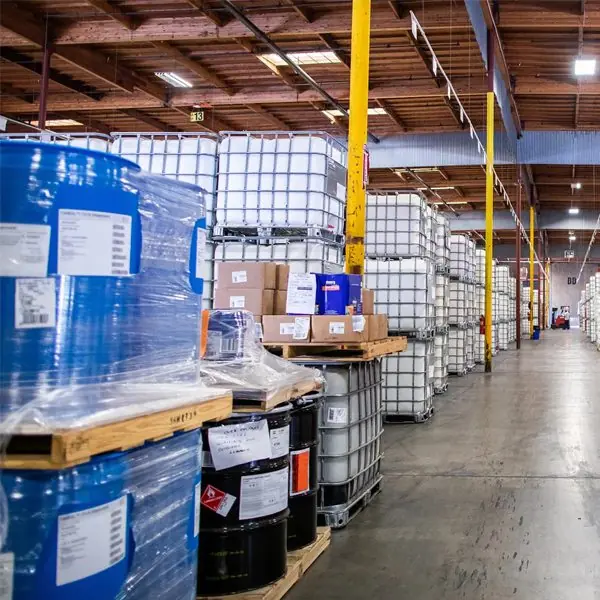
      • Use tanks, bottles, drums, or acid-resistant chemical containers that do not corrode metal. Close the lid tightly after use to prevent evaporation and exposure to air.


      • Store H2SO4 in a dry, cool place, away from direct sunlight and keep away from bases or reducing agents.


      • Avoid contact with strong bases and reducing agents, as H2SO4 can react strongly and generate heat and toxic gases.


  • Environmental Control:

    • Excess SO₂ gas must be treated to avoid air pollution.

      • Use exhaust systems to remove harmful gases, such as SO2, SO3, from the production process.


    • Use SO₂ absorption technology with limestone to reduce environmental impact.

      • Dispose of sulfuric acid waste according to environmental regulations. Do not dump waste directly into drains or the environment.


      <


    • Ensure that everyone working in the sulfuric acid preparation environment is trained in safety and understands the procedures and safety measures.


Remember that the process of preparing H2SO4 must be carried out by experienced individuals with full safety equipment. If you lack experience and necessary conditions, buying sulfuric acid from reliable suppliers is a safer option. Note that this process is complex and requires special attention to safety and process management. Strict supervision and compliance with regulations are necessary to ensure all activities are carried out safely and efficiently.


Where to Buy Quality Sulfuric Acid (H2SO4)?


In this article, Loc Thien Chemicals provides essential information on the laboratory preparation of sulfuric acid and the industrial preparation of H2SO4. Additionally, Loc Thien Chemicals supplies 98% Sulfuric Acid meeting ISO 9001 standards, ensuring:


  • Competitive prices, support for bulk purchases.


  • High quality, imported from leading suppliers.


  • Nationwide delivery, technical consultation support.


Customers who want more information about H2SO4 or wish to buy sulfuric acid, please contact us via hotline: 0979 89 19 29. Loc Thien Chemicals is always ready to provide consultation and answer any questions for customers. We guarantee the supply of high-quality H2SO4 products, available in large quantities, along with other chemicals such as NaOH,FeCl2, FeCl3, PAC, …

LOC THIEN CHEMICALS CO., LTD.

  • Address: 452/6B Provincial Road 10, Binh Tri Dong Ward, Binh Tan District, Ho Chi Minh City
  • Phone: 028 6269 5669 -  028 6269 5662
  • Website: hoachatlocthien.com
  • Fax : 028 6269 5662 - HotLine: 0979 89 19 29


Branches and Warehouses

  • Warehouse 1: Phuoc Hung Hamlet, My Xuan Commune, Tan Thanh District, Ba Ria - Vung Tau Province
  • Warehouse 2: Phuoc Thai, Phuoc Binh Commune, Long Thanh District, Dong Nai Province
  • Warehouse 4: Hoa Khanh Industrial Zone, Da Nang
  • Warehouse 5: O Mon Industrial Zone, Phuoc Thoi Ward, O Mon District, Can Tho City
  • Warehouse 6: Dai Dong - Hoan Son Industrial Zone, Tri Phuong Commune, Tien Du District, Bac Ninh Province


Does the preparation of H₂SO₄ have negative environmental impacts?

Yes, the preparation of H₂SO₄ can cause environmental pollution if not properly controlled. The main issues include:
+ SO₂ emissions: This is a greenhouse gas and can cause acid rain if not treated.
+ High energy consumption: The production process requires temperatures of 450 - 500°C, consuming a lot of fuel.
+ Impact on water sources: If waste is not properly treated, H₂SO₄ can alter water pH, harming aquatic life.
📌 Solutions:
+ Use limestone SO₂ absorption technology to reduce emissions.
+ Reuse heat from the production process to save energy.
+ Control pH in wastewater treatment before discharge into the environment.

Why is the dilution of H₂SO₄ process need to be cautious?

Improper dilution of H₂SO₄ can cause violent exothermic reactions, leading to:
+ Splashing of acid, causing severe burns.
+ Formation of acid fumes, which can irritate eyes and respiratory tract.
📌 Safety principles:
+ Always add acid to water, not the reverse.
+ Use heat-resistant equipment to avoid rapid temperature increases.
+ Perform in a well-ventilated environment to avoid inhaling acid fumes.

Is there any alternative method to the "contact method" for producing H₂SO₄?

Besides the contact method (Contact Process), there was previously the lead chamber method (Lead Chamber Process). However, the lead chamber method is now rarely used because:
+ Lower efficiency (~60-70%) compared to 98-99% of the contact method.
+ Cannot produce H₂SO₄ concentrations above 78%, making it unsuitable for modern industrial applications.
+ Requires larger space, which is economically disadvantageous.
📌 Why is the contact method optimal?
+ Utilizes V₂O₅ catalyst, increasing SO₂ → SO₃ conversion efficiency.
+ Easier to control product quality, suitable for commercial production.

Why does SO₂ need to be converted into SO₃ before producing H₂SO₄?

In H₂SO₄ production, SO₂ cannot dissolve directly in water to form H₂SO₄ because:
+ It reacts with water to form H₂SO₃ (sulfurous acid), a weak acid, not H₂SO₄.
+ Low efficiency, cannot achieve the desired acid concentration.
📌 Solution:
+ Convert SO₂ → SO₃ using V₂O₅ catalyst and temperatures of 450-500°C.
+ Dissolve SO₃ in H₂SO₄ to form oleum (H₂S₂O₇), then dilute to obtain concentrated H₂SO₄.
➡ This is the most crucial step in industrial H₂SO₄ production.

Why is H₂SO₄ called "the most important chemical in industry"?

H₂SO₄ is considered the most important chemical in industry because:
+ It is the main raw material for fertilizer production: Over 60% of global H₂SO₄ is used in producing phosphate fertilizers (super phosphate, MAP, DAP).
+ Wide applications in metallurgy: Removing rust from steel before coating.
+ Catalyst in organic synthesis: Producing plastics, dyes, detergents.
+ Industrial wastewater treatment: Adjusting pH, precipitating heavy metals.
📌 Indicator of importance:
Global H₂SO₄ production is considered a measure of industrial development of a country.