
Semiconductor Chemicals - Breakthrough in Electronic Technology
Tóm tắt nội dung
- What Are Semiconductor Chemicals?
- Common Types of Semiconductor Chemicals
- Photolithography Chemicals
- Etching Chemicals
- Spin Coating Chemicals
- Cleaning Chemicals
- Dopant Chemicals
- Other Ultra-Pure Chemicals
- CMP (Chemical Mechanical Polishing) Chemicals
- Technical Standards for the Semiconductor Industry
- The Role of Semiconductor Chemicals
- Specific Applications
- Current Challenges
- The Future of Semiconductor Chemicals in Vietnam
- Conclusion
- FAQ - Frequently Asked Questions
In the modern technological world, where electronic devices are becoming increasingly compact and powerful, semiconductor chemicals play the role of a "silent hero." Ultra-small microchips, sharp displays, and sensitive sensors all rely on the precision and superior performance of these specialized chemicals. However, few people know that to achieve these breakthroughs, the semiconductor chemical industry must overcome countless challenges and continuously innovate. So, what is the true role of semiconductor chemicals, what applications make them the heart of technology, and what future awaits this industry? Let’s explore in the article below.
What Are Semiconductor Chemicals?
Semiconductor chemicals are specialized chemical compounds used in the manufacturing processes of semiconductor devices, such as microchips, electronic chips, sensors, and high-tech components. They play a crucial role in ensuring the precision and quality of semiconductor products.
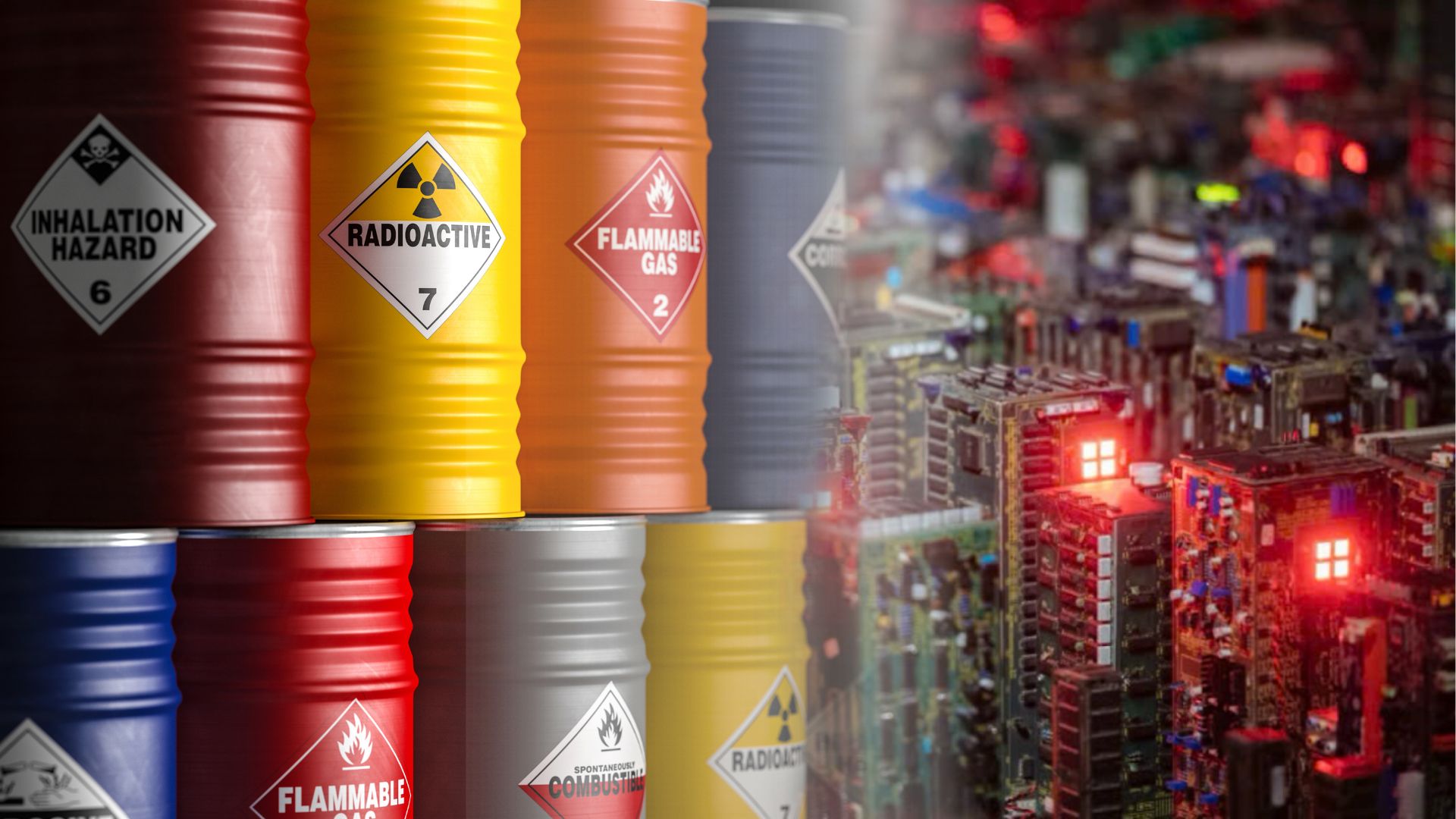 What are semiconductor chemicals?
These are highly pure chemicals with unique chemical and physical properties, allowing them to participate in complex processes such as photolithography, etching, and spin coating.
Basic Characteristics:
- High Purity: Purity levels of 99.999% (5N) or higher are required to avoid impurities affecting sensitive manufacturing processes.
- Uniformity: Ensures chemical reactions occur evenly in the manufacturing environment.
- Controllability: Easy control of reactions to achieve thin layers and precise structures.
Common Types of Semiconductor Chemicals
Semiconductor chemicals include various types, each playing a specific role in the production and fabrication stages of electronic components. Below is a detailed list of common semiconductor chemicals:
Photolithography Chemicals
- Purpose: To create precise patterns on substrate surfaces (usually silicon) to shape microchips.
- Common chemicals:
- Photoresist: A light-sensitive material layer coated on silicon substrates to shape microchips. Used to define ultra-small details in microchip production.
- Developer Solutions: For example, TMAH (Tetramethylammonium Hydroxide), which precisely dissolves unnecessary parts of the photoresist layer, is commonly used to finalize patterns on the photoresist.
Etching Chemicals
- Purpose: To remove unwanted material to create structures on substrate surfaces.
- Classification:
| Wet Etching | Dry Etching |
| Used in microchip and sensor production. | Advantages include high precision, suitable for thin layers and small details. |
|
|
Spin Coating Chemicals
- Purpose: To create thin, uniform coating layers on substrate surfaces.
- Common chemicals:
- PMMA (Polymethyl Methacrylate): A light-sensitive polymer used to create protective coatings, commonly applied in display and optical device production.
- Conductive or insulating liquid materials: For example, PEDOT:PSS (a conductive polymer), used to coat conductive or insulating layers on microchips and applied in semiconductor components like OLEDs or touchscreens.
Cleaning Chemicals
- Purpose: To remove impurities and oils from surfaces before proceeding to the next manufacturing steps.
- Common chemicals:
- IPA (Isopropyl Alcohol) : A fast-cleaning and evaporating chemical, commonly used to remove dust and oils from surfaces.
- Acetone : A solvent that effectively dissolves photoresist layers, often used to clean photoresist layers after photolithography.
- NH4OH (Ammonium Hydroxide) : A strong alkaline solution that deeply cleans and removes unwanted oxides, particularly useful in silicon surface treatment.
Dopant Chemicals
- Purpose: To add elements to silicon to alter its electrical conductivity.
- Common chemicals:
- Phosphine (PH3) : A chemical that adds electrons to silicon structures, creating N-type silicon, commonly used in transistor production.
- Boron Trifluoride (BF3) : Adds electron holes to silicon, forming P-type silicon, widely used in diode and sensor production.
Other Ultra-Pure Chemicals
- Purpose: To create a clean and inert environment in semiconductor production.
- Classification :
| Gas Chemicals | Liquid Chemicals |
|
|
CMP (Chemical Mechanical Polishing) Chemicals
- Purpose: To smooth and flatten surfaces after etching and coating layers.
- Common chemicals:
- Silica Slurry : A solution containing ultra-small silica particles, used to polish surfaces, ensuring flatness before adding new material layers.
- Potassium Hydroxide (KOH) : A strong alkaline solution that polishes silicon, commonly used in optical sensor processing.
Technical Standards for the Semiconductor Industry
- Purity: Semiconductor chemicals require purity levels of 99.999% (5N) or higher to ensure no impurities affect the final product.
- Safety: Chemicals must be tested and certified according to international standards such as MSDS (Material Safety Data Sheet) and ZDHC (Zero Discharge of Hazardous Chemicals).
- Environmental Friendliness: Priority is given to chemicals with minimal environmental and health impacts.
- Controllability: Chemical reactions must be uniform and easily controllable in cleanroom environments.
The Role of Semiconductor Chemicals
- Ensuring High Precision in Manufacturing : Semiconductor chemicals help create ultra-thin, uniform material layers with absolute precision, essential for microchip production.
- Improving Efficiency : These chemicals enhance the conductivity, insulation, and heat resistance of components.
- Supporting Miniaturization : With the ability to create nanometer-sized details, semiconductor chemicals support the miniaturization of microchips, making electronic devices increasingly compact.
- Protecting Surfaces and Component Structures : Protective coatings from chemicals prevent wear, oxidation, and enhance component durability.
Specific Applications
Semiconductor chemicals not only support each step in manufacturing but also optimize the precision and efficiency of electronic components. They ensure that microchip, sensor, and display production processes meet the highest standards in the high-tech industry.
 Specific applications of semiconductor chemicals
- Microchip (IC) Production : Semiconductor chemicals help create ultra-small structures on microchips, ensuring precision and efficiency for electronic devices like computers and phones.
- Sensor Fabrication: Used to treat silicon surfaces, enhancing sensitivity and accuracy for thermal, optical, and motion sensors.
- Display Production : Chemicals create conductive and light-emitting layers for LED, LCD, and OLED displays, ensuring sharp images and energy efficiency.
- Solar Cell Technology : Used to treat silicon surfaces and enhance light absorption for solar panels.
- Electronic Component Improvement : Enhances conductivity, insulation, and durability for transistors, diodes, and electronic memory.
Current Challenges
The semiconductor chemical industry faces challenges such as extremely high purity requirements, rising production costs, and environmental impacts from etching and cleaning chemicals. The development of sub-5nm microchip technology demands chemicals that adapt to more complex processes, while supply chains are affected by pandemics and geopolitical tensions, increasing pressure on continuous production.The Future of Semiconductor Chemicals in Vietnam
The future of semiconductor chemicals focuses on innovation to support advanced technologies like sub-2nm microchips, 3D chips, and smart systems. The industry aims for sustainable development with environmentally friendly chemicals, optimizing production processes through digitalization, while expanding applications into green energy and artificial intelligence.Driving Factors for Development :
- Environmentally Friendly Chemicals: Less toxic, easy to handle, and recyclable.
- Support for Advanced Technologies: Sub-2nm microchips, 3D chips, smart sensors.
- Renewable Energy Applications: Solar cells, fuel cells, energy storage.
- Digitalization of Production Processes: Integrating AI, reducing errors, optimizing efficiency.
- Market Expansion: Meeting demands from electric vehicles, 5G, and electronic devices.
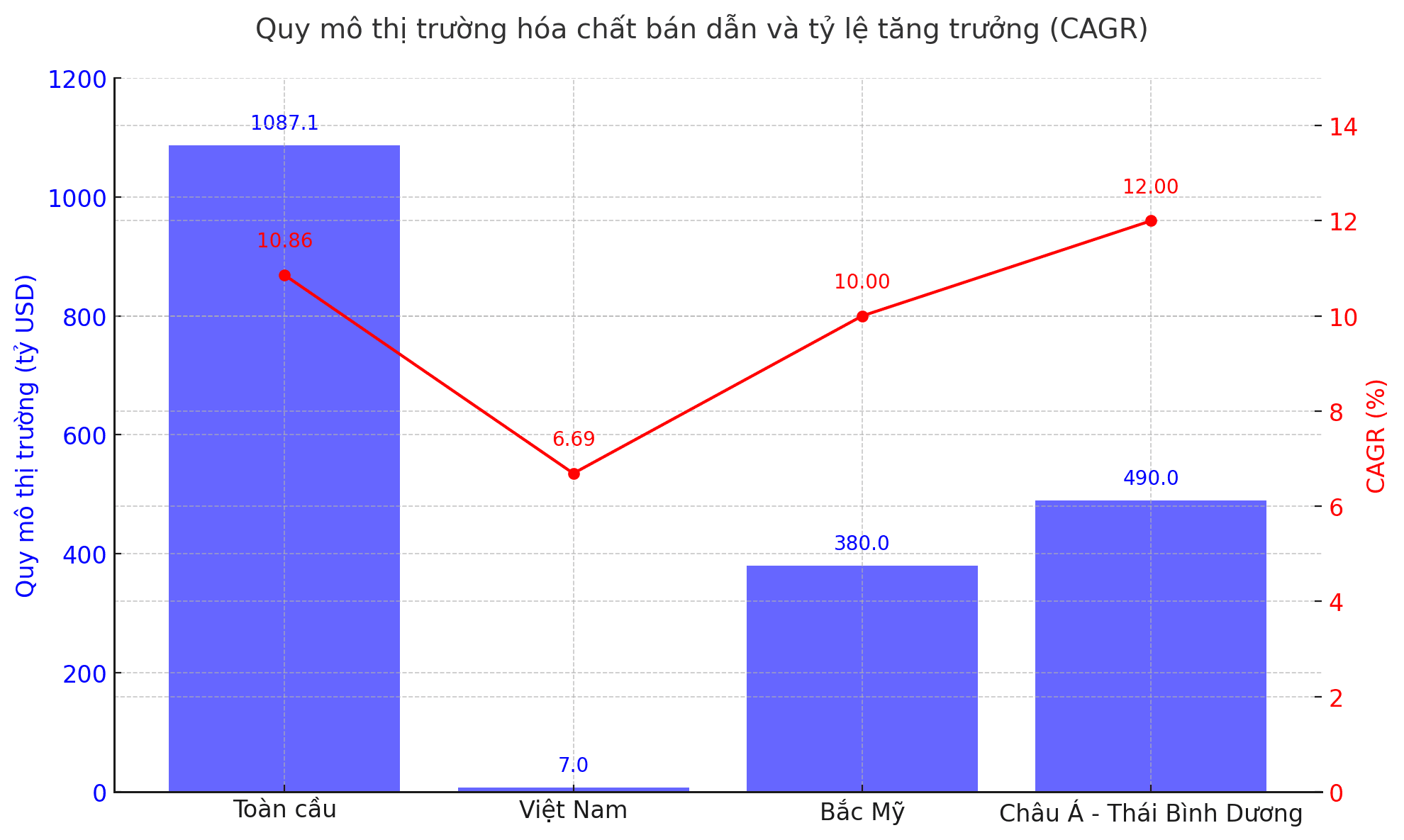 Chart showing the market size and growth rate of semiconductor chemicals
Not only tied to technological innovation but also driven by an expanding market. According to forecasts, the global semiconductor industry is expected to achieve a compound annual growth rate (CAGR) of 6-8% from now to 2030, fueled by increasing demand from fields like AI, 5G, electric vehicles, and renewable energy. Semiconductor chemicals will continue to be a core factor, meeting the growing production demands of the market.
Conclusion
Semiconductor chemicals are not only the foundation of the modern electronics industry but also play a crucial role in shaping the future of technology. From microchip production and sensors to applications in renewable energy, semiconductor chemicals contribute to scientific breakthroughs while aiming for sustainable and environmentally friendly development. Despite facing many challenges, the industry continues to advance, promising new potentials to meet the needs of an increasingly connected and intelligent world.
Loc Thien Chemicals Co., Ltd. proudly stands as a leading company specializing in purchasing, selling, and supplying semiconductor chemical products in Vietnam, effectively serving the electronics and microchip manufacturing industries. With a nationwide warehouse system, stable inventory, and a dedicated team of experts, Loc Thien is committed to providing comprehensive semiconductor chemical solutions, meeting high-quality standards, competitive pricing, and professional customer service.
Contact us now for free consultation and the best quotes:
- 📞 Hotline: 0979 891 929
- 📩 Email: [email protected]
- 🌐 Website: hoachatlocthien.com
Let Loc Thien be your partner on the path to sustainable development!
FAQ - Frequently Asked Questions
- Do semiconductor chemicals require special storage?
Semiconductor chemicals typically require storage in dry, cool conditions, away from direct sunlight and high temperatures. Some chemicals need to be stored in humidity or temperature-controlled environments to maintain stability. - How to choose the right semiconductor chemicals for the production process?
The selection of semiconductor chemicals depends on the substrate material (silicon, glass, metal), technological processes (photolithography, wet/dry etching, spin coating), and technical requirements such as purity and chemical compatibility. - What international standards apply to semiconductor chemicals?
Semiconductor chemicals typically comply with standards such as ISO 9001 for quality, MSDS for safety, and ZDHC for environmental protection. Additionally, there are industry-specific standards like SEMI Standards. - How to safely handle semiconductor chemical spills?
In case of chemical spills, specialized absorbent materials should be used, followed by handling according to the MSDS guidelines for each chemical. Always wear protective gear like gloves, goggles, and masks to avoid direct contact. - What factors influence the price of semiconductor chemicals?
The price of semiconductor chemicals is influenced by purity, origin (domestic or imported), purchase volume, and specific requirements for each chemical. - Does Loc Thien provide technical support for customers?
Yes, Loc Thien’s team of experts is ready to provide optimal solutions for semiconductor chemicals, from product selection to production process operation. - Can semiconductor chemicals be ordered in small quantities?
Loc Thien supports flexible orders, from small quantities for research and testing to large orders for industrial production. - What is the delivery time for semiconductor chemicals at Loc Thien?
With a nationwide warehouse system, Loc Thien commits to fast delivery within 24-48 hours in key areas, depending on geographical location and order quantity.