
Industrial Basic Chemicals — NaOH, HCl, H₂SO₄, PAC | Loc Thien


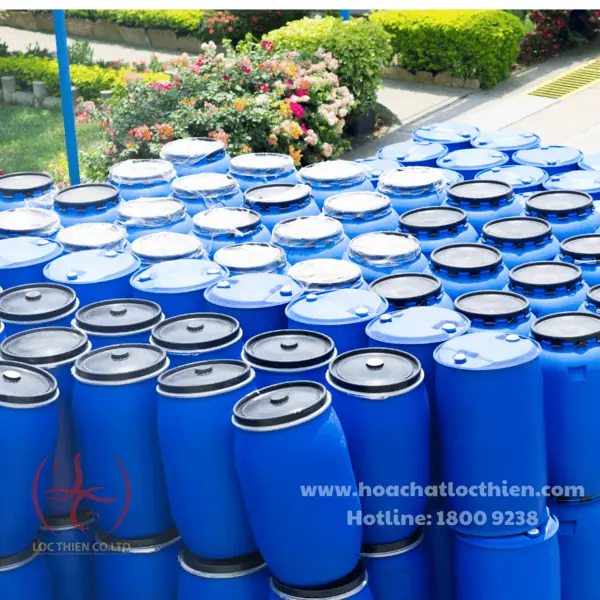
Basic Chemicals
Basic chemicals are inorganic and organic compounds produced in large volumes, serving as essential raw materials for the water treatment, textile dyeing, paper manufacturing, fertilizer, and petrochemical industries. Typical products include: H₂SO₄, NaOH, HCl, PAC, Al₂(SO₄)₃, NH₃. Loc Thien We provide basic chemicals meeting industrial standards, with delivery in Ho Chi Minh City, Binh Duong, Dong Nai, and throughout the Southern region.
What are basic chemicals?
Basic chemicals, also known as foundational chemicals, include simple chemical compounds or elements produced on a large scale to meet the needs of various industries. They are the core element for producing more complex chemicals, especially in fields such as dyeing and finishing, water treatment, plastic production, and fertilizers.Characteristics of basic chemicals
Okay sell at a competitive price thanks to its large production scale.
As an essential input for most industries.
Versatile, easy to combine, and applicable.
Basic chemicals definition
Common basic chemicals
Basic chemicals are divided into two main groups:
Inorganic chemicals:
Sulfuric acidSulfuric acid“King of chemicals,” used in the production of fertilizers, detergents, and water treatment.
Sodium hydroxide (NaOH chemicalCaustic soda, widely used in paper production, soap, and wastewater treatment.
Aluminum sulfate (Chemical Al2(SO4)3): Effective coagulant in water treatment and the textile industry.
Ammonia (NH₃): A raw material for the production of fertilizers and many other nitrogen chemicals.
Organic chemicals:
Ethylene (C₂H₄) and propylene (C₃H₆): The main monomers for the production of polyethylene and polypropylene plastics.
Methanol (CH₃OH): An important solvent and organic synthesis raw material.
Benzene (C₆H₆): Used in the production of plastics and synthetic fibers.
Commonly Supplied Basic Chemicals
Sulfuric Acid (H₂SO₄) CharacteristicsSulfuric acid is an indispensable chemical in many industries, serving as a strong oxidizing agent and catalyst.
Applications:
Production of fertilizers and detergents.
Wastewater treatment and oil refining.
Notes when purchasingPrioritize the ISO certified chemical supplier to ensure product quality.
Aluminum Sulfate (Al₂(SO₄)₃)
CharacteristicsAluminum sulfate is often sold as a white powder or crystal, easily soluble in water.
Applications:
Wastewater treatment, flocculating impurities.
Used in the dyeing and paper manufacturing industries.
3. Poly Aluminium Chloride (PAC)
Characteristics: PAC chemical is an effective flocculating agent, often provided to water treatment plants. PAC is more effective than aluminum sulfate in the pH range of 5–9, causing flocs to settle 15–25% faster.
Applications:
Treatment of raw water, industrial wastewater, and domestic wastewater.
Remove bacteria, viruses, and organic matter.
4. Ammonia (NH₃)
Characteristics: It is a strong alkaline gas, usually sold as a compressed gas or solution 25%.
Applications:
Fertilizer production, nitric acid.
Industrial exhaust cooling and treatment.
Sodium Hydroxide (NaOH)
CharacteristicsKnown as caustic soda, NaOH is a basic chemical that is widespread nationwide supply.
Applications:
Production of soap, paper, and wastewater treatment.
Use in food processing.
Comparison of Basic Chemical Technical Specifications
Quick comparison table of technical specifications helps engineers and procurement departments select the right chemicals according to technological requirements:Chemical nameFormulaCAS numberCommercial formKey applicationsIndustry
Sulfuric Acid H₂SO₄ 7664-93-9 Liquid 93–981 TP3T Fertilizers, rust removers, water treatment Fertilizers, metallurgy, petrochemicals
Caustic Soda (Sodium Hydroxide) NaOH 1310-73-2 Flakes / Solution 30–50 % pH adjustment, soap, paper Paper, textile dyeing, food
Hydrochloric Acid (HCl) 7647-01-0 Liquid 30–361 TP3T Rust removal, alkali neutralization, PVC Metallurgy, plastics, electronics
PACAln(OH)mCl1327-41-9 Powder / Liquid 10% Al₂O₃ Flocculant for Potable Water & Wastewater Water Treatment, Paper
Aluminum Sulfate
Al₂(SO₄)₃
10043-01-3
White crystals/powder
Flocculant, dyeing mordant
Textile dyeing, water treatment
Ammonia (NH₃) 7664-41-7, 25% solution / compressed gas; Fertilizer, refrigeration, disinfection; Fertilizers, food, refrigeration
💡 Technical Note: PAC is more effective than aluminum sulfate at pH 6–8; NaOH and HCl should not be stored in the same container. Free technical consultation: 0979 891 929
Standards & Accompanying Documents: Each shipment of basic chemicals from Loc Thien comes with: Certificate of Analysis (Certificate of Analysis — actual content analysis), MSDS (Material Safety Data Sheet), Carbon Monoxide Certificate of Origin, CQ (Certificate of Quality). The product meets QCVN 40:2025 (superseding QCVN 40:2011, effective Sept 1, 2025)/MONRE industrial wastewater and QCVN 01:2009/BYT (Domestic water) — suitable for lab and plant EHS department input checks.
Where to buy basic chemicals?
Loc Thien Investment and Development Co., Ltd. is a Vietnam-based industrial chemical supplier. We focus on process-grade supply, logistics support and quotation on request. — Established in 2016, with over 10 years of experience — a leading supplier of basic industrial chemicals in the South. Head office located at 452/6B Tỉnh Lộ 10, Binh Tri Dong Ward, Ho Chi Minh City, ready for delivery to: Binh DuongDi An, Thuan An, Ben Cat, VSIP, My Phuoc
Dong NaiLong Thanh, Nhon Trach, Bien Hoa, Amata Industrial Park
Vung TauMy Xuan, Tan Thanh — serving the oil and gas industrial park
Can Tho & Mekong Delta
Da Nang & Central Vietnam (Delivery via shared car schedule)
Bac Ninh and the Northern region (Major order agreement)
Order from 200 kg and above Expected delivery within 4 hours in inner Ho Chi Minh City and 24–48 hours to Southern industrial parks. Goods are fully accounted for. COA, MSDS, VAT Invoice. Quote response within 30 minutes during business hours.
Applications of Basic Chemicals in Industry
1. Manufacturing industryTextiles:
Sodium hydroxide is used in the mercerization process, enhancing the luster and durability of cotton fabric.
Sulfuric acid and hydrogen peroxide assist in dyeing and bleaching processes.
Paper industry:
Sodium hydroxide dissolves lignin in wood, while chlorine or aluminum sulfate bleaches and improves product strength.
Basic Chemicals in Industrial Production
2. Water Treatment
Water treatment is one of the most important application areas for basic chemicals, especially in the context of increasing environmental pollution. Solutions Water treatment chemicals not only helps improve wastewater quality before discharge into the environment but also ensures that the water supply meets safety standards for living and production. Here are methods for effective chemical use in wastewater and water treatment.
wastewater treatment:
Alum and PAC help to coagulate, remove dirt, and insoluble impurities.
Sulfuric acid and NaOH are used to adjust pH, optimizing treatment efficiency.
Treated water supply:
Chlorine and sodium hypochlorite (NaClO) effectively disinfect, ensuring safe clean water.
Basic Chemicals in Water Treatment
3. Auxiliary Chemical Production
Oil and gas industry:
HCl and NaOH are used in the production of drilling additives, protecting equipment from corrosion, and optimizing drilling performance.
Plastics industry:
Styrene and ethylene are the main raw materials in polymer production, creating polyethylene and polypropylene plastics.
The Role of Auxiliary Chemicals in ProductionNotes on the Use and Storage of Chemicals
Occupational Safety:
Equip yourself with gloves, safety glasses, and a gas mask.
Follow the instructions in the MSDS documentation.
Storage:
Store chemicals in a dry place, away from direct sunlight and high temperatures.
Ensure containers are sealed to prevent chemical leaks or evaporation.
Do not store H₂SO₄ and NaOH together—dangerous exothermic reaction.
Troubleshoot:
Equip a spill containment system and auxiliary tools such as secondary containment bins, clay, or sand.
Equip emergency eyewash stations according to TCVN 5507:2002.
Frequently Asked Questions About Basic Chemicals
What are basic chemicals and how do they differ from specialty chemicals?
Basic/commodity chemicals are chemical compounds produced on a large industrial scale, with simple formulas such as H₂SO₄, NaOH, HCl, NH₃. They differ from specialty chemicals in that they are used as raw materials for many industries, are produced in large quantities, have lower costs, and do not require special refinement for each end application. Specialty chemicals are synthesized from basic chemicals, have higher purity, and more complex formulas.
PAC and alum (Al₂(SO₄)₃) are different in the following ways:
PAC (Poly aluminum chloride) has stronger flocculation capabilities than aluminum sulfate due to its longer aluminum polymer chains; it is effective over a wide pH range (5–9), forming larger flocs that settle more quickly. Aluminum sulfate is suitable for treating water with low turbidity and on a limited budget. For industrial wastewater with high suspended solids (SS) content or dye contamination, PAC typically provides better treatment performance than 15–25%. Loc Thien supplies both types and offers free consultation via our hotline. 0979 891 929.
What documents are needed to purchase basic chemicals?
According to Decree 113/2017/ND-CP, some basic chemicals such as concentrated H₂SO₄, HCl, and NH₃ are on the list of chemicals subject to conditional business. Purchasing businesses need to provide: Business license, chemical reception slip, and a commitment to proper use. Loc Thien provides full documentation: COA (Certificate of Analysis), MSDS (Safety Data Sheet), and VAT invoices in compliance with regulations.
How should sulfuric acid (H₂SO₄) and sodium hydroxide (NaOH) be stored to ensure safety?
H₂SO₄ must be stored in HDPE plastic tanks/cans or stainless steel, avoiding contact with ferrous metals and water (strong exothermic reaction). NaOH is highly hygroscopic, must be stored sealed in PE bags or closed containers, away from damp areas and aluminum materials. Both must not be stored together. The chemical storage area must have a ventilation system, temperature below 35°C, acid/alkali-resistant flooring, and be equipped with an emergency eyewash station according to TCVN 5507:2002.
Does Loc Thien deliver chemicals to Binh Duong and Dong Nai?
Loc Thien supplies basic chemicals to all industrial parks in Binh Duong (Di An, Thuan An, VSIP, My Phuoc), Dong Nai (Long Thanh, Nhon Trach, Bien Hoa), Vung Tau, Can Tho, and southern provinces. Orders of 200 kg or more in Ho Chi Minh City and Binh Duong: delivered within 4 hours in inner Ho Chi Minh City; Binh Duong, Dong Nai and Vung Tau within 24–48 hours. Contact: 0979 891 929.
The right choice High-quality basic chemicals not only helps optimize production efficiency but also ensures labor safety and environmental protection. Loc Thien Company commits to providing basic chemicals that meet international standards, helping businesses strengthen their competitive advantage in the market.
Contact us now for the best chemical consultation and pricing!
Hotline: 0979 891 929
Email: [email protected]
Website: hoachatlocthien.com
Content compiled by the Loc Thien technical team | Updated: July 2026 | Hotline: 0979 891 929 | Email: [email protected]