# What Are Coagulants? - The Secret to Effective and Safe Water Treatment Coagulants play a vital role in water treatment processes, ensuring clean and safe water for industrial and municipal applications. At **Loc Thien Chemicals Co., Ltd.**, we provide high-quality coagulants such as **aluminum sulfate (alum)**, **iron sulfate**, **PAC powder**, and **liquid PAC** to optimize water clarification and purification. ## Why Use Coagulants? - **Effective turbidity removal**: Aggregates suspended particles for easy filtration. - **Heavy metal reduction**: Binds and removes harmful contaminants. - **Cost-efficient**: Minimizes chemical consumption in **wastewater treatment**. - **Versatile applications**: Suitable for **feedwater supply**, **textile dyeing**, **aquaculture**, and more. Trust **Loc Thien Chemicals** for certified solutions backed by **COA**, **MSDS**, and **ZDHC Certification**. Contact our **Loc Thien Hotline** for expert advice on **chemical dosing** and **jar testing**!
Tóm tắt nội dung
- What Are Coagulants?
- Properties and Mechanism of Coagulants
- Types of Coagulants
- Common Types of Coagulants Today
- Aluminum sulfate (Al2(SO4)3)
- PAC (Polyaluminium chloride)
- Ferric chloride (FeCl3)
- Ferric sulfate (Fe2(SO4)3)
- Chitosan
- Polytetsu (Ferric sulfate-polymer)
- Anionic Polymer
- Practical Applications of Coagulants
- Usage and Storage Guidelines
- How to use:
- Storage:
- Safety Precautions
- Conclusion
- FAQ - Frequently Asked Questions About Coagulants
- Do coagulants affect treated water quality?
- How to choose the right coagulant?
- Is overdosing coagulants harmful?
- Can coagulants treat oily wastewater?
- Can I prepare and use coagulants at home?
- How to minimize sludge after using coagulants?
- Are natural coagulants like chitosan better than synthetic ones?
In the modern world of water treatment technology, coagulants are not just ordinary chemicals but the "heart" of water purification systems. From improving drinking water quality to treating complex industrial wastewater, coagulants play an essential role in protecting the environment and public health. But have you ever wondered how such a small chemical can turn murky water crystal clear? So what are coagulants? Let's explore their working principles, common types, and practical applications in the article below.
What Are Coagulants?
Coagulants are chemical compounds used to improve water quality by facilitating the aggregation of suspended solids or dissolved organic matter in water into larger clusters (called flocs) for easy removal through sedimentation or filtration processes.Their primary role is to neutralize the surface charge of solid particles or colloids in water, reducing electrostatic repulsion and enabling them to bind together.

Properties and Mechanism of Coagulants
- Key properties: Coagulants are highly soluble in water, effective at pH 6-8, and work under standard temperature and pressure conditions. They help reduce turbidity, remove bacteria, and eliminate organic and inorganic pollutants, ensuring high water treatment efficiency.

- Mechanism:
- Charge neutralization: Solid particles usually carry a negative charge. Coagulants, typically positive ions, neutralize this charge, reducing repulsion between particles.
- Floc formation: After neutralization, small particles bind together through gravitational forces or coagulant aids, forming larger flocs that easily settle at the bottom.
Types of Coagulants
- By origin: Chemical coagulants like aluminum sulfate, iron sulfate, and cationic polymers (high efficiency, low cost), and natural coagulants like chitosan and gum arabic (eco-friendly, suitable for organic and heavy metal treatment).
- By mechanism: Positive coagulants neutralize negative charges, while coagulant aids help small flocs connect into larger clusters, enhancing sedimentation efficiency.
Common Types of Coagulants Today
| Type | Key Features | Typical Applications |
| Aluminum sulfate (Al2(SO4)3) | Traditional, cost-effective, effectively neutralizes charges and forms flocs | Domestic water and municipal wastewater treatment |
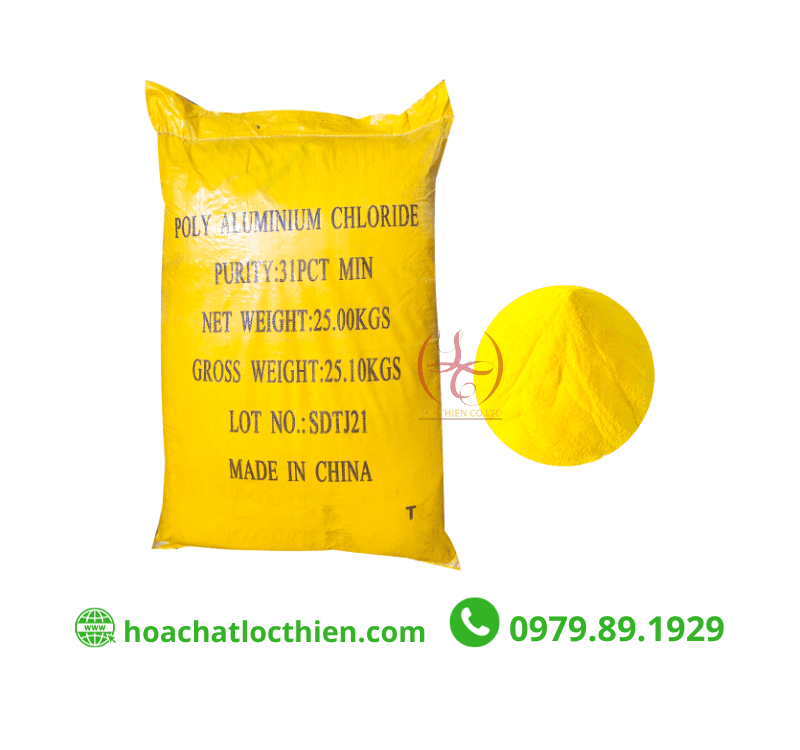
| PAC (Polyaluminium chloride) | High-performance aluminum polymer, minimal pH impact, generates less sludge | Drinking water and industrial wastewater treatment |
| Ferric chloride (FeCl3) | Highly effective for organic-rich wastewater, easily soluble in water | Industrial wastewater and heavy metal-containing water treatment |
| Ferric sulfate (Fe2(SO4)3) | Effective for high-turbidity water, minimal impact on treatment systems | Municipal and industrial wastewater treatment |
| Chitosan | Natural polymer, eco-friendly, effective for color and heavy metal removal | Food and textile dyeing wastewater |
| Polytetsu (Ferric sulfate-polymer) | Enhanced ferric sulfate, high efficiency, reduces sludge volume | Industrial and organic-rich wastewater treatment |
| Anionic Polymer | Increases floc size and bonding, typically used as a coagulant aid | Support in domestic and industrial water treatment |
See also:
Aluminum sulfate (Al2(SO4)3)
- Features: A traditional chemical coagulant, highly soluble in water, effective at pH 6-8. Low cost, effective for medium-turbidity water treatment.
- Applications: Commonly used in drinking water and domestic wastewater treatment due to its ability to remove turbidity and bacteria.
PAC (Polyaluminium chloride)
- Features: An improved aluminum polymer, high efficiency, minimal impact on water pH, and generates less sludge compared to aluminum sulfate.
- Applications: Widely used in clean water and industrial wastewater treatment, especially in systems requiring high-quality effluent.
Ferric chloride (FeCl3)
- Features: Highly soluble in water, effective for organic-rich and heavy metal-containing wastewater. However, it is highly corrosive and produces foul-smelling HCl gas.
- Applications: Commonly used in industrial wastewater treatment, especially from electroplating and food processing industries.
Ferric sulfate (Fe2(SO4)3)
- Features: Effective for high-turbidity water, minimal impact on pH treatment systems. Produces less gas compared to ferric chloride.
- Applications: Suitable for municipal and light industrial wastewater treatment.
Chitosan
- Features: A natural coagulant derived from shrimp and crab shells. Eco-friendly, effective for color, heavy metal, and organic matter removal.
- Applications: Commonly used in textile dyeing, food processing wastewater, and industries requiring environmentally safe treatment.
Polytetsu (Ferric sulfate-polymer)
- Features: A combination of ferric sulfate and polymer, highly effective in reducing sludge volume and treating organic-rich wastewater.
- Applications: Widely used in industrial wastewater treatment, especially in food processing and oil-containing water treatment.
Anionic Polymer
- Features: A coagulant aid that increases floc size by binding small particles. Works effectively with primary coagulants.
- Applications: Supports domestic and industrial water treatment, optimizing sedimentation processes.
Practical Applications of Coagulants
- Drinking water and wastewater treatment: Removes turbidity, dissolved organic matter, and bacteria from surface water, groundwater, or industrial wastewater.
- Paper manufacturing: Separates pulp and unwanted residues in production processes.
- Food and beverage industry: Used to filter proteins or impurities in production water.
- Municipal wastewater treatment: Removes pollutants, heavy metals, and oils from municipal wastewater before discharge.
- Textile dyeing wastewater treatment: Effective in removing color and hard-to-degrade organic matter, ensuring compliance with discharge standards.

Usage and Storage Guidelines
How to use:
- Dilute first: Coagulants should be diluted with clean water before being introduced into the treatment system.
- Proper dosage: Calculate the exact amount of chemicals needed based on factors like turbidity and organic concentration.
- pH adjustment: The optimal pH for coagulation is typically 6.5-7.5.
<>
Storage:
- Store in sealed containers, away from direct sunlight.
- Keep in a cool, well-ventilated area, away from heat sources and other chemicals.
- Ensure proper safety gear (gloves, goggles) when handling.
Safety Precautions
- Exposure risks: Direct contact may cause skin or eye irritation. If dust or fumes are inhaled, move the affected person to fresh air immediately.
- Protective measures: Wear gloves, masks, and safety goggles when handling and wash hands thoroughly after use.
- Spill response: For spills, use absorbent materials or flush with plenty of clean water. In case of accidents, follow MSDS guidelines and seek emergency medical attention.

Conclusion
Coagulants are key components in clean water and wastewater treatment, helping reduce pollution, protect water resources, and meet stringent environmental standards. So what are coagulants? This might be your first question when exploring effective water and wastewater treatment processes. Understanding their concept, working principles, and types will help you appreciate how they remove impurities, reduce turbidity, and safeguard water sources.
From common products like aluminum sulfate and PAC to eco-friendly options like chitosan, coagulants not only meet environmental standards but also deliver high practical efficiency. Committed to sustainable development, Loc Thien Chemicals Co., Ltd. proudly stands as Vietnam's leading industrial chemical solutions provider. We deliver high-quality products, expert consulting services, and nationwide distribution. Let Loc Thien accompany you in all water treatment projects, protecting living environments and public health.
- 📞 Hotline: 0979 891 929
- 📩 Email: [email protected]
- 🌐 Website: hoachatlocthien.com
Contact us today !!!