Hoa Chat Doping
Doping Chemicals for Semiconductor Industry - Optimal Solutions for Semiconductor Material Performance
In the semiconductor industry, the doping process plays a core role in improving and adjusting the electronic properties of materials. This technique involves adding small amounts of impurities to semiconductors to modify electrical conductivity according to technical requirements. Thanks to this process, high-tech devices such as microprocessors, diodes, and transistors can achieve optimal performance, high precision, and stable operation.The doping chemicals catalog from Loc Thien includes high-quality products such as Boron Trichloride (BCl₃), Phosphine (PH₃), Arsine (AsH₃), Diborane (B₂H₆), Hydrogen Chloride (HCl), and Germane (GeH₄). All are widely used in critical processes like plasma etching, silicon epitaxy, and ion implantation, contributing to the creation of advanced electronic components and miniaturized devices.
Does your production process require high-quality doping chemicals or semiconductor chemicals that meet international standards? Explore the optimal solutions in our catalog below with Loc Thien!
📞 Hotline: 0979 89 19 29 | 📩 Email: [email protected] | 🌐 Website: hoachatlocthien.com
Below are the doping chemicals used in semiconductor manufacturing
| Chemical | Doping Type | Main Application | Key Properties |
| Boron Trichloride (BCl₃) | P-type | Plasma etching, p-type doping | Corrosive, toxic gas |
| Phosphine (PH₃) | N-type | N-type doping on silicon | Toxic, flammable gas |
| Arsine (AsH₃) | N-type | N-type doping for Gallium Arsenide (GaAs) | Extremely toxic, flammable gas |
| Diborane (B₂H₆) | P-type | P-type doping in silicon epitaxy | Colorless, flammable gas |
| Hydrogen Chloride (HCl) | Cleaning | Silicon wafer surface cleaning | Highly corrosive gas |
| Germane (GeH₄) | N-type | Germanium thin film deposition | Colorless, flammable gas |
- Boron Trichloride (BCl₃)
- Basic properties : BCl₃ is a colorless gas with a pungent odor and strong corrosiveness. Under high pressure, it easily liquefies and reacts vigorously with moisture, producing corrosive hydrochloric acid.
- Role in semiconductors: BCl₃ is used as a plasma etchant in IC manufacturing, precisely removing excess silicon oxide layers. It also serves as a p-type dopant, introducing boron into silicon crystal lattices to create hole carriers.
- Applications: BCl₃ is primarily used in integrated circuit (IC) production, forming p-type semiconductor layers for diodes and transistors.
- Phosphine (PH₃)
- Basic properties : PH₃ is a colorless gas with an unpleasant odor, highly toxic and flammable. It is unstable and may spontaneously ignite in air at high temperatures.
- Role in semiconductors : PH₃ is used as an n-type dopant, adding free electrons to silicon crystal lattices to enhance electrical conductivity. It is widely used in ion implantation and epitaxy technologies.
- Applications : PH₃ is used to manufacture high-speed transistors, diodes, and electronic devices requiring pure n-type semiconductor materials.
- Arsine (AsH₃)
- Basic properties : AsH₃ is an extremely toxic, colorless, flammable gas with a slight garlic odor. Even at low concentrations, it can cause severe harm to humans.
- Role in semiconductors : AsH₃ is an n-type dopant, crucial for producing Gallium Arsenide (GaAs) and silicon semiconductors. GaAs exhibits superior electronic properties for high-speed devices.
- Applications : AsH₃ is used in microprocessor fabrication, high-frequency transistors, and sensitive electronic sensors requiring precision and speed.
- Diborane (B₂H₆)
- Basic properties : Diborane is a colorless, highly flammable gas with an unpleasant odor. It reacts violently with oxygen and may explode upon exposure to heat or sparks.
- Role in semiconductors : B₂H₆ is a p-type dopant used in low-temperature silicon epitaxy to create p-type semiconductor layers, ensuring high purity and uniformity.
- Applications : Diborane is used in silicon epitaxy technology to form p-type layers for integrated circuits (ICs) and advanced semiconductor devices.
- Hydrogen Chloride (HCl)
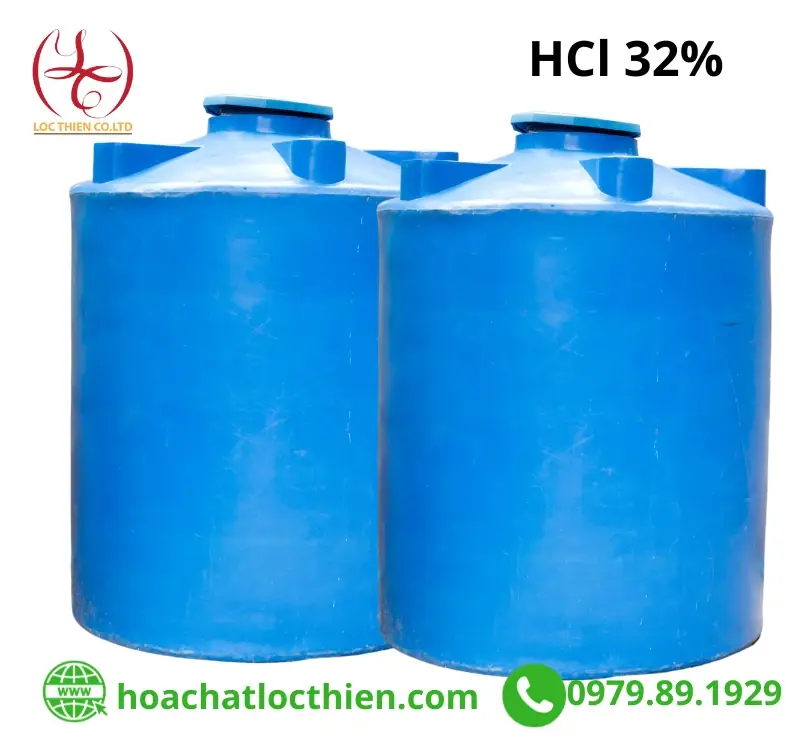
- Basic properties : HCl is a colorless gas with a strong pungent odor and high corrosiveness. When dissolved in water, it forms hydrochloric acid capable of corroding metals and organic materials.
- Role in semiconductors : HCl is used to clean silicon wafer surfaces, removing impurities and unwanted oxide layers before subsequent processing steps.
- Applications: HCl chemical plays a vital role in producing high-purity polycrystalline silicon and serves as a surface cleaning agent in chemical etching processes.
- Germane (GeH₄)
- Basic properties : GeH₄ is a colorless, flammable gas with a slight characteristic odor. It is used under strictly controlled conditions due to its toxicity and high flammability.
- Role in semiconductors : GeH₄ is an n-type dopant used to deposit germanium thin films during epitaxy, improving semiconductor conductivity.
- Applications : Germane is applied in manufacturing high-performance transistors and diodes, as well as ultra-thin germanium layers for precision electronic devices.
 Safety precautions when using HCl and lithium
General Applications of Doping Agents in the Semiconductor Industry
- Enhancing electrical conductivity: Doping creates charge carriers (electrons or holes) to improve semiconductor conductivity for electronic devices.
- Forming PN-junctions: Doping creates p-type and n-type layers, forming junctions to regulate current flow in diodes and transistors.
- Improving device performance: Optimizes sensitivity and efficiency of sensors, LEDs, and solar cells, enhancing signal response.
- Device miniaturization: Doping enables fabrication of smaller, higher-performance components for modern ICs and electronics.
Why Choose Loc Thien Investment Development Co., Ltd. as Your Doping Chemical Supplier?
Loc Thien Company is a trusted partner in supplying high-quality doping chemicals for the semiconductor industry. We deliver exceptional value through:- International standards: All products comply with MSDS and ZDHC certifications.
- Dedicated support: Expert team provides end-to-end consultation from product selection to usage.
- Stable supply: Modern warehouse system ensures rapid fulfillment of large orders.
- Flexible policies: Easy 7-day return policy for unsatisfactory products.
- Nationwide coverage: Fast delivery supported by extensive nationwide warehousing.

Doping chemicals are essential in the semiconductor industry, optimizing product performance and quality. Loc Thien Investment Development Co., Ltd. proudly serves as a reliable partner, supplying high-quality chemicals for semiconductor manufacturing. With our expert team and diverse inventory, we commit to supporting your sustainable development journey.
- 📞 Hotline: 0979 89 19 29
- 📩 Email: [email protected]
- 🌐 Website: hoachatlocthien.com
FAQ - Frequently Asked Questions About Doping Chemicals
Are Loc Thien's doping chemicals safe to use?
Yes, all doping chemicals supplied by Loc Thien comply with international safety standards such as MSDS and ISO 9001. We ensure quality and provide detailed safety usage guidelines.
What is Loc Thien's delivery time?
With nationwide warehousing, we guarantee fast delivery within 1-3 working days, depending on customer location.
Does Loc Thien provide MSDS documentation for doping chemicals?
Yes, we always provide complete MSDS documentation and certificates of origin for each product.
Are there special storage requirements for doping chemicals?
Chemicals like PH₃ and AsH₃ require storage in cool, dry, well-ventilated areas away from heat sources or sparks.
Can I consult before placing an order?
Absolutely! Loc Thien's expert team is ready to advise on solutions tailored to your needs via hotline: 0979 89 19 29 or email: [email protected].