
Semiconductor Industry - The Technological Foundation and Future
Tóm tắt nội dung
In modern life, devices such as phones, computers, and electric vehicles rely on the semiconductor industry – the "brain" of technology. This industry not only drives breakthroughs like AI, IoT, and renewable energy but also faces significant challenges in supply chains and chip shortages. The article below will clarify the role, applications, and challenges of the semiconductor industry in the context of globalization.
What is the semiconductor industry?
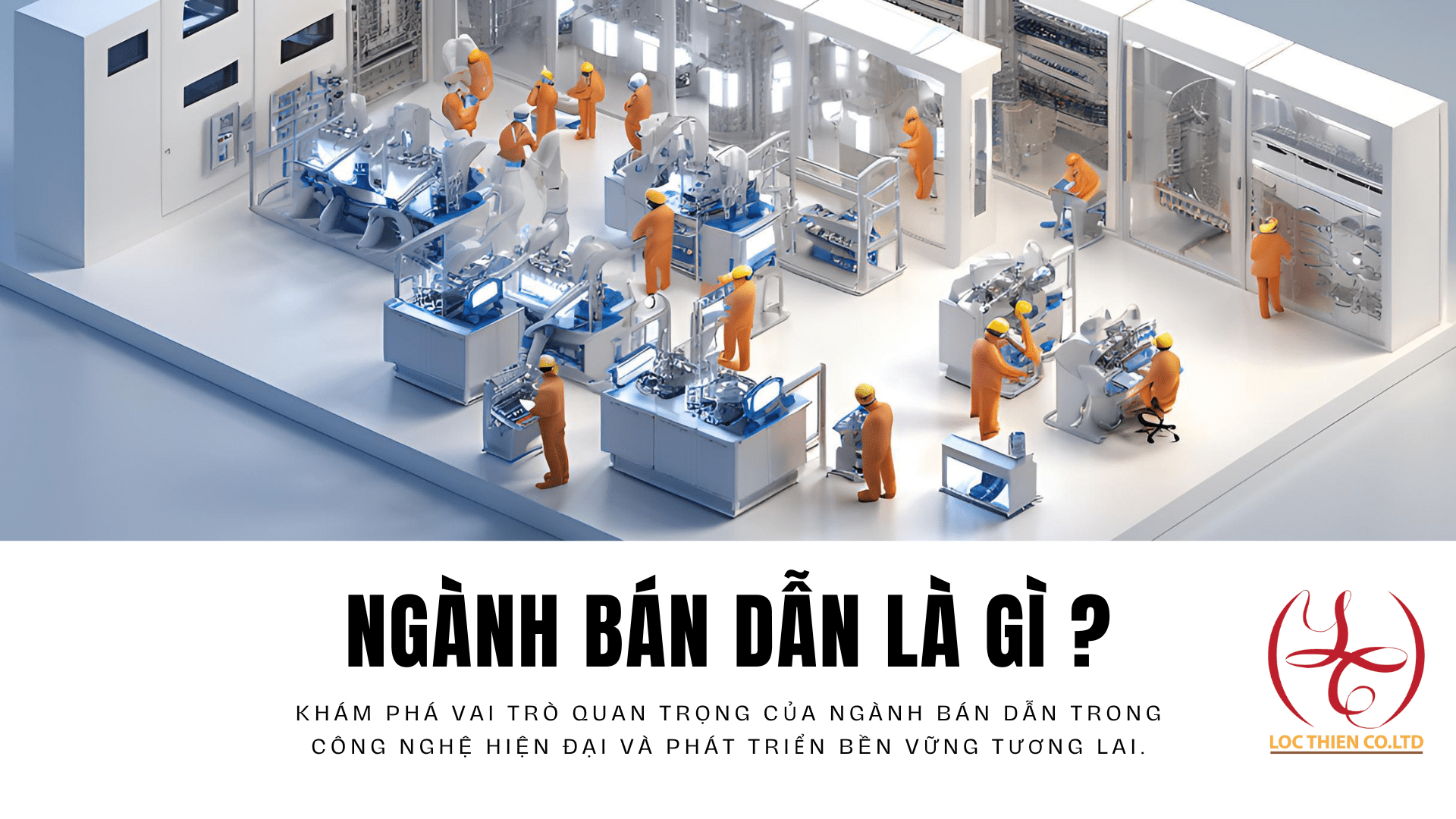
The semiconductor industry is an industrial sector involved in the research, design, production, and application of semiconductor materials, primarily used in the manufacturing of electronic devices. It is a crucial industry in the modern economy because its products play a central role in most modern technologies.
 What is the semiconductor industry?
The semiconductor industry focuses on researching, developing, and producing materials and devices that utilize the unique properties of semiconductors (such as silicon, gallium arsenide). Semiconductors have electrical conductivity between conductors (like metals) and insulators (like wood), allowing for flexible control of electric current.
Key products of the semiconductor industry
 Key products in the semiconductor industry
- Integrated Circuits (ICs).
- Transistors.
- Sensors and processors (CPU, GPU).
- LEDs, solar panels, and optoelectronic components.
Applications of the semiconductor industry
In industry:- Automation: Industrial robots, sensors in production lines.
- Industrial IoT: Sensors and connected devices for monitoring and managing production.
- Renewable energy: Solar panels, smart grid management systems, optimizing energy consumption.
- Information and communication technology: CPU, GPU chips in computers, phones; supporting 5G networks, data centers.
- Aerospace: GPS, radar, satellites, sensors in spacecraft and drones.
- Healthcare: MRI machines, CT scans, ultrasound, biosensors for health monitoring.
- Transportation and automotive: Electric vehicles (EVs), self-driving cars, radar, battery management, fast charging, smart sensors.
- Consumer electronics: TVs, phones, VR/AR glasses, gaming consoles.
- Smart homes: Security cameras, motion sensors, smart appliances like refrigerators, washing machines, air conditioners.
- Wearable devices: Health-tracking watches, biosensors.
- Entertainment devices: Smart speakers, music players, wireless headphones.
Role of the semiconductor industry
- Pillar of the digital era: The semiconductor industry is the foundation for AI, IoT, and blockchain, supporting digital transformation in various fields.
- Driving technological innovation: Semiconductor chips drive advancements in technologies like quantum computing and machine learning, improving products and productivity.
- Ensuring performance and energy efficiency: Modern chips reduce energy consumption, increasing accuracy and operational efficiency of devices.
- Supporting national strategies: The semiconductor industry plays a strategic role, ensuring competitive positioning and economic security for nations.
Current challenges in the semiconductor industry
The semiconductor industry is facing a severe chip shortage due to surging demand from AI, IoT, EV, and 5G technologies, along with supply chain disruptions post-pandemic. Additionally, the cost of building advanced manufacturing facilities (5nm, 3nm processes) and R&D has skyrocketed, requiring massive capital and skilled technical teams. Moreover, heavy reliance on international supply chains, especially from Taiwan (TSMC) and South Korea (Samsung), coupled with the monopoly of equipment by ASML, poses challenges for autonomy and supply chain stability.Future outlook for the semiconductor industry
The semiconductor industry is leading the way in developing new technologies:- AI chips: Applied in machine learning, natural language processing, and computer vision, enhancing data processing speed and efficiency.
- Quantum chips: Offering breakthrough potential in encryption and data optimization, opening vast opportunities for high-tech industries.
- IoT chips: Expected to grow by 15% annually, strongly supporting smart devices and Industry 4.0 systems.
- Domestic production: Countries like the US and EU are heavily investing in programs like the CHIPS Act to reduce reliance on Asia.
 Chart showing future trends in the semiconductor industry
Regarding sustainable development, the semiconductor industry is focusing on improving low-power chips, contributing to reduced electricity consumption in electric vehicles and renewable energy. Additionally, manufacturing facilities are being built to be environmentally friendly, reducing carbon emissions and managing waste effectively.
Conclusion
The semiconductor industry is not only the foundation of modern technology but also a critical factor for economic development and national security. Despite facing numerous challenges, the industry is being strongly driven by technological innovations and strategic investments. It will continue to be the center of global innovation for decades to come.
Loc Thien Chemicals Co., Ltd. proudly stands as a leading provider of industrial chemical products and solutions in Vietnam, supporting the electronics and semiconductor industries. With years of experience and a solid reputation, Loc Thien is committed to delivering high-quality products, abundant supply, and dedicated consulting services, meeting the needs of domestic and international customers. Contact us to join us on the path of sustainable development and technological innovation!
- 📞 Hotline: 0979 891 929
- 📩 Email: [email protected]
- 🌐 Website: hoachatlocthien.com
Frequently Asked Questions (FAQ)
- What is the semiconductor industry and why is it important?
The semiconductor industry produces electronic chips, serving as the "brain" of all electronic devices. It is crucial because it forms the foundation for the development of information technology and other industries.
- What is the chip manufacturing process?
The chip manufacturing process is highly complex, involving stages such as integrated circuit design, silicon wafer fabrication, photolithography, and packaging.
- What types of chips are there?
There are various types of chips, such as microprocessors, memory, sensors, each with its own function.
- What is the future of the semiconductor industry?
The future of the semiconductor industry is bright with the development of new technologies like 3D chips, artificial intelligence, and quantum computing.
- Vietnam and the semiconductor industry?
Vietnam has potential to develop the semiconductor industry thanks to abundant human resources and government support. However, challenges remain, such as a shortage of experts and outdated technology.