
What is a Semiconductor Substrate - The Key to Optimizing Performance

Tóm tắt nội dung
- What Is a Substrate?
- Common Types of Substrates Today
- Silicon (Si)
- Gallium Arsenide (GaAs)
- Silicon Carbide (SiC)
- Gallium Nitride (GaN)
- Oxide Substrates (ITO, MgO)
- The Role of Substrates
- Applications of Substrates in Semiconductors
- How to Choose the Right Substrate?
- Emerging Substrate Trends
- Conclusion
- FAQ: Common Questions About Semiconductor Substrates
- Can substrates be reused in semiconductor manufacturing?
- How to choose the right substrate for semiconductor devices?
- What factors affect substrate production costs?
- Which substrates are suitable for renewable energy applications?
- How is substrate manufacturing technology evolving?
- What’s the difference between single-crystal and polycrystalline substrates?
- What are common issues when using substrates?
In the modern technological world, the semiconductor industry serves as the heart of all electronic devices, from smartphones and computers to electric vehicles and renewable energy systems. One crucial yet often overlooked element in this field is the substrate – the fundamental foundation that shapes and optimizes the performance of semiconductor components. So, what is a substrate? What makes substrates an indispensable piece in the development of high-tech advancements? Let’s explore the role, applications, and common types of substrates in the semiconductor industry through this article.
What Is a Substrate?
A substrate (substrate) is a foundational material used as a base to support other material layers or devices. It serves as a mechanical framework or provides suitable physicochemical properties to support specific applications. In semiconductor technology, substrates typically act as the foundation for manufacturing thin films, sensors, microchips, or functional coatings.The importance of substrates:
- Influences the performance, size, and stability of devices.
- Affects electrical conductivity, thermal conductivity, and operational reliability.
- Enhances overall efficiency and system sustainability.

Common Types of Substrates Today
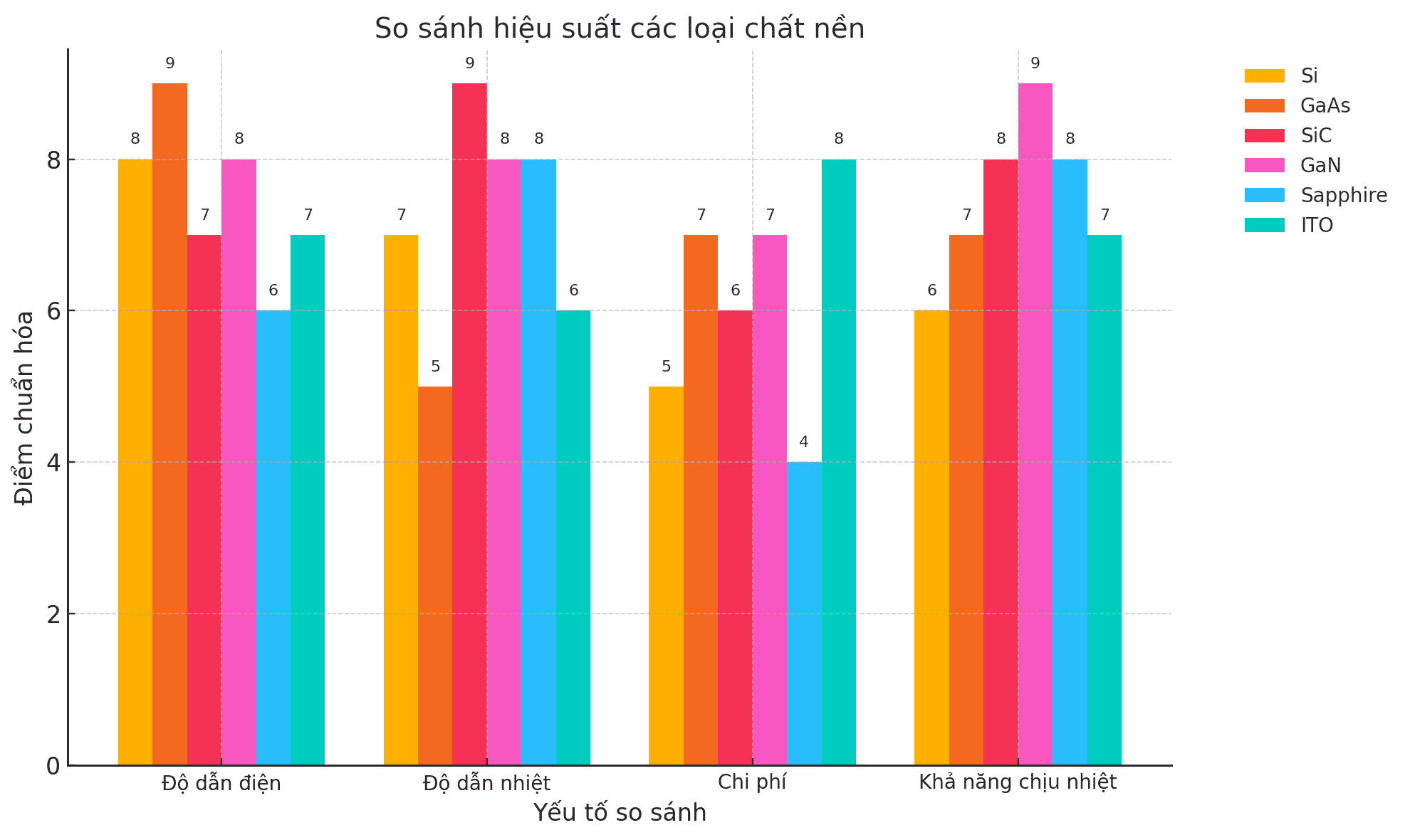
In the semiconductor industry, common substrate choices are based on factors such as electrical performance, insulation capability, thermal conductivity, and material compatibility.
| Substrate | Key Features | Primary Applications |
| Silicon (Si) | Cost-effective, widely available, easy to process. | Integrated circuits (ICs), CMOS sensors, processing chips. |
| Gallium Arsenide (GaAs) | High speed, excellent optical performance. | RF amplifiers, semiconductor lasers, solar cells. |
| Silicon Carbide (SiC) | Resistant to extreme heat and harsh environments, high power. | Power electronics, inverters, EV motors, renewable energy. |
| Gallium Nitride (GaN) | Operates efficiently at high frequencies and voltages. | Telecommunications (5G, satellites), white LEDs, signal amplifiers. |
| Sapphire | High hardness, scratch-resistant, excellent thermal conductivity. | LEDs, optical sensors, smartphone camera lenses. |
| Oxide Substrates (ITO, MgO) | Transparent, good thermal and electrical conductivity. | Touchscreens, solar cell electrodes, advanced optical devices. |
Silicon (Si)
- Silicon is the most widely used substrate today due to its excellent semiconductor properties, abundant supply, and low production costs. It is easy to process, structure, and offers high stability, making it ideal for mass production. However, silicon is limited in high-frequency or extreme-temperature applications, making it less competitive in some advanced fields.
- Applications: Silicon is used in integrated circuits (ICs), including CPUs and GPUs, CMOS (Complementary Metal-Oxide-Semiconductor) devices, and image sensors.
Gallium Arsenide (GaAs)
- Gallium Arsenide outperforms silicon in high-frequency and optical applications, excelling in solar energy devices. Its high electron mobility makes it ideal for high-frequency devices. However, high production costs and complex processing are significant drawbacks.
- Applications: GaAs is used in RF devices like signal amplifiers and radar, high-efficiency solar cells (in satellites), and semiconductor lasers and LEDs.
Silicon Carbide (SiC)
- Silicon Carbide is ideal for high-power applications and harsh environments, withstanding temperatures up to 1,200°C and offering superior mechanical strength. It provides higher energy conversion efficiency and reduces power losses compared to silicon. However, high production costs and limited supply are its main disadvantages.
- Applications: SiC is used in high-power electronics like inverters, EV controllers, and renewable energy systems.
Gallium Nitride (GaN)
- Gallium Nitride is a next-generation material that operates efficiently at higher voltages and frequencies, suitable for high-power and RF devices. With superior energy efficiency and compact size, GaN meets modern technological demands. However, costs remain higher than silicon, and mass production is still limited.
- Applications: GaN is used in high-frequency amplifiers, telecommunications (5G, satellites), white LEDs, and high-performance lighting.
READ MORE:
Sapphire
- Sapphire stands out for its extreme hardness, near-diamond scratch resistance, and excellent thermal conductivity. It is highly durable in harsh environments but brittle if mishandled and relatively expensive.
- Applications: Sapphire is used in LEDs, optical sensors, measurement device windows, and smartphone camera lenses.
Oxide Substrates (ITO, MgO)
- Oxide materials like ITO and MgO are transparent with good thermal and electrical conductivity, making them suitable for advanced optical applications. However, their lower mechanical strength makes them prone to damage under high stress.
- Applications: Oxide substrates are used in LCD/OLED displays, optical sensors, and solar cell electrodes.
The Role of Substrates
Substrates play a critical role in semiconductor manufacturing, providing both a stable mechanical foundation for upper material layers and directly influencing device performance. Additionally, substrates help manage heat efficiently, ensuring stable operation, and act as a bridge between different material layers for compatibility and durability.
Applications of Substrates in Semiconductors
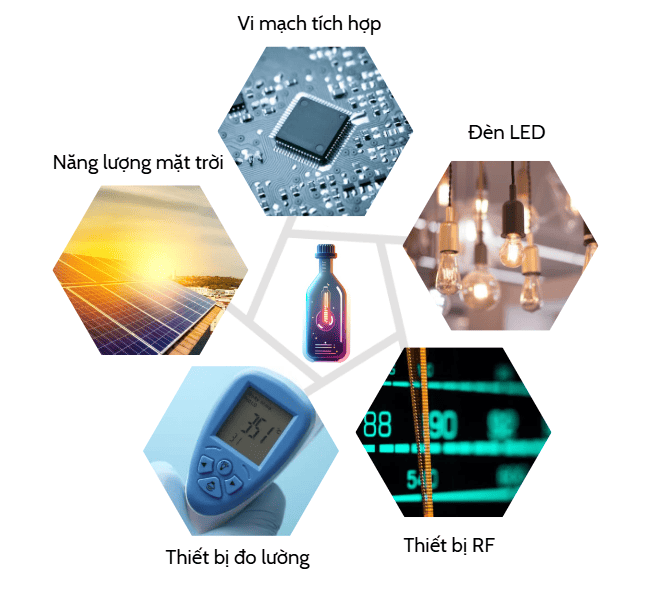
- Integrated Circuits (ICs): The foundation for CPUs, GPUs, and memory in computers, smartphones, and IoT devices.
- RF (Radio Frequency) Devices: Used in signal amplifiers, radar, antennas, 5G telecom, and satellites.
- LEDs and Optical Sensors: Applied in lighting, displays, and camera/measurement sensors.
- High-Power Electronics: Used in inverters, EV controllers, fast-charging systems, and renewable energy.
- Solar Energy: Manufactures high-efficiency solar cells for satellites and photovoltaic systems.
- Displays and Touchscreens: Used in LCDs, OLEDs, and touch sensors for phones, TVs, and tablets.
- Measurement and Scientific Devices: Used in optical windows, protective lenses, and sensors for harsh environments.
How to Choose the Right Substrate?
- Electronic Performance: Select substrates based on operating frequency and voltage requirements. GaAs and GaN suit high-frequency applications, while SiC is ideal for high-power and high-voltage devices.
- Thermal Resistance: For high-temperature environments, SiC and sapphire are the best choices due to their heat resistance and thermal management.
- Mechanical Durability: Applications requiring high durability in harsh conditions (e.g., satellites, military devices) should use sapphire for stability and longevity.
- Cost and Production: Silicon is cost-effective for mass production. For specialized applications, despite higher costs, GaN and SiC offer long-term economic benefits due to superior performance.
- Application Requirements: Sapphire and GaN are commonly used for LEDs and optical sensors, while GaAs and SiC are preferred in renewable energy and inverters.
- Material Compatibility: Choose substrates with high compatibility with upper material layers to ensure device performance and stability.
Considering all these factors, substrate selection should balance technical specifications, cost efficiency, and production goals.
Emerging Substrate Trends
- Next-Generation Substrates
- Graphene is highly regarded for its superior conductivity and ability to reduce chip size, enhancing performance. Meanwhile, synthetic diamond is emerging as an ideal substrate for high-power devices due to its exceptional thermal conductivity, suitable for extreme environments.
- Manufacturing Advancements
- Advanced epitaxy technology enables precise single-crystal layer deposition, improving surface quality and chip performance. Additionally, Silicon-on-Insulator (SOI) reduces current leakage and optimizes power efficiency, widely used in microprocessors and high-tech applications.
- Sustainability Focus
- Manufacturers prioritize eco-friendly materials and substrate optimization to reduce energy consumption. These innovations not only protect the environment but also create more energy-efficient and high-performance semiconductor devices.
Conclusion
Substrates are not just physical foundations but also key determinants of performance, durability, and compatibility in semiconductor devices across industries, from consumer electronics to advanced technology. This article has helped clarify what substrates are, covering their roles, applications, and selection criteria. With continuous technological advancements, understanding and choosing the right substrate optimizes costs and delivers superior performance for future semiconductor products. Loc Thien Chemicals Co., Ltd. proudly serves as a trusted partner in supplying high-quality substrates and industrial chemicals. We are committed to supporting businesses in every step, from production optimization to building a robust technological foundation.
- 📞 Hotline: 0979 891 929
- 📩 Email: [email protected]
- 🌐 Website: hoachatlocthien.com
Let Loc Thien deliver the best solutions for your sustainable growth!
You may also like: What Are Semiconductor Microchips?