
Discover What Superconductors Are - A Breakthrough in Future Technology

Tóm tắt nội dung
- What Are Superconductors?
- History and Discovery
- Characteristics and Properties
- Types of Superconductors
- Roles and Practical Applications
- Roles
- Applications
- Challenges and Future of Superconductors
- Conclusion
- FAQ – Frequently Asked Questions About Superconductors
- Can superconductors operate at room temperature?
- Can superconductors completely replace traditional conductors?
- How can superconductors be applied in daily life?
- How to maintain superconductor performance?
- Which countries lead superconductor research?
- Is superconductor technology environmentally friendly?
- Can I purchase superconductor-related products from Loc Thien?
Superconductors – one of the greatest discoveries of modern science – not only open new horizons in physics but also lay the foundation for breakthrough applications in medicine, energy, and technology. With perfect electrical conductivity and unique properties like the Meissner effect, superconductors have become a key solution to energy, transportation, and data storage challenges. So, what are superconductors? What makes them so powerful, and what does their future hold? Let’s explore this world of potential in the article below.
What Are Superconductors?
Superconductors are special materials that conduct electricity with zero resistance when cooled below a critical temperature (Tc). Superconductivity is a unique quantum phenomenon where electrons form Cooper pairs and move through the crystal lattice without scattering.

Key Features:
- Perfect electrical conductivity.
- Complete expulsion of magnetic fields (Meissner effect).
- Macroscopic quantum behavior.
History and Discovery
The phenomenon of superconductivity was first discovered in 1911 by Heike Kamerlingh Onnes when he observed mercury becoming superconducting at -269°C, marking a major milestone in modern physics.
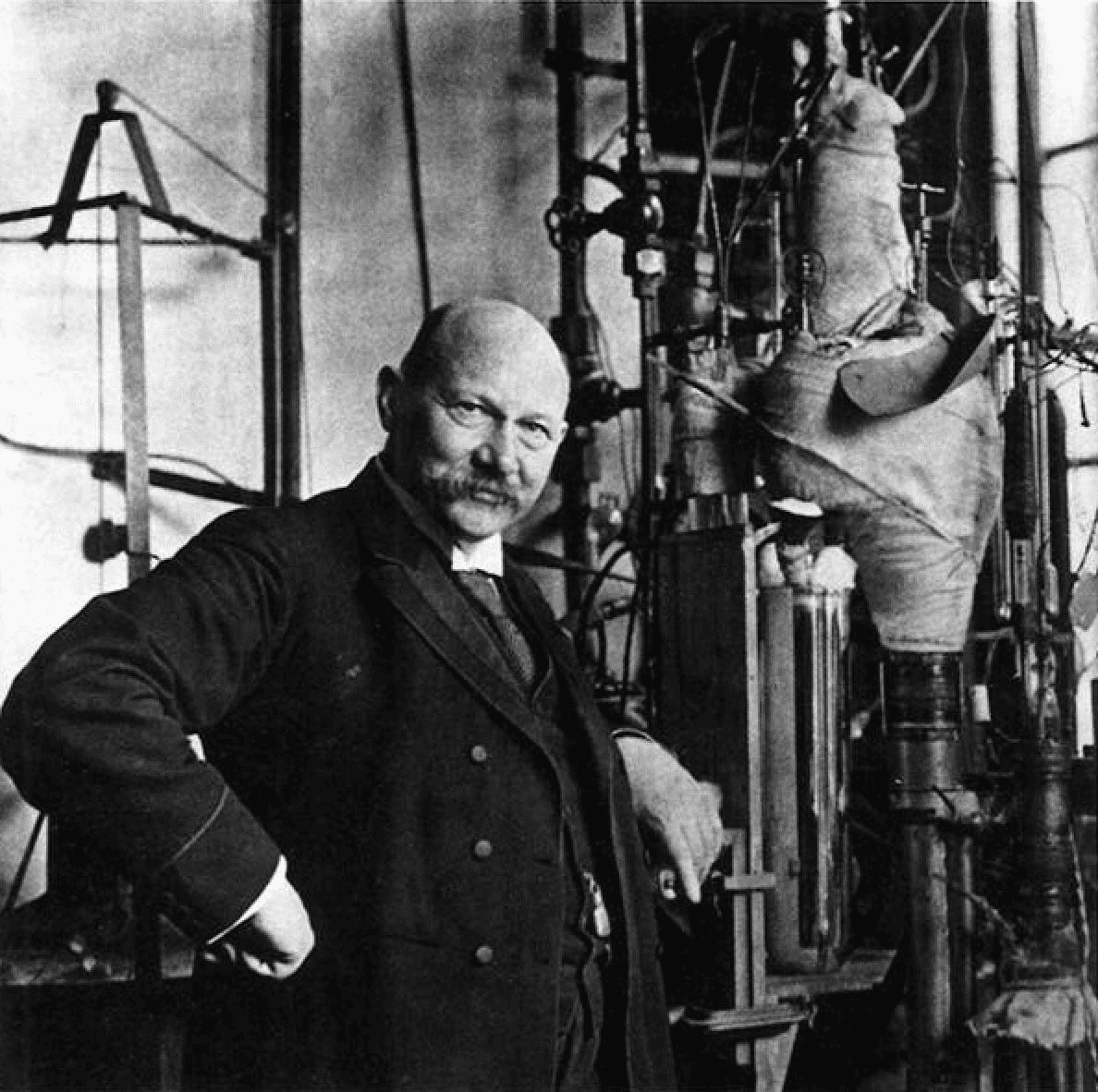
In 1933, Walter Meissner and Robert Ochsenfeld discovered the Meissner effect, showing superconductors completely expel magnetic fields. The BCS theory in 1957 by Bardeen, Cooper, and Schrieffer explained the microscopic mechanism of low-temperature superconductivity. In 1986, Bednorz and Müller discovered high-temperature superconductors (Tc ~35K), ushering in a new research era and earning them the Nobel Prize in Physics.
Today, critical temperatures of superconductors have reached ~250K under high pressure, unlocking superior applications in technology and daily life.
Characteristics and Properties
- Physical Properties:
- Perfect conductivity: Zero resistance below critical temperature, enabling perpetual current flow.
- Meissner effect: Complete magnetic field expulsion, enabling magnetic levitation.
- Phase transition: Sudden shift from normal to superconducting state at Tc.
- Quantization: Macroscopic quantum phenomena like flux quantization.
- Chemical Properties: Chemical composition and crystal structure determine Tc, with stronger lattice bonds enabling higher critical temperatures.
Types of Superconductors
| Type | Characteristics | Examples |
| Type I Superconductors | Exhibit complete Meissner effect, only in weak magnetic fields. | Mercury, aluminum. |
| Type II Superconductors | Partial Meissner effect, operate in strong magnetic fields. | Niobium, YBCO. |
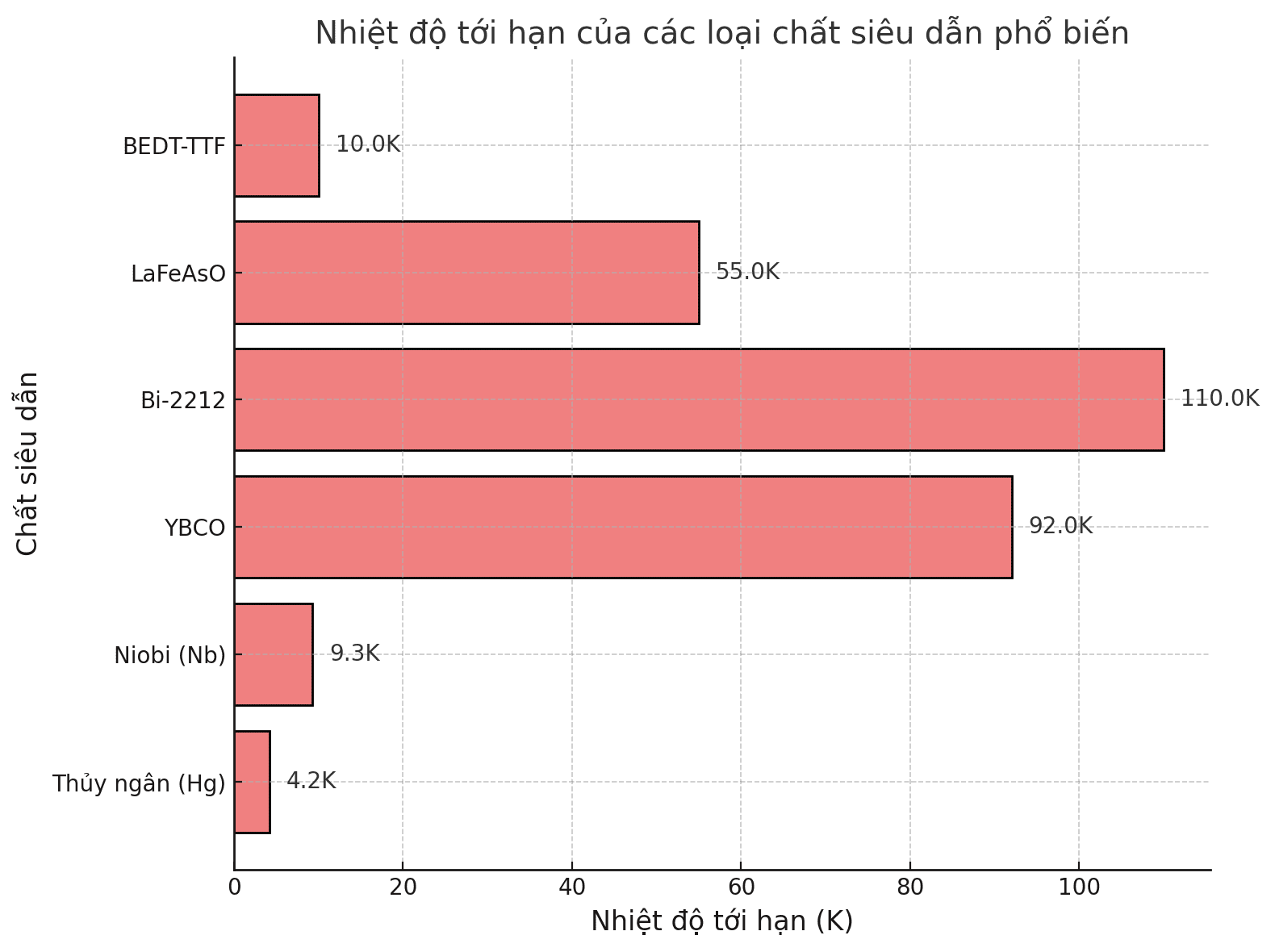
| Low-Temperature Superconductors | Critical temperature below 30K, follow BCS theory. | Niobium (Tc = 9.3K), mercury (Tc = 4.2K). |
| High-Temperature Superconductors | Critical temperature above 77K, mostly metal oxide ceramics. | YBa₂Cu₃O₇ (Tc = 92K). |
| Organic Superconductors | Low critical temperatures, typically a few K. | BEDT-TTF. |
See Also:
Low-Temperature Superconductors
- Mercury (Hg): The first superconductor discovered in 1911. Due to its very low Tc, it is mainly used in fundamental research.
- Niobium (Nb): One of the most common low-temperature superconductors, used in MRI magnets, particle accelerators, and SMES systems.
High-Temperature Superconductors
- YBCO (Yttrium Barium Copper Oxide): The most widely used high-temperature superconductor, applied in lossless power transmission, MRI magnets, and maglev trains.
- Bi-2212 (Bismuth Strontium Calcium Copper Oxide): A bismuth-based superconductor with higher stability, suitable for large-scale energy storage.
Iron-Based Superconductors
- LaFeAsO (Lanthanum Iron Arsenide Oxide): With complex crystal structures, it operates at higher temperatures and is being researched for high-power electrical devices.
Organic Superconductors
- BEDT-TTF (Bis-Ethylenedithio-Tetrathiafulvalene): The first organic superconductor, primarily used in fundamental quantum research.
Roles and Practical Applications
Roles
Superconductors play a vital role due to their zero resistance and Meissner effect, enabling energy-efficient power transmission, improved medical and industrial devices, and advancements in quantum computing, maglev trains, and radar systems.
Applications
In Power Systems: Superconductors enable lossless power transmission, minimizing energy waste in high-voltage systems.
In Medicine
- MRI Machines: Superconducting magnets generate strong, stable magnetic fields for precise imaging.
- SQUID Devices: Detect extremely weak magnetic fields for brain research and diagnostics.
In Transportation: Maglev trains use the Meissner effect to reduce friction, achieving speeds >600 km/h with high efficiency.
In Fundamental Science
- Particle Accelerators: Superconducting magnets guide particle beams for nuclear and cosmic research.
- Magnetic Sensors: Highly sensitive detectors for geology and astrophysics.
In Electronics
- Quantum Computers: Superconducting circuits enable fast, precise quantum computing.
- Radar & Telecommunications: High-speed signal processing for advanced radar and communication systems.
SEE ALSO: What are Semiconductor Components?
Challenges and Future of Superconductors
- Challenges: High production costs, complex processes, and mechanical limitations hinder commercialization. Cryogenic cooling systems also reduce economic viability.
- Future: Room-temperature superconductors could revolutionize energy, medicine, and transportation. Applications in quantum computing, radar, and large-scale energy storage are expected to expand.
Conclusion
From perfect conductivity and the Meissner effect to applications in power transmission, MRI machines, and quantum computing, what are superconductors is a question of growing interest. Superconductors are shaping the future of industries by revolutionizing modern technology. Despite challenges in cost and technology, the development of room-temperature superconductors promises groundbreaking advancements with superior potential in science and daily life.
At Loc Thien, we are committed to providing advanced industrial chemical solutions, partnering with businesses in innovation and sustainability. Contact us today to explore our best products and services!
- 📞 Hotline: 0979 891 929
- 📩 Email: [email protected]
- 🌐 Website: hoachatlocthien.com