
High-Quality Etching Chemical Supplier for the Semiconductor...
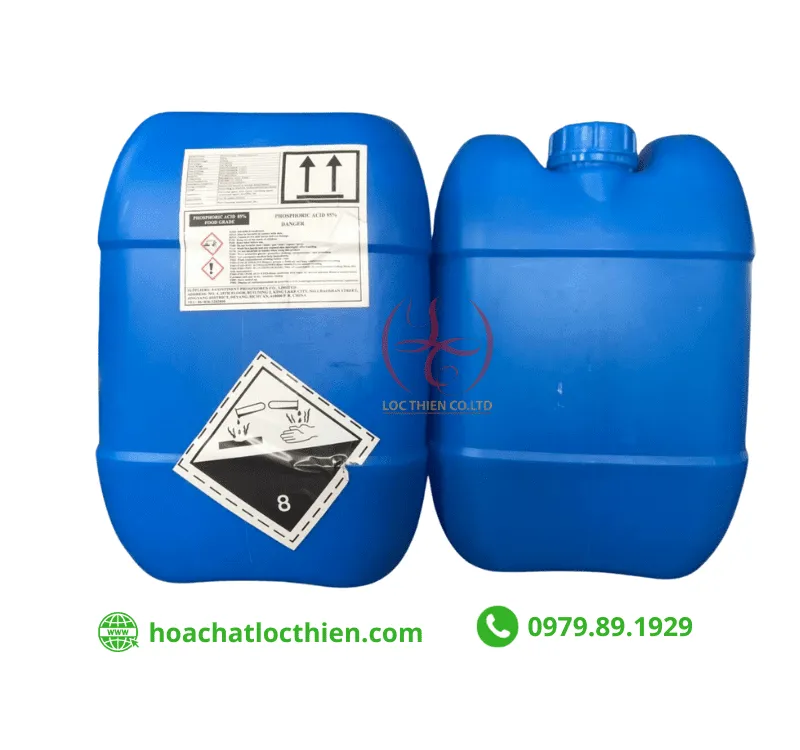
High-Quality Etching Chemical Supplier for the Semiconductor Industry
Etching chemicals are an essential part of the microchip and electronic component manufacturing process, precisely removing unnecessary material layers from the surface of semiconductor wafers. With stringent requirements for purity and precision in production, selecting a certified chemical supplier is a decisive factor in product performance and quality.
Loc Thien is proud to present its catalog etching chemicals as well as semiconductor chemicals achieving international certifications in the semiconductor industry such as ISO 9001, ISO 14001, ensuring maximum quality, safety, and stability for the company's production processes.
📞 Hotline: 0979 891 929 | 📩 Email: [email protected] |🌐 Website hoachatlocthien.com
Common Etching Chemicals in the Semiconductor Industry
|
Chemical name |
Chemical formula |
Applications |
| Hydrofluoric Acid (HF) | HF | Etching SiO₂ in oxide layers, wafer surface treatment in wet etching processes. |
| Buffered Oxide Etch (BOE) | Hydrofluoric acid + Ammonium fluoride | Adjust the SiO₂ etching speed precisely to ensure a uniform etched surface. |
| Plasma Gas (Cl₂, SF₆, CF₄) | Cl₂, SF₆, CF₄ | Assist in the dry etching process, creating micro-details in microchips. |
| Nitrogen Trifluoride (NF₃) | NF₃ | Clean silicon nitride and silicon dioxide in a plasma environment. |
| Sulfur Hexafluoride (SF₆) | SF₆ | Silicon etching is effective in MEMS and microelectronics manufacturing. |
| Phosphoric Acid (H₃PO₄) | H3PO4 | Silicon nitride etching in DRAM and CMOS manufacturing. |
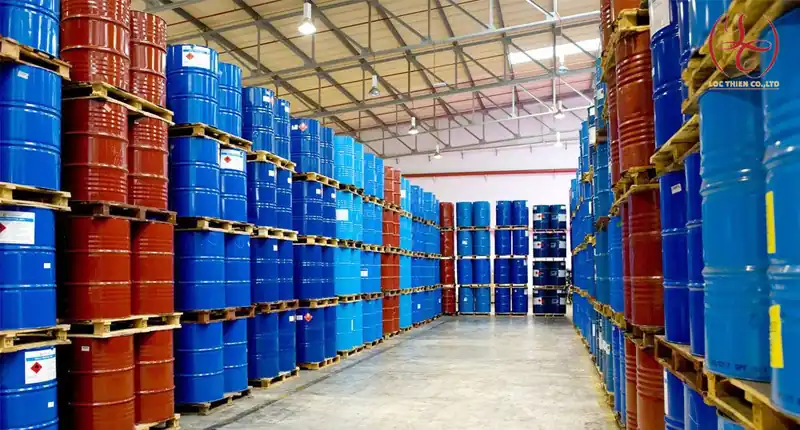
Classification of Etching Chemicals in the Semiconductor Industry
The etching process in semiconductor manufacturing is divided into two main types based on the method used: wet etching chemicals and dry etching chemical. Each type has its own characteristics, applications, and advantages suitable for specific stages in the fabrication of microchips and electronic components.
Wet Etching Chemicals
Characteristics:
- Use Liquid chemical solution to dissolve and remove unnecessary material on the wafer surface.
- Suitable for demanding processes Engrave evenly and quickly, especially on large surfaces.
- Efficiency in processing material layers such as silicon dioxide, Silicon nitride (Si₃N₄) and thin metal.
Examples and Applications:
- Hydrofluoric Acid
- Applications: Engrave layers Silicon dioxide in the semiconductor wafer fabrication process.
- Pros: Fast and efficient oxide dissolution.
- Note: As a strong corrosive chemical, full safety protection equipment is required.
- Buffered Oxide Etch (BOE):
- Ingredients: A mixture of HF and Ammonium Fluoride (NH₄F).
- Applications: Control the etching rate more accurately when removing the oxide layer (SiO₂) without affecting the wafer.
- Pros: Ensure the engraved surface is smooth and uniform.
- Phosphoric Acid (H₃PO₄):
- Applications: Engrave Silicon nitride (Si₃N₄) in the production process DRAM and CMOS.
- Pros: Excellent control of the etching process with higher safety compared to other strong chemicals.
2. Dry Etching Chemicals
Characteristics:
- Use plasma gas or ionized reaction in a vacuum environment to precisely remove material.
- Suitable for required processes high accuracy and extremely fine detail, such as manufacturing nanometer-sized microchips.
- Can be engraved silicon and oxide classes, nitride classes on wafer.
Examples and Applications:
- Chlorine (Cl₂):
- Applications: Carve silicon and metal compounds in a plasma environment.
- Pros: Create micro-details with high precision.
- Note: Cl₂ gas is corrosive and toxic, and requires strict control during use.
- Sulfur Hexafluoride (SF₆):
- Applications: Carve silicon in the manufacturing of devices MEMS (Micro-Electro-Mechanical Systems) and electronic sensors.
- Pros: High efficiency in silicon etching, especially in processes requiring micro-details.
- Carbon Tetrafluoride (CF₄):
- Applications: Engrave layers silicon dioxide and Silicon nitride (Si₃N₄) in a plasma environment.
- Pros: High stability, suitable for large-area dry etching applications.
Comparison Between Wet Etching and Dry Etching
| Criteria | Wet Engraving | Dry Engraving |
|---|---|---|
| Method | Use liquid chemicals to dissolve the material. | Use plasma or ions in a vacuum environment. |
| Accuracy | Lower, harder to control small details. | Hi, can you create nanometer-scale details?. |
| Engraving speed | Faster over large areas. | Slower, but more accurate. |
| Applications | Etch oxide (SiO₂), silicon nitride (Si₃N₄). | Silicon etching and other materials in MEMS. |
| Safety | Be careful with strong corrosive chemicals like HF. | Control of toxic plasma gases such as Cl₂, SF₆. |
Detailed Information About Each Chemical
- Hydrofluoric Acid (HF)
- Salient Features: Strong etchant, rapidly removes SiO₂ layers during wet etching.
- Applications: HF is used in wafer surface treatment steps, especially in the efficient oxide removal stage.
- Safety notice: HF is a strong corrosive substance, so adequate protective equipment must be used.
- Buffered Oxide Etch (BOE)
- Salient Features: BOE is a compound of HF and ammonium fluoride, which helps to precisely and uniformly control the etching rate.
- Applications: Used to etch oxide layers (SiO₂) in microelectronic circuits without damaging the wafer.
- Plasma Gas (Cl₂, SF₆, CF₄)
- Salient Features: Create a plasma environment during dry etching to ensure high precision for micro-scale features.
- Applications: Often used in the manufacturing of electronic components requiring extremely fine details and high precision.
- Nitrogen Trifluoride (NF₃)
- Salient Features: Effectively clean silicon nitride and silicon dioxide layers while minimizing waste in the manufacturing process.
- Applications: Used in plasma systems, helps optimize production processes and ensure efficiency.
- Sulfur Hexafluoride (SF₆)
- Salient Features: Effective silicon etchant, suitable for applications in MEMS and micro-electromechanical devices manufacturing.
- Applications: Widely applied in the production of sensors and semiconductor components requiring extremely high precision.
- Phosphoric Acid (H₃PO₄)
- Salient Features: Allows for good control of the silicon nitride etching process, ensuring safety and efficiency.
- Applications: Suitable for the production of DRAM, CMOS, and complex semiconductor components.
Advantages of Choosing Loc Thien As a Supplier
- International quality: The product has obtained reputable certifications such as:
- ISO 9001 Quality Management Standard.
- ISO 14001 Environmental management standards.
- Zero Discharge of Hazardous Chemicals Meet the requirements for safe chemical management and environmental protection.
- Diverse product categories Suitable for multiple stages in the semiconductor manufacturing process.
- Advanced technical support Our experienced technical team is ready to advise and accompany customers.
- Stable supply: Warehouse system spread across provinces and cities such as Ho Chi Minh City, Binh Duong, Dong Nai, Da Nang, Can Tho, Bac Giang, Bac Ninh, Hung Yen, and Thai Nguyen, with standard storage conditions, ensuring chemicals remain stable, safe, and promptly meet all customer requirements.

In addition to Phosphoric Acid, Loc Thien also supplies other types of etching chemicals such as: Hydrofluoric Acid (HF), Buffered Oxide Etch (BOE), Sulfur Hexafluoride (SF₆), and many other specialized product lines. We are ready to supply chemicals according to customers' specific requirements, with abundant stock and flexible policies.
- 📞 Hotline: 0979 891 929
- 📩 Email: [email protected]
- 🌐 Website hoachatlocthien.com
Frequently Asked Questions (FAQ) About Etching Chemicals in the Semiconductor Industry
How do wet etching and dry etching chemicals differ?
- Wet engraving Use a liquid chemical solution to remove unwanted material. This method is effective over large areas and suitable for etching layers. silicon dioxide, silicon nitride (Si₃N₄). For example: Hydrofluoric Acid (HF) and Buffered Oxide Etch (BOE).
- Dry carving Using plasma or ionized reactions in a vacuum environment, micro-scale parts are created with high precision. This method is commonly used for etching silicon in the microelectromechanical systems (MEMS) process. For example: Sulfur Hexafluoride (SF₆) and Chlorine (Cl₂).
2. What etching chemicals are commonly used in microchip manufacturing?
Common etching chemicals include:
- Hydrofluoric Acid Engrave silicon dioxide on the wafer surface.
- Buffered Oxide Etch (BOE): Laser etching with precise engraving speed and smooth surfaces.
- Plasma Gases (Cl₂, SF₆, CF₄): Support for dry etching in a vacuum environment with extremely fine details.
- Phosphoric Acid (H₃PO₄): Silicon nitride etching in manufacturing DRAM and CMOS.
How to ensure safety when using etching chemicals?
- Wet etching chemicals Use full protective equipment such as safety goggles, chemical-resistant gloves, and protective clothing when handling substances like HF and BOE.
- Dry etching chemical Ensure the process is used in a closed system, controlling toxic gases such as Cl₂ and SF₆ with proper ventilation.
- Always store chemicals in a cool, dry place, away from flammable materials and heat sources.
4. Why are ISO 9001 and ISO 14001 certifications important in the semiconductor industry?
- ISO 9001 Certification of the quality management system, ensuring that Loc Thien's engraved chemicals meet the technical and quality requirements for production.
- ISO 14001 Environmental management standards, ensuring environmentally friendly chemical production and supply processes, minimizing pollution risks.
These certifications affirm International quality and Safety of the product, in line with the strict standards of the semiconductor industry.
What solutions does Loc Thien provide for businesses in the semiconductor industry?
Loc Thien offers:
- Diverse Etching Chemicals As HF, BOE, SF₆, NF₃, and H₃PO₄ suitable for each stage of microchip and semiconductor component production.
- International certificate As ISO 9001, ISO 14001.
- Advanced technical support Consulting on solutions for optimizing engraving processes and ensuring safety when using chemicals.
- Stable supply: Extensive warehousing system, quickly meeting the needs of customers nationwide.
6. What applications are suitable for Loc Thien's etching chemicals?
Loc Thien etching chemicals are widely used in:
- Semiconductor microchip manufacturing Etch SiO₂, silicon nitride, and metal layers.
- MEMS Manufacturing (Micro-Electro-Mechanical Systems): Create ultra-fine and highly accurate details.
- DRAM and CMOS Manufacturing Using chemicals like Phosphoric Acid to etch silicon nitride.
- Clean the reaction chamber: Use Nitrogen Trifluoride (NF₃) to remove impurities in the plasma system.
Contact Information
📞 Hotline: 0979 891 929
📩 Email: [email protected]
🌐 Website hoachatlocthien.com
Loc Thien – High-quality etching chemical solutions, meeting all stringent demands of the semiconductor industry!