Electronics & Semiconductor Chemicals | Loc Thien

Electronics & Semiconductor Chemicals: The Foundation for High-Tech Manufacturing
The semiconductor industry is the backbone of modern technology, responsible for producing core components such as integrated circuits (ICs), sensors, and electronic devices. With stringent requirements for precision, cleanliness, and quality, semiconductor chemicals have become indispensable, playing a decisive role in every stage of production, from cleaning, etching, and surface treatment to protection and waste management. Semiconductor chemicals are specialized compounds with extremely high purity, designed to meet rigorous standards, ensuring no contamination and maintaining optimal quality for manufacturing materials.Classification of Electronics & Semiconductor Chemicals
- Cleaning
- Hydrochloric Acid (HCl): Used to remove unwanted oxide layers on silicon surfaces and clean impurities during material preparation. Purity typically exceeds 99.9% to avoid contamination.
- Hydrogen Peroxide (H2O2): A strong oxidizing agent used to clean silicon and metals, ensuring complete removal of residues or oxides from previous processes.
- Etching
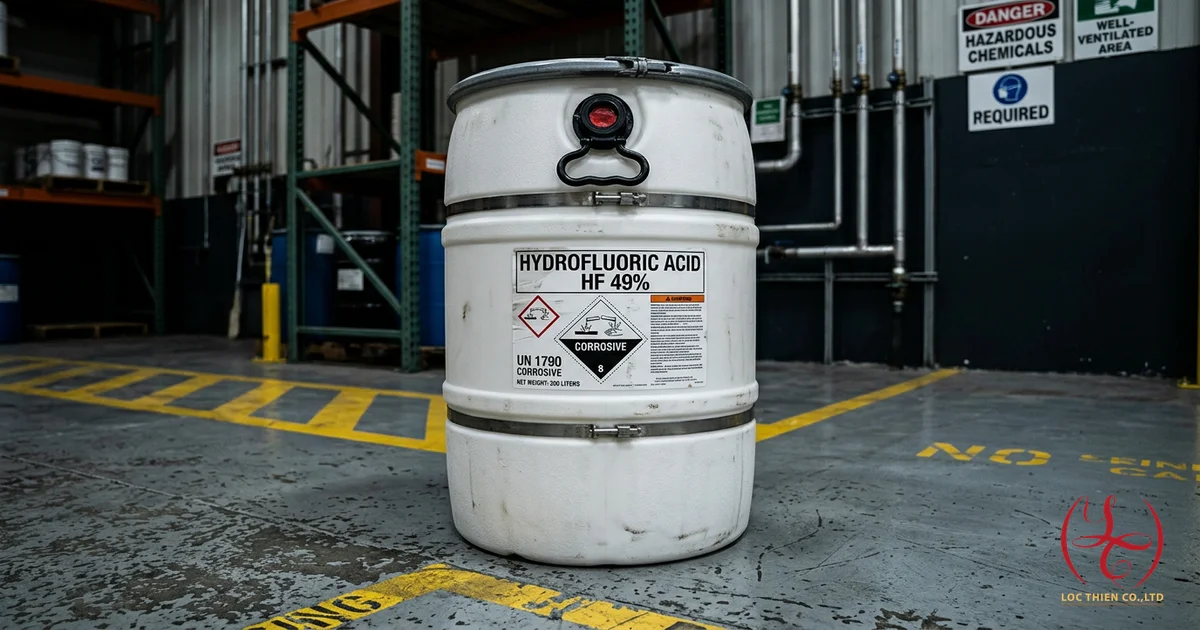
- Hydrofluoric Acid (HF): The primary chemical used to etch silicon oxide (SiO₂), enabling the creation of precise and intricate details in integrated circuit (IC) manufacturing.
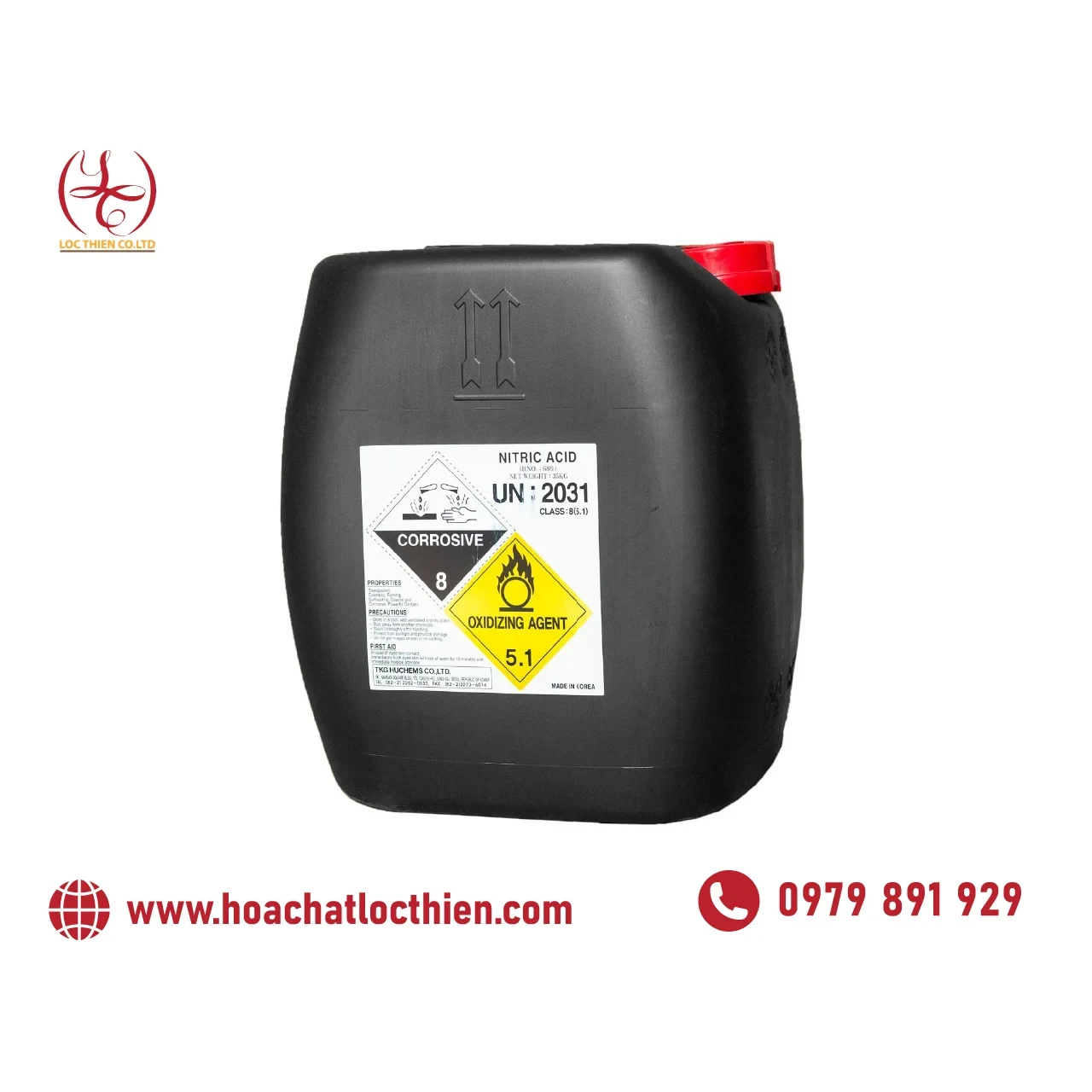
- Nitric Acid (HNO₃): Combined with HF to smooth and even out silicon surfaces, ensuring high-quality devices.
- Lithography
- Photoresist: Used in the process of creating ultra-fine details on silicon surfaces by shaping and developing detailed images through light exposure.
- Developer Solution: Helps reveal detailed images after light exposure.
- Deposition
- Chemical Vapor Deposition (CVD) Precursors: Chemicals such as silane (SiH₄) or NH₃ are used to create thin films like oxide or nitride on silicon wafer surfaces.
- Physical Vapor Deposition (PVD): Uses chemical gases to deposit metal or compound layers on silicon surfaces.
- Doping
- Boron Tribromide (BBr₃) and Phosphine (PH₃): These doping agents are used to introduce dopant elements (boron or phosphorus) into silicon, creating desired electronic properties.
- Ultra-Pure Water & Gases
- Deionized Water (DI Water): Used to clean wafers, removing residues and excess chemicals, ensuring surfaces meet the highest standards.
- Ultra-Pure Gases: Nitrogen, Oxygen, and Hydrogen are used in etching, deposition, and wafer protection, maintaining a clean, impurity-free processing environment.
- Chemical Mechanical Polishing (CMP)
- Slurries: Used in wafer surface polishing to ensure flatness and uniformity.
- Cooling and Lubricating Chemicals: Support the polishing process, ensuring optimal polishing performance.
- Packaging
- Epoxy Resins: Used to encapsulate and protect chips against environmental factors like moisture and dust.
- Solder Paste: Used to connect electronic components to circuit boards, ensuring good electrical conductivity.
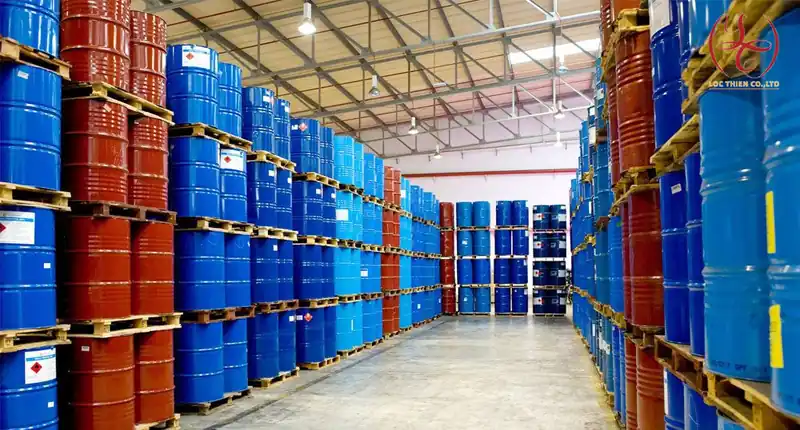 Electronics & Semiconductor Chemicals
Specific Applications of Electronics & Semiconductor Chemicals
- Silicon Wafer Production:
- Chemicals like HCl and HF are used to clean and etch silicon, ensuring wafer surfaces are flawless before chip fabrication begins.
- Etching Details on Silicon:
- The etching process requires strong chemicals like HF to create fine details on silicon surfaces, a crucial step in producing ultra-small microchips.
- Removing Oxides and Metal Ions
- Specialized chemicals like hydrofluoric acid (HF), nitric acid (HNO3), etc., are used to remove unwanted natural silicon oxide layers and residual metal ions. This prevents interference factors, improving chip quality and performance.
- Enhancing Thin Film Adhesion
- Chemical treatment creates surfaces with ideal cleanliness and physicochemical properties, ensuring subsequent coating layers, such as oxide or metal, bond better, enhancing product efficiency and stability.
Specific Applications of Electronics & Semiconductor ChemicalsRequirements for Electronics & Semiconductor Chemicals
- High Purity
- Chemicals must achieve 99.9999% (6N) purity or higher.
- Metal and organic impurity concentrations must be extremely low (ppt or ppb), ensuring no interference with semiconductor manufacturing processes.
- Compliance with International Standards
- SEMI Standards: Chemical standards for the semiconductor industry (SEMI C1-C93).
- ISO 14644: Ensures compatibility with cleanrooms.
- MSDS, RoHS, REACH: Ensures safety, environmental friendliness, and control of hazardous chemicals.
- Strict Quality Control
- Testing for purity, metal impurities (via ICP-MS), and organic contamination levels (via TOC).
- Rigorous batch testing before production use.
- Specialized Packaging and Safe Storage
- Packaging must be airtight, contamination-resistant, and made from non-reactive materials (e.g., fluoropolymer).
- Must meet UN Certified Packaging standards to ensure safety during storage and transportation.
- Traceability and Reputable Suppliers
- Chemicals and suppliers must have clear traceability systems (RFID or barcode).
- Suppliers must hold ISO 9001, ISO 14001 certifications, and meet SEMI requirements.
Why Choose Loc Thien Investment Development Co., Ltd. as Your Chemical Supplier?
Loc Thien proudly provides a wide range of high-quality chemical products, meeting the needs of various industries, especially semiconductors, surface treatment, and high-tech manufacturing. Products offered by Loc Thien Co., Ltd. include:- Sulfuric Acid (H₂SO₄): Used in cleaning and etching silicon wafer surfaces.
- Hydrochloric Acid (HCl): Used in surface cleaning and impurity removal during semiconductor manufacturing.
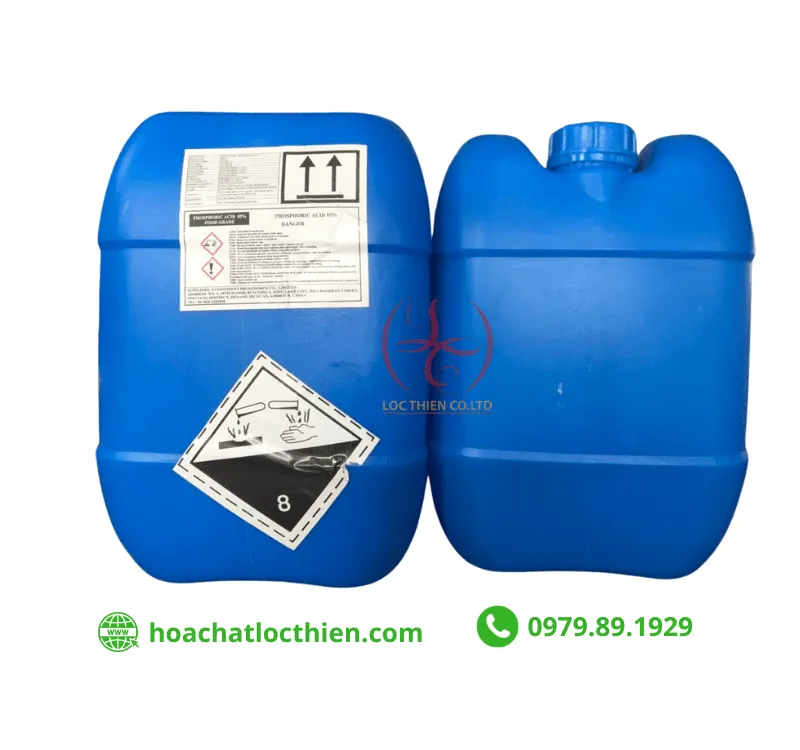
- Phosphoric Acid (H₃PO₄): Used in etching and surface cleaning in microchip production.
- Nitric Acid (HNO3): Used in oxidation and wafer surface cleaning.
- Liquid Caustic Soda (NaOH): Used for pH adjustment and surface cleaning in manufacturing processes.
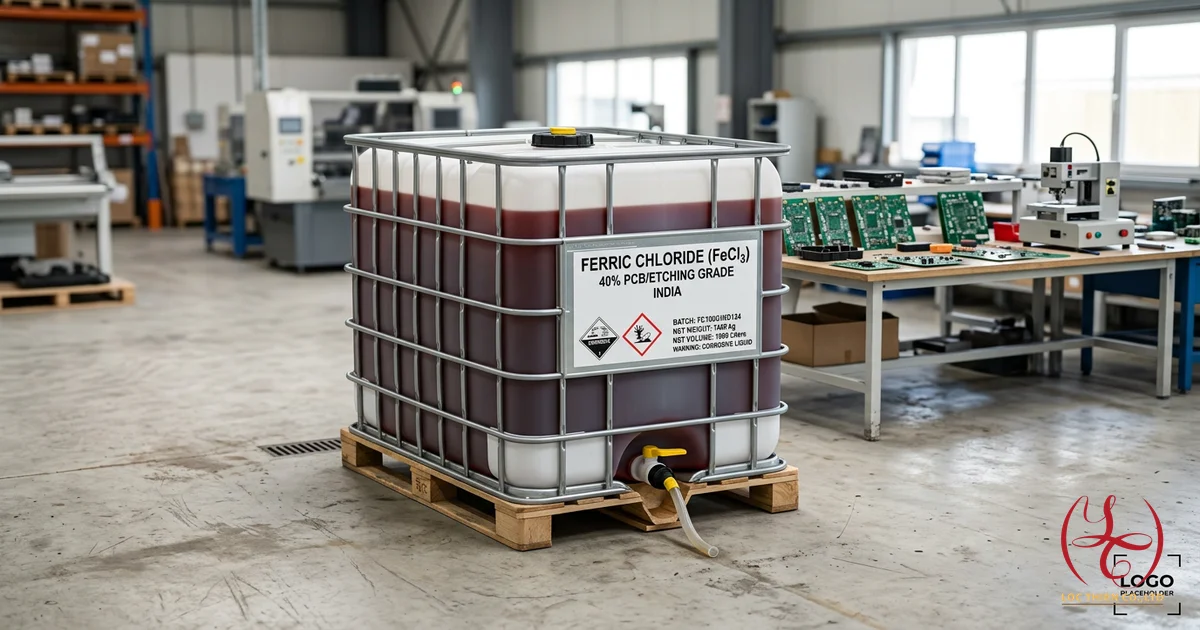
- Ferric Chloride (FeCl3): Used in printed circuit etching and metal surface treatment.
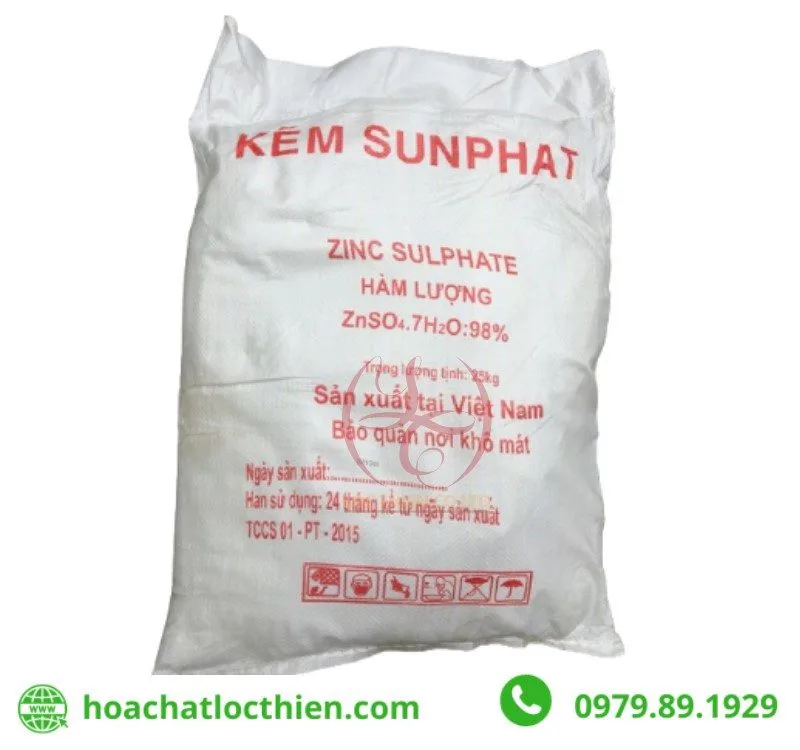
- Zinc Sulfate (ZnSO₄): Can be used in some plating and surface treatment processes.
- Calcium Hydroxide (Ca(OH)₂): Used in water treatment and pH adjustment in certain manufacturing processes.
- Top Quality: Products meet international standards with full MSDS, ensuring safety and maximum efficiency.
- Dedicated Support: Our team of experts is always ready to advise and accompany customers from product selection to usage.
- Transparent Return Policy: Easy returns within 7 days if products do not meet requirements.
- Stable Supply: Always ready to fulfill and produce large orders.
- Extensive Warehouse System: A network of 6 warehouses in Ba Ria – Vung Tau, Dong Nai, Binh Duong, Da Nang, Can Tho and Bac Ninh, supporting nationwide orders.

Semiconductor chemicals are indispensable for the sustainable development of the high-tech industry. With experience and reputation, Loc Thien is committed to providing superior products and services, accompanying businesses on their journey to conquer technological peaks. Contact us now for consultation and the best chemical solutions!
- 📞 Hotline:0979 891 929
- 📩 Email:[email protected]
- 🌐 Website:hoachatlocthien.com
Electronics Chemicals — Classification & Applications
Beyond semiconductors, electronics chemicals serve a wide range of PCB manufacturing, SMT assembly, electroplating, and component surface finishing processes. In key industrial parks such as Bac Ninh, Thai Nguyen, and Ho Chi Minh City — where Samsung, Foxconn, Goertek, Canon, and Amkor are located — demand for technically compliant electronics chemicals is growing rapidly. Learn more about industrial electronics chemicals to get a comprehensive overview.
PCB Manufacturing Chemicals
TL;DR: PCB manufacturing requires chemicals for 4 main stages: copper surface cleaning, circuit etching, through-hole plating, and surface finishing. Loc Thien supplies grades from Technical to ACS Reagent for each step.
- Copper Surface Cleaning: H₂SO₄, HCl, IPA, Acetone — Technical Grade or ACS Reagent Grade — removes grease and oxide layers before etching.
- PCB Etching: FeCl₃ 40% PCB Etching Grade — precision circuit etching (Loc Thien), CuCl₂. Reference: Loc Thien's FeCl₃ reaches 38.02%, heavy metal impurities (Pb/Cd/As/Hg) below detection threshold (COA 24/02/2026, inspectors Nguyen Cam Thuy — Vo Thi Nhu Hoa). Batch-specific COA provided per order.
- Through-hole Plating: CuSO₄, H₂SO₄ — creates conductive paths between PCB layers.
- Surface Finishing: Chemicals for HASL (Hot Air Solder Leveling) and ENIG (Electroless Nickel Immersion Gold) processes — protects copper pads, enhances solderability.
SMT Assembly Chemicals
TL;DR: Surface-mount technology (SMT) requires chemicals for stencil cleaning, flux removal after soldering, and adhesive for component retention. Surface cleanliness directly affects solder defect rates and joint reliability.
- Stencil and Screen Cleaning: IPA, Acetone, specialized solvent blends — removes solder paste residue, maintains print accuracy.
- Post-reflow and Wave Solder Flux Removal: Defluxer, IPA, aqueous cleaners — ensures PCBA surfaces are free of ion residues that cause electrical leakage.
- SMT Adhesive (Red Glue): Secures components on PCB before reflow oven, especially critical in double-sided reflow processes.
SMT production environments require Cleanroom facilities meeting ISO 14644 standards to control particulate contamination, ensuring solder joint quality and reducing defect rates in mass production.
Electroplating Chemicals
TL;DR: Electroplating deposits metal coatings on components and circuit boards, improving conductivity, corrosion resistance, and mechanical durability. Pre-treatment chemicals and plating solutions are critical to coating quality.
- Copper (Cu), Nickel (Ni), Gold (Au), Tin (Sn) Plating — for components and circuit boards, ensuring conductivity and solderability.
- Surface Pre-treatment Chemicals: H₂SO₄, HCl, NaOH — degreasing and surface activation before plating.
- ZnSO₄ — zinc plating protects connectors, screws, and hardware from corrosion.
Post-Assembly Finishing & Protection
TL;DR: After assembly, PCBA requires protection from moisture, dust, and chemicals in harsh operating environments. Conformal coating and potting/encapsulation are two standard solutions.
- Conformal Coating: Protective coating for PCBA against moisture, chemicals, and dust — used in industrial equipment, automotive, and telecommunications.
- Potting/Encapsulation Compounds: Encapsulates components in vibration, high-temperature, and corrosive chemical environments.
PCB Manufacturing Process & The Role of Chemicals
TL;DR: PCB manufacturing involves 6 main steps: Cleaning → Etching → Plating → Stripping → Surface Finish → Solder Mask. Each step requires specialized chemicals with the appropriate grade. Distinguish between semiconductor and electronics chemicals to understand the technical differences.
- Cleaning: Removes grease and oxides from copper laminate — H₂SO₄, HCl, IPA — Technical Grade. Surface cleanliness directly affects photoresist adhesion and etching quality.
- Etching: Removes excess copper, creating circuit traces — FeCl₃ 40% PCB Etching Grade (Loc Thien), CuCl₂. Etch rate and solution temperature control determine trace accuracy.
- Plating: Through-hole copper plating, enhancing interlayer conductivity — CuSO₄, H₂SO₄ — ACS Reagent Grade with impurity control at ppm level, meeting IPC-6012F standards.
- Stripping: Removes photoresist after etching — NaOH, solvent strippers — requires pH and concentration control to avoid affecting copper traces.
- Surface Finish: Protects copper pads — chemicals for ENIG (Electroless Nickel Immersion Gold), HASL (Hot Air Solder Leveling), OSP processes — ensuring solderability and oxidation resistance.
- Solder Mask: Protects copper circuits from oxidation and prevents short circuits — Epoxy, UV-curable resins — thickness and adhesion controlled per IPC-SM-840.
Loc Thien supplies chemicals for the entire PCB process, with a 6-warehouse system in Ba Ria – Vung Tau, Dong Nai, Binh Duong, Da Nang, Can Tho and Bac Ninh. Expected delivery: within 4 hours in inner Ho Chi Minh City; 24–48 hours to industrial parks in Southern and Mekong Delta regions; 2–3 days to Northern and Central Vietnam. Call hotline 0979 891 929 for details on the delivery process. Specialized tanker trucks 5–30 tons (UN Certified) for bulk transport. Every batch of chemicals ships with COA and MSDS; FeCl₂ additionally has a ZDHC MRSL v3.1 test report (Smart testing, 5 substance groups) from TUV Rheinland Vietnam (Level 1 CSR #248162921-02 & Analytical Test Report #248162921-02a).
Technical Standards for Electronics Chemicals
Electronics and semiconductor chemicals operate under two distinct standard systems — they cannot be measured with the same yardstick. Understanding the correct standard system helps factories select the right grade, avoiding unnecessary cost from excessive purity.
For Semiconductor — SEMI C1 System
SEMI C1 is the global benchmark standard for the semiconductor industry, classifying chemicals into 4 tiers:
| Tier | Name | Applicable Node | Metals/Elements | Particles ≥0.5μm |
|---|---|---|---|---|
| G2 | General Electronic Grade | ≥180nm | ≤10 ppb | ≤100 ct/mL |
| G3 | Intermediate | 45–180nm | ≤2 ppb | ≤20 ct/mL |
| G4 | Advanced | 14–45nm | ≤0.5 ppb (28-element ICP-MS) | ≤10 ct/mL |
| G5 | Ultra-High Purity | sub-7nm, EUV | <0.1 ppb | ≤5 ct/mL |
Each tier requires CoA with 28-element ICP-MS, Karl Fischer titration, and Liquid Particle Counting — not just "assay %".
For PCB & SMT — IPC & Industrial Grade System
PCB and SMT do NOT use SEMI G-grade. This is the most important point: chemicals for PCB manufacturing and electronics assembly use their own classification system:
- Technical Grade (90–99%): etching, general cleaning — impurity at ppm level
- ACS Reagent Grade (99.0–99.9%, metals <10 ppm): PCB manufacturing, QC
IPC standards applicable to electronics chemicals:
- IPC-6012F (2023): Quality standard for finished printed boards. Chemicals directly affect compliance through purity and ion residue control (ion contamination <1.56 μg/cm² NaCl equivalent).
- IPC-CH-65B: Guidelines for selecting circuit board and component cleaning chemicals — including solvent cleaning, semi-aqueous, and aqueous cleaning agents.
- IPC-5703/5704: Guidelines & cleanliness standards for bare boards — with specific limits for chloride (0.75 μg/cm²), bromide, sulfate, sodium...
- IPC-1402 (2022): Standard for Greener Cleaners — environmentally friendly cleaning agent standard, including CleanScreen verification.
- J-STD-001FS (2023): Requirements for soldered electrical and electronic assemblies — includes flux classification per J-STD-004 and cleaning validation requirements.
- IPC-1757 (June 2026): Process Chemicals Declaration Standard — the newest standard for process chemical declaration. Loc Thien is ready to comply with IPC-1757, supporting customers in transparent supply chains.
General Standards
- RoHS, REACH: Loc Thien fully complies — chemicals are free of restricted substances under EU regulations.
- ZDHC MRSL v3.1: Loc Thien's FeCl₂ has a ZDHC MRSL v3.1 test report (Smart testing, 5 substance groups) from TUV Rheinland Vietnam (Level 1 CSR #248162921-02 & Analytical Test Report #248162921-02a, part of Loc Thien’s 9 flagship products holding ZDHC MRSL v3.1 Conformance Level 1 documentation: NaOH, H₂O₂, Na₂SO₄, Na₂CO₃, H₂SO₄, FeCl₂, HCl, NaOCl, PAC 31%).
Purity Requirements for Electronics Chemicals — Choose the Right Grade, Optimize Costs
Many factories make a costly mistake: requiring the "purest" chemicals when their actual process does not need it. The result is a 5–20× cost increase with no product quality improvement. Understanding purity requirements by application is a cost-optimization exercise in production.
| Application | Required Grade | Impurity Level | Standard |
|---|---|---|---|
| sub-7nm chip manufacturing (EUV) | Ultra-High Purity (≥6N) | <0.1 ppb/element | SEMI G5 |
| 14–45nm chip manufacturing | Advanced (5N–6N) | ≤0.5 ppb | SEMI G4 |
| ≥45nm chip manufacturing | Intermediate (4N–5N) | ≤2 ppb | SEMI G3 |
| PCB manufacturing — etching | Technical Grade | <100 ppm | SEMI not required |
| PCB / SMT cleaning | ACS Reagent Grade | <10 ppm | IPC-CH-65B |
| PCB / component plating | ACS Reagent Grade | <10 ppm | IPC-6012 |
Loc Thien advises the appropriate grade based on each factory's actual application — we do not sell unnecessarily high grades that waste your budget. Contact 0979 891 929 for consultation and a quote tailored to your required grade.
FAQ about Electronics & Semiconductor Chemicals
1. What are semiconductor chemicals?
Semiconductor chemicals are specialized chemical compounds with extremely high purity, designed to meet the stringent requirements of microchip, sensor, and electronic component manufacturing.
2. Why is chemical purity important in the semiconductor industry?
High purity completely eliminates impurities, preventing contamination of silicon surfaces or damage to material structures, thereby improving product quality and performance.
3. What are the main types of chemicals used in the semiconductor industry?
- Cleaning Chemicals: Hydrochloric Acid (HCl), Hydrogen Peroxide (H₂O₂).
- Etching Chemicals: Hydrofluoric Acid (HF), Nitric Acid (HNO₃).
- Oxidation and Surface Treatment Chemicals: Sulfuric Acid (H₂SO₄), Phosphoric Acid (H₃PO₄).
4. How are semiconductor chemicals applied?
- Cleaning silicon surfaces.
- Etching details on silicon surfaces.
- Removing unwanted silicon oxides and metal ions.
- Enhancing adhesion of subsequent coating layers.
5. What international standards apply to semiconductor chemicals?
International standards such as SEMI Standards (C1 G2–G5), ISO 14644, MSDS, RoHS, and REACH are all applied to ensure quality, safety, and environmental friendliness.
6. What types of PCB etching chemicals are available? Which is more suitable: FeCl₃ or CuCl₂?
The two most common types: FeCl₃ (Ferric Chloride) — stable etch rate, suitable for mass production, cost-effective; and CuCl₂ (Copper(II) Chloride) — regenerable, suitable for continuous production lines. Loc Thien supplies FeCl₃ 40% PCB Etching Grade (India) — batch-specific COA, heavy metal impurities below detection threshold, trusted by PCB factories in Bac Ninh and Thai Nguyen industrial parks.
7. What are IPC standards? How do they differ from SEMI Standards?
SEMI is the standard system for semiconductor manufacturing (wafer fab) — focusing on chemical purity at ppb–ppt levels. IPC is the standard system for printed circuit board manufacturing and electronics assembly (PCB/SMT) — focusing on finished product quality, ion cleanliness, and solderability. The two systems are NOT interchangeable.
8. Do electronics chemicals (PCB/SMT) require the same high purity as semiconductor chemicals (6N)?
No. PCB/SMT only requires Technical Grade or ACS Reagent Grade (90–99.9%), with impurities at ppm level — thousands of times lower than semiconductor requirements. Specifying 6N for PCB etching chemicals is wasteful: 5–20× cost increase with no improvement in etch quality.
9. What chemicals does Loc Thien supply for the PCB manufacturing and SMT assembly industry?
For PCB: FeCl₃ 40% PCB Etching Grade, H₂SO₄, HCl, HNO₃, NaOH, H₂O₂. For SMT: IPA, Acetone, stencil cleaning solvents, and flux removers. All come with batch-specific COA/MSDS, delivered in bulk via 5–30 ton tanker trucks or IBC/drums directly to factories. Contact 0979 891 929 for a quote.
10. What is IPC-1757 (2026) and does Loc Thien comply?
IPC-1757 (issued June 2026) is the newest standard for Process Chemicals Declaration. It defines a data exchange framework between chemical suppliers and electronics manufacturers — enabling supply chain transparency. Loc Thien is ready to comply with IPC-1757, providing full chemical declaration data as required by customers.
11. Why choose Loc Thien as your electronics & semiconductor chemicals partner?
Loc Thien is committed to providing high-quality chemicals that meet international standards, offering dedicated customer support, and ensuring stable supply with a 6-warehouse system across Vietnam. UN Certified tanker trucks 5–30 tons serve key industrial parks; for delivery details, call hotline 0979 891 929.