
Synergistic Application of Anionic & Cationic Polymers in Industrial Sludge Dewatering
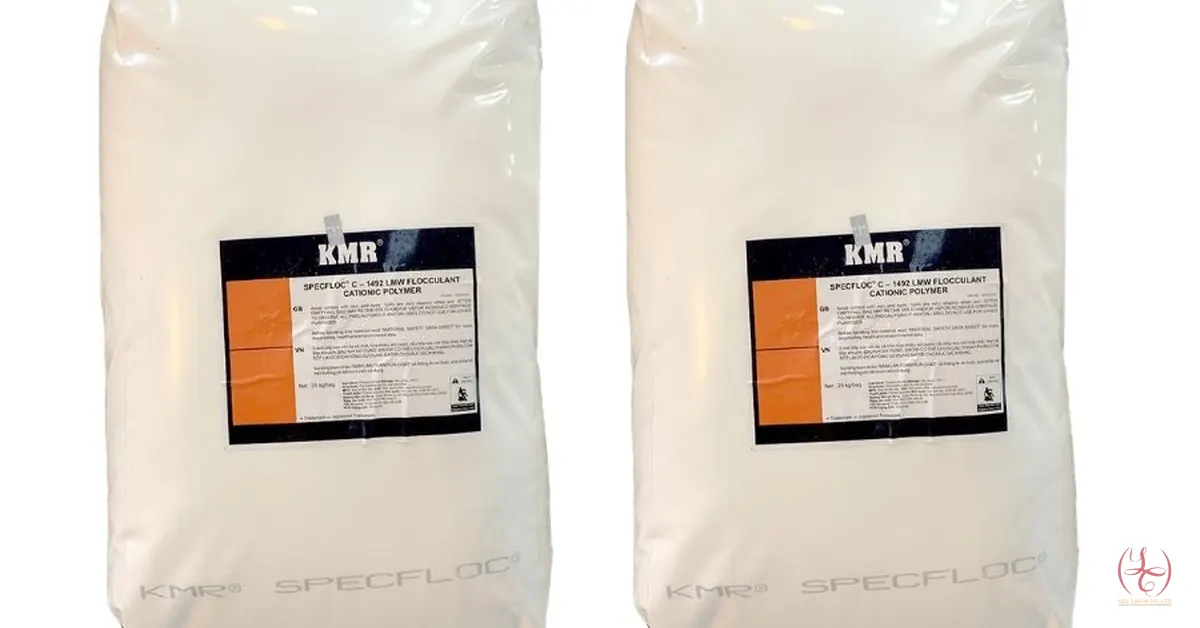
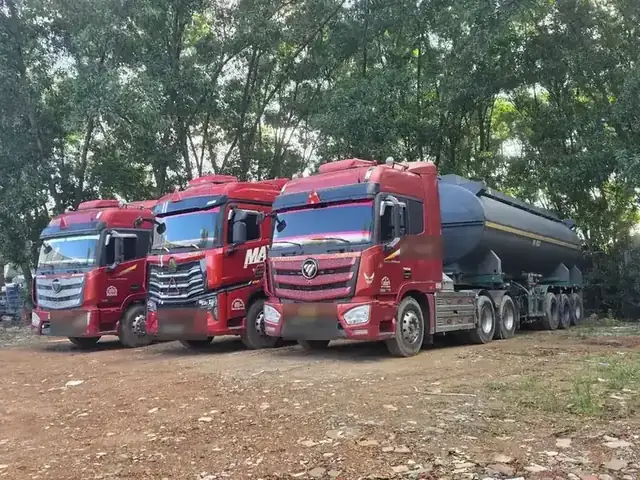
The synergistic integration of Anionic Polymer (A1110 high-molecular inorganic flocculant) and Cationic Polymer (KMR C1492 organic sludge dewatering agent) represents the industry benchmark for Centralized Industrial Wastewater Treatment Plants (CETPs) in Vietnam. Loc Thien Chemical is a direct manufacturer of liquid iron coagulants (FeCl₂, FeCl₃) and a certified Tier-1 Primary Bulk Supplier of Anionic A1110 and Cationic C1492 polymers distributed in 25kg double PE-lined moisture-proof bags (road tankers strictly prohibited), alongside bulk PAC and iron coagulants supplied via dedicated 5–30-ton road tankers. Precisely matching zeta potential inflection points slashes capillary suction time (CST), drives filter cake moisture down to 68–72%, and decreases hazardous waste sludge disposal volumes by 35–45%. Technical proposals delivered within 15 minutes via Hotline: +84 979 891 929.
1. Technical Challenges in Multi-Industrial Sludge Dewatering
Centralized industrial parks receive complex wastewater matrices comprising textile dyes, electroplating heavy metals, food processing effluents, and chemical manufacturing waste. The resulting composite sludge exhibits extreme resistance to mechanical dewatering:
- High Extracellular Polymeric Substances (EPS): Biological waste-activated sludge (WAS) is encapsulated by negative surface charges that trap bound water inside colloidal structures. Standard inorganic coagulants fail to break these hydrate shells.
- Filter Media Blinding: Suboptimal polymer molecular weight or overdosing causes residual polyacrylamide to adhere aggressively to filter press cloths, sealing drainage pores and generating sloppy sludge discharge.
- Soaring Hazardous Waste Levies: Industrial sludge transport and certified thermal destruction costs range between 70 to 140 USD per ton in Vietnam. Reducing cake moisture from 82% to 70% cuts net payload by 40%.
2. Two-Stage Coagulation & Dewatering Chemistry
Stage 1: Primary Chemical Flocculation (Anionic Polymer A1110)
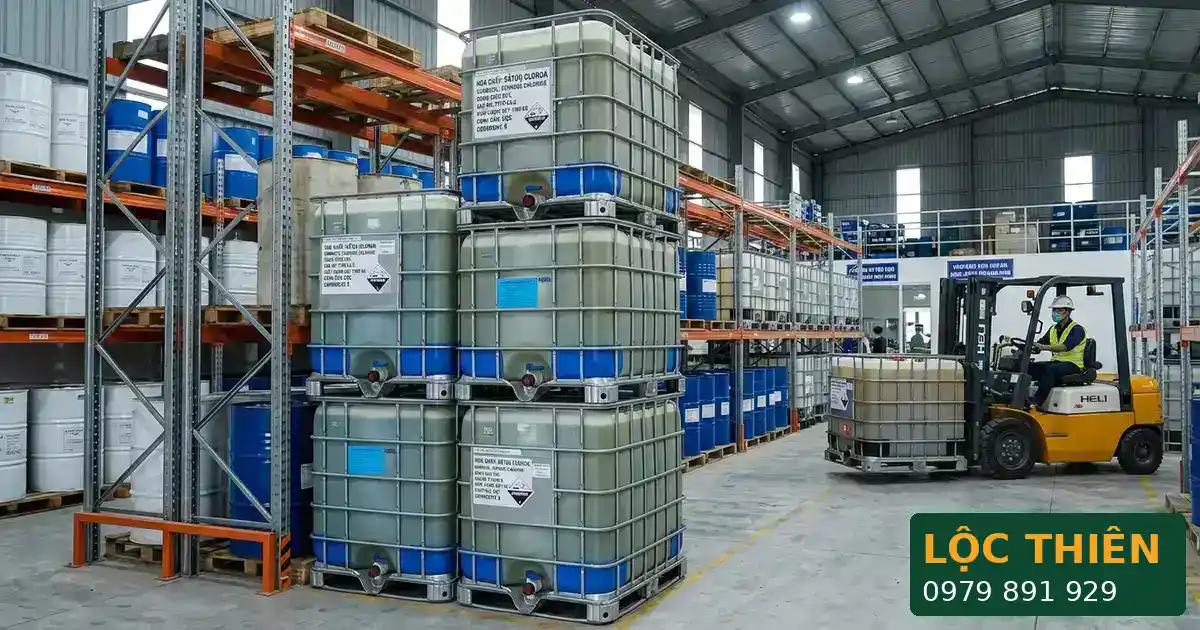
Raw influent pre-treated with direct manufactured Ferrous Chloride FeCl₂ 30% or Ferric Chloride FeCl₃ 38% from Loc Thien (or bulk liquid PAC delivered by 5–30t tankers) receives Polymer Anion A1110 (MW 12–15 Million Dalton, 20–30% charge density). Extended polymer chains bridge micro-flocs into heavy 2–5 mm aggregates, boosting gravity sedimentation velocity tenfold.
Stage 2: Sludge Cake Mechanical Dewatering (Cationic Polymer C1492)
Thickened sludge fed to belt presses or decanter centrifuges is conditioned inline with Polymer Cation KMR C1492 (40–50% high cationic charge, MW 8–10 Million Dalton). Positive ammonium sites neutralize negative bacterial EPS charges instantly, releasing bound water into free drainage.
3. Polymer Anion A1110 vs Cation C1492 Technical Matrix
| Specification | Polymer Anion A1110 | Polymer Cation KMR C1492 |
|---|---|---|
| Polymer Backbone | Hydrolyzed Polyacrylamide (HPAM) | Acrylamide / Cationic Monomer Copolymer |
| Molecular Weight (MW) | 12 – 15 Million Dalton | 8 – 10 Million Dalton |
| Charge Density | 20 – 30% Negative | 40 – 50% Positive (High Charge) |
| Dissolution Time | 45 – 60 min at 25°C | 40 – 50 min at 25°C |
| Viscosity (0.1% Sol.) | ≥ 350 mPa.s | ≥ 250 mPa.s |
| Packaging (SSOT) | 25kg PE-lined Bag (No Tanker) | 25kg PE-lined Bag (No Tanker) |
4. SOP: Preventing Fish-Eye Lumping During Polymer Makeup
Fish-eye lumping wastes up to 40% of polymer powder and clogs dosing injectors. Loc Thien recommends:
- Makeup Concentration: Prepare stock solutions strictly at 0.1% to 0.2% (1–2 kg powder per 1,000 L water). Never exceed 0.5% concentration.
- Dry Powder Dispersion: Always activate water agitation prior to powder introduction. Disperse gradually through an eductor.
- Agitation Speed: Run at 200–300 RPM for 15 minutes, then reduce to 60–100 RPM to protect long polymer chains from mechanical shear.
- Aging Time: Allow full hydration for 45–60 minutes before inline dosing. Use within 24–48 hours.
5. B2B Case Study: 15,000 m³/Day Centralized Wastewater Plant in Nhon Trach IZ (Dong Nai)
Sludge Dewatering Turnaround for Industrial Park Operator
- Plant Bottleneck: Composite sludge with 60% biological content produced wet, sloppy cake with 85% moisture. Annual hazardous sludge trucking fees exceeded 4.2 billion VND.
- Loc Thien Solution:
- Primary clarification using direct manufactured FeCl₂ 30% (5–30-ton tankers) combined with Polymer Anion A1110 at 1.2 ppm.
- Dewatering belt press conditioning converted to Polymer Cation KMR C1492 (45% charge) at 3.5 kg/ton dry solids.
- Quantified Results:
- Cake moisture dropped dramatically from 85% to 69.5%. Cake peels cleanly off filter cloth.
- Total daily wet sludge volume declined from 28 tons/day to 16.2 tons/day (42.1% reduction).
- Net Operational Cost Savings: Saved over 1.45 billion VND annually in licensed sludge disposal fees.
6. Frequently Asked Questions (FAQ)
Can Anionic and Cationic polymers share the same preparation tank?
ABSOLUTELY NOT. Anionic and Cationic polymers possess opposing electrostatic charges. Cross-contamination causes immediate co-precipitation, creating a dense, insoluble rubber-like mass that will seize mixers and destroy metering pumps.
Does Loc Thien Chemical offer on-site Jar-Testing?
YES. Loc Thien application engineers carry mobile multi-stirrer Jar-test kits directly to plant sites to evaluate fresh sludge samples and dial in exact stoichiometric dosing rates before bulk commercial rollout.
6. Troubleshooting Belt Press Blinding & Dual Chemical Calibration
Filter belt blinding and wet sludge cakes stem from zeta potential overcharging when dosing Polymer Cation in isolation. Overdosing induces steric repulsion, blinding belt filter pores and clouding filtrate liquor.
Loc Thien's dual conditioning protocol incorporates inorganic Ferrous Chloride FeCl₂ (50–100 ppm) to collapse the electrical double layer prior to injection of Polymer Cation C1492 or Polymer Anion A1110 (1.2–2.0 g/m³). Flocs dewater rapidly without cloth sticking. Optimize dosage via Loc Thien Online Dosage Calculator and review our wastewater treatment chemical catalog.
⚡ Request Sludge Conditioning Jar-Test & Commercial Proposal
Loc Thien Chemical delivers full wastewater packages: Direct manufactured FeCl₂/FeCl₃, bulk PAC tankers, and genuine 25kg polymer bags nationwide.
- Direct B2B Wastewater Hotline: +84 979 891 929
- Official Corporate Email: [email protected]