
HCl in Food-Grade Gelatin Production — Hydrolysis Process & Quality Standards
HCl in Food-Grade Gelatin Production — Hydrolysis Process & Quality Standards
TL;DR: Food-grade HCl (pharmaceutical, FCC/USP) is the hydrolytic agent that breaks down collagen from animal skin, cartilage and bones to produce gelatin — an essential food hydrocolloid used in candies, yogurt, and soft capsules. The acid process for type A gelatin: soak raw material in HCl 1–6% for 10–30 hours, wash, extract gelatin at 50–70°C. Food gelatin standards: heavy metals <10 ppm, arsenic <1 ppm, E. coli negative. Hóa Chất Lộc Thiên supplies HCl 32% meeting FCC standards for gelatin production — batch COA/MSDS, ZDHC Level 1, nationwide IP delivery.
HCl in Gelatin Production — The Role of Collagen Hydrolysis
Gelatin is a partially hydrolyzed product of collagen — the main structural protein in animal skin, bones, and cartilage. HCl breaks the intramolecular and intermolecular cross-links of collagen, converting insoluble collagen into water-soluble gelatin.
Mechanism: H⁺ ions from HCl attack peptide bonds and cross-links between collagen fibers, cutting the triple helix network into individual α, β, and γ chains — gelatin that dissolves in hot water and forms a gel upon cooling.
This method is called the acid hydrolysis process, producing type A gelatin (isoelectric point pI 7–9) — as opposed to the alkaline method for type B gelatin (pI 4.8–5.2).
Comparison of Type A (Acid) and Type B (Alkaline) Gelatin:
| Parameter | Type A Gelatin (Acid) | Type B Gelatin (Alkaline) |
|---|---|---|
| Hydrolytic agent | HCl, H₂SO₄, H₃PO₄ (1–6%) | NaOH, Ca(OH)₂ (lime) |
| Main raw material | Pig skin, chicken skin | Cattle bones, cattle hide |
| Pretreatment time | 10–30 hours | 3–16 weeks (liming) |
| Isoelectric point (pI) | 7–9 | 4.8–5.2 |
| Bloom strength | 200–300 g | 150–250 g |
| Main application | Food, soft capsules | Dairy, confectionery |
| Product pH | 3.8–6.0 | 5.0–7.5 |
Advantages of the acid method: much shorter processing time (10–30 hours vs 3–16 weeks), easier process control, and higher Bloom strength product. Disadvantage: raw material must be clean with few impurities because the acid process does not remove impurities as effectively as the alkaline method.
Gelatin Production Process from Animal Skin Using HCl
Step 1: Raw Material Preparation
Raw materials (pig skin, cattle hide, bones, chicken cartilage) are cleaned — removing fat, excess meat, and impurities. For bones: crush to 1–3 cm size, degrease with hot water or solvent. Pig skin: cut into 5–10 cm pieces, wash clean.
Step 2: Acid Soaking (HCl) — Pretreatment
This is the decisive step. Raw materials are soaked in HCl solution at concentrations:
- Pig skin: HCl 1–5%, time 10–30 hours, room temperature (20–25°C)
- Chicken/pig bones: HCl 3–6%, time 24–48 hours
- Buffalo hide: HCl 0.9M (~3%), 24 hours
Optimal HCl concentration and soaking time depend on raw material thickness. Research on chicken bones (Kadarani & Jannah, 2022) shows HCl 6% soaking for 24 hours yields the highest gelatin yield (>8% wet weight) with Bloom strength of 260.57 g. Research on buffalo hide (Mulyani et al., 2017) determined HCl 0.9M (~3%) as the optimal concentration for the highest yield of 29.17%.
Step 3: Washing and Neutralization
After acid soaking, the raw material is thoroughly washed with clean water to pH 5–7. Purpose: remove residual Cl⁻ ions, stop further hydrolysis. pH can be adjusted with dilute NaOH.
Step 4: Hot Water Gelatin Extraction
The neutralized raw material is heated with water at:
- 1st extraction: 50–55°C for 3–4 hours — first-run gelatin, high quality
- 2nd extraction: 60–70°C for 3–4 hours — medium gelatin
- 3rd extraction: 75–85°C for 4–6 hours — final gelatin, lower quality
Total extraction time 10–15 hours. Each batch is collected separately — first-extraction gelatin has the highest Bloom strength, used for applications requiring strong gel.
Step 5: Filtration, Concentration, Drying
Gelatin liquor is filtered (removing fat and insoluble impurities), vacuum-concentrated, spray-dried or chill-dried into gelatin powder. Finished product has 8–12% moisture, >85% protein, pH 4.5–6.0.
Food-Grade HCl Standards for Gelatin Production
HCl used in food gelatin production must meet FCC (Food Chemicals Codex) or USP (United States Pharmacopeia) standards. Key specifications:
| Parameter | FCC/USP Standard | Significance in Gelatin Production |
|---|---|---|
| HCl content | 36.5–38.0% (concentrated solution) | Standard commercial grade |
| Heavy metals | <10 ppm (as Pb) | Ensures food safety |
| Arsenic (As) | <1 ppm | FDA 21 CFR limit |
| Iron (Fe) | <5 ppm | Prevents oxidation discoloration of gelatin |
| Sulfate (SO₄²⁻) | <5 ppm | Prevents calcium sulfate precipitation |
| Residual volatiles | Per TCVN | Limits organic impurities |
| Appearance | Clear solution | No turbidity, no mechanical impurities |
Technical-grade HCl must not be used for food gelatin production — its heavy metal content is many times above permitted limits and can introduce lead, arsenic, and mercury into the final product.
🛒 Need food-grade HCl? Get a quote for HCl 32% food grade — COA/MSDS, FCC, ZDHC Level 1. Hotline 0979 891 929.
Factors Affecting Gelatin Quality
HCl Concentration
Increasing HCl concentration improves hydrolysis yield — but too high (>6% for skin, >1.2M for buffalo hide) causes over-hydrolysis, cutting gelatin chains too short, reducing Bloom strength and viscosity. Research on buffalo hide: HCl 0.9M (~3%) gave the highest yield of 29.17%; HCl >0.9M reduced yield due to protein loss during washing.
Soaking Time
24-hour soaking gives higher yield than 48-hour soaking on chicken bones (Kadarani & Jannah, 2022). Longer soaking may increase Bloom strength (265.69 g at 48h vs 260.57 g at 24h) but reduces overall yield. Optimizing soaking time is a key factor in process design.
Extraction Temperature
High extraction temperature (>75°C) increases yield but reduces Bloom strength due to over-hydrolysis. Multi-stage extraction — gradually increasing temperature from 55°C to 75°C — allows maximum gelatin recovery while maintaining quality in the early batches.
Lộc Thiên Supplies HCl 32% Meeting Gelatin Production Standards
Hóa Chất Lộc Thiên supplies HCl 32% (density ~1.16 g/ml) meeting FCC/USP standards — suitable for food and pharmaceutical gelatin production. Each shipment includes:
- COA (Certificate of Analysis) — actual test data: HCl content, density, heavy metals, As, Fe
- MSDS (Material Safety Data Sheet) — full safety instructions
- ZDHC Level 1 (Zero Discharge of Hazardous Chemicals) — certified by TÜV Rheinland, meeting EU/US export standards for textile and food industries
- QC verification: Phan Cẩm Thủy and Võ Thị Như Hòa are responsible for quality control of each shipment before dispatch
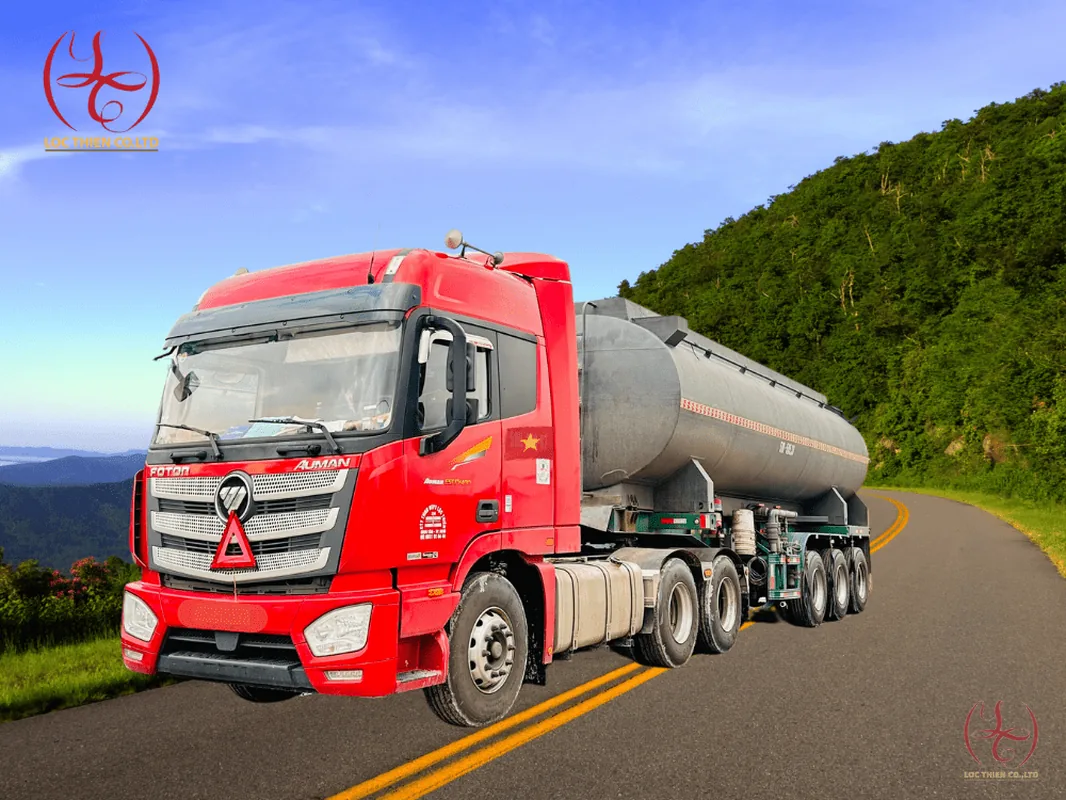
Lộc Thiên operates 6 warehouses nationwide (HCMC, Đồng Nai, BR-VT, Cần Thơ, Đà Nẵng, Bắc Ninh) with a fleet of 5–30 ton tankers — delivery within 4h in Ho Chi Minh City, 24h to Southern industrial parks.
Anonymous case study: A gelatin plant in Đồng Nai province switched from technical-grade HCl to Lộc Thiên’s HCl 32% FCC grade. Result: heavy metal content in the gelatin product dropped from 18 ppm to below 5 ppm (ICP-MS analysis), meeting Japanese export standards. The plant eliminated one additional refining step thanks to cleaner input material.
Frequently Asked Questions (FAQ)
How are Type A and Type B gelatin different?
Type A uses acid (HCl), fast process, high Bloom, used for food and capsules. Type B uses alkali (lime), long process, lower Bloom, higher product pH.
What HCl concentration is used for gelatin production?
Typically 1–6% depending on raw material — pig skin 1–5%, chicken bones 3–6%, buffalo hide ~3% (~0.9M). Excessively high concentration causes over-hydrolysis and reduces gel quality.
Why must food-grade HCl be used instead of industrial HCl?
Industrial HCl has high heavy metal content (lead, arsenic, iron) that contaminates the final product — exceeding the FDA limit of 10 ppm.
What is the optimal HCl soaking time?
Research shows 24 hours is better than 48 hours for chicken bones — higher yield, though Bloom strength may be insignificantly lower.
What is the best gelatin extraction temperature?
Multi-stage extraction 55°C → 65°C → 75°C maximizes yield. Avoid extraction above 90°C, which degrades gel strength.
Does Lộc Thiên have ZDHC certification for HCl?
Yes — Lộc Thiên’s HCl 32% meets ZDHC Level 1 (TÜV Rheinland), meeting EU and US export requirements.
Does HCl 32% need dilution before soaking raw materials?
Yes, HCl 32% must be diluted to working concentration (1–6%). Use full PPE when diluting — always add HCl slowly to water, never the reverse.
Request a Quote
Contact Hóa Chất Lộc Thiên — supplying HCl 32% food grade for gelatin production, meeting FCC/USP standards, ZDHC Level 1, with batch COA/MSDS. Hotline 0979 891 929.