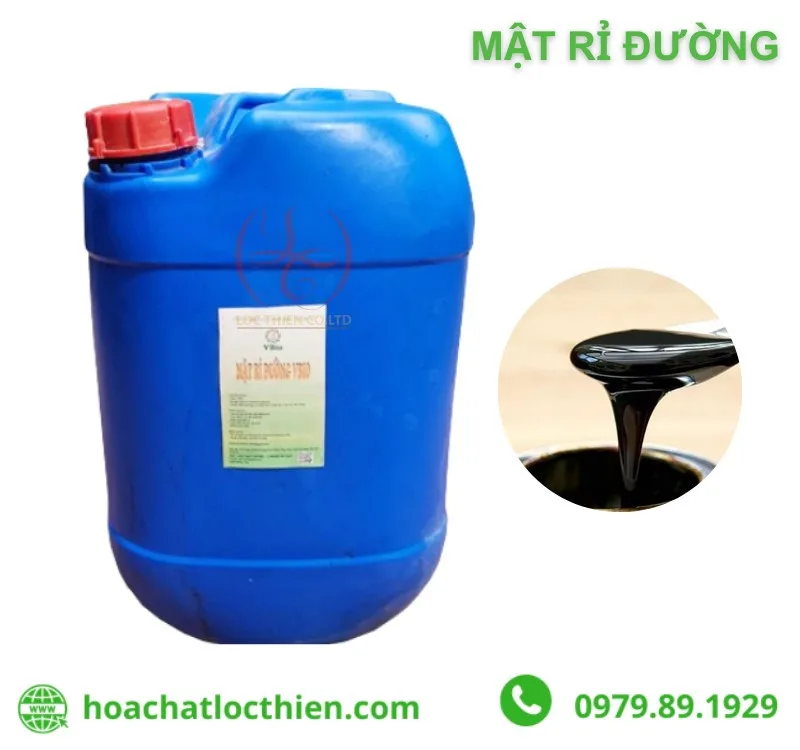
Molasses from Vietnam in cans, a sugar-production byproduct for alcohol, animal feed, wastewater and microbial fertilizer use. Loc Thien, hotline 0979 891 929
Molasses Derived from sugarcane or sugar beets. During the concentration and crystallization process used to produce sugar, water is removed from the juice to create pure sugar; the byproduct of this process is called molasses. It is used in the production of alcohol, as animal feed, or can be processed into other products in the food and pharmaceutical industries, etc. Packaging: can; origin: Vietnam.
Molasses is a versatile raw material with high practical value across many industries. Not only is it important source of nutrition for livestock and poultry, seafood molasses It also helps stimulate beneficial microorganisms and improve the microbial ecosystem in fish ponds. In wastewater treatment, molasses serves as organic carbon sources, promoting the biodegradation process. In addition, the industry beer and wine production also uses molasses to make fermentation medium, which helps improve the flavor and quality of the product. In addition, molasses is an important ingredient in production of microbial organic fertilizer, helping to improve farming efficiency. So, how much does molasses cost? Buy molasses Where can I find a reliable one? Let’s find out together Loc Thien Chemical Learn more about this product.
Product name
Molasses
Also known as
Molasses, molasses syrup, molasses extract
Packing specifications
Can
Origin
Vietnam
What is molasses?
Molasses (also known as molasses, sugar syrup, sugar extract) produced during the process extracting sugar from sugarcane or sugar beets. This is what remains after refined sugar extracted, containing many important organic compounds and minerals such as calcium (Ca), potassium (K), magnesium (Mg), and organic acids. Thanks to its high content of nutrients, Molasses has wide-ranging applications in agriculture, the food industry, beer and wine production, Wastewater Treatment, and aquaculture.
Molasses It is the thick, viscous liquid that remains after sugar has been extracted from the juice. It contains components other than sugar, such as water, minerals, and other organic compounds. Typically, molasses is used in applications such as alcohol production, as animal feed, or can be processed into other products in the food and pharmaceutical industries.
Use of sap depends on its specific quality and technical factors in the manufacturing process.
Components of molasses:
Water content in molasses:
Water is a major component of molasses. This is because, during the process of extracting sugar from sugarcane juice, water is retained after the juice is concentrated to extract the sugar.
Sugar content in molasses:
Molasses It still contains a significant amount of sugar. However, it is not pure sugar like that found in the final product. The sugar molecules in molasses are not completely separated from the juice and other substances, creating a unique mixture with different viscosities and chemical properties.
Mineral content in molasses:
In addition to sugar and water, minerals are also an important component of the nutritional value of molasses. Molasses rich in minerals and elements: Ca, K, Mg, … These substances are typically extracted from sugarcane or sugar beets.
Organic matter content in molasses:
Molasses It also contains other organic compounds such as organic acids, proteins, and antioxidants. These compounds are the result of metabolic processes and transformations in the juice.
Color and flavor:
Molasses It is usually brown or black in color and has the distinctive flavor of cane sugar or beet sugar. The color and flavor depend on the specific source and production process.
Uses of molasses:
Production of feed for livestock, poultry, and aquatic animals:
Molasses is an important ingredient in processing feed for livestock, poultry, and aquaculture. With High sugar content, molasses not only helps boost energy, but also helps improve the binding properties of feed pellets, which helps pets digest and absorb nutrients more easily.
In aquaculture, sugar syrup is also used to stimulate beneficial microorganisms, helps Improving the microbial community in aquaculture ponds and limit harmful bacteria.
Molasses, with its thick consistency and unique flavor, plays an important role in the production of livestock and poultry feed. Molasses It is added to feed to improve the quality and nutritional value of the product. As a result, livestock and poultry find the feed more palatable, increasing their intake.
Not only that, but molasses is also used in the production of compound feed—specifically, feed for pets and aquatic animals—to provide energy and add sweetness to the feed. The versatility of sugar syrup helps animals adapt to a variety of foods and ensures they find them appealing to eat.
✔️ High-energy, helping pets absorb nutrients more effectively.
✔️ Creating Binding Properties in Pelleted Feed, improve the quality of animal feed.
✔️ Stimulating Beneficial Microorganisms in aquaculture ponds, helping to balance the microbial ecosystem.
✔️ Reduces harmful bacteria, improve the water quality in aquaculture ponds.
📌 Practical examples: According to a study by the Vietnam Institute of Animal Husbandry, the use of molasses in animal feed helps Increase 15% digestive efficiency and reduce 20% feed costs compared to regular feed.
The Application of Honey in the Aquaculture Industry
Wastewater Treatment Industry:
Molasses is an important source of organic carbon in microbial composting process. When combined with microorganisms, molasses helps promote the fermentation process, increase the rate of organic matter decomposition and improve fertilizer quality.
In Industrial and Agricultural Wastewater Treatment, Molasses is used as a biocatalyst, helps provides carbon for anaerobic bacteria, thereby promoting the process More effective Wastewater Treatment.
✔️ Provides a natural source of carbon, promoting more active anaerobic microorganisms.
✔️ Supports the denitrification process, helping to reduce industrial wastewater pollution.
📌 Practical applications: A food processing plant used molasses for wastewater treatment, which helped 50% reduces nitrate levels in just 30 days.
Molasses It plays an important role in the food industry with a wide range of applications. Used as a natural source of sugar, Molasses enhances sweetness and provides a distinctive flavor to many products, from beverages such as sugarcane juice and smoothies to candies, pastries, and processed foods. The natural sweetness and versatility of molasses make it a popular ingredient in the food industry, while also helping to improve the quality and flavor of many food products.
Pharmaceutical Manufacturing:
Molasses With its natural sweetness and versatility, it is being incorporated into the pharmaceutical industry for a wide range of applications. It serves not only as a sweetening agent for tablets and capsules but also plays a crucial role in structuring and imparting flexibility to specialized products such as soft tablets. Innovative uses of molasses also open up possibilities for creating natural-form products that enhance the patient experience. At the same time, molasses can play a role in the manufacturing process by increasing viscosity and helping to maintain the stability of pharmaceutical products.
Wine and Beer Production:
In wine and beer production, sugar syrup serves as a source of carbon and natural sweetness for the fermentation process. At the same time, sugar syrup It also enhances the flavor and overall quality of the final product. Its versatility not only helps create a distinctive sweetness but also makes wine and beer more stable and better suited for long-term storage. It is an important ingredient that contributes to the diversity and deliciousness of these beverages on the market.
Molasses It is also considered an important component widely used in various industries, and serves as a valuable source of additives in the manufacturing process.
✔️ Prepare the fermentation ingredients, which helps impart a natural flavor to wine and beer.
✔️ Improve stability and storage capacity of the product.
📌 Actual data: According to a study, using molasses as a partial substitute for cane sugar helps Reduce 30% raw material costs for the distillery.
Molasses used in the production of microbial fertilizer
The molasses production process:
The production process Molasses Typically, the process involves several steps, from extraction to cleaning and refinement. Below is a general overview of how Molasses is produced:
Step 1: Prepare the ingredients:
The main ingredient is sugarcane juice, extracted from sugarcane. The sugarcane is grown and tended to ensure the quality of the sugarcane juice.
Step 2: Extracting sugarcane juice:
Sugarcane juice is extracted from sugarcane through a process of pressing or grinding. This process typically requires specialized machinery and equipment to produce pure sugarcane juice.
Step 3: Filtering and cleaning:
After being extracted, the sugarcane juice is filtered to remove impurities and sediment. It is then purified to ensure high quality.
Step 4: Concentrate:
Sugarcane juice is concentrated by evaporating some of the water from the juice, which increases the sugar concentration and produces sugar syrup dense.
Step 5: Refining and filtering:
Molasses After concentration, it undergoes a purification process to remove any remaining impurities. It is then filtered to achieve clarity and high quality.
Step 6: Packaging:
Packing leak in boxes or bottles, depending on customer requirements and market demand.
The production process sugar syrup may vary depending on the methods and technologies used. Some countries and territories may use more traditional methods, while modern factories may employ high-tech methods and equipment to optimize their production processes.
Why You Should Buy Molasses at Loc Thien Chemicals:
Loc Thien Chemical Company, with many years of experience in the chemical industry, we are proud to be a trusted partner supplying high-quality basic chemical products to the industrial sector at competitive prices. We are committed to top-notch quality, transparent traceability, and ample inventory stored under optimal conditions. Our warehouse not only ensures large quantities but also features a fast delivery team, providing a convenient shopping experience for our customers. In particular, we offer free consulting services to assist customers in selecting and using our products.
Loc Thien Chemicals is proud to be a supplier high-quality molasses, meeting strict safety and inspection standards. We are committed to:
✅ Competitive prices, great discounts for large orders.
✅ Stable supply, ensuring a large supply.
✅ Fast nationwide delivery.
✅ Free Consultation Support, helping customers choose the right products.
📞 Contact us qua hotline 0979 891 929 to receive Detailed Quote for Molasses.
If you are interested in purchasing high-quality molasses, please contact us via our hotline: 0979 891 929. Our team of experts is always ready to provide advice and quick quotes, ensuring customer satisfaction and trust.
Loc Thien Investment and Development Co., Ltd. is a Vietnam-based industrial chemical supplier. We focus on process-grade supply, logistics support and quotation on request.
Address: 452/6B Tỉnh Lộ 10, Binh Tri Dong Ward, Ho Chi Minh City
Can molasses completely replace sugar in animal feed production?
Molasses can be used as a supplemental energy source in the diets of livestock and poultry, but cannot completely replace sugar or starch in animal feed. This is because molasses has a high content of impurities and is rich in minerals, which can lead to nutritional imbalances if consumed in excess. A reasonable amount to use is typically 5 – 10% in the diet, depending on the type of livestock and their stage of development.
Can molasses be used as a preservative in animal feed?
Yes, molasses is natural antibacterial properties Thanks to its high sugar content and thick, viscous consistency, it helps inhibits the growth of bacteria and mold in animal feed, especially in types of silage. When molasses is mixed into fermented feed, it creates an environment lactic fermentation, helps keep food fresh longer, improves digestion and encourages animals to eat more. However, dosage must be controlled to prevent unwanted fermentation.
How can molasses be used in the production of bio-organic fertilizers?
In the production of microbial fertilizers, molasses is used as a food source for microorganisms, which helps stimulate the fermentation process and the breakdown of organic matter. Common applications include:
Composting with microbial organic fertilizer: Molasses combined with a microbial preparation stimulates the rapid growth of beneficial bacteria, helping to accelerate the decomposition of organic waste a nutrient-rich fertilizer component.
Add to the drip irrigation system: Some organic farming methods use a diluted Molasses solution to stimulate soil microorganisms, which helps improve soil aeration and increase the plants’ ability to absorb nutrients.
Reduces protein loss through evaporation: When molasses is combined with urea during the composting process, it helps reduce nitrogen loss by reducing evaporation, thereby improving fertilizer use efficiency.
Does molasses affect water quality in aquaculture ponds?
The use of molasses in aquaculture requires Dosage control to avoid affecting the quality of the pond water. When used properly, Molasses helps increase beneficial microorganisms, facilitating the development of microbial communities that break down pond bottom sludge, Reduce NH3, NO2, and H2S, improve water quality.
However, if used in excess, the amount excess carbon may lead to algal blooms or a decrease in dissolved oxygen, which has a negative impact on aquatic animal health. Here are some recommendations for effective use:
Appropriate dosage: 1–3 liters of molasses per 1,000 m³ of pond water.
In combination with a microbial preparation: Helps balance the microbiome and prevent the overgrowth of anaerobic bacteria.
Regular water quality testing: Ensure that the dissolved oxygen concentration is not reduced by molasses.
How can molasses be stored properly to prevent spoilage or a decline in quality?
Molasses can be stored for a long time if stored properly. Some important tips for storing molasses include:
Avoid direct exposure to air and sunlight: Because it will cause the molasses to oxidation, resulting in a decline in quality.
Store in a cool place; avoid excessive heat: Excessively high temperatures can cause the molasses to overly concentrated, which is difficult to use, while temperatures that are too low can cause the molasses to solidify.
Use a sealed container or a specialized storage tank: To prevent contamination from dust, water, or unwanted microorganisms.
Stir periodically if stored for an extended period: In particular, molasses with high viscosity helps prevent precipitation and maintain consistent quality.
📌 Important note: If the molasses is sour or has an unusual odor, it should not be used in animal feed or Wastewater Treatment, as it may affect livestock and microorganisms.
Product Specifications (Vietnamese Molasses)
Product name
Molasses
English Name / Alias
Sugar cane molasses, Blackstrap molasses
Identification Code
According to TDS/COA batch · By-products of the sugar industry
Type / Color
A thick, viscous liquid, dark brown in color, with a distinctive aroma
Brix
≥ 75% Brix, total sugar content ≥ 48%
Packing specifications
30-kg Can / 300-kg Drum / Bulk Tanks
Origin
Vietnam (Sugar Mill)
Applications
Microbial cultures for Wastewater Treatment, production of biofertilizers, animal feed, and fermented ethanol
CAS Number / Entity: Technical Identification Code: As per the TDS/COA for the batch. Molasses is a natural byproduct that does not have a single chemical CAS number.
English Name / Industry Designation: Commercial English alias: cane molasses, sugarcane molasses (Vietnamese sugarcane molasses). Nationwide supply of Vietnamese sugarcane molasses from a stable supply source with high Brix levels.