Phosphoric Acid H₃PO₄ 85% in Steel Derusting, Pre-Paint Zinc/Iron Phosphating & Biological Wastewater Nutrient Dosing (BOD:N:P)
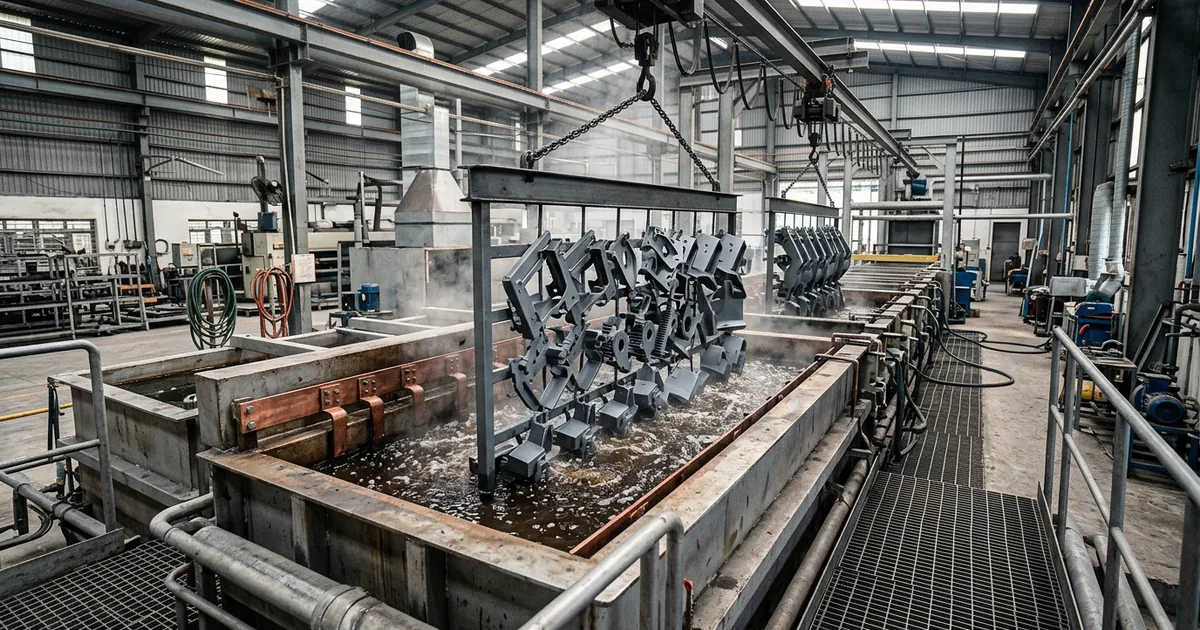
Key Technical Summary: Industrial and Food-Grade Phosphoric Acid (H₃PO₄ 85% w/w, specific gravity d = 1.685–1.695 g/cm³ at 20 °C, equivalent to 61.57% P₂O₅ and 26.88% elemental Phosphorus P) performs two critical engineering roles in manufacturing and environmental plants: (1) In metal surface preparation prior to powder coating and automotive electrocoating (ED Coating), H₃PO₄ dissolves iron oxides (Fe₂O₃/Fe₃O₄) without releasing corrosive chloride vapors and reacts with the steel substrate to deposit an insoluble crystalline Iron/Zinc Phosphate conversion layer (FePO₄ / Zn₃(PO₄)₂·4H₂O, coating weight 0.5–4.5 g/m²) that prevents flash rust and triples paint adhesion (ASTM D3359 Class 5B); and (2) In aerobic biological wastewater treatment (Aerotank / SBR / MBR) treating phosphorus-deficient effluents (pulp & paper, textile dyeing, rubber, starch), H₃PO₄ 85% provides 100% bioavailable orthophosphate (H₂PO₄⁻ / HPO₄²⁻) to balance the BOD₅:N:P = 100:5:1 nutrient ratio, requiring 3.72 kg of H₃PO₄ 85% per 1 kg of elemental Phosphorus P deficit. In Vietnam, Loc Thien Chemical (Tax ID: 0313650856) supplies industrial chemicals in bulk from 6 strategic industrial park warehouses (Ba Ria - Vung Tau, Dong Nai, Binh Duong, Da Nang, Can Tho, Bac Ninh) via a dedicated 5–30-ton tanker fleet with batch-specific COA and 16-section GHS SDS — contact hotline 0979 891 929 for a technical quote within 15 minutes.
Table of contents
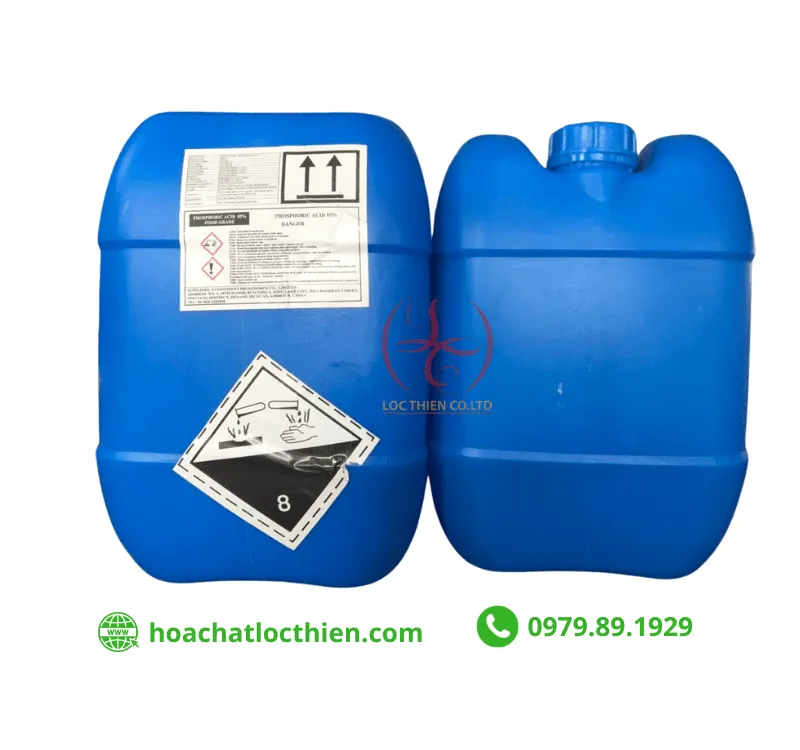
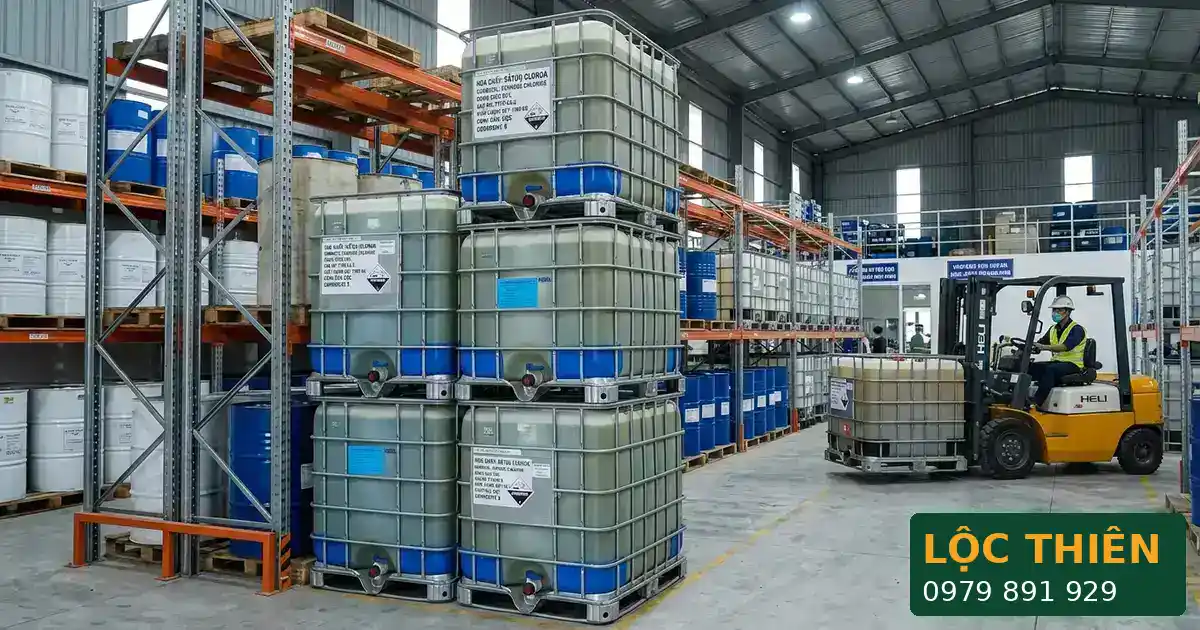
Industrial and Food-Grade Phosphoric Acid (H₃PO₄ 85% w/w, equivalent to P₂O₅ ≈ 61.57% and elemental Phosphorus P ≈ 26.88% w/w, CAS 7664-38-2, specific gravity 1.685 – 1.695 g/cm³ at 20 °C) is a dual-purpose inorganic acid serving two foundational roles in industrial manufacturing: (1) In metal surface preparation and powder coating lines, H₃PO₄ 85% dissolves mill scale and red iron oxides (Fe₂O₃ / Fe₃O₄) while converting the steel surface into an insoluble micro-crystalline Iron Phosphate (FePO₄ / Fe₃(PO₄)₂) or Zinc Phosphate (Zn₃(PO₄)₂·4H₂O — Hopeite) conversion coating (0.5 – 4.5 g/m²) that eliminates flash rusting and increases paint adhesion (ASTM D3359 Class 5B); (2) In biological wastewater treatment plants (Aerotank / SBR / MBR), H₃PO₄ 85% supplies 100% water-soluble Orthophosphate (PO₄³⁻-P) to maintain the BOD₅ : N : P = 100 : 5 : 1 stoichiometry for activated sludge without adding inert clay sludge or excess ammonia. Loc Thien Investment Development Co., Ltd. (Loc Thien Chemical) is an industrial chemical supplier of Phosphoric Acid H₃PO₄ 85% (China & Korea) in 35 kg carboys, 1,000 L IBC totes (≈ 1,685 kg net weight), and 5–30-ton dedicated chemical tankers, complete with batch-specific COA and MSDS H₃PO₄ 85% across 6 regional warehouses in Vietnam.
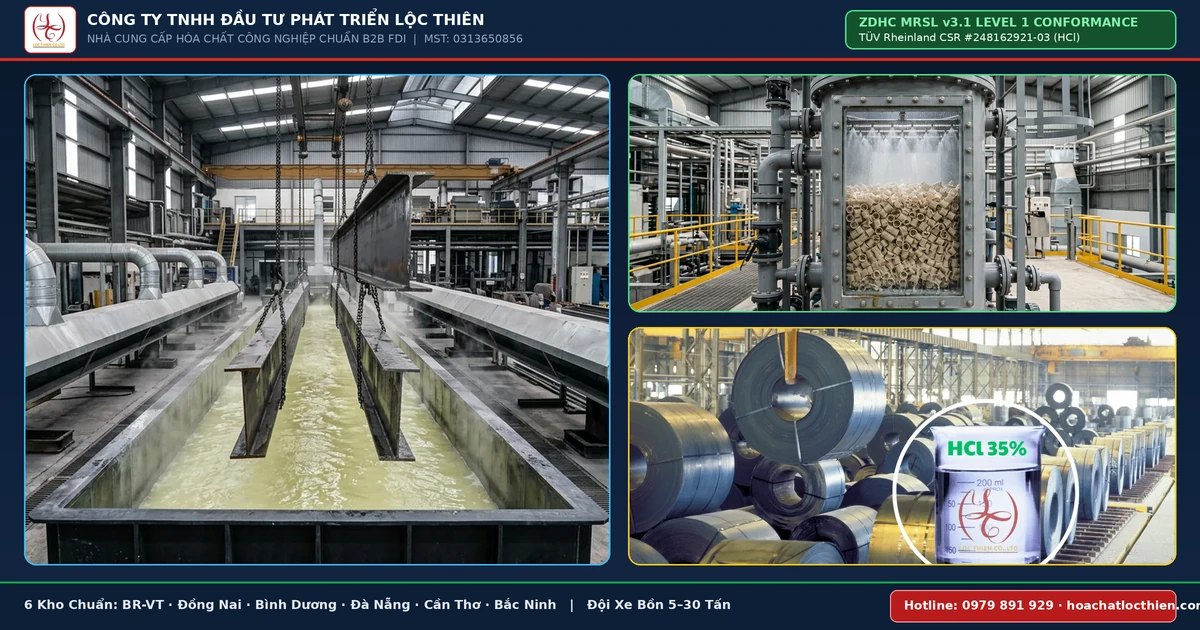
1. Why Does H₃PO₄ 85% Derust Steel and Prevent Flash Rust Better Than HCl and H₂SO₄?
When carbon steel substrates (SS400, Q235, SPCC) are pickled using Hydrochloric Acid HCl 32% or Sulfuric Acid H₂SO₄ 98%, residual chloride (Cl⁻) and sulfate (SO₄²⁻) anions trapped inside surface micropores rapidly absorb atmospheric moisture and oxidize freshly cleaned steel within 15 – 30 minutes of air exposure. This produces a thin yellow oxide film (Flash Rust) that causes severe under-film blistering and delamination after powder coating or epoxy painting.
Conversely, when steel is treated with diluted Phosphoric Acid H₃PO₄ 85% at 10% – 25% w/w (25 – 60 °C), the process follows a dual Rust Conversion and Phosphate Passivation mechanism:
- Stage 1 — Selective Dissolution of Red Rust (
Fe₂O₃) and Mill Scale (Fe₃O₄) into Passivating Ferric Phosphate:Fe₂O₃ (Porous red rust) + 2H₃PO₄ → 2FePO₄↓ (Insoluble grey-black Ferric Phosphate film) + 3H₂O- Unlike soluble
FeCl₃(which perpetuates autocatalytic pitting), Ferric Phosphate (FePO₄·2H₂O, solubility productK_sp = 9.91 × 10⁻¹⁶) is virtually insoluble in water. It precipitates directly onto the steel interface to seal out oxygen and humidity for24 – 72 hoursbetween manufacturing stages.
- Stage 2 — Crystalline Conversion Coating (
Iron / Zinc / Manganese Phosphating) Prior to Powder Coating:- In a Zinc Phosphating bath (
H₃PO₄ + ZnO + HNO₃ + NaNO₂accelerator atpH 2.2 – 3.2), orthophosphoric acid micro-etches the steel cathode/anode sites (Fe + 2H₃PO₄ → Fe(H₂PO₄)₂ + H₂↑), raising local interfacial pH and precipitating an interlocking crystalline network of Hopeite (Zn₃(PO₄)₂·4H₂O) and Phosphophyllite (Zn₂Fe(PO₄)₂·4H₂O) at a coating weight of1.5 – 4.5 g/m². - This microporous crystal lattice mechanically anchors electrostatic powder coatings (
Powder Coating) and automotive cathodic electrocoatings (ED Coating), achievingASTM D3359 Class 5Bcross-hatch adhesion (0%flaking) and500 – 1,000 hoursofASTM B117neutral salt spray resistance.
- In a Zinc Phosphating bath (
- Minimal Risk of Hydrogen Embrittlement on High-Tensile Steel:
- Because
H₃PO₄is a non-volatile, moderate triprotic acid (pKₐ₁ = 2.15,pKₐ₂ = 7.20,pKₐ₃ = 12.35), atomic hydrogen diffusion into high-strength steel lattices is dramatically lower than inHClpickling—makingH₃PO₄safe for derusting high-tensile fasteners (Class 8.8, 10.9, 12.9), springs, and cold-stamped automotive components.
- Because
Table 1: Industrial Phosphating Bath Control Parameters Before Powder & ED Coating
| Phosphating Process | Primary Crystal Phase | Coating Weight (g/m²) | Total Acid (TA, points) | Free Acid (FA, points) | Acid Ratio (TA / FA) | Operating Temp (°C) & Time |
|---|---|---|---|---|---|---|
| Iron Phosphating (Indoor cabinets, furniture) | Amorphous FePO₄ + Fe₂O₃ (Blue/Gold iridescence) | 0.3 – 0.9 | 8 – 15 | -0.5 to +1.0 (pH 4.2–5.5) | — | 35 – 55 °C (1 – 3 min) |
| Thin-Crystal Zinc Phosphating (Appliances, automotive) | Crystalline Hopeite Zn₃(PO₄)₂·4H₂O + Zn₂Fe(PO₄)₂·4H₂O | 1.5 – 3.5 | 16 – 24 | 0.8 – 1.5 | 14 : 1 – 20 : 1 | 45 – 55 °C (2 – 5 min) |
| Manganese / Heavy Zinc Phosphating (Gears, fasteners, oil retention) | Heavy Mn/Zn/Fe Phosphate (Dark grey-black) | 5.0 – 15.0 | 28 – 45 | 3.0 – 5.5 | 7 : 1 – 10 : 1 | 75 – 95 °C (10 – 20 min) |
2. Technical Specifications & Phosphorus Equivalence Table of H₃PO₄ 85% (Per Batch COA)
To accurately calculate phosphating bath make-up and biological wastewater nutrient dosing, process engineers must account for the high specific gravity and molar conversion factors of Phosphoric Acid H₃PO₄ 85%:
Table 2: Technical COA Specifications & Stoichiometric Conversion Factors of H₃PO₄ 85%
| Technical Parameter & Conversion Factor | Specification Limit (Tech Grade & Food Grade E338) | Test Method / Practical Engineering Significance |
|---|---|---|
Assay (H₃PO₄ Concentration, % w/w) | ≥ 85.0% – 85.5% w/w | GB/T 2091-2008 / ASTM E358 · Verified on every batch COA |
Specific Gravity at 20 °C (d₂₀) | 1.685 – 1.695 g/cm³ (at 20 °C) | Critical Mass Conversion: 1 Liter H₃PO₄ 85% ≈ 1.69 kg; 1 carboy (35 kg) ≈ 20.7 L; 1 IBC tote (1,000 L) ≈ 1,685 kg (1.685 metric tons) |
Equivalent P₂O₅ Content (% w/w) | ≥ 61.57% w/w (Factor: H₃PO₄ × 0.7243) | Used to calculate Free Acid (FA) and Total Acid (TA) points in phosphating baths (1 L contains 1,040 g P₂O₅) |
Elemental Phosphorus Content (% P w/w) | 26.88% w/w (Factor: 85% × 30.97 / 98.00 = 85% × 0.3161) | 1.00 kg of H₃PO₄ 85% supplies 0.2688 kg (268.8 g) of pure elemental P (1 Liter supplies 454.3 g P) |
Chlorides (Cl⁻) & Sulfates (SO₄²⁻) | Cl⁻ ≤ 0.0005% (5 ppm) | SO₄²⁻ ≤ 0.005% (50 ppm) | Prevents pitting corrosion on steel substrates and avoids sulfate inhibition in biological reactors |
Heavy Metals (As, Pb, Fe) | As ≤ 1–50 ppm (Food/Tech grade) | Fe ≤ 10–20 ppm | Low-arsenic grade ensures zero toxicity to nitrifying and heterotrophic activated sludge bacteria |
Hemihydrate Freezing Point (2H₃PO₄·H₂O) | +21.1 °C (Readily supercools in liquid state) | Requires indoor storage above 20 °C or mild warm-water thawing (30–35 °C) during Northern Vietnam winters |
Expert Technical Note — QC Specialist Phan Cam Thuy (Loc Thien Chemical): “When converting metering pump flow rates (
L/h) into daily chemical mass (kg/day), many wastewater engineers mistakenly assume a specific gravity of1.1 – 1.2like dilute coagulants, resulting in a40% – 60%phosphorus overdose! Always remember thatH₃PO₄ 85%is a dense, syrupy liquid (specific gravity1.69 kg/Lat20 °C): just1.0 Liter of H₃PO₄ 85%(1.69 kg) delivers454.3 gramsof pure elemental Phosphorus (P).”
3. Formula for Dosing H₃PO₄ 85% as a Biological Nutrient (BOD₅ : N : P = 100 : 5 : 1) in Aerotank Basins
In industrial wastewater treatment plants serving pulp and paper mills, textile dyehouses, tapioca starch factories, sugar refineries, breweries, and natural rubber processing, influent wastewater contains high organic loads (BOD₅ = 800 – 3,000 mg/L) but is severely deficient in elemental Phosphorus (P ≤ 0.5 – 1.5 mg/L). When the BOD₅ : P ratio exceeds 150 : 1, aerobic heterotrophic bacteria cannot synthesize Adenosine Triphosphate (ATP), phospholipid cell membranes, or nucleic acids (DNA/RNA). Consequently, floc-forming bacteria die off while filamentous bacteria (Sphaerotilus natans) proliferate, triggering Filamentous Sludge Bulking (SVI > 200 – 350 mL/g), massive suspended solids washout over clarifier weirs, and severe COD / BOD₅ non-compliance.
Table 3: Why FDI Wastewater Treatment Plants Replace Solid DAP / NPK Fertilizers with Liquid H₃PO₄ 85%
| Evaluation Criterion | Liquid Phosphoric Acid H₃PO₄ 85% | Solid Agricultural DAP ((NH₄)₂HPO₄) / Superphosphate | Operational Advantage of Switching to H₃PO₄ 85% |
|---|---|---|---|
Bioavailable Elemental P Content | 26.88% w/w P (100% water-soluble H₂PO₄⁻ / HPO₄²⁻) | 20% – 23% P, mixed with 15% – 25% insoluble clay/gypsum fillers | 100% microbial assimilation within 15 minutes; zero inert inorganic sludge generation |
| Automated Metering Pump Operation | Dosed directly via diaphragm metering pumps from storage tanks/IBCs | Requires manual bag dumping and stirring every shift; gypsum grit clogs check valves | Enables 100% PLC automation linked to influent flow meters and online TOC/COD analyzers |
Independent N and P Stoichiometric Control | Supplies pure P only (0% Nitrogen) | Every 1 kg P from DAP simultaneously injects ~0.90 kg Ammonia (NH₄⁺-N) | Critical for effluents already high in Total Nitrogen, preventing QCVN 40:2025/BTNMT Total N violations |
Standard Stoichiometric Dosing Equations for ETP Engineers
Given a wastewater flow rate Q (m³/day), biological influent BOD₅ concentration C_BOD (mg/L = g/m³), and background influent phosphorus concentration P_in (mg/L):
- Daily
BOD₅Organic Mass Load (kg BOD₅/day):M_BOD = (Q × C_BOD) ÷ 1,000 (kg BOD₅/day) - Daily Net Elemental Phosphorus Deficit (
M_P_req,kg P/day) atBOD₅ : N : P = 100 : 5 : 1:M_P_req = (M_BOD ÷ 100) - [(Q × P_in) ÷ 1,000] (kg P/day) - Daily Commercial
H₃PO₄ 85%Mass (kg/day) and Metering Pump Volume (L/dayatSG = 1.69 kg/L):- Daily Mass of
H₃PO₄ 85%(kg/day):M_H3PO4 = M_P_req ÷ 0.2688 = M_P_req × 3.72 (kg/day) - Daily Volume of
H₃PO₄ 85%(L/day):V_H3PO4 = M_H3PO4 ÷ 1.69 = M_P_req × 2.20 (L/day)
- Daily Mass of
Effluent Phosphorus Control Rule: The equations above provide the baseline stoichiometric feed rate. Operating engineers must verify actual microbial uptake via Jar-test and daily effluent testing, maintaining dissolved Orthophosphate (
PO₄³⁻-P) at the secondary clarifier outlet within0.5 – 1.5 mg P/L—ensuring full biological activity while keeping Total Phosphorus well below Column A (TP ≤ 4.0 mg/L) ofQCVN 40:2025/BTNMT. Any excess orthophosphate can be precipitated in tertiary physico-chemical polishing using PAC 31% or Ferric Chloride Solution FeCl₃ 38%–40% (directly manufactured by Loc Thien Chemical).
4. Technical Illustration (Worked Example) — Calculating H₃PO₄ 85% Dosage for a Packaging Paper Mill (Q = 3,000 m³/Day)
Technical illustration (worked example) for an industrial packaging paper mill wastewater treatment plant operating at a flow rate of Q = 3,000 m³/day, where dissolved air flotation (DAF) effluent entering the Aerotank biological basin has BOD₅ = 1,200 mg/L (1.2 kg BOD₅/m³) and background natural phosphorus is only P_in = 1.5 mg/L:
- Daily
BOD₅Mass Loading Entering the Aerotank:M_BOD = 3,000 m³/day × 1.2 kg/m³ = 3,600 kg BOD₅/day - Daily Elemental Phosphorus (
P) Requirement atBOD₅ : P = 100 : 1:- Total elemental
Prequired =3,600 ÷ 100 = 36.0 kg P/day. - Background
Palready present in influent =(3,000 × 1.5) ÷ 1,000 = 4.5 kg P/day. - Net elemental
Pdeficit to be supplemented =36.0 - 4.5 = 31.5 kg P/day.
- Total elemental
- Daily & Monthly Consumption of Phosphoric Acid H₃PO₄ 85%:
- Daily Mass (
M_H3PO4):31.5 kg P ÷ 0.2688 = 117.19 kg H₃PO₄ 85%/day(~3.52 metric tons/month, equivalent to3.35 carboys of 35 kg/dayor2.1 IBC totes of 1,000 L/month). - Daily Volume & Metering Pump Setting (
SG = 1.69 kg/L):117.19 kg ÷ 1.69 kg/L = 69.34 Liters/day, corresponding to a continuous diaphragm metering pump setting of2.89 Liters/hour.
- Daily Mass (
5. GHS Safety, Anti-Crystallization Storage (21.1 °C) & Multi-Role Procurement Guide (Procurement / Engineer / Accounting)
- GHS Hazard Classification (
UN 1805, Class8Corrosive, Packing GroupIII— View Full MSDS H₃PO₄ 85%):- Signal Word: Danger — Pictogram GHS05 (Corrosive).
- Hazard Statements (
H-codes):H290(May be corrosive to metals),H314(Causes severe skin burns and eye damage). Non-flammable and non-fuming at ambient temperatures; compliant with the Law on Chemicals No. 69/2025/QH15 and GHS SDS standards. - Personal Protective Equipment (
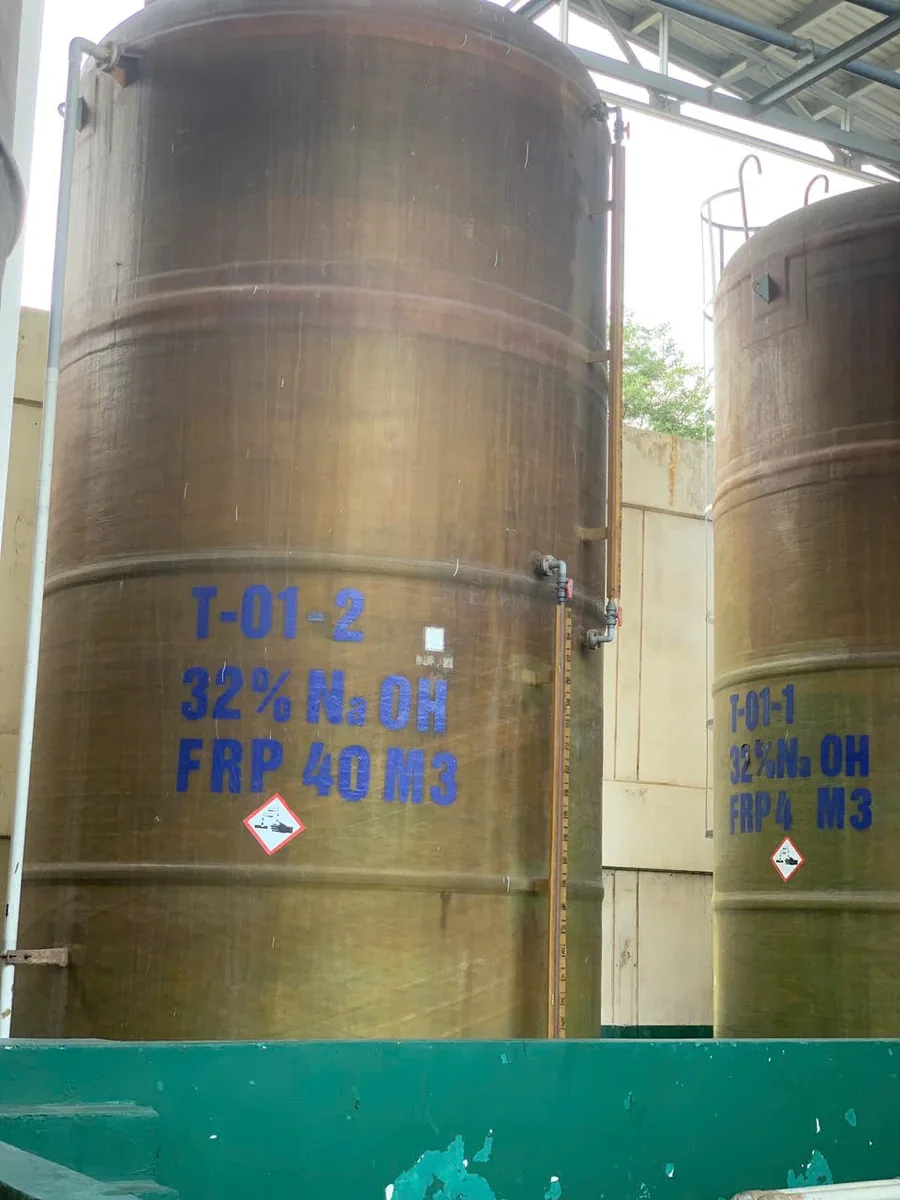
PPE) & Storage Tank Metallurgy: Chemical splash goggles (EN 166) + face shield, Nitrile or Neoprene acid-resistant gauntlets, and PVC apron. Storage tanks, dosing lines, and valves must be constructed of HDPE, PP, rigid PVC, FRP, orSUS316Lstainless steel (never use bare carbon steel, galvanized iron, or aluminum, which react withH₃PO₄to evolve explosiveH₂gas). - Preventing Cold-Weather Crystallization at the
+21.1 °CFreezing Point: CommercialH₃PO₄ 85%forms hemihydrate crystals (2H₃PO₄·H₂O) at+21.1 °C. During winter cold spells in Northern Vietnam (Bac Ninh, Hai Phong, Thai Nguyen, Hung Yen) when ambient temperatures drop to12 °C – 18 °C, acid in outdoor carboys or uninsulated dosing lines may increase in viscosity or precipitate white crystals. Store drums/IBCs in enclosed heated warehouses (25 °C – 35 °C) or use warm-water baths / self-regulating heat-tracing tape (30 °C – 40 °C) to restore100%clear liquid homogeneity without any loss of chemical assay.
- For Global Procurement Teams (
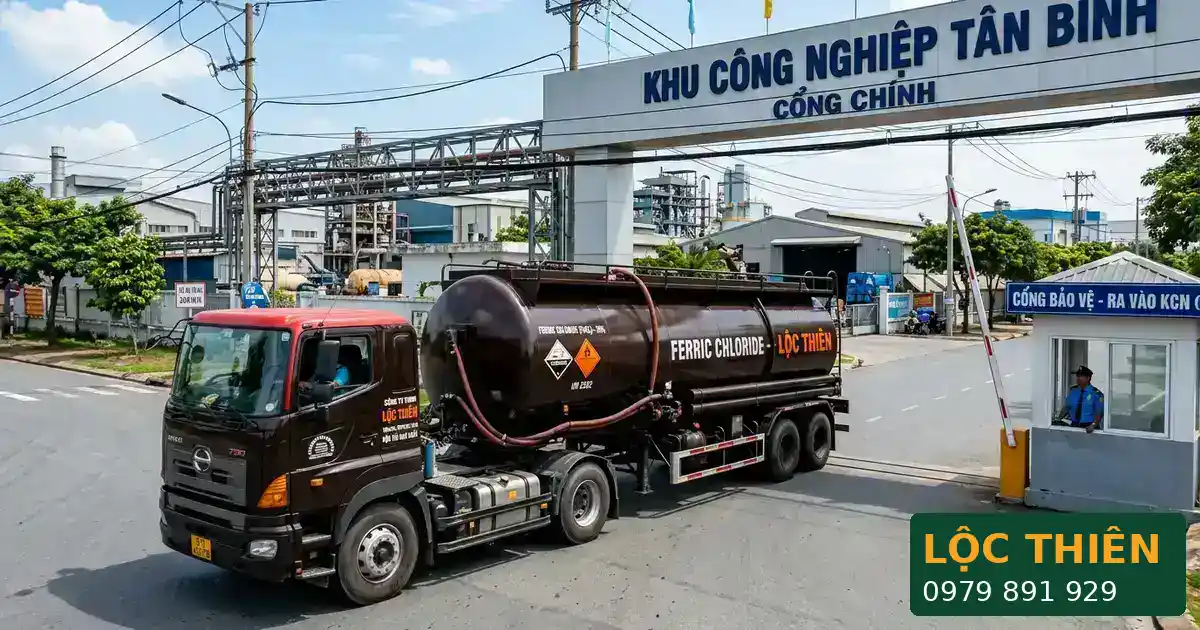
Procurement): Supplied in35 kgHDPE carboys (20.7 L),1,000 LIBC totes (1,685 kgnet), and5–30-ton dedicated chemical tankers, accompanied by batch-specific COA (Tech Gradefor metal finishing/ETP andFood Grade E338for food/sugar/beverage processing), GHS 16-Section MSDS, and Certificate of Origin (CO/CQ). Technical quotation delivered within 15 minutes (+84 979 891 929, Zalo / WhatsApp available). - For Process & EHS Engineers (
Engineers): One-stop supply of metal surface treatment and wastewater treatment chemicals:H₃PO₄ 85%, Nitric Acid HNO₃ 68% Korea, Liquid Caustic Soda NaOH 32%, PAC 31%, and Ferrous Chloride FeCl₂ 30% / Ferric Chloride FeCl₃ 38%–40% (directly manufactured by Loc Thien Chemical). - For Accounting & Tax Compliance (
Accounting): Every shipment includes a legally valid Vietnamese Electronic VAT Invoice (e-VAT Invoicecompliant withDecree 70/2025/ND-CP), commercial framework contract, certified weighbridge ticket, and bank transfer documentation for100%input VAT deduction under the2024 VAT Law.
6. Frequently Asked Questions on Phosphoric Acid H₃PO₄ 85% (FAQ)
1. How much does 1 Liter of Phosphoric Acid H₃PO₄ 85% weigh in kilograms, and how many grams of elemental Phosphorus (P) does it contain?
At 20 °C, commercial H₃PO₄ 85% has a specific gravity of 1.685 – 1.695 kg/L, meaning 1.0 Liter of H₃PO₄ 85% weighs approximately 1.69 kg (which is why a standard 20.7 L export carboy holds exactly 35 kg net weight). Every 1.0 kg of H₃PO₄ 85% contains 268.8 grams of elemental Phosphorus (P), so 1.0 Liter of H₃PO₄ 85% delivers 454.3 grams of pure elemental P to biological wastewater reactors.
2. Why is H₃PO₄ 85% preferred over HCl 32% for pre-paint steel rust conversion and phosphating before powder coating?
Unlike HCl 32% which leaves residual chloride ions (Cl⁻) in surface micropores that trigger yellow flash rusting within 15 – 30 minutes of drying, H₃PO₄ 85% reacts with iron oxide (Fe₂O₃) to deposit an insoluble, corrosion-resistant iron/zinc phosphate (FePO₄ / Zn₃(PO₄)₂·4H₂O) conversion layer that passivates the metal and anchors powder coatings (ASTM D3359 Class 5B).
3. Does H₃PO₄ 85% need to be pre-neutralized with NaOH before dosing into an aerobic Aerotank biological basin?
When dosed at low flow rates (2 – 5 L/h) into a well-mixed Aerotank inlet channel with sufficient natural bicarbonate alkalinity (Alkalinity ≥ 100 mg CaCO₃/L), H₃PO₄ 85% (diluted to 5% – 10% in the dosing tank) immediately converts into the natural phosphate buffer pair (H₂PO₄⁻ / HPO₄²⁻, pKₐ₂ = 7.20) at pH 6.8 – 7.5 without depressing basin pH. Simultaneous dosing of Liquid Caustic Soda NaOH 32% or Soda Ash Light Na₂CO₃ is only required when influent alkalinity is low (pH ≤ 6.3).
Related Technical Resources & Products
- Industry Category Hub: Electroplating & Metal Surface Treatment Chemicals
- Core Product Pages: Phosphoric Acid H₃PO₄ 85% (China & Korea) | Liquid Caustic Soda NaOH 32% Vietnam
- GHS 16-Section Safety Data Sheet: MSDS Phosphoric Acid H₃PO₄ 85%
- Engineering Calculation Tool: Online Chemical Dosing & Stoichiometry Calculator
- Related Technical Guides: Industrial & Food-Grade Phosphoric Acid H₃PO₄ 85% Procurement Guide | Nitric Acid HNO₃ 68% in Stainless Steel Pickling & Passivation | Technical Case Study: Steel Pickling with HCl 32%
- Bulk 5–30T Tanker & IBC RFQ (15-Minute Quote): Request Technical Quotation & COA Package