
HCl 32% -- Industrial Applications in Water Treatment, Pickling & Manufacturing

Tóm tắt nội dung
- A Brief Overview of Hydrochloric Acid:
- What Is HCl 32%?
- Industrial Applications of HCl 32%
- Application of HCl 32% in Salt Production
- Application of Hydrochloric Acid in Metal Processing
- Application of Hydrochloric Acid in Water Treatment
- Application of HCl 32% in the Food Industry
- Application of Hydrochloric Acid in Chemical Production
- HCl 32% in the Chemical Industry - An Important Component in Many Chemical Reactions
- Safely Storing HCl 32%
- Verified Locations to Buy and Sell HCl 32%:
- Is there a safe way to neutralize HCl 32%?
- Does HCl 32% affect the environment, and how should it be handled?
- Why is HCl 32% commonly used in the metallurgy industry?
- Can HCl 32% be replaced with other chemicals in industry?
📌 Actual statistics: According to a report by the International Council of Chemical Associations (ICCA), more than 20 million tons of HCl are produced each year to serve the chemical, metallurgy, and wastewater treatment industries. In Vietnam, demand for HCl 32% is growing 5-7% each year, particularly in food processing and wastewater treatment.
In this article,
- The chemical properties of HCl 32%
- Applications of HCl in key industries
- How to store it and safety measures for use
- Environmental impacts and safe handling solutions
A Brief Overview of Hydrochloric Acid:
Hydrochloric acid (HCl) is a sin inorganic acid with the chemical formula HCl, formed from a hydrogen (H) atom and a chlorine (Cl) atom. When dissolved in water, HCl forms a highly corrosive acidic solution that reacts sinly with metals and effectively dissolves mineral salts.
With its distinctive chemical properties, HCl is present in most industrial manufacturing processes, from metal rust removal and water treatment to organic and inorganic chemical synthesis. HCl is also known by other names such as muriatic acid, hydrochloric acid, or chloran.
📌
Low pH (~1.0 - 2.0): HCl is a sin acid, capable of reacting with metals to produce chloride salts and hydrogen gas (H₂). High corrosiveness: HCl can dissolve metal oxides, helping remove rust and calcium scale from pipes. Good solubility for many inorganic compounds: HCl solution is an important component in producing metal chlorides such as FeCl₃, ZnCl₂, CaCl₂. Volatile: On contact with air, HCl can form an acid vapor that irritates the respiratory tract, so careful storage is required.
⚠️
Reacts sinly with aluminum and zinc, easily generating toxic gas. Direct contact can cause skin burns and soft tissue corrosion.
You can learn more about what hydrochloric acid is to better understand this important chemical.
What Is HCl 32%?
📌
Sin acidity: Has a low pH, reacts with metals to produce chloride salts and hydrogen gas (H₂). High corrosiveness: Cleans metal surfaces, removes calcium scale in piping systems. Dissolves many inorganic compounds: Used to produce metal chlorides and many other useful compounds. Volatile: HCl can form dangerous acid vapor, so careful storage is needed.
⚠️
- Always
wear safety goggles and chemical-resistant gloves during contact. - Do not let the solution come into direct contact with
light metals such as aluminum or zinc, as this can create a sin reaction. Store in a dedicated storage tank, avoiding contact with sin oxidizing agents such as nitric acid (HNO₃) or bleach (NaClO).
Industrial Applications of HCl 32%
Application of HCl 32% in Salt Production
HCl 32% solution plays an important role in salt production. It reacts sinly with metals, so when it acts on sodium and potassium, it produces sodium chloride (NaCl) and potassium chloride (KCl) salts.
It is also used to help remove impurities and improve salt quality. HCl is known for use in natural salt processing and producing mineral salt from minerals. This solution is also used in the salt drying process to remove moisture and impurities, controlling the final batch quality of the product.
Application of Hydrochloric Acid in Metal Processing
The application of hydrochloric acid in metal processing serves to remove oxides and impurities from metal surfaces. It helps clean and prepare surfaces for electroplating, galvanizing, and coating processes. It is also used as a metal cleaning agent, removing grease and impurities. In addition, HCl helps strip plating and supports the manufacturing of special metals such as titanium and tungsten. This solution plays an important role in the metal processing workflow, helping improve the quality and performance of the final product.
Application of Hydrochloric Acid in Water Treatment
This solution is used in water treatment to adjust pH, remove unwanted minerals, and control scale formation in water distribution systems. HCl is also useful for disinfecting water, helping remove bacteria and disease-causing agents.
Using HCl 32% requires strict compliance with safety measures and control of the amount of acid added to control the batch quality of the treated water.
Check out how to dilute HCl for more effective and safer water treatment.
Application of HCl 32% in the Food Industry
Thanks to its sin properties, HCl is used in the food industry to adjust pH and clean and disinfect equipment and work surfaces. It is also used for disinfection to prevent bacterial growth.
This solution also participates in processing to create preservatives. The use of hydrochloric acid must strictly comply with food safety standards and quality requirements.
HCl 32% plays an important role in the food industry, especially in producing food additives and processing raw materials.
- 📌 Some important applications:
- ✅ pH adjustment in food production:
- HCl is used in producing gelatin from animal bones and skin.
- Supports cane sugar refining by removing impurities.
- ✅ Disinfecting and sanitizing food processing equipment:
- HCl 32% has the ability to kill bacteria and mold on equipment surfaces.
- Used to wash tanks and pipes used in food production.
- ⚠️ Important note:
- The use of HCl in food must strictly comply with the FDA and Ministry of Health's safety standards.
- HCl must not be applied directly to food without proper processing.
- 📊 Actual statistics:
- According to the European Food Safety Authority (EFSA), more than 70% of food manufacturing plants in Europe use HCl 32% to clean equipment and adjust pH during food processing.
- ✅ pH adjustment in food production:
Application of Hydrochloric Acid in Chemical Production
Hydrochloric acid plays an undeniable role in the chemical manufacturing industry. It is used to extract basic raw materials, such as sodium chloride, from salt sources. It is also a key component in producing basic chemicals such as chlorine, chlorides, and sodium hydroxide.
It is also involved in the production of basic salts, and is applied in creating high-purity forms of chemical products.
The use of HCl is not limited to production, but also extends to wastewater treatment and creating important chemicals used in industry. Overall, HCl makes an important contribution to the production and development of the chemical industry.
HCl 32% in the Chemical Industry - An Important Component in Many Chemical Reactions
Besides its applications in
- ✅
Production of metal chlorides such as FeCl₃, ZnCl₂, CaCl₂ serving the electroplating industry. - ✅
Production of organic and inorganic acids, most commonly phosphoric acid (H₃PO₄) and citric acid. - ✅
Synthesis of plastics and rubber, supporting polymerization in the chemical industry.
Safely Storing HCl 32%
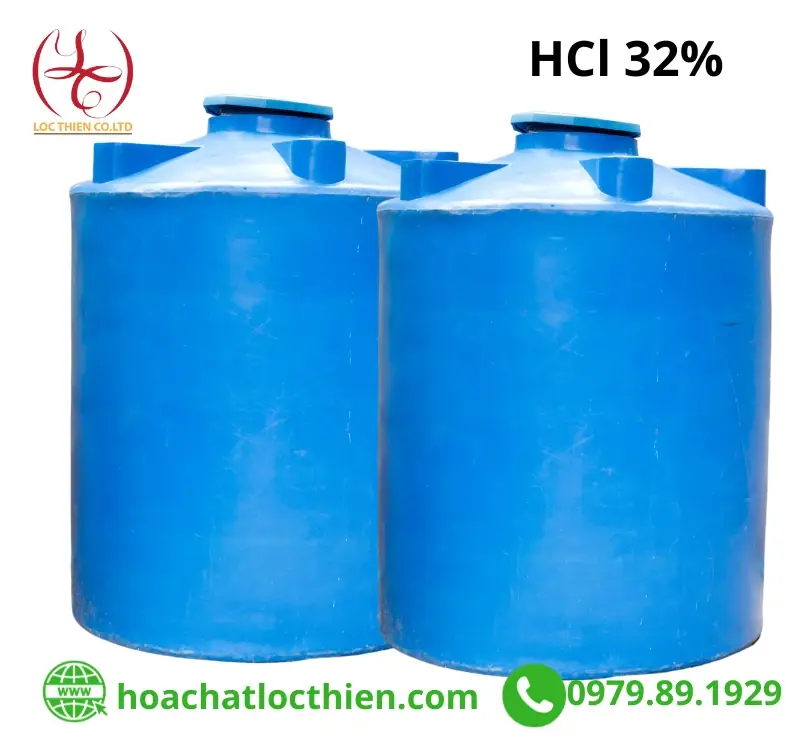
- HCl is typically supplied as a liquid solution. Therefore, it must be stored in tanks, containers, or reservoirs specially designed for highly corrosive chemicals.
- Place this solution in a separate chemical storage area, an isolated space with safety measures such as emergency exits and fall-protection netting.
- Keeping the temperature within a safe range is important. Avoid storing at high temperatures, as this can create pressure and increase the risk of leaks.
- A corrosive chemical like HCl 32% should generally not be stored near other substances, especially sin bases such as NaOH, to avoid unwanted reactions.
- Use sealed containers or drums to reduce the risk of leaks and prevent the effects of the outside environment.
- When working with HCl, personnel must wear personal protective equipment, including safety goggles, gloves, chemical-resistant coats, and a helmet.
Verified Locations to Buy and Sell HCl 32%:
To buy quality HCl 32% solution, choosing a verified and reliable supplier is extremely important. You can find more information about HCl 32–35% acid (hydrochloric acid, CAS 7647-01-0) as well as verified places to buy HCl 32% at Loc Thien Chemical to ensure product safety and quality. We specialize in supplying verified chemical products, including hydrochloric acid solution and many other basic chemicals such as NaOH, FeCl2, Javel, …
Loc Thien Chemical guarantees to supply technical-grade products, ensures safety, and complies with industry standards. For detailed information on pricing and other products, customers can contact us directly via hotline: 0979 89 19 29. We are always ready to serve and meet our customers' needs with dedication.
Is there a safe way to neutralize HCl 32%?
📌 Common neutralization methods:
+ Using sodium hydroxide (NaOH): Reacts with HCl to form NaCl salt and water, safer for discharge into the environment.
+ Using calcium hydroxide (Ca(OH)₂): Used in industrial wastewater treatment to neutralize HCl.
+ Using sodium bicarbonate (NaHCO₃): A safer solution, typically used in laboratories or small-scale handling.
⚠️ Note: When neutralizing HCl, the base should be added to the acid slowly, avoiding a sinly exothermic reaction that could be dangerous.
Does HCl 32% affect the environment, and how should it be handled?
📌 Environmental impacts:
+ Water pollution: When discharged into rivers or lakes, the acid can change the pH, disrupting the ecosystem balance and affecting aquatic organisms.
+ Corrosion of structures: If it leaks into drainage systems or concrete, the acid can corrode building materials.
+ Generation of toxic chlorine gas: If HCl contacts a sin oxidizing agent such as NaClO (Javel water), it can produce extremely toxic chlorine gas (Cl₂).
📌 How to safely treat HCl before discharge:
+ Neutralize with a base such as NaOH or Ca(OH)₂ before discharging into the drainage system.
+ Use filtration and neutralization tanks in the factory to control the pH level of wastewater.
+ Store and transport according to proper standards to avoid leaks that pollute the environment.
Why is HCl 32% commonly used in the metallurgy industry?
📌 Main applications in metallurgy:
+ Pickling steel: HCl 32% helps remove the iron oxide (Fe₂O₃) and rust layer from metal surfaces before painting or galvanizing.
+ Cleaning metal surfaces before machining: Helps improve the adhesion of the plating or protective coating layer.
+ Supporting precious metal extraction: Used in the process of extracting gold, silver, and copper from ore.
📊 Actual statistics: According to data from the World Steel Association (WSA), more than 60% of industrial HCl is used in the process of pickling metal before plating.
Can HCl 32% be replaced with other chemicals in industry?
📌 Some common substitute chemicals:
+ Sulfuric acid (H₂SO₄): Used in wastewater treatment, though less effective than HCl for steel pickling.
+ Phosphoric acid (H₃PO₄): Can replace HCl in fertilizer production and the food industry.
+ Nitric acid (HNO₃): Used in processing special metals but more dangerous than HCl due to its sin oxidizing properties.
📌 Why HCl 32% is still preferred: ✅ Lower cost compared to other substitute acids.
✅ High metal-cleaning efficiency, easily dissolving rust without damaging the surface.
✅ Fewer dangerous byproducts generated compared to nitric acid or sulfuric acid.
💡 Advice: Depending on the specific application, businesses should consider choosing the most suitable type of acid to ensure production efficiency and chemical safety.
Supplying HCl 32–35% acid (hydrochloric acid, CAS 7647-01-0) — bulk quantities, MSDS/COA on request, batch quotation (per purchase order).
View specifications & contact us for industrial hydrochloric acid supply · Hotline 0979 891 929
Technical Support & B2B Procurement Hotline
Loc Thien Chemical specializes in direct manufacturing of FeCl₂ / FeCl₃ and Tier-1 supply of basic industrial chemicals (NaOH, HCl, H₂SO₄, PAC, NaOCl, H₂O₂, FeSO₄) with factory-direct pricing and dedicated 5–30-ton tanker delivery across Vietnam.
- Hotline / Zalo: +84 979 891 929
- Official Email: [email protected]
- Direct Manufacturer: Ferrous Chloride (FeCl₂ 15–30%) & Ferric Chloride (FeCl₃ 38–40%)
- Primary Supplier: NaOH 32%/45%/50%/99%, HCl 32%, H₂SO₄ 98%, PAC 30–31%, NaOCl 10–12%, H₂O₂ 35%/50%
- Compliance & Quality: ZDHC Gateway Level 1, ISO 9001:2015, Quatest 3 Certified, Full COA & GHS SDS