Common types of wastewater treatment chemicals today

Key Technical Summary: Overview of common wastewater treatment chemicals: NaOH for pH control, PAC, aluminum sulfate, FeCl2 and FeCl3 coagulants, and Javel water for disinfection.
Table of contents
Wastewater treatment has become a critical concern today due to its impact on human health, livelihoods, and microorganisms. Wastewater treatment chemicals play a vital role in improving water quality and protecting the environment. In today's article, Loc Thien Chemicals will provide a detailed introduction to the commonly used chemicals in wastewater treatment. Let’s explore them together!
What are wastewater treatment chemicals?
Wastewater treatment chemicals are chemical compounds used to remove or minimize pollutants in wastewater, ensuring the treated water meets safety standards for the environment and human health. These chemicals are crucial in addressing issues such as pH adjustment, disinfection, suspended solid precipitation, heavy metal removal, odor elimination, and color treatment.
Each chemical has specific functions, such as:
- Sodium Hydroxide (NaOH) balances pH and removes grease
- Javel (NaClO) and Chlorine (Ca(ClO)2) effectively disinfect
- PAC and Polymer aid in coagulation and sedimentation.
The proper combination of these chemicals ensures thorough wastewater treatment, contributing to water resource protection and sustainable living environments.
Common wastewater treatment chemicals:
Below are the common wastewater treatment chemicals frequently supplied by Loc Thien to the market.
Neutralizing chemical NaOH:
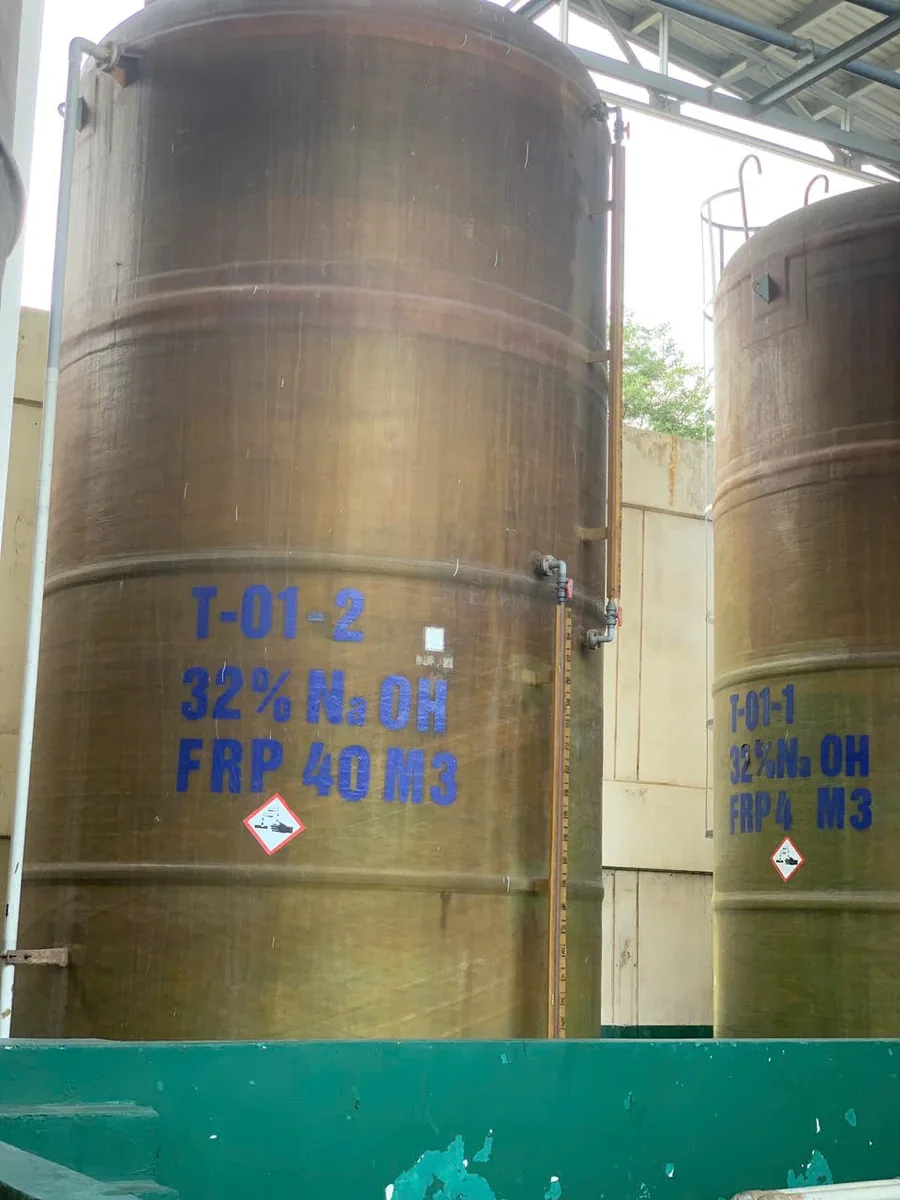
Wastewater treatment chemical NaOH is a neutralizing agent commonly used to adjust the pH of wastewater. This helps maintain pH stability, optimizing subsequent treatment steps such as precipitation and flocculation.
Additionally, NaOH neutralizes contaminants, particularly those that may lower wastewater pH, facilitating subsequent treatment processes. This not only improves wastewater quality but also enhances the overall efficiency of the treatment process.
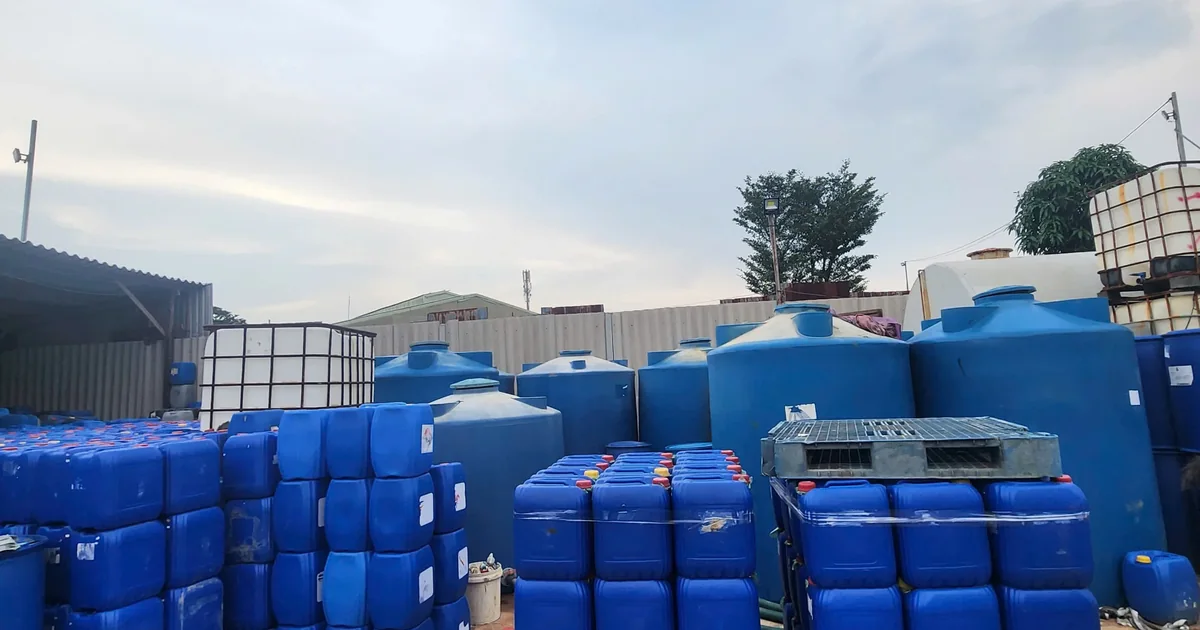
PAC – Coagulant and flocculant chemical:
PAC chemical is widely used in wastewater treatment. PAC can form coagulated clusters and solid flocs in wastewater. These flocs result from the aggregation of small particles, allowing them to settle efficiently at the bottom of tanks.The combined coagulation and flocculation capabilities of PAC make it a critical component in wastewater treatment, reducing environmental impact and improving effluent quality.
Aluminum sulfate Al2(SO4)3 – Coagulant and flocculant chemical:
Wastewater treatment chemical aluminum sulfate Al2(SO4)3 participates in coagulation and flocculation. It aggregates small particles into larger clusters, facilitating sedimentation and removal. It also helps control pH, decolorize wastewater, and supports disinfection.
Aluminum sulfate is essential in wastewater treatment, improving water quality and ensuring compliance with environmental standards.
Ferrous chloride FeCl2 – Coagulant and flocculant chemical:
Coagulant and flocculant FeCl2 effectively settles and removes small particles in wastewater. FeCl2 also eliminates pollutants, aids in decolorization, pH control, and disinfection. Wastewater treatment chemical FeCl2 plays a vital role in enhancing water quality and protecting the environment.
Ferric chloride FeCl3 – Coagulant and flocculant chemical:
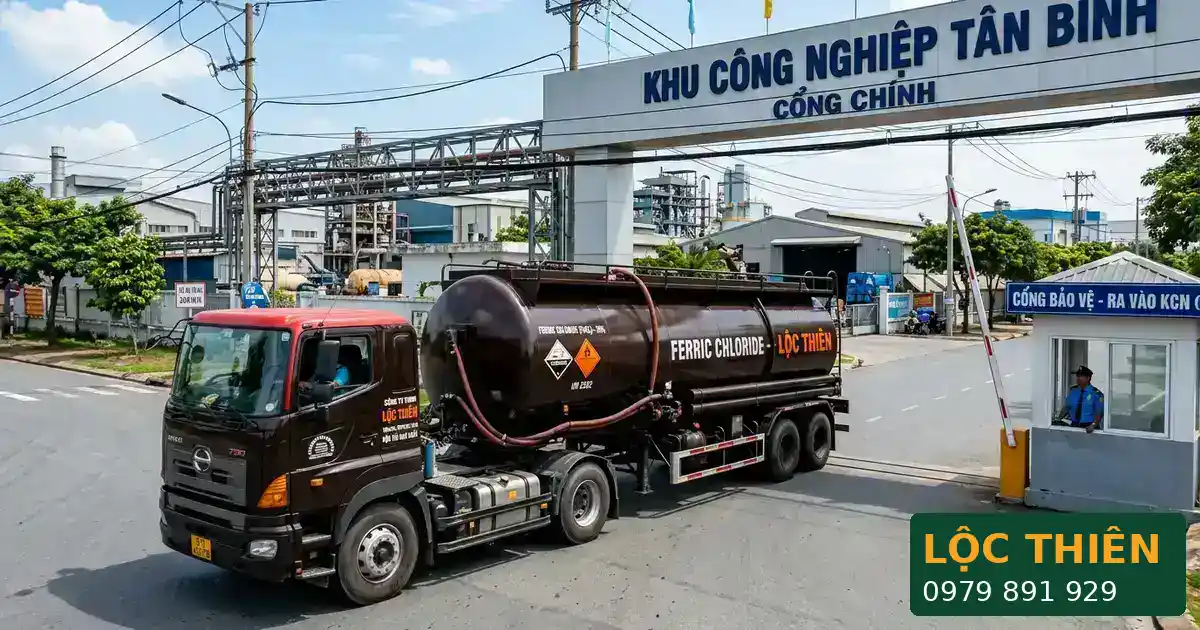
With its versatility, FeCl3 serves as a coagulant and flocculant in modern water treatment. FeCl3 delivers high efficiency, accelerating wastewater treatment and ensuring cleaner water for environmental hygiene and human safety.
Disinfectant chemical Javel water:
Javel water is used in wastewater treatment for its strong disinfecting properties, eliminating bacteria and ensuring effluent meets safety standards. It also removes odors and colors, enhancing water aesthetics. However, careful usage is required to avoid environmental and health impacts. It plays a key role in maintaining water safety and cleanliness.
Applications of wastewater treatment chemicals:
Wastewater treatment chemicals are widely applied across various sectors, from domestic to industrial and agricultural production. Key applications include:
- Domestic and municipal wastewater treatment:
- Removing pollutants from household wastewater in residential, urban, and rural areas.
- Applied to wastewater systems from construction projects, infrastructure, and public facilities.
- Public service facility wastewater treatment:
- Treating wastewater from schools, hospitals, restaurants, and hotels to ensure effluent does not pollute the environment.
- Critical for hospital wastewater treatment to eliminate bacteria, viruses, and toxic chemicals.
- Industrial wastewater treatment:
- Used in chemical, petrochemical, textile dyeing, paper, and food production plants.
- Removes hazardous substances, oils, heavy metals, and persistent organic compounds.
- Agricultural wastewater treatment:
- Applied to wastewater from fields, aquaculture ponds, and livestock farms.
- Eliminates organic waste, pesticide residues, and fertilizers from water.
- Water reuse applications:
- Treats water for reuse in production, agricultural irrigation, or other industrial purposes, reducing reliance on natural water sources.
Positive impacts:
Using wastewater treatment chemicals ensures cleaner water, reduces disease risks, and protects human and microbial health. This fosters a safer living environment and promotes sustainable development in production and daily life.
Buy affordable wastewater treatment chemicals in Ho Chi Minh City:
Many suppliers offer wastewater treatment chemicals in Ho Chi Minh City, but finding a reputable, high-quality provider at competitive prices can be challenging. Look no further—Loc Thien Chemicals is your trusted supplier of wastewater treatment chemicals, textile dyeing chemicals, paint industry chemicals, and more in Vietnam. We specialize in wastewater treatment chemicals imported from renowned brands, with large stock availability to meet customer demands.
To purchase affordable, reliable, and high-quality wastewater treatment chemicals in Ho Chi Minh City, contact Loc Thien Chemicals via hotline: 0979 891 929. Our team is ready to provide competitive wastewater treatment chemical pricing tailored to your needs.
Technical Support & B2B Procurement Hotline
Loc Thien Chemical specializes in direct manufacturing of FeCl₂ / FeCl₃ and direct industrial supply of basic chemicals (NaOH, HCl, H₂SO₄, PAC, NaOCl, H₂O₂, FeSO₄) with direct B2B pricing and dedicated 5–30-ton tanker delivery across Vietnam.
- Hotline / Zalo: +84 979 891 929
- Official Email: [email protected]
- Direct Manufacturer: Ferrous Chloride (FeCl₂ 30%) & Ferric Chloride (FeCl₃ 38–40%)
- Primary Supplier: NaOH 32%/45%/50%/99%, HCl 32%, H₂SO₄ 98%, PAC 30–31%, NaOCl 10–12%, H₂O₂ 35%/50%
- Compliance & Quality: FeCl₂ ZDHC MRSL v3.1 test report (Smart testing, 5 substance groups, TUV Rheinland Vietnam), ISO 9001:2015, Quatest 3, Full COA & GHS SDS
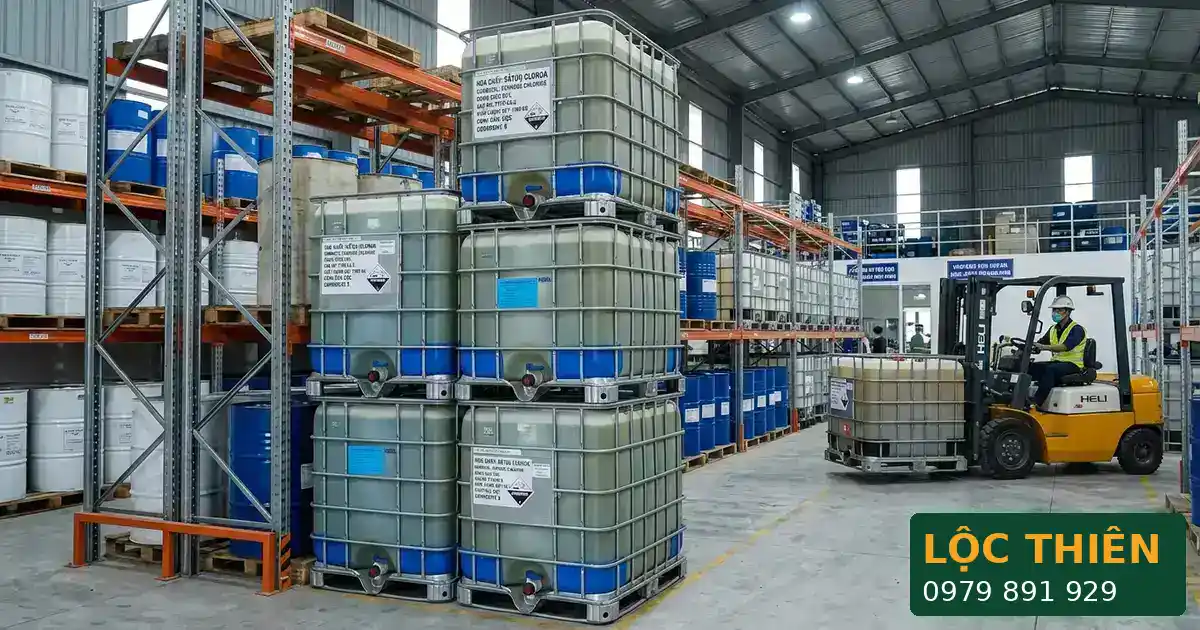
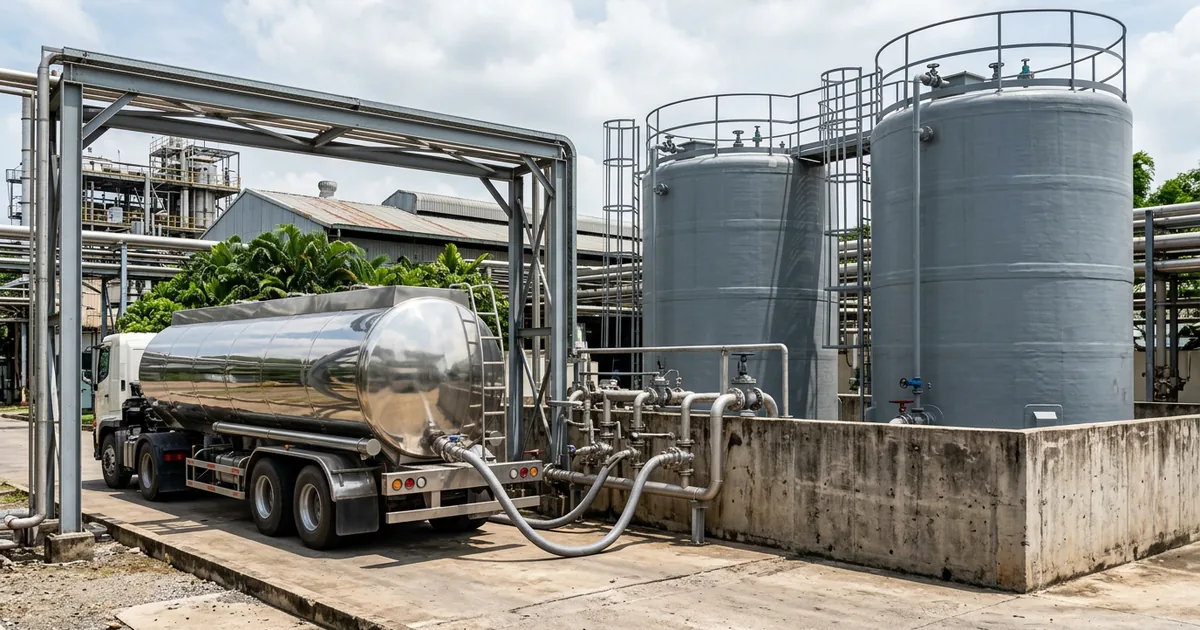 Figure: On-site chemical dosing, storage tank operation, and batch COA inspection — Source: Loc Thien Chemical.
Industrial Field Operation & Batch Quality Verification
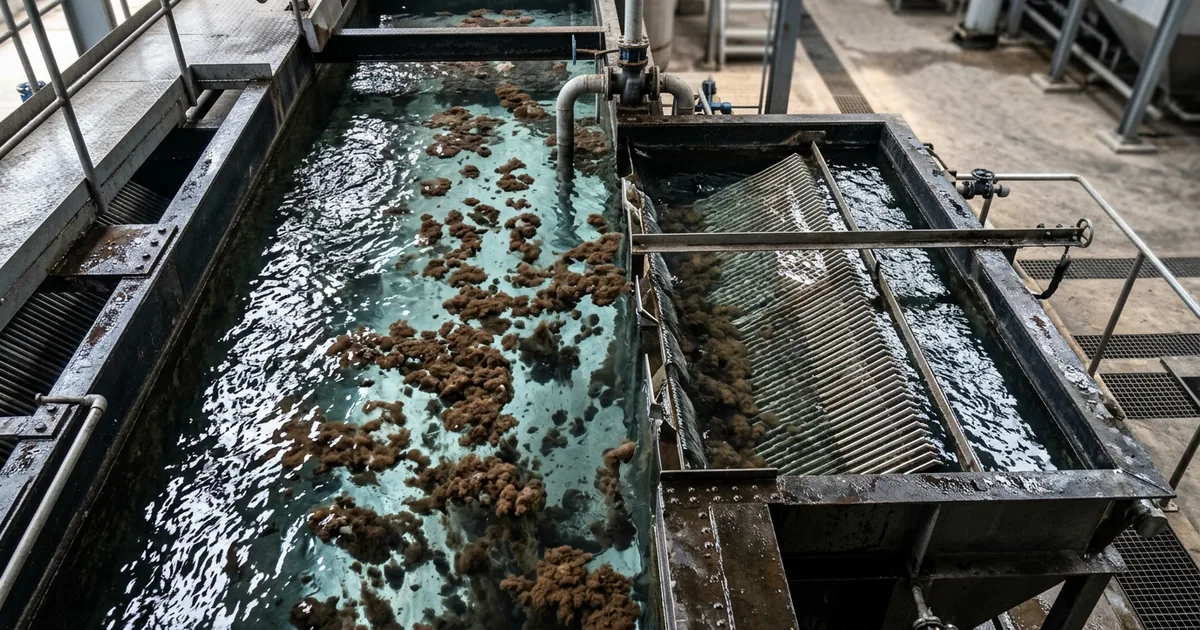
1. Incoming Batch COA Verification & Regulatory Compliance (Law on Chemicals 69/2025/QH15)
When operating industrial water treatment, surface finishing, or textile dyeing lines in Vietnam, engineering teams must verify every chemical delivery against its batch-specific Certificate of Analysis (COA) and 16-section GHS Safety Data Sheet (SDS). Under the Vietnam Law on Chemicals No. 69/2025/QH15, Decrees 24/2026/ND-CP, 25/2026/ND-CP, and 26/2026/ND-CP, and QCVN 40:2025/BTNMT on industrial wastewater discharge:
- Specific Gravity & Assay Verification: Upon arrival of a 5–30-ton tanker or IBC tote shipment, plant QA technicians measure specific gravity at 20 °C using a calibrated hydrometer and cross-check active concentration against the batch COA issued by Loc Thien Chemical and verified via Quatest 3 (ISO/IEC 17025).
- Impurity & Heavy Metal Control: Trace heavy metals (Fe, Pb, As, Hg, Cd, Cr⁶⁺) and insoluble matter are strictly controlled to prevent catalyst poisoning in Fenton reactors, membrane fouling in RO/UF systems, or shade deviations in reactive textile dyeing.
- ZDHC MRSL v3.1 Level 1 Portfolio Boundary: For export-oriented textile and footwear FDI factories, Loc Thien Chemical maintains official ZDHC MRSL v3.1 Conformance Level 1 documentation for exactly 9 core products: four products certified by TUV SUD Product Service GmbH (
NaOH,H2O2,Na2SO4,Na2CO3) and five products verified via Conformance Summary Report (CSR) and Analytical Test Report by TUV Rheinland Vietnam (H2SO4,FeCl2,HCl,Javel/NaOCl,PAC 31%).
| Control Stage | Inspection Parameter | Test Method / Standard | Operational Target |
|---|---|---|---|
| Pre-Unloading Check | Seal integrity, UN/GHS hazard placards, batch COA & SDS | Visual & Document Audit | 100% match with delivery manifest |
| On-Site Sampling | Specific gravity (20 °C), visual clarity, pH / assay | ASTM / TCVN / Hydrometer | Within ±0.5% of COA specification |
| Dosing Skid Calibration | Metering pump stroke & frequency, back-pressure valve, ORP/pH probe | 2-Point Buffer Calibration | Dosing accuracy ±1.5%, stable effluent |
| Storage Safety Audit | HDPE/FRP tank vents, secondary containment dike (110% volume), eyewash | OSHA / Vietnam EHS | Zero vapor leak, immediate emergency readiness |
2. Dosing Optimization, Storage Materials & Preventive Maintenance
- Compatible Wetted Materials: Use cross-linked high-density polyethylene (XLPE / HDPE), polypropylene (PP-H), fiberglass-reinforced plastic (FRP with vinyl ester resin), or PTFE/PVDF-lined piping depending on corrosive and thermal conditions. Avoid unlined carbon steel or incompatible elastomers.
- Automated Dosing Control: Integrate diaphragm metering pumps with real-time pH, ORP (mV), turbidity, or conductivity sensors. Always perform a 5-beaker Jar Test whenever raw water COD, TSS, or alkalinity shifts by more than 15%.
- Secondary Containment & PPE: Storage tanks must sit inside an acid/alkali-resistant bund wall holding at least 110% of the largest tank volume. Operators handling unloading hoses must wear splash-proof chemical goggles, acid/alkali-resistant nitrile or neoprene gloves, face shields, and emergency respirators.
3. Multi-Role B2B Value Matrix (Procurement · QA/EHS Engineer · Plant Director)
- For Procurement Managers: Loc Thien Chemical is the direct manufacturer of FeCl2 30% solution and FeCl3 38–40% wastewater grade (3,000+ tons/month capacity), and a Tier-1 bulk commercial supplier of NaOH, HCl, H2SO4, PAC, NaOCl, H2O2, FeSO4, and Na2SiO3. Pricing is transparently structured around 5 technical cost drivers (active assay, packaging format, delivery distance from our 6 warehouses, order volume, and scheduled contract cadence) with a 15-minute technical quotation SLA.
- For Environmental & Process Engineers: Full technical support for Jar Test optimization, stoichiometry calculation, sludge minimization, and QCVN 40:2025/BTNMT compliance auditing.
- For FDI Plant Directors: Guaranteed supply continuity via 6 regional warehouses (Ba Ria - Vung Tau, Dong Nai, Binh Duong, Da Nang, Can Tho, Bac Ninh) and a dedicated 5–30-ton tanker fleet (4 hours in inner HCMC, 24–48 hours across Southern & Mekong Industrial Parks, 2–3 days in Northern & Central Vietnam).
4. Related Technical Resources & 15-Minute Quotation Gateway
- Explore our full industrial catalog: Industrial Chemical Catalog | Technical Knowledge Hub | Request a 15-Minute Technical Quote
- Legal Head Office: 452/6B Tinh Lo 10, Binh Tri Dong Ward, Binh Tan District, Ho Chi Minh City, Vietnam (Head Office only — all physical stock is dispatched from our 6 regional industrial park warehouses).
- 24/7 Technical Hotline: 0979 891 929 (Please contact hotline 0979 891 929 for detailed delivery procedures) | Official Email: [email protected]
Extended Engineering Calculation Example & Jar Test Protocol for Common types of wastewater treatment chemicals today
In a representative industrial wastewater treatment or surface treatment facility operating at a design flow of 1,200 m³/day (Technical Illustrative Example), process engineers evaluate dosing stoichiometry across three operating scenarios: baseline load, peak shift load (+25% COD/TSS), and seasonal rain dilution. Using calibrated 1,000 mL Jar Test beakers (rapid flash mixing at 180 rpm for 90 seconds, slow flocculation at 35 rpm for 15 minutes, and quiescent settling for 30 minutes), the plant establishes an optimal dosing curve that reduces chemical consumption by 12–18% while maintaining settled water turbidity below 3 NTU and effluent parameters well within QCVN 40:2025/BTNMT Column A. Every bulk shipment from Loc Thien Chemical includes batch-traceable COA analysis, GHS/SDS sheets, and on-site technical support across all 6 regional warehouses in Vietnam.
Preventive Maintenance (PM) & Corrosion Inspection Schedule for Chemical Storage & Dosing Skids
To prevent unplanned downtime, flange weeping, or sensor drift in industrial water treatment and manufacturing plants, EHS and maintenance engineering teams should enforce the following preventive maintenance (PM) schedule:
| Equipment & Subsystem | Inspection Frequency | Technical Inspection Scope & Engineering Standard | Corrective Action Upon Deviation |
|---|---|---|---|
| Bulk Storage Tanks (HDPE / XLPE / FRP) | Monthly | Inspect PTFE/EPDM flange gaskets, sight-glass level gauges, scrubber breathers, and 110%-capacity containment dike | Depressurize line, re-torque bolts, and replace aged gaskets immediately |
| Diaphragm Metering Pumps & Piping | Bi-weekly | Calibrate volumetric flow rate using a graduated calibration cylinder (target accuracy ±2%); clean Y-strainers and check valves | Flush crystallized deposits from ball checks and bleed air locks |
| Online pH / ORP / Conductivity Probes | Weekly | Perform two-point buffer calibration (pH 4.00 / 7.00 / 10.01) and clean glass bulb fouling | Regenerate sluggish electrodes in dilute HCl solution or replace probe |
| ANSI Z358.1 Emergency Shower & Eyewash | Weekly | Activate flow for 30 seconds to verify pressure, tepid water clarity, and unobstructed access | Clear nozzle blockages and log inspection in plant EHS register |
Transparent 5-Factor B2B Cost Structure & Supply Chain Optimization in Vietnam
Under Loc Thien Chemical’s transparent B2B commercial policy, unit chemical pricing is never published as a static retail figure online; instead, every formal quotation is engineered within 15 minutes around five verifiable cost drivers:
- Active Assay & Grade Specification: Concentration levels (such as 32% / 45% / 50% liquid NaOH vs. 99% pearls, or industrial vs. ZDHC-compliant grades) directly determine the active molar equivalent delivered per metric ton.
- Packaging & Bulk Delivery Mode: Bulk delivery via dedicated 5–30-ton corrosion-resistant tankers eliminates drum handling and minimizes per-ton logistics cost; 1,000 L IBC totes, 200 L drums, and 25 kg woven bags are also stocked.
- Dispatch Distance from Our 6 Regional Warehouses: Orders are routed from the nearest hub (Ba Ria - Vung Tau, Dong Nai, Binh Duong, Da Nang, Can Tho, or Bac Ninh) to cut freight lead time and carbon footprint.
- Order Volume & Annual Blanket Contracts: Scheduled monthly call-off contracts lock in priority safety stock and volume-tiered commercial terms, insulating factories from raw material spot volatility.
- Batch Documentation & FDI Compliance Package: Every delivery includes a batch-specific COA, 16-section GHS SDS, and—for our 9 certified core textile/footwear chemicals—official ZDHC MRSL v3.1 Conformance Level 1 documentation.
Engineering Cost-Per-Equivalent Evaluation, Dilution Thermodynamics & Foolproof Unloading
Industrial procurement and process engineers should evaluate chemicals based on total treatment cost per kilogram of pollutant removed (COD, Total Phosphorus, Cr⁶⁺) or per kilomole of active reagent (H⁺, OH⁻, Fe²⁺, Fe³⁺, Al₂O₃) rather than nominal price per kilogram of solution:
- Real-Time Specific Gravity Cross-Checking: Operators should verify solution specific gravity at 20 °C each shift using a calibrated hydrometer to compensate for seasonal temperature shifts or moisture absorption.
- Exothermic Dilution Safety: When diluting concentrated sulfuric acid or dissolving caustic soda pearls, always add chemical slowly into cooled water under continuous mechanical agitation inside a heat-resistant PP-H or FRP mixing vessel.
- Dual-Lock Poka-Yoke Unloading Manifolds: Color-coded, padlocked camlock manifolds requiring joint sign-off by the tanker driver and plant EHS officer prevent accidental cross-mixing of acids with sodium hypochlorite (Javen) or alkalis.
Regulatory Compliance Under Vietnam Law on Chemicals 69/2025/QH15 & QCVN 40:2025/BTNMT
FDI manufacturers operating across Vietnamese industrial parks face tightened environmental and chemical safety audits under the updated 2025–2026 regulatory framework:
- Chemical Lifecycle Traceability (Law No. 69/2025/QH15 & Decrees 24–26/2026/ND-CP): Facilities must maintain auditable supplier licenses, dangerous-goods transport permits, and bilingual 16-section GHS Safety Data Sheets.
- Strict Effluent Limits (QCVN 40:2025/BTNMT): The national industrial wastewater standard enforces stringent limits on Total Phosphorus, Total Nitrogen, color, COD, and heavy metals. Using high-purity, low-heavy-metal reagents from a verified manufacturer/supplier prevents secondary contamination.