
FeCl2 25-30%: Technical Specifications, Applications & Where to Buy
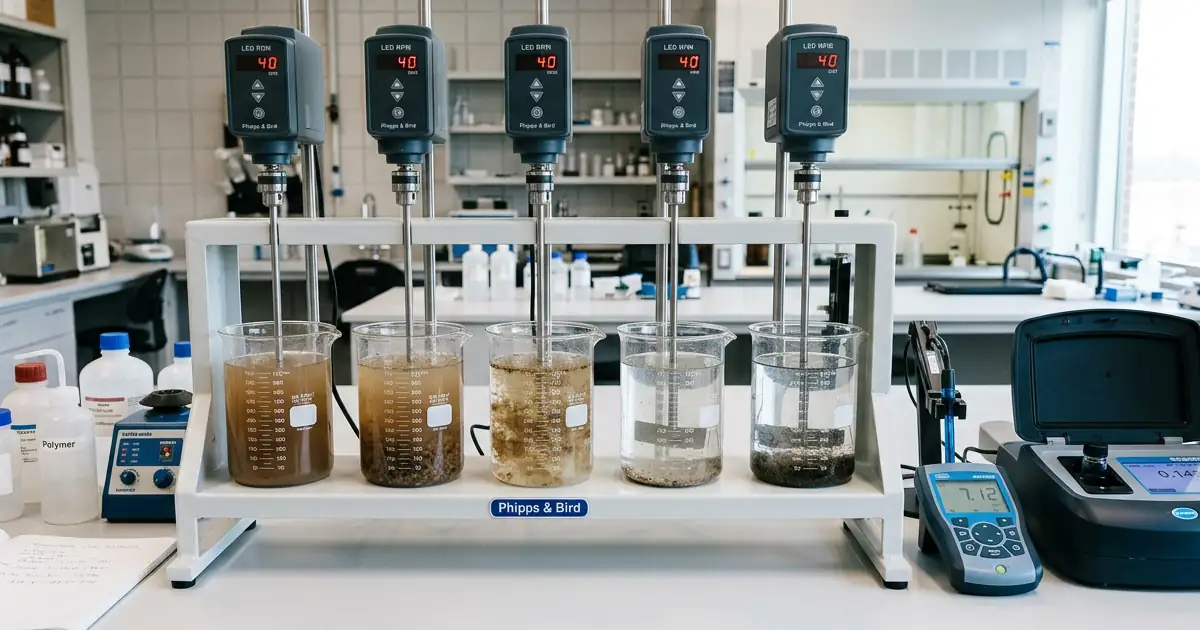
FeCl2 25-30% (ferrous chloride, CAS 7758-94-3) is a pale green solution used in electroplating wastewater treatment to reduce Cr6+ to Cr3+, coagulate suspended solids and phosphates, and serve as a Fenton catalyst for treating refractory COD. Learn more about FeCl2 wastewater treatment — coagulation dosage and Cr6+ reduction guide (PILLAR WWT). The product is directly manufactured by Loc Thien with an FeCl2 content of 28-30%, density 1.30-1.35 g/ml (20°C), pH <1.0, free HCl 0.1-0.5%, packaged from 30L jerrycans to 30-ton tankers, with batch-specific COA.
- Active FeCl2 28-30% — determined by K2Cr2O7 titration, Fe3+ impurity ≤0.5%, free HCl 0.1-0.5%
- Density 1.30-1.35 g/ml at 20°C — stock solution pH <1.0, heavy metals (Pb, As) ≤5 ppm by ICP-MS
- 3 treatment mechanisms: Cr6+ reduction (3Fe2+:1Cr6+ ratio, pH 2.0-2.5), coagulation (pH 6.5-8.5, dose 50-500 mg/L), Fenton AOP (pH 2.8-3.5, H2O2:Fe2+ = 2:1 to 10:1)
- 4 packaging options: 30L jerrycan (~42 kg), 200L drum (~280 kg), 1000L IBC (~1400 kg), 5-30 ton tanker
- Direct manufacturer — batch COA, 6 warehouses across 3 regions, dedicated tanker fleet, nationwide delivery (within 4 hours in inner Ho Chi Minh City; 24–48 hours to industrial parks in southern and western Vietnam; 2–3 days to northern and central Vietnam)
What is FeCl2 25-30%?
FeCl2 25-30%, full chemical name ferrous chloride solution, is an industrial water treatment chemical belonging to the group of ferrous iron salts. Its molecular formula is FeCl2, CAS registry number 7758-94-3, and molecular weight 126.75 g/mol.
The product exists as a liquid solution with a characteristic pale green color from hydrated Fe2+ ions in an acidic environment. Upon prolonged exposure to air, a portion of Fe2+ oxidizes to Fe3+, causing the solution to gradually turn brown — this is a natural phenomenon that does not significantly affect coagulation efficiency but should be noted for Cr6+ reduction or Fenton applications. The product has a mild, slightly sour odor characteristic of residual HCl (controlled at 0.1-0.5% to stabilize Fe2+ and prevent premature hydrolysis).
In water treatment, FeCl2 25-30% is applied in three main areas. First, reduction of hexavalent chromium (Cr6+) in electroplating wastewater — this is a specialized application that cannot be replaced by FeCl3 or PAC. Second, coagulation of suspended solids, organic colloids, and phosphates in industrial and municipal wastewater. Third, as a catalyst for the Fenton reaction (Advanced Oxidation Process) to oxidize non-biodegradable organic compounds.
Chemically, FeCl2 is fundamentally different from FeCl3 (CAS 7705-08-0). FeCl2 contains iron in the +2 oxidation state (Fe2+ — a reducing agent, electron donor), appearing green. FeCl3 contains iron in the +3 oxidation state (Fe3+ — a weak oxidizing agent, electron acceptor), appearing reddish-brown. This difference in valence determines their distinct application areas — FeCl2 reduces Cr6+ and drives Fenton reactions; FeCl3 coagulates more rapidly.
Loc Thien manufactures FeCl2 25-30% directly, with quality control via COA for each batch. Actual FeCl2 content is 28-30%, density 1.30-1.35 g/ml (20°C), pH <1.0, Fe3+ impurity ≤0.5%.
FeCl2 25-30% Technical Specifications Table
The TDS table below compiles specifications from Loc Thien’s actual COA. Each parameter includes the test method for engineers to cross-check during incoming quality inspection:
| Parameter | Value | Test Method |
|---|---|---|
| FeCl2 Content | 28-30% | K2Cr2O7 Titration |
| Fe3+ Impurity | ≤0.5% | Titration |
| Density (20°C) | 1.30-1.35 g/ml | TCVN |
| pH (Stock Solution) | <1.0 | pH meter |
| Free HCl | 0.1-0.5% | NaOH Titration |
| Heavy Metals (Pb, As) | ≤5 ppm | ICP-MS |
| Solubility in Water | Completely soluble | Visual |
| Boiling Point | ~106°C | — |
| Vapor Pressure (20°C) | ~14 mmHg | — |
Analysis of Key Parameters:
-
FeCl2 Content 28-30%: This concentration range indicates a high-strength product suitable for both Cr6+ reduction (requiring active Fe2+) and coagulation. The K2Cr2O7 titration method is standard in water chemistry labs — plant labs can perform this test.
-
Fe3+ Impurity ≤0.5%: This is a critical specification for Cr6+ reduction and Fenton efficiency. Fe3+ cannot reduce Cr6+ (it is already in its highest oxidation state). Regular testing helps detect product oxidation during storage.
-
Density 1.30-1.35 g/ml: Field estimation of FeCl2 content can be done quickly using a hydrometer — a reading below 1.30 g/ml suggests possible dilution.
-
Free HCl 0.1-0.5%: The residual acid stabilizes Fe2+ and prevents hydrolysis during storage. When dosed into the reaction tank, this acid contributes to pH reduction and must be factored into the pH control system design.
Mechanism of Action of FeCl2 in Water Treatment
FeCl2 25-30% participates in three distinct mechanisms. Understanding each mechanism helps engineers optimize dosage, pH, and equipment for different wastewater types.
Cr6+ Reduction in Electroplating Wastewater
This is the most specialized application of FeCl2 — it cannot be replaced by FeCl3, PAC, or alum. The mechanism is based on the redox reaction between Fe2+ (reducing agent, donating 1 electron) and Cr6+ (oxidizing agent, accepting 3 electrons):
3Fe2+ + Cr6+ → 3Fe3+ + Cr3+
Detailed Analysis:
- Stoichiometric Ratio: 3 moles of Fe2+ per 1 mole of Cr6+. In practice, 10-20% excess Fe2+ is used to ensure complete Cr6+ reduction (to zero)
- Optimal pH: 2.0-2.5. At pH >3.0, Fe3+ precipitates as Fe(OH)3, hindering reduction. At pH <2.0, the reaction rate decreases due to excessively high H+ concentration
- Reaction Time: 15-30 minutes with gentle mixing
- Cr3+ Precipitation: After reduction, raise pH to 8-9 with NaOH — Cr3+ precipitates as Cr(OH)3 (gray-green floc), removed by sedimentation or filtration
- Actual Efficiency: Cr6+ from 120 mg/L → <0.05 mg/L (meeting QCVN 40:2025/BTNMT (replacing QCVN 40:2011, effective September 1, 2025), Column A: Cr6+ ≤0.1 mg/L)
Cr6+ Reduction Tank Operating Procedure:
- Pump electroplating wastewater into the reduction tank, adjust pH to 2.0-2.5 using HCl or H2SO4
- Dose FeCl2 25-30% at a molar ratio of 3Fe2+:1Cr6+ (10% excess), mix for 15-30 minutes
- Check residual Cr6+ using a field test kit
- Pump NaOH to raise pH to 8-9 — Cr3+ precipitates as Cr(OH)3
- Add anionic PAM flocculant 1-3 ppm if needed, settle for 30-60 minutes
- Recover Cr(OH)3 sludge; treated water meets discharge standards
Electroplating plants in Bien Hoa Industrial Park and VSIP Bac Ninh have switched from solid FeSO4.7H2O to liquid FeCl2 30% for their Cr6+ reduction process, achieving a 31% reduction in chemical costs due to savings on preparation labor, reduced dosing errors, and elimination of solid raw material storage.
Wastewater Coagulation
FeCl2 25-30% coagulates through two transformation stages. Unlike FeCl3 (direct coagulation), FeCl2 requires oxidation for maximum efficiency — this process occurs naturally in water containing dissolved oxygen (DO).
Stage 1 — Hydrolysis: Fe2+ hydrolyzes to form Fe(OH)2:
Fe2+ + 2H2O → Fe(OH)2 + 2H+
Stage 2 — Oxidation: Fe(OH)2 is oxidized by DO to Fe(OH)3:
4Fe(OH)2 + O2 + 2H2O → 4Fe(OH)3
Fe(OH)3 floc has a large surface area, adsorbing suspended solids, organic colloids, and phosphates. The floc settles to the bottom or is removed by filtration.
Coagulation Operating Parameters:
- Dosage: 50-500 mg/L (depending on influent turbidity and phosphate levels)
- Optimal pH: 6.5-8.5
- Rapid Mixing: 30-60 seconds (G = 300-500 s⁻¹)
- Flocculation Mixing: 15-30 minutes (G = 30-70 s⁻¹)
- Polymer Flocculant Aid: Anionic PAM 1-3 ppm
Fenton Reaction (AOP)
In the classic Fenton system, FeCl2 provides Fe2+ as a catalyst to decompose H2O2:
Fe2+ + H2O2 → Fe3+ + OH• + OH-
The OH• radical has an oxidation potential of E° = 2.80 V — second only to fluorine, higher than ozone (2.07 V), H2O2 (1.78 V), and Cl2 (1.36 V). OH• oxidizes most refractory organic compounds — phenols, pesticides, solvents, oils & greases, color compounds — into CO2 and H2O or biodegradable products.
Optimal Fenton Operating Parameters:
- Optimal pH: 2.8-3.5. pH >4.0: Fe3+ precipitates, Fe2+ is not regenerated. pH <2.5: H2O2 protonates to H3O2+, reducing OH• production
- H2O2:Fe2+ Ratio: 2:1 to 10:1 (depending on COD). Higher ratios for high COD, lower ratios for low COD
- COD Reduction: 60-85% under optimal conditions
- Reaction Time: 30-60 minutes
Basic Fenton Procedure:
- Adjust wastewater pH to 3.0 using H2SO4
- Dose FeCl2 25-30% based on the H2O2:Fe2+ ratio (starting point 5:1)
- Slowly add H2O2 30% over 30-60 minutes — avoid shock loading and OH• radical loss
- Mix for 30-60 minutes, check residual COD
- Raise pH to 7-8 with NaOH — precipitate excess Fe3+
- Settle and separate excess iron floc
Example: Textile dyeing wastewater with COD ~2000 mg/L, Fenton with H2O2:Fe2+ = 8:1, FeCl2 30% dose ~800 mg/L, COD reduced to ~300 mg/L (85%), followed by biological treatment to meet QCVN 40:2025 (replacing QCVN 40:2011, effective 01/09/2025) Column A.
FeCl2 25-30% Usage Guide
Dosing Principles by Application
The FeCl2 25-30% dose is calculated based on the treatment objective and jar test results. Reference formulas:
Cr6+ Reduction — quick estimate: wastewater with 100 mg/L Cr6+ → requires ~11 mL FeCl2 30%/liter of wastewater. Full formula:
Dose (mL/m³) = (Cr6+ mg/L ÷ 52) × 3 × 126.75 ÷ (%FeCl2 × density) × 1000
Where 52 is the atomic weight of Cr, 126.75 is the molecular weight of FeCl2, %FeCl2 is the decimal concentration (0.30), and average density is 1.32.
Coagulation — jar test is the standard method. Dilute FeCl2 25-30% to a 5-10% solution, test doses of 50-100-200-300-500 ppm. Select the dose that produces rapid floc formation, the clearest supernatant, and a post-treatment pH drop not exceeding 0.5 units.
Fenton — determine influent COD → select a starting H2O2:Fe2+ ratio of 5:1 → conduct jar tests with ratios of 3:1, 5:1, 8:1, 10:1 → measure post-reaction COD → select the ratio with the highest COD removal per cost.
Dosage Guidelines by Wastewater Type
| Wastewater Type | Purpose | Reference Dose | Operating pH | Notes |
|---|---|---|---|---|
| Electroplating (plating, anodizing) | Cr6+ Reduction | Calculated per 3Fe2+:1Cr6+ ratio (10-20% excess) | 2.0-2.5 (reduction) → 8-9 (Cr3+ precipitation) | Check effluent Cr6+ with test kit; use NaOH for Cr(OH)3 precipitation |
| Textile Dyeing | Fenton or Coagulation | 200-800 mg/L (Fenton), 100-400 mg/L (Coagulation) | 2.8-3.5 (Fenton), 6.5-8.5 (Coagulation) | Fenton: 60-85% COD reduction; Coagulation: color and TSS removal |
| Printing Ink & Packaging | Coagulation + Fenton | 300-500 mg/L | 2.8-3.5 (Fenton) | Treats high COD, refractory ink color; requires jar test to optimize H2O2:Fe2+ |
| Municipal (Urban, Industrial Parks) | Phosphate Coagulation | 50-200 mg/L | 6.5-8.5 | Lower dose than FeCl3 due to lower cost; phosphate removal efficiency depends on DO for Fe2+ → Fe3+ oxidation |
All doses above are starting points. Conducting a jar test with actual wastewater is mandatory before full-scale operation — each wastewater source has different TSS, COD, phosphate, and metal characteristics, leading to different optimal FeCl2 doses.
Safe Dosing Procedure
- FeCl2 25-30% is a ready-to-use solution — no dilution required before dosing
- Use acid-resistant metering pumps — PTFE diaphragm pumps or peristaltic pumps
- Dose after the pH adjustment point (Cr6+ reduction requires pH ~2.0) or simultaneously with acid (coagulation/Fenton)
- Provide rapid mixing G > 300 s⁻¹ for 30-60 seconds after the dosing point
- For Fenton — add H2O2 slowly, at least 2-3 minutes after FeCl2 addition
- Monitor actual pH — FeCl2 pH <1.0, high doses can further drop pH by 0.3-0.5 units
Material Compatibility
| Material | Compatibility Level | Notes |
|---|---|---|
| PP, PE, PVC | Good | Storage tanks, piping, valves — standard |
| FRP (Fiberglass) | Good | Large IBC tanks, dosing tanks |
| Rubber-lined | Good | Reaction tanks, tanker tanks |
| PVDF, PTFE | Good | Pumps, valves, gaskets |
| Carbon Steel | No | Rapid corrosion |
| Stainless Steel 304/316 | No | Pitting corrosion due to Cl- + low pH |
Note: Do not use stainless steel or carbon steel for FeCl2 containment at any temperature. Cl- + pH <1.0 causes rapid corrosion — 316 stainless steel can perforate after a few months of operation.
Packaging & Storage Specifications
| Form | Net Weight | Suitable For |
|---|---|---|
| 30L Jerrycan | ~42 kg | Laboratories, trial runs |
| 200L Drum | ~280 kg | Small plants, WWTPs <500 m³/day |
| 1000L IBC | ~1400 kg | Medium-large WWTPs |
| Tanker | 5-30 tons | Large industrial parks, most economical |
Loc Thien operates a dedicated fleet of 5-30 ton tankers with rubber-lined or PP/PE tanks, safety valves, and dedicated discharge pumps.
Storage Conditions:
- PP, PE, FRP, or rubber-lined steel tanks — no stainless steel, no carbon steel
- Temperature 5-35°C — avoid freezing (FeCl2 30% freezing point ~ -25°C, safe in winter), avoid excessive heat (>40°C increases Fe2+ oxidation)
- Keep sealed — Fe2+ oxidizes to Fe3+ upon air exposure. Large tanks should have a vapor barrier
- Avoid direct sunlight — UV and heat accelerate oxidation and HCl evaporation
- Mechanical ventilation in storage areas — prevent HCl vapor accumulation
Required PPE:
- Butyl/neoprene gloves (not latex)
- Tight-fitting safety goggles
- Chemical-resistant protective clothing
- Acid-cartridge respirator if in an enclosed area
Spill & Emergency Procedures:
- Skin contact: rinse with water for 15 minutes, remove contaminated clothing. Do not neutralize with alkali on the skin
- Eye contact: rinse for 15 minutes at eyewash station, seek immediate medical attention
- Spills: contain with sand/vermiculite — do not use sawdust, do not flush to drains
- Fire: FeCl2 is non-flammable but thermal decomposition >300°C produces HCl + Cl2 — use CO2 or dry powder extinguisher
FeCl2 vs FeCl3 — Technical Comparison Table
FeCl2 and FeCl3 are not direct substitutes — each has its own application domain. The table below compares 10 technical criteria to help engineers select the correct chemical:
| Criterion | FeCl2 25-30% | FeCl3 40% |
|---|---|---|
| Iron Form | Fe2+ (Ferrous) — reducing agent, electron donor | Fe3+ (Ferric) — cannot reduce Cr6+ |
| Color | Pale green → brown upon oxidation | Dark reddish-brown |
| CAS Number | 7758-94-3 | 7705-08-0 |
| Cr6+ Reduction | ✅ Yes — specialized application | ❌ No |
| Coagulation | ✅ Good (requires Fe2+ → Fe3+ oxidation) | ✅ Excellent (direct coagulation) |
| Fenton AOP | ✅ Source of Fe2+ for Fenton | ❌ Not applicable |
| Phosphate Removal | ✅ Good (FePO4) | ✅ Excellent (lower Fe:P ratio) |
| Equipment Corrosion | Medium-High | High |
| Post-Treatment pH | Less pH drop | Significant pH drop — requires more alkali |
| Cost | Lower | Higher |
Choose FeCl2 25-30% when:
- Electroplating wastewater contains Cr6+ — mandatory application, FeCl3 cannot substitute
- Fenton treatment is required — Fe2+ is a prerequisite for OH• generation
- Reducing chemical costs is a priority — FeCl2 is cheaper than FeCl3, saving operational budget
- Wastewater is pH-sensitive or minimizing alkali consumption is desired — FeCl2 causes less pH drop
Choose FeCl3 40% when:
- Treating conventional wastewater — Fe3+ forms floc immediately, no oxidation lag time
- Stringent phosphate removal is needed — FeCl3 has a lower Fe:P ratio (1:1 vs. requiring oxidation)
- Very high turbidity and TSS — FeCl3 neutralizes colloidal charges more strongly
- Short reaction time is required — FeCl3 coagulates faster than FeCl2
Where to Buy FeCl2 25-30% Reliably?
Loc Thien is a direct manufacturer of FeCl2 25-30%, with closed-loop quality control from production to delivery. Each batch comes with a COA detailing FeCl2 content, density, pH, Fe3+ impurity, and heavy metals.
Actual Capabilities:
- Direct Manufacturer — no intermediaries, competitive pricing, end-to-end quality control
- Batch COA — customers receive analysis certificates verifiable against their plant lab
- 6 Warehouses across 3 Regions: Ba Ria – Vung Tau, Dong Nai, Binh Duong, Da Nang, Can Tho and Bac Ninh — ready stock for fast delivery
- 5-30 Ton Tanker Fleet: rubber-lined/PP tanks, dedicated discharge pumps, safety valves
- Free Technical Consultation: support for jar tests, chemical dosing system design, Fenton/Cr6+ reduction optimization
Why Customers Choose Loc Thien?
- Competitive pricing through direct manufacturing — no multiple intermediary markups
- Full-parameter COA — verifiable immediately at your lab before stock intake
- Flexible ordering — from 30L jerrycans for trials to 30-ton tankers for stable production
- Delivery within 4 hours in inner Ho Chi Minh City, 24–48 hours to southern and western industrial parks (VSIP, Amata, Long Hau, Nhon Trach…), 2–3 days to northern and central Vietnam
- Engineering team available for process operation and troubleshooting consultation
An electroplating plant in Bien Hoa Industrial Park switched to Loc Thien’s liquid FeCl2 30% for their Cr6+ reduction process and achieved a 31% monthly reduction in chemical costs. This was due to savings from eliminating solid FeSO4.7H2O preparation labor, reduced material loss and dosing errors, and no need for solid raw material storage. Effluent Cr6+ remains consistently below 0.05 mg/L.
📞 Contact for Orders and FeCl2 25-30% Pricing:
- Hotline: 0979 891 929
- Zalo: 0979 891 929
- Email: [email protected]
- Website: https://hoachatlocthien.com
Request a quote for FeCl2 25-30% — provide quantity, delivery address, and technical requirements. Loc Thien responds within 15 minutes with an optimal packaging solution.
FeCl2 Cluster Cross-Links:
- FeCl2 Wastewater Treatment — Coagulation Dosage and Cr6+ Reduction (PILLAR WWT)
- FeCl2 Solution — Hazardous Chemical, Strong Corrosive (PILLAR Introduction)
- FeCl2 25-30% Price Quote Today — Updated August 2026
- Ferrous Chloride FeCl2 — Uses, Dosage and Where to Buy
- FeCl2 vs FeCl3 — Which Iron Chloride to Choose?
Related: FeCl3 40% Technical Specifications — detailed comparison. FeCl2 for Cr6+ Reduction in Electroplating Wastewater — process guide.
Technical Support & B2B Procurement Hotline
Loc Thien Chemical specializes in direct manufacturing of FeCl₂ / FeCl₃ and Tier-1 supply of basic industrial chemicals (NaOH, HCl, H₂SO₄, PAC, NaOCl, H₂O₂, FeSO₄) with direct B2B pricing and dedicated 5–30-ton tanker delivery across Vietnam.
- Hotline / Zalo: +84 979 891 929
- Official Email: [email protected]
- Direct Manufacturer: Ferrous Chloride (FeCl₂ 15–30%) & Ferric Chloride (FeCl₃ 38–40%)
- Primary Supplier: NaOH 32%/45%/50%/99%, HCl 32%, H₂SO₄ 98%, PAC 30–31%, NaOCl 10–12%, H₂O₂ 35%/50%
- Compliance & Quality: FeCl₂ ZDHC MRSL v3.1 test report (Smart testing, 5 substance groups, TUV Rheinland Vietnam), ISO 9001:2015, Quatest 3, Full COA & GHS SDS
Frequently Asked Questions
Is FeCl2 25-30% completely soluble in water?
Yes. FeCl2 25-30% is a liquid solution, completely miscible in all proportions. No vigorous mixing or heating is required for dilution.
How to distinguish FeCl2 from FeCl3 when purchasing?
FeCl2 is pale green, CAS 7758-94-3, labeled as ferrous chloride. FeCl3 is reddish-brown, CAS 7705-08-0, labeled as ferric chloride. Request a COA showing Fe2+ and Fe3+ content for verification.
Can FeCl2 25-30% reduce Cr6+ in electroplating wastewater?
Yes — this is its specialized application. Fe2+ reduces Cr6+ to Cr3+. The ratio is 3 moles Fe2+ per 1 mole Cr6+, optimal pH 2.0-2.5. FeCl3 or PAC cannot substitute.
How much FeCl2 25-30% is needed for 100 mg/L Cr6+?
Approximately 11 mL of FeCl2 30% per liter of wastewater (3Fe2+:1Cr6+ ratio, 10% excess). Conduct a jar test with actual wastewater to determine the precise dose.
What material should FeCl2 storage tanks be made of?
PP, PE, FRP, or rubber-lined steel. Absolutely do not use carbon steel or stainless steel 304/316 — Cl- and low pH cause rapid corrosion.
Can FeCl2 25-30% be used for Fenton?
Yes — it is a common source of Fe2+ for Fenton. The H2O2:Fe2+ ratio ranges from 2:1 to 10:1 depending on COD, optimal pH 2.8-3.5, COD reduction 60-85%.
How long can FeCl2 25-30% be stored?
At least 6 months at 5-35°C, kept sealed, away from sunlight. After this period, check Fe2+ and Fe3+ levels before use for Cr6+ reduction or Fenton.
How to dilute FeCl2 25-30%?
FeCl2 25-30% is a ready-to-use liquid solution — no dilution is required before dosing into the reaction tank. If dilution is needed for jar testing, use clean water (not wastewater) at a 1:10 ratio (1 part FeCl2 + 9 parts water), mix thoroughly.
Does FeCl2 25-30% form precipitates?
The stock solution does not form precipitates under standard storage conditions (pH <1.0). When introduced into wastewater at pH >3.0, Fe2+ hydrolyzes and oxidizes to Fe(OH)3 — this is the desired coagulant floc, not a defective product.
Can FeCl2 25-30% be used together with PAC?
It is possible but uncommon. FeCl2 and PAC are both coagulants — using them together does not provide synergistic benefits. Typically, only one is used. An exception: in Fenton systems, FeCl2 acts as a catalyst and can be combined with PAC in a final coagulation step after Fenton.