
What Is Ferrous Chloride (FeCl₂)? Uses, Dosage & Where to Buy
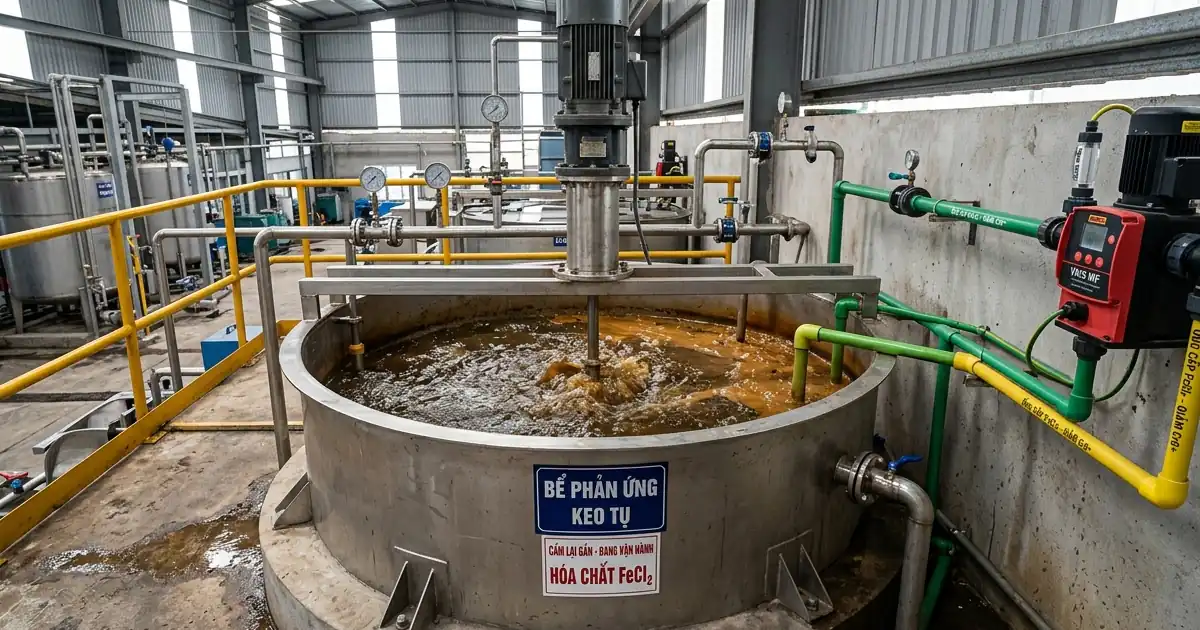
What is ferrous chloride (FeCl₂)? Ferrous chloride (ferrous sulfate II) is the common industry term for Iron (II) Chloride — FeCl₂ (CAS 7758-94-3) — a divalent iron-based coagulant supplied as a pale green liquid solution with specific gravity 1.30–1.35 g/mL and pH < 1.0. Learn more about FeCl₂ wastewater treatment — coagulation dosage and Cr6+ reduction (PILLAR WWT). What is FeCl₂ used for? Due to its ability to reduce Cr⁶⁺ to Cr³⁺ and its effective coagulation properties, FeCl₂ is a key chemical in treating wastewater from electroplating, textile dyeing, and other industrial processes. How to distinguish FeCl₂ from FeCl₃? Ferrous chloride (FeCl₂) is pale green CAS 7758-94-3, while ferric chloride (FeCl₃) is reddish-brown CAS 7705-08-0. Key distinction: FeCl₂ is pale green ≠ FeCl₃ is reddish-brown.
- Ferrous Chloride FeCl₂ — Iron (II) Chloride, CAS 7758-94-3, pale green solution, pH < 1.0.
- Key Application: Reduces Cr⁶⁺ in electroplating wastewater — up to 31% cheaper than NaHSO₃.
- Broad Operating Range: Effective at pH 2–9 — more flexible than alum (pH 5.5–7.5).
- Easy Identification: FeCl₂ is pale green — FeCl₃ is reddish-brown — avoid confusion when purchasing.
- Cost Optimization:Standard Name: Iron (II) Chloride — FeCl₂, CAS 7758-94-3, pale green solution, pH < 1.0.
- Key Application: Reduces Cr⁶⁺ in electroplating wastewater more effectively and up to 31% cheaper than NaHSO₃.
- Broad Operating Range: Effective at pH 2–9 — more flexible than alum (pH 5.5–7.5).
- Easy Identification: FeCl₂ is pale green — FeCl₃ is reddish-brown — avoid confusion when purchasing.
- Cost Optimization: Buy directly from the manufacturer — bulk tanker orders over 5 tons save 15–25%.
What Is Ferrous Chloride (FeCl₂)?
Origin of the Term
In the wastewater treatment industry, the term “phen” (alum/coagulant) is commonly used for mineral coagulants. Technicians and plants often refer to “ferrous sulfate” (iron coagulant) for iron compounds used in coagulation. However, the correct chemical name is Iron (II) Chloride — formula FeCl₂, CAS 7758-94-3.
Identification Characteristics
| Parameter | Value |
|---|---|
| Chemical Formula | FeCl₂ |
| CAS Number | 7758-94-3 |
| Color | Pale green |
| Physical State | Liquid solution |
| FeCl₂ Content | 28–30% |
| Specific Gravity | 1.30–1.35 g/mL |
| pH | < 1.0 |
| Odor | Slightly acidic |
A key distinguishing feature: ferrous chloride (FeCl₂) has a pale green color — this is the most reliable visual cue to differentiate it from ferric chloride (FeCl₃), which is reddish-brown. This characteristic green color comes from the Fe²⁺ ion in solution.
Distinguishing Between Types of Iron Coagulants — Comparison Table
Not all “iron coagulants” are the same. Below is a comparison of 4 common types available on the market:
| Type | Chemical Name | Formula | CAS | Color | Main Application |
|---|---|---|---|---|---|
| Ferrous Chloride | Iron (II) Chloride | FeCl₂ | 7758-94-3 | Pale green | Cr⁶⁺ reduction, Fenton process, coagulation |
| Ferric Chloride | Iron (III) Chloride | FeCl₃ | 7705-08-0 | Reddish-brown | Wastewater coagulation, PCB etching |
| Ferrous Sulfate | Iron (II) Sulfate | FeSO₄ | 7720-78-7 | Pale green | Cr⁶⁺ reduction, coagulation |
| Alum (Aluminum Sulfate) | Aluminum Sulfate | Al₂(SO₄)₃ | 10043-01-3 | White | Drinking water treatment |
🚨 Important Note: In the market, “ferrous chloride” (ferrous sulfate II) can sometimes refer to both FeCl₂ and FeSO₄. However, this article focuses specifically on ferrous chloride FeCl₂ — the chloride form — due to its superior Cr⁶⁺ reduction and floc formation compared to the sulfate form.
Applications of Ferrous Chloride (FeCl₂) in Wastewater Treatment
🔬 Cr⁶⁺ Reduction in Electroplating Wastewater
This is the most critical application of ferrous chloride FeCl₂. The electroplating industry generates wastewater containing hexavalent chromium (Cr⁶⁺) — a highly toxic, carcinogenic substance regulated under QCVN 40:2025/BTNMT (replacing QCVN 40:2011, effective September 1, 2025).
Reaction Mechanism:
3Fe²⁺ + Cr⁶⁺ → 3Fe³⁺ + Cr³⁺The Fe²⁺ ion in ferrous chloride acts as a reducing agent, converting toxic Cr⁶⁺ into less harmful Cr³⁺, which can then be easily precipitated as hydroxide.
Operating Parameters:
- Optimal pH: 2.0–2.5
- Slight excess of FeCl₂ (1.1–1.5 times the theoretical ratio) to ensure complete reaction
- After reduction: raise pH to 8–9 to precipitate Cr(OH)₃
Competitive Advantage: Compared to using NaHSO₃ (Sodium Bisulfite) — another common Cr⁶⁺ reducing agent — ferrous chloride FeCl₂ is more cost-effective, offering up to 31% savings in treatment costs (based on a real-world case study from Loc Thien).
⚗️ Coagulation for Industrial & Municipal Wastewater Treatment
Fe²⁺ in FeCl₂, upon oxidation to Fe³⁺, forms iron hydroxide flocs — Fe(OH)₃ — which effectively adsorb and enmesh pollutants:
- Phosphate Removal: Iron flocs combine with PO₄³⁻ to form FePO₄ precipitates.
- COD Reduction: Adsorbs dissolved and suspended organic compounds.
- Total Suspended Solids (TSS) Removal: Enmeshes fine colloidal particles into larger, settleable flocs.
Broad pH operating range of 2–9 allows FeCl₂ to perform well across various wastewater types — from acidic to neutral effluents.
👕 Textile Dyeing Wastewater Treatment — Supporting ZDHC Compliance
The textile dyeing industry generates large volumes of wastewater containing dyes, auxiliaries, and recalcitrant organic compounds. Ferrous chloride FeCl₂ addresses this challenge via two mechanisms:
- Decolorization: Fe²⁺ ions precipitate dye molecules — particularly effective with reactive and disperse dyes.
- COD Reduction: The Fenton reaction (Fe²⁺ + H₂O₂) generates highly oxidative OH• radicals that break down difficult-to-treat organics.
Recommended Dosage: 50–200 mg FeCl₂/L of wastewater, depending on pollutant load and color intensity of the batch.
✅ Loc Thien FeCl₂ has a ZDHC MRSL V3.1 test report from TUV Rheinland Vietnam (Smart testing, 5 substance groups) — a reference document for export mills; it is not a certificate.
🖨️ Printing Ink Wastewater Treatment
Printing ink wastewater contains pigments, acrylic binders, and organic solvents — challenging to treat with conventional coagulation. Ferrous chloride FeCl₂ complexes with carboxyl groups in the binders, destabilizes the emulsion, and settles the pigments.
Real-World Case Study: A 200 m³/day printing ink factory in Dong Nai province used FeCl₂ in combination with anionic polymer — achieving >80% COD removal, with final effluent color meeting QCVN 40 Column A standards.
Advantages of Ferrous Chloride FeCl₂ Over Other Coagulants
| Criteria | FeCl₂ (Ferrous Chloride) | FeSO₄ (Ferrous Sulfate) | Alum (Aluminum Sulfate) |
|---|---|---|---|
| Cr⁶⁺ Reduction Capability | ✅ YES | ✅ YES | ❌ NO |
| Cost | Medium | Lowest | Low |
| Floc Formation Efficiency | Good | Moderate | Good |
| Equipment Corrosion | High (requires corrosion-resistant lining) | Moderate | Low |
| Operating pH Range | 2–9 (widest) | 5–9 | 5.5–7.5 (narrowest) |
| Solution Color | Pale green | Pale green | Cloudy white |
| Primary Application | Electroplating & textile WWT | General WWT | Drinking water treatment |
Conclusion: If you are treating electroplating wastewater containing Cr⁶⁺ or require a broad pH operating range, FeCl₂ is the optimal choice. Alum is suitable for water supply, while FeSO₄ is a cost-effective option for wastewater without Cr⁶⁺.
How to Use Ferrous Chloride FeCl₂ Effectively
Reference Dosage
| Wastewater Type | FeCl₂ Dosage (mg/L) | Optimal pH | Notes |
|---|---|---|---|
| Electroplating (Cr⁶⁺ reduction) | Calculate based on Fe²⁺:Cr⁶⁺ molar ratio of 3:1 | 2.0–2.5 | Maintain 10–50% excess |
| Textile Dyeing | 100–200 | 6–8 | Combine with polymer +5–10 mg/L |
| Municipal | 30–80 | 6–9 | Use lime if pH is low |
| Printing Ink | 150–300 | 5–7 | H₂O₂ may be needed (Fenton) |
⚠️ The above dosages are for reference only. Each water source has unique characteristics. Always perform a Jar Test before full-scale application.
Jar Test Procedure
- Dilute FeCl₂ to a 1% solution (10 g/L) for accurate dosing.
- Prepare 6 beakers with 500 mL of wastewater — add FeCl₂ in increasing dosages.
- Rapid mix at 200 rpm for 1 minute (uniform chemical dispersion).
- Slow mix at 40 rpm for 15 minutes (floc formation).
- Allow to settle for 15–20 minutes — observe floc size, settling rate, and supernatant clarity.
- Measure pH, COD, and color of the clear supernatant to select the optimal dosage.
Operational Considerations
- Equipment Materials: Due to FeCl₂’s pH < 1.0 and high corrosivity — use pumps, valves, and piping made of plastic (PP, PVC, PE) or stainless steel 316. Avoid stainless steel 304 and carbon steel.
- Safety: Wear safety goggles and chemical-resistant gloves. Avoid skin contact — FeCl₂ is strongly acidic.
- Storage: Keep in sealed plastic containers in a dry, cool area away from direct sunlight. Do not store near alkalis or strong oxidizing agents.
Key Considerations When Purchasing Ferrous Chloride FeCl₂
1️⃣ Request a COA — Verify Actual Content
Don’t rely on the label — request a Certificate of Analysis (COA) for the actual batch. The standard FeCl₂ content is 28–30%. Some suppliers dilute to 15–20% to lower the price, meaning you pay for water, not the chemical.
2️⃣ Check for Fe³⁺ Impurities
Fe³⁺ impurities exceeding 1% in ferrous chloride significantly reduce its Cr⁶⁺ reduction efficiency, as Fe³⁺ lacks reducing capability. Ask the supplier to clearly state the Fe³⁺ content on the COA.
3️⃣ Choose a Direct Manufacturer — Avoid Middlemen
Buying directly from a manufacturer like Loc Thien offers:
- 15–30% better pricing compared to buying through distributors
- Reliable supply — no production disruptions
- Direct technical support from the production team — no intermediaries
4️⃣ Optimize Packaging Costs
- Tanker trucks (5–30 tons): Save 15–25% compared to 250 kg drums
- 250 kg drums: Suitable for medium to small plants
- 30–50 kg cans: For research and Jar Test trials
5️⃣ Request a Jar Test Before Finalizing Your Order
A responsible manufacturer should support a Jar Test on your actual wastewater sample. This is the only reliable basis for determining: optimal dosage, actual treatment efficiency, and real operating costs.
Where to Buy High-Quality Ferrous Chloride FeCl₂?
Loc Thien is a direct manufacturer of ferrous chloride FeCl₂ — no middlemen — with the following guarantees:
| Criteria | Loc Thien Commitment |
|---|---|
| Content | FeCl₂ ≥ 28–30% (with COA for each batch) |
| Origin | Directly manufactured in Vietnam |
| Pricing | Competitive — no intermediaries |
| Technical Support | Free Jar Test, process consultation |
| Packaging | Tanker trucks (5–30 tons), 250 kg drums |
Simple Ordering Process
- Call the hotline 0979 891 929 for a free consultation
- Send a wastewater sample — Loc Thien will run a Jar Test
- Receive a quote and optimal dosage recommendation
- Direct delivery from the factory
- COA provided with each batch
🏭 Manufacturer — not a distributor. When you buy from Loc Thien, you get the right quality — the right price — the right technical support.
Technical Support & B2B Procurement Hotline
Loc Thien Chemical specializes in direct manufacturing of FeCl₂ / FeCl₃ and Tier-1 supply of basic industrial chemicals (NaOH, HCl, H₂SO₄, PAC, NaOCl, H₂O₂, FeSO₄) with direct B2B pricing and dedicated 5–30-ton tanker delivery across Vietnam.
- Hotline / Zalo: +84 979 891 929
- Official Email: [email protected]
- Direct Manufacturer: Ferrous Chloride (FeCl₂ 30%) & Ferric Chloride (FeCl₃ 38–40%)
- Primary Supplier: NaOH 32%/45%/50%/99%, HCl 32%, H₂SO₄ 98%, PAC 30–31%, NaOCl 10–12%, H₂O₂ 35%/50%
- Compliance & Quality: FeCl₂ ZDHC MRSL v3.1 test report (Smart testing, 5 substance groups, TUV Rheinland Vietnam), ISO 9001:2015, Quatest 3, Full COA & GHS SDS
Frequently Asked Questions About Ferrous Chloride FeCl₂
❓ What is the difference between ferrous chloride and ferric chloride?
Ferrous chloride (FeCl₂) is a pale green liquid containing Fe²⁺, capable of reducing Cr⁶⁺ — used in electroplating. Ferric chloride (FeCl₃) is a reddish-brown liquid containing Fe³⁺, used primarily as a coagulant and for PCB etching. These two CANNOT be substituted for each other.
❓ Can ferrous chloride FeCl₂ be used for drinking water?
No. FeCl₂ has a pH < 1.0 and is highly corrosive. It is strictly for industrial wastewater treatment and is NOT suitable for drinking water or municipal water supply. Water supply plants typically use alum (Al₂(SO₄)₃).
❓ FeCl₂ vs. FeSO₄ — which is better?
FeCl₂ provides superior floc formation and more effective Cr⁶⁺ reduction than FeSO₄. However, FeSO₄ is cheaper. If your wastewater does not contain Cr⁶⁺, FeSO₄ can be a cost-effective option. If Cr⁶⁺ is present or a broad pH range is required, choose FeCl₂.
❓ What is the correct dosage of FeCl₂?
There is no universal formula. The dosage depends on factors including: Cr⁶⁺ concentration, COD, pH, and overall pollutant load. A Jar Test on your actual wastewater is mandatory to determine the optimal dosage.
❓ Where can I buy FeCl₂ reliably and at a good price?
Loc Thien — a direct manufacturer. Call 0979 891 929 today for consultation, a quote, and a free Jar Test. We guarantee a COA for every batch, 28–30% content, and factory-direct delivery.
Related FeCl2 Cluster Articles
- FeCl2 Wastewater Treatment — Coagulation Dosage Guide and Cr6+ Reduction (PILLAR WWT)
- FeCl2 Solution — Hazardous Chemical, Strong Corrosive, and Where to Buy (PILLAR Introduction)
- FeCl2 30% Price Quote Today — Updated August 2026
- FeCl2 25-30% Technical Specifications — TDS, Density, pH and Batch COA
- FeCl2 vs FeCl3 — Which Iron Chloride for Wastewater Treatment?
📞 Need Advice on Ferrous Chloride FeCl₂?
Contact Loc Thien now — Direct Manufacturer:
- ☎ Hotline: +84 979 891 929
- 📍 Factory based in Vietnam
- 🧪 Jar Test support — determine the optimal dosage for your wastewater
- 📄 COA provided with each batch — transparent content verification
- 🚛 Delivery via tanker truck (5–30 tons) or 250 kg drums
Genuine Ferrous Chloride FeCl₂ — Direct Manufacturing — Factory Pricing — Loc Thien.