
FeCl2 30% for textile dyeing wastewater treatment and ZDHC/MRSL documentation
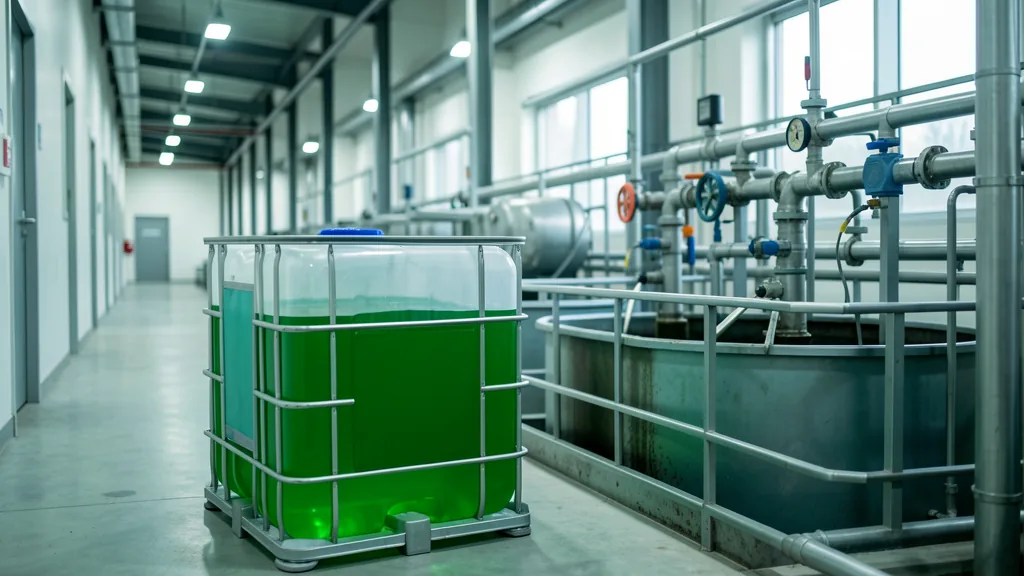
Table of contents
How is FeCl2 used in textile dyeing wastewater treatment? Ferrous chloride aids coagulation, iron adjustment, and certain color/COD reduction chains post jar-test at the plant's effluent parameters — not a "one-dose-fits-all" solution for all dyeing sources.
FeCl2 (ferrous chloride, iron II chloride) CAS 7758-94-3 is supplied as a ~15–30% solution per batch COA (SKU FECL2-1530); delivered with COA/MSDS and ZDHC/MRSL documentation package upon customer request.
- No substitute for on-site jar-testing: each textile-dyeing effluent, season, or dye code may require different doses and pH windows.
- 15–30% concentration must be locked per batch COA before dosing; never rely solely on "FeCl2" labels.
- ZDHC/MRSL compliance requires paperwork + correct batch chemicals + plant inventory — not just catalog claims.
This guide is for ETP engineers, chemical warehouse staff, and procurement officers in textile dyeing/wet processing plants who need to understand when FeCl2 30% suits their effluent, how to interpret jar-tests with "head and tail" results, and how to respond when brands/buyers request ZDHC/MRSL documentation from chemical suppliers. Goal: purchasing soft-decision — quote-on-demand, no retail pricing.
Why textile wastewater resists stable coagulation
Textile dyeing wastewater isn't as uniform as domestic sewage. Effluent varies by shift: pre-treatment, bleaching, reactive/disperse/vat dyeing, washing, softening... COD, color, alkalinity, salts, surfactants, and auxiliaries can fluctuate within a day. Coagulation-flocculation-settling systems (sometimes with orthophosphate/polymer) often show "lab-perfect, field-failed" results if dosed at fixed rates from outdated jar-tests.
Common issues causing weak flocs or residual color:
- Off-target pH window — acid/alkali imbalance, dirty probes, insufficient G-value in rapid/slow mixing.
- Mismatched coagulant mechanism — sometimes needing aluminum (PAC), sometimes iron; sometimes Fe(II) for mild reduction/Fenton, sometimes just color/SS removal.
- Batch chemical variance — same "ferrous chloride" name but different % per COA vs. jar-test batch → different results.
- Late polymer "rescue" — overdosing coagulant then forcing flocs with excess polymer, increasing sludge and dewatering costs.
For export-oriented plants or workshops in brands' supply chains requiring chemical compliance documentation, "difficult coagulation" also involves paperwork: batch COAs, MSDS/SDS, inventory records, and mapping against the plant's chemical inventory list (CIL). This can't be fixed by "adding another drum."
For a full overview of textile chemicals, see our textile dyeing chemicals catalog and dedicated application note on ferrous chloride in textile dyeing — this salvage focuses on wastewater + documentation.
When FeCl2 30% fits (and when it doesn't)
Better suited when ETP engineers need Fe(II) (ferrous) in controlled redox environments, iron-based coagulation support, certain color/COD reduction chains, or when jar-tests prove the effluent responds better to iron salts than aluminum at comparable pH windows and acceptable sludge costs. The ~15–30% solution per COA facilitates dosing pumps, dilution, and inventory management vs. solids in some wet sites.
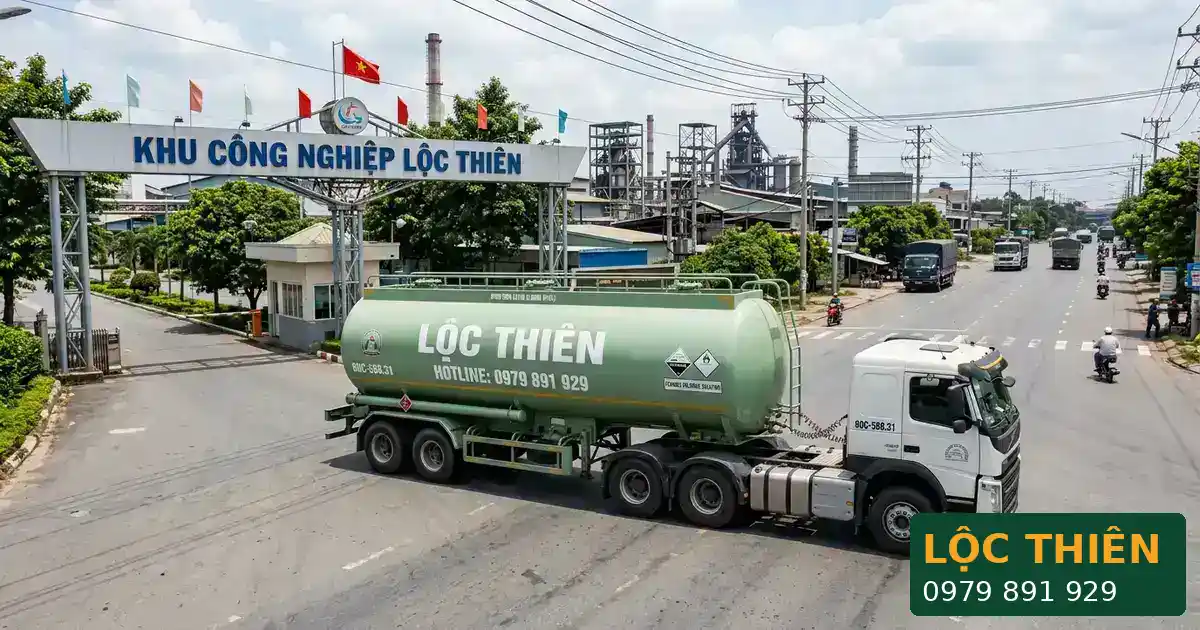
Loc Thien FeCl2 (SKU FECL2-1530) is a ferrous chloride solution, CAS 7758-94-3, with working concentration ~15–30% per batch COA. We supply : drums/IBCs/tankers with COA + MSDS/SDS; upon buyer/brand request, can prepare ZDHC/MRSL documentation packages per batch/order. Loc Thien FeCl2 has a ZDHC MRSL v3.1 test report issued by TUV Rheinland Vietnam (ref. #248162921-02a) alongside CSR #248162921-02 confirming ZDHC MRSL Version 3.1 Conformance Level 1.
Less suitable or requiring reconsideration when:
- Effluent stabilizes with PAC at cheaper pH/dose and easier sludge dewatering — don't force FeCl2 just for "iron" branding.
- The system needs pure Fe(III) or can't control Fe²⁺ oxidation in open storage (long dwell, loose lids) — risks losing reducing power.
- You only need "general coagulation" without locking Fe(II) valence, pH window, or AOP/Fenton chains — lab-test before scaling up.
- Brands ask for MRSL paperwork but chemicals fall outside the plant's CIL — documents can't replace correct inventory.
In short: FeCl2 30% is a tool in textile ETP's coagulant/iron toolkit, not a standalone "ZDHC master key."
Jar-test operation guidelines (lab ≠ plant SOP)
All suggestions below are lab/jar-test frameworks for engineers to self-calibrate. These are not full-plant dosing SOPs, don't replace tank designs, and don't fix ml/m³ rates for all effluents. Reliable dosing only comes from jar-tests on current water samples + batch COA + actual mixing/pH conditions.
| Suggested step (lab) | Action required | Safety/operation notes |
|---|---|---|
| 1. Lock sample baseline | Collect representative shift samples (avoid start/end only), measure pH, turbidity/color, COD if available | Record dye code / production shift with samples |
| 2. Lock FeCl2 batch COA | Check % per COA (~15–30%), solution color, production date; convert to mg/L Fe or solution ml | New batch → rerun ≥1 jar-test series |
| 3. Dose series (coarse → fine) | Test incremental doses (e.g., equivalent to 50–100 mg/L active steps, then refine); observe flocs, settle 10–30 mins | Numbers are lab guides only; don't copy as plant standards |
| 4. pH window | Maintain/adjust pH around optimal jar-test zones; compare pre/post dosing | Clean, calibrated probes; acid/alkali PPE required |
| 5. Polymer (if used) | Only after floc formation; add slowly, watch floc breakage/floating | Polymer overdose creates "sticky" sludge hard to dewater |
| 6. Early-scale lock | Scale only after ≥2–3 stable jar-tests on current effluent | Dye code/season changes → repeat step 1 |
Disclaimer: This table provides jar-test context for ETP engineers. Lab doses, mixing times, and pH values must not be used verbatim as full-plant dosing SOPs. All internal procedures (PPE, dosing points, G-values, sludge handling) are plant-mandated.
For quick comparisons between iron/aluminum coagulants before lengthy jar-tests, see FeCl2 vs FeSO4 vs PAC.
ZDHC/MRSL documentation when brands inquire
Many textile-dyeing plants and ETPs in export chains face buyer questions: "Do your coagulation/water treatment chemicals have ZDHC-aligned documents?" The accurate answer usually involves batch-specific records + plant inventory, not a "forever ZDHC MRSL v3.1 Level 1 conformant" logo slapped on every chemical drum.
As a chemical supplier, Loc Thien supports per order/batch requests:
- COA (concentration, contractual parameters);
- MSDS/SDS current versions;
- Chemical identification (name, CAS 7758-94-3, ~15–30% solution per COA);
- ZDHC/MRSL documentation package upon specific customer/brand requests (prepared according to the brand/mill's program and the actual batch evidence).
Brief reminder: ZDHC manages chemicals in textile supply chains (MRSL, wastewater guidance...), not "coagulation permits." Full definitions/modules reside in our ZDHC resource hub for plants & chemical suppliers — this article won't repeat the full program framework. Plant responsibilities: map chemicals to CIL/InCheck (if applicable), use correct batches, dose at proper ETP points; supplier responsibilities: provide batch certificates and support paperwork upon request.
FeCl2 helps you "have chemicals + files" when jar-tests fit; it doesn't replace Vietnamese QCVN standards, brand effluent tests, or plant inventory management.
FeCl2 vs PAC and FeSO4
In actual textile ETP practice, three products are often compared:
- PAC — aluminum coagulant, common when jar-tests show fast flocs, suitable pH windows, acceptable costs/sludge. Reference product: PAC tenor ~31%.
- FeSO4 — iron sulfate source; some sites use for iron coagulation/color reduction. Liquid reference: FeSO4 30%.
- FeCl2 — ferrous chloride; preferred when controlled Fe(II) is needed, 15–30% solution per COA, or jar-tests prove better efficiency/sludge/pH vs. others on the same effluent.
No "absolute winner." Decisions should stem from jar-tests + TCO (chemicals + sludge + polymer + compliance risks), not just per-drum prices. Detailed tables and pH/sludge notes: FeCl2 vs FeSO4 vs PAC.
Frequently asked questions
What is FeCl2 30% and its CAS number?
Ferrous chloride solution, ~15–30% concentration per batch COA. Standard CAS: 7758-94-3. Loc Thien supplies with COA/MSDS; working concentration always per batch COA, not generic labels.
Does Loc Thien FeCl2 have a ZDHC Level?
Loc Thien FeCl2 has a ZDHC MRSL v3.1 test report issued by TUV Rheinland Vietnam, ref. #248162921-02a. It is accompanied by Conformance Summary Report (CSR #248162921-02) confirming ZDHC MRSL Version 3.1 Conformance Level 1. We also provide COAs, MSDS/SDS, and ZDHC/MRSL documentation packages per batch/order upon customer/brand request; how a brand accepts the documents is determined by the brand–mill program.
What FeCl2 dose (mg/L) for textile wastewater?
No universal safe number for all plants. Doses must come from jar-tests on current water after locking % per COA. The table above is a lab framework only — not plant SOP.
When to choose FeCl2 over PAC?
When jar-tests show Fe(II) improves coagulation/color/COD reduction or sludge costs on your specific effluent; or when ETP processes need controlled iron(II) valence. If PAC already works stably, cheaper, with easier sludge handling — stick with PAC. Detailed comparison: FeCl2 vs FeSO4 vs PAC.
Can FeCl2 replace FeSO4?
Same iron family but different anions and lab behaviors. May substitute in some cases post jar-test, not "rename-and-done." Also requires locking COA concentration and pH windows. FeSO4 reference: FeSO4 30%.
What documents do plants need for FeCl2 purchase?
Minimum: batch COA + MSDS/SDS, delivery note, packaging info. For additional ZDHC/MRSL requests: specify desired file formats, applicable batches, deadlines — we prepare per order, no "forever certificates" for all inventory.
FeCl2 solution storage precautions?
Prefer sealed tanks/drums, avoid prolonged air exposure, FIFO by batch, acid/iron salt-compatible materials. Partial Fe²⁺ oxidation reduces reducing power if processes rely on iron(II) — check color, COA, and stock age if lab results suddenly degrade.
Request FeCl2 30% quote ()
If you need ferrous chloride FeCl2 ~15–30% solution per COA (SKU FECL2-1530) for textile dyeing ETP — with COA/MSDS and ZDHC/MRSL documentation support per order — provide estimated quantities (drums/IBCs/tankers), delivery location, and required timeline.
Technical/procurement Hotline/Zalo: 0979 891 929
We quote per actual demand; no retail web pricing. ETP engineers may include jar-test results (pH, dose series, target parameters) for contextual advice — with disclaimer: operational errors and plant SOPs remain your responsibility.
Technical Support & B2B Procurement Hotline
Loc Thien Chemical specializes in direct manufacturing of FeCl₂ / FeCl₃ and direct industrial supply of basic chemicals (NaOH, HCl, H₂SO₄, PAC, NaOCl, H₂O₂, FeSO₄) with direct B2B pricing and dedicated 5–30-ton tanker delivery across Vietnam.
- Hotline / Zalo: +84 979 891 929
- Official Email: [email protected]
- Direct Manufacturer: Ferrous Chloride (FeCl₂ 30%) & Ferric Chloride (FeCl₃ 38–40%)
- Primary Supplier: NaOH 32%/45%/50%/99%, HCl 32%, H₂SO₄ 98%, PAC 30–31%, NaOCl 10–12%, H₂O₂ 35%/50%
- Compliance & Quality: FeCl₂ ZDHC MRSL v3.1 test report (Smart testing, 5 substance groups, TUV Rheinland Vietnam), ISO 9001:2015, Quatest 3, Full COA & GHS SDS