Ferrous Chloride FeCl2 Applications in the Textile Dyeing Industry

Key Technical Summary: Ferrous chloride FeCl2 in textile dyeing: properties, reactions, uses in dyeing and printing, process steps, plus storage and handling notes for dye houses.
Table of contents
Ferrous Chloride is widely used in wastewater treatment, swimming pool treatment, chemical industry, and electronics industry. Particularly, you can explore what FeCl2 salt is to better understand the properties and diverse applications of this compound. Additionally, it is also used in the textile dyeing industry to create unique color shades. To better understand the application of FeCl2 in the textile dyeing industry, let’s explore today’s article with Loc Thien Chemicals.
Table of Contents
A Brief Overview of Ferrous Chloride FeCl2:
Ferrous Chloride has the chemical formula FeCl₂ and is a chemical compound containing iron in the +2 oxidation state. The common form of ferrous chloride is a green solid. This raises questions for many about what color ferrous chloride is and its applications in various industries.
FeCl2 is used in chemical processes and as a medium for many chemical reactions. It is sometimes used in the production of iron from iron ore.
Physical Properties of FeCl2:
- State: Green pigment, solid under standard conditions.
- Melting Point: Approximately 677°C.
Chemical Properties of FeCl2:
- FeCl2 commonly exists in hydrated form, with the formula FeCl₂·4H₂O.
- Soluble in water, forming a yellow-brown solution.
Chemical Reactions of Ferrous Chloride:
- FeCl2 can react with acids to form chlorine gas and ferric chloride.
- Reaction with oxidizing agents can produce ferric chloride and release chlorine gas.
Toxicity of FeCl2:
- FeCl2 is not toxic if handled correctly, but like any chemical, safety measures must be followed during handling and storage.
Applications of Ferrous Chloride in the Textile Dyeing Industry:
Ferrous Chloride, with the chemical formula FeCl2, plays an important role in the textile dyeing industry with many creative applications. Primarily, this substance is used for fabric dyeing, where one of the main applications is creating deep black shades on fabric products. Black is not only a popular choice in the fashion industry but also brings elegance and style.
Additionally, Ferric chloride is favored for creating other shades such as green, brown, and red, bringing color diversity to textile dyeing. The ability to enhance color fastness is a standout advantage of FeCl2. It helps maintain the brightness of colors on fabric over time.
Not limited to dyeing, Ferric chloride also participates in the printing process, playing a crucial role in creating images and patterns on fabric surfaces, bringing creativity and personalization to products. With this versatility, FeCl2 is an endless source of inspiration in the textile dyeing industry, helping to create color masterpieces in the world of fabric. With diverse applications, chemicals for the textile dyeing industry like FeCl2 contribute to improving the quality and aesthetics of products.
Process of Using Ferrous Chloride in Textile Dyeing:
- Step 1: Fabric Preparation
- The fabric needs to be prepared before the dyeing process. This includes washing the fabric to remove dust and oils.
- Step 2: Preparing the Dye Solution
- Prepare the dye solution by dissolving FeCl₂ in water. The specific formula and concentration will depend on the fabric type and desired color.
- Step 3: Dyeing the Fabric
- Pour the FeCl2 solution onto the fabric and soak to create the color. The soaking time depends on the desired shade intensity.
- Step 4: Rinsing the Fabric with Other Additives
- After completing the dyeing process, the fabric needs to be treated to remove excess substances and fix the color. Therefore, it must be rinsed and treated with other additives.
- Step 5: Drying or Heat-Setting the Dyed Fabric
- After removing the fabric, it needs to be dried by air drying or heat drying. The temperature must be checked to control the color of the dyed fabric.
Storage Methods for FeCl2:
To safely store FeCl2 (Ferrous Chloride) and maintain its quality, you should follow these storage methods:
- Store in moisture-resistant materials, such as plastic or glass containers.
- Keep in a dark place, away from direct sunlight, to prevent oxidation and reduce light exposure.
- Tightly seal the container to prevent air exposure, reducing the risk of oxidation of FeCl2.
- Store in a dry environment to avoid water absorption and the formation of hydrates.
- If possible, limit temperature fluctuations, as they can affect the physical properties of FeCl2.
- Keep FeCl2 out of reach of children and pets.
Buy FeCl2 at Affordable Prices and High Quality at Loc Thien Chemicals:
Ferrous Chloride, or Ferric chloride, is a high-quality product that we confidently provide in various packaging sizes to meet diverse customer needs.
If you are looking for a reliable place to buy ferrous chloride at the most competitive prices, please contact us for support. Please contact us via phone: 0979 891 929 or visit our official website hoachatlocthien.com. Our team of consultants will promptly assist you, providing optimal solutions and competitive market prices.
Our commitment is to provide quality products, standard packaging, and excellent customer service. Loc Thien Chemicals aims to be your trusted partner in the chemical industry, bringing convenience and efficiency to all your processes.
🔗 Related Articles
- 🧪 Comprehensive Overview of FeCl2 and FeCl3 Properties
- 💧 Textile Dyeing Wastewater Treatment Using Fenton Reaction (90–98% Color Removal Efficiency)
- ⚖️ FeCl2 vs PAC vs FeSO4 in Textile Dyeing Wastewater Treatment
- 📦 Buy Industrial FeCl2 — Loc Thien Supplies Nationwide
Technical Support & B2B Procurement Hotline
Loc Thien Chemical specializes in direct manufacturing of FeCl₂ / FeCl₃ and direct industrial supply of basic chemicals (NaOH, HCl, H₂SO₄, PAC, NaOCl, H₂O₂, FeSO₄) with direct B2B pricing and dedicated 5–30-ton tanker delivery across Vietnam.
- Hotline / Zalo: +84 979 891 929
- Official Email: [email protected]
- Direct Manufacturer: Ferrous Chloride (FeCl₂ 30%) & Ferric Chloride (FeCl₃ 38–40%)
- Primary Supplier: NaOH 32%/45%/50%/99%, HCl 32%, H₂SO₄ 98%, PAC 30–31%, NaOCl 10–12%, H₂O₂ 35%/50%
- Compliance & Quality: FeCl₂ ZDHC MRSL v3.1 test report (Smart testing, 5 substance groups, TUV Rheinland Vietnam), ISO 9001:2015, Quatest 3, Full COA & GHS SDS
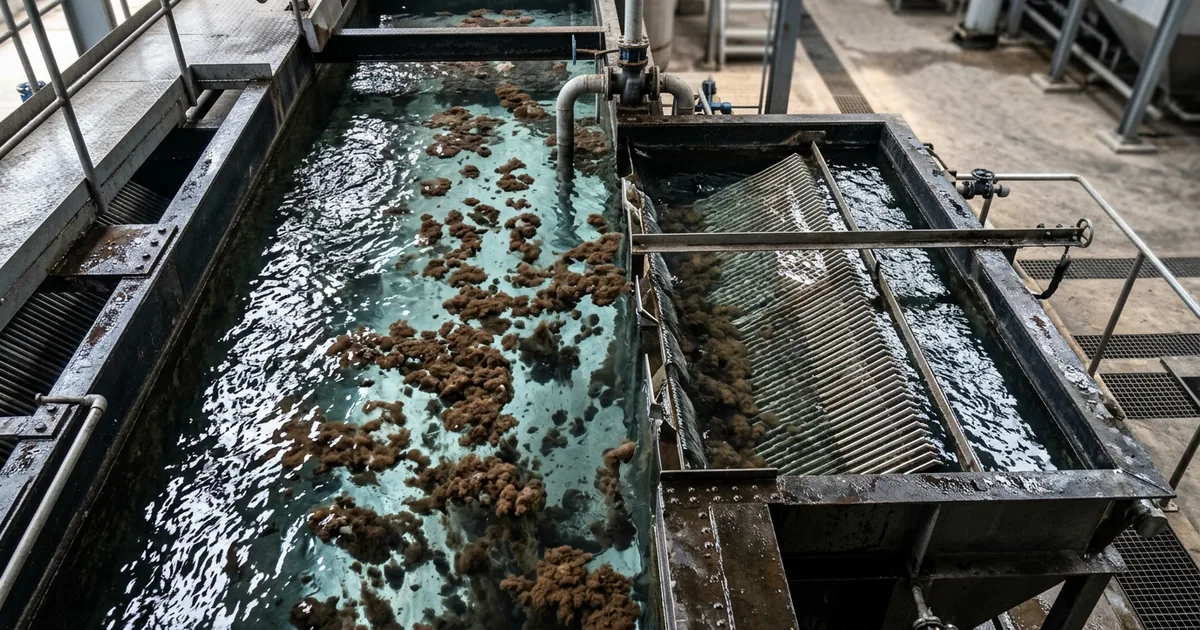 Figure: On-site chemical dosing, storage tank operation, and batch COA inspection — Source: Loc Thien Chemical.
Industrial Field Operation & Batch Quality Verification
1. Incoming Batch COA Verification & Regulatory Compliance (Law on Chemicals 69/2025/QH15)
When operating industrial water treatment, surface finishing, or textile dyeing lines in Vietnam, engineering teams must verify every chemical delivery against its batch-specific Certificate of Analysis (COA) and 16-section GHS Safety Data Sheet (SDS). Under the Vietnam Law on Chemicals No. 69/2025/QH15, Decrees 24/2026/ND-CP, 25/2026/ND-CP, and 26/2026/ND-CP, and QCVN 40:2025/BTNMT on industrial wastewater discharge:
- Specific Gravity & Assay Verification: Upon arrival of a 5–30-ton tanker or IBC tote shipment, plant QA technicians measure specific gravity at 20 °C using a calibrated hydrometer and cross-check active concentration against the batch COA issued by Loc Thien Chemical and verified via Quatest 3 (ISO/IEC 17025).
- Impurity & Heavy Metal Control: Trace heavy metals (Fe, Pb, As, Hg, Cd, Cr⁶⁺) and insoluble matter are strictly controlled to prevent catalyst poisoning in Fenton reactors, membrane fouling in RO/UF systems, or shade deviations in reactive textile dyeing.
- ZDHC MRSL v3.1 Level 1 Portfolio Boundary: For export-oriented textile and footwear FDI factories, Loc Thien Chemical maintains official ZDHC MRSL v3.1 Conformance Level 1 documentation for exactly 9 core products: four products certified by TUV SUD Product Service GmbH (
NaOH,H2O2,Na2SO4,Na2CO3) and five products verified via Conformance Summary Report (CSR) and Analytical Test Report by TUV Rheinland Vietnam (H2SO4,FeCl2,HCl,Javel/NaOCl,PAC 31%).
| Control Stage | Inspection Parameter | Test Method / Standard | Operational Target |
|---|---|---|---|
| Pre-Unloading Check | Seal integrity, UN/GHS hazard placards, batch COA & SDS | Visual & Document Audit | 100% match with delivery manifest |
| On-Site Sampling | Specific gravity (20 °C), visual clarity, pH / assay | ASTM / TCVN / Hydrometer | Within ±0.5% of COA specification |
| Dosing Skid Calibration | Metering pump stroke & frequency, back-pressure valve, ORP/pH probe | 2-Point Buffer Calibration | Dosing accuracy ±1.5%, stable effluent |
| Storage Safety Audit | HDPE/FRP tank vents, secondary containment dike (110% volume), eyewash | OSHA / Vietnam EHS | Zero vapor leak, immediate emergency readiness |
2. Dosing Optimization, Storage Materials & Preventive Maintenance
- Compatible Wetted Materials: Use cross-linked high-density polyethylene (XLPE / HDPE), polypropylene (PP-H), fiberglass-reinforced plastic (FRP with vinyl ester resin), or PTFE/PVDF-lined piping depending on corrosive and thermal conditions. Avoid unlined carbon steel or incompatible elastomers.
- Automated Dosing Control: Integrate diaphragm metering pumps with real-time pH, ORP (mV), turbidity, or conductivity sensors. Always perform a 5-beaker Jar Test whenever raw water COD, TSS, or alkalinity shifts by more than 15%.
- Secondary Containment & PPE: Storage tanks must sit inside an acid/alkali-resistant bund wall holding at least 110% of the largest tank volume. Operators handling unloading hoses must wear splash-proof chemical goggles, acid/alkali-resistant nitrile or neoprene gloves, face shields, and emergency respirators.
3. Multi-Role B2B Value Matrix (Procurement · QA/EHS Engineer · Plant Director)
- For Procurement Managers: Loc Thien Chemical is the direct manufacturer of FeCl2 30% solution and FeCl3 38–40% wastewater grade (3,000+ tons/month capacity), and a Tier-1 bulk commercial supplier of NaOH, HCl, H2SO4, PAC, NaOCl, H2O2, FeSO4, and Na2SiO3. Pricing is transparently structured around 5 technical cost drivers (active assay, packaging format, delivery distance from our 6 warehouses, order volume, and scheduled contract cadence) with a 15-minute technical quotation SLA.
- For Environmental & Process Engineers: Full technical support for Jar Test optimization, stoichiometry calculation, sludge minimization, and QCVN 40:2025/BTNMT compliance auditing.
- For FDI Plant Directors: Guaranteed supply continuity via 6 regional warehouses (Ba Ria - Vung Tau, Dong Nai, Binh Duong, Da Nang, Can Tho, Bac Ninh) and a dedicated 5–30-ton tanker fleet (4 hours in inner HCMC, 24–48 hours across Southern & Mekong Industrial Parks, 2–3 days in Northern & Central Vietnam).
4. Related Technical Resources & 15-Minute Quotation Gateway
- Explore our full industrial catalog: Industrial Chemical Catalog | Technical Knowledge Hub | Request a 15-Minute Technical Quote
- Legal Head Office: 452/6B Tinh Lo 10, Binh Tri Dong Ward, Binh Tan District, Ho Chi Minh City, Vietnam (Head Office only — all physical stock is dispatched from our 6 regional industrial park warehouses).
- 24/7 Technical Hotline: 0979 891 929 (Please contact hotline 0979 891 929 for detailed delivery procedures) | Official Email: [email protected]
Extended Engineering Calculation Example & Jar Test Protocol for Ferrous Chloride FeCl2 Applications in the Textile Dyeing Industry
In a representative industrial wastewater treatment or surface treatment facility operating at a design flow of 1,200 m³/day (Technical Illustrative Example), process engineers evaluate dosing stoichiometry across three operating scenarios: baseline load, peak shift load (+25% COD/TSS), and seasonal rain dilution. Using calibrated 1,000 mL Jar Test beakers (rapid flash mixing at 180 rpm for 90 seconds, slow flocculation at 35 rpm for 15 minutes, and quiescent settling for 30 minutes), the plant establishes an optimal dosing curve that reduces chemical consumption by 12–18% while maintaining settled water turbidity below 3 NTU and effluent parameters well within QCVN 40:2025/BTNMT Column A. Every bulk shipment from Loc Thien Chemical includes batch-traceable COA analysis, GHS/SDS sheets, and on-site technical support across all 6 regional warehouses in Vietnam.
Transparent 5-Factor B2B Cost Structure & Supply Chain Optimization in Vietnam
Under Loc Thien Chemical’s transparent B2B commercial policy, unit chemical pricing is never published as a static retail figure online; instead, every formal quotation is engineered within 15 minutes around five verifiable cost drivers:
- Active Assay & Grade Specification: Concentration levels (such as 32% / 45% / 50% liquid NaOH vs. 99% pearls, or industrial vs. ZDHC-compliant grades) directly determine the active molar equivalent delivered per metric ton.
- Packaging & Bulk Delivery Mode: Bulk delivery via dedicated 5–30-ton corrosion-resistant tankers eliminates drum handling and minimizes per-ton logistics cost; 1,000 L IBC totes, 200 L drums, and 25 kg woven bags are also stocked.
- Dispatch Distance from Our 6 Regional Warehouses: Orders are routed from the nearest hub (Ba Ria - Vung Tau, Dong Nai, Binh Duong, Da Nang, Can Tho, or Bac Ninh) to cut freight lead time and carbon footprint.
- Order Volume & Annual Blanket Contracts: Scheduled monthly call-off contracts lock in priority safety stock and volume-tiered commercial terms, insulating factories from raw material spot volatility.
- Batch Documentation & FDI Compliance Package: Every delivery includes a batch-specific COA, 16-section GHS SDS, and—for our 9 certified core textile/footwear chemicals—official ZDHC MRSL v3.1 Conformance Level 1 documentation.
Engineering Cost-Per-Equivalent Evaluation, Dilution Thermodynamics & Foolproof Unloading
Industrial procurement and process engineers should evaluate chemicals based on total treatment cost per kilogram of pollutant removed (COD, Total Phosphorus, Cr⁶⁺) or per kilomole of active reagent (H⁺, OH⁻, Fe²⁺, Fe³⁺, Al₂O₃) rather than nominal price per kilogram of solution:
- Real-Time Specific Gravity Cross-Checking: Operators should verify solution specific gravity at 20 °C each shift using a calibrated hydrometer to compensate for seasonal temperature shifts or moisture absorption.
- Exothermic Dilution Safety: When diluting concentrated sulfuric acid or dissolving caustic soda pearls, always add chemical slowly into cooled water under continuous mechanical agitation inside a heat-resistant PP-H or FRP mixing vessel.
- Dual-Lock Poka-Yoke Unloading Manifolds: Color-coded, padlocked camlock manifolds requiring joint sign-off by the tanker driver and plant EHS officer prevent accidental cross-mixing of acids with sodium hypochlorite (Javen) or alkalis.