
PAC for Treated Water Supply QCVN | Hóa Chất Lộc Thiên
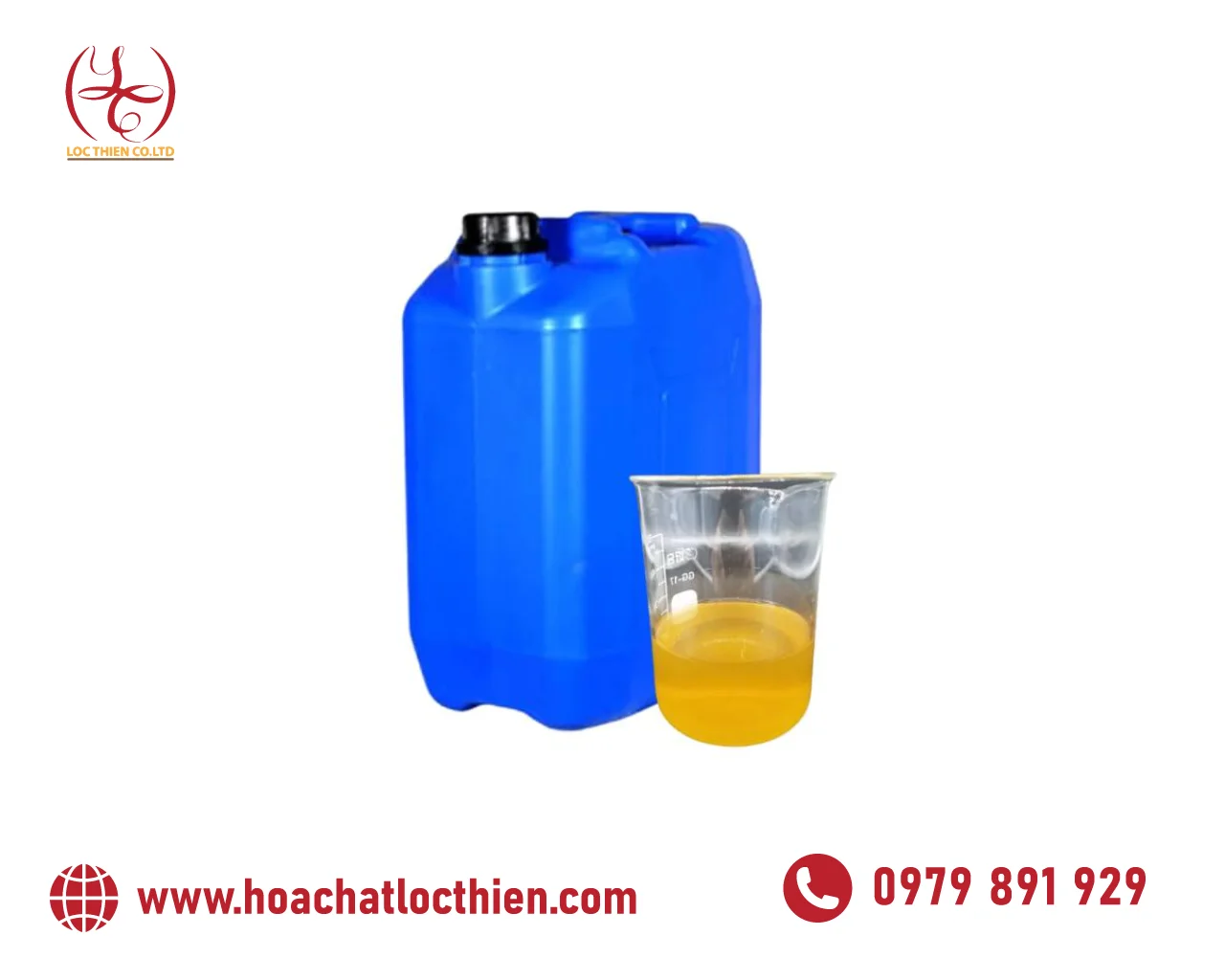
TL;DR: PAC (Poly Aluminium Chloride) for water supply must meet QCVN 01:2009/BYT of the Ministry of Health on drinking water quality. PAC has Al₂O₃ content ≥10%, heavy metals below permitted limits. PAC dosage for surface water 5–20 mg/L, groundwater 10–30 mg/L. Compared to traditional alum, PAC causes less pH reduction, reduces sludge by up to 60%, and leaves no Al residue in finished water. Hóa Chất Lộc Thiên supplies 31% PAC (powder), 17% PAC (liquid), 10% PAC (liquid) — batch COA.
1. What Is QCVN 01:2009/BYT and Why Is It Important for PAC?
QCVN 01:2009/BYT is the National Technical Regulation on drinking water quality, issued by the Ministry of Health under Circular 04/2009/TT-BYT dated June 17, 2009, effective from December 1, 2009. The regulation sets maximum permissible limits for 109 water quality parameters, applicable to centralized water supply facilities with a capacity of 1,000 m³/day or more.
For PAC — the primary coagulant in water supply treatment — compliance with QCVN 01:2009/BYT is mandatory because the chemical comes into direct contact with incoming water. The most important parameters:
| Parameter | QCVN 01:2009/BYT Limit | Relevance to PAC |
|---|---|---|
| Aluminium (Al) content | ≤ 0.2 mg/L | PAC residue must not exceed threshold |
| Turbidity | ≤ 2 NTU | PAC must achieve coagulation efficiency to reduce turbidity |
| pH | 6.5–8.5 | PAC must not lower pH beyond threshold |
| Total iron | ≤ 0.3 mg/L | PAC with low Fe content ensures compliance |
| Arsenic | ≤ 0.01 mg/L | PAC for water supply must have As below threshold |
| Lead (Pb) | ≤ 0.01 mg/L | Heavy metals in PAC are controlled |
| Mercury (Hg) | ≤ 0.001 mg/L | Stringent requirement for drinking water grade PAC |
PAC for water supply must have Al₂O₃ content ≥10% and heavy metals below the limits specified in QCVN 06A:2020/BCT. Each PAC batch must include a COA (Certificate of Analysis) with heavy metals parameters.
2. Technical Specifications of PAC for Water Supply
| Parameter | PAC 31% (powder) | PAC 17% (liquid) | PAC 10% (liquid) |
|---|---|---|---|
| CAS | 1327-41-9 | 1327-41-9 | 1327-41-9 |
| Al₂O₃ content | 30–31% | ≥17% | ≥10% |
| Product form | Fine white powder | Solution | Solution |
| Density (20°C) | — | 1.375 g/ml | 1.19–1.20 g/ml |
| pH (1% solution) | 3.5–5.0 | 3.5–5.0 | 3.5–5.0 |
| Basicity | 40–85% | 40–85% | 40–85% |
| Packaging | 25 kg HDPE bag | 5–30 ton tanker, IBC | 5–30 ton tanker, IBC |
| Shelf life | 12–24 months | 6 months | 6 months |
31% PAC (powder) saves 60–70% on transportation costs compared to liquid form. Liquid PAC is suitable for large plants (>10,000 m³/day) with automatic dosing pump systems.
3. PAC Dosage for Water Supply
PAC dosage depends on raw water turbidity, pH, organic matter content, and temperature.
3.1. Surface Water (rivers, lakes)
| Raw water turbidity (NTU) | PAC 31% dosage (mg/L) | Notes |
|---|---|---|
| < 50 (dry season) | 5–10 | Low dose, mainly for color + organic removal |
| 50–150 | 10–15 | Common at river water plants |
| 150–500 (flood season) | 15–20 | Combine with anionic polymer 0.05–0.1 mg/L |
| > 500 | 20–30 | Jar test mandatory, may need primary sedimentation first |
PAC 31% for surface water typically uses a dosage of 5–20 mg/L. When using 10% liquid PAC, multiply the dosage by 3.1 (e.g., 15 mg/L PAC 31% ≈ 47 mg/L PAC 10%).
3.2. Groundwater
Groundwater has low turbidity (<10 NTU) but contains Fe²⁺, Mn²⁺, and ammonia. PAC 31% dosage for groundwater ranges from 10–30 mg/L, higher than surface water due to simultaneous coagulation and iron/manganese removal:
| Iron content | PAC 31% dosage (mg/L) | Notes |
|---|---|---|
| Fe < 5 mg/L | 10–15 | Base dosage |
| Fe 5–15 mg/L | 15–25 | Requires combination with chlorination or KMnO₄ |
| Fe > 15 mg/L | 20–30 | Dedicated sedimentation + oxidation tank design |
3.3. Jar Test — Determining Precise Dosage
5-step procedure:
- Prepare 1% PAC solution (10 g PAC 31% + 990 mL clean water).
- Prepare 6 beakers with 1,000 mL raw water each.
- Add PAC at dosage range: 5, 10, 15, 20, 25, 30 mg/L.
- Rapid mix at 120–150 RPM for 1–2 minutes, slow mix at 30–40 RPM for 15–20 minutes.
- Settle for 30–60 minutes, measure turbidity and pH of clear water.
Select the dosage that achieves the lowest turbidity at the most economical cost, with final pH 6.5–8.5.
4. Case Study: 5,000 m³/Day Water Treatment Plant
Background: A domestic water treatment plant in a Western province, capacity 5,000 m³/day, raw river water turbidity 35–85 NTU, pH 6.8–7.2. The plant used alum at a dosage of 35–50 mg/L; settled water achieved 5–8 NTU, pH dropped to 5.8–6.2 — requiring lime alkali dosing.
Solution: Switched to 31% PAC (powder), optimal jar test dosage 8 mg/L, pH 6.8–7.0, settling time 45 minutes.
Results:
| Parameter | Before (alum) | After (PAC 31%) | QCVN 01:2009/BYT |
|---|---|---|---|
| Settled water turbidity | 5–8 NTU | <1 NTU | ≤ 2 NTU |
| Settled water pH | 5.8–6.2 | 6.8–7.1 | 6.5–8.5 |
| Residual Al | 0.15–0.25 mg/L | <0.05 mg/L | ≤ 0.2 mg/L |
| Sludge volume | 100% (reference) | Reduced 60% | — |
| Chemical cost | 100% (reference) | Reduced 35% | — |
| Number of chemicals used | 3 (alum + lime + polymer) | 1–2 (PAC ± polymer) | — |
Output water meets QCVN 01:2009/BYT with turbidity <1 NTU — far exceeding the 2 NTU limit.
5. PAC vs Alum for Water Supply
| Criterion | PAC 31% | Alum |
|---|---|---|
| Formula | [Al₂(OH)ₙCl₆₋ₙ]ₘ | Al₂(SO₄)₃·18H₂O |
| Basicity | 40–85% | 0% (non-prehydrolyzed) |
| Optimal pH range | 5.0–9.0 | 6.0–7.5 |
| pH drop after coagulation | 0.2–0.5 units | 0.8–1.5 units |
| Natural alkalinity consumption | Low | High (requires lime/NaOH) |
| Sludge volume | 40–60% lower | High |
| Residual Al in water | <0.05 mg/L | 0.1–0.3 mg/L |
| Floc formation speed | Fast (5–10 minutes) | Slow (15–30 minutes) |
| Performance below 15°C | Stable | Significantly reduced |
PAC is a pre-hydrolyzed aluminium polymer — positively charged polymer chains are already formed before dosing into water, immediately neutralizing the negative charge of colloidal particles and forming flocs. In contrast, alum hydrolyzes slowly, consuming OH⁻ and releasing H⁺, causing a sharp pH drop. Alum’s residual Al (0.1–0.3 mg/L) can exceed the QCVN 01:2009/BYT threshold (≤0.2 mg/L) when treating high-turbidity water. PAC maintains residual Al below 0.05 mg/L — absolutely safe.
6. Guide to Using PAC in Water Supply Systems
Dilution: Dilute 31% PAC with clean water at a ratio of 5–10% (5–10 kg/100 L), stir until completely dissolved. Store solution for 1–3 days at room temperature.
Dosing point: At the head of the mixing tank or raw water pipeline, before the rapid mix tank, distance to the mix tank not exceeding 2 m.
Reference process:
Raw water → PAC dosing → Rapid mix 1–3 min (80–150 RPM)
  → Slow mix 15–30 min (20–40 RPM) → Sedimentation 60–120 min
  → Filtration (sand/activated carbon) → Disinfection → Clear water tank
Equipment: Diaphragm dosing pump for 5–10% PAC solution, peristaltic pump for neat liquid PAC. Mixing tanks should be PE/PP plastic (PAC mildly corrodes carbon steel).
Quality control: Batch COA (Al₂O₃, pH, basicity, heavy metals). Jar test weekly or when raw water changes. Measure turbidity + pH of settled water each shift.
7. Storage and Safety
Powder PAC storage: dry, cool, temperature <40°C, on pallets ≥15 cm high. Sealed HDPE bags — powder PAC absorbs moisture and clumps. Liquid PAC tanks: sealed PE/PP, avoid sunlight. Shelf life: powder 12–24 months, liquid 6 months. PPE: nitrile gloves, safety goggles, dust mask when handling powder. PAC pH 3.5–5.0 — rinse immediately with water if skin contact occurs.
8. Why Choose PAC from Hóa Chất Lộc Thiên?
Lộc Thiên (Tax Code 0313650856, established 2016) is a large-scale industrial chemical supplier with 6 warehouses nationwide: HCMC, Đồng Nai, Bà Rịa – Vũng Tàu, Cần Thơ, Đà Nẵng, Bắc Ninh. Fleet of 5–30 ton tanker trucks delivers within 4 hours in HCMC, 24 hours to Southern industrial parks.
PAC at Lộc Thiên comes with batch COA including full specifications. Technical team supports on-site jar testing. The testing process is supervised by QC Phan Cẩm Thủy and Võ Thị Như Hòa. Products meet ZDHC MRSL Level 1 (TÜV Rheinland Report 248162921-02a), suitable for FDI factories exporting to Europe and the United States.
Frequently Asked Questions (FAQ)
Can 31% PAC be used for direct drinking water?
PAC is used for water supply coagulation; the water then undergoes sedimentation, filtration, and disinfection to meet QCVN 01:2009/BYT for drinking. It does not replace the disinfection stage.
What is the PAC dosage for municipal tap water?
Typically 5–15 mg/L of 31% PAC for river water with turbidity below 100 NTU. A jar test is needed to determine the precise dosage.
Does PAC change the taste of water?
Standard PAC dosage does not leave any foreign taste. Water after coagulation – sedimentation – filtration – disinfection meets the “no unusual odor or taste” requirement of QCVN 01:2009/BYT.
How to distinguish between water supply PAC and wastewater PAC?
Water supply PAC requires low heavy metals: As ≤ 0.01%, Pb ≤ 0.005% per QCVN 06A:2020/BCT. Regular industrial PAC does not meet these thresholds.
How long does it take for 31% PAC powder to dissolve?
Completely dissolves after 10–20 minutes of continuous stirring at 25–30°C. Water below 15°C requires 30–40 minutes.
Where to buy PAC for water supply treatment?
Hóa Chất Lộc Thiên supplies PAC 31%, PAC 17%, PAC 10% — batch COA, ZDHC Level 1, nationwide delivery. Hotline 0979 891 929.
How to know if PAC meets water supply standards?
Request a COA showing Al₂O₃, pH, basicity, Fe, As, Pb, Hg, Cd. PAC must meet QCVN 06A:2020/BCT and be suitable for QCVN 01:2009/BYT.
How long can 31% PAC powder be stored?
Minimum 12 months in sealed HDPE bags, in a dry, cool warehouse. Avoid moisture as it causes clumping and reduces dissolution efficiency.
🛒 Need PAC for water supply treatment? PAC 31%, PAC 17%, PAC 10% Quote — Batch COA, ZDHC Level 1, 5–30 ton nationwide delivery. Hotline 0979 891 929.
✓ PAC 31% Al₂O₃ 30–31%, batch COA, tested by QC Phan Cẩm Thủy + Võ Thị Như Hòa.
✓ Meets ZDHC MRSL Level 1 (TÜV Rheinland Report 248162921-02a).
✓ 6 warehouses across 3 regions, 20 tanker trucks 5–30 tons, nationwide delivery 4–24 hours.
✓ On-site jar test support — determine optimal dosage for each water source.