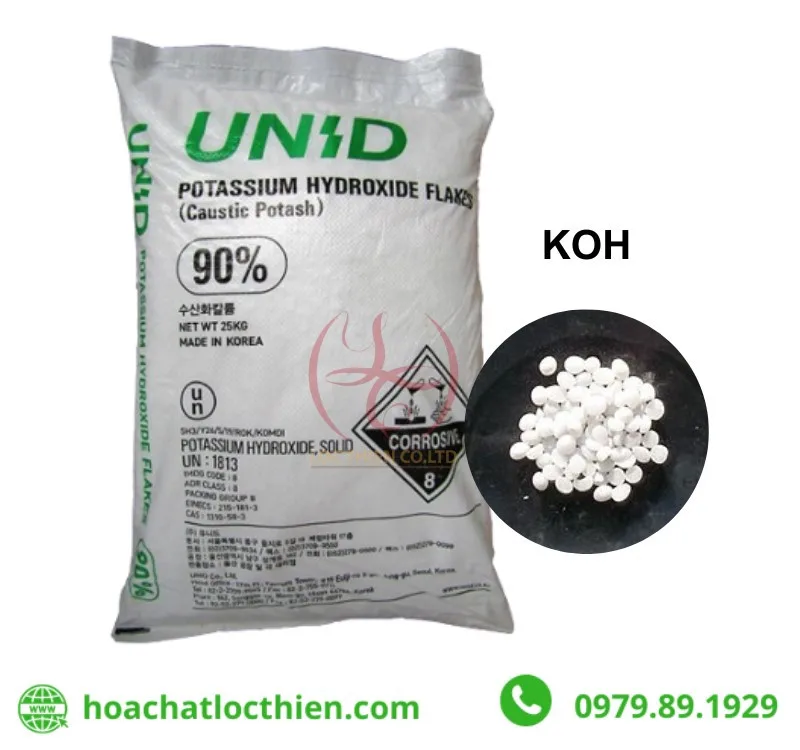
Potassiumhydroxide Potassium hydroxide (KOH) is a strong base and therefore has strong cleaning properties. Potassium hydroxide appears as white granules that are soluble in water, forming an alkaline solution. KOH is used in soap manufacturing, cleaning, and the production of many other chemical products. Packaging: 25 kg per bag; origin: China, South Korea.
Potassium hydroxide (KOH), also known as kali hidroxit, is a chemical compound with the formula KOH. This is a strong base and is high corrosion, which is widely used in many industrial sectors.
Chemical name: Potassium Hydroxide
Also known as: potassium hydroxide
Chemical formula: KOH
Content: 90%
CAS: 1310-58-3
Packing specifications: 25kg/bao
Origin: South Korea, China
What is potassium hydroxide?
Potassiumhydroxide is a chemical compound with the chemical formula KOH. It is a strong base, commonly known as potassium hydroxide. Potassium hydroxide appears as white granules and is soluble in water, forming an alkaline solution.
potassium hydroxide It is commonly used in a variety of applications, including soap manufacturing, cleaning, and the production of many other chemical products. It is also used in applications such as the formulation of animal feed and in the food processing industry.
potassium hydroxide It is also a substance found in biology, and it plays a role in some basic chemical reactions within living cells.
KOH Chemical
Physical and chemical properties of potassium hydroxide:
Physical Properties of Potassium Hydroxide:
Appearance: White, odorless granules that melt easily.
Molar mass: 56,10564 g/mol.
Density: 2,044 g/cm³.
Melting point: 406 °C.
Boiling point: 1.327 °C.
Solubility: Highly soluble in water, alcohol, and glycerol. Insoluble in ether and liquid ammonia.
Moisture-absorbing properties: It readily absorbs moisture from the air and may form precipitate particles.
Corrosive Solution potassium hydroxide It is a strong corrosive and can cause damage to the skin and materials that do not react with alkalis.
Stability It easily absorbs moisture from the air, and if exposed to air, it can form particles.
Molecular Structure of KOH
Chemical Properties of Potassium Hydroxide:
1. Reaction with an acid to form a salt and water:
KOH + HCl → KCl + H2O
KOH + HNO3 → KNO3 + H2O
In this reaction, potassium hydroxide (KOH) reacts with hydrochloric acid (HCl) to form potassium chloride (KCl) and water.
2. Reaction with acid oxides such as SO2, CO2:
KOH + CO2 → K2Carbon Monoxide3 + H2O
KOH + SO2 → K2Carbon Monoxide3 + H2O
Under the right conditions, potassium hydroxide reaction with CO gas2 and SO2 to create K2Carbon Monoxide3 hay K2SO3 and water.
3. Reaction with strong metals:
KOH + Na → NaOH + K
Method for the preparation of potassium hydroxide:
Potassium hydroxide (KOH) It is typically produced through the electrolysis of a solution of potassium chloride (KCl) or potassium carbonate (K₂CO₃). Here are some common methods of preparation:
1. Electrolysis Method busing a solution of potassium chloride (KCl) or potassium carbonate (K₂CO₃). During electrolysis, the potassium chloride or potassium carbonate is broken down into potassium hydroxide, Chlorine, and hydrogen. The potassium hydroxide is then recovered from the solution.
2KCl + 2H2O → 2KOH + Cl2 + H2
2. Method of preparation using potassium carbonate and calcium hydroxide:
K2Carbon Monoxide3 + Ca(OH)2 →2KOH + CaCO3↓
In this method, potassium hydroxide is produced along with precipitated calcium carbonate. The potassium hydroxide is then separated from the solution.
3. Method of preparation using potassium chloride and sodium hydroxide:
KCl + NaOH → KOH + NaCl
potassium hydroxide is produced along with sodium chloride. Potassium hydroxide is then separated from the solution.
Applications of Potassium Hydroxide:
Potassium hydroxide (KOH) It has many important applications in various fields due to its strong chemical properties. One of the main applications of KOH is in the soap manufacturing industry, where it is used to produce soaps and cleaning agents. With its softening and foaming properties, potassium hydroxide helps improve the quality of household and industrial cleaning products.
The Soap and Detergent Manufacturing Industry
KOH helps produce soap that is softer and more easily soluble in water than NaOH for making soap.
It is a key ingredient in industrial cleaning agents.
KOH Applications in Cosmetics
The Chemical Industry
Fertilizer production, particularly in hydroponic agriculture.
Chemical solvents in organic synthesis.
Antifreeze in the refrigeration system.
Food industry
Adjust the pH of food.
Food processing, such as the production of ramen noodles or cocoa.
Applications in Healthcare and Pharmaceuticals
Used in microbiological testing to identify fungi.
It can be used to exfoliate dead skin cells in certain skin treatments.
potassium hydroxide dissolves very readily in water, generates alkaline solution with high corrosiveness. When dissolved in water, KOH intense heat, which can cause burns if not handled properly.
The strong alkaline nature of KOH also makes it an ideal corrosive agent for cleaning and decontamination in the chemical and manufacturing industries. At the same time, potassium hydroxide It is also used in energy synthesis and production processes, such as in alkaline batteries.
In summary, KOH plays a vital and multifaceted role in a wide range of applications, from the chemical industry to everyday manufacturing, demonstrating its versatility and importance in many aspects of daily life.
How to Store Potassium Hydroxide:
Storage Conditions
Store in a dry place, keep out of direct sunlight.
Contained in sealed packaging, made of corrosion-resistant plastic or glass.
Avoid exposure to air because KOH absorbs moisture and can crystallize into solid lumps.
Do not store near strong acids or reactive metals.
Safety Precautions for Use
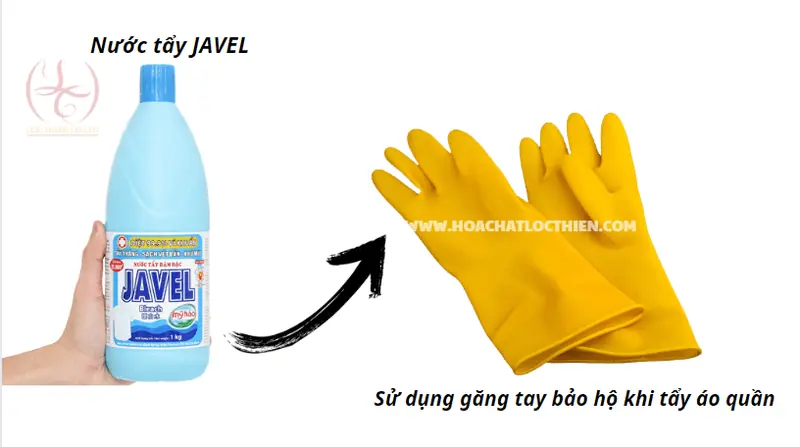
Wear safety goggles, gloves, and protective clothing when working with KOH.
Do not allow KOH to come into direct contact with the skin because it can cause severe burns.
Wash your hands thoroughly after contact with KOH, even if only indirectly.
Using the ventilation system It is safe to work with KOH in powder or solution form.
Where can I buy high-quality, affordable potassium hydroxide?
Potassium hydroxide There are many of them available on the market, but when it comes to price and quality, they are not as reliable as Loc Thien Company provide. With the motto “SELLING WITH TRUST” Loc Thien Chemicals is committed to always providing high-quality chemical products at the most competitive prices, all with clearly documented origins. In addition, we maintain a large inventory of KOH to ensure we can meet our customers’ needs.
✅ Clear origin and source (South Korea, China).
✅ Competitive pricing on the market.
✅ Large warehouse, with large quantities always in stock to meet the needs of businesses.
✅ Dedicated Technical Support Services.
To purchase High-quality, low-cost KOH At Loc Thien Chemicals, please contact our hotline: 0979 891 929 or visit the website: hoachatlocthien.com We are always ready to provide advice and a quote as quickly as possible.
KOH at the Loc Thien warehouse
Loc Thien Investment and Development Co., Ltd. is a Vietnam-based industrial chemical supplier. We focus on process-grade supply, logistics support and quotation on request.
Address: 452/6B Tỉnh Lộ 10, Binh Tri Dong Ward, Ho Chi Minh City
FAQ – Frequently Asked Questions About KOH (Potassium Hydroxide)
1. Can potassium hydroxide be used as a substitute for sodium hydroxide (NaOH) in all applications?
Not in every case KOH can be used as a substitute for NaOH. Although Both are strong bases, but they have different chemical properties and applications:
KOH dissolves more quickly in water, produces a stronger alkaline solution than NaOH, and is therefore often used popular in liquid soap production.
NaOH is less expensive and more suitable for industrial applications We need a strong base that is not very soluble., for example paper manufacturing, Wastewater Treatment.
In the pharmaceutical and food industries, KOH is more commonly used because of its good solubility and higher purity.
So, if you're considering a replacement, you should check specific requirements for each application to ensure compatibility.
2. What types of materials can a KOH solution corrode?
KOH is a strong corrosive substance, can react with many materials, especially soft metal. The following are some materials that may corrode when exposed to a KOH solution:
Aluminum (Al), zinc (Zn), tin (Sn): When exposed to KOH, these metals react vigorously, releasing flammable hydrogen gas, which can be dangerous.
Ordinary glass: KOH can affect silica (SiO₂) in glass, causing the surface to become cloudy over time.
Some types of plastic have poor alkali resistance: Polycarbonate (PC) or polystyrene (PS) may degrade when exposed to concentrated KOH solution.
✅ Note: To store KOH safely, you should use containers made of alkali-resistant plastic (HDPE, PP), stainless steel, or borosilicate glass.
3. What should you do if potassium hydroxide comes into contact with your skin or eyes, or if you swallow it?
Potassium Hydroxide Is strongly corrosive chemicals, which may cause skin burns, eye damage, and gastrointestinal irritation in case of accidental contact. Here’s what to do in each situation:
Sticks to the skin:
Immediately Rinse the affected area thoroughly with clean water for at least 15 minutes.
Do not use vinegar or a weak acid to neutralize, as it may cause an exothermic reaction that could result in further injury.
If there is Severe signs of irritation (redness, swelling, blisters, and persistent burning pain), seek medical attention immediately.
Shot in the eye:
Immediately Rinse your eyes under clean running water for at least 15–20 minutes.
Do not use eye drops or regular eye wash before consulting a doctor.
Go to a medical facility immediately if you experience pain, blurred vision, or sensitivity to light.
Swallowed:
Do not try to induce vomiting, because it can damage the esophagus.
Immediately administer plenty of water or milk to dilute the KOH solution in the stomach.
Call emergency services immediately or go to the hospital so that it can be addressed promptly.
4. Does KOH have an impact on the environment? How should KOH waste be disposed of?
KOH can have an impact on the environment if not handled properly:
When released into the environment, KOH causes increase the pH of the water, possibly harmful to the aquatic ecosystem if the concentration is too high.
If poured directly onto the ground, KOH can reacts with minerals in the soil, altering the chemical composition and causes a pH imbalance.
How to Properly Dispose of KOH Waste:
✅ Dilute the KOH solution with water before disposal to prevent a sudden increase in pH.
✅ Neutralization with a weak acid (such as Citric acid or acid acetic) before discharging into the Wastewater Treatment system.
✅ Do not pour KOH directly down the drain, particularly the domestic wastewater system.
✅ Store waste in alkali-resistant plastic containers and, if necessary, hand it over to a specialized hazardous waste management facility.
5. What are the standards for evaluating the quality of potassium hydroxide?
The quality of KOH is certified based on various international standards, depending on the industry in which it is used. Some common standards include:
ISO 9001: International standards for quality management systems.
FCC (Food Chemicals Codex): Standards applicable to food additives, ensuring safety for use in the food industry.
ASTM E291: Evaluation Criteria purity of KOH in industrial applications.
USP (United States Pharmacopeia): Standards for KOH used in the pharmaceutical industry.
GHS (Globally Harmonized System of Classification and Labeling of Chemicals): Evaluation Criteria Hazards and Safety of KOH during transport and storage.
💡 When buying KOH, check to see if the product has the this certificate not to ensure the quality and safety of the product.
Manufacturing of soap, potash fertilizer, cleaning chemicals, batteries, and biodiesel refining
CAS Number / Entity: CAS Number: 1310-58-3 (Potassium Hydroxide). 90% Potassium Hydroxide (KOH) meets standards.
English Name / Industry Designation: International name: potassium hydroxide, caustic potash (potassium hydroxide KOH 90, potassium hydroxide 25 kg bags). bulk sales of potassium hydroxide KOH 90, potassium hydroxide 25 kg bags; import of potassium hydroxide KOH 90, potassium hydroxide 25 kg bags.