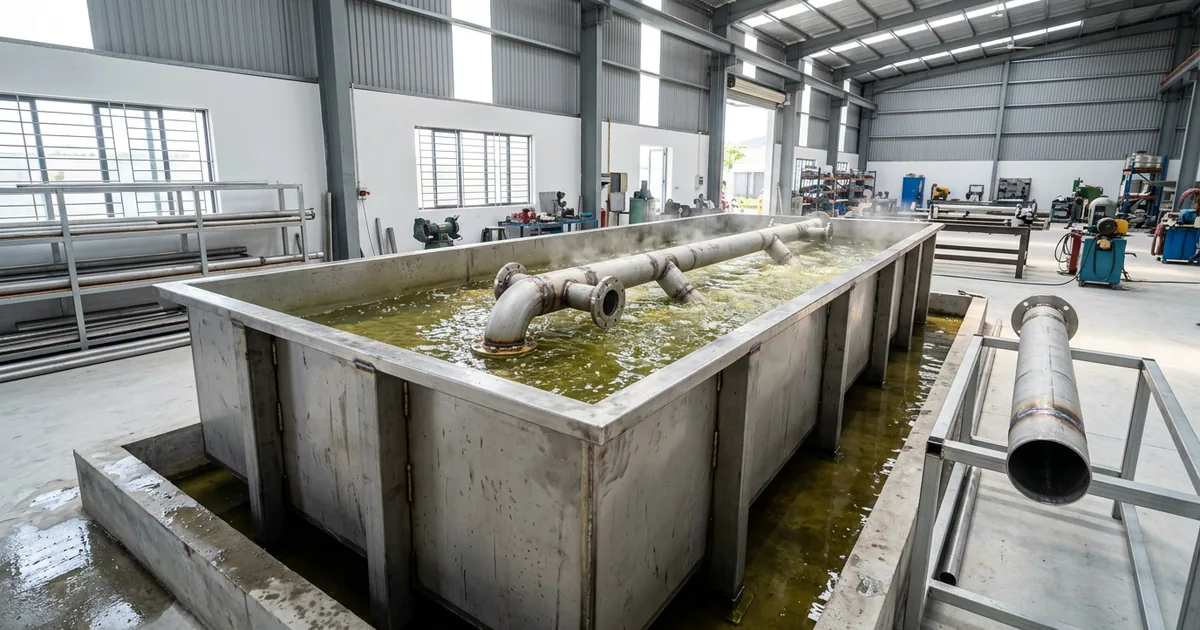
Applications of Citric Acid (C6H8O7) in Food Processing, Beverages & Industrial CIP Cleaning
Key Technical Summary: Citric Acid (C₆H₈O₇, international food additive code E330) is a triprotic alpha-hydroxy tricarboxylic organic acid that serves a dual industrial mission: acting as a clean-tasting acidulant, pH buffer, and antioxidant synergist (BP/USP/FCC compliant) in food and beverage manufacturing, while functioning as a high-efficiency polydentate chelating agent in automated Clean-In-Place (CIP) descaling, ASTM A967 stainless steel 316L/304L surface passivation, and low-pH reverse osmosis (RO) membrane cleaning without pitting corrosion or toxic NOₓ fume emissions. In Vietnam, Loc Thien Chemical (Tax ID: 0313650856) supplies industrial chemicals in bulk from 6 strategic industrial park warehouses (Ba Ria - Vung Tau, Dong Nai, Binh Duong, Da Nang, Can Tho, Bac Ninh) via a dedicated 5–30-ton tanker fleet with batch-specific COA and 16-section GHS SDS — contact hotline 0979 891 929 for a technical quote within 15 minutes.
Table of contents
Citric Acid (C₆H₈O₇ — 2-hydroxypropane-1,2,3-tricarboxylic acid, international additive code E330) is a weak triprotic organic acid produced on an industrial scale via submerged microbial fermentation of molasses or corn starch substrates using non-pathogenic strains of Aspergillus niger. Across modern manufacturing plants, C₆H₈O₇ fulfills a critical dual engineering role: serving as a pharmacopeia-grade acidulant, pH buffer, and antioxidant synergist (BP / USP / FCC) in food, beverage, and pharmaceutical formulations, while operating as the primary polydentate chelating agent for automated Clean-In-Place (CIP) descaling, ASTM A967 stainless steel 316L/304L passivation, and low-pH reverse osmosis (RO) membrane rehabilitation without base-metal pitting or hazardous acid vapor emissions.
Key Technical Sections in This Guide:
- 1. Triprotic Dissociation Kinetics & Polydentate Chelation Mechanism of Citric Acid C₆H₈O₇
- 2. Comprehensive Comparison of Commercial Grades: Monohydrate (C₆H₈O₇·H₂O) vs. Anhydrous (C₆H₈O₇)
- 3. Five-Stage Automated CIP Cleaning Protocol & Industrial Dosing Matrix
- 4. Stainless Steel 316L Passivation (ASTM A967) & RO Membrane Descaling
- 5. Food Acidulant, pH Buffering (E330), Pharmaceutical Effervescents & Textile Neutralization
- 6. Technical Illustrative Example: Converting CIP Descaling from HNO₃ to Citric Acid in Dairy & Beverage Processing
- 7. FCC/USP Food Safety Compliance, Anti-Caking Storage SOP & Loc Thien B2B Supply
- 8. Frequently Asked Questions (FAQ) on Food-Grade Citric Acid & CIP Descaling
1. Triprotic Dissociation Kinetics & Polydentate Chelation Mechanism of Citric Acid C₆H₈O₇ {#1-triprotic-dissociation-kinetics-and-polydentate-chelation-mechanism-of-citric-acid-c6h8o7}
Structurally, Citric Acid (C₆H₈O₇, anhydrous molar mass 192.12 g/mol) contains three carboxylic acid functional groups (-COOH) and one central alpha-hydroxyl group (-OH). This unique molecular geometry provides two decisive physicochemical capabilities that strong mineral acids such as Hydrochloric Acid (HCl) or Sulfuric Acid (H₂SO₄) cannot replicate in sanitary food, beverage, and bioprocessing systems:
1.1. Sequential Three-Step Dissociation & Wide Buffering Window (pH 2.5 – 6.5)
When dissolved in deionized or RO water at 25°C, the C₆H₈O₇ molecule undergoes three sequential deprotonation equilibria characterized by distinct acid dissociation constants (pKa):
- First Dissociation Step (
pKa₁ = 3.13):H₃Cit ⇌ H₂Cit⁻ + H⁺— Supplies controlled acidity capable of dissolving alkaline earth carbonates (CaCO₃,MgCO₃) and tricalcium phosphate (Ca₃(PO₄)₂) without plunging the solution into extreme corrosive pH territory (pH < 1.0). - Second Dissociation Step (
pKa₂ = 4.76):H₂Cit⁻ ⇌ HCit²⁻ + H⁺— Establishes a highly resilient pH buffering zone acrosspH 3.0 – 5.0, critical for suppressing microbial spore germination in carbonated beverages, fruit preserves, sauces, and canned foods. - Third Dissociation Step (
pKa₃ = 6.40):HCit²⁻ ⇌ Cit³⁻ + H⁺— Releases the fully deprotonated trivalent Citrate anion (C₆H₅O₇³⁻), activating maximum electron-pair donor sites for multivalent metal sequestration.
1.2. Polydentate Ring Chelation Kinetics (Metal Ion Sequestration)
Unlike mineral acids that rely solely on hydronium ion (H⁺) attack to dissolve scale, the Citrate anion (C₆H₅O₇³⁻) acts as a powerful tetradentate chelating ligand. Three oxygen donor atoms from the carboxylate groups (-COO⁻) coordinate simultaneously with the central hydroxyl oxygen (-OH) to encapsulate alkaline earth cations (Ca²⁺, Mg²⁺) and transition metal ions (Fe²⁺, Fe³⁺, Cu²⁺, Mn²⁺) inside thermodynamically stable five- and six-membered chelate rings:
C₆H₈O₇ + Fe³⁺ (Surface Rust / Free Iron on Stainless Steel) → [Fe(C₆H₅O₇)]⁰ (Soluble Ferric Citrate Chelate) + 3H⁺2C₆H₈O₇ + 3CaCO₃ (Calcium Carbonate / Milkstone Scale) → Ca₃(C₆H₅O₇)₂ (Soluble Acid Calcium Citrate Complex) + 3CO₂↑ + 3H₂OBecause the formation constants (log Kf) of metal-citrate complexes are exceptionally high (log Kf ≈ 11.50 for Fe³⁺–Citrate and log Kf ≈ 3.50 – 4.68 for Ca²⁺–Citrate), dissolved metal ions remain locked inside the aqueous phase. This completely prevents secondary hydroxide or phosphate re-precipitation across plate heat exchanger (PHE) corrugations, sanitary orbital welds, and RO membrane feed spacers during rinse-down cycles.
2. Comprehensive Comparison of Commercial Grades: Monohydrate (C₆H₈O₇·H₂O) vs. Anhydrous (C₆H₈O₇) {#2-comprehensive-comparison-of-commercial-grades-monohydrate-vs-anhydrous}
In global B2B chemical supply chains and across Loc Thien Chemical’s six regional distribution warehouses, Citric Acid is supplied in two crystalline commercial forms: Citric Acid Monohydrate (one water of crystallization per molecule) and Citric Acid Anhydrous (water-free crystal). Selecting the correct form directly governs dry-blend stability and chemical consumption economics:
| Technical & Commercial Parameter | Citric Acid Monohydrate | Citric Acid Anhydrous | Analytical Method & Operational Impact |
|---|---|---|---|
| Chemical Formula & CAS Registry No. | C₆H₈O₇·H₂O | CAS: 5949-29-1 | C₆H₈O₇ | CAS: 77-92-9 | International chemical identification |
| Food Additive Code (INS / Codex) | E330 / INS 330 | E330 / INS 330 | Codex Alimentarius & Food Grade |
| Molar Mass (Molecular Weight) | 210.14 g/mol (contains ~8.58% crystal water) | 192.12 g/mol (100% active dry basis) | Mass conversion: 1.00 kg Anhydrous = 1.094 kg Mono |
| Purity Assay (on dried basis) | 99.5% – 100.5% | 99.5% – 100.5% | Acid-base titration per BP / USP / FCC |
| Water Content / Loss on Drying | 7.5% – 8.8% (Karl Fischer water) | ≤ 0.5% (typical batch COA ≤ 0.2%) | USP <921> Karl Fischer titration |
| Crystallization Transition Temperature | Crystallizes from cold mother liquor < 36.5°C | Crystallizes from hot liquor > 36.5°C | Loses water of hydration at 70°C – 75°C |
| Standard Particle Size (Mesh Range) | 8 – 40 mesh (regular) or 12 – 40 mesh | 10 – 40 mesh (granular) or 30 – 100 mesh (fine) | ASTM standard sieve analysis |
Aqueous Solubility at 20°C | ~590 – 650 g/L (rapid endothermic dissolution) | ~590 g/L (rapid dissolution, lower heat drop) | Ideal for high-strength CIP make-up tanks |
Sulfate (SO₄²⁻) & Chloride (Cl⁻) Limits | SO₄²⁻ ≤ 150 ppm | Cl⁻ ≤ 50 ppm | SO₄²⁻ ≤ 150 ppm | Cl⁻ ≤ 50 ppm | Prevents chloride pitting on 304L/316L stainless |
Heavy Metal Impurities (Pb, As, Hg) | Pb ≤ 0.5 ppm | As ≤ 1.0 ppm | Hg ≤ 1.0 ppm | Pb ≤ 0.5 ppm | As ≤ 1.0 ppm | Hg ≤ 1.0 ppm | Full food & pharmaceutical safety compliance |
| Bacterial Endotoxins (Pharma Grade) | < 0.5 EU/mg (for parenteral/WFI grades) | < 0.5 EU/mg (for parenteral/WFI grades) | Protects pharmaceutical WFI water loops |
| Optimal Industrial Application | Aqueous solutions: CIP descaling, 316L passivation, RO cleaning, liquid beverages, textile neutralization | Dry formulations: Effervescent tablets, instant drink powders, dry spice blends, moisture-sensitive confectionery | Maximizes active molar cost efficiency |
QC Specialist Insight — Phan Cam Thuy (Food & Industrial Chemical QC Specialist at Loc Thien Chemical): “When auditing chemical consumption norms for FDI dairy and beverage plants, our QC team frequently encounters procurement departments ordering Citric Acid Anhydrous solely to dissolve into 2% aqueous CIP descaling tanks. Because both Monohydrate and Anhydrous dissociate into the exact same Citrate ion species the instant they enter water, using Anhydrous for liquid CIP is an unnecessary procurement expense. By simply multiplying the anhydrous recipe weight by 1.094 and switching to Citric Acid Monohydrate, plants achieve identical molar chelation strength at a significantly lower unit cost. Conversely, if an effervescent tablet or dry seasoning plant mistakenly uses Monohydrate, the 8.58% bound water released when ambient warehouse temperatures exceed 36.5°C will prematurely trigger CO₂ evolution with sodium bicarbonate, swelling packaging pouches and ruining the production batch.”
3. Five-Stage Automated CIP Cleaning Protocol & Industrial Dosing Matrix {#3-five-stage-automated-cip-cleaning-protocol-and-industrial-dosing-matrix}
In UHT dairy pasteurizers, carbonated beverage filling lines, breweries, and liquid food processing plants, every 8 – 24 hour production run leaves behind two distinct fouling layers inside stainless steel piping and plate heat exchangers:
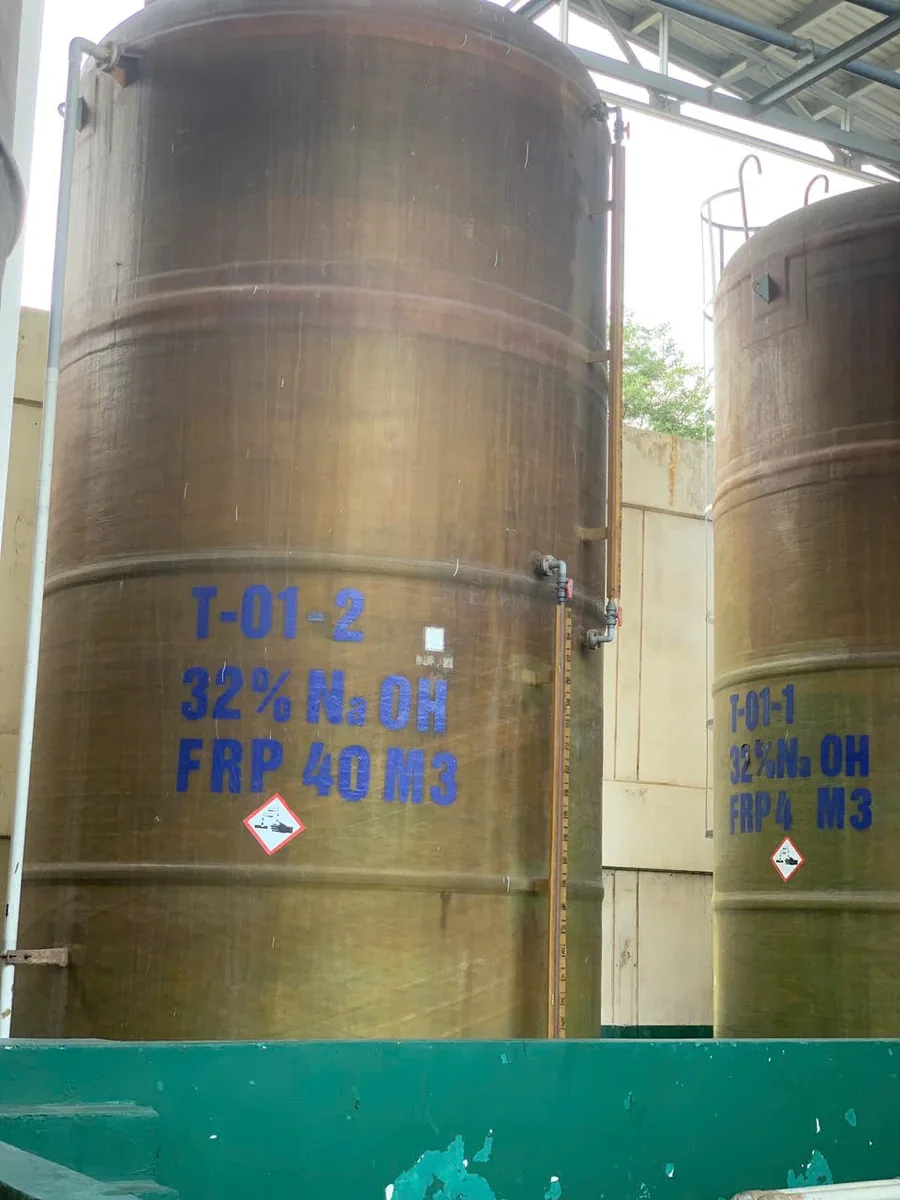
- Organic Fouling Layer: Heat-denatured whey proteins, polymerized lipids, and caramelized sugars — saponified and hydrolyzed during the alkaline wash stage using Caustic Soda NaOH 32% (diluted to
1.0% – 2.0% w/w). - Inorganic Scale Matrix: Milkstone (complexed calcium phosphate
Ca₃(PO₄)₂+ calcium caseinate), Beerstone (calcium oxalateCaC₂O₄), and water hardness deposits (CaCO₃,Mg(OH)₂). Because inorganic mineral scales are completely insoluble in caustic soda, they must be chelated and stripped during the Acid Wash stage using Citric AcidC₆H₈O₇.
3.1. Standard 5-Step Automated CIP Cycle (HACCP / ISO 22000)
- Step 1 — Pre-Rinse: Circulate warm water (
40°C – 50°C) for5 – 10 minutesat a pipeline flow velocity of1.5 – 2.0 m/s(ensuring turbulent pipe flow with Reynolds numberRe > 25,000) to flush out > 90% of loosely adherent product residue. - Step 2 — Hot Caustic Wash: Circulate
1.5% – 2.0% w/w NaOHsolution at70°C – 80°Cfor20 – 30 minutesto saponify fats and cleave peptide bonds in denatured protein films. - Step 3 — Intermediate Water Rinse: Flush with clean ambient water for
5 – 10 minutesuntil return-line conductivity and pH drop to near-neutral (pH 7.0 – 8.0). - Step 4 — Citric Acid Descaling & Neutralization Wash: Circulate
1.0% – 2.5% w/wCitric Acid at55°C – 65°Cfor15 – 30 minutes. Polydentate Citrate anions chelate and dissolve milkstone/beerstone scales, neutralize residual caustic soda trapped inside EPDM/PTFE gasket grooves, and restore a bright, hydrophilic stainless steel surface. - Step 5 — Final RO Rinse & Sanitization: Rinse with RO water until effluent conductivity matches feedwater, followed by thermal sanitization (
85°Chot water) or chemical disinfection using Hydrogen Peroxide H₂O₂ / Peracetic Acid (PAA).
3.2. Industrial Citric Acid Dosing & Operating Parameter Matrix
| Process Equipment / System | Primary Technical Objective | Active C₆H₈O₇ (% w/w) | Monohydrate Dose per 1,000 L Tank | Circulation Temp & Time | Target Operating pH |
|---|---|---|---|---|---|
| UHT Dairy Piping & Plate Heat Exchangers (PHE) | Dissolve milkstone (Ca₃(PO₄)₂) & neutralize caustic trace residue | 1.5% – 2.0% | 16.5 – 22.0 kg / m³ | 60°C – 65°C for 20 – 30 min | pH 2.0 – 2.5 |
| Brewery Fermentation Tanks & Beverage Fillers | Strip beerstone (CaC₂O₄), eliminate metallic off-flavors, protect yeast | 1.0% – 1.5% | 11.0 – 16.5 kg / m³ | 50°C – 60°C for 15 – 25 min | pH 2.2 – 2.8 |
| Pharmaceutical Purified Water (PW / WFI Loops) | Periodic derouging (Class I/II iron oxide removal) on 316L piping | 2.0% – 3.0% | 22.0 – 33.0 kg / m³ | 65°C – 75°C for 30 – 45 min | pH 1.8 – 2.3 |
| New 316L/304L Stainless Piping Passivation | Remove weld free iron & build Cr₂O₃ passive film per ASTM A967 | 4.0% – 10.0% | 44.0 – 110.0 kg / m³ | 50°C – 70°C for 20 – 120 min | pH 1.5 – 2.0 |
| Reverse Osmosis (RO) TFC Polyamide Membranes | Chelate CaCO₃, Fe₂O₃, and MnO₂ inorganic fouling scales | 1.5% – 2.0% | 16.5 – 22.0 kg / m³ (pH buffered with NH₄OH/NaOH) | 30°C – 35°C (max 40°C), 45 – 60 min | pH 2.5 – 3.5 (Mandatory) |
| Low-Pressure Boilers & Chiller Heat Exchangers | Remove carbonate scale and iron oxide with corrosion inhibitor | 3.0% – 5.0% | 33.0 – 55.0 kg / m³ | 60°C – 70°C for 120 – 240 min | pH 3.0 – 4.0 (ammonia buffered) |
4. Stainless Steel 316L Passivation (ASTM A967) & RO Membrane Descaling {#4-stainless-steel-316l-passivation-astm-a967-and-ro-membrane-descaling}
4.1. Austenitic Stainless Steel 316L / 304L Surface Passivation per ASTM A967
During mechanical cutting, internal polishing, and orbital TIG welding of sanitary Austenitic stainless steel piping (AISI 304L and 316L), the native chromium oxide film is thermally disrupted, leaving behind microscopic exogenous free iron (Fe⁰) embedded across the heat-affected zone (HAZ). If placed into service without chemical passivation, this free iron rapidly oxidizes in aqueous streams, triggering red iron oxide rouging and localized pitting corrosion.
International standard ASTM A967 / A967M (alongside aerospace standard AMS 2700) codifies five standardized Citric Acid passivation treatments (Citric 1 through Citric 5) that have largely replaced hazardous nitric acid (20% – 40% HNO₃) pickling:
- Citric 1:
4% – 10% w/wCitric Acid solution at60°C – 70°Cfor a minimum of4 minutes. - Citric 2:
4% – 10% w/wCitric Acid solution at50°C – 60°Cfor a minimum of10 minutes. - Citric 3:
4% – 10% w/wCitric Acid solution at20°C – 50°Cfor a minimum of20 minutes.
Metallurgical Advantage Over Nitric Acid (HNO₃): Because HNO₃ is an aggressive oxidizer, prolonged immersion indiscriminately dissolves beneficial alloying elements—Chromium (Cr), Nickel (Ni), and Molybdenum (Mo)—alongside iron. By contrast, Citric Acid selectively chelates and removes only free surface iron atoms within the outermost 1 – 3 nm atomic layer while leaving Chromium and Nickel completely intact. Upon subsequent rinsing and exposure to dissolved oxygen, the enriched surface forms a dense Chromium(III) Oxide (Cr₂O₃) passive barrier featuring a Chromium-to-Iron atomic ratio (Cr / Fe) of ≥ 1.5 – 2.0 (substantially outperforming the 1.1 – 1.3 ratio typical of nitric acid passivation), doubling long-term pitting resistance.
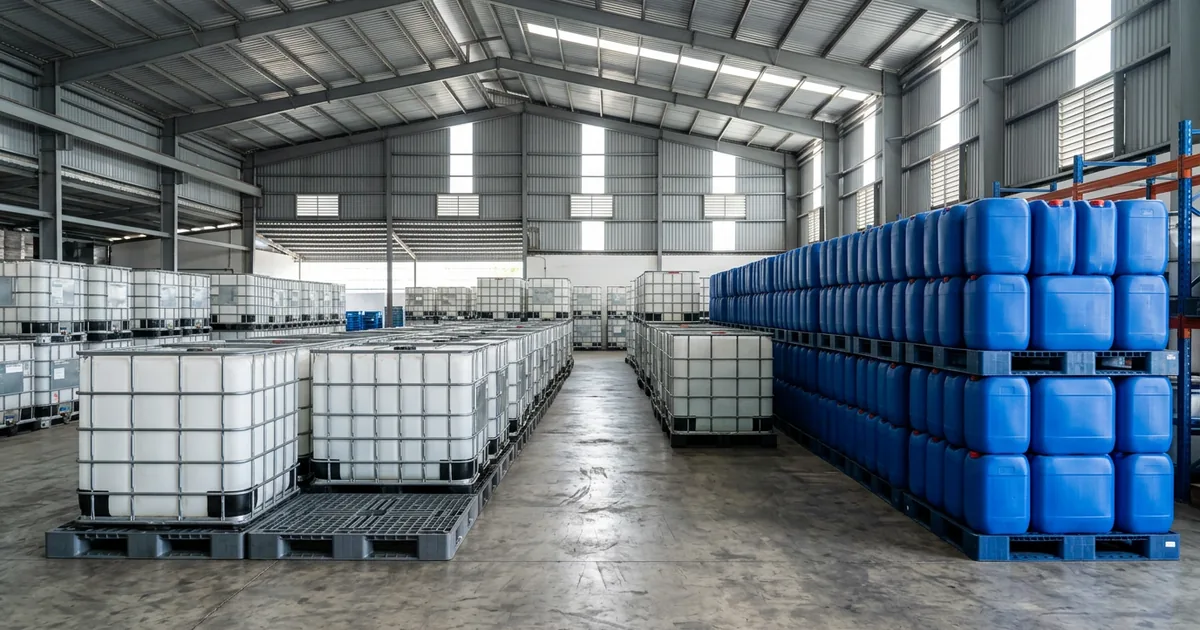
4.2. Low-pH Reverse Osmosis (RO) Membrane Descaling Protocol
For thin-film composite (TFC) polyamide RO membranes (such as DuPont FilmTec, Toray, and Hydranautics), cleaning with strong mineral acids like HCl risks localized pH excursions (pH < 1.5) that hydrolyze polyamide amide linkages and cause chloride stress-corrosion cracking on stainless steel pressure vessels. Buffered 2.0% w/w Citric Acid is the membrane industry’s gold standard for dissolving CaCO₃ and ferric hydroxide Fe(OH)₃ fouling:
| Technical & Safety Criterion | Citric Acid (C₆H₈O₇) Protocol | Mineral Acid (HNO₃ / HCl) Protocol | Plant Engineering & Cost Benefit |
|---|---|---|---|
| Metal Dissolution Selectivity on 316L Stainless | Selectively chelates free Fe; preserves Cr & Ni | Dissolves Fe, Cr, Ni, and Mo simultaneously | Maximizes Cr/Fe ratio in passive Cr₂O₃ film |
| Base Metal Corrosion Rate | < 0.002 mm/year (100% safe for orbital welds) | 0.05 – 0.25 mm/year (HCl induces Cl⁻ pitting) | Zero wall thinning or flange face etching |
Prevention of Ferric (Fe³⁺) Re-Precipitation | Forms soluble [Fe(Cit)]⁰ stable up to pH 8.0 | Precipitates red Fe(OH)₃ sludge once rinse pH > 3.5 | Eliminates secondary fouling on RO membranes |
| Compatibility with Polyamide RO Membranes | Natural triprotic buffer stabilizes pH 2.5 – 3.5 | Prone to sudden pH < 1.0 spikes that destroy polyamide | Extends RO membrane service life to 3 – 5 years |
| Occupational Safety (EHS) & Vapor Emissions | Non-volatile, odorless, > 98% biodegradable | Emits toxic NOₓ fumes (HNO₃) or corrosive HCl mist | Eliminates acid fume scrubbers in CIP rooms |
| Wastewater Treatment Plant (WWTP) Impact | Serves as biodegradable carbon source (BOD₅) | Spikes Total Nitrogen (TN), TDS, or Chloride (Cl⁻) | Prevents Total Nitrogen violations under QCVN 40:2025/BTNMT |
5. Food Acidulant, pH Buffering (E330), Pharmaceutical Effervescents & Textile Neutralization {#5-food-acidulant-ph-buffering-e330-pharmaceutical-effervescents-and-textile-neutralization}
Beyond sanitary CIP engineering and metallurgy, Citric Acid (E330) is a foundational functional raw material across three major industrial sectors:
5.1. Food, Beverage & Export Seafood Processing
- Natural Acidulant & Flavor Enhancer: In carbonated soft drinks (CSD), bottled fruit juices, ready-to-drink teas, and confectionery gummies, Citric Acid (
dosed at 0.1% – 0.5% w/w) delivers an immediate, refreshing burst of tartness (clean, sharp acid profile) that enhances fruit aromatics on the palate and dissipates cleanly without the lingering astringency associated with malic or tartaric acids. - Antioxidant Synergist & Color Stabilizer: In export frozen seafood processing (shrimp and pangasius fillets), edible oils, culinary sauces, and canned vegetables, trace free metal ions (
Cu²⁺,Fe²⁺) catalyze lipid autoxidation (rancidity) and enzymatic browning (polyphenol oxidase activity). By chelating these pro-oxidant metal ions, a0.2% – 0.5%Citric Acid dip combined with Ascorbic Acid (Vitamin C) preserves natural tissue whiteness and extends cold-chain shelf life by1.5x – 2.0x. - Controlled Pectin Gelation in Jams & Jellies: A buffered
C₆H₈O₇ / Sodium Citratesystem maintains product pH precisely withinpH 2.8 – 3.3—the exact electrostatic window required to protonate pectin carboxyl groups, enabling uniform 3D gel network cross-linking without syneresis (weeping).
5.2. Pharmaceutical Formulations & Personal Care Cosmetics
- Effervescent Tablet Matrix: Citric Acid Anhydrous (
C₆H₈O₇, moisture≤ 0.2%, fine particle cut30 – 100 mesh) blended with Sodium Bicarbonate (NaHCO₃) at a1 : 3molar ratio forms the core disintegrant matrix for effervescent tablets and granules. Upon contact with water, rapidCO₂micro-bubble evolution disintegrates the tablet within< 90 secondswhile generating a buffered Sodium Citrate solution that masks bitter active pharmaceutical ingredients (APIs) and accelerates gastric absorption. - Physiological Acid-Mantle Balancing in Cosmetics: In shampoos, facial cleansers, and dermatological serums, Citric Acid titrates formulation pH into harmony with the human skin’s natural acid mantle (
pH 4.5 – 5.5).
5.3. Core Fiber Neutralization in Textile Dyeing & Industrial Laundries
Following alkaline cotton scouring and mercerizing with Caustic Soda NaOH, neutralizing residual alkali with volatile Acetic Acid (CH₃COOH) often leaves pungent vinegar odors in the dyehouse and incomplete core neutralization after high-temperature stenter drying. Dosing Citric Acid at 0.5 – 1.5 g/L provides non-volatile, deep-core fiber neutralization, prevents fabric yellowing (when drying below 150°C), and simultaneously sequesters dissolved iron (Fe³⁺) in mill process water to prevent rust spots on bleached fabrics.
6. Technical Illustrative Example: Converting CIP Descaling from HNO₃ to Citric Acid in Dairy & Beverage Processing {#6-technical-illustrative-example-converting-cip-descaling-from-hno3-to-citric-acid-in-dairy-and-beverage-processing}
Technical Illustrative Case Study: Optimizing CIP acid descaling, eliminating EPDM gasket degradation, and achieving Total Nitrogen wastewater compliance at a
120,000 L/dayplant-based dairy and fruit beverage facility in My Phuoc 3 Industrial Park (Binh Duong).
6.1. Operational Baseline & Engineering Bottlenecks
A beverage processing facility operating three 316L stainless steel plate heat exchangers (PHE) fitted with food-grade EPDM elastomers previously ran a conventional two-stage CIP regime consisting of 2.0% NaOH caustic wash followed by 1.2% w/w Nitric Acid (HNO₃) at 65°C. After 14 months of continuous operation, plant engineering documented three critical failures:
- Accelerated EPDM Gasket Cracking & Black Specks: The strong oxidizing potential of
HNO₃at65°Cattacked the polymer backbone of the EPDM gaskets, causing elastomer embrittlement, black rubber particle shedding into the beverage stream, and forced full PHE regasketing every4 months. - Total Nitrogen (
TN) Exceedances at the Wastewater Plant: Daily discharge of spent nitric acid CIP solutions injected high concentrations of Nitrate (NO₃⁻) into the effluent, pushing influent Total Nitrogen to65 – 80 mg/L, overloading the anoxic denitrification basin, and threatening Column A compliance under QCVN 40:2025/BTNMT. - Occupational Fume Hazards: Operators handling concentrated
HNO₃during CIP tank make-up were repeatedly exposed to irritating yellow-brownNOₓvapors.
6.2. Engineering Conversion Implemented by Loc Thien Chemical
Following water hardness profiling and scale composition analysis (Ca₃(PO₄)₂ co-precipitated with soy protein), Loc Thien Chemical engineers redesigned the acid CIP protocol by replacing HNO₃ entirely with Food-Grade Citric Acid Monohydrate (C₆H₈O₇·H₂O assay ≥ 99.5%, FCC/USP compliant):
- Modified Acid CIP Recipe: Circulate
1.8% w/wCitric Acid (equivalent to19.7 kg Citric Acid Monohydrateper1,000 Lof RO water) at62°Cfor25 minutes, maintaining a plate-gap flow velocity of1.8 m/s. - Quarterly ASTM A967 Passivation Maintenance: Every 90 days, increase Citric Acid concentration to
5.0% w/wat65°Cfor45 minutes(ASTM A967 Citric 1) to remove trace free iron and regenerate theCr₂O₃passive film.
6.3. Verified Performance Outcomes After 6 Months
- Extended PHE Gasket Lifespan & Maintenance Reduction: EPDM gasket service life increased from
4 monthsto over14 monthswith zero elastomer cracking or black-speck contamination, reducing annual PHE gasket and sanitary valve seal replacement expenses by 68% and eliminating42 hoursof unplanned production downtime. - 99.4% Heat Transfer Recovery: Differential pressure across the PHE (
ΔP < 0.8 bar) and approach temperature efficiency (ΔT) remained rock-steady throughout production runs thanks to complete calcium phosphate chelation. - 100% Elimination of CIP Nitrate Discharge: Replacing
HNO₃removed100%of Nitrate (NO₃⁻) loading from the CIP system; furthermore, spent Citrate entering the wastewater plant acted as a readily biodegradable carbon source (BOD₅/COD > 0.65) that enhanced biological denitrification in the anoxic tank without requiring external methanol dosing.
7. FCC/USP Food Safety Compliance, Anti-Caking Storage SOP & Loc Thien B2B Supply {#7-fcc-usp-food-safety-compliance-anti-caking-storage-sop-and-loc-thien-b2b-supply}
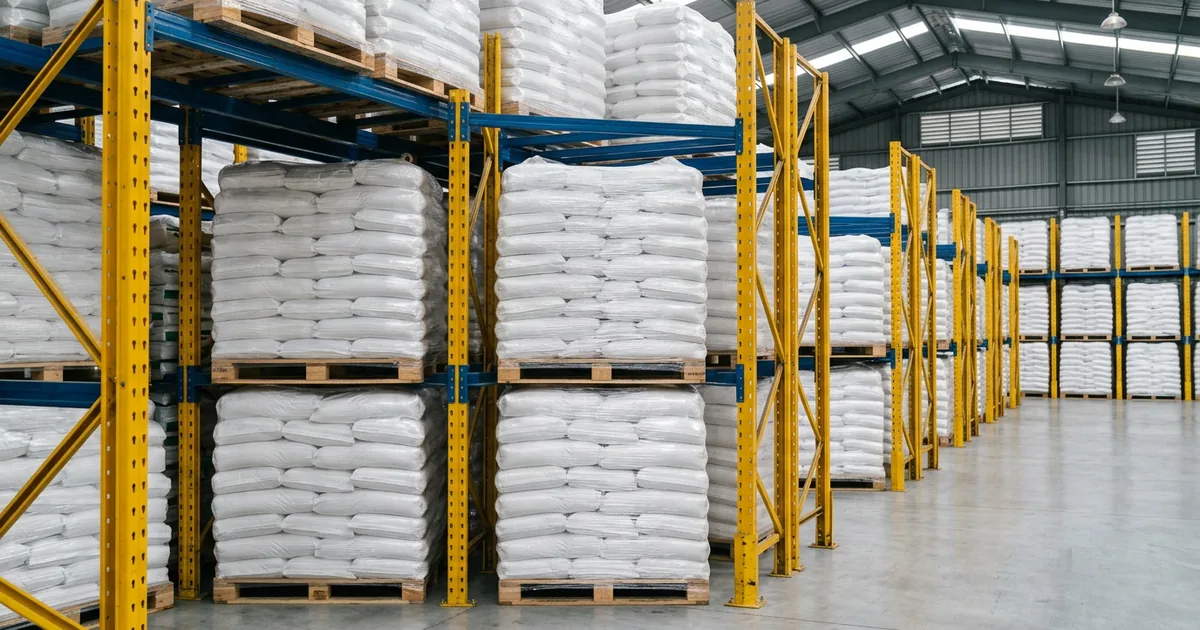
7.1. Warehouse Anti-Caking SOP for 25kg Crystalline Bags
In Vietnam’s tropical monsoon climate (summer ambient temperatures of 32°C – 38°C and relative humidity of 75% – 90% RH), crystalline Citric Acid (especially Monohydrate C₆H₈O₇·H₂O) is susceptible to surface moisture migration and inter-particle crystal bridging (caking) if stored improperly. To maintain 100% free-flowing granules, warehouse teams must enforce four storage controls:
- Microclimate Temperature & Humidity Control: Store in a dry, ventilated warehouse equipped with roof insulation or dehumidification, keeping ambient temperature
< 30°C(strictly below the36.5°Cdehydration transition point of Monohydrate) and relative humidity< 65% RH. - Pallet Racking & Stack-Height Limits: Place
25kgbags on moisture-proof plastic pallets at least15 cmabove the floor and30 cmclear of perimeter walls. Never stack higher than 8 bag layers per pallet (and avoid double-stacking pallets without structural racking) to prevent mechanical compression caking in bottom-layer bags. - Chemical Segregation: Segregate Citric Acid storage zones strictly away from strong alkalis (Caustic Soda Flakes NaOH,
KOH, Soda AshNa₂CO₃), bicarbonates (NaHCO₃), and acid-sensitive oxidizers such as Sodium Hypochlorite NaOCl to prevent exothermic reactions or toxic chlorine (Cl₂) gas release. - Immediate Inner-Liner Resealing: All
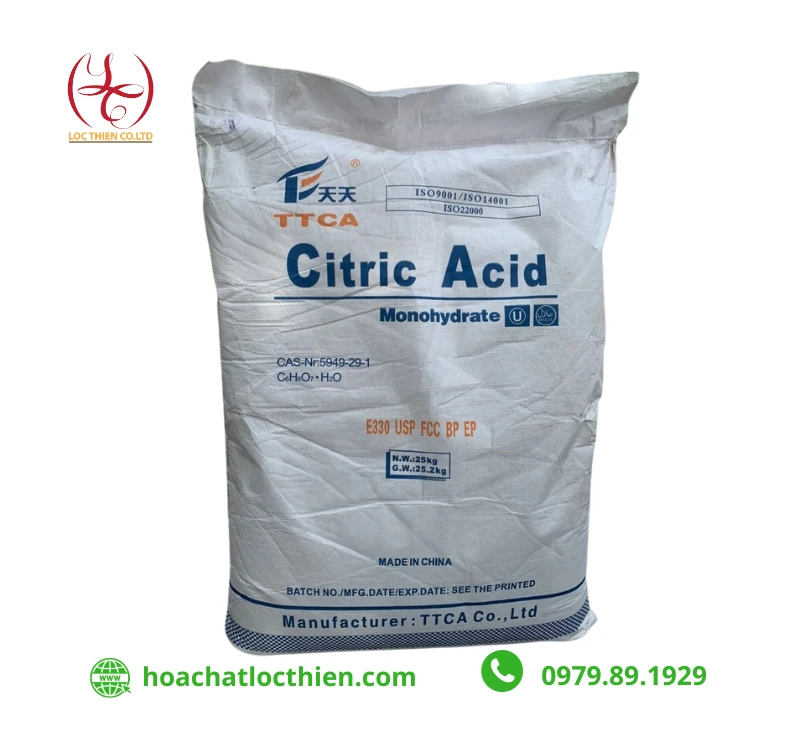
25kgbags distributed by Loc Thien Chemical feature a heavy-duty outer PP woven/Kraft composite bag paired with a heat-sealed inner moisture-barrier PE liner. After partial dispensing, operators must expel trapped air and twist-tie the inner PE liner immediately before folding the outer bag.
7.2. B2B Bulk Supply Chain & SLA Commitments from Loc Thien Chemical
Loc Thien Investment Development Co., Ltd. (Tax ID: 0313650856) is a trusted commercial bulk supplier and industrial chemical distributor, importing and supplying genuine Citric Acid Monohydrate (C₆H₈O₇·H₂O) and Citric Acid Anhydrous (C₆H₈O₇) from world-leading fermentation manufacturers (Ensign, TTCA, Lemon Star, Weifang) alongside a complete portfolio of companion CIP chemicals (NaOH, H₂O₂, Food-Grade H₃PO₄):
- Packaging Specifications & Integrated Fleet Logistics: Crystalline Citric Acid is supplied in factory-sealed
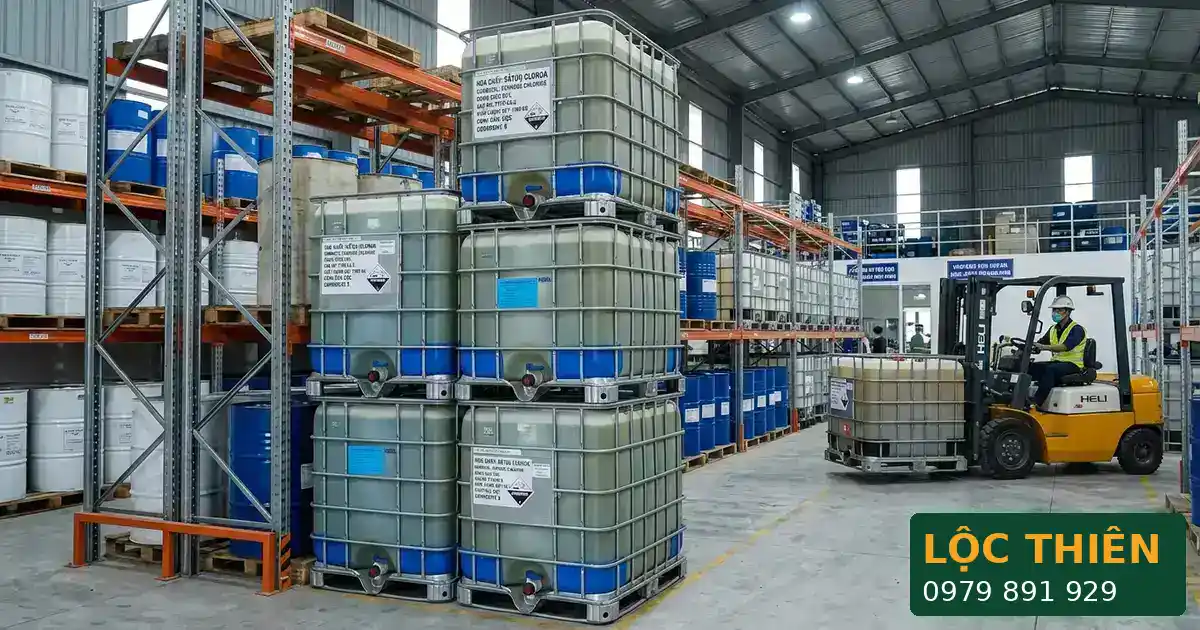
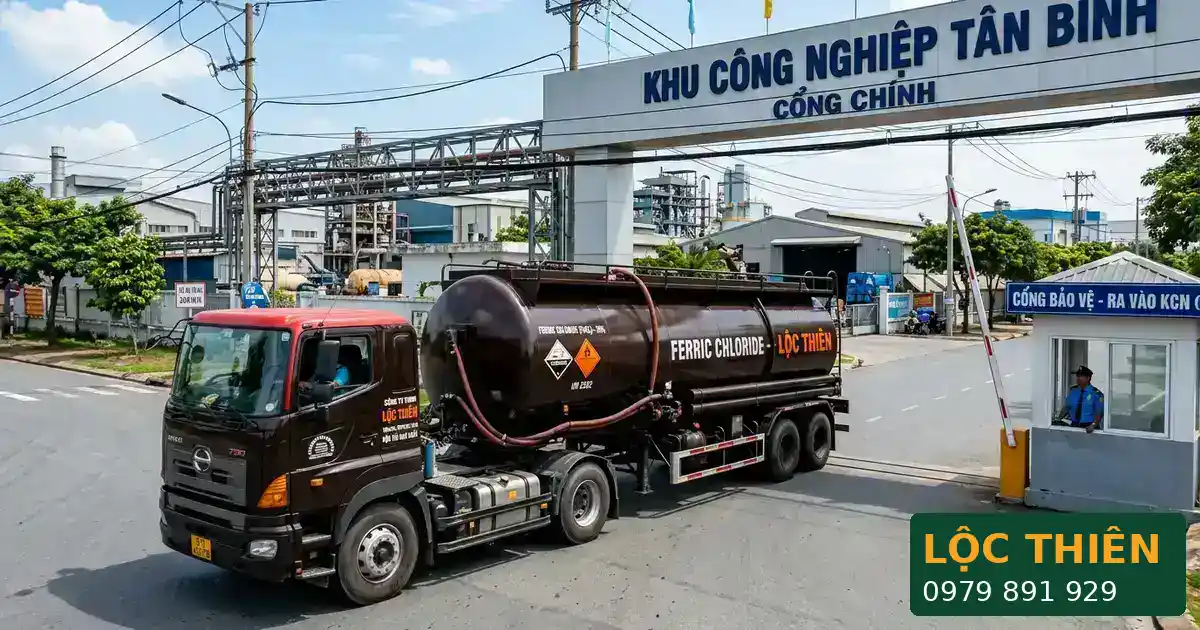
25kgdouble-layered moisture-proof PE/PP bags (palletized at1,000 kg – 1,250 kg/palletwith stretch-film wrapping). For integrated food and beverage plants ordering bundled liquid CIP alkalis (NaOH 32%) or wastewater treatment chemicals, Loc Thien operates covered box trucks alongside a dedicated fleet of5–30-tonspecialized chemical tankers, backed by a monthly supply capacity of3,000+ tons/month. - Nationwide 6-Warehouse Distribution Network: Inventory is stocked for rapid dispatch across 6 strategic chemical warehouses nationwide (Legal Headquarters located at
452/6B Tinh Lo 10, Binh Tri Dong Ward, Binh Tan District, Ho Chi Minh City):- Ba Ria - Vung Tau Warehouse: Phu My 1 Industrial Park, Phu My Town, Ba Ria - Vung Tau.
- Dong Nai Warehouse: Long Thanh Industrial Park, Long Thanh District, Dong Nai.
- Binh Duong Warehouse: Tan Dong Hiep Ward, Di An City, Binh Duong.
- Da Nang Warehouse: Hoa Khanh Industrial Park, Lien Chieu District, Da Nang City.
- Can Tho Warehouse: Tra Noc Industrial Park, O Mon District, Can Tho City.
- Bac Ninh Warehouse: Tien Son Industrial Park, Tien Du District, Bac Ninh.
- Quotation Speed & Delivery SLA Commitments:
- Technical Quotation Within
15 Minutes: B2B contract pricing is structured transparently around 5 core factors: (1) Crystal hydration grade (Monohydrate vs. Anhydrous), (2) Pharmacopeial/Food specification tier (FCC/USP/BP Food Grade, Pharma Grade, or Tech Grade), (3) Order volume (pallet lots, full containers, or annual blanket contracts), (4) Delivery distance from the nearest regional warehouse, and (5) Specific audit/testing requirements. Our engineering desk issues formal quotes with batch COA/SDS within 15 minutes. - Delivery SLA: Inner Ho Chi Minh City within 4 hours; Southern and Mekong Delta Industrial Parks within 24–48 hours; Northern and Central Vietnam within 2–3 days. Contact hotline 0979 891 929 for detailed delivery scheduling and procedures.
- Technical Quotation Within
8. Frequently Asked Questions (FAQ) on Food-Grade Citric Acid & CIP Descaling {#8-frequently-asked-questions-faq-on-food-grade-citric-acid-and-cip-descaling}
1. Should our plant select Citric Acid Monohydrate (C6H8O7.H2O) or Anhydrous (C6H8O7) for liquid CIP descaling systems?
For aqueous applications such as automated CIP acid descaling, stainless steel 316L passivation, and reverse osmosis (RO) membrane cleaning, plants should select Citric Acid Monohydrate (C₆H₈O₇·H₂O, containing ~8.58% water of crystallization) to optimize procurement cost efficiency. When dosed on an equivalent molar basis (multiplying the anhydrous mass requirement by a stoichiometric conversion factor of 1.094), Monohydrate provides identical Ca²⁺, Mg²⁺, and Fe³⁺ chelation capacity in solution. Conversely, Citric Acid Anhydrous (moisture ≤ 0.5%) is strictly required for dry powder blending, pharmaceutical effervescent tablets, and dry seasoning premixes to prevent premature moisture release and spontaneous reaction with sodium bicarbonate.
2. Why are food, dairy, and pharmaceutical plants replacing Nitric Acid (HNO3) with Citric Acid (C6H8O7) for 316L stainless steel passivation?
Under international standard ASTM A967 (Citric 1 through Citric 5), a 4% – 10% w/w Citric Acid solution circulating at 50°C – 70°C selectively chelates and removes exogenous free iron (Free Iron) from orbital weld heat-affected zones on 316L/304L stainless steel without etching or dissolving beneficial alloying elements such as Chromium (Cr) and Nickel (Ni). This selective iron removal yields a passive Cr₂O₃ oxide film with a superior Cr/Fe atomic ratio (≥ 1.5 – 2.0) compared to traditional nitric acid pickling, while eliminating toxic NOₓ fumes, severe acid burn hazards, and nitrate (NO₃⁻) wastewater discharge violations.
3. What are the optimal concentration and pH operating parameters for cleaning inorganic scale from RO membranes with Citric Acid?
When thin-film composite (TFC) polyamide reverse osmosis membranes experience calcium carbonate (CaCO₃) or metal oxide (Fe₂O₃, MnO₂) scaling that reduces normalized permeate flow by > 10% or increases differential pressure (ΔP) by > 15%, engineers prepare a 1.5% – 2.0% w/w Citric Acid solution using permeate water. Because unbuffered 2% citric acid exhibits a pH near 2.1, the cleaning solution should be adjusted to a safe operating pH window of 2.5 to 3.5 using ammonium hydroxide or food-grade NaOH, circulated at low pressure at 30°C – 35°C (maximum ≤ 40°C) for 45 – 60 minutes to dissolve inorganic scale without delaminating the polyamide barrier layer.
4. How can warehouse teams prevent 25kg bags of Citric Acid from caking and lumping during humid monsoon seasons?
Citric Acid (particularly the Monohydrate crystal form, which loses water of crystallization above 36.5°C) undergoes surface moisture migration and inter-particle crystal bridging when exposed to high heat (> 30°C) and relative humidity (> 75% RH). Standard warehouse SOP requires storing 25kg bags on moisture-proof plastic pallets or racking systems at least 15 cm off the floor and 30 cm away from walls, limiting stack height to a maximum of 8 bag layers to minimize compressive stress, maintaining ambient warehouse conditions at < 30°C and < 65% RH, and immediately resealing the inner PE liner after partial dispensing.
5. What quality documentation does Loc Thien Chemical provide with Citric Acid shipments for HACCP, ISO 22000, and FSSC 22000 audits?
Every commercial batch of Citric Acid Monohydrate and Citric Acid Anhydrous (25kg double-layered PE-lined Kraft/PP woven bags) supplied by Loc Thien Chemical is accompanied by a complete audit-ready documentation package: batch-specific Certificate of Analysis (COA) verifying compliance with BP / USP / FCC / E330 pharmacopeial and food standards, a 16-section GHS Safety Data Sheet (SDS), manufacturer Halal and Kosher certificates, and full lot traceability records supporting HACCP, ISO 22000, and FSSC 22000 food safety inspections.
Request a Bulk Quote for Citric Acid (C₆H₈O₇ Monohydrate & Anhydrous) with Batch COA/SDS Within 15 Minutes
Food, beverage, dairy, pharmaceutical, and textile manufacturing plants seeking technical CIP dosing consultation or wholesale supply of Citric Acid (C₆H₈O₇ 25kg Bags) compliant with FCC/USP/BP standards are invited to contact Loc Thien Chemical's B2B Engineering Desk:
- 24/7 Technical Hotline / Zalo: 0979 891 929
- Official B2B RFQ Email: [email protected]
- Explore Our Catalog: Industrial & Food Chemical Catalog | Request Lab Samples & Batch COA