
NaOH Liquid Caustic Soda (Sodium Hydroxide) — Nationwide Delivery...

Liquid Caustic Soda NaOH (Sodium Hydroxide) — Delivery to Industrial Parks
Liquid Caustic Soda NaOH (CAS 1310-73-2) — Loc Thien Delivery to Industrial Parks
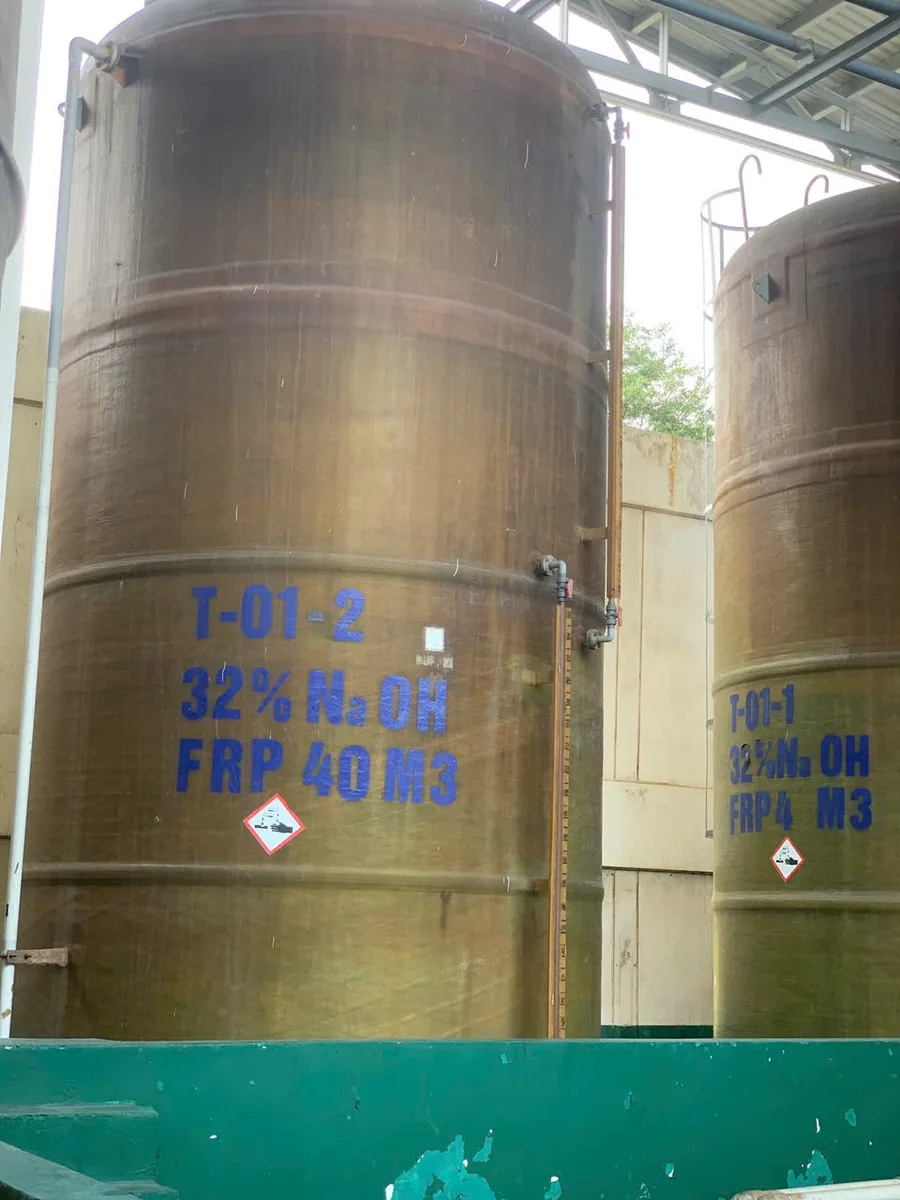
Loc Thien Company specializes in supplying liquid caustic soda NaOH (Sodium Hydroxide, CAS 1310-73-2 ) in various concentrations 32%, 45%, 50% to factories and industrial parks in Ho Chi Minh City, Binh Duong, and Dong Nai. Products come with complete documentation, including a Certificate of Origin, Certificate of Quality, Certificate of Analysis, and Material Safety Data Sheet , and comply with QCVN 40:2025 (superseding QCVN 40:2011, effective Sept 1, 2025) for industrial Wastewater Treatment.
Liquid Caustic Soda Concentration Comparison Chart — Select the Appropriate Type
Concentration
Key Applications
Suitable
Industries Typical Dosage
NaOH 32%
Mild pH adjustment, surface
cleaning Food, Textile Dyeing
50–150 ml/m³ of wastewater
NaOH 45%
Raising wastewater pH to 7–9, saponification of oils and fats
Paper, rubber, chemicals
80–200 ml/m³ of wastewater
NaOH 50%
High-capacity chemical reactions, metallurgy
; Oil and gas, metallurgy, petrochemicals
; Varies by technical process
Technical Specifications — CO/CQ/CoA/MSDS Certificates
Detailed Specifications
Chemical name
Sodium Hydroxide — Liquid Caustic Soda — NaOH Liquid
CAS number
1310-73-2
Concentration32%, 45%, 50% (tolerance ±1%)
Appearance
:
Colorless liquid solution
Packaging
:
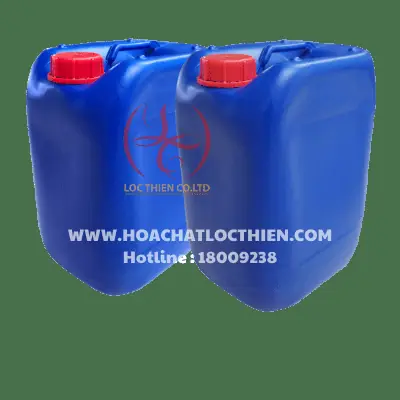
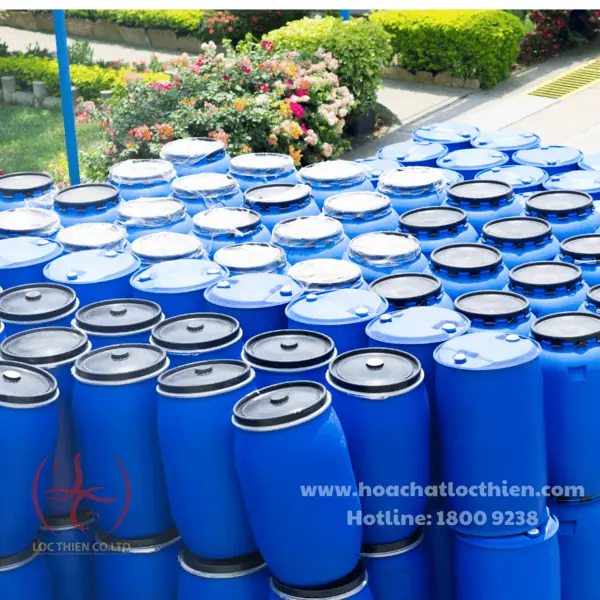
25L can, 220L drum, 1000L IBC tank
Documentation
CO, CQ, Certificate of Analysis (Certificate of Analysis), MSDS
Discharge
Standard QCVN 40:2025/BTNMT (superseding QCVN 40:2011, effective Sept 1, 2025)
— Output pH 6–9
Applications: Liquid Caustic Soda NaOH by Industry
Wastewater Treatment — QCVN 40:2025 (superseding QCVN 40:2011, effective Sept 1, 2025):
NaOH 45%/50% to adjust the pH of industrial wastewater to 6–9 in accordance with QCVN 40:2025/BTNMT (superseding QCVN 40:2011, effective Sept 1, 2025). Dosage: 80–200 ml/m³ depending on the initial pH.
Saponification of oils and fats:
NaOH liquid 32%–45% saponification reaction with animal and vegetable oils and fats in food processing plant wastewater, converting them into glycerol and water-soluble soap.
Textile dyeing:
Alkalization of dye solutions, fixation of reactive dyes, and bleaching of cellulose fibers.
Pulp and Paper:
Kraft pulp cooking, lignin removal, and recovery of Caustic Soda from black liquor.
Food:
Production of pretzels, olives, and soy sauce (food-grade standard).
Metallurgy & Oil & Gas:
NaOH 50% neutralizing acids, treating metal surfaces, and removing sulfur from oil.
Delivery to Industrial Parks — Ho Chi Minh City, Binh Duong, Dong Nai
Loc Thien delivers liquid Soda Ash NaOH directly to factory gates in key industrial parks:
🏭 VSIP I and VSIP II Industrial Parks
— Binh Duong (delivery)
🏭 Nhon Trach Districts
I, II, III, V, and VI — Dong Nai (delivery)
🏭 Amata Industrial Park
— Bien Hoa, Dong Nai
🏭 Tan Binh, Cat Lai, Hiep Phuoc Industrial Parks — Ho
Chi Minh City 🏭 Song Than, My Phuoc, Bau Bang Industrial Parks — Binh Duong
Estimated delivery time: within 4 hours in inner-city Ho Chi Minh City, 24–48 hours to industrial parks in the South and Mekong Delta, 2–3 days to Northern and Central Vietnam. 1–15-metric-ton trucks, IBC tankers.
📋 Accompanying Documents: VAT invoice, warehouse release slip, Certificate of Analysis (COA), Purchase Order / Change Order, MSDS.
Dosage Guide NaOH Liquid pH Raiser for Wastewater
Initial pH 4–5 → needs to be raised to 7–8 (to meet QCVN 40:2025 (superseding QCVN 40:2011, effective Sept 1, 2025)
): use NaOH 45%, dosage 150–300 ml/m³
Initial pH 5–6 → needs to be raised to 7–9: use NaOH 32%, dosage 80–150 ml/m³
Recommendation: Test with a small dose first, measure the actual pH, and adjust based on the actual flow rate
Installation of an automatic dosing system (dosing pump) combined with an online pH sensor.
Frequently Asked Questions — NaOH Liquid
What are liquid Soda Ash NaOH and 32% used for?
NaOH 32% is suitable for: adjusting the pH of potable water and mild wastewater, industrial surface cleaning, fabric treatment in Textile Dyeing, and the production of soap and detergents. Moderate concentration makes NaOH and 50% easier to transport and safer to store.
What are the differences between NaOH, 32%, 45%, and 50%? Which one should you choose?
NaOH 32%: lower corrosivity, suitable for food applications and light water treatment. NaOH 45%: Balances effectiveness and transport safety; ideal for industrial Wastewater Treatment and paper production. NaOH 50%: Highest efficacy; used in metallurgy, oil and gas, and chemical synthesis; requires specialized corrosion-resistant equipment. Recommendation: Wastewater Treatment plants compliant with QCVN 40:2025 (superseding QCVN 40:2011, effective Sept 1, 2025) should use 45%; Textile Dyeing plants should use 32%–45%, and the petrochemical industry should use 50%.
What is the dosage of liquid NaOH to raise the pH of wastewater to 7–9?
Reference dosage: NaOH 45% — Raising pH from 4 to 7 requires approximately 150–250 ml/m³ of wastewater; raising pH from 5 to 8 requires 80–150 ml/m³. Quick formula: for each unit of pH increase, approximately 50–80 ml of NaOH 45% per m³ is needed. A practical Jar Test must be conducted because the wastewater from each plant has different buffer capacities. Install a dosing pump and an online pH sensor for automatic control to meet QCVN 40:2025 (superseding QCVN 40:2011, effective Sept 1, 2025).
NaOH liquid vs. NaOH flakes (99%) — when to use which type?
NaOH liquid (32–50%): ready to use, no dilution required, safer for transporting in large quantities, suitable for automatic dosing systems. Suitable for Wastewater Treatment plants, Textile Dyeing facilities, and continuous food processing. NaOH flakes 99%: high-purity concentration; requires a dilution tank and temperature control (generates significant heat during mixing); reduces shipping costs for small quantities. Suitable for laboratories and artisanal soap production. Conclusion: For industrial plants with continuous operations → choose NaOH liquid to save on labor and ensure safety.
Can NaOH liquid be used for the saponification of fats and oils in food plant Wastewater Treatment?
Saponification reaction: fats and oils + NaOH → glycerol + sodium soap (water-soluble). NaOH, 32%, and 45% are pumped into the grease separation tank or equalization tank, combined with mechanical agitation. The optimal temperature is 40–60°C to accelerate the reaction. After the reaction, the saponified layer that rises to the surface is skimmed off; the wastewater then proceeds to the biological treatment tank. Typical dosage for wastewater from slaughterhouses and seafood processing plants: 100–300 ml of NaOH and 45% per cubic meter.
Need to purchase Liquid Caustic Soda NaOH for delivery to the Binh Duong or Dong Nai Industrial Parks?
Estimated delivery time: within 4 hours in inner-city Ho Chi Minh City, 24–48 hours to industrial parks in the South and Mekong Delta, 2–3 days to Northern and Central Vietnam. Complete documentation: CO, CQ, CoA, MSDS, and VAT invoice. Contact: ☎ 0979 891 929 for an immediate quote.
📞 Hotline for consultation & ordering: 0979 891 929 (Delivery to industrial zones)