
Checking NaOH Concentration with a Hydrometer — Step-by-Step Guide
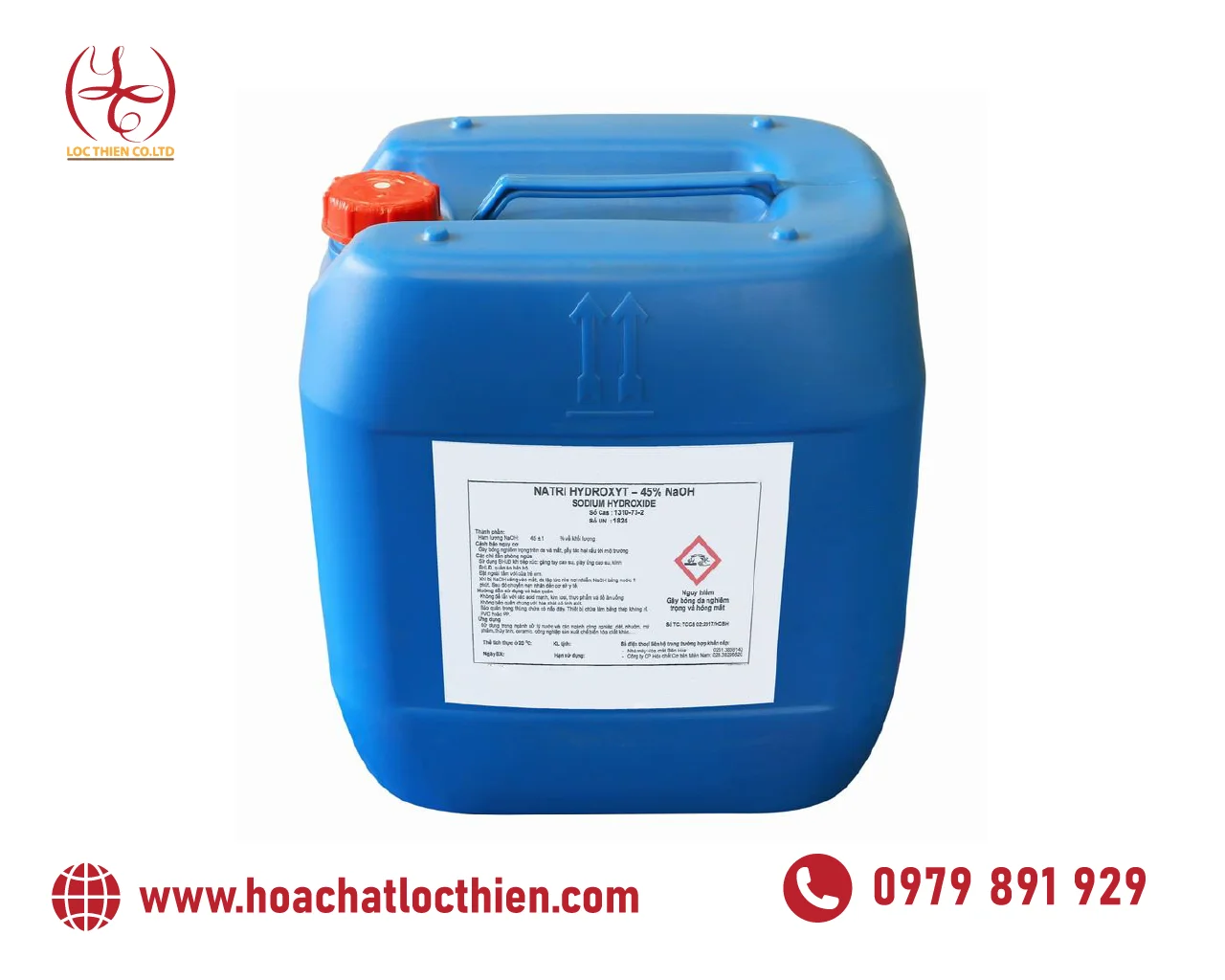
TL;DR: Measuring NaOH concentration with a hydrometer is a fast, low-cost method for checking liquid caustic quality directly at the warehouse or plant. This guide covers step-by-step preparation, measurement, reading, and conversion of specific gravity to concentration, including a standard conversion table (1.348 = 32%, 1.478 = 45%, 1.52 = 50%) and common measurement errors.
What Is Checking NaOH Concentration with a Hydrometer?
A hydrometer is an instrument that measures the specific gravity (relative density) of liquids, operating on the Archimedes principle — when placed in a solution, the hydrometer sinks to a mark corresponding to the liquid’s density. Concentrated NaOH solution has a higher specific gravity than water, and specific gravity increases linearly with mass percentage concentration.
This method is standardized under IS 4016 (based on International Critical Tables), allowing rapid determination of NaOH concentration in the 0–50% range with ±0.5% mass accuracy. Although less precise than laboratory titration (±0.1%), the hydrometer is a practical rapid-check tool for production, goods receiving, and CIP operations.
Preparation Before Measurement
Required Equipment
- NaOH hydrometer: Scale suitable for the concentration range to be checked. Two types are most common: 0–27% for dilute solutions and 25–50% for concentrated solutions. Typically ~270 mm long, glass, 0.5% mass graduations
- Graduated cylinder or measuring vessel: 250–500 mL capacity, sufficient for the hydrometer to float freely without touching the bottom or walls
- Thermometer: ±0.5°C accuracy, 0–50°C range
- Distilled water: For cleaning and checking the hydrometer before use
- Gloves, safety goggles: NaOH is a strong corrosive chemical
Hydrometer Verification
Before measuring, check the hydrometer in distilled water at 20°C:
- Place the clean hydrometer in distilled water
- Read the value — must display exactly 1.000 (or 0°Bé)
- If deviation >0.001 → hydrometer is damaged or needs recalibration
Sample Conditions
- NaOH sample temperature must be stable at 20°C ± 2°C (standard temperature for the conversion table)
- Sample must be homogeneous, free of solid impurities, grease, or air bubbles
- For concentrated NaOH from storage tanks, take a representative sample after thorough stirring or recirculation
Step-by-Step Measurement Guide
Step 1: Stabilize Sample Temperature
Pour the NaOH sample into a graduated cylinder and let it stand in a room at 20°C for 5–10 minutes, or use a temperature-controlled bath. Measure the actual temperature — record it for later correction.
Step 2: Clean the Hydrometer
Rinse the hydrometer with distilled water and wipe dry with a soft lint-free cloth. Do not use cleaning chemicals that could scratch the glass surface.
Step 3: Insert the Hydrometer
Slowly lower the hydrometer into the solution, gently rotating to dislodge any air bubbles adhering to the glass surface. Wait until the hydrometer stabilizes (no oscillation, not touching the cylinder walls).
Step 4: Read the Result
Read at the lowest point of the meniscus — eyes level with the liquid surface to avoid parallax error.
Step 5: Record and Correct
Record the reading and the actual temperature. If the temperature is not 20°C, apply the following correction:
- Above 20°C: add 0.0003 g/cm³ for each °C of difference
- Below 20°C: subtract 0.0003 g/cm³ for each °C of difference
Reason: NaOH expands when heated, reducing specific gravity by ~0.03% per °C increase.
Step 6: Look Up the Conversion Table
After obtaining the corrected specific gravity, refer to the conversion table below to find the corresponding mass percentage concentration.
NaOH Specific Gravity — Concentration Conversion Table (20°C)
| Specific Gravity (g/cm³) | Concentration (% mass) | Notes |
|---|---|---|
| 1.000 | 0 | Pure water |
| 1.023 | 2 | Very dilute solution |
| 1.046 | 4 | |
| 1.069 | 6 | |
| 1.092 | 8 | |
| 1.115 | 10 | |
| 1.173 | 15 | |
| 1.232 | 20 | |
| 1.260 | 23 | |
| 1.293 | 27 | NaOH 27% — commonly used in plating |
| 1.348 | 32 | NaOH 32% — used in CIP and water treatment |
| 1.378 | 35 | |
| 1.395 | 37 | |
| 1.414 | 39 | |
| 1.430 | 41 | |
| 1.449 | 43 | |
| 1.463 | 44 | |
| 1.478 | 45 | NaOH 45% |
| 1.493 | 47 | |
| 1.509 | 49 | |
| 1.52 | 50 | NaOH 50% — most common concentration |
Note: The above table applies at the standard temperature of 20°C. Commercial hydrometers (e.g., Matsu) typically have 0.5% mass graduations with ±0.5% error. For goods-in inspection, combine with titration to confirm concentration more accurately.
Practical Examples
A compounding engineer at a CIP plant receives a batch of concentrated NaOH. Specific gravity measured at 1.518 at 25°C:
- Correct: 1.518 + (25-20) × 0.0003 = 1.5195 → rounded to 1.52
- Look up → concentration 50% → batch meets specification
A CIP engineer checks an operating wash bath, solution specific gravity = 1.012 at 22°C:
- Correct: 1.012 + (22-20) × 0.0003 = 1.0126
- Interpolate between 1.000 (0%) and 1.023 (2%) → ~1.2% — needs NaOH addition
Common Errors When Measuring NaOH Concentration with a Hydrometer
Incorrect Temperature
Issue: NaOH solution has a thermal expansion coefficient of ~0.03%/°C. Measuring at 30°C instead of 20°C reduces specific gravity by ~0.003 — equivalent to ~0.5% concentration error. With NaOH 50%, if measured at 35°C without correction, the reading would be only ~48.5% — enough to reject a compliant batch.
Prevention: Always measure with a thermometer. Correct to 20°C before consulting the table.
Air Bubbles in Solution
Issue: Air bubbles adhering to the hydrometer surface or present in the solution reduce Archimedes buoyancy → hydrometer sinks deeper → reads lower than actual. Error is particularly large with NaOH solutions containing surfactants or after pump circulation.
Prevention: Let the sample stand for 5–10 minutes before measuring. Gently rotate the hydrometer when inserting to release bubbles. For foamy samples, gentle heating (not above 30°C) or rapid vacuum filtration may help.
Dirty Hydrometer
Issue: Grease residue or dried NaOH film on the glass surface alters surface tension and contact angle with the liquid → meniscus distortion → reading error up to 0.001–0.002.
Prevention: Clean the hydrometer with distilled water and wipe dry before each measurement. Periodically check with distilled water.
Parallax Error
Issue: Eyes not level with the liquid surface → incorrect meniscus reading.
Prevention: Place eyes level with the liquid surface. Use a white backing sheet behind the cylinder for easier reading.
Non-Representative Sampling
Issue: Samples from the tank bottom or surface do not represent the entire batch. Concentrated NaOH develops a concentration gradient if left standing — heavier portions settle at the bottom.
Prevention: Take samples from the tank’s middle valve after recirculation or thorough stirring for at least 15 minutes.
Hydrometer vs Other Methods
| Method | Error | Time | Equipment Cost | Suitable For |
|---|---|---|---|---|
| Hydrometer | ±0.5% | 2–5 min | Low (~200–500K VND) | Rapid check at warehouse, CIP |
| Acid-base titration | ±0.1% | 15–20 min | Medium (burette, standard chemicals) | Accurate check, batch acceptance |
| pH + conductivity measurement | ±0.3% | 1–2 min | High (electronic instruments) | CIP online, automation |
| Refractometer | ±0.3% | 1 min | Medium | Laboratory, R&D |
The hydrometer is the optimal choice for daily rapid checks — no electricity required, no standard chemicals, simple operation that any technical staff can perform after 5 minutes of instruction.
Standard NaOH Parameters — Hóa Chất Lộc Thiên
NaOH is directly imported by Hóa Chất Lộc Thiên and batch-certified with COA. Standard specific gravity parameters per QC Phan Cẩm Thùy and Võ Thị Như Hòa:
| Concentration | Specific Gravity (20°C) | Packaging |
|---|---|---|
| NaOH 32% | 1.348 g/cm³ | Tanker truck, IBC 1000L |
| NaOH 45% | 1.478 g/cm³ | Tanker truck, IBC 1000L |
| NaOH 50% | 1.52 g/cm³ | Tanker truck 5–30 tons, IBC 1000L, 30L jerry can |
🛒 Need to check NaOH concentration before receiving goods? Buy NaOH 32%/45%/50% — batch COA/MSDS, QC Phan Cẩm Thùy & Võ Thị Như Hòa certified. Hotline 0979 891 929.
Frequently Asked Questions (FAQ)
What type of NaOH hydrometer should I buy?
Choose a glass hydrometer with a 0–27% range for dilute solutions and 25–50% for concentrated solutions. Brand Matsu (Germany) or equivalent, 0.5% mass graduations, ±0.5% error.
Why measure at 20°C?
The NaOH specific gravity–concentration conversion table is established at the standard temperature of 20°C. Hotter solutions have lower specific gravity due to expansion — correction is needed if measuring at a different temperature.
What is the measurement error with a hydrometer?
±0.5% mass per manufacturer specifications. In practice, with correct procedure and temperature correction, error is within ±0.3–0.5%.
Can a hydrometer be used for solid NaOH?
No. This method only measures liquid solutions. Solid NaOH (flakes, prills) must be weighed and dissolved into solution to determine concentration.
How often should the hydrometer be checked?
Check with distilled water (must read 1.000) before each use. In-depth calibration every 6 months at an accredited laboratory.
Can hydrometer results be used for batch acceptance?
Can be used for preliminary inspection. For formal acceptance, combine with acid-base titration (determining concentration to ±0.1%) and cross-reference with the manufacturer’s COA.
What if the measured specific gravity is below specification?
Recheck the temperature and apply correction. If still low, take a second sample from a different tank location. Contact the QC department (Phan Cẩm Thùy, Võ Thị Như Hòa) for cross-verification.
Quality control: QC Phan Cẩm Thùy inspects and Võ Thị Như Hòa approves each NaOH batch. Batch COA, ZDHC MRSL Level 1 (TÜV Rheinland) certified.