Precision PCB Acid Copper Electroplating & Heavy Metal Effluent Treatment with CuSO₄ — Loc Thien Chemical
Key Technical Summary: High-aspect-ratio Printed Circuit Board (PCB) Plated Through-Hole (PTH) and HDI microvia acid copper electroplating require high-purity Copper Sulfate Pentahydrate (CuSO4 5H2O ≥ 98.5%–99.0%, metallic Cu ≥ 24.8%, trace iron Fe ≤ 35 ppm, Cl- ≤ 10 ppm) to sustain Throwing Power ≥ 85% and deposit elongation ≥ 18%–22% under IPC-6012 Class 3. Loc Thien Chemical is a Commercial Bulk Supplier of CuSO4 5H2O in moisture-proof 25kg bags, H2SO4 98%, Liquid Caustic Soda NaOH 32% via 5–30-ton tankers, Polymer Cation C1492, and FeCl2 30% solution for EDTA de-complexation, achieving final effluent copper < 0.18 mg/L (QCVN 40:2025/BTNMT Column A). In Vietnam, Loc Thien Chemical (Tax ID: 0313650856) supplies industrial chemicals in bulk from 6 strategic industrial park warehouses (Ba Ria - Vung Tau, Dong Nai, Binh Duong, Da Nang, Can Tho, Bac Ninh) via a dedicated 5–30-ton tanker fleet with batch-specific COA and 16-section GHS SDS — contact hotline 0979 891 929 for a technical quote within 15 minutes.
Table of contents
Precision Printed Circuit Board (PCB) Acid Copper Pattern & Plated Through-Hole (PTH) Electroplating and High Density Interconnect (HDI) microvia bottom-up superfilling require stringent chemical purity to deposit equiaxed, fine-grained copper linings with high tensile ductility (Elongation ≥ 18%–22%) and deep hole coverage (Throwing Power ≥ 85%). Loc Thien Chemical is a Commercial Bulk Supplier of industrial chemicals distributing imported high-purity Copper Sulfate Pentahydrate CuSO₄·5H₂O ≥ 98.5%–99.0% (Cu ≥ 24.8%, trace iron Fe ≤ 35 ppm, Cl⁻ ≤ 10 ppm, CAS 7758-99-8) packaged in 25kg double PE-lined moisture-proof bags (bulk road tankers strictly prohibited for dry crystalline salts). Concurrently, Loc Thien supplies Ferrous Chloride FeCl₂ 30% solution for EDTA de-complexation and bulk Liquid Caustic Soda NaOH 32% via dedicated 5–30-ton tankers paired with Polymer Cation C1492, ensuring post-Lamella wastewater effluent consistently achieves Cu < 0.18 mg/L in full compliance with QCVN 40:2025/BTNMT Column A. Receive a technical quotation with batch COA within 15 minutes via Hotline: 0979 891 929 or Email: [email protected].
1. Through-Hole (PTH) & HDI Microvia Metallization Challenges in Multi-Layer 5G & Automotive PCBs
In advanced manufacturing of multi-layer telecommunications backplanes, AI server motherboards, and automotive radar PCBs, Plated Through-Holes (PTH) and blind/buried microvias feature micro-drilled diameters ranging from 75 µm to 200 µm across FR-4 dielectric laminates 1.6 mm – 3.2 mm thick. The resulting hole aspect ratio (Aspect Ratio = Depth / Diameter) routinely reaches 8 : 1 to 12 : 1, imposing severe hydrodynamic and diffusional mass-transfer limitations on Cu²⁺ cation transport from the bulk solution into the center of the hole barrel.
Electroplated acid copper serves as the vertical electrical and thermal interconnect linking 8 to 32 internal copper signal planes. Under international electronics standard IPC-6012 Class 3 / Class 3A (governing high-reliability aerospace, medical, and automotive electronics) and electrodeposited copper foil specification IPC-4562, the plated copper barrel must simultaneously satisfy four metallurgical benchmarks:
- Minimum Average Copper Wall Thickness: Must reach
20 µm – 25 µmacross the vertical barrel wall with zero plating voids (Voids = 0), nodules, or circumferential thin spots. - Throwing Power (TP): The ratio of copper thickness at the geometric center of the through-hole to the copper thickness deposited on the external board surface must achieve
TP ≥ 85%. - Tensile Strength & Ductility (Elongation): The electrodeposited copper matrix must crystallize in an equiaxed fine-grained structure exhibiting ultimate tensile strength
≥ 280 MPaand elongation at breakElongation ≥ 18% – 22%. - Thermal Stress Solder Float Resistance (IPC-TM-650 Method 2.6.8): Microsection test coupons floated on molten lead-free solder at
288 °C ± 5 °Cfor10 seconds(3 to 6 consecutive thermal shock cycles) must show zero corner cracking, barrel cracking, or inner-layer interconnect separation.
When a PCB shop introduces low-grade agricultural or general commercial copper sulfate containing dissolved iron contamination (Fe²⁺/Fe³⁺ > 50–100 ppm), trace heavy metals (Pb, As, Sb, Ni, Zn), or uncontrolled chloride levels outside the 40 – 70 ppm window, three destructive electrochemical failure modes immediately degrade bath stability:
- Parasitic
Fe²⁺/Fe³⁺Redox Shuttle & Brightener Destruction: At the phosphorized copper anode, ferrous ions oxidize to ferric ions (Fe²⁺ → Fe³⁺ + e⁻). Migrating into the bulk electrolyte and cathode boundary layer,Fe³⁺acts as a potent chemical oxidant that cleaves the disulfide linkage (-S-S-) of the organic brightener SPS (Bis-(3-sulfopropyl) disulfide), converting active accelerator molecules into electrochemically inactive sulfonate fragments. Consequently, brightener dosing consumption escalates by2.5 – 3.0×while low-current-density (LCD) regions inside hole barrels suffer from dull haze and poor throw. - Pinhole Pitting, Nodular Growth & High-CD Edge Burning: Water-insoluble particulates (
> 0.05%) and metallic impurities distort the local electric field at PTH entry rims—where local current density is2.0 – 2.5×higher than the panel average. Hydrogen evolution (2H⁺ + 2e⁻ → H₂↑) traps gas micro-bubbles against the hole wall to create plating voids, while conductive suspended particles codeposit onto the cathode to form rough copper nodules that trigger short circuits during pattern etching. - Grain-Boundary Embrittlement & Thermal Barrel Cracking: Trace Arsenic (
As > 5 ppm), Lead (Pb > 10 ppm), and accumulated organic breakdown products segregate along copper grain boundaries, pinning dislocation slip and reducing deposit elongation below10% – 12%. During lead-free reflow soldering (260 °C – 288 °C), the Z-axis coefficient of thermal expansion (CTE≈ 50 – 70 ppm/°C) of the FR-4 epoxy-glass laminate expands3.5×faster than metallic copper (16.8 ppm/°C), generating axial tensile stress that fractures brittle copper barrels cleanly in half.
2. Acid Copper Cathodic Electrodeposition Kinetics (CuSO₄ – H₂SO₄ – Cl⁻) & Three-Component Organic Additive Synergism
Cathodic copper deposition from Copper Sulfate Pentahydrate CuSO₄·5H₂O in an acidic sulfate electrolyte proceeds not via a single two-electron step, but through two sequential single-electron charge-transfer reactions mediated by an adsorbed cuprous intermediate (Cu⁺(ads)):
Because Step 1 (Cu²⁺ + e⁻ → Cu⁺) exhibits a high activation energy barrier and governs overall reaction kinetics, nucleation density and deposit morphology are controlled by the surface coverage of Cu⁺(ads) within the electrical double layer and the cathodic overpotential (ηc). Achieving bottom-up superfilling inside blind microvias and Throwing Power ≥ 85% inside deep through-holes requires precise stoichiometric balance between the inorganic matrix and the three-component organic additive package:
- High-Acid / Low-Copper Inorganic Matrix (
H₂SO₄ : Cu²⁺ ≈ 10 : 1): Unlike decorative copper baths (CuSO₄·5H₂O 200 g/L,H₂SO₄ 60 g/L), high-throw PCB acid copper baths maintain a lowCuSO₄·5H₂Oconcentration of70 – 85 g/L(Cu²⁺ = 18 – 22 g/L) paired with a high concentration of Sulfuric AcidH₂SO₄ 98%at180 – 220 g/L. AbundantH⁺protons elevate solution conductivity to0.45 – 0.55 S/cm, minimizing ohmic voltage drop (IR drop) down the length of deep PTH barrels and equalizing current density between the panel face and hole center. - Ligand-Bridging Function of Chloride Ions (
Cl⁻ = 40 – 70 ppm): Chloride ions chemisorb onto the copper cathode to form a surface coordination bridge (Cu⁺–Cl⁻–PEG) that anchors polymeric suppressor molecules. At the phosphorized copper anode (0.04% – 0.06% P),Cl⁻stabilizes the15 – 30 µmblack copper phosphide (Cu₃P) film, preventing cuprous ion release and disproportionation (2Cu⁺ → Cu²⁺ + Cu⁰↓copper sludge formation). IfCl⁻ < 30 ppm, suppressor desorption causes rough burning; ifCl⁻ > 90 ppm, insulatingCuClprecipitates passivate the anode and trigger brightener deactivation. - Suppressor / Carrier (Polyalkylene Glycol
PEG / EO-PO Copolymer, MW3,000 – 12,000 Da,100 – 300 ppm): Due to their high molecular weight and slow diffusion coefficient, PEG macromolecules preferentially adsorb onto flat external panel surfaces and hole entrances. Anchored byCl⁻, the densePEG–Cl⁻barrier film induces a strong cathodic polarization shift (Δη ≈ 150 – 220 mV), suppressing surfaceCu²⁺reduction rates. - Brightener / Accelerator (
SPSBis-(3-sulfopropyl) disulfide,1 – 5 ppm): As a low-molecular-weight disulfide carrying negatively charged sulfonate (-SO₃⁻) terminal groups, SPS diffuses rapidly into microvia bottoms and PTH centers. There, SPS competitively displaces PEG fromCl⁻sites and forms aCu(I)-thiolatecomplex that lowers the activation barrier of Step 1 (Cu²⁺ + e⁻ → Cu⁺), accelerating copper deposition inside the hole by3 – 5×relative to the exterior surface while refining grain size below0.5 – 1.5 µm. - Leveler (Quaternized Nitrogen Heterocyclic Polymer,
5 – 20 ppm): Positively charged nitrogen centers migrate electromigratively toward high-current-density protrusions and PTH entry corners, selectively deactivating adsorbed SPS molecules at hole rims to eliminate “dog-boning” and guarantee uniform wall geometry.
3. Technical Data Sheet (TDS) of High-Purity CuSO₄·5H₂O & Compliance with IPC-4562 / HG/T 2960-2020
To eliminate metallic impurity buildup in continuous Vertical Continuous Plating (VCP) and gantry hoist lines, Loc Thien Chemical verifies every imported batch of High-Purity Copper Sulfate Pentahydrate CuSO₄·5H₂O via Atomic Absorption Spectroscopy (AAS) and ICP-OES against IPC-4562 and electroplating standard HG/T 2960-2020 Grade I:
| Analytical Parameter | Loc Thien High-Purity Electroplating Grade CuSO₄·5H₂O | Standard Commercial / Agricultural Grade CuSO₄ | PCB Electroplating Standard (IPC-4562 & HG/T 2960-2020 Grade I) | Process Impact on PCB Acid Copper Bath & PTH Quality |
|---|---|---|---|---|
Main Assay (CuSO₄·5H₂O) | ≥ 98.5% – 99.2% w/w | 95.0% – 96.5% w/w | ≥ 98.5% w/w | Ensures accurate Cu²⁺ stoichiometric replenishment per plated panel area |
Metallic Copper Content (Cu) | ≥ 24.8% – 25.2% w/w | 23.8% – 24.2% w/w | ≥ 24.8% w/w | Theoretical pure pentahydrate contains 25.45% Cu; 100% rapid dissolution |
Total Iron Impurity (Fe) | ≤ 30 – 35 ppm | 180 – 500 ppm | ≤ 50 ppm (Strict threshold) | Prevents parasitic Fe²⁺/Fe³⁺ oxidation of SPS brightener and pinhole pitting |
Free Sulfuric Acid (H₂SO₄) | ≤ 0.10% w/w | 0.30% – 0.80% w/w | ≤ 0.15% w/w | Free-flowing dry micro-crystals; prevents bag corrosion and hard caking |
Chloride Content (Cl⁻) | ≤ 10 ppm | 80 – 250 ppm | ≤ 20 ppm | Prevents uncontrolled drift of the narrow 40 – 70 ppm Cl⁻ bath window |
Lead (Pb) & Cadmium (Cd) | Pb ≤ 5 ppm · Cd ≤ 2 ppm | 30 – 80 ppm | Pb ≤ 10 ppm (RoHS 3 & REACH compliant) | Prevents grain-boundary embrittlement and ensures EU RoHS export compliance |
Arsenic (As) & Antimony (Sb) | As ≤ 2 ppm · Sb ≤ 5 ppm | 15 – 40 ppm | As ≤ 5 ppm · Sb ≤ 10 ppm | Preserves deposit ductility (Elongation ≥ 18%–22%), preventing 288 °C barrel cracks |
Nickel (Ni) & Zinc (Zn) | Ni ≤ 8 ppm · Zn ≤ 8 ppm | 50 – 150 ppm | Ni ≤ 15 ppm · Zn ≤ 20 ppm | Maintains ultra-low copper electrical resistivity (≤ 1.72 µΩ·cm) |
| Water-Insoluble Matter | ≤ 0.008% – 0.01% w/w | 0.10% – 0.25% w/w | ≤ 0.02% w/w | Protects 1 µm PP filter cartridges and eliminates cathode nodules |
| SSOT Packaging Format | 25kg double PE-lined moisture-proof bag | Single-layer woven PP bag | 25kg moisture-proof bag (No Tankers) | Fine fast-dissolving crystals; bulk road tankers strictly prohibited for dry salt |
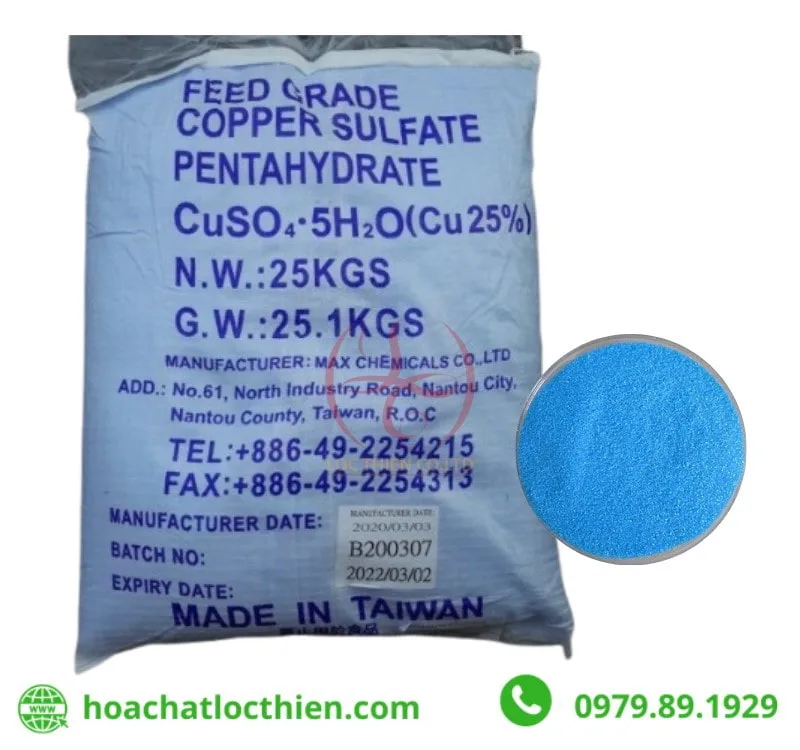
 Figure 1: Palletized inventory of high-purity Copper Sulfate Pentahydrate CuSO₄·5H₂O ≥ 98.5% (Cu ≥ 24.8%, Fe ≤ 35 ppm) in 25kg double PE-lined moisture-proof bags ready for dispatch to FDI PCB manufacturing plants from Loc Thien Chemical warehouses.
Technical QC Insight — Specialist Vo Thi Nhu Hoa (Quality Control Lab — Loc Thien Chemical): “Across our incoming and outgoing quality audits of Copper Sulfate Pentahydrate
CuSO₄·5H₂O25kg bags supplied to multi-layer PCB facilities in Bac Ninh and Binh Duong, two analytical parameters dictate bath longevity: trace Iron (Fe ≤ 35 ppm) and filterable insolubles (Water-insoluble matter ≤ 0.01% w/w). Introducing even a single off-spec lot withFe > 120 ppminto a make-up tank causes Cyclic Voltammetric Stripping (CVS) brightener consumption rates to spike within 48 hours while inducing rough PTH wall nodules. Consequently, our QC laboratory retains batch reference samples and performs a200 g/Ldissolution clarity filtration test through a0.45 µmmembrane filter prior to releasing any shipment.”
4. Acid Copper Bath Control SOP, Hull Cell Diagnostics (250 mL, 2A, 10 Min) & Carbon Treatment / Dummy Plating Protocol
To sustain cathodic current efficiency at 98% – 100% and extend bath service life beyond 18 – 24 months without bath dumping, PCB laboratory engineers must execute daily wet-chemical titrations alongside electrochemical diagnostics using a standard 250 mL Hull Cell (operated with regulated air sparging across the cathode face, total current I = 2.0 A, duration t = 10 minutes at 23 – 25 °C, mapping the continuous current density spectrum from 0.5 A/dm² to 5.0 A/dm²):
| Bath Parameter / Hull Cell Panel Symptom | Optimal Operating Window (High-Throw PCB Bath) | Laboratory Analytical Method | Root Cause of Process Deviation | Corrective Engineering Action on the Plating Line |
|---|---|---|---|---|
CuSO₄·5H₂O (Cu²⁺) Concentration | 70 – 85 g/L (Cu²⁺ = 18 – 22 g/L) | Complexometric titration with 0.1 M EDTA at pH 10 (Murexide or PAN indicator) | Excessive anodic dissolution or high solution drag-out on thin panels | If CuSO₄ > 90 g/L: reduce active titanium anode basket area or dilute with DI water; if < 65 g/L: dissolve CuSO₄·5H₂O via auxiliary filter tank |
Free Sulfuric Acid (H₂SO₄) | 180 – 220 g/L (Weight ratio H₂SO₄ : Cu²⁺ ≈ 10 : 1) | Acid-base titration with 1.0 N NaOH (Methyl Orange endpoint at pH 4.2) | Drag-out loss into post-plating rinse cascades | Slowly dose high-purity Sulfuric Acid H₂SO₄ 98% into the cooled recirculation loop (maintain bath T ≤ 28 °C) |
Chloride Ion (Cl⁻) Concentration | 40 – 70 ppm (Target setpoint 50 – 60 ppm) | Potentiometric titration or AgCl turbidimetry using 0.01 N AgNO₃ | DI water make-up deionizer breakthrough or consumption into Cu₃P anode film | If Cl⁻ < 35 ppm: add reagent-grade HCl (1.65 mL HCl 37% per 1,000 L raises Cl⁻ by 1 ppm); if Cl⁻ > 85 ppm: treat with zinc dust or dilute |
Burnt, rough deposits at High CD (> 3.5 A/dm²) | Mirror-bright, ductile finish across 0.5 – 4.5 A/dm² | 2A / 10 min Hull Cell panel + CVS suppressor analysis | Low Cu²⁺ concentration, bath temperature < 20 °C, or Carrier (PEG) depletion | Raise CuSO₄·5H₂O to 80 g/L, verify sparger air agitation (0.2 – 0.3 m³/min·m²), and replenish Carrier additive |
Matte haze at Low CD (0.5 – 1.2 A/dm²) | Zero dullness or step demarcation in the LCD zone | CVS electrochemical stripping analysis of Brightener/Leveler | Excess Leveler, depleted SPS Brightener, or organic breakdown contamination | Dose SPS Brightener according to mL/kAh schedule; if LCD haze persists, perform activated carbon filtration |
| Vertical striations / treeing ridges on panel | Smooth, level surface free of vertical flow lines | Cross-sectional microsection & Cl⁻ turbidimetric check | Chloride dropped below 20 ppm combined with severe SPS Brightener overdose | Immediately titrate and restore Cl⁻ to 55 ppm with HCl, then dose Carrier PEG to rebalance surface coverage |
| Anode film turns reddish-brown or grey-white | Adherent, conductive thin black Cu₃P film | Visual basket inspection & rectifier voltage monitoring (1.8 – 2.8 V) | Non-phosphorized copper (P < 0.03%) or Cl⁻ > 100 ppm forming insulating CuCl | Replace with certified phosphorized copper nuggets (0.04% – 0.06% P), clean PP anode bags, and keep anode CD at 0.5 – 1.2 A/dm² |
Once cumulative bath operation reaches 800 – 1,200 Ah/L, accumulated organic breakdown products (OBPs) and trace metals degrade copper elongation. Process engineers should execute the 4-Step Bath Purification SOP (Carbon Treatment & LCD Dummy Plating):
- Transfer the electrolyte into an auxiliary polypropylene treatment tank, heat to
45 – 50 °C, and dose1.5 – 2.5 mL/Lof Hydrogen PeroxideH₂O₂ 35% – 50%with air agitation for60 minutesto oxidize fractured organic polymers. - Add
3.0 – 5.0 g/Lof acid-washed electroplating-grade powdered activated carbon, agitate for2 – 3 hours, and filter back into the cleaned main tank through1 µmpolypropylene cartridges until a white filter-paper spot check shows zero carbon fines. - Suspend corrugated copper dummy cathode panels in the bath and run Low-Current-Density (LCD) Dummy Electrolysis at
0.1 – 0.2 A/dm²for4 – 6 hoursto selectively plate out metallic contaminants (Pb²⁺, Cu⁺, Ni²⁺, Zn²⁺). - Re-analyze
CuSO₄·5H₂O,H₂SO₄, andCl⁻(using the Loc Thien Online Chemical Dosage Calculator), replenish fresh Carrier, Brightener, and Leveler additives, and verify a clean Hull Cell panel before resuming production.
5. Closed-Loop Heavy Metal Effluent Treatment & EDTA De-Complexation to QCVN 40:2025/BTNMT Column A
In a PCB fabrication facility, copper-bearing wastewater originates from three distinct process streams: (1) Acid copper electroplating rinse water (Cu²⁺ = 50 – 300 mg/L, free ionic copper at pH 1.5 – 2.5); (2) Spent micro-etching solutions (Na₂S₂O₈ / H₂SO₄ or H₂O₂ / H₂SO₄ containing Cu²⁺ = 500 – 2,500 mg/L); and (3) Electroless copper plating rinses containing powerful organic chelating agents such as EDTA, Quadrol, or Rochelle Salt (Tartrate).
Because the Cu-EDTA chelate ring possesses an exceptionally high stability constant (log Kf(Cu-EDTA) = 18.80), simply adding caustic soda (NaOH) to raise pH to 9.0 – 10.0 fails to precipitate copper hydroxide, leaving residual effluent copper at 3.0 – 8.0 mg/L. To reliably reduce total copper below Cu < 0.18 mg/L (satisfying both QCVN 40:2025/BTNMT Column A and the strictest industrial park connection limit of Cu ≤ 0.5 mg/L), Loc Thien Chemical engineers deploy a 5-stage physicochemical treatment train:
| Treatment Stage | Engineering Objective & Physicochemical Mechanism | Loc Thien Chemical Reagents & Packaging Format | Operating pH / ORP Setpoint & Reference Dosage | Stage Effluent Control Target |
|---|---|---|---|---|
| 1. Acidic De-Complexation Reactor | Cleave Cu-EDTA and Cu-Tartrate chelate rings via competitive iron cation ligand displacement | Ferrous Chloride FeCl₂ 30% Solution (Directly Manufactured by Loc Thien, 5–30-ton tankers / 1,000L IBC) + H₂SO₄ 98% | Adjust pH = 2.5 – 3.0 · Dose FeCl₂ 30% at molar ratio Fe : Cu = 3.0 : 1 (150 – 400 mg/L) · Reaction time 20 – 30 min | > 98% of chelated copper liberated as free uncomplexed Cu²⁺ ions |
| 2. Alkaline Precipitation Tank | Shift pH to the minimum solubility point of Cu(OH)₂ (pH 8.8 – 9.2) with simultaneous ferric hydroxide co-precipitation | Liquid Caustic Soda NaOH 32% (Commercial Bulk Supplier, delivered via 5–30-ton tankers) | Automated pH PID loop maintaining pH = 8.8 – 9.2 (0.8 – 1.8 kg NaOH 32% / m³) · Retention 15 – 20 min | Dense Cu(OH)₂ and Fe(OH)₃ co-precipitate micro-flocs; avoid pH > 10.5 redissolution as Cu(OH)₄²⁻ |
| 3. Coagulation & Flocculation Basin | Neutralize negative Zeta potential of hydroxide colloids and bridge particles into 3 – 5 mm macro-flocs | PAC 31% (50 – 120 mg/L) + Polymer Cation C1492 (1.0 – 2.0 ppm, 25kg bag) | Flash mix PAC at 150 rpm (2 min); slow flocculate Polymer at 35 rpm (12 – 15 min) | Rapidly settling shear-resistant flocs with settling velocity 3.5 – 5.0 m/h |
| 4. Lamella Clarifier & Filter Press Dewatering | High-rate inclined-plate solid-liquid separation and high-pressure sludge cake dewatering for copper smelting recovery | Pneumatic diaphragm pump feeding chamber filter press at 7 – 12 bar | Lamella hydraulic retention 35 – 45 min · Pressing cycle 2.5 – 3.5 hours/batch | Clarified supernatant Cu < 0.15 – 0.18 mg/L, Fe < 0.8 mg/L, TSS < 15 mg/L; cake moisture < 58% – 60% |
| 5. Final pH Neutralization & Discharge | Polish clarified water pH to neutral range and pass through multi-media sand filtration before IP discharge | Micro-dosing dilute H₂SO₄ or HCl 32% via diaphragm metering pump | Maintain final discharge pH = 6.5 – 8.0 | 100% compliance with QCVN 40:2025/BTNMT Column A and Industrial Park online monitoring |
Mandatory Jar-Test Calibration Note: The dosage ranges for
FeCl₂ 30%(150 – 400 mg/L),NaOH 32%,PAC 31%, andPolymer Cation C1492(1.0 – 2.0 ppm) detailed above serve as engineering design benchmarks; actual plant dosing rates must always be determined and periodically calibrated via 6-beaker bench-scale Jar-test trials on the facility’s actual composite PCB wastewater.
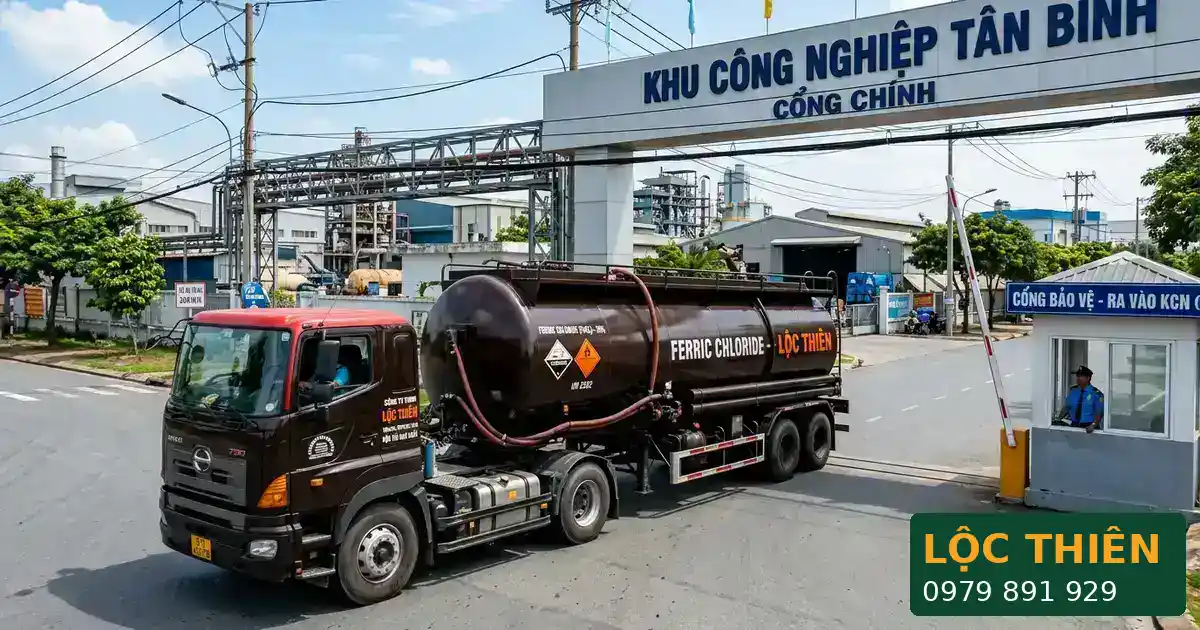
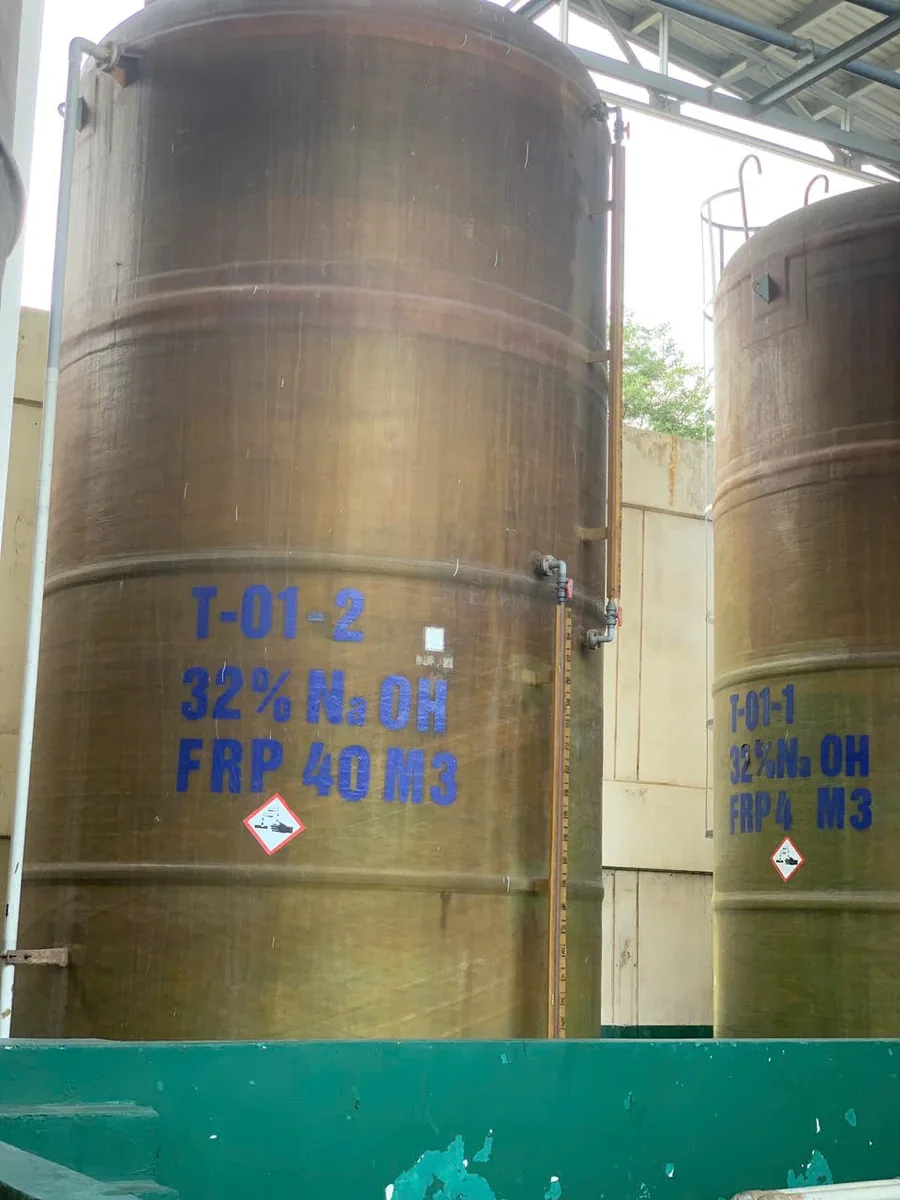
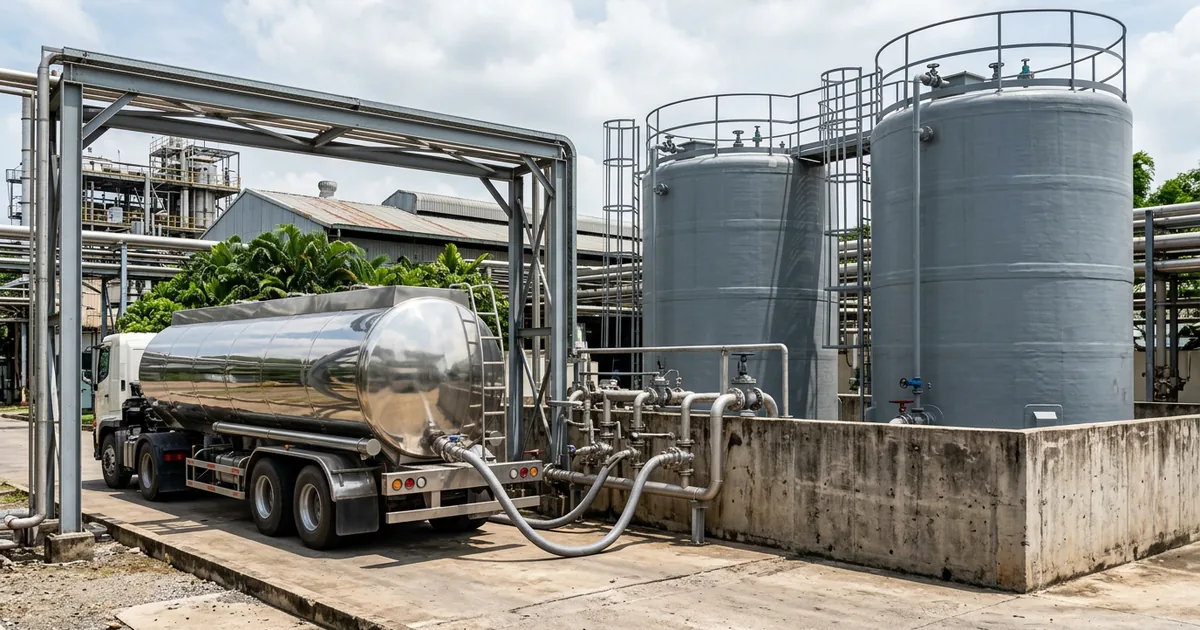 Figure 2: Loc Thien Chemical’s dedicated 5–30-ton tanker fleet unloading Liquid Caustic Soda NaOH 32% into Composite FRP storage tanks at an FDI electronics and PCB wastewater treatment station.
6. Technical Illustrative Example & B2B Case Study: Optimizing VCP Acid Copper Plating & Effluent Treatment at a High-Layer PCB Plant in Bac Ninh
To demonstrate the measurable operational and environmental gains achieved by standardizing high-purity electroplating copper sulfate alongside closed-loop effluent treatment, below is an engineering deployment profile (Technical Illustrative Example based on project parameters for a Korean FDI multi-layer telecommunications PCB manufacturer in Dai Dong – Hoan Son Industrial Park, Bac Ninh Province):
- Facility Baseline & Initial Bottlenecks:
- The facility operates two automated Vertical Continuous Plating (VCP) lines with a total acid copper bath volume of
V = 12,000 L, processing1,500 m²/dayof 8-to-12-layer PCB panels, and generatingQ = 350 m³/dayof combined plating wastewater. - Previously, using standard commercial copper sulfate containing
160 – 240 ppm Feand0.08%insolubles resulted in a2.8%PTH void and thermal barrel-cracking defect rate during microsection inspection after288 °Csolder float testing, while SPS brightener consumption exceeded design norms by35%. Meanwhile, at the wastewater treatment plant, relying on hydrated limeCa(OH)₂slurry failed to breakCu-EDTAcomplexes from electroless copper rinses—leaving effluent copper at1.2 – 1.8 mg/L(exceeding the industrial park’s0.5 mg/Llimit) and generating excessive calcium sulfate sludge.
- The facility operates two automated Vertical Continuous Plating (VCP) lines with a total acid copper bath volume of
- Integrated Engineering Solution Implemented by Loc Thien Chemical:
- On the VCP Electroplating Lines: Transitioned 100% of bath replenishment to Loc Thien High-Purity Electroplating Grade
CuSO₄·5H₂O ≥ 98.5%(Cu ≥ 24.8%,Fe ≤ 35 ppm,Cl⁻ ≤ 10 ppm, 25kg double PE-lined bags) dispatched directly from Loc Thien’s Bac Ninh Warehouse (Tien Son IP, Tien Du District), following an initial carbon treatment and LCD dummy electrolysis cycle that lowered baseline bath iron below25 ppm. - At the
350 m³/dayWastewater Treatment Plant: Segregated chelated electroless copper streams for acidic ligand displacement atpH 2.8using Loc Thien Directly ManufacturedFeCl₂ 30%Solution, replaced lime slurry entirely with Liquid Caustic SodaNaOH 32%delivered via 5–30-ton tankers controlled atpH 9.0, and flocculated with Polymer Cation C1492 (1.5 ppm).
- On the VCP Electroplating Lines: Transitioned 100% of bath replenishment to Loc Thien High-Purity Electroplating Grade
- Verified Performance Outcomes After 45 Days of Continuous Operation:
- PCB Metallization Yield: PTH void and thermal crack defects dropped from
2.8%to0.15%;10:1aspect-ratio hole Throwing Power reached88.5%; deposit elongation reached21.5%(exceeding IPC-6012 Class 3 requirements), and organic SPS brightener consumption decreased by28%. - Effluent Compliance & Sludge Reduction: Post-Lamella effluent copper stabilized at
Cu = 0.12 – 0.15 mg/L(70%below the industrial park threshold and fully compliant with QCVN 40:2025/BTNMT Column A), while switching from lime slurry toNaOH 32%+FeCl₂ 30%reduced monthly hazardous filter-press sludge volume by35%.
- PCB Metallization Yield: PTH void and thermal crack defects dropped from
7. Chemical Safety (GHS/SDS), Moisture-Proof Warehousing & B2B Bulk Supply from 6 Loc Thien Warehouses
When handling electroplating salts (CuSO₄·5H₂O, H₂SO₄ 98%) and wastewater treatment reagents (FeCl₂ 30%, NaOH 32%, Polymer Cation C1492), plant EHS and logistics teams must comply with the Vietnam Law on Chemicals No. 69/2025/QH15 and guiding Decrees (24/2026/ND-CP, 25/2026/ND-CP, 26/2026/ND-CP):
- Moisture-Proof Storage of
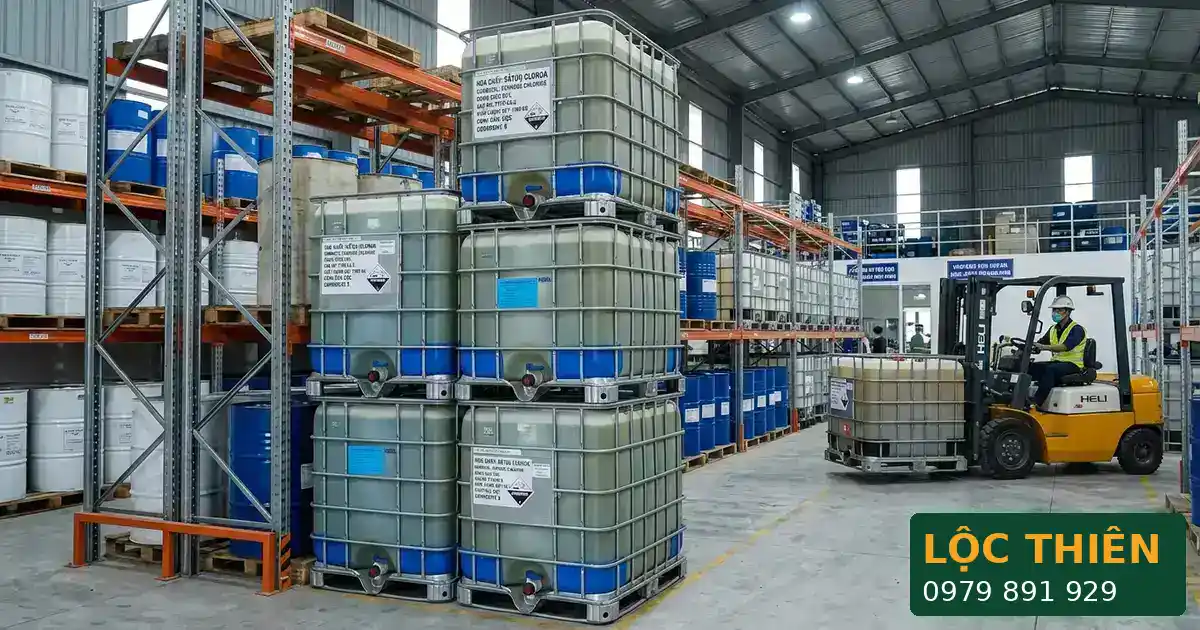
CuSO₄·5H₂O25kg Bags: Store palletized bags on plastic pallets or elevated racking at least15 cmabove floor level and20 cmaway from walls inside a cool, dry, ventilated warehouse (ambient temperature< 32 °C, relative humidity< 70%). Segregate strictly from strong alkalis (NaOH,Na₂CO₃) and active metal powders (Mg,Al,Zn). Reseal the inner double PE liner immediately after partial dispensing to prevent surface efflorescence or hygroscopic caking. - Bulk Liquid Tank Materials & Secondary Containment: Bulk storage tanks for
NaOH 32%,FeCl₂ 30%, andH₂SO₄ 98%must be fabricated from compatible corrosion-resistant materials (Vinyl Ester FRP, virgin cross-linked HDPE, or PTFE-lined steel) surrounded by segregated acid/alkali secondary containment dikes holding≥ 110%of the largest tank volume. Install ANSI Z358.1 emergency safety showers and eyewash stations within a10 – 15 meterunobstructed radius of tanker unloading manifolds, and maintain 16-section GHS Safety Data Sheets (SDS) and batch COAs on site. - Loc Thien Chemical SSOT Positioning & 6 Nationwide Warehouses:
- Loc Thien Investment Development Co., Ltd. (Tax ID:
0313650856; Legal Head Office:452/6B Tinh Lo 10, Binh Tri Dong Ward, Binh Tan District, Ho Chi Minh City— administrative headquarters only, zero chemical storage) is a Commercial Bulk Supplier of Copper Sulfate PentahydrateCuSO₄·5H₂O, Sulfuric AcidH₂SO₄ 98%, Liquid Caustic SodaNaOH 32%, Hydrogen PeroxideH₂O₂ 50%, and Polymer CationC1492in our electroplating and surface finishing chemical catalog, alongside core supply of Ferrous ChlorideFeCl₂ 30%solution and wastewater-grade Ferric ChlorideFeCl₃ 38%–40%(3,000+ tons/monthcapacity). - Physical stock is dispatched 24/7 from 6 standardized regional warehouses:
- Ba Ria - Vung Tau Warehouse: Phu My 1 Industrial Park, Phu My Town, Ba Ria - Vung Tau.
- Dong Nai Warehouse: Long Thanh Industrial Park, Long Thanh District, Dong Nai.
- Binh Duong Warehouse: Tan Dong Hiep Ward, Di An City, Binh Duong.
- Da Nang Warehouse: Hoa Khanh Industrial Park, Lien Chieu District, Da Nang City.
- Can Tho Warehouse: Tra Noc Industrial Park, O Mon District, Can Tho City.
- Bac Ninh Warehouse: Tien Son Industrial Park, Tien Du District, Bac Ninh.
- Delivery SLA & 15-Minute Technical Quotation Policy: Inner Ho Chi Minh City within 4 hours; Southern & Mekong Delta Industrial Parks within 24–48 hours; Northern & Central Vietnam Industrial Parks within 2–3 days (Please contact hotline 0979 891 929 for detailed delivery procedures). Commercial pricing is transparently calculated across 5 technical cost drivers: (1) Assay & impurity grade; (2) Packaging specification (25kg bags vs
5–30-tontankers for liquids); (3) Order volume & annual contract cadence; (4) Dispatch distance from the nearest warehouse; and (5) Required analytical certification dossiers.
- Loc Thien Investment Development Co., Ltd. (Tax ID:
8. Frequently Asked Questions (FAQ) on PCB Acid Copper Plating & Effluent Treatment with Loc Thien CuSO₄
1. Why must dissolved iron impurities (Fe) in Copper Sulfate Pentahydrate CuSO₄·5H₂O for PCB acid copper plating baths be strictly controlled below 35–50 ppm?
In high-throw PCB acid copper baths, dissolved iron forms a parasitic Fe²⁺/Fe³⁺ redox shuttle between the anode and cathode. At the phosphorized copper anode, Fe²⁺ is oxidized to Fe³⁺; as Fe³⁺ migrates into the bulk electrolyte and toward the cathode, it chemically oxidizes and cleaves the disulfide bond (-S-S-) of the organic brightener SPS (Bis-(3-sulfopropyl) disulfide). When iron exceeds 50–100 ppm, brightener consumption increases by 2.5 to 3.0 times, the protective black Cu₃P anode film degrades, and PTH copper deposits suffer from hydrogen pitting, low-current-density haze, reduced ductility, and barrel cracking during 288 °C thermal solder float testing.
2. What is the optimal Sulfuric Acid (H₂SO₄) to Copper Sulfate (CuSO₄·5H₂O) weight ratio to achieve Throwing Power ≥ 85% in high-aspect-ratio (10:1) PCB through-holes?
For Plated Through-Holes (PTH) with hole diameters of 75–200 µm and aspect ratios ranging from 8:1 to 12:1, electroplating lines must operate a High-Acid / Low-Copper formulation with an H₂SO₄ to Cu²⁺ weight ratio of approximately 10 : 1. Specifically, CuSO₄·5H₂O is maintained at 70–85 g/L (18–22 g/L metallic Cu²⁺), free H₂SO₄ is maintained at 180–220 g/L, and Chloride ions (Cl⁻) are locked within 40–70 ppm. High free acid maximizes electrolyte conductivity (0.45–0.55 S/cm) and minimizes ohmic potential drop (IR drop) between the board surface and the center of the hole barrel.
3. Why is Copper Sulfate Pentahydrate CuSO₄·5H₂O exclusively packaged in 25kg moisture-proof bags and strictly prohibited from bulk liquid road tanker transport?
Commercial Copper Sulfate Pentahydrate (CuSO₄·5H₂O) is a solid blue crystalline salt whose aqueous solubility is limited (~320 g/L at 20 °C in pure water and below 95 g/L in 200 g/L H₂SO₄ due to the common-ion effect of SO₄²⁻). Transporting pre-dissolved concentrated copper sulfate in bulk road tankers risks severe recrystallization, bottom caking, and valve/pump seizure during ambient temperature drops. Therefore, Loc Thien Chemical strictly supplies CuSO₄·5H₂O in 25kg double PE-lined moisture-proof bags on shrink-wrapped pallets, whereas liquid chemicals such as NaOH 32%, H₂SO₄ 98%, and FeCl₂ 30% are delivered via our dedicated 5–30-ton tanker fleet.
4. How can chelated copper wastewater (Cu-EDTA) from electroless copper plating lines be treated below Cu < 0.2 mg/L to meet QCVN 40:2025/BTNMT Column A?
Because the Cu-EDTA chelate complex exhibits an extremely high thermodynamic stability constant (log Kf ≈ 18.80), conventional alkaline neutralization with NaOH at pH 9–10 cannot precipitate Cu(OH)₂. The verified 3-step de-complexation protocol comprises: (1) Acidifying the wastewater to pH 2.5–3.0 with H₂SO₄ or HCl and dosing Ferrous Chloride FeCl₂ 30% solution (directly manufactured by Loc Thien Chemical) so Fe²⁺/Fe³⁺ ions displace Cu²⁺ from the EDTA ligand ring; (2) Dosing Liquid Caustic Soda NaOH 32% to raise pH to the optimal isoelectric window of 8.8–9.2, precipitating insoluble Cu(OH)₂ alongside iron hydroxide co-precipitates; and (3) Dosing Polymer Cation C1492 (1.0–2.0 ppm) prior to Lamella clarification to achieve final effluent copper below 0.15–0.18 mg/L.
5. What are Loc Thien Chemical’s quotation SLA and nationwide delivery timelines for FDI electronics and PCB manufacturers across Vietnam?
Operating as a Commercial Bulk Supplier of CuSO₄·5H₂O, H₂SO₄ 98%, NaOH 32%, and Polymer Cation C1492 alongside FeCl₂ 30% and wastewater-grade FeCl₃ 38%–40% solutions (3,000+ tons/month supply capacity), Loc Thien Chemical dispatches inventory from 6 standardized industrial park warehouses (Ba Ria - Vung Tau, Dong Nai, Binh Duong, Da Nang, Can Tho, and Bac Ninh). We guarantee a 15-minute technical quotation SLA complete with batch COA and GHS SDS, with delivery within 4 hours in inner Ho Chi Minh City, 24–48 hours across Southern and Mekong Delta Industrial Parks, and 2–3 days in Northern (Bac Ninh, Bac Giang, Hai Phong, Thai Nguyen) and Central Vietnam via hotline 0979 891 929.
⚡ Request High-Purity Copper Sulfate & PCB Effluent Chemical Quotation (15-Minute Response)
Nationwide supply of CuSO₄·5H₂O ≥ 98.5% in 25kg moisture-proof bags, Liquid NaOH 32%, and Directly Manufactured FeCl₂ 30% via 5–30-ton tankers with batch-traceable COA.
- 24/7 PCB & Surface Finishing Hotline: 0979 891 929 (Contact hotline 0979 891 929 for detailed delivery procedures)
- Official B2B Tender Email: [email protected]
- Online Technical Inquiry: Loc Thien Chemical FDI Project & Engineering Division
- SSOT Packaging Standard: CuSO₄·5H₂O 25kg double PE-lined bags (No Tankers) | Liquid NaOH 32% & FeCl₂ 30% via 5–30-ton tankers.