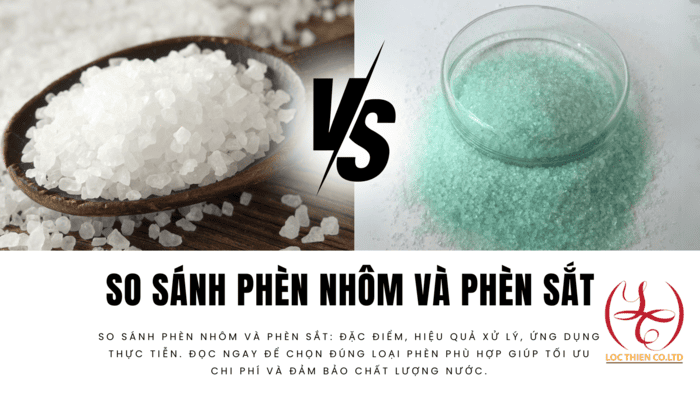
In the field of water treatment, selecting the right chemicals not only determines water quality but also significantly impacts economic efficiency and environmental protection. The two most common chemicals today are aluminum sulfate (alum) and iron sulfate. Each has its own advantages and limitations, suitable for different water types and treatment purposes. So, what is the optimal solution for your water source? In this article, we will delve into a comparison of aluminum sulfate and iron sulfate, covering their properties, practical applications, costs, and treatment efficiency, helping you gain a clear perspective to make the right choice.
What is Aluminum Sulfate (Alum)?
Aluminum sulfate (alum) is a chemical compound belonging to the aluminum sulfate salt group, commonly used in clean water and wastewater treatment. It has effective coagulation properties, helping to remove suspended impurities in water and making it clearer.
Properties of Aluminum Sulfate:
Chemical formula: Al₂(SO₄)₃·nH₂O.
Mechanism of action: When dissolved in water, aluminum sulfate releases Al³⁺ ions, which combine with colloidal particles or suspended impurities to form larger flocs that settle easily.
Optimal pH range: 5.5 - 7.
Coagulation capability: Suitable for treating drinking water and domestic water with low turbidity and minimal organic compounds.
Primary applications: Mainly used in drinking water and domestic water treatment due to its effective coagulation, reducing turbidity and removing impurities. Additionally, aluminum sulfate is applied in paper production, textile dyeing, and ceramics to enhance product durability and quality.
What is Iron Sulfate?
Iron sulfate is a group of iron sulfate salts, including ferrous sulfate (FeSO₄) and ferric sulfate (Fe₂(SO₄)₃), widely used in industrial wastewater treatment. Iron sulfate not only coagulates but also has strong oxidizing properties, effectively removing organic compounds and heavy metals.
Properties of Iron Sulfate:
Chemical formula:
Ferrous sulfate (FeSO₄·7H₂O): Light green crystals, easily oxidized in air.
Ferric sulfate (Fe₂(SO₄)₃): Yellow or brown powder or solution.
Mechanism of action: Releases Fe³⁺ or Fe²⁺ ions in water, interacting with suspended particles and organic compounds to promote coagulation. Effective in treating water with low pH (4.0 - 6.5).
Oxidizing capability: Ferric sulfate has strong oxidizing properties, effectively removing odors, colors, and complex organic compounds in wastewater.
Primary applications: Commonly used in industrial wastewater treatment, especially for water containing heavy metals and organic compounds. Iron sulfate is also applied in odor and color control, as well as phosphate removal in highly polluted water bodies or wastewater.
Comparison Between Aluminum Sulfate and Iron Sulfate
Similarities
Both aluminum sulfate and iron sulfate are coagulants used in water treatment, helping to reduce turbidity, color, and odor by forming settleable flocs. They work by releasing metal ions (Al³⁺ or Fe³⁺/Fe²⁺) to combine with impurities in water. Both are available in powder or liquid form and are applied in feedwater and wastewater treatment, capable of removing organic compounds and heavy metals.
Differences
Criteria
Aluminum Sulfate
Iron Sulfate
Chemical formula
Al₂(SO₄)₃·nH₂O
FeSO₄·7H₂O or Fe₂(SO₄)₃
Color
White or colorless
Light green (FeSO₄), yellow/brown (Fe₂(SO₄)₃)
Water treatment efficiency
Effective for drinking water and domestic water with low turbidity.
Highly effective for industrial wastewater.
Optimal pH
5.5 - 7
4.0 - 6.5
Corrosive properties
Less corrosive, safe for pipes and equipment.
More corrosive, requiring equipment protection.
Sludge production
Less sludge, easier to handle.
More sludge, complex sludge treatment.
Oxidizing capability
Weak, primarily coagulates.
Strong, effectively removes odors and heavy metals.
Higher due to superior efficiency in industrial wastewater treatment.
Advantages and Disadvantages of Aluminum Sulfate and Iron Sulfate
Aluminum Sulfate
Advantages: Low cost, easy to source and use. It works effectively in treating domestic water and feedwater with low turbidity. Aluminum sulfate produces less sludge, reducing costs and simplifying sludge treatment. Notably, it is less corrosive to equipment, making it suitable for standard treatment systems.
Disadvantages: Ineffective for complex industrial wastewater or water containing heavy metals, with significantly reduced efficiency in low-pH environments.
Iron Sulfate
Advantages: Excels in treating industrial wastewater containing heavy metals and organic compounds. Iron sulfate also has strong oxidizing properties, effectively removing odors, colors, and complex pollutants.
Disadvantages: Higher cost and more sludge production, complicating sludge treatment. Additionally, iron sulfate is more corrosive, requiring better equipment protection to prevent damage.
Practical Applications of Coagulants
Water treatment:
Feedwater: Widely used to purify drinking and domestic water, removing suspended impurities, reducing turbidity, and improving water quality.
Industrial wastewater: Used to treat wastewater from industries like textile dyeing, paper, chemicals, and food, removing heavy metals, organic compounds, and persistent pollutants.
Pond/lake water: Applied to control odors, colors, and organic compounds in ponds or landscape water, ensuring clean and safe water environments.
Industrial production: Used in paper production as a precipitating agent. In textile dyeing, coagulants enhance colorfastness and dye quality.
Agriculture: Supports irrigation water treatment, ensuring clean water that does not pollute soil, thereby improving crop yields.
Aquaculture: Applied in aquaculture ponds to reduce turbidity and remove impurities, ensuring a safe habitat for shrimp and fish.
Aluminum sulfate and iron sulfate are not only useful in domestic and wastewater treatment but also flexibly applied in industries, agriculture, aquaculture, and environmental protection. Depending on the water characteristics and treatment needs, each coagulant has its own advantages to deliver optimal efficiency.
Conclusion
Aluminum sulfate and iron sulfate are indispensable chemicals in water treatment, each with distinct characteristics. Aluminum sulfate is suitable for feedwater and domestic water due to its low cost and minimal sludge, while iron sulfate excels in treating complex industrial wastewater. The choice depends on the water source's properties and specific treatment requirements.
If you are seeking a comprehensive and optimal solution for your water treatment system or are interested in aluminum sulfate prices, Loc Thien Chemicals Co., Ltd. is a reliable partner. With years of experience in supplying industrial chemicals, we are committed to delivering quality products, competitive pricing, and professional consulting services.
Let us accompany you in all water treatment solutions. Contact us today!
Are coagulants toxic and safe for use in drinking water treatment?
Aluminum sulfate and iron sulfate are safe when used correctly and in permitted dosages. In drinking water treatment, they are applied under strict control to ensure no harm to consumer health. However, excess coagulants must be removed before water is used.
Are there alternatives to aluminum sulfate and iron sulfate in water treatment?
Besides aluminum sulfate and iron sulfate, other coagulants like polyaluminium chloride (PAC) or organic polymers are also used. These may be more effective in some cases but typically come with higher costs and more complex operational requirements.
Why is it important to choose the right coagulant for water treatment?
Choosing the wrong coagulant can lead to poor water treatment efficiency, increased operational costs, or even negative impacts on the treatment system and environment. Aluminum sulfate is suitable for feedwater and domestic water, while iron sulfate is designed for heavily polluted industrial wastewater.
Can iron sulfate and aluminum sulfate be used together in one system?
Both aluminum sulfate and iron sulfate can be combined in some special cases to enhance treatment efficiency. However, the combination must be carefully evaluated by water treatment experts, as the chemical properties and dosages of each coagulant may affect coagulation efficiency.
Do coagulants affect water pH?
Yes, both aluminum sulfate and iron sulfate lower water pH due to the release of H⁺ ions during dissolution. Thus, pH adjustment post-treatment is necessary to ensure compliance with water quality standards.
What factors determine the required coagulant dosage?
Coagulant dosage depends on multiple factors, including water turbidity, pollution levels, initial pH, and water source characteristics. Pre-treatment testing is crucial to determine the appropriate dosage.
Does using coagulants increase operational costs?
Operational costs depend on the coagulant type and desired treatment efficiency. Aluminum sulfate typically has lower costs and produces less sludge, while iron sulfate is more effective for polluted wastewater but generates more sludge, requiring higher sludge treatment costs.
Do coagulants have long-term environmental impacts?
If sludge waste is improperly managed, residual coagulants in sludge can affect water and soil environments. Thus, post-coagulation sludge treatment is necessary to ensure no harm to ecosystems.