
How to Read a NaOH COA — A QC Engineer’s Guide from Specific Gravity to Iron Content
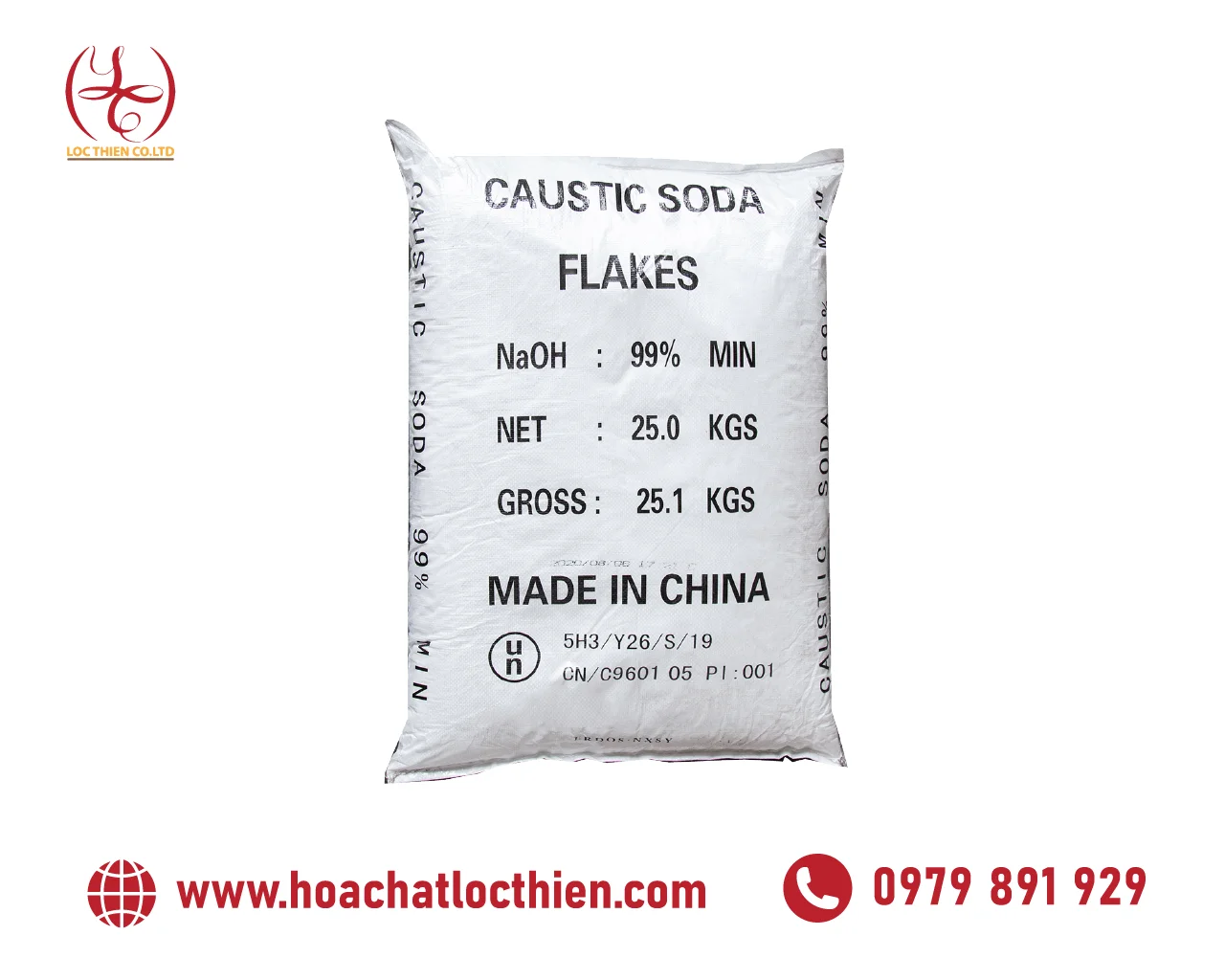
How to Read a NaOH COA — A QC Engineer’s Guide from Specific Gravity to Iron Content
TL;DR: A COA (Certificate of Analysis) for NaOH is a document issued by the manufacturer for each batch, listing quality parameters: actual NaOH concentration, specific gravity (d=1.35–1.52 depending on concentration), impurity levels (NaCl, Na₂CO₃, Fe), heavy metals, and other specifications, with limits as stated on each batch COA. QC engineers must know how to read a COA correctly to verify that the batch meets specs, detect counterfeit COAs, and ensure traceability. Loc Thien supplies NaOH 32%/45%/50% and caustic soda flakes 98% with batch-specific COAs and Vietnamese MSDS. Hotline: 0979 891 929.
Quick Facts About NaOH COA
| Parameter | Standard Value on COA |
|---|---|
| NaOH CAS | 1310-73-2 |
| Formula | NaOH (Sodium Hydroxide) |
| Specific Gravity NaOH 32% @20°C | d=1.35 g/ml |
| Specific Gravity NaOH 45% @20°C | d=1.48 g/ml |
| Specific Gravity NaOH 50% @20°C | d=1.52 g/ml |
| NaCl (impurity) | Per batch COA |
| Na₂CO₃ (impurity) | Per batch COA |
| Fe (iron) | Per batch COA |
| Heavy metals | Per manufacturer standard |
| Documents per batch | COA + MSDS/SDS |
| Contact | Hotline 0979 891 929 — Loc Thien Chemical |
1. What Is a NaOH COA and Why Should QC Engineers Read It?
A COA — Certificate of Analysis — is a document issued by the manufacturer or supplier accompanying each chemical batch. For NaOH (Sodium Hydroxide — CAS 1310-73-2), the COA records the test results of that batch at the time of shipment. This is not a mere administrative paper; it is legal evidence of quality: if the COA states NaOH 45% with specific gravity 1.48 g/ml but actual measurement gives 1.44 g/ml, the QC engineer has grounds to reject the shipment.
Why must a QC engineer read the COA? Three reasons:
- Incoming Inspection: Each NaOH batch may have slight variations in concentration and impurities depending on the manufacturing plant and raw materials. A plant with an ISO 9001 system must cross-check the COA against internal test results before releasing the batch into production.
- Audit Accountability: When customers or regulatory bodies require batch traceability, the COA is the primary document. Without a COA, the batch is considered uncertified — posing legal and brand reputation risks.
- Detecting Counterfeit COAs: In the chemical market, fake COAs are a real problem. Unscrupulous parties photocopy a COA from a good batch and attach it to a substandard one. A QC engineer who knows how to read a genuine COA can spot irregularities immediately.
Loc Thien Chemical (Tax ID 0313650856) issues a separate COA for each NaOH batch — whether liquid caustic 32%/45%/50% or caustic soda flakes 98% — along with a Vietnamese MSDS/SDS. A COA should contain at minimum: product name, sample ID, test/production date, expiry date, parameters/methods/results, and the tester and approver. Learn more about incoming quality inspection procedures in our article comparing NaOH 32-45-50 operating techniques.
2. Key Parameters on a NaOH COA
A standard NaOH COA includes the following parameter groups. QC engineers need to understand the meaning of each parameter, the acceptable range, and how to verify them in practice — the order below is arranged by importance to final product quality.
2.1. NaOH Concentration (Assay — NaOH%)
This is the most important parameter on the COA. For commercial liquid NaOH, the COA reports the mass percentage — typically 32%, 45%, or 50%. The actual value on the COA is not always an exact round number. A genuine COA might read: "NaOH 32.15%" or "NaOH 49.87%" — a small deviation from the nominal concentration, within the tolerance stated in the specification or contract, is acceptable. If the COA shows a perfect 32.00%, that could be a sign of a fake COA (see Section 4).
The standard method for determining NaOH concentration is neutralization titration with 1N HCl, using phenolphthalein and methyl orange indicators. QC engineers can perform this on-site with a titration test kit — no need to send samples to the lab. Procedure: accurately weigh about 2g of NaOH sample, dilute with distilled water, and titrate with 1N HCl to the equivalence point. The volume of HCl consumed multiplied by 0.04 gives the NaOH%. A small method error is acceptable, but a significant difference from the COA value should be investigated.
2.2. Specific Gravity (d at 20°C)
Specific gravity of NaOH at 20°C is an important physical parameter, usually listed right below the concentration on the COA. Standard values:
- NaOH 32%: d = 1.35 g/ml
- NaOH 45%: d = 1.48 g/ml
- NaOH 50%: d = 1.52 g/ml
Specific gravity is directly proportional to concentration: if the COA states NaOH 45% but the measured specific gravity is only 1.43 g/ml (corresponding to about 42–43%), that indicates the batch may be diluted or mislabeled. QC engineers can check specific gravity immediately upon receipt using a hydrometer placed in the NaOH solution at 20°C. The sample must be brought to 20°C before measurement — if that is not possible, measure at the actual temperature and use the ASTM D1298 temperature correction table.
Note: specific gravity is not listed on the COA for caustic soda flakes (NaOH 98%) because it is a solid. Instead, the flake COA reports purity (98% min) and impurity levels.
2.3. NaCl Content (Sodium Chloride — Per Batch COA)
NaCl is the main impurity in industrial NaOH, generated during the electrolysis of brine: 2NaCl + 2H₂O → 2NaOH + Cl₂ + H₂. This process cannot completely remove NaCl from the final product. A NaOH COA reports the NaCl content of each batch, as a percentage by weight or in ppm.
NaCl content directly affects final product quality in the textile and soap industries. If NaCl exceeds the limit stated on the COA or agreed in the specification, Cl⁻ ions can:
- Cause pitting corrosion in stainless steel reaction equipment.
- Affect the viscosity and clarity of dye solutions.
- Reduce bleaching efficiency in the paper industry.
NaCl in NaOH is tested by precipitation titration with AgNO₃ (Mohr method). For field conditions, use a chloride ion quick test strip if available. Most QC plants trust the COA value for this parameter and only perform periodic checks.
2.4. Na₂CO₃ Content (Sodium Carbonate — Per Batch COA)
NaOH absorbs CO₂ from the air to form Na₂CO₃: 2NaOH + CO₂ → Na₂CO₃ + H₂O. This is the second most important impurity after NaCl. A COA reports the Na₂CO₃ content of each batch. If the level exceeds the limit stated on the COA or agreed in the specification, the NaOH solution may appear slightly cloudy or have white sediment at the bottom of the tank.
Higher Na₂CO₃ means lower actual NaOH — because CO₃²⁻ is not as strong a base as OH⁻. During neutralization in wastewater treatment, CO₃²⁻ requires more acid to lower the pH, wasting chemicals. Na₂CO₃ content also increases over time if storage tanks are not sealed — the COA reports the value at the time of shipment, not at receipt. QC engineers should check Na₂CO₃ for batches stored for extended periods.
2.5. Iron Content (Fe — Per Batch COA)
Iron in NaOH comes from corrosion of electrolysis equipment and carbon steel piping during production. NaOH COAs report the Fe content of each batch. When Fe is high, the NaOH solution may appear pale yellow or reddish-brown — a visual clue that QC engineers can detect with the naked eye.
For the textile industry, Fe in NaOH is a serious issue. Fe³⁺ ions form colored complexes with cotton fibers during scouring, causing yellow stains that are difficult to remove. In soap and detergent manufacturing, Fe gives the final product a gray or brown tint — failing aesthetic requirements. Cosmetic and fine chemical plants require very low Fe in NaOH, often using specialty grade NaOH with a specific Fe limit agreed in the specification and stated on the COA.
Test methods for Fe in NaOH: atomic absorption spectroscopy (AAS) or colorimetry with 1,10-phenanthroline reagent. In the field, the simplest check is visual observation — pure NaOH is colorless and transparent.
2.6. Heavy Metals
NaOH COAs typically list a total heavy metals figure or specify individual metals: Pb, As, Hg, Cd. Heavy metals originate from contaminated salt feedstock or from electrodes used in electrolysis. Excessive levels are toxic to humans and the environment — especially critical for food-grade and pharmaceutical chemical plants.
For NaOH used in drinking water treatment and food processing, heavy metal limits are stricter and must follow the standard that applies to your application. QC engineers must check whether the COA lists individual metals or just a total — a total-only figure is typically a standard-grade report and may not meet food industry requirements. If your industry demands tight limits, request a COA with individual metal analysis from your supplier.
2.7. Other Supplementary Parameters
Some detailed NaOH COAs include:
- Viscosity: Important for pump design. NaOH 50% has about 2–3 times higher viscosity than 32% at the same temperature.
- Crystallization point: NaOH 50% begins to crystallize at about 12°C and NaOH 32% at about 5°C (a 31–33% batch can start anywhere from about 2 to 8°C). Reference figures follow the NaOH–H₂O phase diagram and technical literature from caustic soda producers; the actual crystallization point depends on each batch's concentration per its COA/TDS. See more in our article comparing NaOH 32-45-50.
- Appearance: States "Clear liquid, colorless" or "White flakes" for caustic soda. If the COA says "slightly yellowish" but the QC engineer observes a deep yellow color, caution is needed.
- Packaging: Information on container type — tank truck, IBC, drum, 25 kg bag. Cross-check with actual delivery.
3. How to Read a NaOH COA — Step-by-Step Guide for QC Engineers
When receiving a COA from a supplier, QC engineers should follow the three-step procedure below. This applies to both liquid NaOH and caustic soda flakes.
Step 1: Verify Administrative Information on the COA
- Manufacturer: Must have a clear name and address. A COA without a manufacturer or with a generic "Chemical Supplier" is suspicious.
- Batch/Lot No.: Must match the batch number printed on the tank, drum, or packaging label. This is the fastest check to detect a mismatched COA.
- Production date and expiry date: Production date must not be later than the delivery date. Liquid NaOH typically has a shelf life of 6–12 months; caustic soda flakes 12–24 months.
- Date of Analysis: May differ from the production date if testing was delayed. A few days' difference is acceptable.
- Approved by / Signature: A valid COA bears the signature or stamp of the manufacturer's QC responsible person. A COA without a signature or with only a printed name is invalid.
Step 2: Cross-Check Results Against Technical Requirements
Take the COA and compare each parameter against the purchase order (PO) specifications. Questions to answer:
- Is the NaOH concentration within the tolerance stated in the PO or specification?
- Does the specific gravity correspond to the concentration stated on the COA? (NaOH 45% should have d ≈ 1.48)
- Is NaCl within the limit stated in the PO or on the COA?
- Is Na₂CO₃ within the limit stated in the PO or on the COA?
- Is Fe within the limit stated in the PO or on the COA? If your industry requires lower Fe, has this been agreed with the supplier?
Note: if the PO only states "Industrial NaOH" without specifying parameters, the COA values are for reference only, not binding. To protect your interests, your plant should include minimum specs in the PO. Loc Thien publishes COAs with all the above parameters — see product specifications on the NaOH — Sodium Hydroxide — Caustic Soda page.
Step 3: On-Site Cross-Check — Measure Specific Gravity and Observe Color
No expensive lab needed; QC engineers can perform a preliminary check right at the receiving area:
- Measure specific gravity: Take a liquid NaOH sample in a 250 ml graduated cylinder, insert a hydrometer, and read the value at 20°C. Compare with the COA — a small deviation is acceptable (as a rule of thumb, 1% NaOH corresponds to about 0.010 g/ml).
- Observe color: Pure NaOH is colorless and transparent. Yellow or brown indicates high Fe. Cloudiness or sediment suggests high Na₂CO₃ or an old batch.
- Titrate concentration: If a test kit is available, perform a quick on-site titration. Compare the result with the COA.
If all three checks match the COA, the batch passes. If there is a significant discrepancy (specific gravity deviation >0.02, clearly different color), hold the batch and request an explanation from the supplier. In an ISO 9001 plant, this must be documented as a Non-conformance Report (NCR).
4. Signs of a Fake NaOH COA — What QC Engineers Should Watch For
Fake NaOH COAs exist in the market — especially when chemical supplies are tight and prices volatile. Below are signs of counterfeit COAs documented from actual inspections by Loc Thien's technical team, including QC technician Phan Cam Thuy with over 8 years of chemical QC experience.
Sign 1: Concentration and Specific Gravity Are Perfect Round Numbers
A genuine COA reports the actual measured concentration — e.g., "NaOH: 32.08%", "NaOH: 49.92%". A COA showing "NaOH: 32.00%", "d: 1.350" is suspicious because no plant can produce an exact absolute concentration. Real production batches show small variations around the nominal value. If the specific gravity is listed as exactly 1.480 for NaOH 45%, that is too perfect — measured values rarely land on a round figure.
Sign 2: Old or Altered COA
A blurry photocopy, smudged signature, or batch number that has been erased and rewritten by hand — all are signs of a reused COA. One COA can be recycled for ten different batches. QC engineers should request an original COA with a digital signature or a fresh stamp from the supplier. Check the COA against the minimum content list given at the start of this article.
Sign 3: COA Does Not Match Visual Observation
The COA states "Appearance: Clear, colorless" but the actual sample is yellow. Or the COA says NaOH 50% with specific gravity 1.52 but the measured value is 1.45. Such large discrepancies are clear evidence that the batch does not match the COA. Do not accept the shipment in this case.
Sign 4: COA Has No Batch Number or a Generic One
A valid COA must have a unique batch number for each production lot. If the COA says "Batch: N/A", "Lot: 001" (a simple number), or "Lot: per invoice" — it is fake. Serious chemical manufacturers always have a batch management system with unique codes. Loc Thien Chemical uses batch codes in the format: LK-YYMMDD-NNN (Alkali Batch - Year Month Day - Sequence number) — each batch has a unique code.
Sign 5: COA Does Not List an Expiry Date
NaOH is a stable chemical but is still affected by storage conditions. A valid COA has a clear expiry date. A COA without an expiry date or stating "No expiry" is unreliable. For liquid caustic, the shelf life is typically 6 months; for flakes, 12 months from production.
5. QC Case Study — Detecting Substandard NaOH
Situation: A detergent manufacturing plant in My Phuoc Industrial Park (Binh Duong) received 10 tons of NaOH 50% from a new supplier. The accompanying COA stated: NaOH concentration 50.2%, specific gravity 1.521 g/ml, NaCl 0.018%, Na₂CO₃ 0.15%, Fe 8 ppm. All parameters were within acceptable limits.
QC Engineer's Inspection: The plant's QC engineer performed a quick check per procedure:
- Specific gravity measurement: Measured at 20°C gave 1.508 g/ml — 0.013 g/ml lower than the COA, corresponding to a concentration of about 48–49% instead of 50.2% (at roughly 0.010 g/ml per 1% NaOH).
- Visual observation: The solution was pale yellow, not transparent — different from the COA description "Clear, colorless".
- Titration: Actual concentration was 47.8% — a 2.4% deviation from the COA.
Outcome: The QC engineer issued an NCR and rejected the batch. Closer inspection of the COA revealed that the batch number matched a previous order — the COA had been photocopied. The plant demanded a replacement batch with a genuine COA from the new supplier and subsequently switched to a verified source — Loc Thien Chemical — with a commitment to batch-specific COAs.
Lessons Learned:
- Trust actual inspection results, not the COA blindly.
- Specific gravity measurement is the fastest and most effective check — takes only 5 minutes.
- Always verify the COA batch number against the label on the tank/drum — if they don't match, it's a mismatched COA.
- Work with reputable suppliers — Loc Thien provides original batch-specific COAs traceable via unique batch numbers.
See packaging specifications and COA for caustic soda flakes in our article Industrial caustic soda flakes — specifications and applications.
6. COA for Caustic Soda Flakes 98% — How Is It Different from Liquid?
The COA for caustic soda flakes NaOH 98% (solid, 25 kg bags) has a different structure and parameters compared to liquid NaOH COA. Since it is anhydrous, the flake COA does not include specific gravity but instead lists:
- Assay (Purity): ≥ 98% (typically 98.0–99.5%). Actual values are usually 98.5% or 99.0% — not a perfect 98.00%.
- Water content: Also called Loss on Drying (LOD), typically ≤ 2.0%.
- NaCl: Same as liquid — per batch COA.
- Na₂CO₃: Same as liquid — per batch COA.
- Fe: Per batch COA.
- Particle size: Flakes or granules, average diameter in mm.
- Solubility: States "Completely soluble in water, clear solution".
7. FAQ — Frequently Asked Questions About Reading a NaOH COA
How can I tell a real COA from a fake one for NaOH?
Check three things: (1) The batch number on the COA must match the batch number on the actual tank/drum/packaging; (2) Concentration and specific gravity should not be perfect round numbers; (3) The COA must have a signature/stamp or digital signature from the approver. A blurry photocopy or missing signature is suspicious.
When receiving NaOH, is it mandatory to re-test all parameters on the COA?
Not mandatory, but it is recommended to check at least two parameters: specific gravity (using a hydrometer, 5 minutes) and visual color. If these two match the COA, 90% of the batch is likely compliant. Perform a titration check for new suppliers or when there is suspicion.
At what temperature is the specific gravity of NaOH 32% listed as 1.35 on the COA?
Standard is 20°C. If measured at a different temperature, correct for thermal expansion. At around 30°C, the specific gravity of NaOH 32% decreases by about 0.005 g/ml compared to 20°C. Use the ASTM D1298 correction table for accurate values.
How does iron in NaOH affect textile product quality?
High Fe (as Fe³⁺) forms yellow/brown complexes with cotton fibers during scouring. This color is difficult to remove with hydrogen peroxide, forcing the plant to increase bleaching temperature and time — wasting energy and chemicals. White fabric becomes unevenly yellowed, downgraded to second grade — significant economic loss.
What does NaCl content on a NaOH COA mean for the soap industry?
NaCl is an impurity that directly affects the salting-out process in soap manufacturing. If NaCl in NaOH exceeds the limit agreed in the specification, the total Cl⁻ ions in the saponification reaction increase, reducing soap precipitation efficiency and increasing turbidity in the final product. For premium white soap, agree a tight NaCl limit for the NaOH in the specification.
Can I request a COA before ordering NaOH?
Yes — and you should. Reputable suppliers can provide a representative COA from the most recent batch for your review. Loc Thien sends the COA + MSDS/SDS immediately upon order confirmation — customers can check before the tank truck departs.
Does a NaOH COA have legal value in traceability audits?
Yes. The COA is a mandatory document in ISO 9001, FSSC 22000 (food), and GMP (pharmaceutical) quality management systems. During audits, COAs must be retained for at least 5 years and must be presented when customers request batch traceability. Note: a photocopied COA without an original signature may be rejected by auditors.
Why do two NaOH batches with the same concentration have different specific gravities on their COAs?
That is normal. Each production batch has an actual concentration that varies slightly due to electrolysis operating conditions. Specific gravity changes accordingly, so a small difference between two batches of the same nominal concentration is reasonable. If two batches both state NaOH 50% and both have specific gravity 1.520, that is unusual — the COA may have been copied.
Summary — QC Engineers and the NaOH COA
The NaOH COA is not just an administrative document; it is the QC engineer's number one tool. A QC engineer who knows how to read a COA will:
- Detect off-spec batches early — saving downstream processing costs.
- Identify counterfeit COAs — protecting the plant from legal and quality risks.
- Trace batch origins — meeting ISO and customer audit requirements.
Four parameters must always be checked when receiving a COA: (1) NaOH concentration — within the tolerance stated in the PO or specification; (2) specific gravity — must correspond to concentration; (3) NaCl and Na₂CO₃ — within the limits on the COA or in the PO; (4) Fe — within the COA limit or as per industry requirement. At minimum, perform an on-site check with specific gravity measurement and visual color observation — takes only 5 minutes but prevents substandard batches from entering production.
Loc Thien Chemical (Tax ID 0313650856) — supplies NaOH 32%/45%/50% liquid and caustic soda flakes 98% with batch-specific COAs and Vietnamese MSDS/SDS. Fleet of tank trucks 5–30 tons, 6 warehouses nationwide, delivery includes COA + delivery receipt. Field engineers Phan Cam Thuy and Vo Thi Nhu Hoa are ready to support incoming quality inspection for your plant. Call hotline 0979 891 929 or review product specifications at NaOH — Sodium Hydroxide — Caustic Soda.
Need help reading a NaOH COA or want a sample COA before ordering?
Call hotline 0979 891 929 or send a technical request — specify concentration, volume, and delivery location so that Loc Thien's QC engineers can assist with cross-checking.
Last updated: September 1, 2026.
Loc Thien Investment and Development Co., Ltd. — Tax ID 0313650856 · 452/6B Tinh Lo 10 (Provincial Road 10), Binh Tri Dong Ward, Ho Chi Minh City · ☎ 0979 891 929 · hoachatlocthien.com
Learn more: Comparison of NaOH 32%–45%–50% · NaOH — Caustic Soda · Industrial Caustic Soda Flakes
Technical Support & B2B Procurement Hotline
Loc Thien Chemical specializes in direct manufacturing of FeCl₂ / FeCl₃ and direct industrial supply of basic chemicals (NaOH, HCl, H₂SO₄, PAC, NaOCl, H₂O₂, FeSO₄) with direct B2B pricing and dedicated 5–30-ton tanker delivery across Vietnam.
- Hotline / Zalo: +84 979 891 929
- Official Email: [email protected]
- Direct Manufacturer: Ferrous Chloride (FeCl₂ 30%) & Ferric Chloride (FeCl₃ 38–40%)
- Primary Supplier: NaOH 32%/45%/50%/99%, HCl 32%, H₂SO₄ 98%, PAC 30–31%, NaOCl 10–12%, H₂O₂ 35%/50%
- Compliance & Quality: FeCl₂ ZDHC MRSL v3.1 test report (Smart testing, 5 substance groups, TUV Rheinland Vietnam), ISO 9001:2015, Quatest 3, Full COA & GHS SDS