
Liquid Sodium Silicate (Water Glass) -- Industrial Applications & Usage Guide
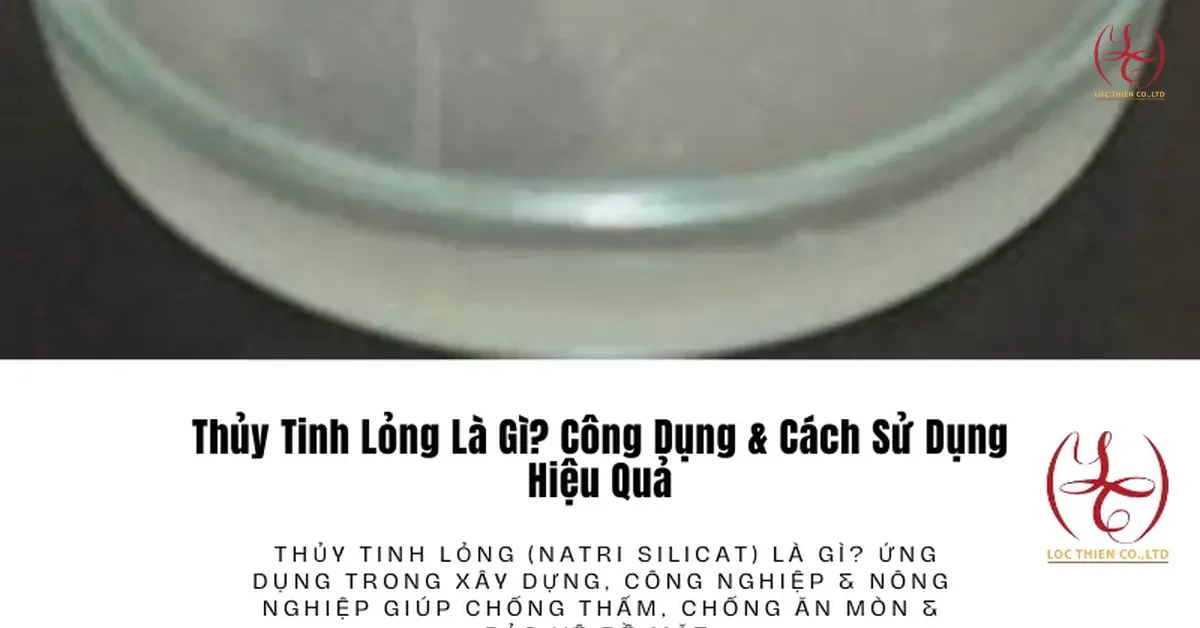
Table of contents
- Overview of Liquid Sodium Silicate
- Applications of liquid sodium silicate in construction
- Waterproofing concrete and cement surfaces
- Cement reinforcement – Increasing concrete strength
- Applications of liquid sodium silicate in industry
- Industrial adhesive in the manufacturing of ceramics, glass, and heat-resistant materials
- Applications of liquid sodium silicate in agriculture
- Protecting crops from fungal disease and pests
- Improving soil, retaining moisture, and increasing fertilizer efficiency
- Benefits of using liquid sodium silicate in your business
- Optimizing cost & quality when buying liquid sodium silicate at Loc Thien
- Is liquid sodium silicate toxic? Is it safe to use?
- Can liquid sodium silicate completely replace traditional waterproofing materials?
- Why can concrete or cement mixed with liquid sodium silicate become brittle?
- Can liquid sodium silicate protect wood from termites and mold?
- Can liquid sodium silicate be used to treat industrial wastewater?
Liquid Sodium Silicate (Water Glass). Applications in construction, industry & agriculture that provide resistance, corrosion protection & surface protection. Find out more at Loc Thien!
Overview of Liquid Sodium Silicate
Liquid Sodium Silicate, also known as water glass (Sodium Silicate - Na₂SiO₃), is a highly viscous solution that dissolves easily in water and has strong alkalinity. With its ability to waterproof, bond, protect surfaces, and resist corrosion, liquid sodium silicate is widely used in construction, industry, ceramics manufacturing, water treatment, and agriculture.
So what is liquid sodium silicate used for? It is one of the key chemicals that helps optimize production efficiency, save costs, and improve product quality across many fields.
Applications of liquid sodium silicate in construction
Waterproofing concrete and cement surfaces
Applying liquid sodium silicate in construction is an effective waterproofing method that helps protect concrete, cement walls, and water tanks from the effects of water and the environment. When applied correctly, liquid sodium silicate penetrates the capillaries of the concrete, forming a protective film that increases durability and reduces cracking over time.
What is liquid sodium silicate used for in construction? This chemical helps improve waterproofing capability and increase the durability of construction projects.
How to use liquid sodium silicate:
- Clean the surface thoroughly, removing dust and grease before application.
- Dilute at a ratio of 1:4 (1 part liquid sodium silicate glue, 4 parts water).
- Apply 2 even coats to create good adhesion and increase waterproofing ability.
- Allow to dry for at least 24 hours before use.
- You may also be interested in:
Cement reinforcement – Increasing concrete strength
Beyond waterproofing, liquid sodium silicate also helps reinforce concrete and cement, improving load-bearing capacity and limiting shrinkage and cracking.
What are the benefits of applying liquid sodium silicate in construction? In addition to waterproofing, it also gives cement greater hardness and reduces damage.
How to use liquid sodium silicate:
- Mix liquid sodium silicate directly into cement at an appropriate ratio.
- Apply in foundation works, roads and bridges, and factory flooring to increase durability and load-bearing capacity.
Applications of liquid sodium silicate in industry
Metals such as iron, steel, and aluminum are prone to oxidation and corrosion when exposed to moisture and chemicals. Liquid sodium silicate helps create a protective layer, limiting rust and extending the material's lifespan, thereby significantly reducing maintenance costs.
What is liquid sodium silicate used for in industry? One of its most common applications is protecting metal from corrosion and oxidation.
How to use liquid sodium silicate:
- Clean the metal surface, removing grease and dust before coating.
- Use pure liquid sodium silicate or dilute it 1:1 with water.
- Apply evenly over the metal surface, let it dry, and check adhesion.
Industrial adhesive in the manufacturing of ceramics, glass, and heat-resistant materials
In the manufacturing of ceramics, heat-resistant materials, and welding rods, liquid sodium silicate acts as a bonding agent, increasing durability, reducing cracking, and improving product quality.
What is the effect of applying liquid sodium silicate in industry? Besides protecting metal, it also improves adhesion in the manufacturing of heat-resistant materials.
How to use liquid sodium silicate:
- Use pure liquid sodium silicate or dilute with water according to technical requirements.
- Apply to ceramic, glass, or metal surfaces before firing or welding.
- Allow to air dry or apply heat to increase adhesion.
Applications of liquid sodium silicate in agriculture
Protecting crops from fungal disease and pests
One little-known application of liquid sodium silicate is protecting crops from fungal disease and insects, helping to reduce the use of harmful chemicals. When sprayed onto plants, liquid sodium silicate forms a biological protective film that helps plants resist bacteria, mold, and pests.
What is liquid sodium silicate used for in agriculture? It helps protect crops and strengthen the plant's natural resistance.
How to use liquid sodium silicate:
- Dilute at a ratio of 1:20 with clean water.
- Spray evenly on plant stems and leaves in the early morning or late afternoon for the best results.
Improving soil, retaining moisture, and increasing fertilizer efficiency
Liquid sodium silicate helps improve soil structure, retain water longer, and reduce fertilizer runoff, thereby increasing the plant's ability to absorb nutrients.
What are the benefits of applying liquid sodium silicate in agriculture? It helps the soil retain moisture and improves fertilizer efficiency.
How to use liquid sodium silicate:
- Dissolve liquid sodium silicate in water at an appropriate ratio.
- Water it evenly onto the soil to help plants grow better.
Benefits of using liquid sodium silicate in your business
Applying liquid sodium silicate in practice not only delivers high effectiveness in construction, industry, and agriculture, but also helps businesses reduce maintenance costs, increase product durability, and boost production efficiency.
- For construction contractors: Using liquid sodium silicate improves waterproofing, extends the lifespan of structures, and reduces repair costs.
- For manufacturing plants: Liquid sodium silicate helps protect metal surfaces, reduce equipment wear, and improve product quality.
- For agricultural businesses: Using liquid sodium silicate for soil treatment and crop protection helps reduce dependence on harmful chemicals and increases crop yields.
Optimizing cost & quality when buying liquid sodium silicate at Loc Thien
With over 10 years of experience supplying industrial chemicals, Loc Thien is proud to be a trusted partner for many businesses in the construction, manufacturing, and agriculture sectors.
Why choose Loc Thien?
- Standard-compliant quality: Our liquid sodium silicate products are rigorously tested to ensure high purity.
- Large warehouse – Fast delivery: Our warehouse network in Ba Ria – Vung Tau, Dong Nai, Binh Duong, Da Nang, Can Tho and Bac Ninh ensures large-volume supply and fast delivery.
- Free technical support & consultation: Our team of experts is ready to advise on usage to help optimize efficiency for your business.
If your business needs technically compliant liquid sodium silicate at a great price, contact Loc Thien for a detailed quote and dedicated support.
- Hotline: 0979 891 929
- Email: [email protected]
- Address: 452/6B Tỉnh Lộ 10, Binh Tri Dong Ward, Ho Chi Minh City
Is liquid sodium silicate toxic? Is it safe to use?
Can liquid sodium silicate completely replace traditional waterproofing materials?
Why can concrete or cement mixed with liquid sodium silicate become brittle?
Can liquid sodium silicate protect wood from termites and mold?
Can liquid sodium silicate be used to treat industrial wastewater?
LOC THIEN INVESTMENT AND DEVELOPMENT CO., LTD. — TAX ID 0313650856 · 452/6B Tỉnh Lộ 10, Binh Tri Dong Ward, Ho Chi Minh City · ☎ 0979 891 929 · hoachatlocthien.com
Technical Support & B2B Procurement Hotline
Loc Thien Chemical specializes in direct manufacturing of FeCl₂ / FeCl₃ and Tier-1 supply of basic industrial chemicals (NaOH, HCl, H₂SO₄, PAC, NaOCl, H₂O₂, FeSO₄) with direct B2B pricing and dedicated 5–30-ton tanker delivery across Vietnam.
- Hotline / Zalo: +84 979 891 929
- Official Email: [email protected]
- Direct Manufacturer: Ferrous Chloride (FeCl₂ 30%) & Ferric Chloride (FeCl₃ 38–40%)
- Primary Supplier: NaOH 32%/45%/50%/99%, HCl 32%, H₂SO₄ 98%, PAC 30–31%, NaOCl 10–12%, H₂O₂ 35%/50%
- Compliance & Quality: FeCl₂ ZDHC MRSL v3.1 test report (Smart testing, 5 substance groups, TUV Rheinland Vietnam), ISO 9001:2015, Quatest 3, Full COA & GHS SDS