
NaOH (Caustic Soda) in Soap Production — Saponification Formula, SAP Value & NaOH vs KOH Comparison
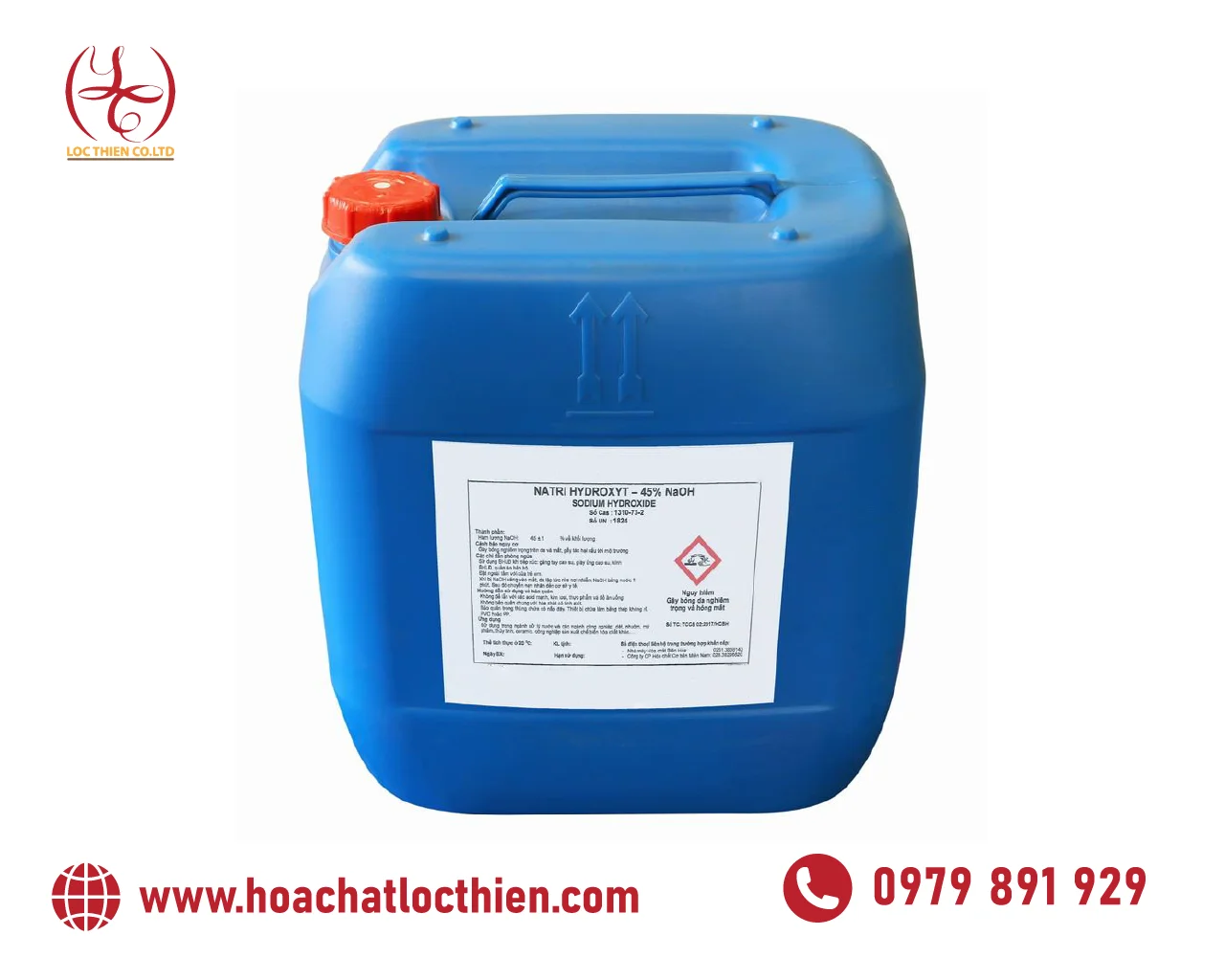
TL;DR: NaOH is the main saponification agent for producing solid soap. Reaction: oil + NaOH → soap + glycerin. SAP value of coconut oil 255, palm oil 199, olive oil 185 determines the required NaOH amount. This article compares NaOH vs KOH for solid and liquid soap, with standard mixing ratio tables for manufacturing plants.
The Saponification Reaction — Basic Principle
Soap is produced through the saponification reaction between fats (triglycerides) and a strong alkali. When using NaOH, the reaction proceeds as follows:
Triglyceride + 3 NaOH → 3 sodium salts of fatty acids (soap) + Glycerin
Illustrated molecular equation with tristearin (a main component of animal fat):
(C₁₇H₃₅COO)₃C₃H₅ + 3 NaOH → 3 C₁₇H₃₅COONa (sodium stearate) + C₃H₅(OH)₃ (glycerin)
This reaction is exothermic and requires thorough mixing to ensure NaOH fully contacts the oil molecules. Optimal temperature: 60–80°C for the hot-process method, 40–50°C for the cold-process method.
SAP Value Table — NaOH Amount for Each Oil Type
The Saponification Value (SAP) is the number of mg of KOH required to completely saponify 1 g of fat. From the SAP value, the required NaOH amount is calculated by the ratio:
NaOH (g) = KOH (g) × (40 / 56.1) ≈ KOH × 0.713
Alternatively, refer directly to the table below:
| Oil Type | SAP Value (mg KOH/g) | SAP (g NaOH/g oil) | NaOH 45% per kg oil (g) | Superfat 5% (g NaOH/kg oil) |
|---|---|---|---|---|
| Coconut oil | 250–260 (Avg 255) | 0.183 | 150–162 | 142–154 |
| Palm oil | 195–203 (Avg 199) | 0.142 | 116–124 | 110–118 |
| Olive oil | 185–196 (Avg 190) | 0.135 | 110–118 | 105–112 |
| Sunflower oil | 186–194 (Avg 190) | 0.135 | 110–118 | 105–112 |
| Soybean oil | 185–195 (Avg 190) | 0.135 | 110–118 | 105–112 |
| Canola oil | 168–181 (Avg 175) | 0.124 | 100–108 | 95–103 |
| Tallow | 193–202 (Avg 198) | 0.141 | 115–122 | 109–116 |
| Castor oil | 178–184 (Avg 181) | 0.129 | 104–110 | 99–105 |
How to Calculate NaOH 45% Quantity
Commercial NaOH is commonly supplied at 45% concentration (density 1.478 g/ml at 20°C). Calculation formula:
NaOH 45% solution weight = (oil weight × SAP_NaOH) ÷ 0.45
Example with 1,000 g coconut oil (SAP_NaOH = 0.183):
- Pure NaOH required = 1,000 × 0.183 = 183 g
- With 5% superfat: 183 × 0.95 = 174 g
- NaOH 45% solution required = 174 ÷ 0.45 = 387 g (≈ 260 ml)
Actual ratio including 5% superfat: 130–150 g NaOH 45%/kg coconut oil.
Technical note: Superfat (excess oil) of 5–8% is the industry standard to ensure no free NaOH remains in the soap bar — alkaline soap causes skin irritation and dryness. Industrial-scale soap factories typically run at 3–5% superfat, strictly controlling the finished soap bar pH.
Comparing NaOH vs KOH for Solid and Liquid Soap
| Criterion | NaOH (Sodium Hydroxide) | KOH (Potassium Hydroxide) |
|---|---|---|
| Chemical formula | NaOH | KOH |
| Molar mass | 40.0 g/mol | 56.1 g/mol |
| Active ingredient required | Higher (ratio 1:0.713 vs KOH) | Lower (requires 40% more mass than NaOH) |
| Soap product | Solid soap (hard, durable) | Liquid or paste soap (soft) |
| Water solubility | Moderate | Higher (forms clear solutions) |
| Lather | Fine, creamy, slow-dissolving | Fluffy, quick-dissolving, easy rinsing |
| Skin feel | Clean, may be slightly drying if superfat is low | Gentler, suitable for sensitive skin |
| Storage | Solid bar, no airtight packaging needed | Requires sealed container (hygroscopic) |
| Raw material cost | Lower (NaOH is 30–40% cheaper than KOH) | Higher |
| Primary applications | Hard soap bars, industrial soap bars | Liquid hand soap, body wash, shampoo |
When to Use NaOH?
NaOH is chosen for solid soap products:
- Laundry bars — low cost, high hardness
- Toilet soap bars — fine lather, slow dissolving, shape retention
- Industrial soap — large-scale production, cost savings
When to Use KOH?
KOH is chosen for liquid soap products:
- Liquid hand soap
- Shower gel, shampoo
- Paste soap for industrial washers
Conversion Formula Between NaOH and KOH
To convert a formula from NaOH to KOH (or vice versa), use the following factors:
- KOH (g) = NaOH (g) × (56.1 / 40) = NaOH × 1.403
- NaOH (g) = KOH (g) × (40 / 56.1) = KOH × 0.713
Example: a formula using 100 g NaOH — if replacing with KOH, 100 × 1.403 = 140.3 g KOH is needed.
Standard Solid Soap Formula — Oil Blend Ratio
Balanced solid soap formula for a medium-scale manufacturing plant (1 ton of oil per batch):
| Component | Ratio | Mass (kg) |
|---|---|---|
| Palm oil | 40% | 400 |
| Coconut oil | 30% | 300 |
| Olive oil | 20% | 200 |
| Sunflower oil | 10% | 100 |
| Total oil | 100% | 1,000 |
| Pure NaOH | calculated | ~148 kg |
| Water (2.0–2.5:1 ratio to NaOH) | ~300–370 kg | |
| Fragrance, color, additives | custom | per proprietary formula |
NaOH calculation:
- Palm oil 400 kg × 0.142 = 56.8 kg
- Coconut oil 300 kg × 0.183 = 54.9 kg
- Olive oil 200 kg × 0.135 = 27.0 kg
- Sunflower oil 100 kg × 0.135 = 13.5 kg
- Total pure NaOH = 152.2 kg
With 5% superfat: 152.2 × 0.95 = ~144.6 kg pure NaOH If using NaOH 45%: 144.6 ÷ 0.45 = 321.3 kg NaOH 45% solution (~217 liters)
Note: When dissolving NaOH in water, ALWAYS add NaOH to water (never the reverse), stirring slowly as the reaction is strongly exothermic. After preparation, the NaOH solution must cool to 50–60°C before mixing with oils.
NaOH vs KOH Soap Quality Comparison Table
| Criterion | NaOH Soap | KOH Soap |
|---|---|---|
| Hardness when dry | ⭐⭐⭐⭐⭐ (hard, non-deforming) | ⭐⭐ (soft, pliable) |
| Lather in soft water | ⭐⭐⭐⭐ | ⭐⭐⭐⭐⭐ |
| Lather in hard water | ⭐⭐⭐ (inferior to KOH) | ⭐⭐⭐⭐ |
| Water solubility | ⭐⭐⭐ (slow dissolving, long-lasting) | ⭐⭐⭐⭐⭐ (fast dissolving) |
| Cleaning ability | ⭐⭐⭐⭐⭐ (excellent grease removal) | ⭐⭐⭐⭐ |
| Skin care | ⭐⭐⭐ (high superfat formulation) | ⭐⭐⭐⭐⭐ (naturally gentle on skin) |
| Shelf life | > 12 months (low moisture absorption) | 6–8 months (highly hygroscopic) |
| Production cost | Low | 30–40% higher |
Storage and Safety When Using NaOH in Soap Production
NaOH Storage
- NaOH 45% liquid: stainless steel 304 or HDPE tank, temperature 15–30°C, avoid freezing (< 5°C)
- NaOH flakes/solid: 25 kg bags, dry warehouse, 30 cm from walls, avoid moisture
- Shelf life: liquid NaOH 45% — 3 months (absorbs CO₂ from air → reduced activity)
- Keep away from acids and flammable materials
Production Safety
- Always wear PPE: safety goggles, alkali-resistant gloves, PVC apron, rubber boots
- Production area must have ventilation — NaOH dust irritates the respiratory tract
- Eyewash station and emergency shower on site
- If NaOH splashes on skin: rinse immediately under running water for 15 minutes, do not neutralize with acid
- NaOH dilution: slowly add NaOH to cold water, stirring constantly — reaction can exceed 90°C
Frequently Asked Questions
Why does coconut oil need more NaOH than olive oil?
Coconut oil contains more short-chain fatty acids (lauric C12, myristic C14) — lower molar mass means more triglyceride molecules per gram → requires more NaOH for complete saponification.
Can NaOH be replaced with KOH in the same formula?
Yes, but multiply by a factor of 1.403 (KOH requires 40.3% more by weight). KOH soap will be softer and dissolve faster.
Can NaOH 45% be used for cold-process?
Yes. NaOH 45% is commonly used in cold-process soap making. Adjust the water calculation to achieve the appropriate dilution level.
What happens if NaOH is insufficient or excessive?
Excess NaOH → harsh soap, skin irritation, pH > 10.5. Insufficient NaOH → soft, mushy soap with excess free oil, prone to spoilage. Superfat 5–8% is the safe standard.
Where to buy NaOH 45% for soap manufacturing?
Contact hotline 0979 891 929 — supplying NaOH 45%, 50%, and 99% (flakes). Tanker delivery 5–30 tons to industrial parks nationwide, with batch COA/MSDS.
Saponification Temperature and Its Effect on Quality
Reaction temperature directly affects the saponification rate and product quality:
- Cold-process (40–50°C): Oils at room temperature are mixed with cooled NaOH solution — the mixture self-heats (gel phase) and completes the reaction in 24–48 hours. The product retains natural glycerin, offering better moisturizing properties.
- Hot-process (60–80°C): Active heating; reaction completes in 2–4 hours — enables uniformity control, suitable for large-scale production.
- Semi-boiled (80–100°C): Heated to a gentle boil — used in industrial soap production with heat-resistant mixing equipment, reaction time < 1 hour.
In large-scale industrial production, hot-process (60–80°C) is preferred for easier quality control and higher throughput than cold-process.
Quality Control System — pH, Hardness, Glycerin Content
Finished soap must meet the following specifications (per TCVN 2224:1991):
| Parameter | Standard Allowable | Test Method |
|---|---|---|
| pH (1% solution at 25°C) | 8.5–10.5 | pH meter |
| Total fatty matter | ≥ 70% (solid), ≥ 35% (liquid) | Ether extraction |
| Moisture content | ≤ 20% (solid), ≥ 50% (liquid) | Drying at 105°C to constant weight |
| Free NaOH | ≤ 0.1% (non-irritating) | Acid titration |
| Unsaponifiable matter | ≤ 2.5% | Acetone extraction |
| Bar hardness | suitable (firm, non-deforming at 35°C) | Mechanical testing |
The QC department of a soap factory typically checks pH and free NaOH for each production batch before packaging, ensuring end-user safety.
Conclusion
NaOH is the irreplaceable saponification agent in solid soap production. Understanding the correct SAP value for each oil type, calculating the precise NaOH ratio, and choosing the right concentration (45% or 50%) helps the factory optimize costs and product quality. Compared to KOH, NaOH offers advantages in price and bar hardness — suitable for mainstream solid soap product lines (toilet soap, laundry bars) and industrial-scale production.
Request a Quote — Contact
Need NaOH for soap production? Get a quote for NaOH 45%, 50%, NaOH flakes 99% — batch COA/MSDS, delivered to industrial parks nationwide. Hotline 0979 891 929.
Quality control: QC Phan Cẩm Thùy inspects and Võ Thị Như Hòa approves each batch of NaOH. Batch COA provided, certified ZDHC MRSL Level 1 (TÜV Rheinland). Hotline 0979 891 929.