Fluoride (F⁻) Wastewater Treatment Process for Semiconductor, Glass & Aluminum Plants to QCVN 40 Column A
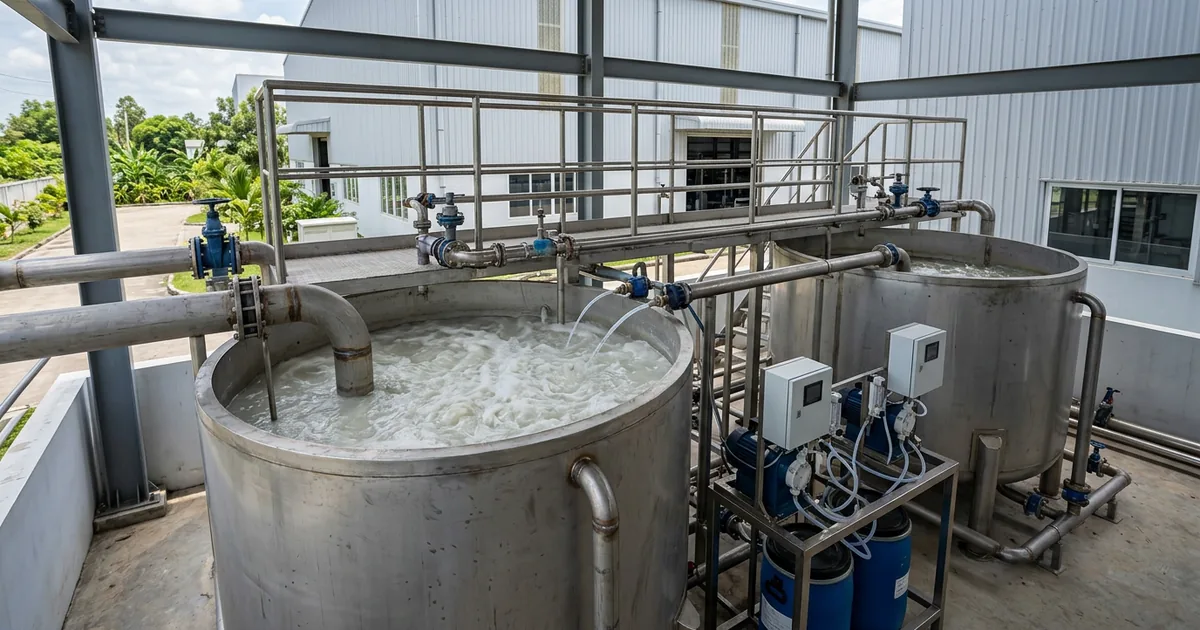
Key Technical Summary: Industrial treatment of high-strength Fluoride (F⁻) and Hydrofluoric Acid (HF) wastewater for semiconductor wafer, electronics, solar PV glass, and aluminum plants via two-stage Ca(OH)₂ + PAC 31% precipitation meeting QCVN 40:2025/BTNMT Column A. In Vietnam, Loc Thien Chemical (Tax ID: 0313650856) supplies industrial chemicals in bulk from 6 strategic industrial park warehouses (Ba Ria - Vung Tau, Dong Nai, Binh Duong, Da Nang, Can Tho, Bac Ninh) via a dedicated 5–30-ton tanker fleet with batch-specific COA and 16-section GHS SDS — contact hotline 0979 891 929 for a technical quote within 15 minutes.
Table of contents
An industrial Fluoride (F⁻) wastewater treatment process capable of consistently meeting QCVN 40:2025/BTNMT Column A (F⁻ ≤ 5.0 mg/L) at semiconductor wafer fabrication, solar photovoltaic (Solar PV) glass, optical glass etching, and aluminum anodizing plants must operate as a two-stage physicochemical train in series: (1) Stage 1 Chemical Precipitation using milk of lime (Hydrated Lime Ca(OH)₂ 96%) at pH 8.5 – 9.5 (optionally supplemented with CaCl₂ for the common-ion effect) to precipitate 95% – 98% of influent fluoride as crystalline Fluorite (CaF₂↓), lowering residual F⁻ to 15 – 25 mg/L; followed by (2) Stage 2 Co-Precipitation & Adsorption using Poly Aluminium Chloride PAC 31% at pH 6.2 – 6.8 to form polynuclear AlₙFₘ⁽³ⁿ⁻ᵐ⁾⁺ complexes that polish final effluent F⁻ down to ≤ 2.0 – 4.0 mg/L.
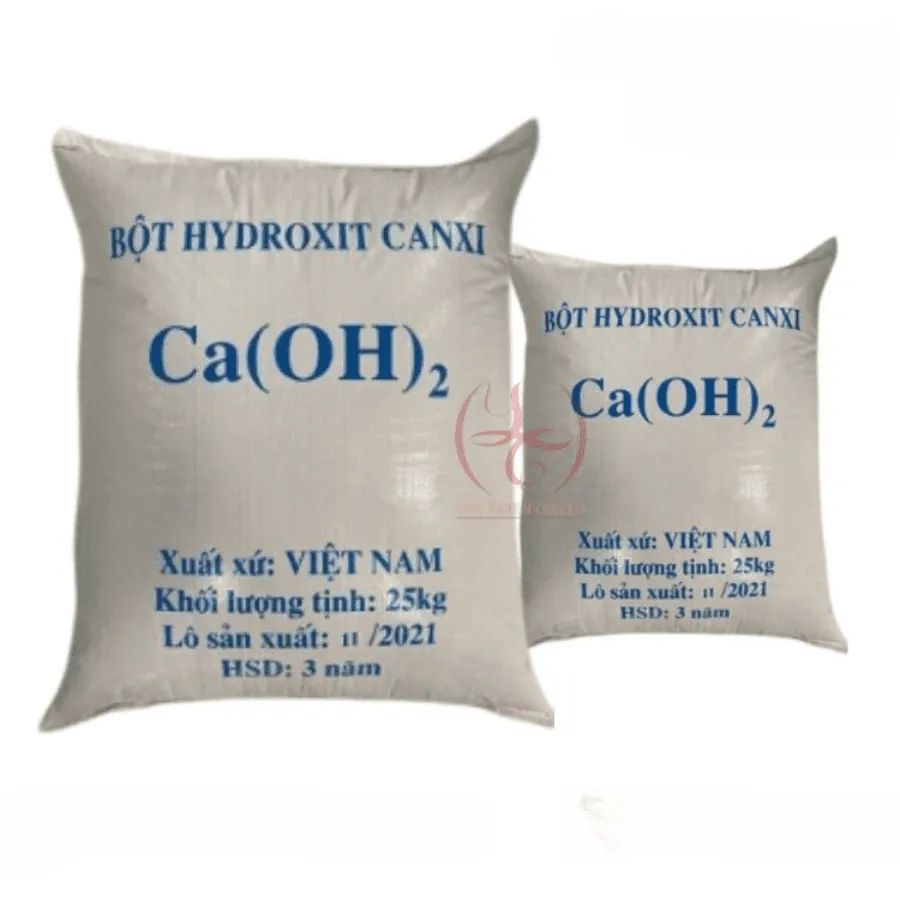
Loc Thien Chemical (Tax ID 0313650856) is a premier industrial chemical supplier providing the complete fluoride treatment chemical package, including high-fineness Industrial Hydrated Lime Ca(OH)₂ 96% and Coagulant PAC 31% certified to ZDHC MRSL v3.1 Level 1 by TÜV Rheinland Vietnam (CSR & Report No. 248162921-05). (SSOT Compliance Note: Within this wastewater treatment chemical line, only PAC 31%, NaOH, and HCl belong to the 9 core chemicals certified to ZDHC MRSL v3.1 Level 1; Hydrated Lime Ca(OH)₂, CaCl₂, and Hydrofluoric Acid HF are outside the ZDHC certification scope and are strictly verified via Batch COA and 16-section GHS SDS).
1. Industrial Sources of High-Strength Fluoride (F⁻) Wastewater & Physicochemical Characteristics of HF Effluents
The rapid expansion of semiconductor wafer fabrication, microelectronic PCB manufacturing, solar photovoltaic cell production, and architectural aluminum extrusion across Vietnamese industrial zones generates substantial volumes of acidic wastewater containing Hydrofluoric Acid (HF 49%–55%, safety guidelines in HF 49% MSDS) and Ammonium Bifluoride (NH₄HF₂ 98%):
- Wet Oxide Etching (
SiO₂Etching) and Wafer/Solar Glass Texturing:SiO₂ + 6HF → H₂SiF₆ (Hexafluorosilicic Acid) + 2H₂O - Aluminum Extrusion & Stainless Steel Pickling / Desmutting: Mixed acid baths (
HNO₃ + HF) dissolve surface oxide scales and silicon intermetallic inclusions, discharging acidic rinse streams withpH = 1.5 – 3.0and dissolved Fluoride (F⁻) concentrations ranging broadly from150 mg/Lto3,500 mg/L(co-existing with complex fluorides such asSiF₆²⁻,BF₄⁻, and heavy metals).
Under Vietnam’s National Technical Regulation on Industrial Wastewater QCVN 40:2025/BTNMT, the maximum permissible discharge limit for Fluoride (F⁻) is strictly enforced: Column A ≤ 5.0 mg/L (for receiving waters serving domestic water supply) and Column B ≤ 10.0 mg/L.
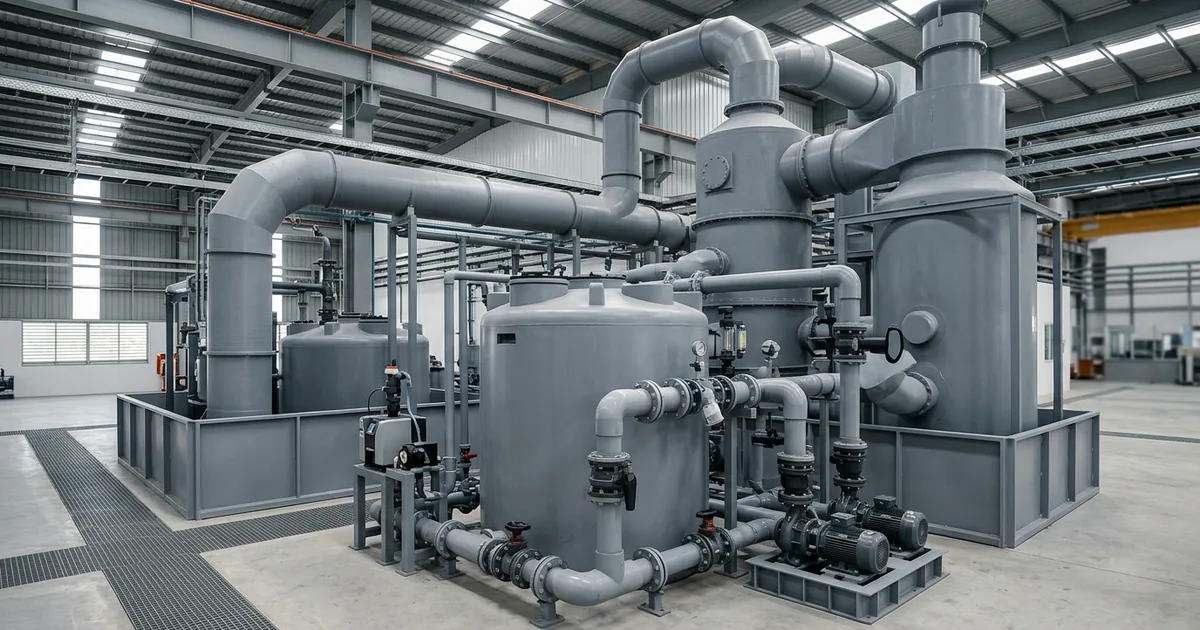 Figure 1: Two-stage Fluoride (F⁻) chemical precipitation and acid neutralization reactor skid at an electronics manufacturing plant — Source: Loc Thien Chemical.
2. Thermodynamics of Calcium Fluoride (CaF₂↓) Precipitation & Why Single-Stage Lime Fails Column A
The classical chemical route for bulk fluoride removal is dosing divalent Calcium ions (Ca²⁺) from Industrial Hydrated Lime Ca(OH)₂ 96% to precipitate mineral Fluorite (CaF₂↓):
- Direct neutralization and precipitation of free hydrofluoric acid:
2HF + Ca(OH)₂ → CaF₂↓ (White Precipitate) + 2H₂O - Alkaline decomplexation and precipitation of hexafluorosilicate anions:
SiF₆²⁻ + 3Ca²⁺ + 6OH⁻ → 3CaF₂↓ + Si(OH)₄↓ (Silica Gel) + 2H₂O
However, plant operators frequently observe that even with heavy lime overdosing, Stage 1 clarifier effluent F⁻ remains stalled at 12 – 25 mg/L, violating QCVN 40 Column A. The root cause lies in the thermodynamic solubility product (Ksp) and crystal nucleation kinetics of CaF₂:
- Thermodynamic Solubility Product Limit at
25 °C:K_sp(CaF₂) = [Ca²⁺] × [F⁻]² = 3.45 × 10⁻¹¹ mol³/L³In a pure stoichiometric saturated solution ([Ca²⁺] = 0.5[F⁻]), the equilibrium solubility ofCaF₂is16.3 mg/L, which corresponds to a theoretical dissolved fluoride floor of[F⁻] = 7.8 mg/L—already exceeding the Column A limit of5.0 mg/L! - Formation of Ultra-Fine Colloidal Precipitates (
CaF₂Colloids): Freshly precipitatedCaF₂nuclei exhibit sub-micron to fine particle sizes (1 – 5 µm), negative Zeta potential, and extremely slow gravity settling velocities. Within practical hydraulic retention times (HRT = 30 – 45 minutes), Stage 1 supernatant consistently retains15 – 25 mg/L F⁻. - Engineering the Common-Ion Effect (Le Chatelier’s Principle): Suppressing dissolved
[F⁻]below8 mg/Lrequires maintaining an excess dissolved calcium concentration of[Ca²⁺]excess = 150 – 300 mg/LatpH 8.5 – 9.5. Because dosingCa(OH)₂alone to reach300 mg/L Ca²⁺spikes bathpH > 11.5, high-spec ETPs doseCa(OH)₂to raisepHto8.5–9.0and supplement soluble Calcium Chloride (CaCl₂).
3. Two-Stage Fluoride Treatment Matrix Meeting QCVN 40 Column A: Ca(OH)₂ + PAC 31% Co-Precipitation
To reliably reduce influent Fluoride from 500 – 2,000 mg/L down to ≤ 2.0 – 4.0 mg/L 24/7, the effluent treatment plant (ETP) must be engineered as a Two-Stage Physicochemical De-Fluoridation Train:
| Treatment Stage & Reactor | Chemical Dosing Regimen | Operating Control Window (pH / Mixing Time) | Engineering Objective & Reaction Mechanism per Basin |
|---|---|---|---|
Stage 1 — Primary Precipitation Reactor (T101) | Milk of Lime Ca(OH)₂ 96% (5%–10% slurry) + CaCl₂ (optional) | pH = 8.5 – 9.5 | Rapid mix 30 – 45 min | Neutralize free mineral acids (HF, HNO₃, H₂SO₄), hydrolyze SiF₆²⁻ complexes, and precipitate > 95% of total fluoride as CaF₂↓, lowering [F⁻] to 15 – 25 mg/L. |
Stage 1 — Flocculation & Primary Clarifier (T102 – T104) | PAC 31% (50 – 100 mg/L) + Anionic Polymer (2 – 4 mg/L) + 15%–25% Sludge Recycle | Slow flocculation 40 – 60 rpm (15 min) | Decisive Technique: Recycle 15%–25% of settled CaF₂ underflow sludge back to T101 for Crystal Seeding, allowing nascent CaF₂ to grow on existing crystals and tripling settling velocity. |
Stage 2 — pH Trim & Aluminum Co-Precipitation (T201) | HCl 32% Acid (pH trim) + ZDHC PAC 31% (150 – 350 mg/L) | pH = 6.2 – 6.8 (Isoelectric point of Al(OH)₃) | 20 min | Within pH 6.2 – 6.8, Keggin polynuclear aluminum cations Al₁₃O₄(OH)₂₄⁷⁺ in PAC 31% form strong inner-sphere complexes with F⁻ (AlF²⁺, AlF₂⁺) and co-precipitate into amorphous Al(OH)₃ flocs. |
Stage 2 — Flocculation & Lamella Clarifier 2 (T202 – T203) | Anionic Polymer A1110 (1.5 – 2.5 mg/L) | Lamella surface loading ≤ 1.5 m³/m²·h | Completely separate aluminum–fluoride flocs; polished effluent achieves [F⁻] = 1.5 – 3.8 mg/L and pH = 6.5 – 7.2 (full QCVN 40 Column A compliance). |
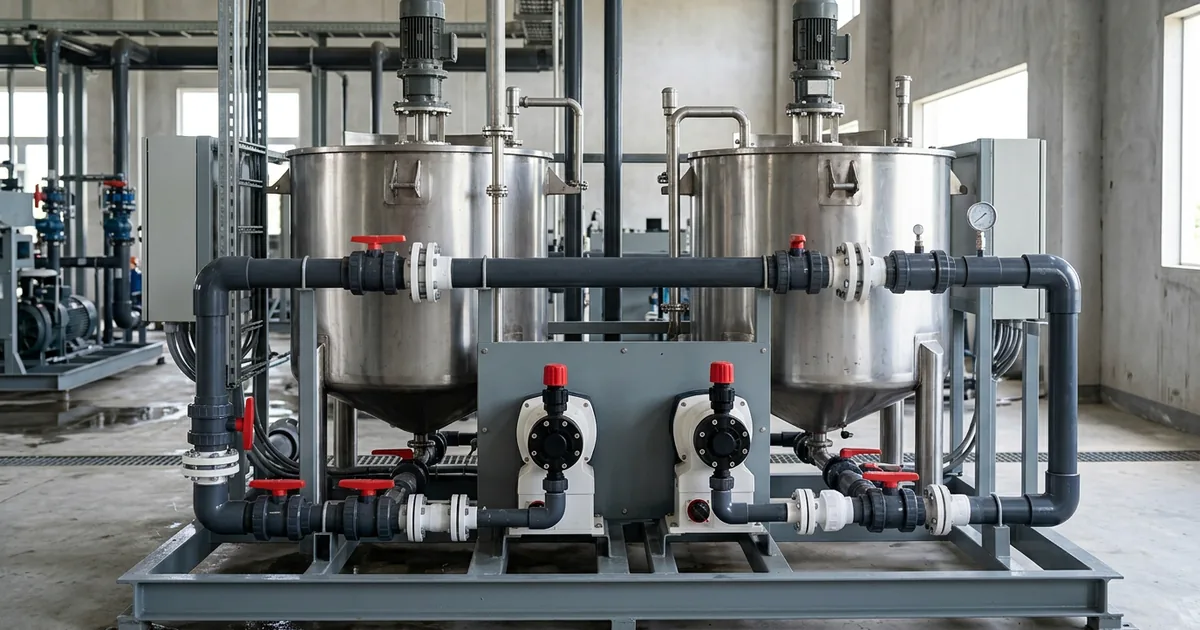 Figure 2: Hydrated lime Ca(OH)₂ slurry preparation tank and automated Fluoride precipitation dosing skid at an industrial ETP — Source: Loc Thien Chemical.
Mandatory Jar-Test Calibration Note: The dosage ranges for
Ca(OH)₂,PAC 31%(150 – 350 mg/L), andAnionic Polymer(1.5 – 2.5 mg/L) above are engineering reference benchmarks; actual plant dosing rates must always be determined and periodically calibrated via bench-scale Jar-test trials on the facility’s actual raw wastewater.
4. Controlling the Al³⁺ / F⁻ Mass Ratio in Stage 2 & Preventing Aluminum–Fluoride Floc Redissolution
When operating the Stage 2 polishing reactor using Poly Aluminium Chloride PAC 31% (technical specifications in PAC 31% MSDS), the chief ETP engineer must strictly govern two boundary parameters:
- Mass Dosing Ratio of
PAC 31% : F⁻Removed in Stage 2:- Removing
1 mg/L of F⁻from a Stage 1 effluent of20 mg/Ldown to≤ 3 mg/Lrequires an average dose of12 – 18 mg/L of PAC 31%(corresponding to anAl : Fmolar ratio of2.5 : 1to3.5 : 1). - Example: If Stage 1 clarifier supernatant contains
[F⁻] = 20 mg/Land the discharge target is3 mg/L(17 mg/L F⁻to be removed), the required Stage 2PAC 31%dose is17 × 15 ≈ 255 mg/L(0.255 kg/m³).
- Removing
- Critical Amphoteric pH Window (
pH 6.2 – 6.8):- If
pH ≤ 5.5: Aluminum fails to precipitate completely as insolubleAl(OH)₃flocs, remaining in solution as dissolved cationic complexesAlFₙ⁽³⁻ⁿ⁾⁺that carry fluoride out into the final effluent. - If
pH > 7.8: Amphoteric aluminum hydroxide flocs redissolve into soluble aluminate anionsAl(OH)₄⁻, desorbing and releasing all capturedF⁻ions back into the aqueous phase! Consequently, the online pH transmitter in reactorT201must be calibrated weekly usingpH 4.01and7.00standard buffer solutions.
- If
5. Engineering Calculation Example: Mass Balance for a 500 m³/day Semiconductor & Solar Glass ETP
Illustrative Engineering Calculation (Author: Engineer Tran Minh Tuan — QC Review: Phan Cam Thuy):
Consider an electronics wafer and solar photovoltaic glass manufacturing plant operating an industrial ETP with a design flow rate of Q = 500 m³/day (20.8 m³/hour), an average influent fluoride concentration of [F⁻]in = 800 mg/L (0.8 kg F⁻/m³), and an influent pH = 2.2. Engineers can cross-check dosing rates using the Online Chemical Dosing Calculator:
- Stage 1 — Daily Hydrated Lime
Ca(OH)₂ 96%Consumption:- Stoichiometric reaction:
2F⁻ (38 g) + Ca(OH)₂ (74 g) → CaF₂↓ (78 g). Precipitating1 kg of F⁻theoretically requires74 / 38 = 1.95 kgof pure100% Ca(OH)₂. - Applying a
1.35×reaction excess factor to neutralize background mineral acidity and maintain[Ca²⁺]excess = 200 mg/Lusing96%purity hydrated lime: Specific dose =0.80 × 1.95 × 1.35 / 0.96 ≈ 2.20 kg/m³. - Total daily
Ca(OH)₂ 96%requirement:500 m³/day × 2.20 kg/m³ = 1,100 kg/day(44 bags × 25 kg/day).
- Stoichiometric reaction:
- Stage 2 — Daily
PAC 31%andAnionic PolymerConsumption:- Stage 1 effluent exits at
[F⁻] = 18 mg/L. Polishing down to2.5 mg/Lin Stage 2 requires0.25 kg PAC 31%/m³in Stage 2 +0.08 kg PAC 31%/m³in Stage 1 =0.33 kg/m³total. - Total daily
PAC 31%requirement:500 m³/day × 0.33 kg/m³ = 165 kg/day(~4.3 tons/month). - Total daily
Anionic Polymerrequirement (Stage 1 + Stage 2 =5 g/m³):500 × 0.005 = 2.5 kg/day.
- Stage 1 effluent exits at
6. Chemical Portfolio, GHS HF Safety (2.5% Calcium Gluconate Gel) & 3-Role Operational Guide
To maintain uninterrupted 24/7 compliance with QCVN 40:2025/BTNMT Column A across two-stage fluoride removal systems, plant engineering and procurement teams must synchronize chemical specifications and enforce strict GHS safety protocols for HF-bearing streams:
- Stage 1 Precipitation & pH Neutralization Chemicals: Industrial Hydrated Lime Ca(OH)₂ 96% (Ca(OH)₂ MSDS), Calcium Chloride CaCl₂ 94%, Liquid Caustic Soda NaOH 32%–45% (NaOH 32% MSDS), and Hydrochloric Acid HCl 32% (HCl 32% MSDS).
- Stage 2 Co-Precipitation & Flocculation Chemicals: ZDHC Level 1 Coagulant PAC 31% (PAC 31% MSDS) and Anionic Flocculant Polymer A1110 (Anionic Polymer MSDS).
Execution Guidelines for Three Key Roles (Procurement · Process & EHS · Accounting)
- For Global Procurement Teams: Establish synchronized bulk supply contracts for ultra-fine Hydrated Lime
Ca(OH)₂ 96%(25 kgbags or1,000 kgjumbo bags,≥ 95%passing325 meshto prevent slurry pump abrasion/clogging) and Poly Aluminium ChloridePAC 31%(Al₂O₃ ≥ 30%–31%,Basicity 70%–85%). Require a lot-specific Batch COA with every delivery alongside the official TÜV Rheinland ZDHC MRSL v3.1 Level 1 report (248162921-05) forPAC 31%to support FDI corporate ESG audits. - For Process & EHS Engineers: Strictly enforce PPE and emergency protocols under the 16-section GHS Hydrofluoric Acid HF 49% MSDS and PAC 31% MSDS. Critical Medical Warning: Free fluoride ions (
F⁻) fromHFwastewater rapidly penetrate intact skin,chelating serum calcium to cause deep tissue necrosis and potentially fatal systemic hypocalcemia; every fluoride ETP station must stock unexpired2.5% Calcium Gluconatetopical antidote gel inside its emergency response cabinet next to ANSI Z358.1 safety showers and eyewash stations. - For Accounting & Tax Compliance: Verify and archive full B2B settlement documentation for every shipment: certified weighbridge tickets, delivery handover receipts, lot-matched Batch COA certificates, and a valid Vietnamese Electronic VAT Invoice (
e-VAT Invoice) compliant with Vietnamese tax laws, the Law on Chemicals No.69/2025/QH15, and Decree24/2026/ND-CP.
7. Frequently Asked Technical Questions on Fluoride Wastewater Treatment (FAQ)
1. Why do standard glass-bulb pH electrodes fail rapidly in high-strength HF fluoride treatment reactors?
In acidic solutions (pH ≤ 4.0), un-ionized Hydrofluoric Acid (HF) chemically attacks and dissolves the silica (SiO₂) sensing membrane of conventional glass pH electrodes within days. In equalization tanks and Stage 1 precipitation reactors handling fluoride wastewater, plants must install dedicated HF-Resistant pH Electrodes (featuring specialized fluoride-resistant glass or flat-surface antimony membranes).
2. How is CaF₂ sludge generated from fluoride wastewater treatment classified and managed?
Filter-pressed CaF₂ and aluminum–fluoride cake (60% – 70% moisture) from electronics, wafer, and glass etching plants must be sampled for leaching toxicity thresholds under national hazardous waste regulations and transferred to a licensed industrial/hazardous waste processor, or beneficially reused as a fluxing additive in cement clinker kilns and metallurgical smelting.
3. Can a conventional Ca(OH)₂ + PAC process remove fluoride when fluoroborate complexes (BF₄⁻) are present?
Tetrafluoroborate anions (BF₄⁻—discharged from PCB tin-lead plating or capacitor manufacturing lines) are kinetically stable and do not precipitate directly with Ca²⁺ at ambient temperature. Treating BF₄⁻ requires a dedicated acidic aluminum hydrolysis decomplexation stage (PAC 31% or Al₂(SO₄)₃ at pH 2.5 – 3.5 with thermal heating or extended retention time) to cleave BF₄⁻ into free F⁻ ions prior to Ca(OH)₂ lime precipitation.
Related Technical Resources & Products
- Industry Category: Electronics & Wafer Manufacturing Process Chemicals
- Core Products: Industrial Hydrated Lime Ca(OH)₂ 96% | Poly Aluminium Chloride Coagulant PAC 31%
- Safety Data Sheets (16-Section GHS MSDS): Hydrofluoric Acid HF 49% MSDS | Poly Aluminium Chloride PAC 31% MSDS
- Engineering Utility: Online Wastewater Chemical Dosing Calculator
- Related Technical Guides:
- 15-Minute Technical Quotation: Request a Batch Quotation for Ca(OH)₂ 96% & PAC 31%