Industrial NaOH Production Process: Electrolysis, Membranes and Applications
Key Technical Summary: NaOH production: ion-exchange membrane electrolysis, diaphragm, lime-soda. 32% and 50% quality comparison. Batch COA. Call 0979 891 929.
Table of contents
| Criteria | Ion-Exchange Membrane | Diaphragm Cell | Lime-Soda Process |
|---|---|---|---|
| Principle | Selective Na⁺ membrane | Physical porous barrier | Chemical reaction |
| Output NaOH concentration | 30-35% | 10-12% | <10% |
| Purity of 50% NaOH | Very high, NaCl <50 ppm | Medium, NaCl ~1% | Low, high carbonate |
| Power consumption (kWh/ton NaOH) | ~2,100-2,500 | ~2,500-3,000 | No electricity |
| Capital investment | Highest | Medium | Lowest |
| Brine input requirements | High-purity saturated | Basic treatment | Not applicable |
| Current status | Industry standard | Some legacy plants | Historical only |
50% NaOH Production Process — Step by Step
50% NaOH is the primary commercial form for bulk tanker transport and industrial consumption. The production process from raw materials to final product involves these steps:
Step 1: Brine treatment. Industrial salt (NaCl ≥ 97%) is dissolved into saturated solution ~300 g/L. The solution undergoes filtration and ion exchange to remove Ca²⁺, Mg²⁺, Fe³⁺ and heavy metal impurities — particularly stringent requirements for membrane technology.
Step 2: Electrolysis. Purified NaCl solution is fed into electrolysis cells. Direct current (DC) splits NaCl into NaOH at the cathode, Cl₂ at the anode, and releases H₂. Cell operating temperature is typically maintained at 80-90°C.
Step 3: Byproduct processing. Cl₂ from the anode is dried, compressed and liquefied for commercial sale or used as raw material for NaOCl, HCl, PVC production. H₂ is recovered as fuel or feedstock for hydrogen peroxide, ammonia.
Step 4: NaOH concentration. 30-35% NaOH solution from the cathode undergoes multi-effect vacuum evaporation to reach 50% concentration. For diaphragm technology, this step includes NaCl crystallization separation via centrifugation or filtration.
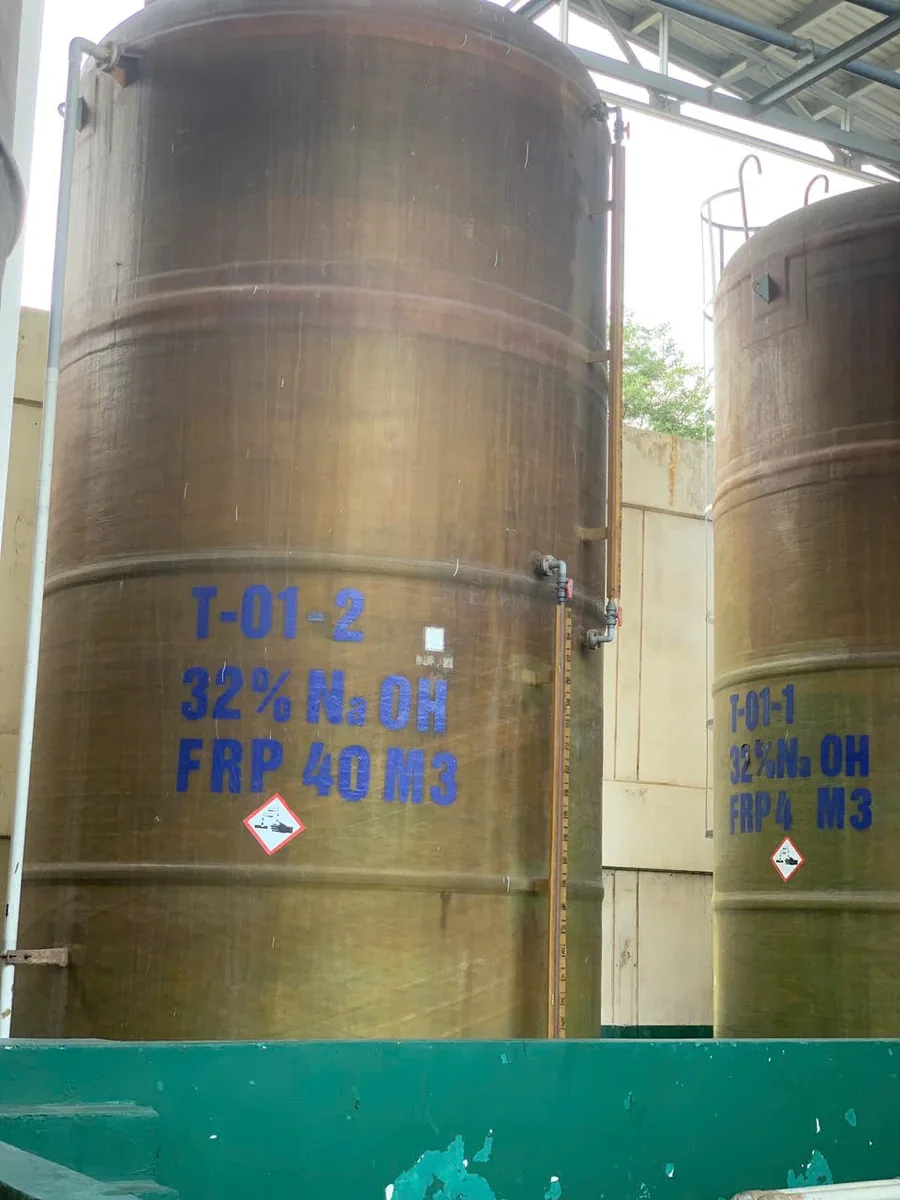
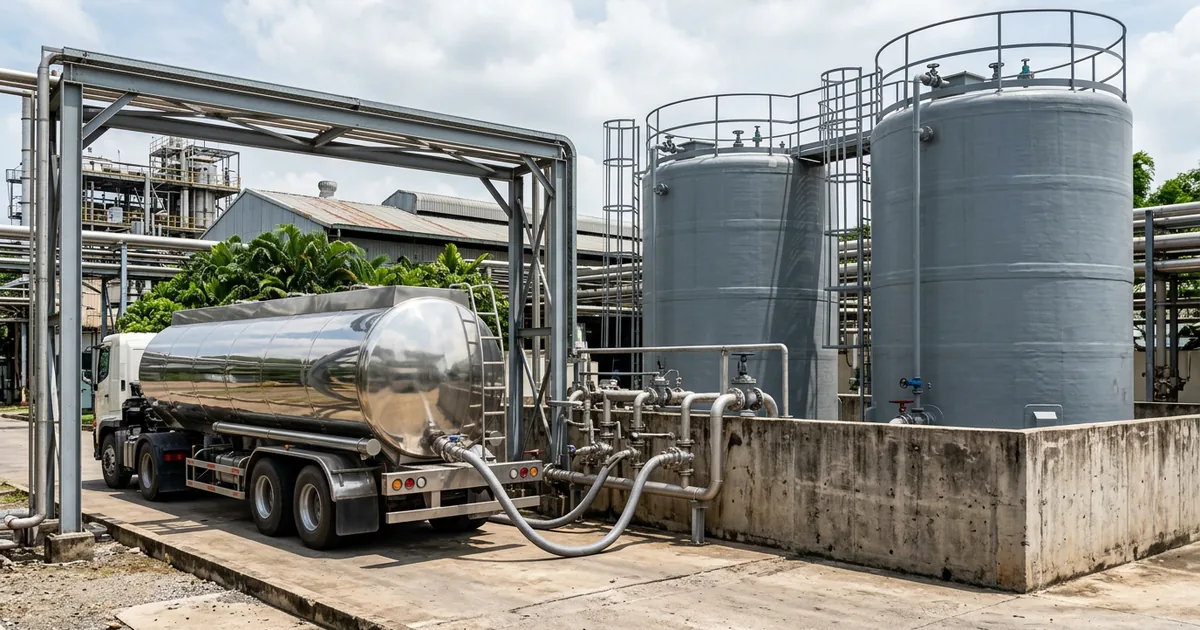
Step 5: Cooling and storage. 50% NaOH is cooled to 40-50°C before pumping into FRP (Fiberglass Reinforced Plastic) or carbon steel tanks — must maintain temperature above 12°C to prevent NaOH crystallization.
Step 6: Quality control and shipping. Each production batch is sampled for NaOH content, NaCl, Na₂CO₃, Fe according to TCVN or ASTM standards. Loc Thien provides COA per batch for factory customers. 50% NaOH is shipped via specialized tankers to industrial zones.
NaOH Applications in Manufacturing Processes
NaOH itself serves as a key input chemical for other production processes within industrial clusters:
- NaOCl (Bleach) production: Chlorine gas (from the same electrolysis process) is bubbled into NaOH solution to produce NaOCl — a disinfectant for water treatment and wastewater.
- Na₃PO₄ (Trisodium Phosphate) production: NaOH reacts with H₃PO₄ to form TSP — an industrial cleaner and food additive.
- PAC (Poly Aluminium Chloride) production: NaOH adjusts alkalinity during PAC synthesis from Al(OH)₃ and HCl.
- Acid waste neutralization: Electroplating and steel plants use 32-50% NaOH to neutralize acid waste before discharge into centralized wastewater treatment systems.
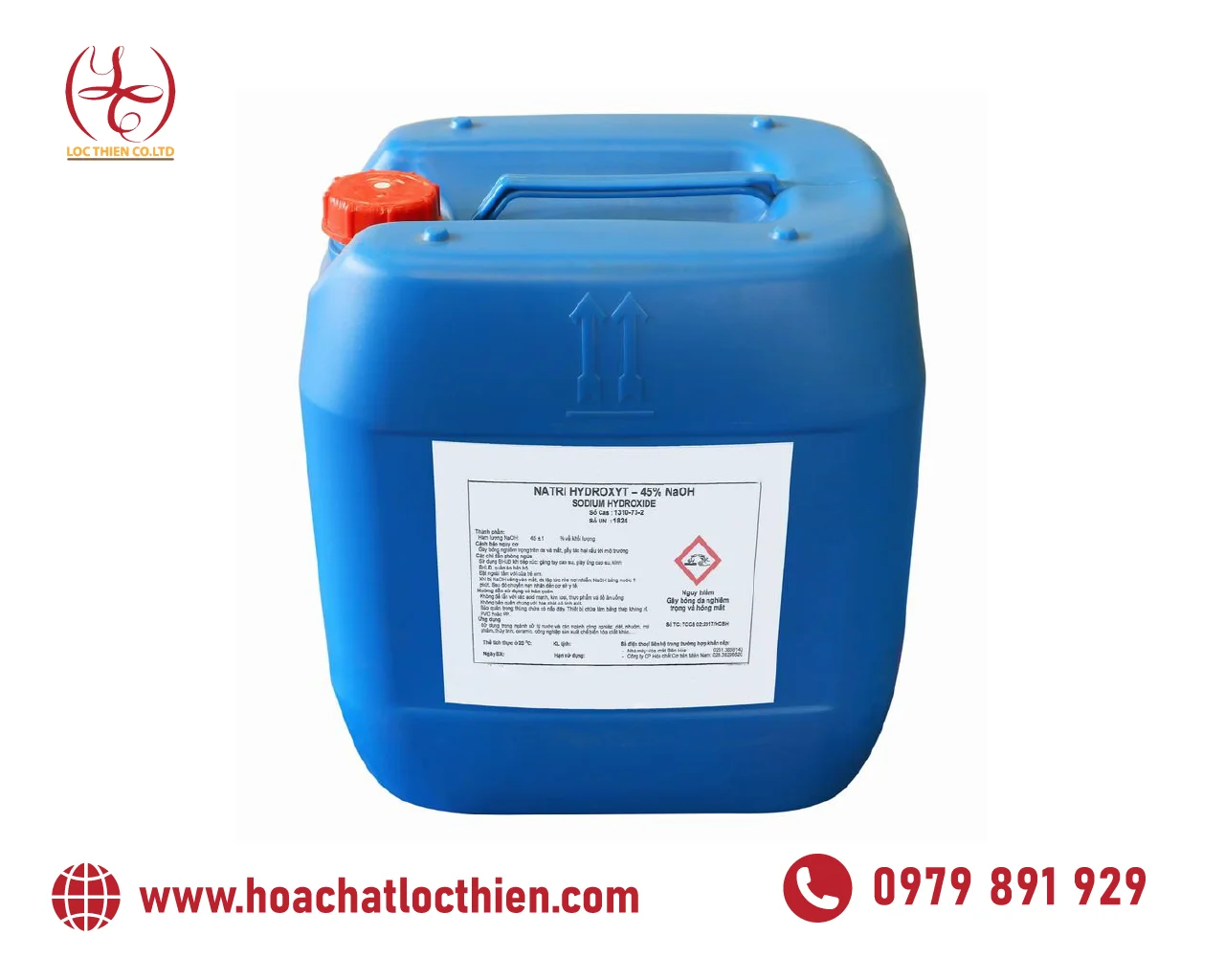
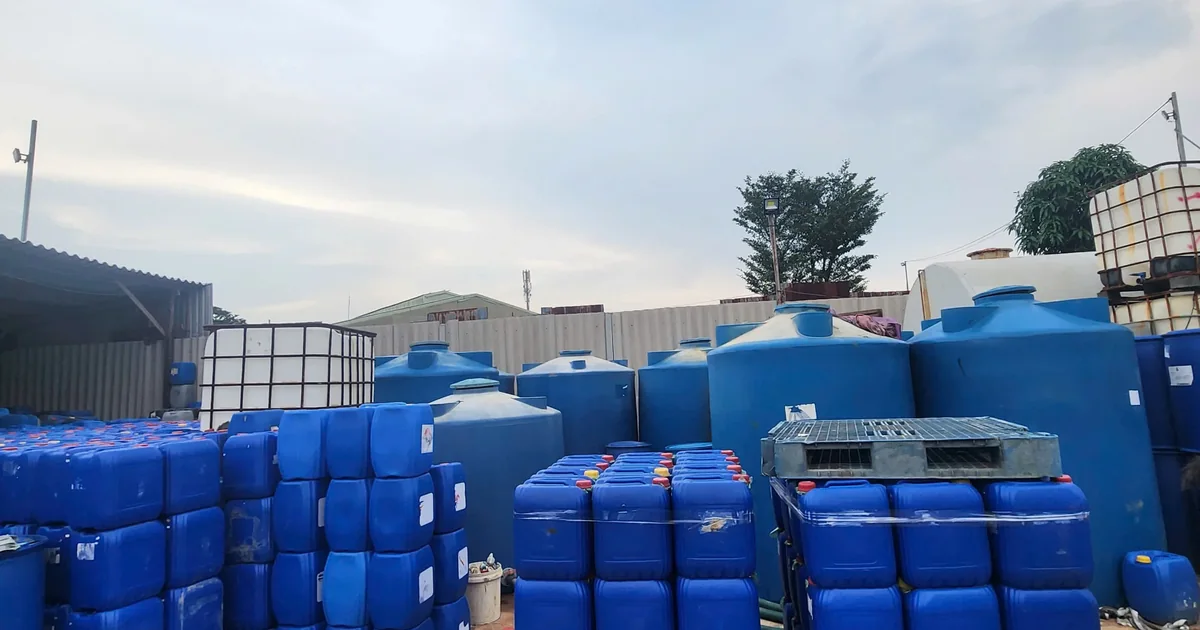 Figure: On-site chemical dosing, storage tank operation, and batch COA inspection — Source: Loc Thien Chemical.
Industrial NaOH Quality Standards
Industrial NaOH quality is evaluated through key parameters per TCVN and manufacturer standards:
| Parameter | 32% NaOH | 50% NaOH | Test Method |
|---|---|---|---|
| NaOH content (% by weight) | 32.0 (nominal) | 50.0 (nominal) | Acid-base titration |
| NaCl | Per batch COA | Per batch COA | Mohr titration |
| Na₂CO₃ | Per batch COA | Per batch COA | Dual-indicator titration |
| Fe | Per batch COA | Per batch COA | AAS / ICP-OES |
| Density at 20°C | 1.348 | 1.52 | Hydrometer |
For stringent applications (pharmaceuticals, food, artificial fibers), NaOH must meet heavy metal (Hg, As, Pb) thresholds below specified limits. Each Loc Thien shipment includes COA and MSDS — factory engineers can directly compare with internal standards before production use.
Loc Thien — Nationwide Industrial NaOH Supplier
- 6-warehouse network: 32% and 50% NaOH available in Ba Ria – Vung Tau, Dong Nai, Binh Duong, Da Nang, Can Tho and Bac Ninh warehouses — reducing delivery time to under 2–3 days for most key industrial zones.
- Specialized tanker fleet: Stainless steel/FRP tanks ensure safe NaOH liquid transport compliant with dangerous goods regulations.
- Batch-specific COA/MSDS: Complete test documentation with each shipment, supporting QA/QC engineers in standard verification.
- Free technical consultation: Supports dosage calculation, storage system design, and NaOH dosing systems for wastewater treatment, boilers, production lines.
Advanced Thermodynamic Energy Balance & Triple-Effect Evaporation Systems
In modern industrial chlor-alkali complexes, membrane electrolyzers output caustic soda at 32–33% concentration. To produce commercial 50% liquid caustic or 98–99% solid flakes, the effluent undergoes energy-intensive thermal concentration:
1. Triple-Effect Falling Film Evaporation Physics
Concentrating 33% NaOH to 50% NaOH requires removing approximately 1.03 tons of water per ton of 50% product:
- First Effect: High-pressure plant steam (4–6 bar) heats the most concentrated fluid (45–50%) inside nickel alloy (Inconel 600 / Nickel 200) heat exchanger tubes to withstand severe caustic embrittlement and stress corrosion cracking.
- Second & Third Effects: Vapor generated from the preceding stage acts as the heating medium for less concentrated brine under progressive vacuum down to 0.15 bar, minimizing primary thermal steam consumption to <0.55 tons steam / ton 50% NaOH.
- Boiling Point Elevation (BPE): At 50% concentration, the boiling point of aqueous NaOH rises to 142°C at atmospheric pressure, demanding vacuum operation to keep operating temperatures below 110°C to protect structural metallurgy.
2. Brine Purification & Membrane Longevity Gateways
High-performance perfluorosulfonic acid membranes (e.g., DuPont Nafion / AGC Flemion) demand high-purity saturated brine (305–315 g/L NaCl):
- Primary Purification: Addition of sodium carbonate (Na2CO3) and barium chloride (BaCl2) precipitates Ca2+ as CaCO3 and SO42- as BaSO4.
- Secondary Ion-Exchange Chelating Resins: Polystyrene aminophosphonic resins reduce hardness ([Ca2+] + [Mg2+]) from 5 ppm down to <20 ppb (0.02 mg/L). Failure to maintain sub-20 ppb hardness causes irreversible calcium hydroxide precipitation inside the membrane matrix, driving cell voltage up by 200–400 mV and destroying membrane selectivity within weeks.
Loc Thien Chemical sources directly from primary manufacturers operating advanced high-purity brine membrane systems, with low salt and low iron content as reported on each batch COA, for demanding industrial synthesis.
Technical Support & B2B Procurement Hotline
Loc Thien Chemical specializes in direct manufacturing of FeCl₂ / FeCl₃ and direct industrial supply of basic chemicals (NaOH, HCl, H₂SO₄, PAC, NaOCl, H₂O₂, FeSO₄) with direct B2B pricing and dedicated 5–30-ton tanker delivery across Vietnam.
- Hotline / Zalo: +84 979 891 929
- Official Email: [email protected]
- Direct Manufacturer: Ferrous Chloride (FeCl₂ 30%) & Ferric Chloride (FeCl₃ 38–40%)
- Primary Supplier: NaOH 32%/45%/50%/99%, HCl 32%, H₂SO₄ 98%, PAC 30–31%, NaOCl 10–12%, H₂O₂ 35%/50%
- Compliance & Quality: FeCl₂ ZDHC MRSL v3.1 test report (Smart testing, 5 substance groups, TUV Rheinland Vietnam), ISO 9001:2015, Quatest 3, Full COA & GHS SDS
Frequently Asked Questions
32% vs 50% liquid NaOH — which to choose for factories?
50% NaOH saves transportation cost per ton of pure NaOH and requires less storage volume. However, 50% NaOH crystallizes below 12°C, needing heated or insulated tanks. Northern factories often choose 32% or 45% rather than 50% to reduce winter crystallization risk: 32% and 45% begin to crystallize at similar temperatures (about 5°C and 6–7°C; a 31–33% batch can start anywhere from about 2 to 8°C), while 50% crystallizes at about 12°C. Reference figures follow the NaOH–H₂O phase diagram and technical literature from caustic soda producers; the actual crystallization point depends on each batch’s concentration per its COA/TDS. Consult Loc Thien engineers to select the optimal type for your operating conditions.
What’s the difference between membrane and diaphragm-produced NaOH?
Membrane NaOH has <50 ppm residual NaCl, while diaphragm product contains ~1% NaCl. For most industrial applications (water treatment, paper, textiles), both meet requirements. Special applications like viscose fiber or high-purity chemical synthesis require membrane NaOH.
Why must 50% NaOH be kept warm during storage?
50% NaOH has a crystallization point around 12°C. Below this temperature, NaOH begins forming solid hydrates that clog pipes, pumps and valves. Storage tanks need insulation or steam/electric heating systems to maintain 20-30°C (follow the guidance of the producer or your system designer), especially in northern plants from November to March.
Can 50% NaOH be diluted to 32% at the factory?
Yes. Mixing 100 kg 50% NaOH with 56.25 kg clean water yields 156.25 kg 32% NaOH. Dilution is strongly exothermic — always add NaOH to water (never reverse), stir continuously, and use heat-resistant containers. If your plant has mixing systems, purchasing 50% NaOH saves transportation costs.
Where does Loc Thien deliver NaOH?
Loc Thien delivers 32% and 50% NaOH to all industrial zones in Binh Duong, Dong Nai, Ho Chi Minh City, Long An, Ba Ria-Vung Tau, Hai Phong, Bac Ninh, Hung Yen. Our tanker fleet ensures 24–48h delivery to Southern industrial parks and 2–3 days to northern factories.
Request 32% & 50% NaOH Quotes
Hotline: 0979 891 929 — quotes within 15 minutes, including sample COA and estimated delivery schedule.
Liquid NaOH pricing is quoted in VND/kg or VND/ton based on your plant’s monthly volume. Submit requests via hotline or email — Loc Thien engineers will recommend the optimal NaOH type and delivery method for your production needs.
LOC THIEN CHEMICAL INVESTMENT & DEVELOPMENT CO., LTD Address: Lot B1-4, Street 3, Tan Dong Hiep B Industrial Park, Di An, Binh Duong Phone: 0979 891 929 Website: hoachatlocthien.com
Industrial Chlor-Alkali Electrolysis Technology: Membrane vs. Diaphragm vs. Mercury
Modern industrial production of Sodium Hydroxide (NaOH) relies primarily on the chlor-alkali process through aqueous brine electrolysis:
Comparative Evaluation of Chlor-Alkali Technologies
- Ion-Exchange Membrane Cell Technology (Standard Modern Practice):
- Mechanism: Perfluorinated cation-exchange membranes (e.g., Nafion) selectively allow Na⁺ ions to migrate from anode to cathode compartment while rejecting Cl⁻ and OH⁻ ions.
- Energy Efficiency: Consumes 2,100–2,400 kWh/ton NaOH, representing a 30–35% energy saving compared to older diaphragm processes.
- Product Purity: Yields 32–35% NaOH directly at cathode with chlorate impurities <10 ppm and salt residue <50 ppm, meeting ultra-stringent electronics and food-grade standards.
- Diaphragm Cell Technology:
- Uses asbestos or non-asbestos composite diaphragms. Output stream contains approximately 12% NaOH and 15% NaCl, requiring intensive triple-effect thermal evaporation to concentrate up to 50%. Residual salt concentration remains high (1.0–1.5%), unsuitable for high-precision synthetic applications.
- Mercury Cell (Castner-Kellner Process):
- Historically delivered 50% NaOH directly via sodium amalgam intermediate; now phased out globally under the UNEP Minamata Convention on Mercury due to severe heavy metal emissions.
Loc Thien Chemical exclusively sources and distributes membrane-cell grade caustic soda (NaOH 32%, 45%, 50%, and 99% flakes/pearls), with low iron and low sodium chloride content as reported on each batch COA, for textile dyeing, electronics PCB, and pulp & paper bleaching processes.
Industrial Field Operation & Batch Quality Verification
1. Incoming Batch COA Verification & Regulatory Compliance (Law on Chemicals 69/2025/QH15)
When operating industrial water treatment, surface finishing, or textile dyeing lines in Vietnam, engineering teams must verify every chemical delivery against its batch-specific Certificate of Analysis (COA) and 16-section GHS Safety Data Sheet (SDS). Under the Vietnam Law on Chemicals No. 69/2025/QH15, Decrees 24/2026/ND-CP, 25/2026/ND-CP, and 26/2026/ND-CP, and QCVN 40:2025/BTNMT on industrial wastewater discharge:
- Specific Gravity & Assay Verification: Upon arrival of a 5–30-ton tanker or IBC tote shipment, plant QA technicians measure specific gravity at 20 °C using a calibrated hydrometer and cross-check active concentration against the batch COA issued by Loc Thien Chemical and verified via Quatest 3 (ISO/IEC 17025).
- Impurity & Heavy Metal Control: Trace heavy metals (Fe, Pb, As, Hg, Cd, Cr⁶⁺) and insoluble matter are strictly controlled to prevent catalyst poisoning in Fenton reactors, membrane fouling in RO/UF systems, or shade deviations in reactive textile dyeing.
- ZDHC MRSL v3.1 Level 1 Portfolio Boundary: For export-oriented textile and footwear FDI factories, Loc Thien Chemical maintains official ZDHC MRSL v3.1 Conformance Level 1 documentation for exactly 9 core products: four products certified by TUV SUD Product Service GmbH (
NaOH,H2O2,Na2SO4,Na2CO3) and five products verified via Conformance Summary Report (CSR) and Analytical Test Report by TUV Rheinland Vietnam (H2SO4,FeCl2,HCl,Javel/NaOCl,PAC 31%).
| Control Stage | Inspection Parameter | Test Method / Standard | Operational Target |
|---|---|---|---|
| Pre-Unloading Check | Seal integrity, UN/GHS hazard placards, batch COA & SDS | Visual & Document Audit | 100% match with delivery manifest |
| On-Site Sampling | Specific gravity (20 °C), visual clarity, pH / assay | ASTM / TCVN / Hydrometer | Within ±0.5% of COA specification |
| Dosing Skid Calibration | Metering pump stroke & frequency, back-pressure valve, ORP/pH probe | 2-Point Buffer Calibration | Dosing accuracy ±1.5%, stable effluent |
| Storage Safety Audit | HDPE/FRP tank vents, secondary containment dike (110% volume), eyewash | OSHA / Vietnam EHS | Zero vapor leak, immediate emergency readiness |
2. Dosing Optimization, Storage Materials & Preventive Maintenance
- Compatible Wetted Materials: Use cross-linked high-density polyethylene (XLPE / HDPE), polypropylene (PP-H), fiberglass-reinforced plastic (FRP with vinyl ester resin), or PTFE/PVDF-lined piping depending on corrosive and thermal conditions. Avoid unlined carbon steel or incompatible elastomers.
- Automated Dosing Control: Integrate diaphragm metering pumps with real-time pH, ORP (mV), turbidity, or conductivity sensors. Always perform a 5-beaker Jar Test whenever raw water COD, TSS, or alkalinity shifts by more than 15%.
- Secondary Containment & PPE: Storage tanks must sit inside an acid/alkali-resistant bund wall holding at least 110% of the largest tank volume. Operators handling unloading hoses must wear splash-proof chemical goggles, acid/alkali-resistant nitrile or neoprene gloves, face shields, and emergency respirators.
3. Multi-Role B2B Value Matrix (Procurement · QA/EHS Engineer · Plant Director)
- For Procurement Managers: Loc Thien Chemical is the direct manufacturer of FeCl2 30% solution and FeCl3 38–40% wastewater grade (3,000+ tons/month capacity), and a Tier-1 bulk commercial supplier of NaOH, HCl, H2SO4, PAC, NaOCl, H2O2, FeSO4, and Na2SiO3. Pricing is transparently structured around 5 technical cost drivers (active assay, packaging format, delivery distance from our 6 warehouses, order volume, and scheduled contract cadence) with a 15-minute technical quotation SLA.
- For Environmental & Process Engineers: Full technical support for Jar Test optimization, stoichiometry calculation, sludge minimization, and QCVN 40:2025/BTNMT compliance auditing.
- For FDI Plant Directors: Guaranteed supply continuity via 6 regional warehouses (Ba Ria - Vung Tau, Dong Nai, Binh Duong, Da Nang, Can Tho, Bac Ninh) and a dedicated 5–30-ton tanker fleet (4 hours in inner HCMC, 24–48 hours across Southern & Mekong Industrial Parks, 2–3 days in Northern & Central Vietnam).
4. Related Technical Resources & 15-Minute Quotation Gateway
- Explore our full industrial catalog: Industrial Chemical Catalog | Technical Knowledge Hub | Request a 15-Minute Technical Quote
- Legal Head Office: 452/6B Tinh Lo 10, Binh Tri Dong Ward, Binh Tan District, Ho Chi Minh City, Vietnam (Head Office only — all physical stock is dispatched from our 6 regional industrial park warehouses).
- 24/7 Technical Hotline: 0979 891 929 (Please contact hotline 0979 891 929 for detailed delivery procedures) | Official Email: [email protected]
Transparent 5-Factor B2B Cost Structure & Supply Chain Optimization in Vietnam
Under Loc Thien Chemical’s transparent B2B commercial policy, unit chemical pricing is never published as a static retail figure online; instead, every formal quotation is engineered within 15 minutes around five verifiable cost drivers:
- Active Assay & Grade Specification: Concentration levels (such as 32% / 45% / 50% liquid NaOH vs. 99% pearls, or industrial vs. ZDHC-compliant grades) directly determine the active molar equivalent delivered per metric ton.
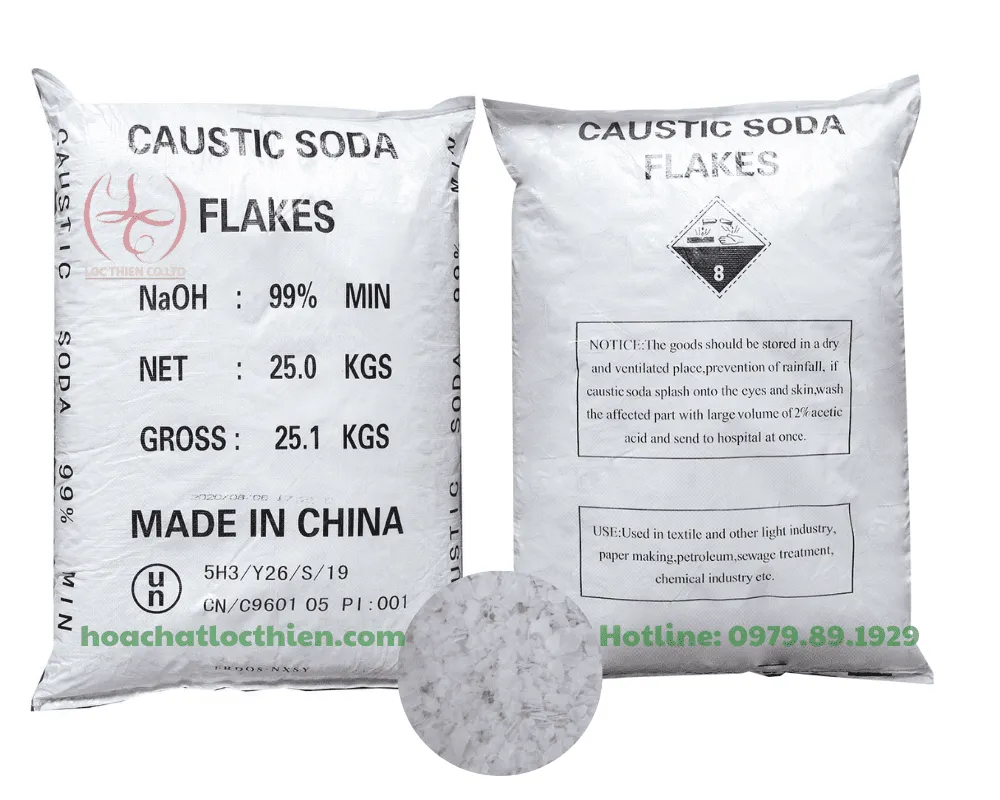
- Packaging & Bulk Delivery Mode: Bulk delivery via dedicated 5–30-ton corrosion-resistant tankers eliminates drum handling and minimizes per-ton logistics cost; 1,000 L IBC totes, 200 L drums, and 25 kg woven bags are also stocked.
- Dispatch Distance from Our 6 Regional Warehouses: Orders are routed from the nearest hub (Ba Ria - Vung Tau, Dong Nai, Binh Duong, Da Nang, Can Tho, or Bac Ninh) to cut freight lead time and carbon footprint.
- Order Volume & Annual Blanket Contracts: Scheduled monthly call-off contracts lock in priority safety stock and volume-tiered commercial terms, insulating factories from raw material spot volatility.
- Batch Documentation & FDI Compliance Package: Every delivery includes a batch-specific COA, 16-section GHS SDS, and—for our 9 certified core textile/footwear chemicals—official ZDHC MRSL v3.1 Conformance Level 1 documentation.
Engineering Cost-Per-Equivalent Evaluation, Dilution Thermodynamics & Foolproof Unloading
Industrial procurement and process engineers should evaluate chemicals based on total treatment cost per kilogram of pollutant removed (COD, Total Phosphorus, Cr⁶⁺) or per kilomole of active reagent (H⁺, OH⁻, Fe²⁺, Fe³⁺, Al₂O₃) rather than nominal price per kilogram of solution:
- Real-Time Specific Gravity Cross-Checking: Operators should verify solution specific gravity at 20 °C each shift using a calibrated hydrometer to compensate for seasonal temperature shifts or moisture absorption.
- Exothermic Dilution Safety: When diluting concentrated sulfuric acid or dissolving caustic soda pearls, always add chemical slowly into cooled water under continuous mechanical agitation inside a heat-resistant PP-H or FRP mixing vessel.
- Dual-Lock Poka-Yoke Unloading Manifolds: Color-coded, padlocked camlock manifolds requiring joint sign-off by the tanker driver and plant EHS officer prevent accidental cross-mixing of acids with sodium hypochlorite (Javen) or alkalis.
Regulatory Compliance Under Vietnam Law on Chemicals 69/2025/QH15 & QCVN 40:2025/BTNMT
FDI manufacturers operating across Vietnamese industrial parks face tightened environmental and chemical safety audits under the updated 2025–2026 regulatory framework:
- Chemical Lifecycle Traceability (Law No. 69/2025/QH15 & Decrees 24–26/2026/ND-CP): Facilities must maintain auditable supplier licenses, dangerous-goods transport permits, and bilingual 16-section GHS Safety Data Sheets.
- Strict Effluent Limits (QCVN 40:2025/BTNMT): The national industrial wastewater standard enforces stringent limits on Total Phosphorus, Total Nitrogen, color, COD, and heavy metals. Using high-purity, low-heavy-metal reagents from a verified manufacturer/supplier prevents secondary contamination.