Sodium Hypochlorite (Javel NaOCl 10% – 12%) Concentration Lookup Table to Available Chlorine (ppm) & Disinfection Dosing Formulas
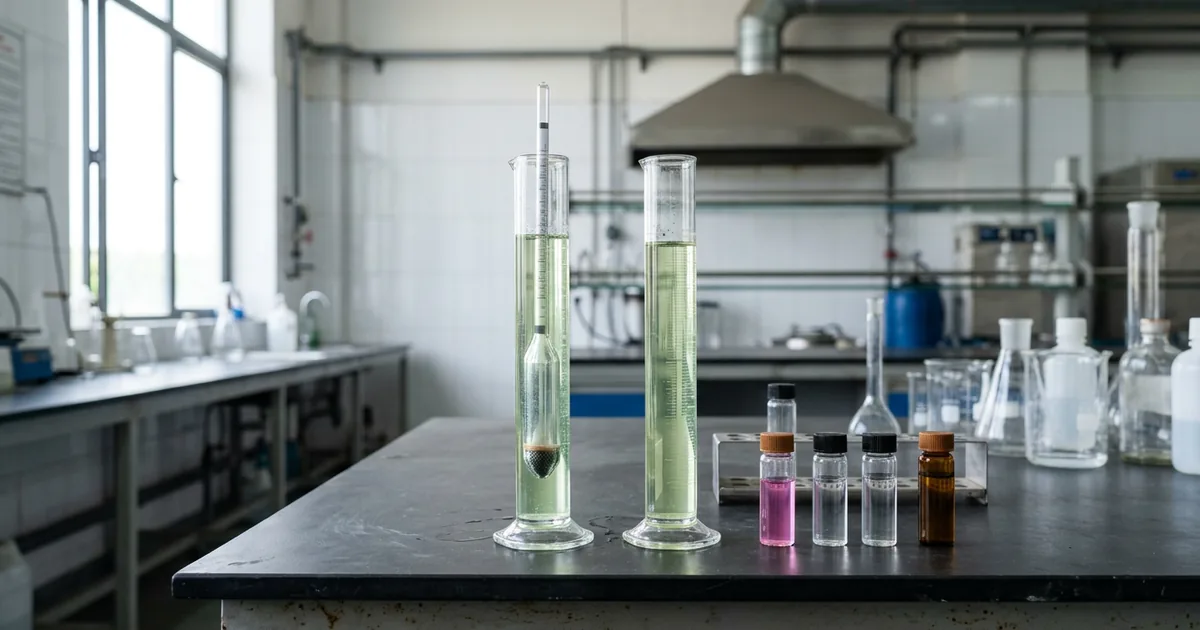
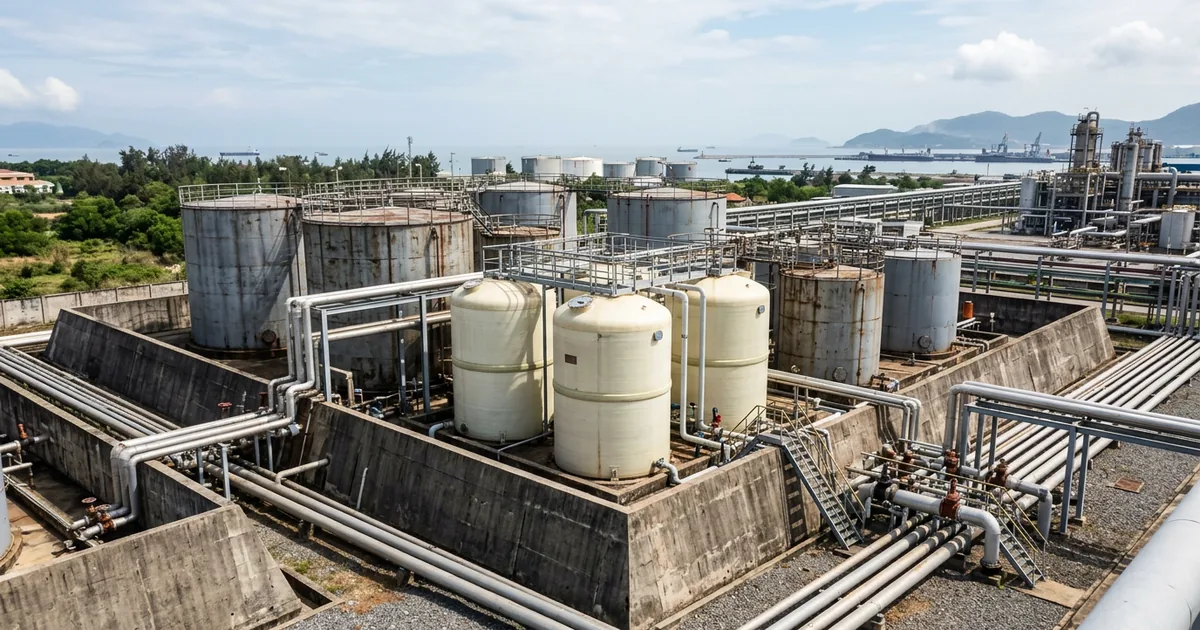
Key Technical Summary: In municipal water treatment plants, industrial wastewater disinfection chambers, and cooling towers, commercial Sodium Hypochlorite (Javel solution NaOCl 10%–12%) is dosed on the basis of Available Chlorine (oxidizing equivalence compared to elemental Cl2 gas, M = 70.91 g/mol vs NaOCl M = 74.44 g/mol, where 1.00% w/w NaOCl equals 0.9525% w/w Available Chlorine). Because commercial Javel has a specific gravity of 1.14–1.21 g/cm3 at 20 °C, one liter of 10%–12% solution delivers 110.5 to 143.5 g of Available Chlorine (110,500–143,500 mg/L or ppm). To maintain a target Free Residual Chlorine of 0.3–1.0 mg/L at the contact tank outlet, operators must apply accurate concentration conversion tables, control water pH between 6.5 and 7.5 to maximize undissociated Hypochlorous Acid (HOCl, which is 80–100 times more bactericidal than OCl-), and use auto-degassing pump heads to prevent oxygen vapor lock. In Vietnam, Loc Thien Chemical (Tax ID: 0313650856) supplies industrial chemicals in bulk from 6 strategic industrial park warehouses (Ba Ria - Vung Tau, Dong Nai, Binh Duong, Da Nang, Can Tho, Bac Ninh) via a dedicated 5–30-ton tanker fleet with batch-specific COA and 16-section GHS SDS — contact hotline 0979 891 929 for a technical quote within 15 minutes.
Table of contents
In municipal waterworks, industrial park central effluent treatment plants (CETPs), textile bleaching houses, and open-recirculating cooling water circuits, accurately converting commercial Sodium Hypochlorite NaOCl 10% – 12% (Javel Solution) concentrations into volumetric g/L and ppm Available Chlorine directly governs microbial disinfection compliance (Coliform ≤ 3,000–5,000 MPN/100 mL under Vietnam National Technical Regulation QCVN 40:2025/BTNMT) as well as chemical dosing economy. Because one mole of NaOCl (M = 74.44 g/mol) exchanges two electrons in redox reactions—equivalent to one mole of diatomic Chlorine gas Cl₂ (M = 70.91 g/mol, conversion ratio 1.00 g NaOCl = 0.9525 g Cl₂)—and commercial solutions exhibit a specific gravity of SG = 1.14–1.21 kg/L at 20 °C, each liter of 10%–12% Javel delivers 110.5 to 143.6 g of Available Chlorine (110,500 – 143,600 mg/L or ppm). Below is the complete engineering conversion reference, iodometric quality-control protocol, pH speciation kinetics, and anti-vapor-lock metering pump design compiled by Loc Thien Chemical.
1. Electrochemistry of “Available Chlorine” & pH-Dependent HOCl / OCl⁻ Speciation
1.1. Disproportionation Synthesis & Two-Electron Redox Equivalence
Industrial Sodium Hypochlorite is manufactured by absorbing elemental Chlorine gas (Cl₂) into chilled, agitated Liquid Caustic Soda (NaOH 32%) inside titanium or PVDF-lined absorption towers maintained strictly below 30–35 °C to prevent thermal chlorate formation:
- Industrial Synthesis Reaction:
Cl₂ + 2NaOH → NaOCl + NaCl + H₂O(ΔH = -103 kJ/mol, strongly exothermic)
Although a single formula unit of Sodium Hypochlorite (NaOCl, molar mass M = 74.44 g/mol) contains only 1 Chlorine atom in the +1 oxidation state (Cl⁺), when it participates in bactericidal oxidation, ammonia breakpoint chlorination, or cyanide destruction, that Cl⁺ center accepts 2 electrons to reduce to a Chloride ion Cl⁻ (-1 oxidation state):
- Half-Reaction of Hypochlorite Ion:
OCl⁻ + H₂O + 2e⁻ → Cl⁻ + 2OH⁻(E° = +0.89 Vin alkaline media;HOCl + H⁺ + 2e⁻ → Cl⁻ + H₂O,E° = +1.482 Vin acidic/neutral media) - Half-Reaction of Elemental Chlorine Gas:
Cl₂ + 2e⁻ → 2Cl⁻(E° = +1.358 V)
Because 1 mole of NaOCl (74.44 g) provides the exact same two-electron oxidizing capacity as 1 mole of Cl₂ gas (70.91 g), international standards (AWWA B300, ASTM E1229, and TCVN) express the active strength of liquid bleach in terms of Available Chlorine (Active Chlorine Equivalent):
- Gravimetric Equivalence Factor:
1.000 g pure NaOCl = 70.91 ÷ 74.44 = 0.9525 g Available Chlorine (as Cl₂) - Inverse Conversion Factor:
1.000 g Available Chlorine (as Cl₂) = 74.44 ÷ 70.91 = 1.0498 g NaOCl - Volumetric Conversion Equations (at
20 °C, Specific GravitySGing/cm³orkg/L):- Heavy Baume (
°Be) ↔ Specific Gravity (SG > 1.0):SG = 145 ÷ (145 - °Be)and°Be = 145 - (145 ÷ SG) - Volumetric Available Chlorine (
g Cl₂/Lor% w/v × 10):C_vol (g/L) = C_wt (% w/w Available Cl₂) × SG × 10(orC_wt (% w/w NaOCl) × 0.9525 × SG × 10) - Parts Per Million Available Chlorine (
ppmormg Cl₂/L):C_ppm (mg/L) = C_vol (g/L) × 1,000
- Heavy Baume (
1.2. pH-Dependent Hydrolysis Equilibrium Between HOCl and OCl⁻ in Water
When Sodium Hypochlorite is metered into a disinfection contact chamber, the salt dissociates completely and establishes a rapid, reversible hydrolysis and acid-dissociation equilibrium governed by pKa = 7.53 at 25 °C (K_a = 2.95 × 10⁻⁸):
- Hydrolysis Reaction:
NaOCl + H₂O ⇌ HOCl (Hypochlorous Acid) + Na⁺ + OH⁻ - Bactericidal Dissociation Equilibrium:
HOCl ⇌ H⁺ + OCl⁻ (Hypochlorite Ion)(pKa = 7.53at25 °C) - Fraction of Active
HOClas a Function ofpH:f_HOCl = 1 ÷ [1 + 10^(pH - 7.53)]
From a microbiological perspective, electrically neutral Hypochlorous Acid (HOCl) has a low molecular weight and zero net charge, allowing it to diffuse effortlessly across the negatively charged phospholipid bilayer of pathogenic bacteria (Escherichia coli, Coliforms, Salmonella, Legionella pneumophila) to oxidize sulfhydryl (-SH) enzyme groups and halt cellular respiration. In contrast, the negatively charged Hypochlorite ion (OCl⁻) is electrostatically repelled by the bacterial cell wall, making HOCl 80 to 100 times more lethal to microorganisms than OCl⁻.
Contact Basin Water pH | Active HOCl Fraction (%) | Weak OCl⁻ Fraction (%) | Disinfection Kinetics, CT Requirement & Operational Risk Assessment |
|---|---|---|---|
pH = 5.5 | 99.1% | 0.9% | Extremely rapid kill rate, but elevated risk of corrosive Cl₂ gas evolution if local pH drops below 4.5. |
pH = 6.5 | 91.5% | 8.5% | Optimal disinfection window for potable waterworks and secondary biological effluent polishing. |
pH = 7.0 | 77.3% | 22.7% | Standard industrial operating target, balancing rapid bacterial inactivation with minimal pipe corrosion. |
pH = 7.5 | 51.7% | 48.3% | Near the pKa midpoint (7.53); germicidal velocity drops by nearly half, requiring a minimum 30-minute contact time. |
pH = 8.0 | 25.3% | 74.7% | Three-quarters of free chlorine exists as sluggish OCl⁻; chemical dosage must be increased by 2.5–3.0× for equal kill. |
pH = 9.0 | 3.3% | 96.7% | Negligible bactericidal speed; suitable only for cotton textile bleaching, alkaline CIP, or Cyanide (CN⁻ → CNO⁻) oxidation. |
2. Standard Conversion Table: Javel NaOCl (6% – 12.5%) to g/L & ppm Available Chlorine
Engineering Note: Commercial Sodium Hypochlorite contains equimolar sodium chloride (NaCl) from the synthesis reaction plus 0.5%–1.2% w/w residual free caustic (NaOH) added as a pH stabilizer (pH 12.2–13.0). Consequently, hydrometer (SG / °Be) readings serve as a rapid receiving check, while exact Available Chlorine assay for COA verification is determined via iodometric titration (AWWA B300).
Table 1: Specific Gravity, Baume, NaOCl % w/w, and Available Chlorine (g/L & ppm) at 20 °C
| Commercial Grade (Trade Label) | Specific Gravity at 20 °C (SG, g/cm³) | Baume Degree (°Be at 20 °C) | Mass Concentration (% w/w NaOCl / Trade %) | Volumetric Available Chlorine (g Cl₂/L Basis NaOCl / Trade) | Equivalent Available Chlorine in ppm (mg Cl₂/L) | Volume of Javel per 1 m³ Water for 1.0 ppm Cl₂ Dose (mL/m³) |
|---|---|---|---|---|---|---|
Javel 6.0% (Light Sanitizing / CIP) | 1.095 | 12.6 °Be | 6.0% | 62.6 – 65.6 g/L | 62,600 – 65,640 ppm | 15.2 – 16.0 mL / m³ |
Javel 8.0% (Municipal & General WWTP) | 1.126 | 16.2 °Be | 8.0% | 85.7 – 90.1 g/L | 85,700 – 90,080 ppm | 11.1 – 11.7 mL / m³ |
Javel 10.0% (Industrial Standard) | 1.160 | 20.0 °Be | 10.0% | 110.5 – 116.0 g/L | 110,500 – 116,000 ppm | 8.62 – 9.05 mL / m³ |
Javel 11.0% (High-Strength WWTP & Cyanide) | 1.178 | 21.9 °Be | 11.0% | 123.4 – 129.6 g/L | 123,400 – 129,580 ppm | 7.72 – 8.10 mL / m³ |
Javel 12.0% (FDI / ZDHC Grade) | 1.196 | 23.8 °Be | 12.0% | 136.7 – 143.5 g/L | 136,700 – 143,520 ppm | 6.97 – 7.32 mL / m³ |
Javel 12.5% (Commercial Max Saturation) | 1.206 | 24.8 °Be | 12.5% | 143.6 – 150.8 g/L | 143,600 – 150,750 ppm | 6.63 – 6.96 mL / m³ |
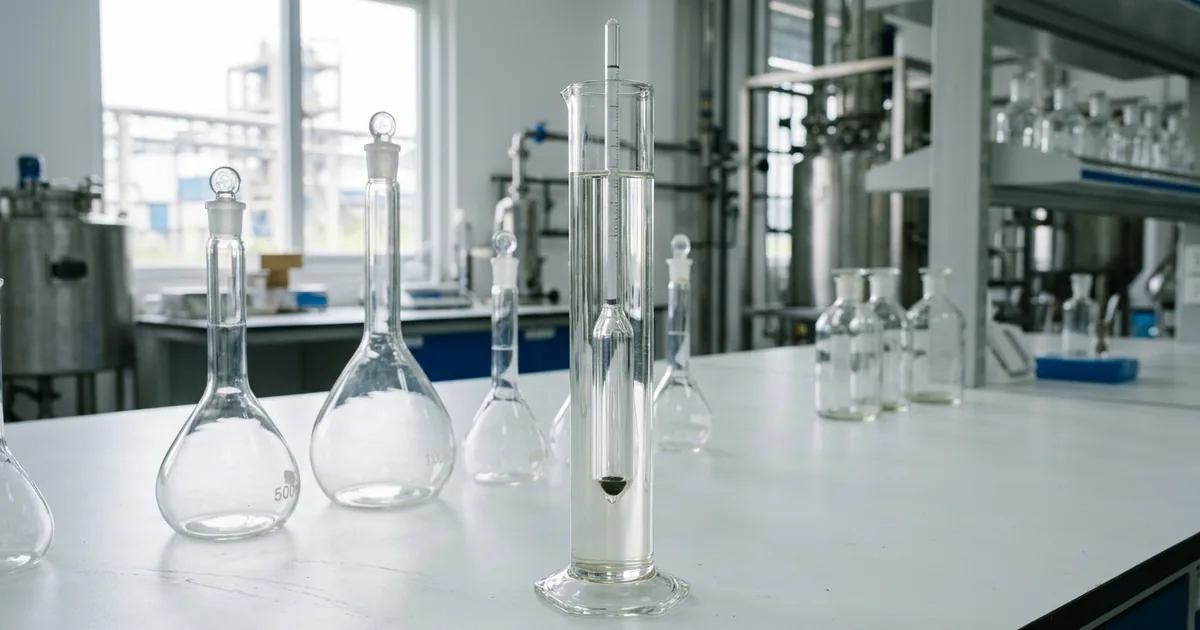
Laboratory Iodometric Titration Protocol (AWWA B300 / Incoming QC Verification in 5 Minutes)
To verify batch concentration independent of dissolved salt density interference, Incoming Quality Control (IQC) laboratories execute a standard four-step iodometric titration:
- Volumetric Dilution (
D = 25): Pipette exactly10.0 mLof commercial NaOCl sample (simultaneously recordingSGat20 °C) into a250 mLvolumetric flask and dilute to the mark with deionized water. - Acidification & Potassium Iodide Oxidation: Transfer
10.0 mLof the diluted aliquot into a250 mLErlenmeyer flask containing50 mLdeionized water, add10 mLof10%Potassium Iodide (KI) solution and10 mLof30%glacial acetic acid (CH₃COOH). Hypochlorite quantitatively oxidizes iodide to amber-brown elemental iodine (OCl⁻ + 2I⁻ + 2H⁺ → I₂ + Cl⁻ + H₂O). - Thiosulfate Titration to Starch Endpoint: Titrate with standardized
0.1000 NSodium Thiosulfate (Na₂S₂O₃) until pale straw-yellow, add2 mLof1%soluble starch indicator (turning deep blue-black), and continue dropwise until the blue color disappears completely (I₂ + 2S₂O₃²⁻ → 2I⁻ + S₄O₆²⁻). Record titrant volumeV(mL). - Calculation:
Volumetric Available Chlorine C_vol (g Cl₂/L) = (V × 0.1000 × 35.453 × 25) ÷ 10.0 = V × 8.863.
3. Dosing Pump Flow Rate Equations, Breakpoint Chlorination & Worked Engineering Examples
3.1. Direct Metering Pump Flow Rate Formula (L/h)
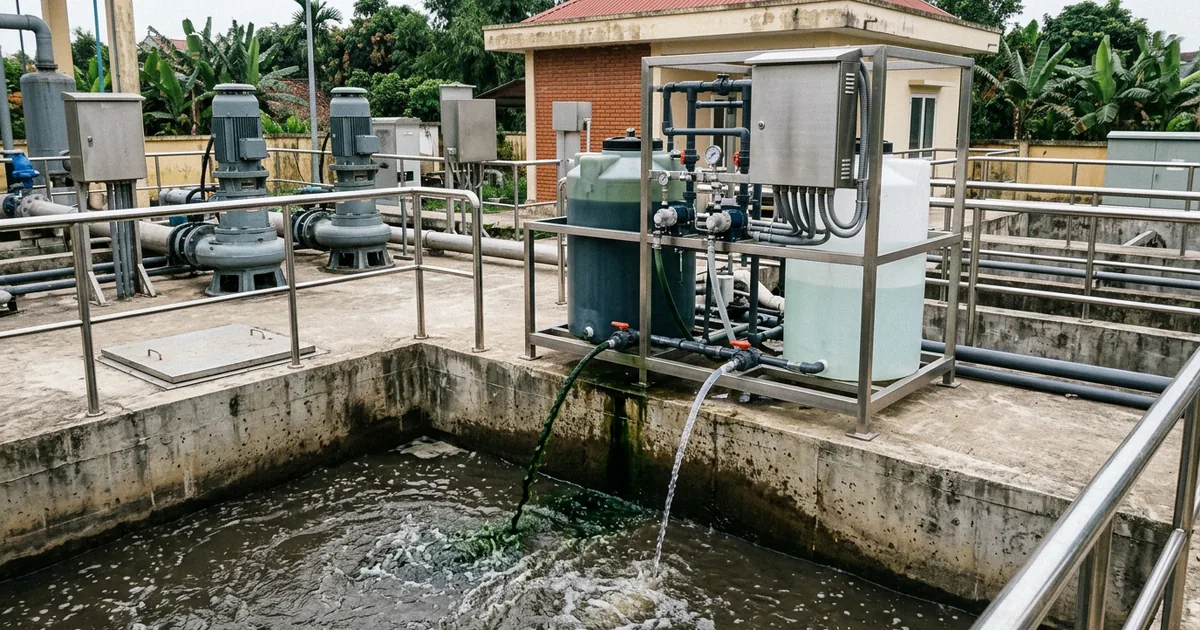
When dosing commercial Sodium Hypochlorite directly from a storage tank into a contact chamber or static mixer handling a water flow rate Q (m³/h), the required metering pump flow rate Q_pump (L/h) is calculated by mass balance:
- Master Metering Pump Equation:
Q_pump (L/h) = [Water Flow Q (m³/h) × Target Chlorine Dose C_dose (mg/L or ppm)] ÷ Available Chlorine C_Javel (g Cl₂/L) - Total Chlorine Dose Definition:
C_dose (mg/L) = Immediate Chlorine Demand (Fe²⁺, Mn²⁺, H₂S, NO₂⁻, BOD/COD) + Target Free Residual Chlorine at Basin Outlet (0.3 – 1.0 mg/L after 30 min).- Deep Groundwater / Municipal Potable Water:
C_dose = 1.5 – 3.0 mg/L (ppm)(maintaining0.3–0.5 mg/Lresidual in distribution mains). - Open-Loop Cooling Tower Recirculation Water:
C_dose = 3.0 – 5.0 mg/L (ppm)shock dose or0.5–1.0 mg/Lcontinuous free residual against Legionella and biofouling slime. - Secondary Biological Wastewater Effluent (Industrial Park CETP):
C_dose = 5.0 – 10.0 mg/L (ppm)(Coliform ≤ 3,000 MPN/100 mLunderQCVN 40:2025/BTNMT). - Textile Dyeing / Seafood Processing Effluent Containing Residual Ammonia:
C_dose = 10.0 – 25.0 mg/L (ppm).
- Deep Groundwater / Municipal Potable Water:
3.2. Worked Engineering Examples (Technical Illustrations)
Technical Illustration 1 — Disinfection Dosing for a 2,400 m³/day Industrial Wastewater Plant: A central wastewater treatment plant operates at a steady flow rate of
Q = 2,400 m³/day(100 m³/h). Laboratory jar-test demand on secondary clarifier effluent indicates a30-minuteChlorine Demand of6.2 mg/L, and environmental discharge compliance requires maintaining0.8 mg/LFree Residual Chlorine at the outfall monitoring trench (Coliform ≤ 1,000 MPN/100 mL).
- Required Active Chlorine Dosage (
C_dose):6.2 + 0.8 = 7.0 mg/L(7.0 g Cl₂/m³).- Hourly Active Chlorine Mass Consumption:
100 m³/h × 7.0 g/m³ = 700 g Cl₂/h(16.8 kg Cl₂/day).- Metering Pump Setting Using Commercial Javel
10%(C_Javel = 110.5 g Cl₂/Lon NaOCl basis, or116.0 g/Lon trade Cl₂ basis,SG = 1.16 kg/L):
Q_pump = 700 g/h ÷ 110.5 g/L = 6.335 L/h(152.0 L/dayor176.4 kg Javel 10%/day; at116.0 g/L,Q_pump = 6.034 L/h).- Equipment Selection: Specify a PVDF-head, PTFE-diaphragm metering pump with an auto-degassing valve rated at
10 L/hor15 L/hmaximum capacity (operating at42%–63%stroke/frequency for optimal linear repeatability).
Technical Illustration 2 — Breakpoint Chlorination for Residual Ammonia-Nitrogen (
NH₄⁺-N) Polishing: When biological nitrification leaves residual ammonium (8–12 mg/L NH₄⁺-N) slightly above the strict receiving-water limit, Sodium Hypochlorite can be dosed past the breakpoint to oxidizeNH₄⁺-Ninto harmless diatomic Nitrogen gas (N₂↑):
- Stoichiometric Breakpoint Reaction:
2NH₄⁺ + 3HOCl → N₂↑ + 3H₂O + 5H⁺ + 3Cl⁻- Mass Ratio (
Cl₂ : NH₄⁺-N): Theoretically3 × 70.91 ÷ (2 × 14.01) = 7.60 mg Cl₂per1.0 mg NH₄⁺-N. Accounting for competing organic demand, practical plant design uses8.5 : 1 to 10.0 : 1(kg Cl₂ per kg NH₄⁺-Nremoved).- Alkalinity Compensation: Because the reaction releases
5 molesofH⁺(consuming 7.14 kg CaCO₃ alkalinity per kg NH₄⁺-N oxidized), co-dosing Liquid Caustic Soda (NaOH 32%) is required to hold reaction basin pH at7.0–7.5, maximizing reaction speed while preventing pungent Nitrogen Trichloride (NCl₃) formation belowpH 6.0.
Technical QC Insight — Specialist Phan Cam Thuy (Quality Control Lab — Loc Thien Chemical): “Across our bulk tanker deliveries of
NaOCl 10%–12%to industrial zones, chlorate disproportionation (3NaOCl → 2NaCl + NaClO₃) is governed by free residual alkali (NaOH = 0.5% – 1.2% w/w, maintainingpH ≥ 11.8) and transition metal trace limits (Fe < 2.0 ppm,Ni/Cu < 0.5 ppm). Before unloading into plant HDPE tanks, utility engineers should verify20 °Cspecific gravity (SG = 1.155 – 1.190 g/cm³) and free alkali on the batch COA to keep available chlorine decay below0.08%/dayeven in tropical ambient conditions.”
4. Decomposition Kinetics, Storage Half-Life & Preventing Metering Pump “Vapor Lock”
Sodium Hypochlorite solutions are thermodynamically metastable at ambient temperatures. Above 30 °C, under direct solar UV irradiation (290–350 nm), or when contaminated with sub-ppm traces (≥ 0.5 mg/L) of transition metal ions (Ni²⁺, Cu²⁺, Co²⁺, Fe³⁺), NaOCl degrades rapidly via two competing pathways:
- Second-Order Chlorate Disproportionation (Primary Pathway,
85%–90%of loss):3OCl⁻ → ClO₃⁻ + 2Cl⁻. The reaction rate increases3.0 to 3.5 timesfor every10 °Crise in storage temperature, consuming active chlorine without evolving gas and accumulating regulated Chlorate (ClO₃⁻) ions. - Catalytic Oxygen Evolution (Secondary Pathway, Causes Vapor Lock & Drum Bulging):
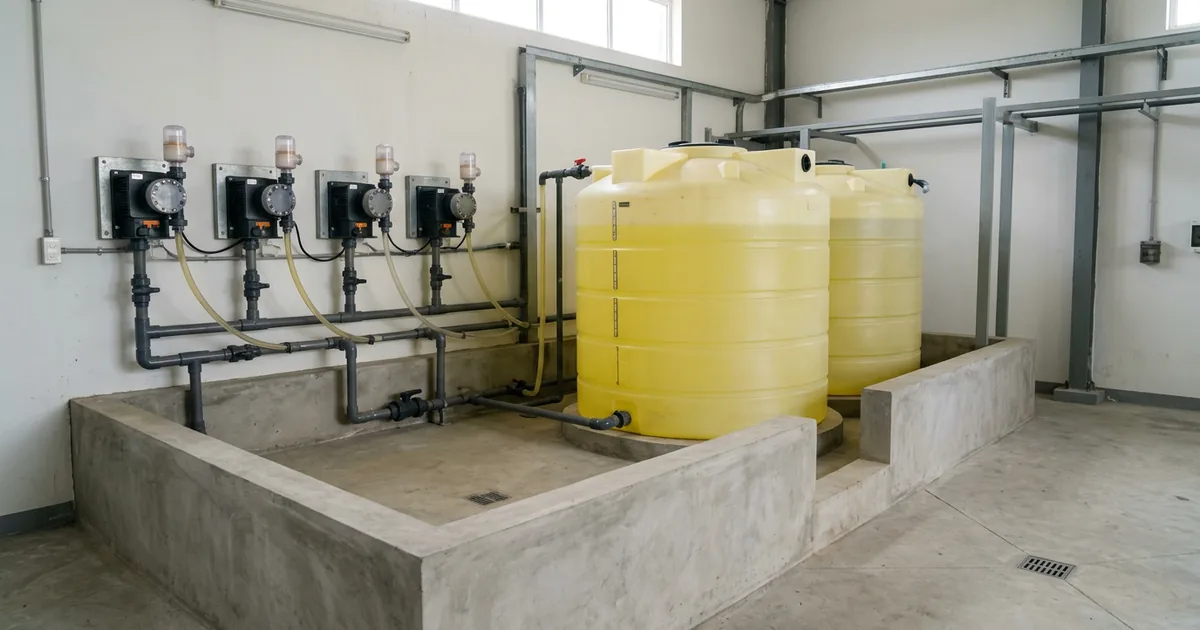
2OCl⁻ → 2Cl⁻ + O₂↑. Micro-bubbles of oxygen gas nucleate inside the suction line under negative lift pressure and collect inside the diaphragm pump chamber. Because gas is compressible, each forward stroke of the PTFE diaphragm merely compresses the trappedO₂pocket without generating enough hydraulic pressure to lift the discharge ball check valve—resulting in Vapor Lock (Air-Binding) where the pump motor runs continuously but delivers zero liquid.
Table 2: Thermal Decomposition Half-Life of Industrial NaOCl Solutions & Recommended Inventory Turnover
Initial Volumetric Strength (% w/w Equivalent) | Storage Half-Life at 20 °C (Climate Controlled) | Storage Half-Life at 30 °C (Shaded Tropical Warehouse) | Storage Half-Life at 40 °C (Unshaded Outdoor Sun Exposure) | Recommended Plant Inventory Turnover Cycle |
|---|---|---|---|---|
140 g/L (~12% w/w) | ~180 days | ~45 days | ≤ 12 days (~0.4%/day loss in first week) | 7 – 14 days |
116 g/L (~10% w/w) | ~320 days | ~85 days | ~24 days | 14 – 25 days |
90 g/L (~8% w/w) | ~600 days | ~160 days | ~48 days | 25 – 35 days |
65 g/L (~6% w/w) | > 800 days | ~260 days | ~75 days | 30 – 45 days |
Mandatory Engineering Controls for NaOCl Storage Tanks & Metering Pumps
- Zero Metallic Wetted Parts: Never use carbon steel, stainless steel (
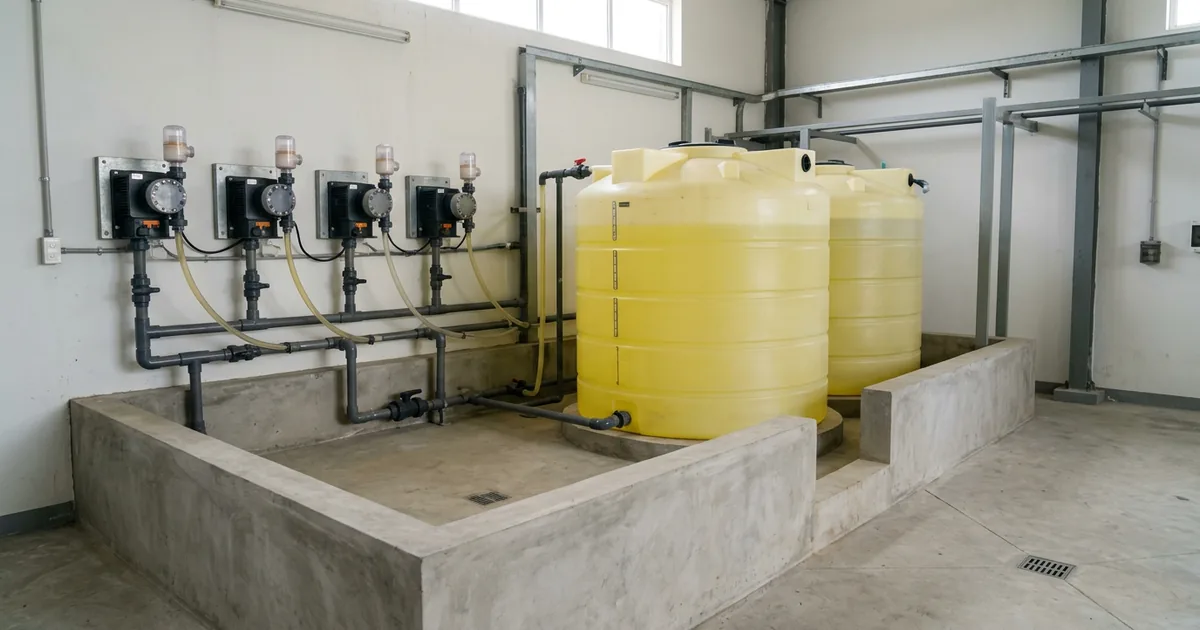
SUS304 / SUS316), brass, or aluminum in contact with NaOCl (both corrode rapidly and leachFe³⁺/Ni²⁺/Cu²⁺ions that catalyze explosiveO₂off-gassing). Specify UV-stabilized opaque HDPE, uPVC / CPVC, PVDF, or PTFE-lined piping with EPDM or Viton (FKM) gaskets. - Flooded Suction & Auto-Degassing Pump Heads: Mount dosing pumps below the minimum liquid level of the storage tank (Flooded Suction) with short, upward-sloping suction lines (
< 1.5 m) and equip all diaphragm pumps with Auto-Degassing Valve Heads vented back to the top of the storage tank. - 100% Isolated Secondary Containment Dike: Per the GHS 16-Section MSDS for Sodium Hypochlorite,
NaOCltanks must never share a containment bund with acids (HCl,H₂SO₄) or acidic coagulants (FeCl₃,FeCl₂,PAC), as accidental mixing belowpH 4.0instantaneously liberates lethal yellow-green Chlorine gas (NaOCl + 2HCl → Cl₂↑ + NaCl + H₂O).
5. Technical Verification & Industrial Compliance Guide (3-Role FDI Reference)
As an established industrial chemical supplier serving FDI manufacturing plants across Vietnam, Loc Thien Chemical supplies bulk and packaged Sodium Hypochlorite (Javel NaOCl 10% – 12%) backed by full third-party analytical verification:
- For Global Procurement & Brand Sustainability Teams: Loc Thien Chemical holds an official
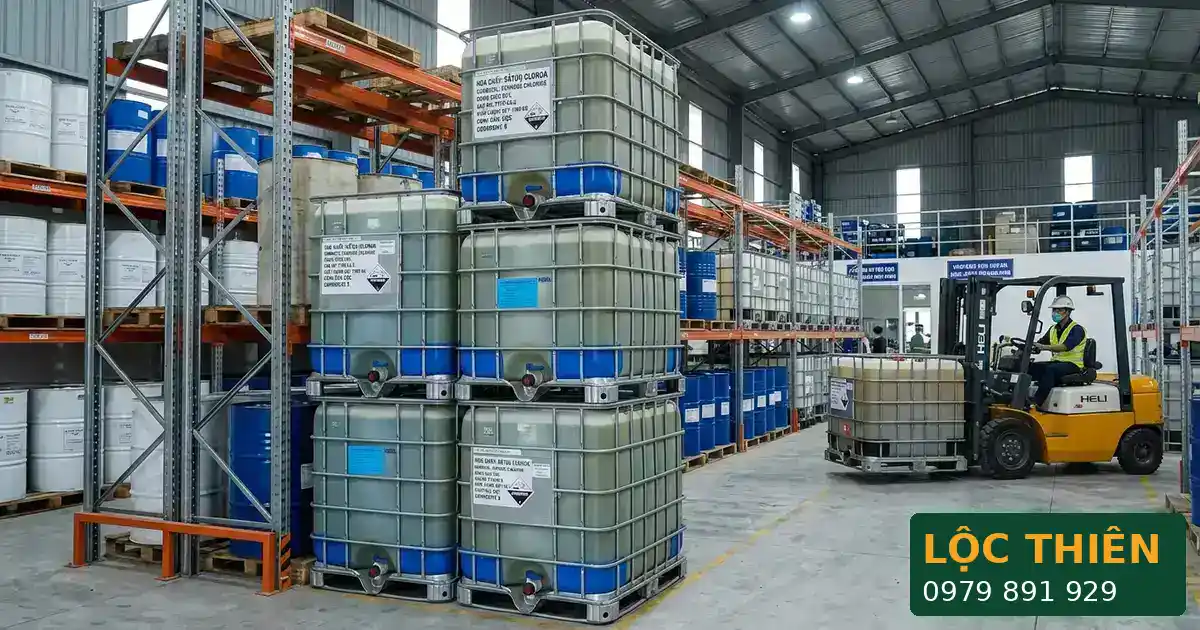
ZDHC MRSL Version 3.1 Conformance Level 1Conformance Summary Report (CSR) and Analytical Test Report for Sodium Hypochlorite (Javel / NaOCl) issued byTÜV Rheinland Vietnam(Report No.248162921-04). Bulk deliveries are executed via our dedicated5–30-toncorrosion-resistant tanker fleet or1,000 LUV-protected IBC totes from our 6 regional warehouses (Ba Ria – Vung Tau, Dong Nai, Binh Duong, Da Nang, Can Tho, and Bac Ninh), with technical quotations issued within 15 minutes and standard delivery SLAs of 4 hours in Ho Chi Minh City, 24–48 hours across Southern and Mekong Delta industrial zones, and 2–3 days in Northern and Central Vietnam. - For Process, QA/QC & EHS Engineers: Every production batch is accompanied by a batch-specific Certificate of Analysis (
Batch COA) verifying Available Chlorine (% w/wandg/L), Specific Gravity (SGat20 °C), residual free alkali (NaOH %), and low heavy-metal catalyst limits, alongside a compliant 16-Section GHS Safety Data Sheet (MSDS) aligned with Vietnam’s Law on Chemicals No.69/2025/QH15and guiding Decrees24–26/2026/ND-CP. - For Accounting, Tax & Customs Compliance Teams: All commercial deliveries are supported by full legal documentation, certified weighbridge tickets, signed delivery notes (
POD), and official Vietnamese Electronic VAT Invoices (e-VAT Invoices) issued directly byLOC THIEN INVESTMENT DEVELOPMENT COMPANY LIMITED(Tax ID:0313650856) for seamless corporate tax deduction and FDI audit reconciliation.
Extended Engineering Application (Swine Effluent Breakpoint Chlorination & ASF Biosecurity): When disinfecting biologically treated swine wastewater containing residual ammonia (
NH₄⁺), breakpoint chlorination consumes7.6 mg active Cl₂ per 1 mg NH₄-Nand increases dissolvedCl⁻(≤ 600 mg/Llimit for crop irrigation underQCVN 01-195:2022/BNNPTNT). See our detailed dosing calculations in Advanced Removal of Total Phosphorus, Humic Color & Coliform in Swine Effluent Using FeCl₃ 40%, Fenton & Javen 10%.
6. Frequently Asked Questions on Sodium Hypochlorite (NaOCl) Concentration & Dosing (FAQ)
1. Why does a 10% w/w Sodium Hypochlorite (Javel) solution equal 110.5 to 116.0 g/L (110,500–116,000 ppm) of available chlorine by volume?
Because 10% w/w NaOCl has a specific gravity of SG = 1.160 g/cm³ at 20 °C, 1 liter of solution weighs 1,160 g. Depending on whether the 10% specification is stated on an active Cl₂ mass basis (1,160 × 10% = 116.0 g/L or 116,000 ppm) or a pure NaOCl compound mass basis (116.0 × 0.9525 = 110.5 g/L or 110,500 ppm), the volumetric strength is 10%–16% higher than 100,000 ppm. Metering pump flow rates (L/h) must always be calculated using volumetric concentration (g/L).
2. How do operators prevent vapor lock (gas binding) in diaphragm metering pumps dosing liquid NaOCl?
Sodium hypochlorite slowly decomposes into oxygen micro-bubbles (2NaOCl → 2NaCl + O₂↑) that accumulate inside standard pump heads. Install an auto-degassing pump head, configure flooded suction below the storage tank level with a short suction line (< 1.5 m), and shade storage tanks below 30 °C.
3. Why must NaOCl storage tanks never share a secondary containment dike with HCl, H₂SO₄, or FeCl₃ tanks?
Accidental mixing of NaOCl with acids (HCl, H₂SO₄) or acidic metal salts (FeCl₃) drives pH below 4.0 and instantaneously releases acutely toxic Chlorine gas (Cl₂↑) (NaOCl + 2HCl → Cl₂↑ + NaCl + H₂O). Dedicated, physically isolated containment dikes are mandatory under GHS safety standards.
Related Technical Resources & Products
- Specialized Chemical Category: Industrial Water & Wastewater Treatment Chemicals
- Standard Industrial Products: Sodium Hypochlorite Javel NaOCl 10% | High-Strength Sodium Hypochlorite Javel NaOCl 12%
- GHS 16-Section Safety Data Sheet: MSDS Sodium Hypochlorite NaOCl 10%–12%
- Online Engineering Calculator: Interactive Chemical Dosing & Metering Pump Flow Calculator
- Related Technical Guides in This Cluster:
- 15-Minute Technical Quotation & Bulk Supply: Request a Technical Quotation for Bulk NaOCl — Hotline
0979 891 929(tel:0979891929) — Email[email protected].