Sulfuric Acid (H2SO4 10% – 98%) Specific Gravity, Concentration (% w/w) & Baume (°Be) Lookup Table with Safe Dilution Rules
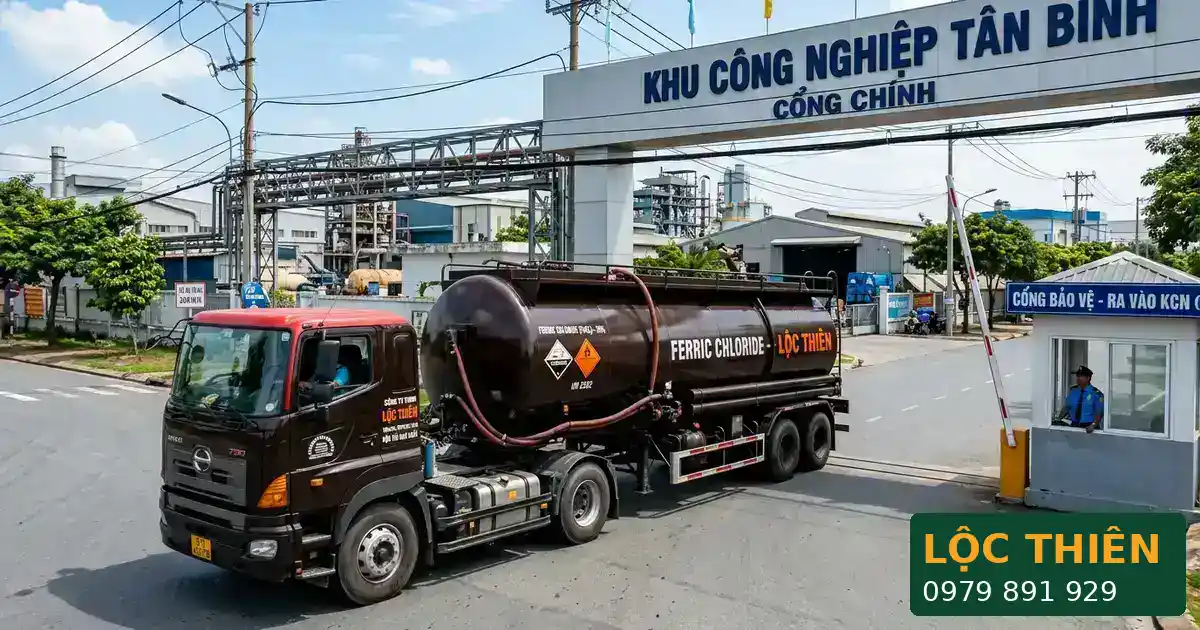
Key Technical Summary: Concentrated industrial Sulfuric Acid (H2SO4 98%, specific gravity d = 1.836–1.840 g/cm3 at 20 °C, equivalent to 66.0 °Be and containing 1,799.4 g of pure H2SO4 per liter) exhibits extreme hygroscopicity and releases massive hydration heat upon dilution (ΔH = -85.5 kJ/mol, or -872 kJ per 1 kg of 100% H2SO4). To accurately prepare dilute acid baths for lead-acid battery electrolyte (d = 1.260–1.280 g/cm3, 35%–37% w/w), hot-rolled steel pickling (15%–20% w/w), ion-exchange resin regeneration (4%–8% w/w), and alkaline textile wastewater neutralization, engineers must apply temperature-corrected specific gravity / Baume tables, calculate dilution volumes on a mass basis, and strictly enforce the golden safety rule: Always pour concentrated H2SO4 slowly into agitated cold water while maintaining bath temperature below 55–60 °C—never pour water into concentrated acid. In Vietnam, Loc Thien Chemical (Tax ID: 0313650856) supplies industrial chemicals in bulk from 6 strategic industrial park warehouses (Ba Ria - Vung Tau, Dong Nai, Binh Duong, Da Nang, Can Tho, Bac Ninh) via a dedicated 5–30-ton tanker fleet with batch-specific COA and 16-section GHS SDS — contact hotline 0979 891 929 for a technical quote within 15 minutes.
Table of contents
Across industrial manufacturing and environmental treatment operations utilizing Sulfuric Acid H₂SO₄ 98%—ranging from alkaline textile dyeing effluent neutralization (pH 10.5–12.0 down to QCVN 40:2025/BTNMT discharge limits), lead-acid battery electrolyte formulation (SG = 1.260–1.280), and hot-rolled carbon steel pickling (15%–20% w/w) to strong-acid cation-exchange resin regeneration (4%–6% w/w)—accurately converting between Specific Gravity (SG or d, g/cm³), Baume degrees (°Be), and mass percentage (% w/w) is a fundamental engineering requirement. Because diluting commercial H₂SO₄ 98% (d = 1.836–1.840 g/cm³, 66.0 °Be) induces strong molecular volume contraction (4%–7%) and liberates 872 to 880 kJ of hydration heat per kilogram of pure acid (ΔH = -85.5 kJ/mol), process engineers must execute mass-based dilution balances, apply hydrometer temperature compensation, and strictly enforce the “Pour Acid Slowly Into Agitated Cold Water” SOP inside heat-resistant PPH, PVDF, Vinyl Ester FRP, or PTFE-lined vessels.
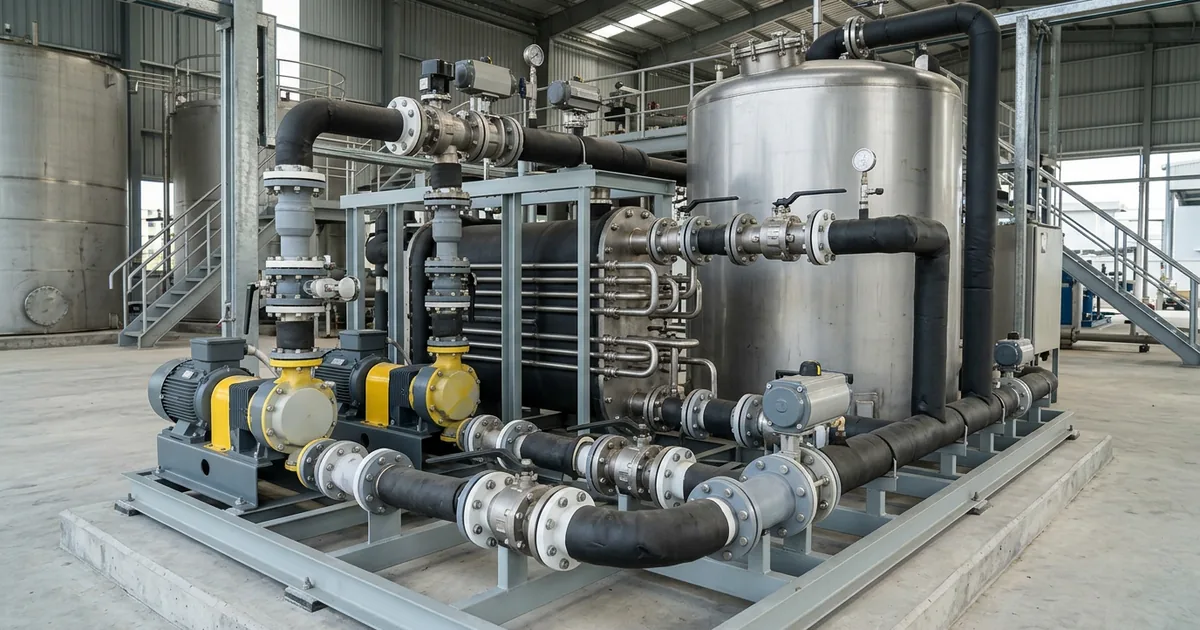
1. Standard Lookup Table: Specific Gravity (g/cm³), Baume (°Be), Molarity & g/L of H₂SO₄ (at 20 °C)
1.1. Non-Linear Volume Contraction, Baume Conversion & Temperature Compensation
When anhydrous or concentrated Sulfuric Acid (H₂SO₄, molar mass M = 98.079 g/mol) mixes with water, intense hydrogen bonding and sequential proton transfer form discrete stable stoichiometric hydrates (H₂SO₄·H₂O, H₂SO₄·2H₂O, H₂SO₄·4H₂O). This molecular packing causes a pronounced volume contraction (V_acid + V_water > V_mixture), meaning solution density does not scale linearly with mass fraction. Under international chemical engineering standards (ASTM E100, IUPAC, and TCVN 5719), the conversion equations at 20 °C are:
- Specific Gravity (
d,g/cm³) to Heavy Baume (°Be):°Be = 145 - (145 ÷ d) - Heavy Baume (
°Be) to Specific Gravity (d):d = 145 ÷ (145 - °Be) - Volumetric Pure
H₂SO₄Content (g/Lorkg/m³):C (g/L) = d (g/cm³) × C (% w/w) × 10 - Molarity (
M,mol/L) & Normality (N,eq/L):M = C (g/L) ÷ 98.079andN = 2 × M(diprotic acid) - Hydrometer Temperature Correction Formula (for warm samples between
20 °Cand60 °C):d(20 °C) = d(measured at T °C) + 0.00085 × (T - 20)(Example: If an inline or laboratory hydrometer reads1.240 g/cm³in a newly diluted bath at45 °C, the true reference specific gravity at20 °Cis1.240 + 0.00085 × (45 - 20) = 1.261 g/cm³, corresponding to35.0% w/w H₂SO₄.)
Table 1: Engineering Reference Table for Sulfuric Acid Solutions (5% to 98% w/w at 20 °C)
Mass Concentration (% w/w H₂SO₄) | Specific Gravity at 20 °C (d, g/cm³) | Baume Degree (°Be at 20 °C) | Pure H₂SO₄ per Liter (g/L) | Molarity (mol/L) | Normality (eq/L) | Freezing Point (°C) | Primary Industrial Application |
|---|---|---|---|---|---|---|---|
5.0% | 1.0317 | 4.5 °Be | 51.6 g/L | 0.53 M | 1.05 N | -1.9 °C | Cation-exchange resin regeneration (4%–6%), RO antiscalant pH trim. |
10.0% | 1.0661 | 9.0 °Be | 106.6 g/L | 1.09 M | 2.17 N | -4.6 °C | Automated pH neutralization of alkaline textile dyeing effluent. |
15.0% | 1.1020 | 13.4 °Be | 165.3 g/L | 1.69 M | 3.37 N | -8.6 °C | Hot-rolled carbon steel pickling baths (60–80 °C) & aluminum anodizing. |
20.0% | 1.1394 | 17.7 °Be | 227.9 g/L | 2.32 M | 4.65 N | -13.9 °C | Sulfuric acid anodizing electrolyte (18%–22% w/w) forming Al₂O₃ films. |
30.0% | 1.2185 | 26.0 °Be | 365.6 g/L | 3.73 M | 7.46 N | -35.6 °C | Uncharged lead-acid battery filling acid & hydrometallurgical leaching. |
35.0% | 1.2599 | 29.9 °Be | 441.0 g/L | 4.50 M | 8.99 N | -56.6 °C | Standard fully charged lead-acid battery electrolyte (SG = 1.26–1.28). |
40.0% | 1.3028 | 33.7 °Be | 521.1 g/L | 5.31 M | 10.63 N | -36.0 °C | Inorganic sulfate salt synthesis (CuSO₄, ZnSO₄, Al₂(SO₄)₃, FeSO₄). |
50.0% | 1.3951 | 41.1 °Be | 697.6 g/L | 7.11 M | 14.22 N | -32.0 °C | Ammonia (NH₃) wet gas scrubber liquor producing (NH₄)₂SO₄ fertilizer. |
60.0% | 1.4983 | 48.2 °Be | 899.0 g/L | 9.17 M | 18.33 N | -39.5 °C | Superphosphate fertilizer digestion from apatite ore (no carbon steel!). |
70.0% | 1.6105 | 55.0 °Be | 1,127.4 g/L | 11.49 M | 22.99 N | -39.0 °C | Chlorine gas (Cl₂) drying towers, sulfonation & dehydration processes. |
80.0% | 1.7272 | 60.9 °Be | 1,381.8 g/L | 14.09 M | 28.17 N | +4.5 °C | Winter Warning: High freezing point (+4.5 °C to +8.5 °C at 84% w/w!). |
93.0% | 1.8279 | 65.7 °Be | 1,700.0 g/L | 17.33 M | 34.66 N | -29.5 °C | Low-freezing winter bulk storage grade (-29.5 °C eutectic). |
96.0% | 1.8355 | 65.9 °Be | 1,762.1 g/L | 17.97 M | 35.93 N | -14.0 °C | Fine chemical synthesis and analytical reagent grade. |
98.0% | 1.8361 | 66.0 °Be | 1,799.4 g/L | 18.35 M | 36.69 N | +3.0 °C | Standard Commercial Concentrated Sulfuric Acid (66 °Be, Carbon Steel Safe). |
Critical Quality-Control Alert (Specific Gravity Peak Inversion Above
93% w/w): The density curve of aqueous Sulfuric Acid reaches its absolute maximum at97.5%–98.0% w/w(SG = 1.836–1.840 g/cm³at20 °C) and then decreases back to1.8305 g/cm³at100% H₂SO₄due to self-dissociation (2H₂SO₄ ⇌ H₃SO₄⁺ + HSO₄⁻). Because a single hydrometer reading in the95%–100%zone can correspond to two different concentrations, Incoming QC (IQC) must verify commercialH₂SO₄ 98%COA assay via acid–base titration with standardizedNaOH.
2. Mass-Balance Dilution Equations, Volume Contraction & Adiabatic Temperature Rise (ΔH = -85.5 kJ/mol)
2.1. Exothermic Hydration Thermodynamics (872 – 880 kJ/kg H₂SO₄)
When concentrated H₂SO₄ contacts water, two proton dissociation steps and intense ion solvation occur instantaneously:
- Hydration Reaction:
H₂SO₄ + nH₂O → 2H⁺·(H₂O)_x + SO₄²⁻·(H₂O)_y(ΔH_∞ = -85.5 to -86.2 kJ/mol=-872 to -880 kJ/kgof pureH₂SO₄)
Because V_acid + V_water ≠ V_final, dilution recipes must be computed strictly by Mass Conservation first, then divided by component densities at 20 °C:
- Target Solution Total Mass (
M₂, kg) for Desired VolumeV₂(L) at ConcentrationC₂ (% w/w)and Densityd₂ (kg/L):M₂ (kg) = V₂ (L) × d₂ (kg/L) - Required Mass (
m₁, kg) & Volume (V₁, L) of CommercialH₂SO₄ 98%(C₁ = 98.0%,d₁ = 1.836 kg/L):m₁ (kg) = M₂ × (C₂ ÷ 98.0)andV₁ (L) = m₁ ÷ 1.836 - Required Mass (
m_water, kg) & Volume (V_water, L) of Cold Water Added First (d_water ≈ 1.000 kg/L):m_water (kg) = M₂ - m₁(V_water ≈ m_water)
Table 2: Recipe to Prepare 1,000 Liters (1 m³) of Dilute H₂SO₄ from H₂SO₄ 98% & Adiabatic Heat Rise
Target Concentration (% w/w) | Target Density (d₂, kg/L) | Total Mass of 1,000 L Solution (kg) | Volume of Cold Water Filled First (L) | Mass of H₂SO₄ 98% Poured Slowly (kg) | Equivalent Volume of H₂SO₄ 98% (L) | Adiabatic Temperature Rise Without Cooling (ΔT, °C) |
|---|---|---|---|---|---|---|
5% Solution | 1.032 | 1,032 kg | 979.3 L | 52.7 kg | 28.7 L | +11.2 °C (~36 °C Final — Safe) |
10% Solution | 1.066 | 1,066 kg | 957.2 L | 108.8 kg | 59.3 L | +23.5 °C (~48 °C Final — Warm) |
20% Solution | 1.139 | 1,139 kg | 906.6 L | 232.4 kg | 126.6 L | +51.8 °C (~77 °C Final — Exceeds uPVC!) |
30% Solution | 1.219 | 1,219 kg | 845.8 L | 373.2 kg | 203.3 L | +85.4 °C (Boils > 105 °C Without Cooling!) |
36% Battery Acid | 1.268 | 1,268 kg | 802.2 L | 465.8 kg | 253.7 L | +107.0 °C (Cooling Jacket Mandatory!) |
50% Solution | 1.395 | 1,395 kg | 683.3 L | 711.7 kg | 387.6 L | +148.0 °C (Graphite / PTFE Heat Exchanger Required!) |
Technical Illustration (Worked Example — Preparing 2,000 L of 30% w/w Pickling Acid Bath): A steel galvanizing plant needs to prepare
V₂ = 2,000 Lof30.0% w/w H₂SO₄solution (d₂ = 1.219 kg/Lat20 °C) from commercialH₂SO₄ 98.0%(d₁ = 1.836 kg/L) and deionized water:
- Total Target Solution Mass (
M₂):2,000 L × 1.219 kg/L = 2,438.0 kg.- Required
H₂SO₄ 98%Mass & Volume:m₁ = (2,438.0 × 30.0%) ÷ 98.0% = 746.33 kg→V₁ = 746.33 ÷ 1.836 = 406.5 L.- Required Deionized Water Mass & Volume:
m_water = 2,438.0 - 746.33 = 1,691.67 kg→V_water ≈ 1,691.7 L.- Volume Contraction Verification: The sum of the individual liquid volumes added is
406.5 L + 1,691.7 L = 2,098.2 L, yet after cooling to20 °C, the final bath volume is exactly2,000.0 L(a molecular volume contraction of98.2 Lor4.68%).
3. Five-Step Safe Dilution SOP (Always Pour Acid Slowly Into Water) & Corrosion Material Matrix
3.1. Five-Step Plant SOP for Safe Sulfuric Acid Dilution
- Verify Dilution Vessel Material & Cooling Capacity: For target concentrations
≤ 15% w/w, thick-walled PPH (Homopolymer Polypropylene) or Vinyl Ester FRP tanks are suitable. For concentrations between20%and50% w/w, use Vinyl Ester FRP, PVDF, or PTFE-lined steel equipped with a cooling jacket or external heat exchanger (Graphite / Titanium / Alloy 20 / Hastelloy C-276), or execute staged multi-step additions with intermediate cooling pauses. Never diluteH₂SO₄inside unlined carbon steel or thin uPVC/HDPE tanks (uPVC softens above60 °C; thin HDPE softens above75–80 °C). - Pre-Fill 100% of the Required Cold Water First: Pump the entire calculated volume of cold water (
V_water,≤ 28 °C) into the dilution vessel first and start the mechanical turbine agitator (60–120 rpm) before opening the acid feed valve. - Meter Concentrated
H₂SO₄ 98%Slowly into the Agitated Vortex: Route the PTFE/PVDF acid dip-pipe to discharge just below the liquid surface into the high-shear impeller vortex (never let denseH₂SO₄ 98%stream directly against a plastic tank wall or settle unmixed on the tank floor). Strictly NEVER pour water onto concentrated acid! - Enforce a
60 °CTemperature Interlock (PT100Sensor): Install a Teflon-sheathedPT100RTD temperature transmitter interlocked with the acid dosing pump; if bath temperature reaches60 °C(55 °Cfor PPH/HDPE vessels), automatically pause acid addition until cooling water lowers the bath below40 °C. - Enforce Full Acid PPE & Emergency Eyewash Readiness: Per the GHS 16-Section MSDS for Sulfuric Acid 98%, operators must wear a full-face acid shield over chemical splash goggles, long-cuff Butyl or Viton (FKM) gloves, a heavy PVC/Neoprene acid apron, and acid-resistant boots, with a tested ANSI Z358.1 emergency shower and eyewash station within
10–15 meters.
3.2. Storage Tank, Piping & Valve Material Compatibility Matrix for Sulfuric Acid
H₂SO₄ Concentration Range | Carbon Steel (A36 / Q235B) | Stainless Steel (SUS304 / 316L) | uPVC / PVC | PPH / HDPE | PVDF (Fluoropolymer) | PTFE / PFA Lined Steel |
|---|---|---|---|---|---|---|
Dilute Acid (5% – 25%) | ❌ Prohibited (Rapid H₂↑ perforation) | ❌ Prohibited (Severe general corrosion) | ✅ Suitable (≤ 50 °C) | ✅ Excellent (≤ 70 °C) | ✅ Excellent (≤ 120 °C) | ✅ Universal (All Temps) |
Medium Acid (30% – 75%) | ❌ Prohibited | ❌ Prohibited | ⚠️ Limited (≤ 40 °C) | ✅ Suitable (≤ 60 °C) | ✅ Excellent (≤ 110 °C) | ✅ Universal (All Temps) |
Concentrated (93% – 98%) | ✅ Standard Bulk Tank (Static ≤ 40 °C, v ≤ 0.8 m/s) | ⚠️ 98% Low-temp static only | ❌ Prohibited (Dehydration charring) | ❌ Prohibited (Sulfonation cracking) | ✅ Suitable (≤ 80 °C) | ✅ Optimal (Including Hot Dilution Mixers) |
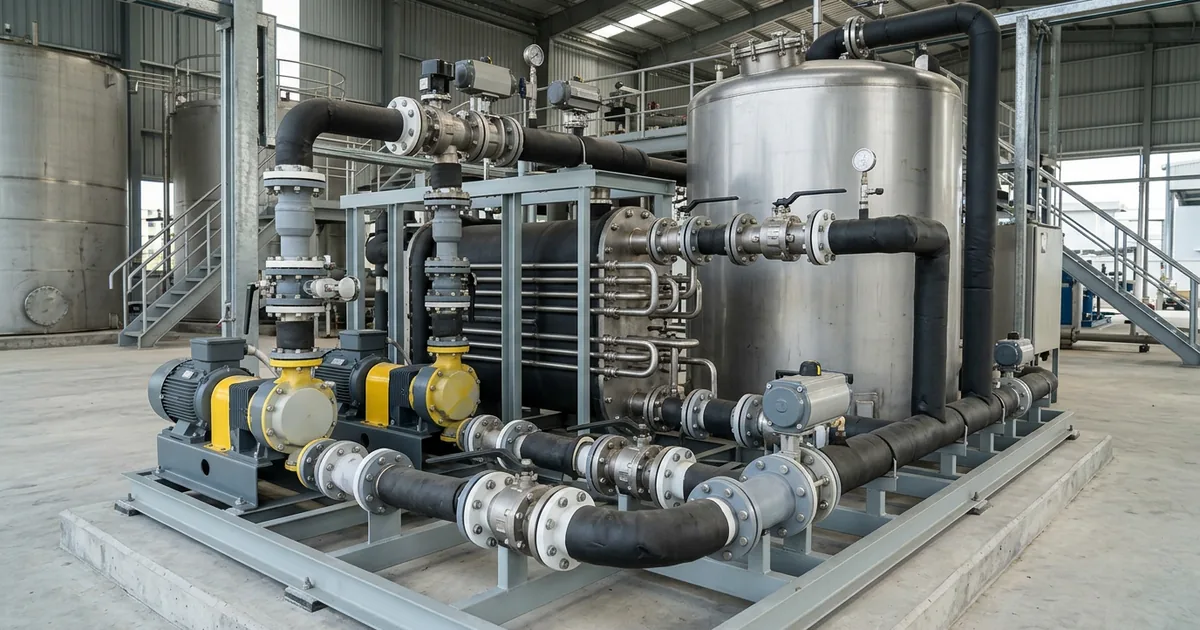
Technical QC Insight — Specialist Phan Cam Thuy (Quality Control Lab — Loc Thien Chemical): “When receiving bulk Sulfuric Acid
H₂SO₄ 98%on site, engineers must never rely solely on hydrometer density readings above94% w/w, becauseH₂SO₄density peaks at97.5%–98.0% w/w(SG = 1.8365 g/cm³ at 20 °C) and slightly declines toward100%. Every5–30-tontanker lot dispatched by Loc Thien undergoes direct acid-base titration (TCVN 2718) alongside iron trace verification (Fe ≤ 30–50 ppm) on the batch COA.”
4. Industrial Precursor Legal Compliance & 3-Role FDI Procurement Guide
As a premier bulk supplier of Industrial Sulfuric Acid (H₂SO₄ 98%) in Vietnam, Loc Thien Chemical provides comprehensive regulatory, technical, and logistical support tailored to FDI manufacturing enterprises:
- For Global Procurement & Brand Compliance Teams: Loc Thien Chemical holds an official
ZDHC MRSL Version 3.1 Conformance Level 1Conformance Summary Report (CSR) and Analytical Test Report for Sulfuric Acid (H₂SO₄) issued byTÜV Rheinland Vietnam(Report No.248162921-01). We maintain3,000+ tons/monthsupply capacity across 6 strategic warehouses (Ba Ria – Vung Tau, Dong Nai, Binh Duong, Da Nang, Can Tho, and Bac Ninh) and a dedicated5–30-tonspecialized tanker fleet, issuing technical quotations within 15 minutes and delivering within 4 hours in Ho Chi Minh City, 24–48 hours across Southern & Mekong Delta industrial zones, and 2–3 days in Northern & Central Vietnam. - For Process, QA/QC & EHS Engineers (Industrial Precursor Compliance): Under Vietnam’s Law on Chemicals No.
69/2025/QH15and guiding Decree24/2026/ND-CP, Sulfuric Acid (H₂SO₄, CAS7664-93-9) is classified and regulated as an Industrial Precursor (Group B / Controlled Industrial Precursor Chemical). Loc Thien Chemical maintains full precursor trading licenses, supports customers with legally mandated precursor purchase/handover logs, and supplies every shipment with a batch-specific Certificate of Analysis (Batch COA: Assay≥ 98.0%,Fe ≤ 50 ppm, clear appearance) and a 16-Section GHS Safety Data Sheet (MSDS). - For Accounting, Tax & Customs Teams: Every bulk tanker or IBC delivery includes certified weighbridge tickets, legally compliant precursor handover records, and official Vietnamese Electronic VAT Invoices (
e-VAT Invoices) issued byLOC THIEN INVESTMENT DEVELOPMENT COMPANY LIMITED(Tax ID:0313650856).
5. Frequently Asked Questions on Sulfuric Acid (H₂SO₄) Specific Gravity & Dilution Safety (FAQ)
1. Why is a standard hydrometer reading alone insufficient to verify H₂SO₄ concentration above 93% w/w?
Between 93% and 100% w/w, the density curve of sulfuric acid peaks at 98.0% w/w (SG = 1.8407 at 20 °C) and then decreases toward 1.8305 at 100%. Because two different concentrations share the same specific gravity near the peak, laboratory acid-base titration is required to confirm exact assay.
2. Why must concentrated H₂SO₄ 98% always be poured slowly into water, and never water into acid?
Hydration of H₂SO₄ is intensely exothermic (ΔH = -85.5 kJ/mol or ~870 kJ/kg). Pouring lighter water (SG = 1.00) onto dense acid (SG = 1.84) causes localized surface flash-boiling and violent acid spattering, whereas feeding dense acid slowly into agitated, cooled water distributes heat safely throughout the liquid volume.
3. Why can carbon steel tanks store concentrated H₂SO₄ 98% but corrode rapidly when exposed to dilute H₂SO₄ (10%–50%)?
Concentrated H₂SO₄ ≥ 93%–98% forms an insoluble ferrous sulfate (FeSO₄) passive film on carbon steel below 40 °C. In dilute acid (10%–70%), this film dissolves immediately, causing rapid acid attack and explosive hydrogen gas evolution (Fe + H₂SO₄ → FeSO₄ + H₂↑); dilution tanks must use PVDF, FRP Vinyl Ester, or PTFE-lined vessels.
Related Technical Resources & Products
- Specialized Chemical Category: Industrial Basic Chemicals, Acids & Alkalis
- Standard Industrial Products: Industrial Sulfuric Acid H₂SO₄ 10% – 98% | Concentrated Sulfuric Acid H₂SO₄ 98% Vietnam
- GHS 16-Section Safety Data Sheet: MSDS Sulfuric Acid H₂SO₄ 98%
- Online Engineering Calculator: Interactive Chemical Dosing & pH Neutralization Calculator
- Related Technical Guides in This Cluster:
- 15-Minute Technical Quotation & Bulk Supply: Request a Technical Quotation for Bulk H₂SO₄ 98% — Hotline
0979 891 929(tel:0979891929) — Email[email protected].
📦 Bulk Procurement Guide: Choosing Pre-Diluted H₂SO₄ 60% vs. Concentrated H₂SO₄ 98%
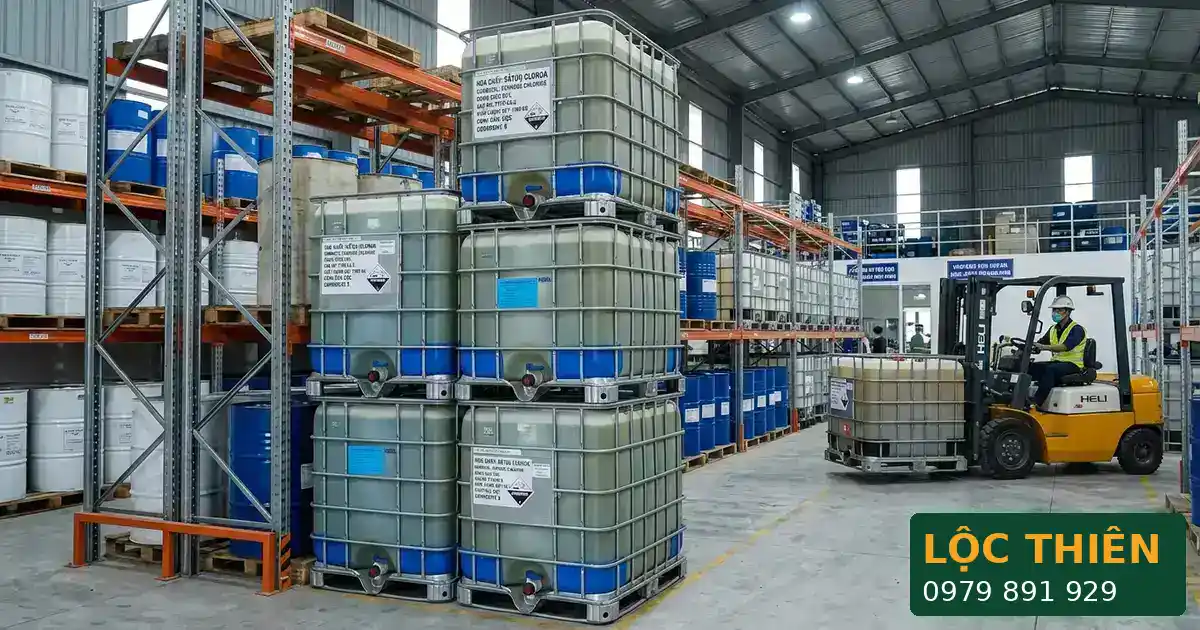
Depending on plant storage materials and dosing equipment, Loc Thien Chemical (ZDHC MRSL v3.1 Level 1 Conformance — TÜV Rheinland CSR #248162921-01) supplies two commercial sulfuric acid grades via 1,500 kg IBC totes and dedicated 5–30-ton road tankers from 6 warehouses across Vietnam:
- Sulfuric Acid H₂SO₄ 60% Solution (SG 1.500 g/cm³ at 20 °C · 48.5 °Be · ~900 g H₂SO₄/L): Pre-diluted grade that eliminates
~65–70%of exothermic hydration heat, ideal for direct automated WWTP pH dosing, lead-acid battery electrolyte formulation, and steel pickling without thermal pipe warping (requiresXLPE/HDPE/PP/FRPstorage tanks; bare carbon steel prohibited). - Concentrated Sulfuric Acid H₂SO₄ 98% (SG 1.840 g/cm³ at 20 °C · 66.0 °Be · ~1,803 g H₂SO₄/L): Maximum active content for long-haul freight efficiency, chemical synthesis, fertilizer manufacturing, and plants equipped with cooled dilution skids.
- 15-Minute Technical Quotation & Batch COA/SDS: Request a formal quote here or call
0979 891 929([email protected]).
Technical Monograph on H2SO4 60% (48.5 °Be · SG 1.50): Read our dedicated engineering guide Sulfuric Acid H2SO4 60%: Specific Gravity Table, Tank Material & Industrial Applications for 10–50°C density corrections and 65%–70% dilution heat reduction calculations.