Safe Dissolution of Caustic Soda Flakes & Pearls (NaOH 99%): Controlling Exothermic Heat (ΔH = -44.5 kJ/mol) Against Boil-Over
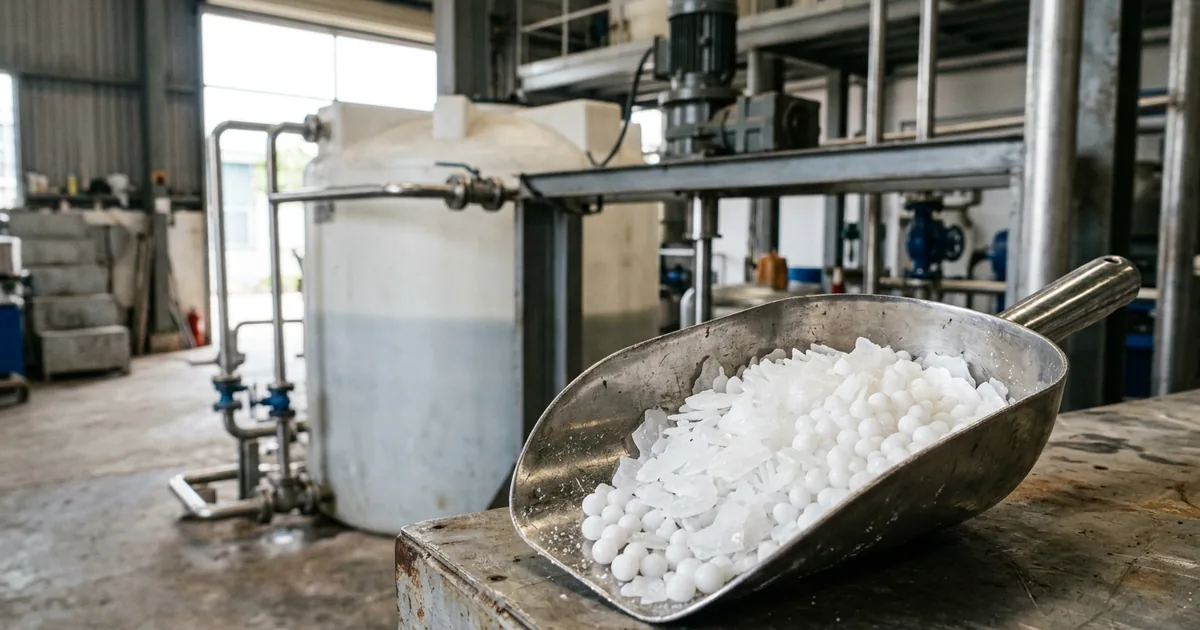
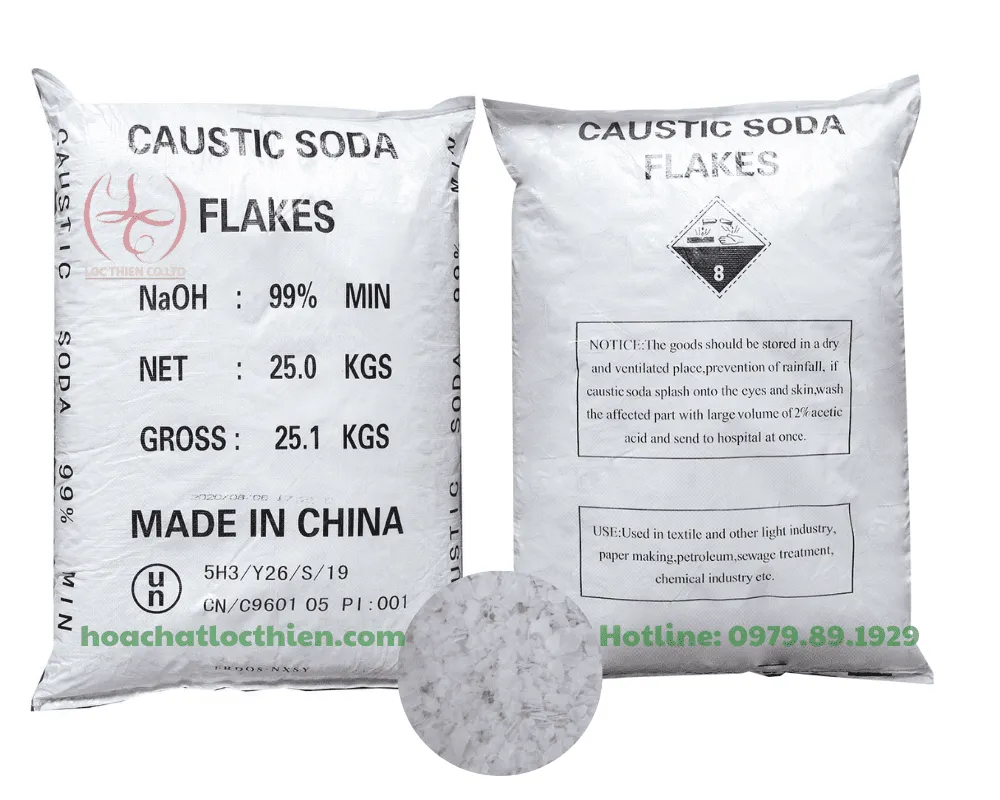
Key Technical Summary: Dissolving solid Caustic Soda Flakes or Micropearls (NaOH 99%) into water to prepare 5%–32% w/w alkaline solutions for wastewater neutralization, textile mercerizing, pulp pulping, or CIP sanitation releases intense hydration heat (ΔH_sol = -44.51 kJ/mol, or 1,113 kJ / 266 kcal per 1 kg of solid NaOH). Dumping entire 25 kg bags rapidly into stagnant or warm water (> 40 °C) drives solution temperatures past 95–115 °C, triggering violent caustic boil-over, corrosive alkaline mist inhalation, plastic tank deformation, and solid monohydrate (NaOH.H2O) rock caking on the tank floor. Safe industrial operation requires filling 100% of cold makeup water first, feeding NaOH gradually through an upper stainless steel dissolving basket under continuous agitation while capping bath temperature below 60–65 °C, or switching directly to ready-to-pump Liquid Caustic Soda NaOH 32%. In Vietnam, Loc Thien Chemical (Tax ID: 0313650856) supplies industrial chemicals in bulk from 6 strategic industrial park warehouses (Ba Ria - Vung Tau, Dong Nai, Binh Duong, Da Nang, Can Tho, Bac Ninh) via a dedicated 5–30-ton tanker fleet with batch-specific COA and 16-section GHS SDS — contact hotline 0979 891 929 for a technical quote within 15 minutes.
Table of contents
Dissolving solid Caustic Soda Flakes or Pearls (NaOH 99%) into industrial alkaline solutions (5% – 32% w/w) is a routine daily operation across wastewater treatment plants, textile dyeing and mercerizing mills, pulp and paper facilities, aluminum anodizing lines, and food-grade CIP (Clean-in-Place) systems. However, the ionic hydration of solid NaOH releases extreme exothermic energy (ΔH_sol = -44.51 kJ/mol, equivalent to 1,113 kJ or 266 kcal per 1 kg of pure NaOH), capable of driving batch tank temperatures upward by +50 °C to +85 °C within minutes. Following mass-based specific gravity makeup tables, feeding solid caustic through a submerged stainless steel dissolving basket, capping bath temperature at ≤ 60–65 °C, and enforcing strict EHS corneal protection are mandatory to prevent violent caustic boil-over, monohydrate rock caking, and plastic tank rupture.
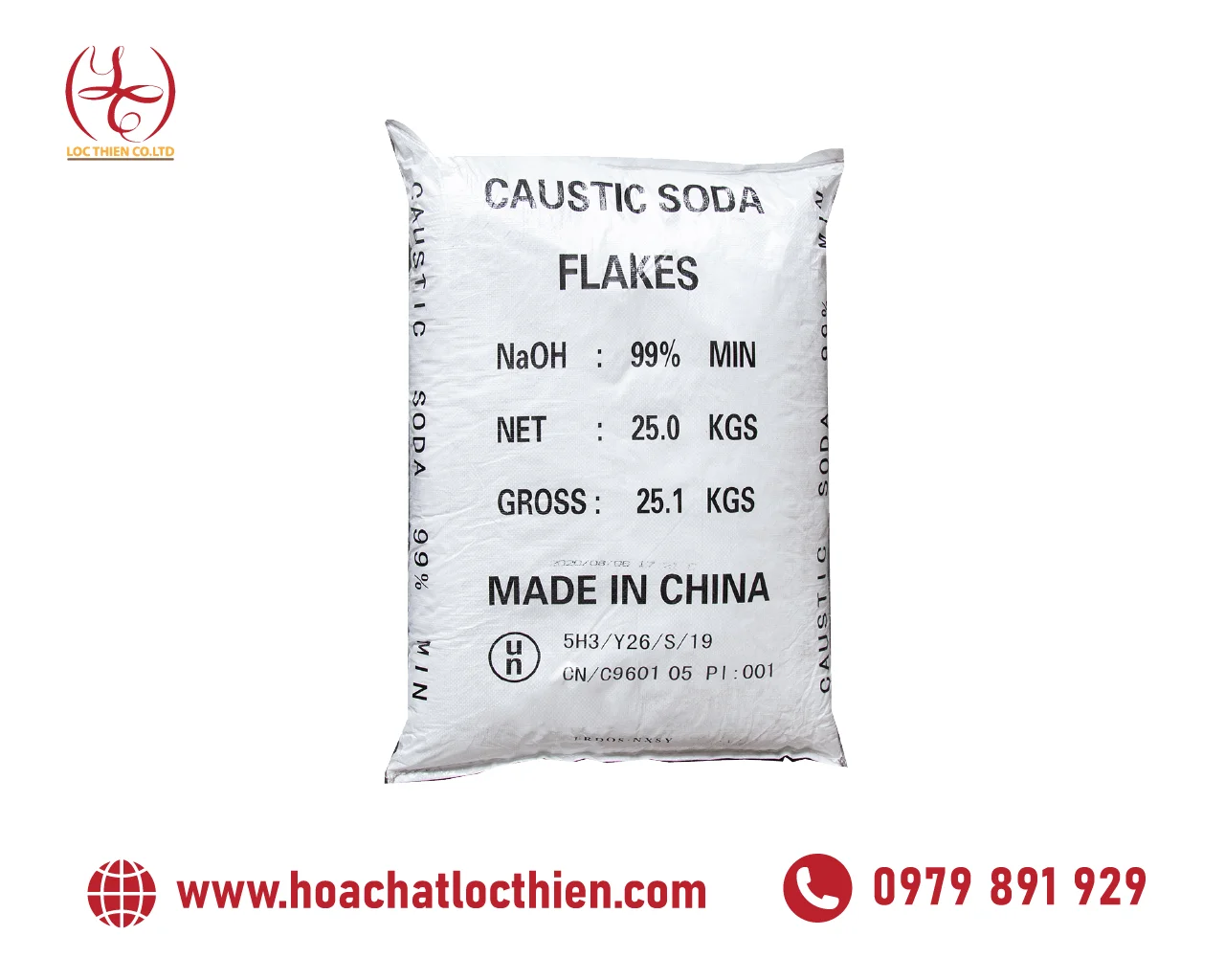
1. Thermodynamics of Solid NaOH Dissolution (ΔH = -44.51 kJ/mol) & 5%–50% Specific Gravity Table
When anhydrous Sodium Hydroxide crystals (NaOH, molar mass M = 40.00 g/mol) contact water, the ionic crystal lattice breaks apart and dissociated Na⁺ and OH⁻ ions undergo intense hydration by polar water molecules. This process releases a combined lattice and hydration enthalpy that is roughly 25% higher per kilogram than diluting concentrated 98% sulfuric acid (880 kJ/kg):
- Exothermic Dissolution Reaction:
NaOH (solid) + nH₂O → Na⁺ (aq) + OH⁻ (aq)(ΔH_sol = -44.51 kJ/mol = -1,113 kJ/kg Pure NaOH, or~1,101 kJ/kgfor commercial99%Flakes/Pearls)
Because the specific heat capacity (C_p) of aqueous sodium hydroxide decreases as concentration increases (dropping from 3.98 kJ/kg·K at 5% w/w to 3.34 kJ/kg·K at 30% w/w), high-concentration single-batch makeup experiences a compounding adiabatic temperature spike.
Table 1: Specific Gravity, Baume Degree, Makeup Recipe for 1,000 L (1 m³) NaOH Solution & Adiabatic Heat Rise
Target Concentration (% w/w NaOH) | Specific Gravity at 20 °C (d, kg/L) | Baume Degree (°Be) | Mass of NaOH 99% per 1,000 L (kg) | Equivalent 25 kg Bags (per 1,000 L) | Volume of Cold Water Added First (L) | Final Temp Starting from 25 °C Water (T_max) | Freezing / Crystallization Point (°C) |
|---|---|---|---|---|---|---|---|
5.0% | 1.054 | 7.4 °Be | 53.2 kg | ~2.1 bags | 1,000.8 L | 38.8 °C (Mildly warm — Safe) | -4.2 °C |
10.0% | 1.109 | 14.2 °Be | 112.0 kg | ~4.5 bags | 997.0 L | 53.2 °C (Warm — Safe for PP/HDPE) | -10.0 °C |
15.0% | 1.164 | 20.4 °Be | 176.4 kg | ~7.1 bags | 987.6 L | 68.5 °C (Hot — Exceeds uPVC limit) | -21.0 °C |
20.0% | 1.219 | 26.0 °Be | 246.3 kg | ~9.9 bags | 972.7 L | 84.6 °C (Very hot — Heavy alkali mist) | -26.2 °C (Eutectic minimum) |
25.0% | 1.274 | 31.2 °Be | 321.7 kg | ~12.9 bags | 952.3 L | 101.4 °C (Incipient boiling!) | -15.5 °C |
32.0% (Commercial Liquid) | 1.349 | 37.5 °Be | 436.0 kg | ~17.4 bags | 913.0 L | > 115 °C (Violent boil-over if single batch!) | +7.5 °C |
45.0% | 1.478 | 46.9 °Be | 671.8 kg | ~26.9 bags | 806.2 L | > 135 °C (Prohibited without cooling jacket) | +15.5 °C |
50.0% | 1.525 | 49.9 °Be | 770.2 kg | ~30.8 bags | 754.8 L | > 145 °C (Prohibited manual batch) | +12.5 °C (Freezes in winter) |
Technical Illustration / Worked Example: Adiabatic Heat Balance for a 1,000 L Batch of 15% w/w NaOH Solution
Suppose an industrial wastewater treatment plant needs to prepare 1,000 L (1.0 m³) of 15.0% w/w NaOH dosing solution (specific gravity d = 1.164 kg/L at 20 °C, total solution mass m_sol = 1,164 kg, specific heat capacity C_p = 3.68 kJ/kg·°C) using ambient makeup water at T_initial = 28.0 °C:
- Required Mass of Solid
NaOH 99%Flakes/Pearls:m_NaOH_99 = (1,164 kg × 0.15) ÷ 0.99 = 176.4 kg(equivalent to7 full 25 kg bagsplus1.4 kg). - Required Volume of Cold Makeup Water Charged First:
m_water = 1,164 kg - 176.4 kg = 987.6 kg ≈ 988 Lof clean cold water. - Total Exothermic Heat Released (
Q_total):Q_total = 176.4 kg × 0.99 × 1,113 kJ/kg = 194,370 kJ(194.4 MJ). - Adiabatic Temperature Rise (
ΔT) & Peak Bath Temperature (T_max):ΔT = Q_total ÷ (m_sol × C_p) = 194,370 ÷ (1,164 × 3.68) = +45.4 °C. Without cooling, the solution temperature reachesT_max = 28.0 °C + 45.4 °C = 73.4 °C. Because73.4 °Cexceeds the safe structural limit of unreinforceduPVCpiping (45 °C) and approaches the softening threshold of thinHDPEtanks (65 °C), operators must split the7-bagcharge into two staged additions (3.5 bagsinitially, followed by a20–30 minutecooling pause before feeding the remaining3.5 bags) to keep bath temperature strictly≤ 60–65 °C.
2. Preventing Bottom Caking (NaOH·H₂O) & Why Plants Switch to Liquid NaOH 32%
From the thermodynamic and phase-equilibrium data in Table 1, plant engineers enforce three fundamental design rules:
- Cap Uncooled Single-Batch Dissolution at
10% – 15% w/w: Preparing10%–15% w/wcaustic soda limits adiabatic temperature rise to50–68 °C, keeping the bath within the safe thermal envelope of thick-walled Polypropylene (PP), Homopolymer Polypropylene (PPH), or steel-belted high-density polyethylene (HDPE ≥ 10 mm) tanks without boiling. Attempting to prepare30%–32%caustic soda in a single uncooled batch drives the liquid past110–120 °C, causing violent boiling splatter, caustic aerosol mist emission, and catastrophic plastic tank bulging. - Eliminating Monohydrate Bottom Caking (
NaOH·H₂ORock Crust) via a Top-Suspended Dissolving Basket: When operators dump an entire25 kgbag of caustic flakes directly onto the floor of a mixing tank with weak bottom agitation, the submerged pile absorbs a small amount of water, overheats locally above65 °C, and forms a supersaturated syrup (> 50% w/w). Upon contacting the cooler tank floor, this syrup crystallizes into an interlocking, rock-hard crust of Sodium Hydroxide Monohydrate (NaOH·H₂O, melting point+64.3 °C) that seals dry caustic inside and stalls or snaps agitator blades.- Engineering Fix: Install a Top-Suspended Perforated Stainless Steel Dissolving Basket (
SUS304 / SUS316L,5–10 mmaperture) submerged150–250 mmbelow the waterline in the upper impeller wash zone. When flakes or pearls are poured into the basket, high-density concentrated caustic (SG 1.30–1.45) forms at the basket surface and sinks rapidly toward the tank floor, driving powerful density-driven natural convection that pushes cold bottom water upward. Dissolution speed increases 3-fold with zero bottom caking.
- Engineering Fix: Install a Top-Suspended Perforated Stainless Steel Dissolving Basket (
- Economic & EHS Advantage of Switching to Ready-to-Pump Liquid Caustic Soda
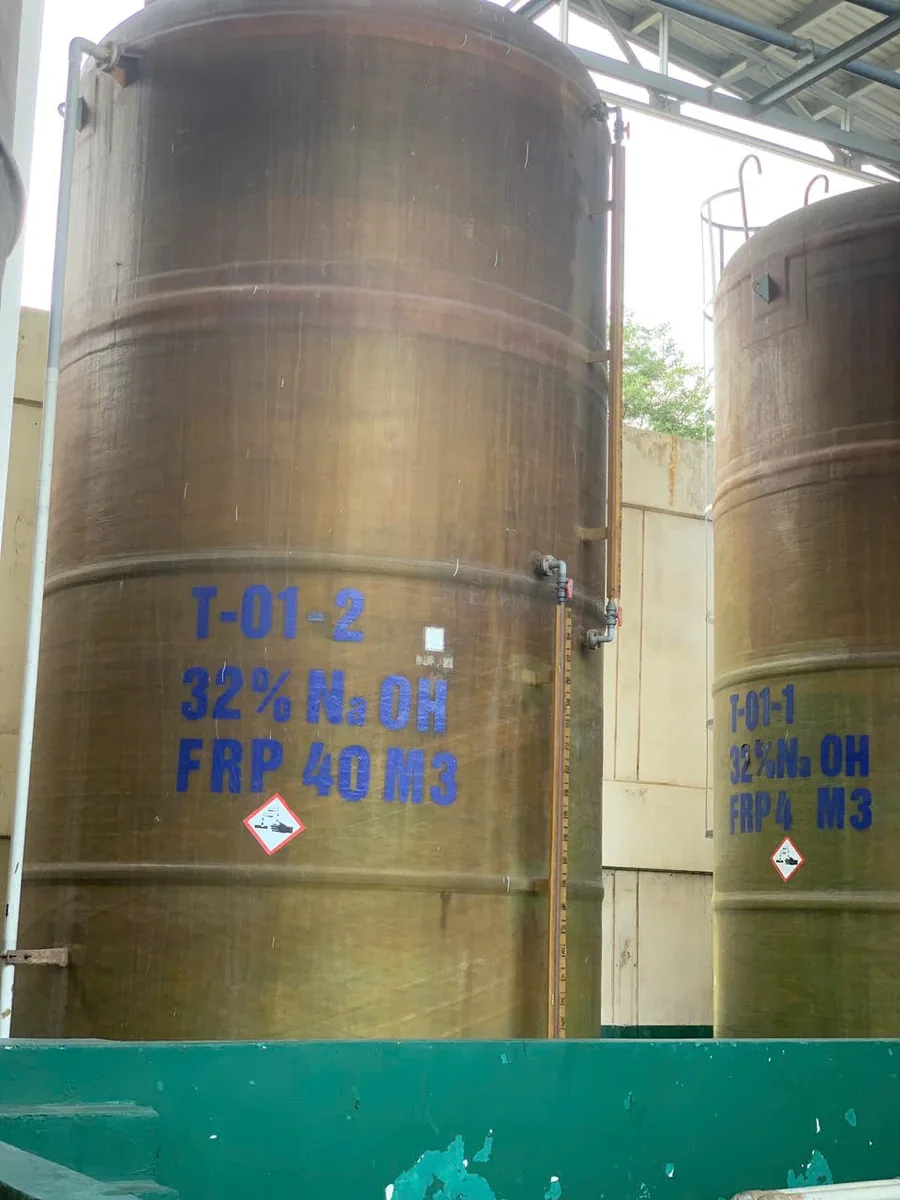
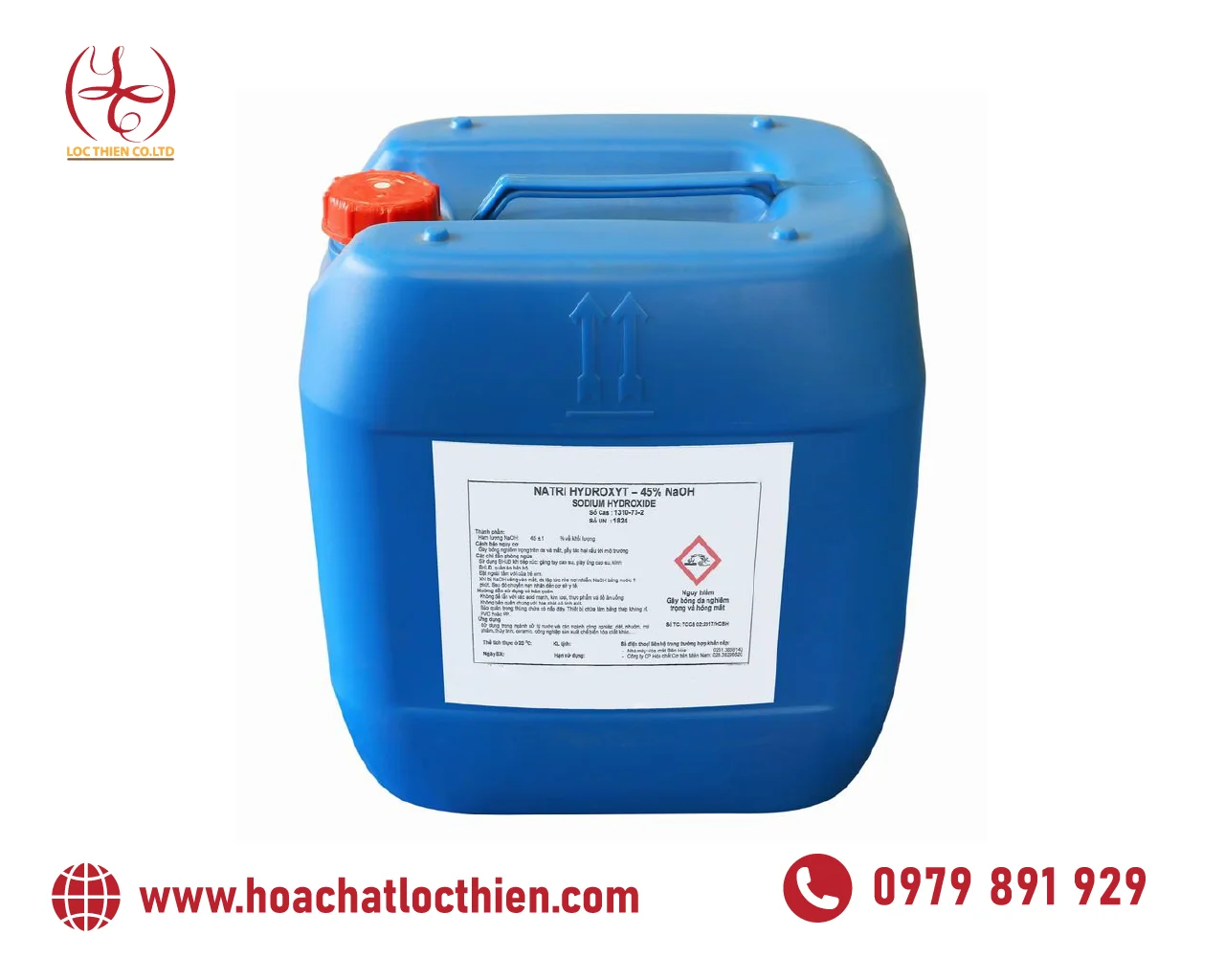
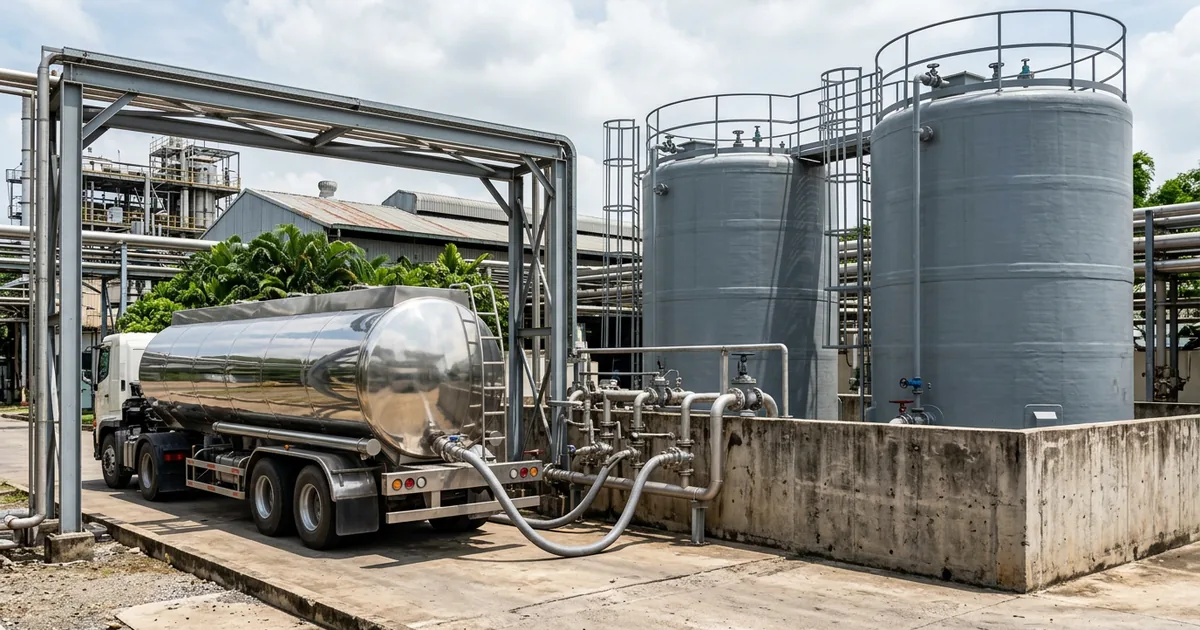
NaOH 32%: For facilities consuming≥ 3–5 tons/monthof solidNaOH 99%(equivalent to~9–15 tons/monthof32%liquid caustic), transitioning to factory-cooled commercial Liquid Caustic SodaNaOH 32%delivered in1,000 LIBC totes or5–30-tonbulk tankers reduces total chemical cost per dry-tonNaOHequivalent by15%–25%, while eliminating manual bag lifting, alkaline dust inhalation, and exothermic dissolution hazards. Furthermore,NaOH 32%has a low freezing point (+7.5 °C), preventing winter pipeline crystallization common with45%–50%grades (+12.5 °C to +15.5 °C).
3. Six-Step EHS Standard Operating Procedure (SOP) for Dissolving NaOH 99%
- Step 1 — Don Mandatory Alkaline PPE & Verify Local Exhaust Ventilation:
Hydroxide ions (
OH⁻) rapidly saponify fatty acids in human corneal epithelium, causing irreversible blindness within10–30 secondsof unwashed contact, while hot dissolution evolves irritating Sodium Hydroxide Aerosol Mist (OSHA PEL ceiling≤ 2.0 mg/m³). Operators must wear chemical splash goggles paired with a full-length polycarbonate face shield, anN95 / P2particulate-and-mist respirator, elbow-length Nitrile or Neoprene gauntlets, a heavy-duty PVC chemical apron, and chemical-resistant safety boots. - Step 2 — Inspect Emergency Eyewash & Drench Shower Station (ANSI Z358.1):
Confirm that the emergency eyewash and safety shower located within
10 meters(unobstructed10-secondwalk) of the dissolving tank deliver tepid potable water continuously for at least15–20 minutes. Never attempt to neutralize alkali splashes on skin or eyes with strong acids. - Step 3 — Charge 85%–100% of Cold Makeup Water (
≤ 28–30 °C) into the Tank First: Verify that the bottom drain valve is closed and pump cold water into the tank until the liquid level submerges the upper stainless steel dissolving basket by at least15–20 cm. Strictly NEVER pour water onto a pile of dry solidNaOH! Pouring water onto dry caustic causes instant localized steam explosion (> 140 °C) and projects boiling concentrated lye onto the operator. - Step 4 — Start Mechanical Agitator (
80–150 rpm) & Scrubber Exhaust Fan: Energize the top-entrySUS304/316Lturbine agitator or circulation pump before opening any chemical bags. - Step 5 — Feed
NaOH 99%Flakes or Pearls Gradually into the Submerged Basket: Cut open25 kgbags using a guarded safety knife and feed10–12 kg(half-bag) increments into the perforated basket every2–3 minutes. Continuously monitor the tank thermometer and keep bath temperature strictly≤ 60–65 °Cfor plastic tanks (PP/PPH/HDPE) or≤ 75 °CforSUS304/316Lstainless steel tanks. - Step 6 — Final Volume Makeup, Cooling & Hydrometer Verification (
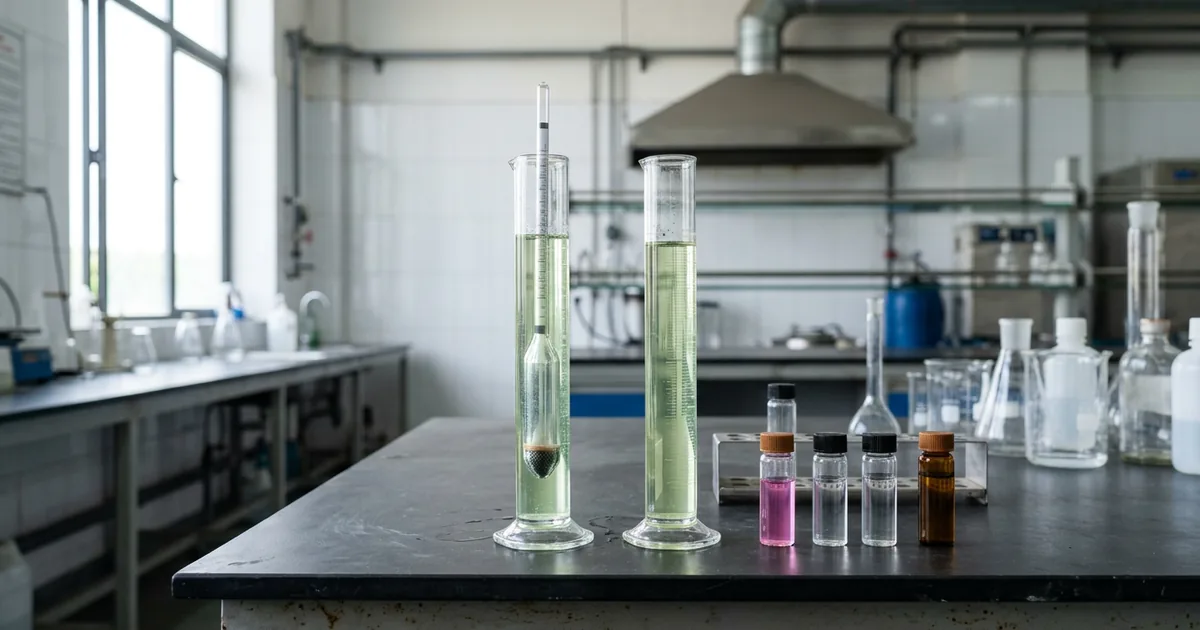
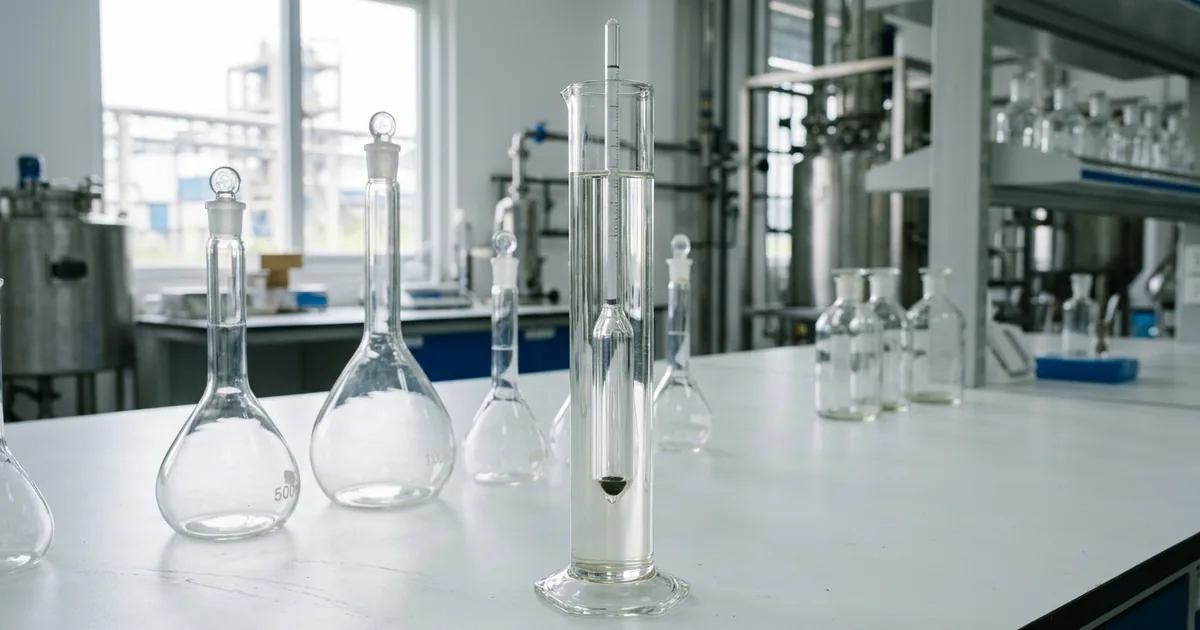
°Be/SG): Continue agitating for15–20 minutesafter the final bag is dissolved, top up with the remaining cold water to the calibrated volume mark, and allow the batch to cool to ambient temperature (20–25 °C). Measure specific gravity (SG) or Baume degree (°Be) against Table 1 (note: measuring density at60 °Creads0.020–0.025 g/cm³lower than at20 °Cdue to thermal expansion) before opening the transfer valve to the metering pump day-tank.
Technical QC Insight — Specialist Phan Cam Thuy (Quality Control Lab — Loc Thien Chemical): “During industrial dissolution of Caustic Soda Flakes / Pearls
NaOH 99%, besides controlling exothermic heat release (ΔH = -44.51 kJ/mol, keeping batch temperature< 80 °C), engineers should verify Sodium Carbonate (Na₂CO₃ ≤ 0.4% w/w) and Iron (Fe ≤ 15 ppm) on the batch COA. Bags exposed to humid air absorb atmosphericCO₂; onceNa₂CO₃ > 1.2%, the prepared alkali liquor turns turbid and precipitates calcium carbonate scale inside dosing pump heads.”
4. Dissolving Tank Material Selection, Carbon Steel Caustic Embrittlement & B2B Supply Standards
Table 2: Engineering Material Compatibility & Thermal Limits for NaOH Dissolving Systems
| Equipment / Piping Material | Compatible NaOH Concentration | Maximum Safe Operating Temp | Engineering Risk & Design Guideline |
|---|---|---|---|
Standard uPVC Plastic | 5% – 32% | ≤ 45 °C | ❌ Strictly prohibited for solid dissolving tanks and hot outlet nozzles: Exothermic heat (70–95 °C) softens uPVC rapidly, causing pipe sagging and catastrophic rupture. Use only for cooled ambient transfer lines. |
CPVC / PPH / Thick HDPE | 5% – 50% | ≤ 75 °C (PPH) | ✅ Suitable for low-to-medium concentration batch tanks (≤ 15% w/w). Must use thick-walled resin with external steel reinforcing hoops to prevent thermal creep. |
Carbon Steel (ASTM A36 / A106) | 10% – 50% | ≤ 55 °C (Unannealed) | ⚠️ When 20%–50% NaOH exceeds 60–65 °C, non-stress-relieved carbon steel welds suffer fatal intergranular Caustic Stress Corrosion Cracking (Caustic Embrittlement) unless Post-Weld Heat Treated (PWHT). |
Stainless Steel (SUS304 / SUS316L) | 5% – 50% | ≤ 95 °C | ✅ Gold-standard material for industrial solid NaOH dissolvers: Withstands localized exothermic thermal shock and alkaline corrosion for 10+ years with an integrated perforated dissolving basket. |
Aluminum (Al), Zinc (Zn), Galvanized Steel | 0% (Incompatible) | Prohibited | ❌ Extreme Explosion Hazard: Caustic soda dissolves amphoteric metals (2Al + 2NaOH + 2H₂O → 2NaAlO₂ + 3H₂↑), perforating vessels and generating explosive Hydrogen gas in headspaces. |
Role-Specific Guide for Global Procurement, Process/EHS Engineers & Accounting Teams
- For Global Procurement Teams: Loc Thien Chemical (
LOC THIEN INVESTMENT DEVELOPMENT COMPANY LIMITED) is a Tier-1 industrial supplier and distributor of Caustic Soda Flakes NaOH 99%, Caustic Soda Micropearls NaOH 99% Taiwan, and Liquid Caustic Soda NaOH 32%–50%, backed by3,000+ tons/monthsupply capacity and a dedicated fleet of5–30-tonbulk tankers. OurNaOHproduct line holds officialZDHC MRSL Version 3.1 Conformance Level 1certification issued byTÜV SÜD Product Service GmbH(Certificate No.ZDHC1 127736 0001 Rev. 00, Analytical Report No.2486017672-Q24VPS-CHM2869). Unit pricing is structured transparently around 5 factors: packaging format (25 kgwoven PE bags,1,000 LIBC totes, or5–30-tontankers), origin, monthly contract volume, delivery distance from our 6 regional warehouses (Ba Ria - Vung Tau, Dong Nai, Binh Duong, Da Nang, Can Tho, Bac Ninh), and payment terms. - For Process & EHS Engineers: Every shipment includes a batch-specific COA (verifying
NaOH ≥ 99.0%,Na₂CO₃ ≤ 0.4%,NaCl ≤ 0.03%,Fe ≤ 30 ppm) and a 16-section GHS Safety Data Sheet (MSDS), ensuring full compliance with Vietnam’s Law on Chemicals No.69/2025/QH15, Decrees24/2026/ND-CP,25/2026/ND-CP,26/2026/ND-CP, and QCVN 40:2025/BTNMT effluent standards. - For Accounting & Tax Compliance Teams: Full commercial documentation—including B2B sales contracts, certified weighbridge tickets, and legally compliant Vietnamese Electronic VAT Invoices (
e-VAT Invoices)—is issued promptly for seamless corporate tax deduction and export-processing zone (EPE) VAT refund audits.
5. Frequently Asked Questions on Safe Dissolution of Caustic Soda Flakes/Pearls (NaOH 99%) (FAQ)
1. Why does dissolving solid NaOH 99% generate extreme heat capable of deforming standard PVC or thin PE tanks?
The enthalpy of dissolution of solid NaOH is ΔH_sol = -44.5 kJ/mol (~1,112 kJ/kg NaOH). Preparing a 30% w/w batch starting from 30 °C water without cooling raises the solution temperature to 95 °C – 102 °C, exceeding the thermal softening limits of uPVC (60 °C) and thin PE (70 °C).
2. Why should 25 kg bags of NaOH flakes be fed into a submerged stainless steel mesh basket rather than dumped onto the tank floor?
Dumping bulk flakes directly onto the bottom creates a fused, rock-hard caustic cake (hydrate crust) that stalls agitator blades and causes localized boiling. Feeding into a SUS304/316 perforated basket submerged 10–15 cm below the water surface utilizes natural density convection (SG 1.15–1.33 sinking downward) to dissolve flakes 3× faster without caking.
3. When should a factory switch from manual NaOH 99% flake dissolution to bulk Liquid Caustic Soda NaOH 32%?
Factories consuming more than 3–5 tons/month eliminate manual handling hazards, exothermic boiling risks, and labor costs by switching to ready-to-dose Liquid Caustic Soda NaOH 32% delivered via 1,000 L IBC totes or 5–30-ton tankers.
Related Technical Resources & Products
- Industrial Category: Basic Industrial Chemicals
- Primary Product Pages: Caustic Soda Flakes NaOH 99% | Liquid Caustic Soda NaOH 32%–50% Vietnam
- GHS Safety Data Sheets (MSDS): MSDS Solid Caustic Soda NaOH 98%–99% | MSDS Liquid Caustic Soda NaOH 32%
- Engineering Dosing Calculator: Automated Chemical Dosing & Dilution Calculator
- Related Technical Guides: How to Mix & Dose NaOH in Wastewater Treatment | Caustic Soda Flakes vs. Pearls (NaOH 99%): Engineering Comparison | Hydrated Lime Ca(OH)₂ vs. Caustic Soda NaOH for Wastewater pH Control
- 15-Minute Technical Quotation (RFQ): Request a Bulk Caustic Soda NaOH Quotation — Hotline
0979 891 929(tel:0979891929) — Email:[email protected](Delivery within 4 hours in Ho Chi Minh City, 24–48 hours across Southern & Mekong Delta industrial zones, and 2–3 days to Central & Northern Vietnam; contact hotline 0979 891 929 for detailed delivery procedures).