Comparing Hydrated Lime Ca(OH)2 vs Liquid Caustic Soda NaOH 32% for Wastewater pH Neutralization & Heavy Metal Precipitation
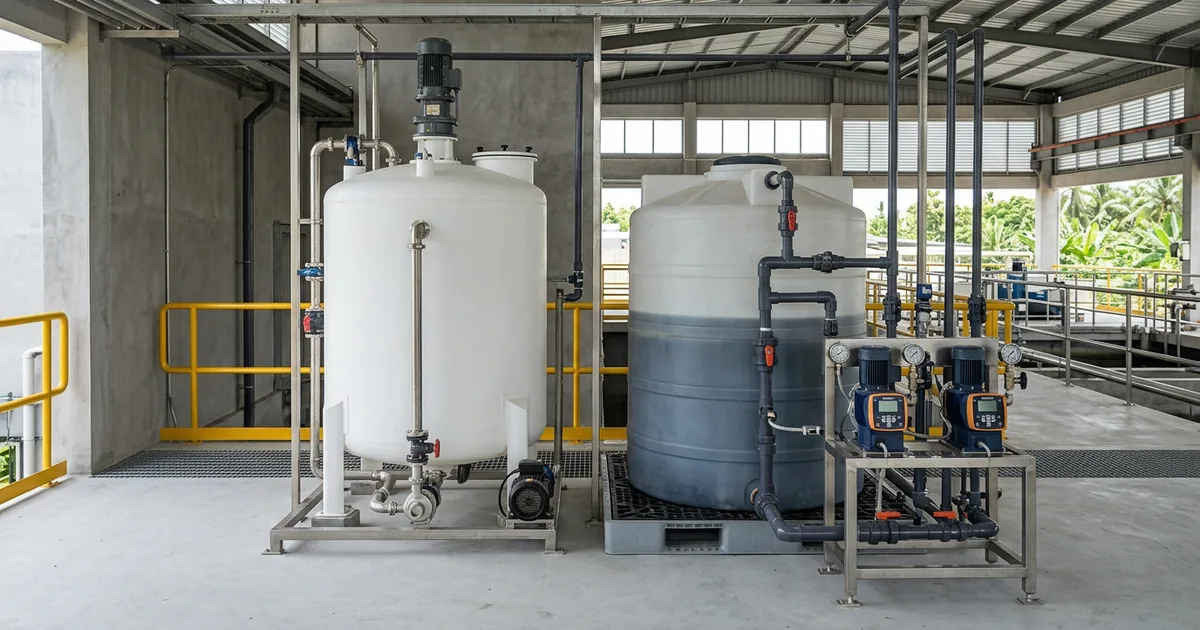
Key Technical Summary: When selecting an alkaline reagent for acid neutralization and heavy-metal precipitation in industrial wastewater treatment plants, engineers must evaluate Hydrated Lime [Calcium Hydroxide Ca(OH)2, equivalent weight 37.05 g/eq] and Caustic Soda [Sodium Hydroxide NaOH, equivalent weight 40.00 g/eq] on a Total Cost of Ownership (TCO) basis rather than raw chemical purchase price alone. Stoichiometrically, 1.00 kg of commercial Ca(OH)2 92% equals 1.00 kg of NaOH 99% flakes or 3.10 kg (2.30 L) of Liquid Caustic Soda NaOH 32%. However, neutralizing sulfate-rich acidic wastewater (SO42- > 1,500 mg/L) with Ca(OH)2 precipitates massive quantities of Gypsum sludge (2.32 kg dry CaSO4.2H2O per 1 kg Ca(OH)2), tripling hazardous sludge disposal costs. Conversely, NaOH 32% forms soluble Na2SO4 (zero gypsum sludge) and enables 100% clog-free PID dosing, whereas Ca(OH)2 remains mandatory whenever Fluoride (F-), Phosphate (PO43-), or high Sulfate must be precipitated.
Table of contents
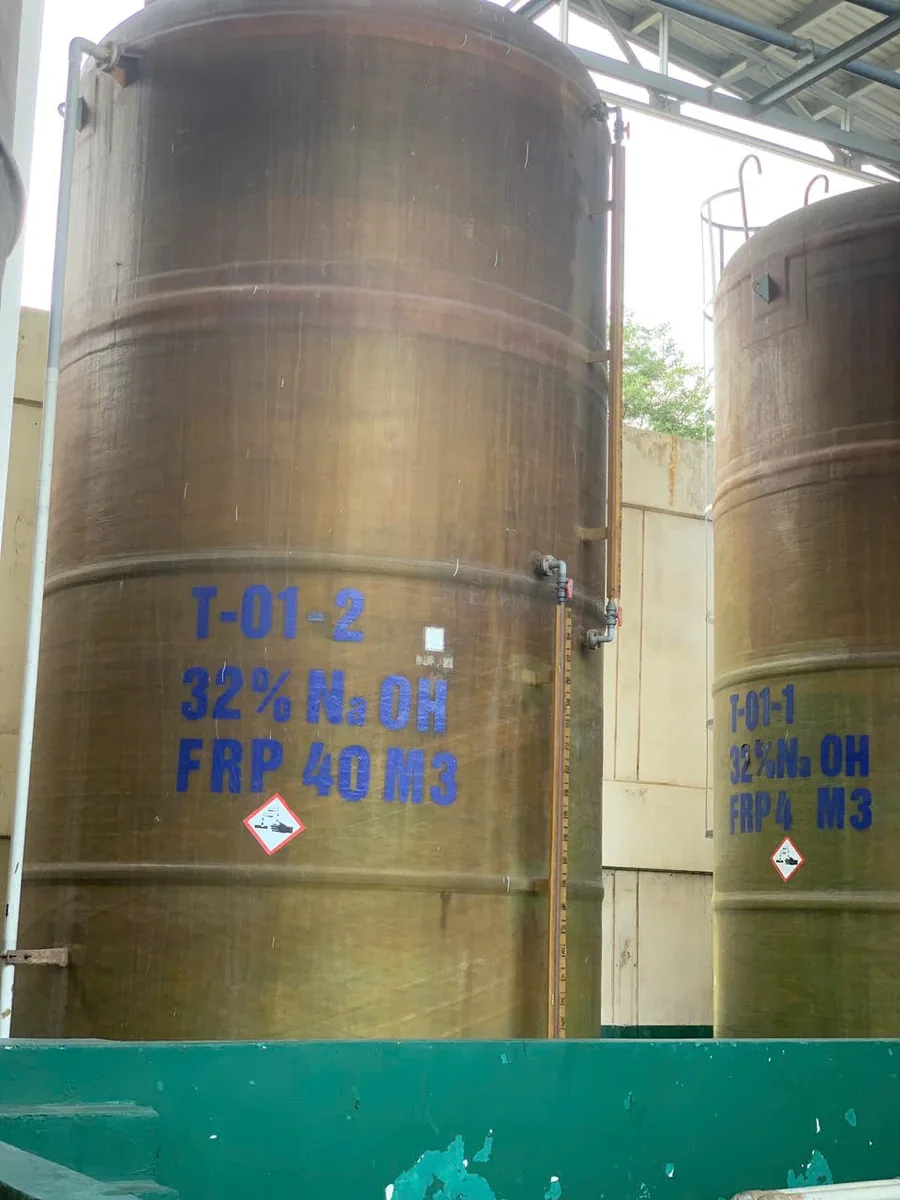
In designing pH neutralization and heavy-metal precipitation reactors for industrial wastewater treatment plants (ETP), choosing between Hydrated Lime Ca(OH)₂ 96% (CAS 1305-62-0) and Liquid Caustic Soda NaOH 32% w/w (CAS 1310-73-2, specific gravity 1.35 g/cm³ at 20 °C) cannot rely solely on per-kilogram purchase price, but must evaluate the Total Cost of Ownership (TCO)—including stoichiometric alkali equivalence, automated PID response speed, effluent Total Dissolved Solids (TDS), and hazardous filter-press sludge disposal fees. Stoichiometrically, 1.00 kg of commercial Ca(OH)₂ 92% provides the same neutralizing capacity as 1.00 kg of Caustic Soda Flakes NaOH 99% or 3.10 kg (2.30 L) of Liquid NaOH 32%; however, NaOH generates zero secondary gypsum sludge (CaSO₄·2H₂O), whereas Ca(OH)₂ remains strictly irreplaceable whenever high concentrations of Fluoride (F⁻), Orthophosphate (PO₄³⁻), or Sulfate (SO₄²⁻) must be chemically precipitated.
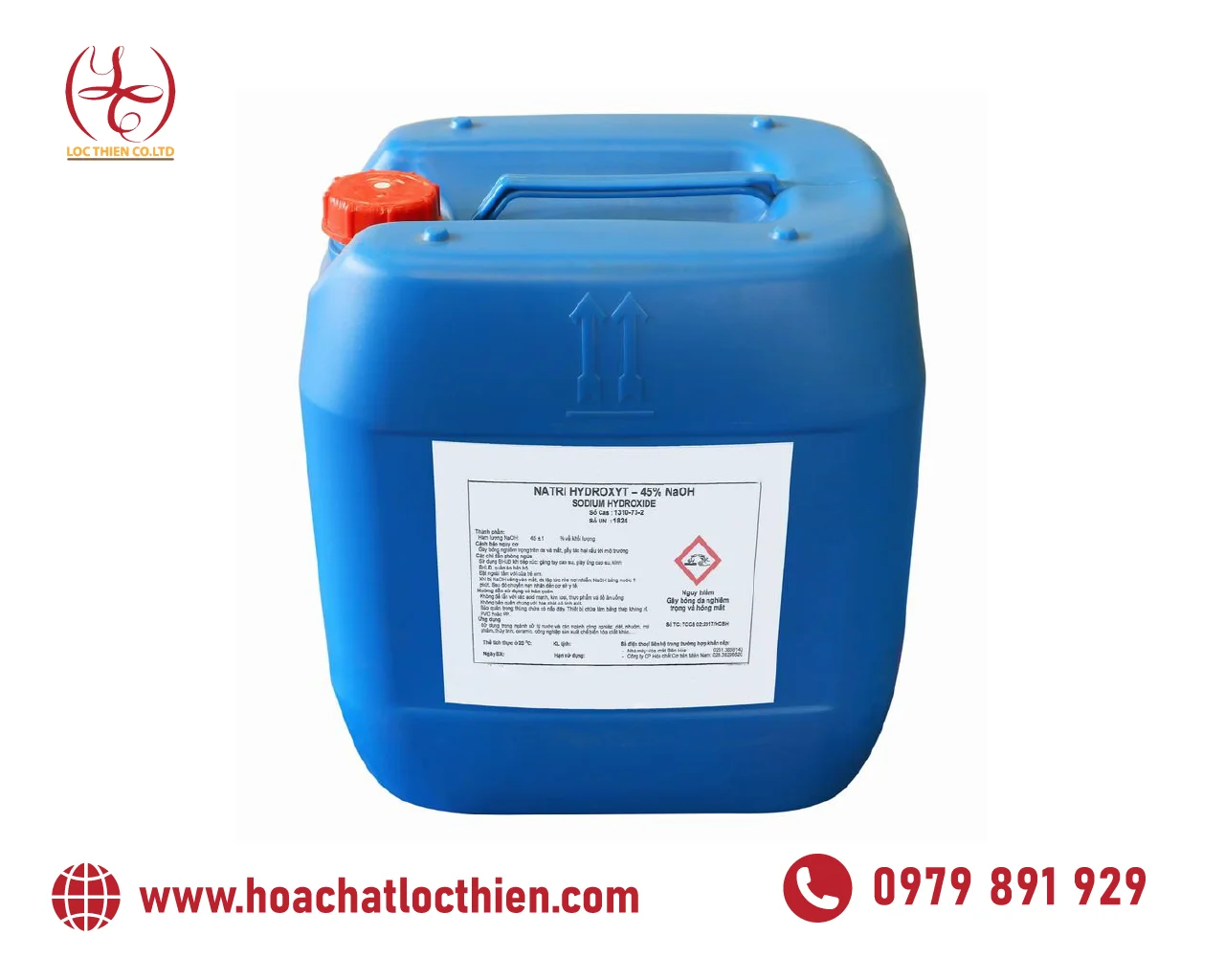
Loc Thien Chemical supplies both commercial-grade Hydrated Lime Ca(OH)₂ (25 kg / 50 kg bags, 1,000 kg jumbo bags) and Liquid Caustic Soda NaOH 32%–50% (30 kg jerrycans, 250 kg drums, 1,000 L IBC totes ≈ 1,350 kg net weight, and dedicated 5–30-ton bulk tankers) with batch-specific COAs from our 6-warehouse network across Vietnam.
1. How Do Stoichiometric Neutralization Equivalence (g/eq) and Acid Consumption Compare Between Ca(OH)₂ and NaOH?
When neutralizing an acidic industrial effluent stream containing mineral acids (H₂SO₄, HCl, HNO₃, or H₃PO₄), chemical consumption is governed by the reagent’s Gram Equivalent Weight (Equivalent Weight = Molar Mass M ÷ Hydroxyl Valence OH⁻) rather than its simple molecular weight:
- Calcium Hydroxide [
Ca(OH)₂, CAS1305-62-0,M = 74.09 g/mol, divalent base providing2 OH⁻]:- Theoretical equivalent weight:
74.09 ÷ 2 = 37.05 g/eq. - Sulfuric acid neutralization reaction:
H₂SO₄ + Ca(OH)₂ → CaSO₄·2H₂O↓ (Gypsum precipitate) + 2H₂O - Hydrochloric acid neutralization reaction:
2HCl + Ca(OH)₂ → CaCl₂ (soluble) + 2H₂O
- Theoretical equivalent weight:
- Sodium Hydroxide [
NaOH, CAS1310-73-2,M = 40.00 g/mol, monovalent strong base providing1 OH⁻]:- Theoretical equivalent weight:
40.00 ÷ 1 = 40.00 g/eq. - Sulfuric acid neutralization reaction:
H₂SO₄ + 2NaOH → Na₂SO₄ (completely soluble) + 2H₂O - Hydrochloric acid neutralization reaction:
HCl + NaOH → NaCl (soluble) + H₂O
- Theoretical equivalent weight:
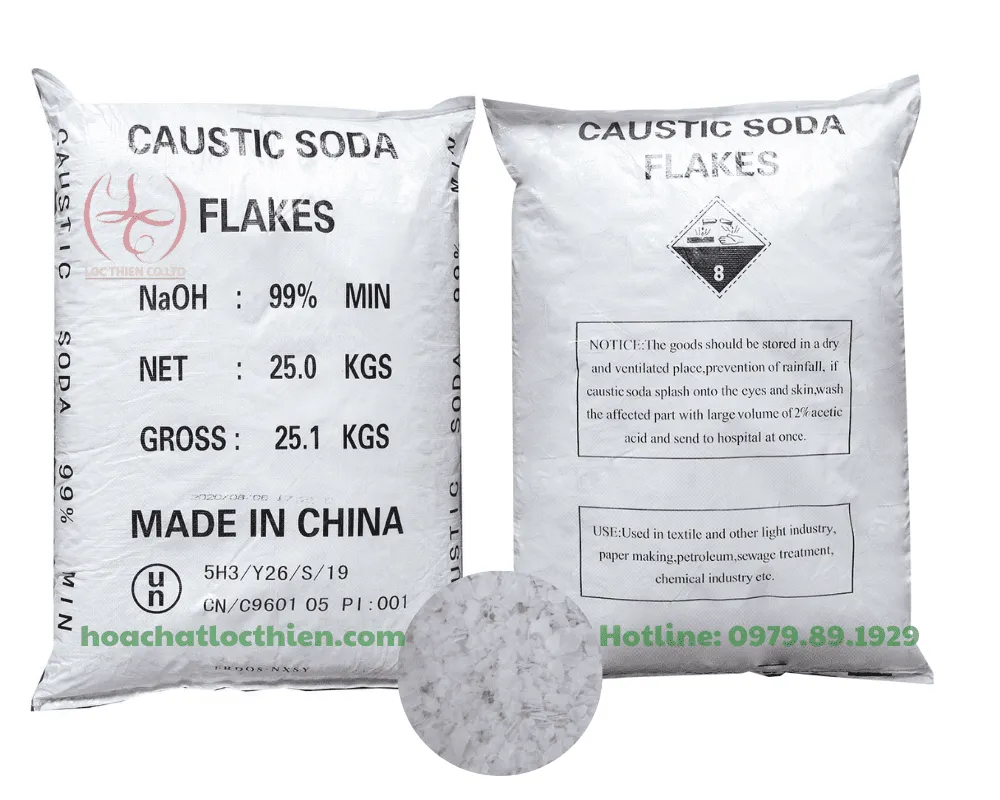
Because Ca(OH)₂ delivers two hydroxyl ions per molecule at a lower molecular weight (37.05 g/eq vs. 40.00 g/eq), 1.00 kg of pure 100% Ca(OH)₂ theoretically neutralizes the same acid load as 1.08 kg of pure 100% NaOH. Once adjusted for commercial purity and solid-liquid dissolution efficiency in continuous flow reactors (92% effective reactivity for Ca(OH)₂ powder vs. 100% homogeneous ionization for NaOH), 1.00 kg of commercial Hydrated Lime Ca(OH)₂ 92% equals exactly 1.00 kg of Caustic Soda Flakes NaOH 99% or 3.10 kg (2.30 L at SG = 1.35 at 20 °C) of Liquid Caustic Soda NaOH 32% w/w.
Table 1: Alkaline Reagent Consumption Required to Neutralize 100 kg of Pure Acid in Wastewater
| Acid Species in Wastewater | Molar Mass (g/mol) | Theoretical Ca(OH)₂ 100% (kg) | Practical Hydrated Lime Ca(OH)₂ 92% (kg) | Practical Caustic Flakes NaOH 99% (kg) | Practical Liquid Caustic NaOH 32% (kg / L) |
|---|---|---|---|---|---|
100 kg Sulfuric Acid (H₂SO₄) | 98.08 | 75.5 kg | 82.1 kg | 82.4 kg | 255.0 kg (189.0 L) |
100 kg Hydrochloric Acid (HCl) | 36.46 | 101.6 kg | 110.4 kg | 110.8 kg | 342.8 kg (254.1 L) |
100 kg Nitric Acid (HNO₃) | 63.01 | 58.8 kg | 63.9 kg | 64.1 kg | 198.4 kg (147.1 L) |
100 kg Phosphoric Acid (H₃PO₄ to HPO₄²⁻) | 98.00 | 75.6 kg | 82.2 kg | 82.5 kg | 255.2 kg (189.2 L) |
2. Multi-Dimensional Analysis: What Is the “Hidden Cost” of Gypsum Sludge (CaSO₄·2H₂O) vs. NaOH 32%?
The most frequent engineering and procurement mistake when comparing Ca(OH)₂ and NaOH is multiplying chemical dosage by unit purchase price while ignoring filter-press sludge generation and off-site hazardous waste disposal fees downstream of the clarifier.
2.1. Sulfate Precipitation & The Hazardous Sludge Cost Inversion
When acidic wastewater contains sulfuric acid (H₂SO₄) or high sulfate loads from alum/ferrous coagulants with SO₄²⁻ > 1,500 mg/L:
- When neutralizing with Liquid Caustic Soda
NaOH 32%: The reaction product is Sodium Sulfate (Na₂SO₄), which exhibits an aqueous solubility of195,000 mg/L(195 g/L) at20 °C. All neutralized sulfate passes through the sedimentation basin as a clear dissolved salt—generating0 kgof gypsum sludge (only target heavy-metal hydroxidesMe(OH)ₙprecipitate). - When neutralizing with Hydrated Lime
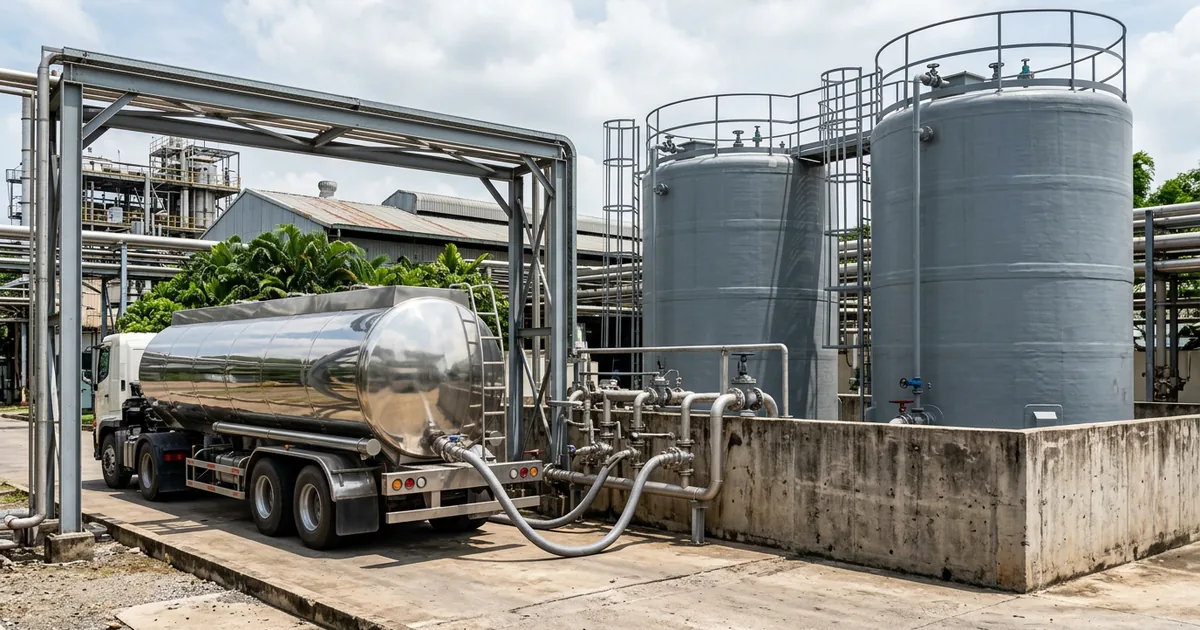
Ca(OH)₂: Calcium ions (Ca²⁺) react with sulfate ions to form Calcium Sulfate Dihydrate (CaSO₄·2H₂O— Gypsum,M = 172.17 g/mol,Ksp = 3.14 × 10⁻⁵), whose solubility ceiling in water is only~2,000 mg/L(2.0 g/L). Every sulfate ion exceeding this saturation limit crystallizes into dense solid sludge, compounded by4%–8%unreactive silica/carbonate grit inherent in commercial lime powder. Stoichiometrically, every100 kgofCa(OH)₂reacted withH₂SO₄above saturation generates up to232 kgof dry gypsum crystals (CaSO₄·2H₂O), which translates into660 – 750 kgof wet filter-press cake (at65%–70%moisture content) that must be hauled off-site! - In electroplating, PCB etching, steel pickling, and pigment plants where wastewater sludge is classified as Hazardous Industrial Waste due to co-precipitated
Cr, Ni, Cu, Zn, or Pb, third-party licensed hazardous sludge disposal fees typically cost2.5 – 3.5 times morethan the initial reagent savings achieved by buying lime instead of liquid caustic soda.
2.2. Where Ca(OH)₂ Is Chemically Irreplaceable: Co-Precipitating F⁻, PO₄³⁻, and Chelated Metals
Conversely, because all sodium salts (NaF, Na₃PO₄, Na₂SO₄) are highly soluble in water, NaOH alone can only raise pH and cannot remove toxic anions. Hydrated Lime Ca(OH)₂ supplies high-activity divalent Ca²⁺ ions that perform three essential chemical functions:
- Fluoride Removal (
F⁻in glass etching, solar cell, aluminum & stainless steel HF pickling):Ca²⁺ + 2F⁻ → CaF₂↓ (Fluorite, Ksp = 3.45 × 10⁻¹¹), reducing raw fluoride from500–3,000 mg/Ldown to10–15 mg/Lprior to PAC 31% polishing to meetQCVN 40:2025/BTNMTColumn A (F⁻ ≤ 5 mg/L). - Orthophosphate & High-Sulfate Removal:
5Ca²⁺ + 3PO₄³⁻ + OH⁻ → Ca₅(PO₄)₃OH↓ (Hydroxyapatite), achieving> 95%Total Phosphorus (TP) removal and lowering excessiveSO₄²⁻(> 3,000 mg/L) upstream of anaerobicUASBdigesters to preventH₂Smethanogen toxicity. - De-Chelation & Floc Ballasting: Divalent
Ca²⁺competitively displaces copper and nickel from citrate, tartrate, and EDTA complexes, while micro-crystallineCaCO₃ / CaSO₄nuclei act as a high-density weighting agent that accelerates clarifier settling velocity by1.8–2.5×and yields drier, non-blinding filter press cakes.
Table 2: Ten-Point Techno-Economic Comparison Matrix: Ca(OH)₂ 90%–96% vs. NaOH 32%
| Evaluation Criterion | Industrial Hydrated Lime Ca(OH)₂ 90%–96% | Industrial Liquid Caustic Soda NaOH 32% |
|---|---|---|
| 1. Physical Form & Pumping | 5%–10% suspended milk-of-lime slurry; requires continuous agitation and loop recirculation (v ≥ 1.5 m/s). | 100% homogeneous aqueous solution (SG = 1.35 at 20 °C); metered directly from IBC or bulk tank without mixing. |
| 2. Reaction Speed & PID Control | Slow (HRT = 15 – 25 min) due to solid-liquid particle dissolution; prone to pH overshoot and post-precipitation. | Instantaneous (≤ 5 – 15 sec, HRT = 3 – 5 min); linear PID setpoint tracking within ±0.1 pH. |
| 3. Pipe & Check-Valve Scaling | High risk if dead-end piping or air sparging is used (CaCO₃ scale coats pH probes and ball check valves). | 0% Clogging Risk — suction lines, injection quills, and check valves remain clean. |
| 4. Chemical Sludge Volume | Very High (100 kg Ca(OH)₂ + H₂SO₄ generates 232 kg dry CaSO₄·2H₂O = 660–750 kg wet filter cake). | Minimal (precipitates only stoichiometric heavy-metal hydroxides Me(OH)ₙ with zero gypsum sludge). |
| 5. Floc Settling & Cake Dewatering | Excellent: CaSO₄ / CaCO₃ micro-crystals act as a dense weighting agent for rapid settling and dry filter cakes. | Metal hydroxide flocs are lighter and gelatinous; requires proper PAC / Polymer conditioning. |
6. Removal of F⁻, PO₄³⁻, SO₄²⁻ | Mandatory: Precipitates insoluble CaF₂↓, Ca₅(PO₄)₃OH↓, and CaSO₄·2H₂O↓. | Ineffective (NaF, Na₃PO₄, and Na₂SO₄ remain 100% dissolved in effluent). |
7. Impact on Effluent TDS Salinity | Lowers or stabilizes TDS because both Ca²⁺ and SO₄²⁻ / CO₃²⁻ precipitate out of the aqueous phase. | Increases TDS & Electrical Conductivity (EC) as all Na⁺ ions remain dissolved in treated water. |
8. Downstream RO / UF Compatibility | High risk of severe CaSO₄ / CaCO₃ inorganic membrane scaling (LSI > 0) in wastewater reuse trains. | RO-Compatible (Na⁺ ions do not form low-solubility scale on UF/RO membranes). |
| 9. Biological Alkalinity Supplement | Supplies OH⁻ and Ca²⁺ to strengthen aerobic/anaerobic sludge granules in conventional activated sludge (CAS). | Rapidly supplies soluble bicarbonate alkalinity for nitrification (Aerotank / MBR) without fouling fine-bubble diffusers. |
10. ZDHC MRSL v3.1 Status (FDI) | Outside the 9 ZDHC-certified products of Loc Thien Chemical. | Certified TÜV SÜD ZDHC MRSL v3.1 Level 1 (Cert No. ZDHC1 127736 0001 Rev. 00). |
3. How Should Industrial Plants Select Between Ca(OH)₂, NaOH 32%, and Two-Stage Hybrid Neutralization?
Based on audit data across industrial wastewater treatment plants operating under Vietnam’s QCVN 40:2025/BTNMT (mandatory compliance roadmap through December 31, 2031), engineers should select their alkaline regime using three clear operational rules:
- When to Choose 100% Liquid Caustic Soda
NaOH 32%:- Small-to-Medium Automated ETPs (
≤ 500 m³/day): Eliminates manual bag cutting, lime dust exposure, slurry tank agitators, and daily pipeline flushing. - High Hazardous Sludge Disposal Cost Facilities (Electroplating, PCB, Surface Finishing, Battery): Eliminates
100%of gypsum and unreactive lime grit, cutting hazardous filter-press cake tonnage by50%–70%. - Membrane Bioreactors (
MBR), Reverse Osmosis (UF/RO) Water Reuse & Wet Scrubbers: Prevents calcium carbonate/sulfate scaling on hollow-fiber membranes, fine-bubble EPDM diffusers, and scrubber packing media.
- Small-to-Medium Automated ETPs (
- When to Choose Hydrated Lime
Ca(OH)₂ 96%:- Effluents Requiring Mandatory Anion Precipitation (
F⁻ > 15 mg/L, highPO₄³⁻, orSO₄²⁻ > 3,000 mg/L): Essential for aluminum anodizing, stainless steelHNO₃-HFpickling, glass/solar etching, and fertilizer/chemical plants.
- Effluents Requiring Mandatory Anion Precipitation (
- Engineering Best Practice for Large Acidic ETPs (
≥ 1,000 m³/day) — The Two-Stage Hybrid Neutralization SOP (Ca(OH)₂ + NaOH 32%):- Stage 1 Coarse Neutralization Tank (
HRT = 15–20 min, raisingpH 1.5–2.5 → pH 5.5–6.0): Dose10% w/wMilk of Lime slurryCa(OH)₂via a closed recirculation loop to absorb75%–85%of the bulk mineral acid load at minimal reagent cost while precipitatingCaF₂↓,Ca₅(PO₄)₃OH↓, and excess sulfate and providing dense calcium nuclei for flocculation. - Stage 2 Fine PID Trimming Tank (
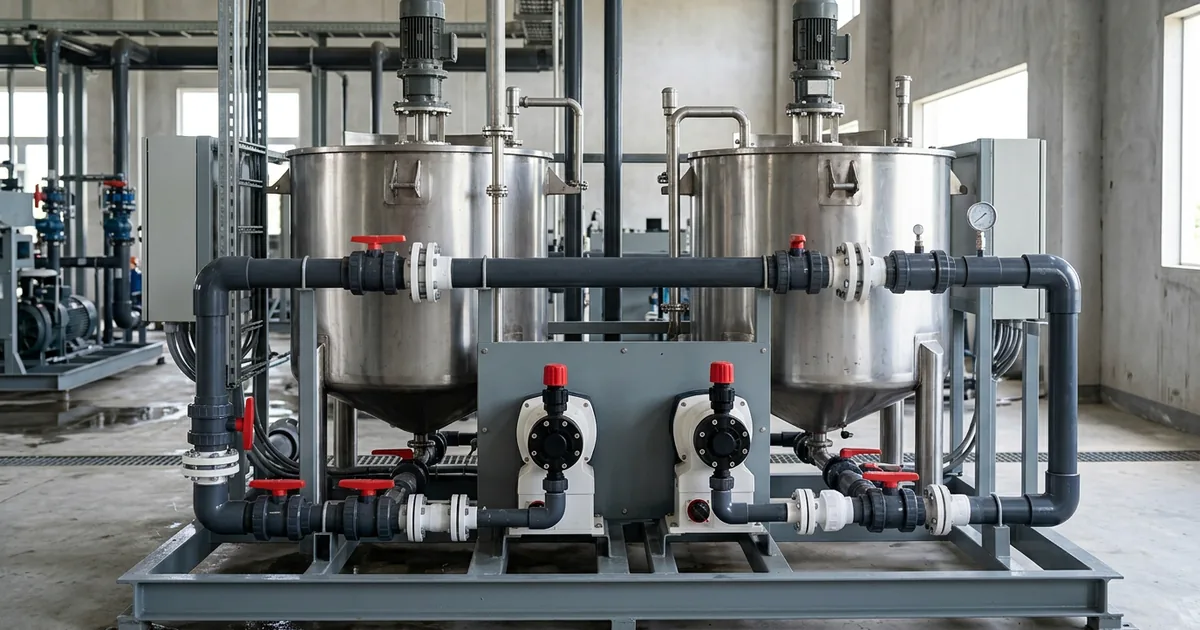
HRT = 3–5 min, trimmingpH 6.0 → pH 7.2–8.5): Dose Liquid Caustic SodaNaOH 32%via a VFD/pulse diaphragm metering pump controlled by an onlinePIDpH transmitter to handle the remaining15%–25%alkali demand with< 10-secondresponse time, preventing post-precipitation turbidity and guaranteeing stable discharge compliance.
- Stage 1 Coarse Neutralization Tank (
Expert Insight from QC Specialist Vo Thi Nhu Hoa (Loc Thien Chemical): “When auditing acid neutralization basins with influent sulfate exceeding
2,000 mg/L, we always run parallel Jar-tests measuring bothSV30settling velocity and oven-dry filter cake weight (g/L). Switching from single-stage lime dosing to a two-stage hybrid regime (Ca(OH)₂ 96%coarse neutralization topH 5.8followed byNaOH 32%PID trimming topH 7.5) typically reduces dry gypsum sludge generation by45%–60%while eliminating pH hunting and post-clarifier scaling.”
Mandatory Engineering Note: Actual reagent dosage and sludge yield must always be verified via bench-scale Jar-test titration on representative plant wastewater samples prior to full-scale pump calibration.
Role-Based Procurement, Engineering & Accounting Guide
- For Global Procurement Teams: Loc Thien Chemical operates as a commercial bulk supplier of both Hydrated Lime
Ca(OH)₂ 96%and Liquid Caustic SodaNaOH 32%–50%across our 6 standardized warehouses (Ba Ria - Vung Tau, Dong Nai, Binh Duong, Da Nang, Can Tho, Bac Ninh) backed by a3,000+ MT/monthsupply capacity and dedicated5–30-tontanker fleet. OurNaOHholds officialTÜV SÜD ZDHC MRSL v3.1 Level 1certification (Cert No. ZDHC1 127736 0001 Rev. 00), accompanied by batch-specific COAs and 16-section GHS SDSs. - For Process & EHS Engineers: Design
Ca(OH)₂slurry tanks withHRT ≥ 15–20 minand self-flushing ring mains (v ≥ 1.5 m/s, zero dead-legs); storeNaOH 32%inHDPE / FRPtanks equipped with110%secondary containment dikes. Enforce corrosive alkali PPE (GHS05, Hazard StatementsH314Causes severe skin burns and eye damage,H318Causes serious eye damage) and plumbed eyewash/safety showers under Vietnam’s Law on Chemicals No.69/2025/QH15. - For Accounting & Tax Compliance: Every delivery includes certified weighbridge tickets, batch COA documentation, and a legally compliant Vietnamese Electronic VAT Invoice (
e-VAT Invoice) issued under Decree70/2025/ND-CPand the Law on Value-Added Tax2024, ensuring 100% valid bank-transfer tax deduction and audit readiness.
Extended Engineering Application (Post-Biogas Swine Wastewater Nitrification Alkalinity): In post-biogas swine effluent (
NH₄⁺-N = 105–785 mg/L), biological nitrification consumes7.14 g CaCO₃ alkalinity per 1 g NH₄-N, frequently crashing aeration basinpH < 5.5. See our complete mass-balance guide on Alkalinity Supplementation & pH Control in Post-Biogas Swine Wastewater Nitrification: NaOH 32% vs Hydrated Lime Ca(OH)₂.
4. Frequently Asked Questions on Choosing Between Hydrated Lime Ca(OH)₂ and Caustic Soda NaOH (FAQ)
1. Why does neutralizing sulfate-rich acidic wastewater with Ca(OH)₂ generate 3–5× more sludge than using Liquid NaOH 32%?
Sodium ions (Na⁺) from NaOH form completely soluble Na₂SO₄ (195 g/L at 20 °C, 0 kg chemical precipitate), whereas calcium ions (Ca²⁺) from Ca(OH)₂ react with sulfate (SO₄²⁻ > 1,500 mg/L) to precipitate bulky gypsum sludge (CaSO₄·2H₂O↓, solubility limit ~2.0 g/L) plus 4–8% inert grit present in commercial lime.
2. Under what wastewater conditions is Hydrated Lime Ca(OH)₂ strictly superior to Caustic Soda NaOH?
Whenever wastewater contains high Fluoride (F⁻ > 20 mg/L), Orthophosphate (PO₄³⁻), concentrated Sulfate (SO₄²⁻ > 2,000 mg/L), or chelated heavy metals (Cu, Ni, Cr, Zn), Hydrated Lime Ca(OH)₂ 96% is indispensable because Ca²⁺ ions drive insoluble CaF₂↓ and hydroxyapatite (Ca₅(PO₄)₃OH↓) precipitation while acting as a dense weighting agent for rapid floc settling.
3. How does a hybrid two-stage “Ca(OH)₂ + NaOH 32%” dosing system optimize total plant OPEX?
Large ETPs dose Ca(OH)₂ 10% slurry in Stage 1 to neutralize 75–85% of bulk acidity and precipitate F⁻/PO₄³⁻/SO₄²⁻, then use Liquid Caustic Soda NaOH 32% in Stage 2 under PID control for instantaneous fine pH trimming (pH 7.0–7.5, < 10 sec response) without scaling downstream biological basins or UF/RO membranes.
Related Technical Resources & Products
- Industry Category: Industrial Water & Wastewater Treatment Chemicals
- Related Products: Industrial Hydrated Lime Ca(OH)₂ 96% Vietnam | Liquid Caustic Soda NaOH 32% Vietnam
- GHS Safety Data Sheets (16-Section MSDS): MSDS Calcium Hydroxide Ca(OH)₂ | MSDS Liquid Caustic Soda NaOH 32%
- Engineering Dosing Calculator: Online Chemical Dosing & Neutralization Calculator
- In-Depth Cluster Technical Guides:
- Request Technical Quotation Within 15 Minutes: Submit RFQ or Call Hotline
0979 891 929(Zalo / WhatsApp / WeChat) — Email:[email protected].