Viscose Rayon Spinning Technology & Zinc Sulphate ZnSO₄ 98% Acid Bath Control
Key Technical Summary: Technical guide to Zinc Sulfate Monohydrate (ZnSO₄·H₂O 98%, Zn ≥ 35%) in Müller-type spin baths for viscose rayon fiber regeneration. Batch COA/MSDS, 15-min quote. In Vietnam, Loc Thien Chemical (Tax ID: 0313650856) supplies industrial chemicals in bulk from 6 strategic industrial park warehouses (Ba Ria - Vung Tau, Dong Nai, Binh Duong, Da Nang, Can Tho, Bac Ninh) via a dedicated 5–30-ton tanker fleet with batch-specific COA and 16-section GHS SDS — contact hotline 0979 891 929 for a technical quote within 15 minutes.
Table of contents
Industrial Viscose Rayon spinning technology requires rigorous stoichiometric and thermodynamic control of the acid coagulation bath (Müller spinning bath) to develop a uniform skin-core cross-sectional microstructure in regenerated cellulose filaments. Loc Thien Chemical is a Tier-1 commercial industrial chemical supplier distributing high-purity Zinc Sulfate Monohydrate ZnSO₄·H₂O 98% (Zn ≥ 35.0% w/w, CAS 7446-19-7) in moisture-proof 25 kg double-PE-lined bags, paired with technical-grade Sulfuric Acid H₂SO₄ 98% delivered via dedicated 5–30-ton corrosion-resistant tankers. Divalent zinc cations (Zn²⁺) function as surface crystallization inhibitors that retard cellulose xanthate decomposition kinetics, elevating filament tenacity above 2.8 cN/dtex while reducing yarn breakage by 68% at high-speed spinning rates of 120–150 m/min. Technical B2B quotations with batch-specific COA are provided within 15 minutes via Hotline: 0979 891 929.
1. How Does the Viscose Rayon Spinning Process Work & Why Is the Müller Coagulation Bath Critical?
Viscose Rayon is a regenerated cellulosic fiber manufactured from high-alpha natural dissolving wood pulp (softwood conifer or eucalyptus pulp) that is chemically derivatized and extruded into continuous multifilament yarn or Viscose Staple Fiber (VSF) for woven apparel, nonwovens, hygiene wipes, and technical textiles. The industrial production train comprises steeping and alkalization of cellulose sheets with Liquid Caustic Soda NaOH 32% to form alkali cellulose, aging, xanthation with liquid carbon disulfide (CS₂) to form sodium cellulose xanthate, dissolution in dilute alkali to produce Viscose dope, ripening, multi-stage micro-filtration, and vacuum deaeration prior to metering through precious-metal spinnerets submerged directly inside the hot acid coagulation bath.
The Müller coagulation bath serves as the physicochemical heart of the spinning line. The instant strongly alkaline viscose dope emerges from thousands of precision capillary orifices (⌀ 50 – 80 µm) drilled into a Platinum–Gold (Pt-Au) alloy spinneret face and contacts the heated acid liquor, two simultaneous mass-transfer and reaction processes govern fiber formation:
- Physical Gelation via Salting-Out (
Coagulation): Concentrated Anhydrous Sodium Sulfate (Na₂SO₄) dissolved in the spin bath dehydrates the hydrophilic xanthate polyelectrolyte chains via osmotic salting-out, rapidly transforming the liquid viscose sol into an elastic, solidified hydrogel filament. - Chemical Acid Hydrolysis (
Cellulose Regeneration): Concentrated Sulfuric Acid (H₂SO₄ 98%) diffuses into the nascent gel filament, neutralizing freeNaOHand cleaving the dithiocarbonate (-OCS₂Na) ester groups to regenerate native cellulose macromolecules (Cell-OH) while liberating gaseousCS₂andH₂S.
If the spinning bath contains only H₂SO₄ and Na₂SO₄, acid neutralization and regeneration proceed too rapidly and uncontrollably across the filament cross-section, producing an all-core, brittle, porous fiber structure with low wet modulus and severe filament breakage across downstream Godet stretching rollers. Dosing Zinc Sulfate (ZnSO₄) into the Müller bath is the decisive engineering lever that modulates acid diffusion kinetics and builds a high-tenacity skin-core morphology.
2. How Does the Zinc Cellulose Xanthate Membrane Control Zn²⁺ Diffusion & Skin-Core Morphology?
Inside the coagulation bath, divalent Zn²⁺ ions dissociated from Zinc Sulfate Monohydrate ZnSO₄·H₂O 98% undergo instantaneous ion exchange with sodium cellulose xanthate macromolecules on the outer boundary layer of the extruded dope jet, precipitating a dense, water-insoluble zinc cellulose xanthate complex membrane around the nascent filament:
- Surface Formation of the Cross-Linked Zinc Cellulose Xanthate Membrane:
2Cell-OCS₂Na + ZnSO₄ → (Cell-OCS₂)₂Zn↓ + Na₂SO₄ - Competing Direct Acid Regeneration Reaction:
Cell-OCS₂Na + H₂SO₄ → Cell-OH + CS₂↑ + NaHSO₄(Uncatalyzed acid hydrolysis ratek_H ≫ k_Zn)
Because divalent Zn²⁺ bidentately cross-links two adjacent xanthate chains, the resulting (Cell-OCS₂)₂Zn complex exhibits 15 to 20 times greater chemical resistance to acid hydrolysis than uncomplexed sodium cellulose xanthate. This skin layer functions as a semi-permeable diffusion barrier that restricts the inward flux of hydronium ions (H₃O⁺) toward the filament center:
- Controlled Two-Way Counter-Diffusion Gradient: By retarding inward
H₃O⁺penetration and outward water counter-diffusion, the zinc xanthate cuticular membrane keeps the interior of the filament in a deformable, plastic gel state along the entire1.2 to 2.5 meterimmersion pathlength of the spinning trough. - Uniaxial Macromolecular Crystallite Orientation: While the filament remains in this plasticized zinc-xanthate gel state, applying
40% to 85%mechanical stretch (Draft Ratio) between sequentialGodetrollers aligns the regenerating cellulose chains parallel to the fiber axis, creating a high degree of uniaxial crystalline orientation. - Engineered Skin-Core Microstructure: The outer sheath (
Skin) develops a fine, densely packed crystalline fibrillar network that imparts high tensile tenacity, crease recovery, and abrasion resistance, whereas the inner zone (Core) retains a micro-void structure that delivers rapid moisture absorption and soft drape.
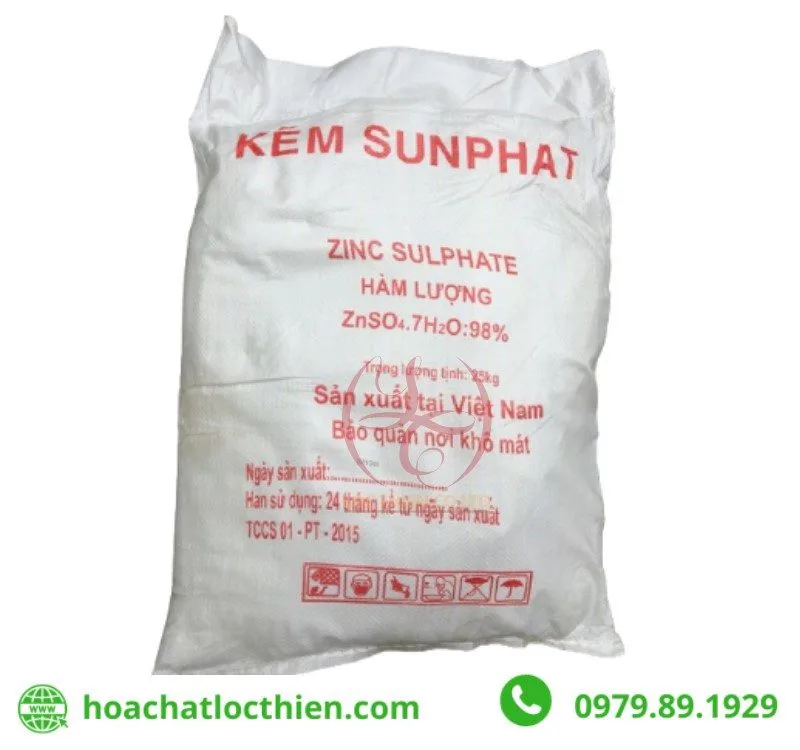
 Figure 1: High-purity Zinc Sulfate Monohydrate ZnSO₄·H₂O 98% (Zn ≥ 35%) palletized in moisture-proof 25kg bags at Loc Thien Chemical Central Distribution Hub.
3. Technical Data Sheet (TDS) & Purity Standards for Viscose Spinning Grade ZnSO₄ and H₂SO₄
Spinning-grade Zinc Sulfate demands stringent control over trace heavy metals and water-insoluble particulates. Even trace levels of Iron (Fe), Copper (Cu), Lead (Pb), Cadmium (Cd), or silica grit will discolor the yarn, catalyze oxidative photodegradation during bleaching, and plug the 50–80 µm capillaries of expensive Pt-Au spinnerets:
| Analytical Quality Parameter | Zinc Sulfate Monohydrate (ZnSO₄·H₂O) | Zinc Sulfate Heptahydrate (ZnSO₄·7H₂O) | Viscose Rayon Spinning Industry Standard (Per Batch COA) |
|---|---|---|---|
Commercial Salt Assay (% w/w) | ≥ 98.0% | ≥ 98.0% | High analytical purity with lot-to-lot consistency |
Elemental Zinc Content (Zn % w/w) | ≥ 35.0% | ≥ 22.0% | Primary active divalent cation forming (Cell-OCS₂)₂Zn skin barrier |
Total Iron Impurity (Fe) | ≤ 20 ppm | ≤ 30 ppm | ≤ 50 ppm maximum (Prevents yarn yellowing and whiteness loss) |
Heavy Metals (Pb & Cd) | ≤ 5 ppm (AAS / ICP-OES) | ≤ 5 ppm | Complies with man-made cellulosic fiber trace metal limits (Batch COA) |
| Water-Insoluble Matter | ≤ 0.02% | ≤ 0.02% | Prevents candle filter blinding and 50–80 µm spinneret orifice clogging |
| SSOT Packaging Specification | 25 kg PP woven bag with dual PE inner liner | 25 kg PP woven bag with dual PE inner liner | Factory-sealed moisture-barrier bags stored on dry plastic pallets |
| Co-Dosed Spin-Bath Reagents | Sulfuric Acid H₂SO₄ 98% (d = 1.84 g/cm³ at 20 °C) | Anhydrous Na₂SO₄ 99% & NaOH 32%–50% | H₂SO₄ 98% and liquid NaOH supplied via 5–30-ton dedicated tankers |
4. Optimal Müller Spinning Bath Operational Control Matrix
In continuous FDI viscose rayon plants, the concentrations of the three primary electrolytes inside the circulating Müller bath must be held within a tight dynamic equilibrium matched to the ripening degree (Hottenroth Index / Salt Index) of the incoming viscose dope:
| Müller Bath Operating Parameter | Standard Control Window | Process Impact When Concentration / Value Is Too High | Process Impact When Concentration / Value Is Too Low |
|---|---|---|---|
Zinc Sulfate (ZnSO₄) | 12 ~ 18 g/L (Equivalent to 1.2–1.8% w/v) | Overly thick horny skin layer, excessive fiber shrinkage, higher zinc recovery load in wash baths | Loss of skin-core structure, 30–40% drop in tensile tenacity, frequent filament breaks |
Sulfuric Acid (H₂SO₄) | 110 ~ 135 g/L (Equivalent to 9.5–11.5% w/w) | Premature acid hydrolysis strips the zinc xanthate barrier, yielding brittle, weak fibers | Incomplete alkali neutralization causes adjacent nascent filaments to fuse (Sticking filaments) |
Sodium Sulfate (Na₂SO₄) | 280 ~ 340 g/L (Equivalent to 23–27% w/w) | Glauber’s salt crystallization fouls spinneret faces and acid circulation heat exchangers | Insufficient osmotic salting-out dehydration; dope jet breaks up immediately at spinneret exit |
| Spin-Bath Temperature | 48 °C ~ 52 °C | Accelerates uncontrolled ester hydrolysis and localized CS₂ / H₂S gas bubbling inside fibers | Increases bath viscosity and depresses Zn²⁺ and H₃O⁺ mass-transfer diffusion coefficients |
Godet Stretch (Draft Ratio) | 55% ~ 75% | Exceeds viscoelastic gel elongation limit, causing mass tow breakage across Godet rollers | Poor macromolecular chain alignment, resulting in low tenacity and high elongation at break |
Process engineers can use the Loc Thien Chemical Online Chemical Dosing Calculator to compute continuous shift make-up rates for Zinc Sulfate and Sulfuric Acid based on daily fiber tonnage.
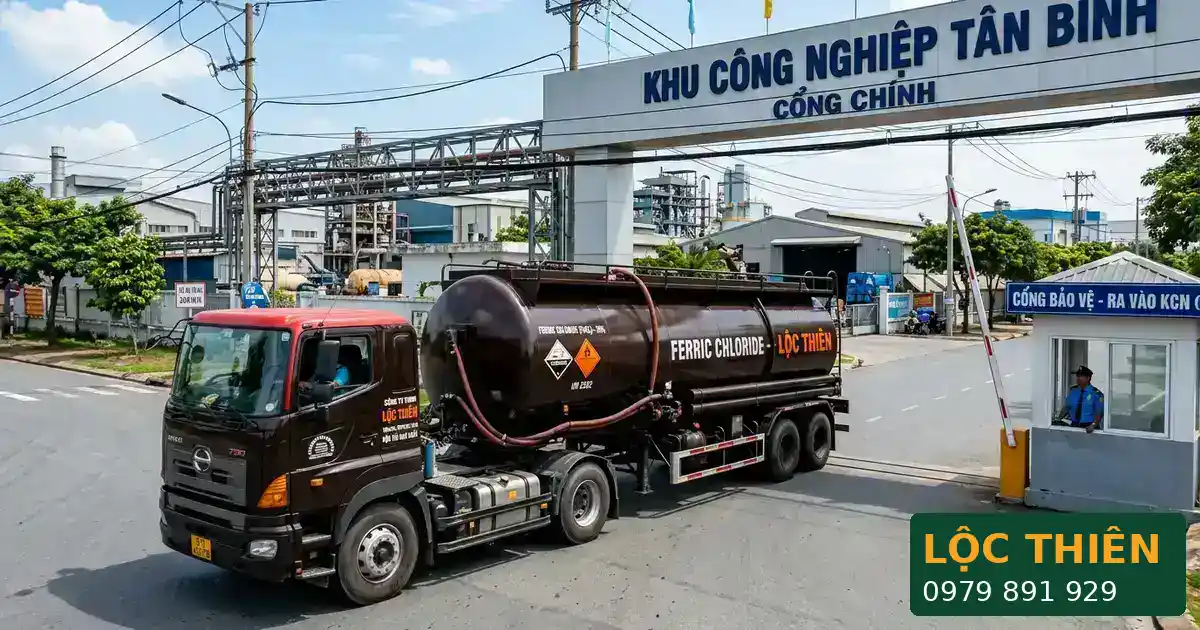
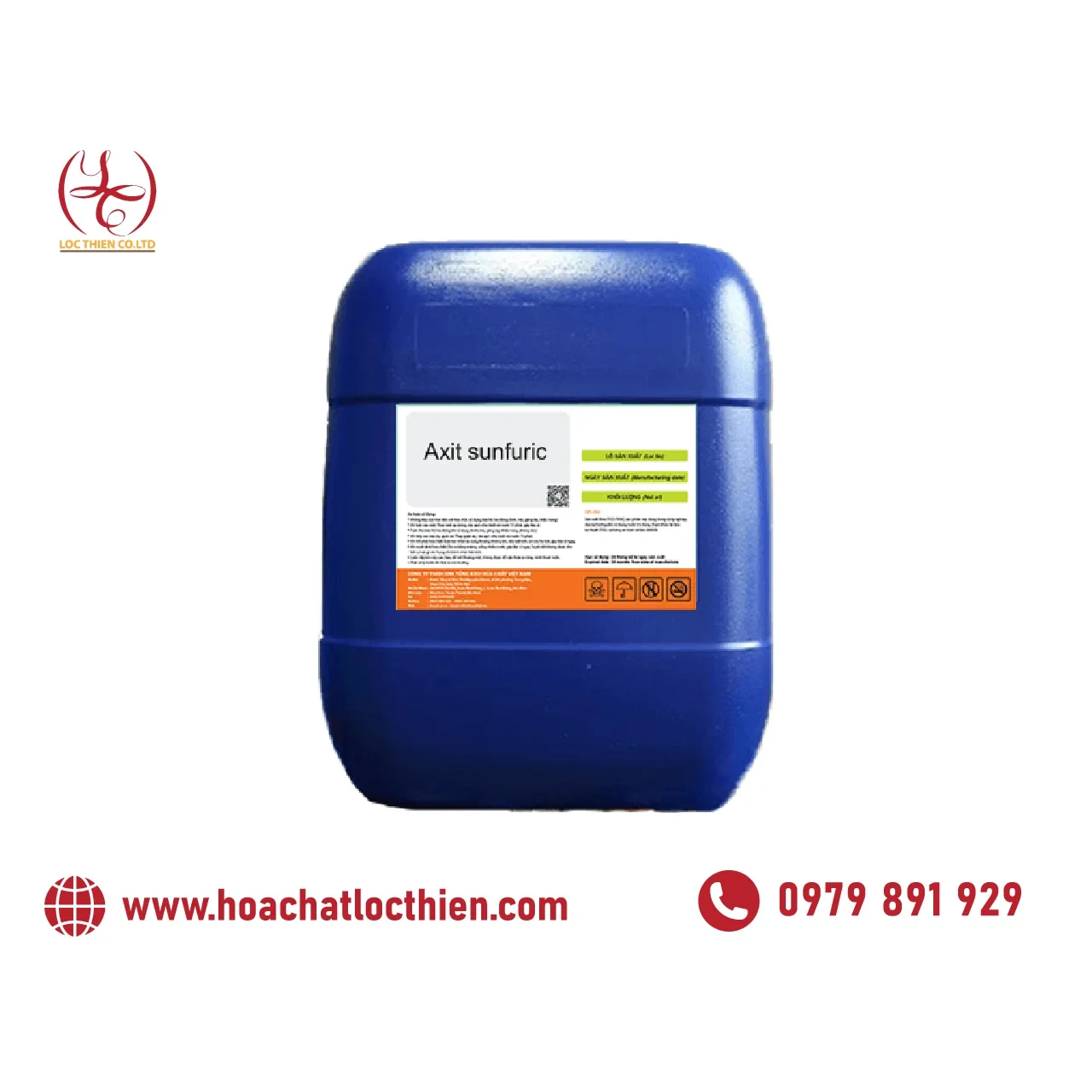 Figure 2: Loc Thien Chemical 5–30-ton dedicated tanker fleet delivering bulk Sulfuric Acid H₂SO₄ 98% and Liquid Caustic Soda directly into factory storage tanks.
5. Technical Calculation Example: Müller Spin-Bath Mass Balance & ZnSO₄·H₂O 98% Consumption
(Illustrative engineering calculation for continuous viscose filament / staple fiber production lines — Actual make-up rates must be calibrated to each mill’s evaporator recovery efficiency):
- Design Basis: A continuous viscose staple fiber (
VSF) line producing30 tons of dry fiber/day, circulating a Müller coagulation bath volumeV_bath = 60 m³controlled atH₂SO₄ = 115 g/L,Na₂SO₄ = 290 g/L, andZnSO₄ = 15.0 g/Lat48 ± 1 °C. - Zinc Sulfate (
ZnSO₄·H₂O 98%,Zn ≥ 35.0%) Mass Balance:- Accounting for tow liquor carry-over from the coagulation bath into the hot stretch bath (
92 °C) after multi-effect vacuum evaporator recovery, net zinc sulfate make-up averages11.5 – 14.0 kg ZnSO₄·H₂O per ton of finished fiber. - At
30 tons/dayfiber output, daily make-up of Zinc Sulfate Monohydrate ZnSO₄·H₂O 98% charged into the central dissolving station is345 – 420 kg/day(14 – 17 bags × 25 kg/day, or~10.5 – 12.6 tons/month). - Concurrent make-up of Industrial Sulfuric Acid H₂SO₄ 98% (
TÜV Rheinland ZDHC MRSL v3.1 Level 1 — CSR No. 248162921-01) for alkali neutralization and cellulose regeneration is~0.95 – 1.10 tons H₂SO₄ 98% per ton of fiber.
- Accounting for tow liquor carry-over from the coagulation bath into the hot stretch bath (
6. GHS Safety, Spinneret Impurity Control & Multi-Department Procurement Guide
“In continuous viscose rayon spinning through Pt-Au alloy spinnerets with 50–70 µm capillary orifices, the two critical parameters of Zinc Sulfate Monohydrate (ZnSO₄·H₂O 98%) are water-insoluble matter ≤ 0.02% and total iron (Fe) ≤ 20 ppm. At the Loc Thien Chemical QC Laboratory, every batch undergoes 10% w/w solution transmittance testing and Atomic Absorption Spectroscopy (AAS) screening to verify Pb/Cd ≤ 5 ppm and prevent spinneret orifice plugging.” — QC Specialist Phan Cam Thuy (Quality Assurance Laboratory, Loc Thien Chemical)
- GHS Storage Rules & Wastewater Zinc (
Zn²⁺) Abatement:- Storage & GHS Handling (
ZnSO₄·H₂O 98%— GHS Signal Word:Danger, Hazard StatementsH302, H318, H410): Because monohydrate powder is hygroscopic, store sealed25 kgdouble-PE-lined PP bags on dry plastic pallets (≥ 30 cmfrom walls); operators must wearEN 166chemical splash goggles, impervious gloves, andN95dust respirators during tank charging. - Wastewater Zinc (
Zn²⁺) Precipitation: Acidic wash effluent containingZn²⁺is neutralized using Liquid Caustic Soda NaOH 32% or Hydrated Lime Ca(OH)₂ 96% within the narrow amphoteric precipitation window ofpH 8.8 – 9.5(verified via laboratoryJar-test) followed by Ferrous Chloride FeCl₂ 30% coagulation to meetQCVN 40:2025/BTNMTColumn A (Total Zn ≤ 2.0 mg/L).
- Storage & GHS Handling (
- Multi-Department Decision & Compliance Guide (Procurement / Process & EHS Engineers / Accounting):
- For Global Procurement Teams: Loc Thien Chemical is a Tier-1 Industrial Chemical Supplier providing the complete viscose spinning and textile chemical portfolio—including
Zinc Sulfate Monohydrate ZnSO₄·H₂O 98%(25 kgbags),Sulfuric Acid H₂SO₄ 98%(TÜV Rheinland ZDHC MRSL v3.1 Level 1 — CSR No. 248162921-01),Anhydrous Sodium Sulfate Na₂SO₄ 99%(TÜV SÜD ZDHC Level 1 — Cert No. ZDHC1 127736 0003 Rev. 00), andCaustic Soda NaOH 32%–50%(TÜV SÜD ZDHC Level 1 — Cert No. ZDHC1 127736 0001 Rev. 00)—and is the Direct Manufacturer ofFerrous Chloride FeCl₂ 30%(CSR No. 248162921-02). (Compliance Note: ZDHC MRSL v3.1 Level 1 certification applies strictly to our 9 certified core products includingH₂SO₄,Na₂SO₄,NaOH, andFeCl₂;ZnSO₄is supplied as a high-purity industrial spinning reagent outside the ZDHC MRSL scope). Backed by3,000+ tons/monthcapacity,5–30-tondedicated tankers, and 6 regional warehouses across Vietnam, we provide technical quotations within 15 minutes (Ho Chi Minh City delivery within4 hours, Southern & Mekong Delta industrial zones24–48 hours, Northern & Central Vietnam2–3 days; contact hotline0979 891 929for detailed delivery procedures). - For Process & EHS Engineers: Every lot is delivered with a batch-specific COA, 16-section GHS SDS, and full Group 2 Industrial Precursor traceability documentation for
Sulfuric Acid H₂SO₄compliant with theLaw on Chemicals No. 69/2025/QH15andDecree 24/2026/ND-CP. - For Accounting & Tax Compliance: Official Vietnamese Electronic VAT Invoices (
e-VAT InvoiceunderDecree 70/2025/ND-CPand the2024 Law on VAT), commercial contracts, and bank transfer documentation for full input tax credit.
- For Global Procurement Teams: Loc Thien Chemical is a Tier-1 Industrial Chemical Supplier providing the complete viscose spinning and textile chemical portfolio—including
7. Frequently Asked Questions on Zinc Sulfate ZnSO₄ 98% in Viscose Spinning (FAQ)
1. Why do viscose rayon plants prefer Zinc Sulfate Monohydrate (ZnSO₄·H₂O 98%, Zn ≥ 35%) over Heptahydrate (ZnSO₄·7H₂O, Zn 22%)?
ZnSO₄·H₂O 98% (Zn ≥ 35.0%) delivers 1.59× more elemental Zinc per kilogram than heptahydrate (Zn ≥ 22.0%), reducing freight weight and warehouse footprint by 37% while resisting thermal caking in tropical storage (> 35 °C).
2. What happens if the ZnSO₄ concentration in the Müller coagulation bath drops below 10 g/L or exceeds 20 g/L?
Below 10 g/L ZnSO₄, the protective zinc cellulose xanthate (Cell-OCS₂)₂Zn skin is too thin to retard H₂SO₄ diffusion, causing brittle core coagulation, loss of skin-core orientation, and frequent filament breakage across the Godet stretch rollers. Exceeding 20 g/L overly thickens the skin and increases zinc recovery load.
3. How is dissolved Zinc (Zn²⁺) removed from spinning wash water to comply with Total Zn ≤ 2.0 mg/L (Column A, QCVN 40:2025/BTNMT)?
Because zinc hydroxide Zn(OH)₂↓ is amphoteric, it precipitates completely only within pH 8.8 – 9.5 (above pH 10.5, it redissolves into soluble zincate ions Zn(OH)₄²⁻). Automated PID dosing of NaOH 32% or Ca(OH)₂ locked at pH 9.0 ± 0.2 with PAC 31% and anionic polymer achieves effluent Zn < 0.5 mg/L.
Related Technical Resources & Products
- Specialized Category: Industrial Textile Dyeing & Fiber Spinning Chemicals
- Primary Product Pages: Zinc Sulfate Monohydrate ZnSO₄ 98% (Zn ≥ 35% — 25kg Bag) | Industrial Sulfuric Acid H₂SO₄ 10%–98%
- GHS 16-Section Safety Data Sheets (MSDS): MSDS Sulfuric Acid H₂SO₄ 98% | MSDS Liquid Caustic Soda NaOH 50%
- Engineering Dosing Calculator: Online Spin-Bath & Wastewater Chemical Dosing Calculator
- In-Depth Technical Cluster Articles: Sulfuric Acid H₂SO₄ Specific Gravity & Concentration Chart and Safe Dilution Rules | Application of Anhydrous Sodium Sulfate Na₂SO₄ 99% as a ZDHC-Compliant Cotton Dyeing Electrolyte | Safe Dissolution & Boil-Over Prevention Guide for Caustic Soda Flakes & Pearls NaOH 99%
- 15-Minute Technical Quotation & RFQ: Request a Batch COA & B2B Quote for ZnSO₄ 98% and H₂SO₄ 98%