
Advanced Removal of Total Phosphorus (TP ≤ 3 mg/L), Refractory Humic Color & Coliform in Swine Effluent: FeCl3 40%, Fenton Oxidation (FeCl2 + H2O2) & Breakpoint Chlorination
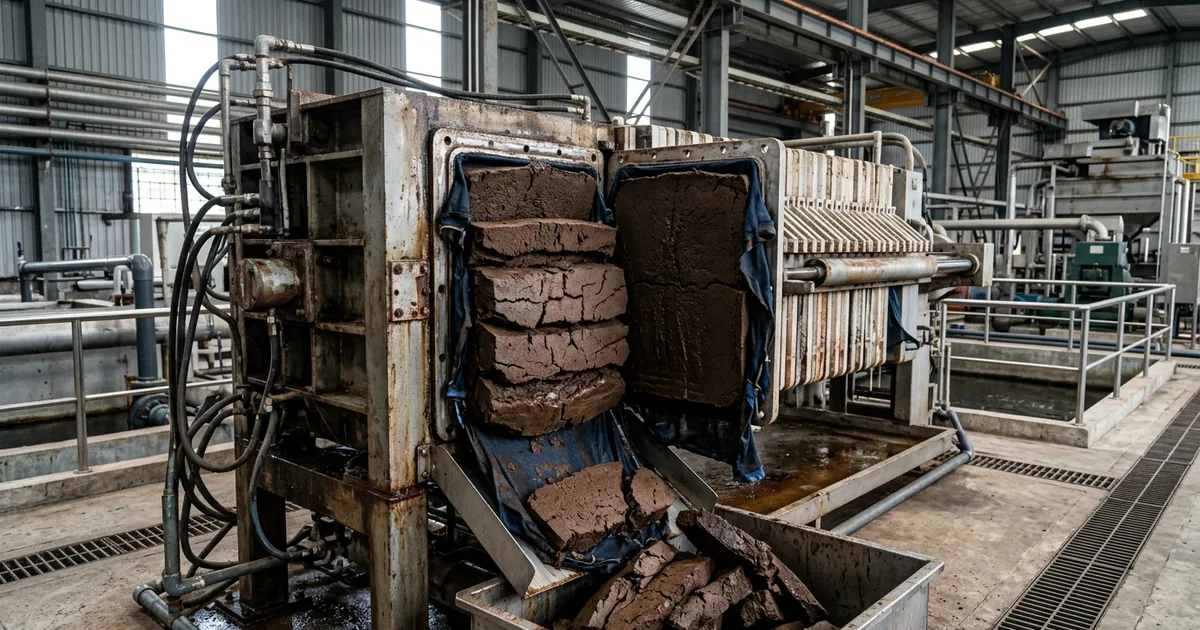
Table of contents
To achieve guaranteed compliance with Vietnam’s QCVN 62:2025/BTNMT livestock effluent regulation for Total Phosphorus (TP ≤ 2–3 mg/L), refractory dark-brown humic color, and pathogenic Coliform after biological treatment, industrial swine farms must integrate tertiary chemical precipitation using directly manufactured Liquid Ferric Chloride (FeCl₃ 40%) at a practical operating molar ratio of Fe:P = 1.5–2.5 : 1 (0.20–0.33 kg FeCl₃ 40%/m³ per 10 mg/L P removed), homogeneous Fenton oxidation (0.25–0.50 kg H₂O₂ 50%/m³ catalyzed by FeCl₂ 30%) to cut residual COD below 65–150 mg/L, and Breakpoint-controlled Sodium Hypochlorite (Javen 10%) disinfection while keeping cumulative Chloride (Cl⁻ ≤ 600 mg/L).
Within the end-to-end architecture of the complete chemical treatment protocol for post-biogas swine wastewater under QCVN 62:2025/BTNMT, the secondary Anoxic–Oxic (A/O) biological train removes biodegradable organic matter (BOD₅) and oxidizes ammonium nitrogen (NH₄⁺-N). However, even when the biological reactors operate at peak efficiency, effluent overflowing the secondary biological clarifier routinely fails three critical regulatory parameters during environmental inspection audits: Total Phosphorus (TP), non-biodegradable humic COD and dark tea color, and fecal Coliform / E. coli. This engineering guide delivers the complete thermodynamic equations, stoichiometric dosing tables, and ASTM D2035 Jar-Test protocols required to design and operate the secondary/tertiary physicochemical polishing train.
1. Why Total Phosphorus (TP) Under QCVN 62:2025/BTNMT Is the Biggest Challenge After Biological Treatment & How FeCl₃ 40% Precipitates FePO₄
1.1. The Biological Phosphorus Bottleneck: Why Biogas Digesters and A/O Reactors Cannot Meet TP Limits Alone
Unlike nitrogen—which escapes the aqueous phase entirely as inert nitrogen gas (N₂↑) through sequential nitrification and denitrification—phosphorus (P) has no gaseous pathway under normal wastewater treatment conditions. Every gram of dietary phytate phosphorus and mineral dicalcium/monocalcium phosphate (DCP/MCP) excreted in swine manure and urine must either be captured in settled sludge or discharged in the liquid effluent.
Field mass-balance audits across large-scale commercial pig farms in Vietnam reveal a stark stoichiometric reality:
- Across Stage 0 Covered HDPE Biogas Digesters: Anaerobic hydrolysis and methanogenesis retain only 7.0% of incoming Total Phosphorus in bottom digestate sludge (primarily via spontaneous struvite MgNH₄PO₄·6H₂O or calcium phosphate deposition). Meanwhile, 93.0% of organic phosphorus is mineralized into soluble orthophosphate species (H₂PO₄⁻, HPO₄²⁻, PO₄³⁻), driving post-biogas soluble phosphate concentrations to 30.6 – 187.65 mg/L PO₄³⁻ (equivalent to 25 – 95 mg/L Total P).
- Across Stage 2 Anoxic–Oxic (A/O) Biological Tanks: Heterotrophic and autotrophic bacteria assimilate phosphorus strictly for cellular synthesis (ATP, cell-wall phospholipids, and nucleic acids) according to the canonical BOD₅ : N : P = 100 : 5 : 1 mass ratio. Because the upstream anaerobic biogas lagoon has already consumed 75–85% of raw BOD₅ to generate CH₄, the carbon-depleted biogas effluent supports only 15–25% biological phosphorus assimilation.
- The Regulatory Compliance Gap Under QCVN 62:2025/BTNMT: Effluent exiting the secondary biological clarifier still contains 20 – 65 mg/L Total P. However, Vietnam’s national technical regulation QCVN 62:2025/BTNMT enforces stringent discharge thresholds based on receiving water classification:
- Discharge into enclosed lakes, ponds, and lagoons (eutrophication-sensitive bodies): TP ≤ 2 mg/L (Column A) to TP ≤ 3 mg/L (Column B).
- Discharge into rivers, streams, canals, and ditches: TP ≤ 4–6 mg/L (Column A) to TP ≤ 8–14 mg/L (Columns B/C depending on daily flow rate).
Consequently, biologically treated swine effluent exceeds legal Total Phosphorus thresholds by 5 to 15 times. Without a dedicated trivalent metal precipitation stage, no conventional biological swine wastewater plant can pass environmental inspection.
1.2. Thermodynamic Mechanism of FePO₄ Precipitation Using Directly Manufactured Liquid Ferric Chloride (FeCl₃ 40%)
To convert dissolved orthophosphate ions into an insoluble crystalline/amorphous solid phase that settles rapidly in the tertiary clarifier, dosing Liquid Ferric Chloride (FeCl₃ 40% Wastewater Grade)—manufactured directly by Loc Thien Investment Development Co., Ltd. (Loc Thien Chemical)—provides the highest thermodynamic driving force among industrial coagulants.
Upon rapid mixing into secondary biological effluent, trivalent ferric ions (Fe³⁺) react selectively with dissociated orthophosphate species according to the primary precipitation equation:
Fe³⁺ + HₙPO₄³⁻ⁿ → FePO₄↓ (dense yellowish-white insoluble precipitate) + nH⁺
From an aqueous thermodynamic perspective at 25 °C:
- The solubility product constant of ferric phosphate (FePO₄) is Ksp = 1.3 × 10⁻²², which is more than 75 times lower than aluminum phosphate (AlPO₄, Ksp = 9.84 × 10⁻²¹) and orders of magnitude less soluble than calcium hydroxyapatite at neutral pH.
- Minimum FePO₄ solubility occurs within the weakly acidic to near-neutral window of pH = 5.0 – 6.5 (remaining highly effective up to pH 6.8 in organic-rich livestock matrices).
- Concurrently, excess Fe³⁺ undergoes stepwise hydrolysis to form polynuclear hydroxo complexes ([Fe₂(OH)₂]⁴⁺, [Fe₃(OH)₄]⁵⁺) and high-density amorphous Fe(OH)₃↓ sweep flocs. These positively charged ferric hydroxide flocs adsorb particulate organic phosphorus, pinpoint biological sludge carryover, and negatively charged humic macromolecular colloids.
For a deeper thermodynamic derivation of ferric phosphate nucleation kinetics and pH-solubility curves, process engineers can consult our dedicated technical monograph on FeCl₃ phosphate precipitation mechanisms and FePO₄ stoichiometry.
1.3. Stoichiometric Dosing Calculation: From 1:1 Theoretical Molar Ratio to Practical Operating Molar Ratio (Fe:P = 1.5–2.5 : 1)
Based on the fundamental reaction Fe³⁺ + PO₄³⁻ → FePO₄↓:
- Exactly 1 mole of Fe³⁺ (atomic weight M = 55.85 g/mol) reacts with 1 mole of elemental P (atomic weight M = 30.97 g/mol).
- At the theoretical Fe : P = 1 : 1 molar ratio, the mass requirement is 55.85 / 30.97 = 1.803 g Fe³⁺ per 1.0 g P removed.
In real post-biological swine wastewater, however, Fe³⁺ ions experience intense side-reaction competition from two matrix components:
- Hydroxide (OH⁻) and Bicarbonate Alkalinity (HCO₃⁻) Hydrolysis: Reaching ultra-low residual targets (TP ≤ 2–3 mg/L) requires sufficient chemical potential to overcome competing Fe(OH)₃↓ formation as orthophosphate concentrations become dilute.
- Humic and Fulvic Acid Complexation: Carboxyl (-COOH) and phenolic (-OH) functional groups on dark-brown swine manure humates chelate a portion of added Fe³⁺ to precipitate color bodies.
Therefore, to guarantee effluent TP ≤ 2–3 mg/L, the practical industrial operating molar ratio must be maintained at Fe : P = 1.5 : 1 to 2.5 : 1, corresponding to 2.70 to 4.51 g Fe³⁺ per 1.0 g P removed.
Converting this active iron requirement into commercial Liquid FeCl₃ 40% solution (molecular weight of anhydrous FeCl₃ = 162.2 g/mol; iron mass fraction in pure FeCl₃ = 55.85 / 162.2 = 34.43%; active elemental Fe³⁺ content in 40% w/w FeCl₃ solution = 40% × 34.43% = 13.77% w/w; specific gravity at 20 °C d ≈ 1.42 kg/L):
- At Fe:P = 1.5 : 1 (2.70 mg Fe³⁺ per 1 mg P): Required FeCl₃ 40% solution dose = 2.70 / 0.1377 = 19.6 mg/L ≈ 20 mg/L.
- At Fe:P = 2.5 : 1 (4.51 mg Fe³⁺ per 1 mg P): Required FeCl₃ 40% solution dose = 4.51 / 0.1377 = 32.7 mg/L ≈ 33 mg/L.
Field Engineering Dosing Rule of Thumb: Removing each 1.0 mg/L of Phosphorus (P) requires 20 – 33 mg/L of FeCl₃ 40% solution. Equivalently, for every 10 mg/L of Total Phosphorus (TP) to be removed in tertiary polishing, dose 0.20 – 0.33 kg of FeCl₃ 40% solution per m³ of wastewater (140 – 232 mL/m³). Worked Example: If secondary biological effluent contains TP = 35 mg/L and the target is TP = 2.5 mg/L (requiring ΔP = 32.5 mg/L removal), the required FeCl₃ 40% dosage is 3.25 × (0.20 to 0.33) = 0.65 – 1.07 kg FeCl₃ 40% / m³.
1.4. Technical Comparison Matrix: Liquid FeCl₃ 40% vs. PAC 31% in Secondary Physicochemical Polishing
Many farms attempt to use the same Poly Aluminium Chloride (PAC 31%) coagulant stocked for Stage 1 primary DAF/sedimentation in their Stage 3 tertiary polishing tank. The engineering comparison below explains why FeCl₃ 40% is superior for post-biological phosphorus and color polishing:
| Engineering Parameter | Liquid Ferric Chloride (FeCl₃ 40%) | Poly Aluminium Chloride (PAC 31%) |
|---|---|---|
| Loc Thien Supply Positioning | Direct Manufacturer (38–40% w/w liquid, dispatched via 5–30-ton tankers or 1,000L IBCs) | Industrial Chemical Supplier (30–31% Al₂O₃ spray-dried yellow powder, 25 kg bags) |
| Phosphate Precipitation Salt | Forms FePO₄↓ (Ksp = 1.3 × 10⁻²²), ultra-low solubility and zero redissolution | Forms AlPO₄↓ (Ksp = 9.84 × 10⁻²¹), higher residual P solubility below pH 6.0 |
| Optimal Operating pH Window | pH 5.0 – 6.5 (effective up to 6.8), seamlessly integrates downstream of Fenton oxidation | pH 6.5 – 7.5; outside this narrow window, amphoteric Al(OH)₃ dissolves into toxic Al³⁺ or Al(OH)₄⁻ |
| Humic & Fulvic Color Removal | Superior (75–90% Pt-Co color reduction) via selective Fe³⁺–humate chelate precipitation | Moderate (40–60% color reduction); struggles against dark-brown swine melanoidins |
| Floc Density & Settling Velocity | High specific gravity iron flocs (settling in 15–25 min); produces high-cake-solids sludge | Lighter aluminum flocs; prone to floating if micro-bubbles of N₂ gas occur in the clarifier |
| Plant Automation & Dosing | Ready-to-dose liquid pumped directly from HDPE/FRP storage tanks; zero manual mixing labor | Powder requires batch dissolution (5–10% w/w) every shift; risk of nozzle clogging |
1.5. Standardized 6-Beaker Jar-Test SOP (ASTM D2035) for Tertiary FeCl₃ 40% Optimization
Because raw feed formulations and seasonal water consumption alter biological effluent alkalinity and orthophosphate loading, plant operators should execute the ASTM D2035 6-beaker Jar-Test protocol weekly:
- Sample Collection & Stock Preparation: Collect 6.0 L of fresh supernatant from the secondary biological clarifier weir and pour 1,000 mL into each of the six gang-stirrer beakers. Prepare a 1.0% w/v working solution of FeCl₃ 40% (where 1.0 mL added to 1.0 L of sample equals 10 mg/L commercial dose).
- Dose Bracket Selection (Beakers 1 to 6): For a typical secondary effluent containing ~30 mg/L TP, dose the six beakers at 400 – 550 – 700 – 850 – 1,000 – 1,150 mg/L of FeCl₃ 40% (spanning Fe:P molar ratios from 1.1:1 to 3.1:1).
- Three-Stage Hydraulic Mixing Profile:
- Stage A — Rapid Flash Mixing: Stir at 100 – 150 rpm for 1 – 2 minutes immediately upon injecting FeCl₃ 40% to achieve instantaneous micro-mixing and homogeneous FePO₄ crystal nucleation. Verify pH with a calibrated probe and trim with NaOH 32% if needed to hold pH 5.5 – 6.5.
- Stage B — Slow Flocculation: Reduce paddle speed to 30 – 40 rpm for 15 – 20 minutes (dosing 1.0–1.5 mg/L anionic polyacrylamide flocculant during the first 30 seconds of slow mixing) to bridge micro-precipitates into dense 2–4 mm macro-flocs.
- Stage C — Quiescent Gravity Settling: Turn off paddles and allow 30 minutes of undisturbed settling.
- Supernatant Verification: Decant supernatant 2 cm below the liquid surface from each beaker and analyze Total Phosphorus (TP), True Color (Pt-Co), pH, and TSS. Select the lowest FeCl₃ 40% dosage that achieves TP ≤ 2.0 mg/L (providing a >30% safety buffer below the 3.0 mg/L regulatory ceiling).
2. “Compliance Rescue” via Homogeneous Fenton Oxidation (FeCl₂ 30% + H₂O₂ 50%) for Refractory COD & Dark-Brown Humic Color
2.1. Why Biologically Treated Swine Effluent Plateaus at COD = 200–280 mg/L with Dark Tea Color
Even when a swine farm’s A/O biological reactor achieves complete BOD₅ removal (BOD₅ < 25 mg/L) and full nitrification, laboratory testing of the secondary clarifier effluent frequently reveals residual COD locked between 200 and 280 mg/L accompanied by a persistent dark-brown or black-tea color (250–600 Pt-Co), causing the plant to fail QCVN 62:2025/BTNMT Column A (COD ≤ 65–100 mg/L) or strict Column B (COD ≤ 150 mg/L) discharge permits.
This residual COD is composed of refractory (non-biodegradable) macromolecular organics (where the BOD₅/COD ratio has dropped below 0.10):
- Partially Degraded Lignin & Hemicellulose Fragments: Originating from corn/soybean hulls and rice bran in swine feed, containing recalcitrant cross-linked phenylpropane aromatic rings.
- Humic and Fulvic Acids: High-molecular-weight polycondensed humic substances (1,000–50,000 Da) formed during 25–40 days of anaerobic digestion inside the biogas lagoon, rich in quinone (C=O) and conjugated double-bond chromophores.
- Melanoidins (Maillard Reaction Polymers): Nitrogenous brown polymers formed during thermal feed pelleting and warm anaerobic digestion that resist both bacterial exo-enzymes and conventional alum/PAC coagulation.
2.2. Hydroxyl Radical (•OH, E⁰ = 2.80 V) Kinetics & Dual Oxidation-Coagulation Coupling
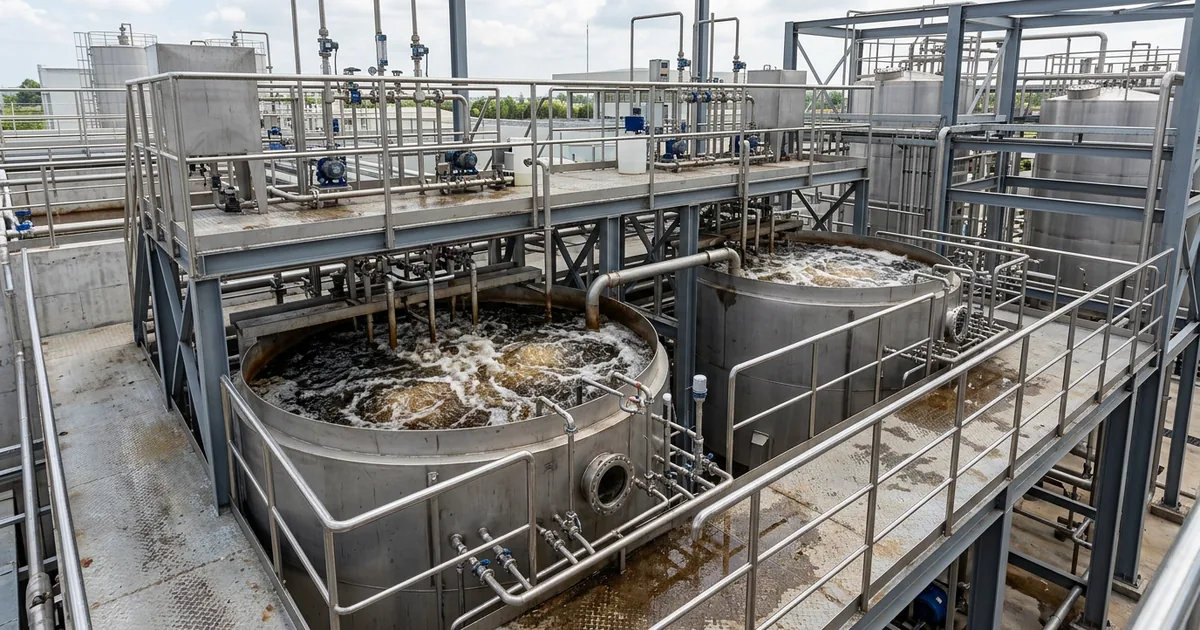
When coagulation alone cannot drop refractory COD below legal thresholds, installing a tertiary Homogeneous Fenton Advanced Oxidation Process (AOP) reactor serves as a high-precision “Compliance Rescue” barrier. The process uses directly manufactured Liquid Ferrous Chloride (FeCl₂ 30%) as a homogeneous transition-metal catalyst to activate Industrial Hydrogen Peroxide (H₂O₂ 50%), generating non-selective Hydroxyl Radicals (•OH):
Fe²⁺ + H₂O₂ → Fe³⁺ + •OH + OH⁻ (second-order rate constant k ≈ 63 – 76 L/(mol·s))
Possessing a standard reduction potential of E⁰ = 2.80 V (second only to fluorine and more than double that of chlorine at 1.36 V), hydroxyl radicals attack refractory swine organics at diffusion-controlled rates (k = 10⁸ – 10¹⁰ L/(mol·s)) via three synergistic pathways:
- Electrophilic Aromatic Ring Cleavage: Hydroxyl radicals add across conjugated C=C bonds and aromatic phenol/quinone rings in humic acids and melanoidins, shattering the chromophoric backbone and bleaching dark-brown tea effluent to pale straw yellow (< 50 Pt-Co) within 20–30 minutes.
- Hydrogen Atom Abstraction: Cleaves high-molecular-weight polymers into short-chain carboxylic acids (oxalic, acetic, formic acid) or mineralizes them completely into CO₂↑ and H₂O.
- In-Situ Fe³⁺ Co-Precipitation of Total Phosphorus: Every mole of catalytic Fe²⁺ oxidized by H₂O₂ is quantitatively converted into Fe³⁺. When the effluent subsequently enters the neutralization chamber and pH is raised to 6.5 – 7.5 using NaOH 32%, this newly generated Fe³⁺ immediately precipitates residual orthophosphate as FePO₄↓ and forms Fe(OH)₃↓ sweep flocs—eliminating the need for a separate FeCl₃ dose!
2.3. Lab Benchmark on High-Strength Digestate vs. Practical Tertiary Polishing Dose in Swine Farms
In academic literature investigating raw or primary anaerobic swine digestate with extreme organic loading (such as Luque et al., 2024, where initial COD exceeds several thousand mg/L), researchers report benchmark laboratory doses of 2.6 g/L H₂O₂ + 0.7 g/L FeSO₄·7H₂O at pH = 4.0. However, applying multi-gram-per-liter doses to biologically pre-treated secondary effluent would be economically prohibitive and operationally unnecessary.
In Loc Thien Chemical’s industrial engineering design for Stage 3 Tertiary Polishing—where biological treatment has already lowered COD to ~220 – 280 mg/L and the engineering target is to remove ΔCOD = 100 – 180 mg/L to reach < 150 mg/L (Column B) or < 65 mg/L (Column A)—the practical field dosing regimen is tightly optimized:
- Fenton Reaction pH Window: Acidify effluent to pH 3.5 – 4.0 (optimum pH 3.5–3.8) where the [Fe(H₂O)₆]²⁺ complex reacts at maximum velocity without premature Fe(OH)₃ precipitation or parasitic H₂O₂ decomposition into O₂.
- Practical H₂O₂ Commercial Dosage:
- Using H₂O₂ 50% w/w (specific gravity d = 1.196 kg/L): Dose 0.25 – 0.50 kg H₂O₂ 50% / m³ of wastewater (delivering 125 – 250 mg/L pure 100% H₂O₂, equivalent to a mass ratio of ~1.0–1.5 g H₂O₂ per 1.0 g ΔCOD removed).
- Using H₂O₂ 35% w/w (specific gravity d = 1.132 kg/L): Dose 0.35 – 0.70 kg H₂O₂ 35% / m³ of wastewater.
- Optimal Catalyst Ratio (H₂O₂ : Fe²⁺ Mass Ratio): Maintain an active mass ratio of H₂O₂ : Fe²⁺ = 3 : 1 to 5 : 1 (detailed kinetic optimization curves are provided in our technical study on optimizing H₂O₂ to Fe²⁺ ratios in industrial Fenton wastewater treatment).
- Practical Liquid FeCl₂ 30% Catalyst Dosage: Because Loc Thien’s directly manufactured FeCl₂ 30% solution (d = 1.30 kg/L) contains 13.2% w/w elemental Fe²⁺, the corresponding catalyst dosage is 0.19 – 0.63 kg FeCl₂ 30% / m³ (simultaneously supplying 25–83 mg/L of iron to precipitate Total Phosphorus down to ≤ 2 mg/L upon neutralization).
- Degassing & Neutralization Flocculation: Following 30 – 45 minutes of hydraulic retention in the Fenton reactor, dose NaOH 32% to raise pH to 7.0 – 7.5, aerate for 10 minutes to strip residual micro-bubbles of oxygen gas (preventing floating sludge in the clarifier), and add 1.0–1.5 mg/L anionic polymer before settling.
Quality Control Lab Perspective — Phan Cam Thuy (Quality Control Specialist, QC Lab — Loc Thien Chemical): “When auditing swine wastewater plants across Dong Nai, Binh Duong, and Ba Ria - Vung Tau, our QC Laboratory frequently encounters dosing pump blockages and secondary H₂S odors caused by farms using solid agricultural-grade ferrous sulfate heptahydrate (FeSO₄·7H₂O) for Fenton oxidation. Bagged solid FeSO₄ typically contains 3–8% insoluble grit that scores metering pump diaphragms, oxidizes prematurely in humid storage, and introduces massive quantities of sulfate ions (SO₄²⁻) into the tertiary sludge. When that excess sludge is returned to anaerobic zones, sulfate-reducing bacteria convert SO₄²⁻ directly into toxic H₂S gas! Switching to high-purity liquid FeCl₂ 30% and FeCl₃ 40% directly manufactured by Loc Thien Chemical eliminates both insoluble grit and sulfate loading. Furthermore, our QC documentation maintains strict SSOT transparency: FeCl₂ 30% (TÜV Rheinland CSR No.
248162921-02/ Report248162921-02a), H₂O₂ 50% (TÜV SÜD Certificate No.ZDHC1 127736 0002 Rev. 00), Javel/NaOCl 10% (CSR No.248162921-04), and PAC 31% (CSR No.248162921-05) are backed by official ZDHC MRSL Version 3.1 Conformance Level 1 credentials, while our directly manufactured FeCl₃ 40% Wastewater Grade is verified via batch-specific COA and independent Quatest 3 analytical test reports.”
3. Breakpoint Chlorination Curve & Why Residual NH₄⁺ Triggers a 5–10x Surge in Javen NaOCl 10% Consumption
3.1. Regulatory Pathogen Thresholds Under QCVN 62:2025/BTNMT & QCVN 01-195:2022/BNNPTNT
Swine manure wastewater harbors extreme concentrations of enteric pathogens, with raw influent Total Coliform counts reaching 10⁷ – 10⁹ MPN/100mL alongside Escherichia coli, Salmonella spp., Leptospira, and viral threats such as African Swine Fever (ASF). Even after anaerobic digestion, A/O biological treatment, and tertiary clarification, effluent still contains 10⁴ – 10⁶ MPN/100mL Coliform.
Final disinfection in the chlorine contact tank using Industrial Sodium Hypochlorite (Javen NaOCl 10%) must reduce pathogen counts below statutory limits:
- QCVN 62:2025/BTNMT (Surface Water Discharge): Total Coliform ≤ 3,000 MPN/100mL (Column A) and Coliform ≤ 5,000 MPN/100mL (Columns B/C).
- QCVN 01-195:2022/BNNPTNT (Agricultural Irrigation Reuse of Treated Livestock Effluent): Requires E. coli ≤ 200 MPN/100mL for industrial/perennial fruit crops and complete inactivation of helminth eggs.
Under normal design conditions—where upstream biological nitrification is complete and effluent ammonium is NH₄⁺-N ≤ 2 – 5 mg/L—the standard disinfection dose is only 10 mg/L active Cl₂ (equivalent to ~0.10 L of Javen NaOCl 10% per m³), maintaining a free chlorine residual of 0.5 – 1.5 mg/L after a minimum contact time of 30 minutes.
3.2. Stoichiometry of Breakpoint Chlorination: The 7.6 mg Active Cl₂ per 1.0 mg NH₄⁺-N Chemical Trap
A widespread operational crisis in pig farm wastewater plants occurs when operators crank the Javen 10% metering pump to 5 to 10 times its design flow rate (dosing 0.8 – 2.5 L/m³), yet DPD colorimetric testing at the contact tank outlet still reads zero free chlorine residual and laboratory samples fail Coliform limits.
The chemical culprit is unoxidized Ammonium (NH₄⁺-N) bleeding through from the upstream biological aeration tank. As detailed in our companion engineering guide on alkalinity supplementation and pH control in post-biogas swine aeration tanks using NaOH 32% vs. Ca(OH)₂, whenever insufficient bicarbonate alkalinity (< 7.14 mg CaCO₃ per mg NH₄⁺-N oxidized) or low dissolved oxygen inhibits Nitrosomonas bacteria, 20 – 50 mg/L of residual NH₄⁺-N overflows directly into the chlorine contact chamber.
When Sodium Hypochlorite (NaOCl) dissolves in water, it hydrolyzes to form Hypochlorous Acid (HOCl), which has a bactericidal potency 80–100 times greater than the hypochlorite ion (OCl⁻):
NaOCl + H₂O ⇌ HOCl + Na⁺ + OH⁻
However, before HOCl can penetrate Coliform cell membranes, dissolved ammonia/ammonium reacts instantaneously with HOCl across the Breakpoint Chlorination Curve:
- Zone 1 — Monochloramine Formation (Mass Ratio Cl₂ : NH₄⁺-N ≤ 5.0 : 1): NH₃ + HOCl → NH₂Cl (Monochloramine) + H₂O All added chlorine is bound as combined chloramine (NH₂Cl), whose disinfection kinetics are nearly two orders of magnitude slower than free HOCl, failing to kill Coliform within a 30-minute contact chamber.
- Zone 2 — Dichloramine Formation & Oxidative Destruction of Chloramines (Mass Ratio Cl₂ : NH₄⁺-N = 5.0 : 1 to 7.6 : 1): NH₂Cl + HOCl → NHCl₂ (Dichloramine) + H₂O 2NH₃ + 3HOCl → N₂↑ + 3HCl + 3H₂O (Net Breakpoint Oxidation Reaction)
- Zone 3 — Post-Breakpoint Free Chlorine Residual (Mass Ratio Cl₂ : NH₄⁺-N > 7.6 : 1): True bactericidal free chlorine (HOCl / OCl⁻) appears only after 100% of residual NH₄⁺-N has been chemically oxidized to nitrogen gas!
From the net breakpoint stoichiometry 2NH₄⁺ + 3HOCl → N₂↑ + 3HCl + 3H₂O + 2H⁺:
- Oxidizing 2 moles of NH₄⁺-N (2 × 14.007 = 28.014 g N) consumes 3 moles of HOCl (equivalent to 3 moles of active Cl₂ = 3 × 70.906 = 212.72 g Cl₂).
- The theoretical stoichiometric ratio at the breakpoint is 212.72 / 28.014 = 7.593 ≈ 7.6 mg active Cl₂ per 1.0 mg NH₄⁺-N (rising to 8.0 – 8.5 mg Cl₂ / mg NH₄⁺-N in the presence of residual organic nitrogen).
3.3. Javen NaOCl 10% Consumption Lookup Table vs. Residual NH₄⁺-N & Disinfection pH Kinetics
To quantify the severe chemical penalty of incomplete biological nitrification, the table below calculates commercial Javen NaOCl 10% consumption (providing ~100 g active Cl₂/L; for full specific gravity and ppm conversion charts, see our Sodium Hypochlorite NaOCl concentration lookup and active chlorine ppm conversion guide):
| Upstream Biological Nitrification State | Residual NH₄⁺-N Entering Disinfection (mg/L) | Active Cl₂ Consumed by Breakpoint (7.6 × NH₄-N) | Active Cl₂ Required for Germicidal Residual (mg/L) | Total Active Cl₂ Dose Required (mg/L) | Commercial Javen NaOCl 10% Dosage (L / m³) | Dosing Multiplier vs. Design Baseline |
|---|---|---|---|---|---|---|
| Scenario 1: Optimal Nitrification (Design Baseline) | ≤ 1.0 mg/L | ~0 – 7.6 mg/L | 10.0 mg/L | 10 – 15 mg/L | 0.10 – 0.15 L/m³ | 1.0x (Baseline) |
| Scenario 2: Minor Ammonia Bleed (Slight alkalinity deficit) | 5.0 mg/L | 38.0 mg/L | 10.0 mg/L | 48.0 mg/L | 0.48 L/m³ | 3.2x – 4.8x surge |
| Scenario 3: Partial Nitrification Failure (Aeration pH drop) | 20.0 mg/L | 152.0 mg/L | 10.0 mg/L | 162.0 mg/L | 1.62 L/m³ | 10.8x – 16.2x surge |
| Scenario 4: Severe Nitrification Collapse (System upset) | 50.0 mg/L | 380.0 mg/L | 10.0 mg/L | 390.0 mg/L | 3.90 L/m³ | 26x – 39x surge! |
Two Golden Rules for Operating the Swine Effluent Disinfection Chamber:
- Never Use Sodium Hypochlorite to Compensate for Failed Biological Nitrification: Oxidizing ammonia biologically in the aeration tank (supported by NaOH 32% alkalinity dosing) is vastly more economical than burning 7.6 mg Cl₂ per mg NH₄⁺-N in the disinfection tank, which also generates toxic chlorinated disinfection by-products (THMs, haloacetic acids, AOX) and spikes effluent chloride ions.
- Maintain Contact Tank pH Between 6.5 and 7.2 with ≥ 30 Minutes Contact Time: Hypochlorous acid has a dissociation constant of pKa = 7.53 at 25 °C (HOCl ⇌ H⁺ + OCl⁻). At pH 6.5, 91% of free chlorine exists as highly lethal HOCl; at pH 7.5, HOCl drops to 50%; and at pH 8.5, only 9.7% remains as HOCl while 90.3% converts to sluggish OCl⁻. Because upstream tertiary precipitation with FeCl₃ 40% naturally buffers effluent at pH 6.2 – 6.8, the water enters the disinfection tank in the ideal pH window for maximum germicidal velocity.
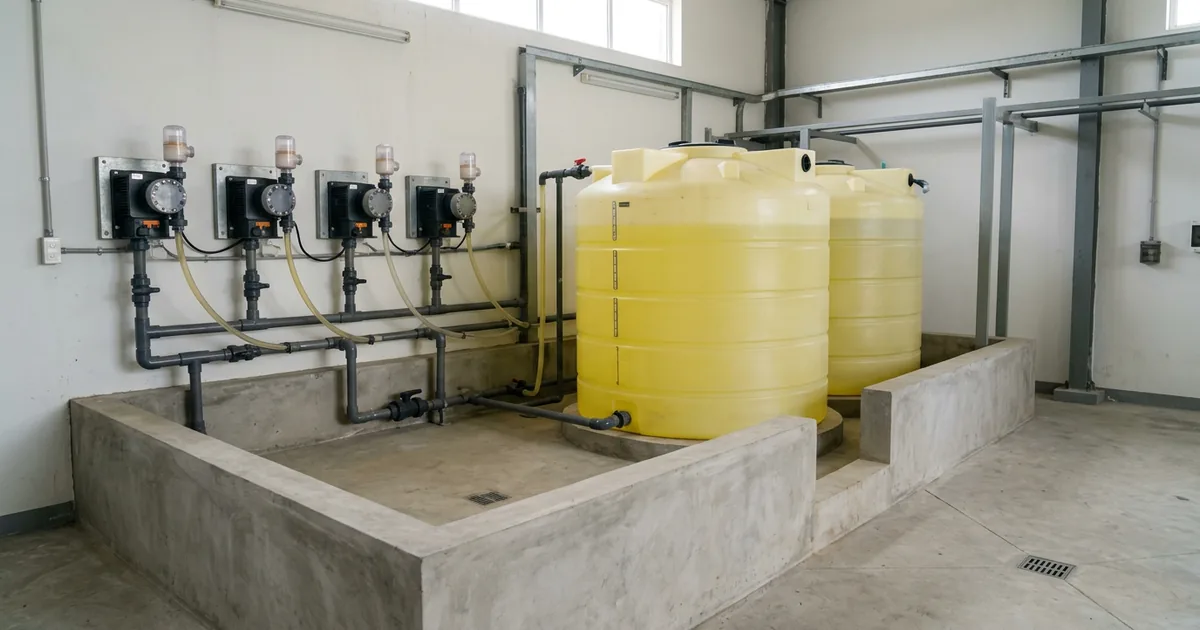
Mandatory Chemical Storage & Incompatibility Warning (GHS 16-Section SDS): NEVER store or manifold Sodium Hypochlorite (NaOCl 10%) in the same secondary containment bund with acidic metal salts (FeCl₃ 40%, FeCl₂ 30%) or mineral acids (HCl, H₂SO₄). Accidental mixing of NaOCl with acidic ferric/ferrous chloride solutions (pH < 4.0) drives the instant evolution of lethal Chlorine gas (Cl₂↑) (NaOCl + 2HCl → Cl₂↑ + NaCl + H₂O). Dedicate separate HDPE storage tanks with independent ≥ 110% bund walls.
4. Cumulative Chloride Ion Mass Balance (Cl⁻ ≤ 600 mg/L) Across All Swine Wastewater Physicochemical Stages
Large agricultural conglomerates increasingly recycle treated swine effluent for irrigating Napier grass, fruit orchards, and industrial crops under QCVN 01-195:2022/BNNPTNT. A critical agronomic threshold in this standard is the maximum Chloride ion limit of Cl⁻ ≤ 600 mg/L (excess chloride causes leaf tip burn, soil salinization, and irrigation pipe corrosion).
Because the integrated treatment train utilizes chloride-bearing reagents across Stage 0 biogas H₂S scrubbing with FeCl₂ 30%, Stage 1 primary coagulation with PAC 31%, Stage 3 tertiary phosphorus precipitation with FeCl₃ 40%, and Stage 4 disinfection with Javen 10%, plant engineers must monitor the Cumulative Chloride Mass Balance Table below:
| Treatment Stage in the Process Train | Chemical Reagent Used | Theoretical Cl⁻ Contribution Factor | Typical Practical Operating Dose | Incremental Chloride Added (mg/L Cl⁻) | Share of Total Effluent Cl⁻ (%) |
|---|---|---|---|---|---|
| Baseline Raw Swine Wastewater | Dietary salt (NaCl) excreted in swine urine | Natural background (150 – 250 mg/L) | — | ~200.0 mg/L | 46.8% |
| Stage 0: Biogas H₂S Scrubbing | Liquid FeCl₂ 30% (d = 1.30 kg/L) | +1.27 mg/L Cl⁻ per 1.0 mg/L Fe²⁺ | 0.30 kg/m³ (~39.6 mg/L Fe²⁺) | +50.3 mg/L | 11.8% |
| Stage 1: Primary DAF / Sedimentation | PAC 31% (high basicity, low chloride) | ~0.35 mg/L Cl⁻ per 1.0 mg/L dry PAC | 150 mg/L PAC 31% | +52.5 mg/L | 12.3% |
| Stage 2: A/O Biological Alkalinity | Liquid NaOH 32% (Chloride-free) | 0.00 mg/L Cl⁻ | 0.80 – 1.50 kg/m³ | 0.0 mg/L | 0.0% |
| Stage 3: Tertiary TP & Color Polishing | Liquid FeCl₃ 40% (d = 1.42 kg/L) | +1.90 mg/L Cl⁻ per 1.0 mg/L Fe³⁺ | 0.40 kg/m³ (~55.1 mg/L Fe³⁺) | +104.7 mg/L | 24.5% |
| Stage 4: Final Disinfection | Javen NaOCl 10% (with NH₄-N < 2 mg/L) | +1.00 mg/L Cl⁻ per 1.0 mg/L Cl₂ (+ ~1.0 mg/L background NaCl in NaOCl) | 10 mg/L active Cl₂ (~0.10 L/m³) | +20.0 mg/L | 4.6% |
| CUMULATIVE FINAL EFFLUENT TOTAL | Integrated 5-Stage Regimen | Strict Breakpoint Control | Standard SOP Operation | ≈ 427.5 mg/L Cl⁻ | 100% (Complies with ≤ 600 mg/L) |
Key Engineering Takeaway from the Chloride Mass Balance:
- When operated according to standard SOPs, cumulative effluent chloride stabilizes at ~427.5 mg/L Cl⁻, maintaining a comfortable > 170 mg/L safety margin below the 600 mg/L ceiling of QCVN 01-195:2022/BNNPTNT.
- Conversely, if upstream biological nitrification fails (Scenario 4 in Section 3.3, leaking 50 mg/L NH₄⁺-N) and operators overdose 3.90 L/m³ of Javen 10%, disinfection alone injects +780 mg/L Cl⁻, driving total effluent chloride above 1,180 mg/L and disqualifying the water from agricultural reuse.
5. Establishing a Regulatory Chemical Dosing Logbook Under Decree 05/2025/ND-CP & Turnkey Supply from Loc Thien Chemical
5.1. Mandatory Environmental Audit Requirements Under Decree 05/2025/ND-CP for Farms Discharging ≥ 50 m³/day
In addition to meeting the effluent quality parameters of QCVN 62:2025/BTNMT and chemical safety mandates under the Law on Chemicals No. 69/2025/QH15 (effective January 1, 2026, alongside implementing Decrees 24–26/2026/ND-CP), commercial swine farms with a wastewater discharge capacity of ≥ 50 m³/day must comply with strict operational verification rules under Decree 05/2025/ND-CP:
- Dedicated Sub-Metering Infrastructure: The wastewater treatment plant must operate an independent electrical sub-meter and calibrated influent/effluent electromagnetic flowmeters.
- Mandatory 2-Year Chemical & Operational Logbook Retention: Environmental inspection teams conduct forensic Cross-Audits reconciling four independent datasets over a rolling 24-month window: (Wastewater plant electricity consumption in kWh) × (Recorded daily effluent flow in m³/day) × (Daily stoichiometric dosing logs for FeCl₂ 30%, PAC 31%, NaOH 32%, FeCl₃ 40%, H₂O₂ 50%, and Javen 10%) × (Electronic VAT Invoices, delivery weighbridge tickets, and Batch COAs).
Procuring off-spec chemicals without traceable batch COAs (such as diluted FeCl₃ at 30% instead of 40%, or degraded NaOCl at 5% instead of 10%) creates irreconcilable discrepancies between theoretical stoichiometric mass balances and invoice records, exposing the enterprise to severe regulatory penalties.
5.2. Three-Role Value Matrix (Procurement – Process Engineers – Accounting/EHS) & 5 Pricing Drivers
Loc Thien Investment Development Co., Ltd. (Loc Thien Chemical) provides a single-source, audit-ready chemical supply chain tailored to all three decision-making departments in large livestock enterprises:
- For Procurement Directors: Factory-direct sourcing from the Direct Manufacturer of Liquid Ferric Chloride (FeCl₃ 40%) and Liquid Ferrous Chloride (FeCl₂ 30%) within our Industrial Iron Chloride (FeCl₂ & FeCl₃) Category Hub (production capacity exceeding 3,000 metric tons/month), bundled with Tier-1 distribution of bulk NaOH 32–50%, PAC 31%, H₂O₂ 50%, and Javen NaOCl 10%.
- For Plant Process & Operating Engineers: On-site and lab ASTM D2035 Jar-Test calibration, specific-gravity dosing charts matched to each batch COA, metering skid stroke calibration, and direct access to our online Chemical Dosing Calculator.
- For Accounting & EHS Legal Compliance: Complete inspection-ready documentation satisfying Decree 05/2025/ND-CP and Law on Chemicals 69/2025/QH15: valid Vietnamese Electronic VAT Invoices (e-VAT) issued upon delivery, Batch COA, GHS 16-Section SDS, Quatest 3 analytical reports, and ZDHC MRSL v3.1 Conformance Level 1 documentation (across 9 core chemicals).
Rather than publishing fixed retail price lists that fluctuate with raw material indices, Loc Thien Chemical customizes every B2B quotation within 15 minutes based on 5 transparent cost-driving factors:
- Chemical Grade & Active Concentration: FeCl₃ 40%, FeCl₂ 30%, PAC 31%, H₂O₂ 35%/50%, NaOH 32%/50%, or Javen NaOCl 10–12%.
- Packaging Format & Bulk Delivery Method: Direct pneumatic/pump discharge via our dedicated fleet of 5–30-ton chemical road tankers, or packaged delivery in 1,000 L IBC totes (invoiced strictly by net weight in kg based on liquid specific gravity), 250 kg drums, 30 kg carboys, or 25 kg woven bags.
- Order Volume & Annual Framework Contracts: Spot shipments versus scheduled monthly/quarterly call-off contracts for multi-farm livestock integrators.
- Dispatch Distance from Our 6 Standardized Warehouses Nationwide:
- Ba Ria - Vung Tau Warehouse: Phu My 1 Industrial Park, Phu My Town, Ba Ria - Vung Tau.
- Dong Nai Warehouse: Long Thanh Industrial Park, Long Thanh District, Dong Nai (strategically positioned at the heart of Southern Vietnam’s livestock belt).
- Binh Duong Warehouse: Tan Dong Hiep Ward, Di An City, Binh Duong.
- Can Tho Warehouse: Tra Noc Industrial Park, O Mon District, Can Tho City (serving Mekong Delta swine complexes).
- Da Nang Warehouse: Hoa Khanh Industrial Park, Lien Chieu District, Da Nang City (serving Central Vietnam & Central Highlands).
- Bac Ninh Warehouse: Tien Son Industrial Park, Tien Du District, Bac Ninh (serving Northern Vietnam).
- (Note: 452/6B Tinh Lo 10, Binh Tri Dong Ward, Binh Tan District, Ho Chi Minh City is our Legal Headquarters for contract administration and invoicing, not a chemical storage warehouse).
- Standardized Delivery SLA & On-Site Engineering Support: Guaranteed technical quotation within 15 minutes; dispatch SLA of 4 hours within inner Ho Chi Minh City, 24–48 hours across Southern and Mekong Delta Industrial Parks and farming zones, and 2–3 days to Northern and Central Vietnam. Contact hotline 0979 891 929 (
+84 979 891 929) for detailed delivery procedures and tanker scheduling.
Technical Support & B2B Procurement Hotline — Loc Thien Chemical
Loc Thien Investment Development Co., Ltd. (Loc Thien Chemical) is a Direct Manufacturer of Liquid Ferrous Chloride (FeCl₂ 30%) & Liquid Ferric Chloride (FeCl₃ 38–40% Wastewater Grade) and an Industrial Chemical Supplier of bulk basic chemicals (NaOH, PAC 31%, H₂O₂ 50%, Javen NaOCl 10%, HCl, H₂SO₄) with dedicated 5–30-ton tanker delivery across Vietnam (technical quote within 15 minutes).
- Hotline / WhatsApp / Zalo (24/7): +84 979 891 929 (0979 891 929)
- Official Email: [email protected]
- Bulk RFQ Submission: Request a 15-Minute Technical Quotation
- Direct Manufacturer: Ferrous Chloride (FeCl₂ 30% solution) & Ferric Chloride (FeCl₃ 38–40% Wastewater Grade)
- Industrial Supplier: NaOH 32%/45%/50%/99%, PAC 30–31%, H₂O₂ 35%/50%, NaOCl 10–12%, HCl 31–35%, H₂SO₄ 98%
- Compliance & Quality: ZDHC MRSL v3.1 Level 1 Conformance (9 core products via TÜV SÜD & TÜV Rheinland), Quatest 3 Tested, Batch COA & GHS 16-Section SDS