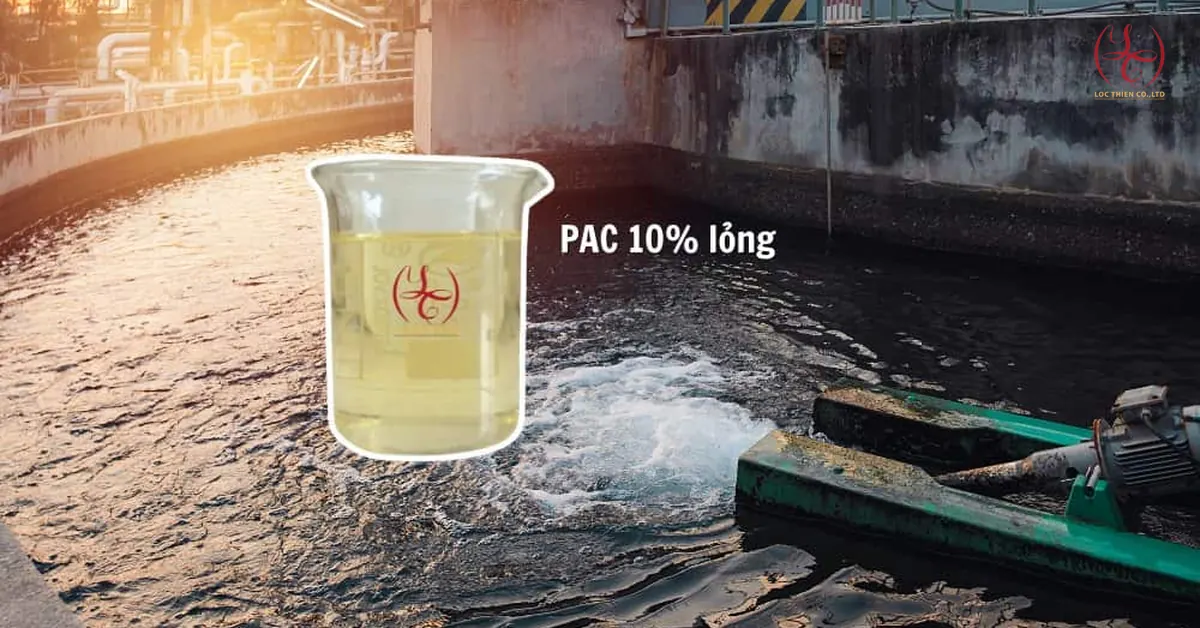
Alkalinity Supplementation & pH Control in Post-Biogas Swine Wastewater Nitrification: NaOH 32% vs Hydrated Lime Ca(OH)2 Dosing for Total Nitrogen Compliance
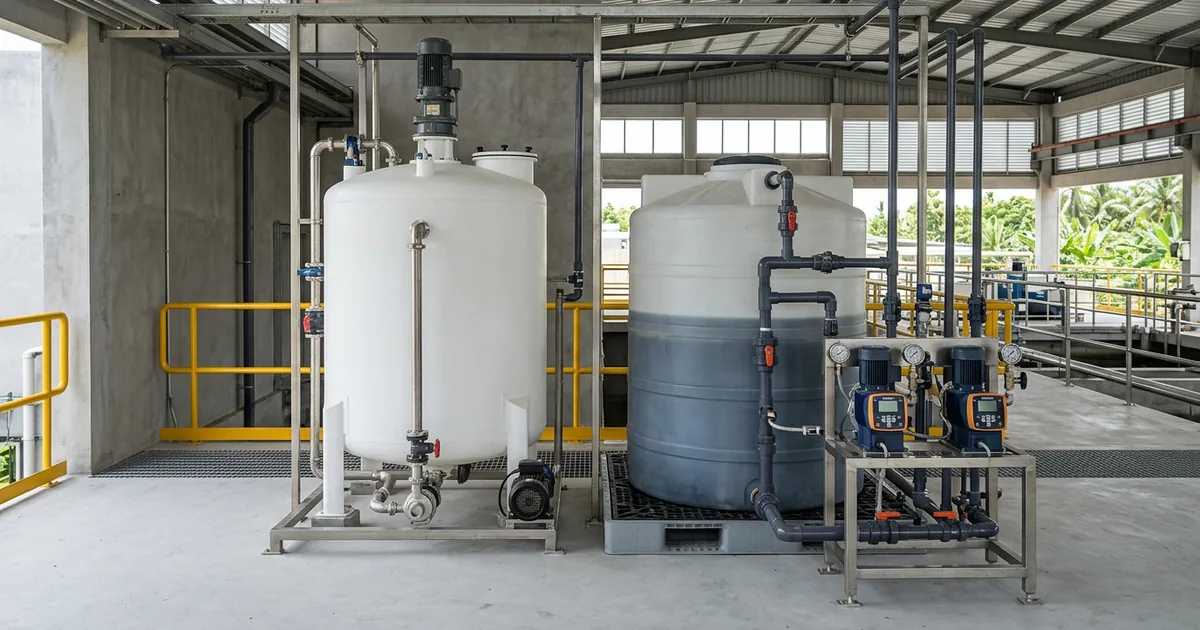
Table of contents
To oxidize concentrated ammonium (NH₄⁺-N = 105–785 mg/L) and comply with QCVN 62:2025/BTNMT Total Nitrogen limits (≤ 20 mg/L Column A; ≤ 60 mg/L Column B), post-biogas swine wastewater nitrification basins require external alkalinity supplementation using liquid caustic soda NaOH 32% w/w (CAS 1310-73-2) at 0.16–2.50 kg/m³ (equivalent to 0.05–0.80 kg of 100% NaOH/m³). Loc Thien Chemical supplies bulk liquid NaOH 32% and hydrated lime Ca(OH)₂ 96% (CAS 1305-62-0) with Batch COA via dedicated 5–30-ton chemical tankers using biosecure over-the-fence transfer from 6 nationwide warehouses.
Across the complete post-biogas swine wastewater treatment chemical train under QCVN 62:2025/BTNMT, the biological pre-anoxic and aerobic nitrification stage (Anoxic – Aerotank / MBBR / MBR) governs whether a commercial livestock enterprise can achieve legal nitrogen discharge compliance. However, field audits across hundreds of industrial swine complexes in Vietnam (ranging from 5,000 to 50,000 finishing pigs and breeding sows) reveal that over 70% of biological aeration basins experience recurring mixed-liquor pH collapse (pH < 5.5, often plunging to 4.8–5.2) within weeks of commissioning. Once mixed-liquor pH drops below 6.0, nitrifying bacteria shut down, viscous white foam blankets the aeration basin, biological flocs disintegrate, and unoxidized ammonium (NH₄⁺-N) and nitrite (NO₂⁻-N) overflow into the tertiary stage—crippling downstream ferric chloride FeCl₃ coagulation, Fenton oxidation, and sodium hypochlorite NaOCl disinfection.
This engineering guide establishes the exact stoichiometric alkalinity mass balance for post-biogas swine wastewater nitrification, explains why legacy design estimates of 0.05 kg NaOH/m³ fail under QCVN 62:2025/BTNMT, provides a quantitative dosing conversion matrix comparing Liquid Caustic Soda NaOH 32%, Caustic Soda Flakes NaOH 99%, and Hydrated Lime Ca(OH)₂ 96%, and details biosecure FRP tank and automated PID pH dosing engineering.
Need an immediate alkalinity mass-balance audit and bulk chemical quotation for your livestock WWTP? Contact Loc Thien Chemical Application Engineering via Hotline / WhatsApp / Zalo +84 979 891 929 (Vietnamese Zalo support available alongside English technical support) or email [email protected] to receive a customized dosing sheet and official technical quotation within 15 minutes.
Why Do Post-Biogas Swine Wastewater Aeration Tanks Suffer Severe pH Crashes (pH < 5.5) and Complete Nitrification Failure?
Post-biogas swine wastewater aeration tanks suffer severe pH collapse below 5.5 because biological nitrification of 1.0 g of ammonium nitrogen (NH₄⁺-N) releases 2 moles of H⁺ protons and consumes exactly 7.14 g of bicarbonate alkalinity (as CaCO₃), rapidly exhausting the natural buffering capacity of anaerobically digested effluent.
To diagnose and permanently eliminate pH crashes in livestock wastewater plants, process engineers must evaluate the intersection of two factors: the stringent regulatory tightening introduced by QCVN 62:2025/BTNMT (National Technical Regulation on Livestock Effluent issued by the Ministry of Agriculture and Environment) and the extreme biochemical C/N/P distortion created inside covered HDPE anaerobic biogas lagoons.
1. Regulatory Tightening Under QCVN 62:2025/BTNMT: Total Nitrogen Slashed by 60%
Under the superseded regulation (QCVN 62-MT:2016/BTNMT), the base Total Nitrogen (TN) limit stood at 150 mg/L for Column B and 50 mg/L for Column A (often relaxed further to 180–195 mg/L when receiving-water coefficients Kq and Kf were applied). Under those lenient thresholds, many swine farms operated aeration basins at partial nitrification (30–40% ammonia conversion) without exhausting raw water alkalinity.
Under QCVN 62:2025/BTNMT, Total Nitrogen discharge limits have been cut by 60%:
- Column A (Water bodies serving domestic water supply / sensitive ecosystems): Total Nitrogen (
Total N / TN) slashed from50 mg/Ldown to ≤ 20 mg/L. - Column B (Non-domestic surface water bodies): Total Nitrogen (
Total N / TN) slashed from150 mg/Ldown to ≤ 60 mg/L.
Meeting TN ≤ 60 mg/L (Column B) or TN ≤ 20 mg/L (Column A) requires biological treatment trains to oxidize 85–95% of influent ammonium, multiplying proton (H⁺) generation inside the Aerotank by 2.5 to 3.0 times compared to legacy operations.
2. The Anaerobic Biogas Lagoon Paradox: 80–90% COD Removal vs. Only 11.8% TKN Removal
Covered HDPE anaerobic digesters and UASB reactors are highly effective at converting volatile fatty acids (VFA) and biodegradable organic matter into methane (CH₄) for farm power generation, but they leave behind a chemically hostile effluent for downstream biological nitrogen removal:
- Severe Depletion of Readily Biodegradable Carbon (
BOD₅): Methanogenic archaea consume80–90%of biodegradableCOD, leaving post-biogas effluent with residualCOD = 650–3,500 mg/L(dominated by refractory humic and fulvic acids) andBOD₅ = 180–950 mg/L. - Complete Ammonification of Organic Nitrogen: Anaerobic hydrolysis converts urea and proteins from swine manure and urine into dissolved ammonium ions (
NH₄⁺). Across full-scale biogas lagoons, total Kjeldahl nitrogen (TKN) removal via sludge settling and struvite precipitation averages only 11.8%. - Extreme Influent Ammonium with C/N Starvation: Effluent exiting the biogas lagoon enters the biological tanks carrying NH₄⁺-N = 105–785 mg/L (typically 300–550 mg/L in commercial farrow-to-finish farms), while the BOD₅/TN ratio plunges below 1.5 (frequently
0.6–1.1).
3. Stoichiometry of Biological Nitrification: Why 1.0 g of NH₄⁺-N Destroys 7.14 g of CaCO₃ Alkalinity
In the aerobic reactor (Aerotank, MBBR, or MBR), chemolithoautotrophic nitrifying bacteria oxidize ammonium to nitrate in a two-step reaction sequence catalyzed by Nitrosomonas (ammonia-oxidizing bacteria, AOB) and Nitrobacter / Nitrospira (nitrite-oxidizing bacteria, NOB):
- Step 1 — Nitritation (Nitrosomonas): 2 NH₄⁺ + 3 O₂ → 2 NO₂⁻ + 4 H⁺ + 2 H₂O
- Step 2 — Nitratation (Nitrobacter): 2 NO₂⁻ + O₂ → 2 NO₃⁻
- Overall Energy Reaction (excluding biomass synthesis): NH₄⁺ + 2 O₂ → NO₃⁻ + 2 H⁺ + H₂O
When autotrophic cell synthesis (C₅H₇O₂N) from dissolved inorganic carbon (HCO₃⁻) is incorporated into the thermodynamic balance, the overall stoichiometric reaction is:
NH₄⁺ + 1.83 O₂ + 1.98 HCO₃⁻ → 0.021 C₅H₇O₂N + 0.98 NO₃⁻ + 1.041 H₂O + 1.88 H₂CO₃
Every 1.0 mole of NH₄⁺-N oxidized (14.0 g of nitrogen) neutralizes 1.98 moles of bicarbonate (HCO₃⁻):
- Alkalinity consumption =
(1.98 eq × 50.0 g CaCO₃/eq) / 14.0 g N= 7.07 to 7.14 g of alkalinity (as CaCO₃) per 1.0 g of NH₄⁺-N oxidized. - Oxygen demand = 4.57 g of dissolved O₂ per 1.0 g of NH₄⁺-N oxidized.
| Kinetic & Chemical Parameter in Swine Nitrification | Engineering Standard Value | Operational Consequence When Residual Alkalinity Drops (< 70 mg/L CaCO₃) |
|---|---|---|
| Alkalinity Consumed by Nitrification | 7.14 g CaCO₃ / 1.0 g NH₄⁺-N oxidized | Released H⁺ protons convert HCO₃⁻ into carbonic acid (H₂CO₃), which strips out as CO₂ gas during aeration. |
| Alkalinity Recovered by Denitrification | 3.57 g CaCO₃ / 1.0 g NO₃⁻-N reduced | Without external carbon supplementation (BOD₅/TN < 1.5), denitrification stalls and alkalinity recovery drops near zero. |
| Optimal pH Window for Nitrosomonas & Nitrobacter | pH 7.2 – 8.0 (Optimum: 7.5 – 7.8) | At pH < 6.5, nitrification rate drops by > 50%. At pH < 5.8, autotrophic enzymatic activity ceases completely. |
| Minimum Residual Buffer Alkalinity in Mixed Liquor | 70 – 100 mg/L as CaCO₃ | Below 50 mg/L CaCO₃, bicarbonate buffering collapses and mixed-liquor pH plunges from 7.0 down to 4.8 – 5.5 within hours. |
| Free Nitrous Acid (HNO₂) Autotoxicity Threshold | HNO₂ > 0.2 – 1.0 mg/L | At pH < 6.0, accumulated nitrite (NO₂⁻) shifts toward unionized HNO₂, which penetrates cell membranes and poisons biomass. |
When mixed-liquor pH crashes below 5.5, nitrification stops completely (NH₄⁺-N passes straight through at 200–450 mg/L), activated sludge flocs undergo acid deflocculation, extracellular polymeric substances (EPS) shear off into thick white scum foam, and clarify effluent TSS and COD spike out of compliance.
How Do You Calculate NaOH 32% & NaOH 99% Alkalinity Dosing, and Why Do Legacy 0.05 kg/m³ Designs Fail?
Compensating for the net alkalinity deficit in post-biogas swine nitrification (typically 500–1,000 mg/L as CaCO₃ at 300–700 mg/L NH₄⁺-N) requires 0.40–0.80 kg of 100% pure NaOH per m³ of wastewater—equivalent to 1.25–2.50 kg of liquid NaOH 32% per m³—which is 8 to 16 times higher than legacy EPC design estimates of 0.05 kg/m³.
During technical audits of failing livestock WWTPs, plant owners and purchasing managers frequently ask why their original contractor’s operating manual specified only 0.05 kg NaOH/m³, whereas actual operation under QCVN 62:2025/BTNMT demands 0.40–0.80 kg of 100% NaOH/m³ (1.25–2.50 kg of liquid NaOH 32%/m³). The answer lies in the alkalinity mass balance equation.
1. The Complete Alkalinity Mass Balance Equation
The net external alkalinity required per cubic meter of wastewater (expressed in mg/L as CaCO₃, which is numerically identical to g CaCO₃/m³) is governed by:
Alk_needed (mg/L CaCO₃) = [7.14 × ΔNH₄-N_oxidized] − [3.57 × ΔNO₃-N_denitrified] + Alk_residual_target (100 mg/L) − Alk_influent
Where:
- ΔNH₄-N_oxidized (mg/L): Mass concentration of ammonium nitrogen oxidized in the Aerotank (
NH₄⁺-N_influent − NH₄⁺-N_effluent_target). - ΔNO₃-N_denitrified (mg/L): Mass concentration of nitrate nitrogen reduced to
N₂gas inside the pre-anoxic reactor. - Alk_residual_target (mg/L CaCO₃): Minimum residual bicarbonate alkalinity required in the Aerotank effluent to lock mixed-liquor pH at
7.3–7.6(80–100 mg/L as CaCO₃). - Alk_influent (mg/L CaCO₃): Available natural bicarbonate alkalinity in the post-biogas wastewater entering the biological train (typically
600–1,800 mg/L as CaCO₃, depending on groundwater hardness, swine diet mineral content, and any upstream coagulant consumption).
2. Exact Stoichiometric Conversion Factors: CaCO₃ vs. NaOH 32%, NaOH 99%, and Ca(OH)₂ 96%
From equivalent weights (CaCO₃ = 100.09 g/mol → 50.0 g/eq; NaOH = 40.00 g/mol → 40.0 g/eq; Ca(OH)₂ = 74.09 g/mol → 37.05 g/eq), supplying 1.0 g of CaCO₃ alkalinity requires:
- As 100% Pure NaOH:
40.0 / 50.0= 0.80 g of 100% NaOH per 1.0 g CaCO₃. - As Commercial Liquid Caustic Soda NaOH 32% (% w/w):
0.80 / 0.32= 2.50 g of Liquid NaOH 32% per 1.0 g CaCO₃. With a standard specific gravity of SG = 1.35 ± 0.02 at 20 °C (verified per Batch COA), this equals 1.85 mL of Liquid NaOH 32% per 1.0 g CaCO₃. (Engineering note on net packaging weight: a standard 1,000 L IBC tote of Liquid NaOH 32% has a net chemical weight of approximately 1,350 kg—never equate 1,000 L to 1 metric ton). - As Commercial Caustic Soda Flakes NaOH 99% (% w/w):
0.80 / 0.99= 0.808 g (≈ 0.81 g) of NaOH 99% flakes per 1.0 g CaCO₃. - As Commercial Hydrated Lime Ca(OH)₂ 96% (% w/w):
(37.05 / 50.0) / 0.96 = 0.741 / 0.96= 0.772 g (≈ 0.77 g) of Ca(OH)₂ 96% powder per 1.0 g CaCO₃.
3. Master Dosing Conversion Table Across Post-Biogas NH₄⁺-N Concentrations (150 to 700 mg/L)
The engineering table below compares legacy 0.05 kg/m³ dosing against actual stoichiometric dosing across four representative post-biogas ammonium concentrations (150 mg/L, 300 mg/L, 500 mg/L, and 700 mg/L):
| Post-Biogas Swine Effluent Scenario | Target Oxidized Ammonium (ΔNH₄-N) | Gross Alkalinity Consumed (7.14 × ΔNH₄-N) | Net Alkalinity Deficit to Supplement (ΔAlk_deficit) | 100% Pure NaOH Dose (kg/m³) | Liquid NaOH 32% w/w Dose (kg/m³ & L/m³ at 20 °C) | NaOH Flakes 99% w/w Dose (kg/m³) | Hydrated Lime Ca(OH)₂ 96% w/w Dose (kg/m³) |
|---|---|---|---|---|---|---|---|
| Legacy Design (QCVN 62:2016) Partial nitrification only |
50 – 80 mg/L | 357 – 571 mg/L CaCO₃ | 62.5 – 125 mg/L CaCO₃ | 0.05 – 0.10 kg/m³ | 0.16 – 0.31 kg/m³ (0.12 – 0.23 L/m³) |
0.051 – 0.101 kg/m³ | 0.048 – 0.096 kg/m³ |
| Tier 1: High-Flush Finishing Farm Influent NH₄⁺-N = 150 mg/L |
135 mg/L (Effluent ≤ 15 mg/L) |
964 mg/L CaCO₃ | 250 mg/L CaCO₃ | 0.20 kg/m³ | 0.63 kg/m³ (0.46 L/m³) |
0.202 kg/m³ | 0.193 kg/m³ |
| Tier 2: Medium Commercial Farm Influent NH₄⁺-N = 300 mg/L |
285 mg/L (Effluent ≤ 15 mg/L) |
2,035 mg/L CaCO₃ | 500 mg/L CaCO₃ | 0.40 kg/m³ | 1.25 kg/m³ (0.93 L/m³) |
0.404 kg/m³ | 0.386 kg/m³ |
| Tier 3: Intensive Farrow-to-Finish Influent NH₄⁺-N = 500 mg/L |
480 mg/L (Effluent ≤ 20 mg/L) |
3,427 mg/L CaCO₃ | 750 mg/L CaCO₃ | 0.60 kg/m³ | 1.88 kg/m³ (1.39 L/m³) |
0.606 kg/m³ | 0.579 kg/m³ |
| Tier 4: Closed-House Low-Water Barn Influent NH₄⁺-N = 700 mg/L |
680 mg/L (Effluent ≤ 20 mg/L) |
4,855 mg/L CaCO₃ | 1,000 mg/L CaCO₃ | 0.80 kg/m³ | 2.50 kg/m³ (1.85 L/m³) |
0.808 kg/m³ | 0.772 kg/m³ |
Mandatory Engineering Verification Note (Titration & Jar-Test): The dosage intervals above represent theoretical stoichiometric mass balances. Exact plant dosing must be confirmed via on-site bicarbonate alkalinity titration (
SMEWW 2320B / TCVN 6636-1) and laboratory Jar-test trials on actual post-biogas effluent. Process engineers can also compute customized dosing rates using the Loc Thien Online Chemical Dosing Calculator.
4. Technical Illustration (Worked Example for a 500 m³/day Commercial Swine Complex)
Assumptions for Technical Illustration (worked example — anonymized livestock enterprise): Consider a closed-house swine breeding and finishing complex in Southern Vietnam operating a post-biogas biological WWTP at a flow rate of Q = 500 m³/day:
- Influent ammonium after HDPE biogas lagoon: NH₄⁺-N_influent = 450 mg/L; target Aerotank effluent: NH₄⁺-N_effluent = 10 mg/L → ΔNH₄-N_oxidized = 440 mg/L.
- Influent natural bicarbonate alkalinity: Alk_influent = 1,650 mg/L as CaCO₃.
- Pre-anoxic denitrification achieved via internal recirculation and molasses dosing: ΔNO₃-N_denitrified = 280 mg/L.
- Target residual alkalinity in the Aerotank to maintain
pH = 7.4: Alk_residual_target = 100 mg/L as CaCO₃.
Step-by-step calculation for Liquid Caustic Soda NaOH 32%:
- Alkalinity consumed in the Aerotank:
440 mg/L × 7.14= 3,141.6 mg/L as CaCO₃. - Alkalinity recovered in the Anoxic reactor:
280 mg/L × 3.57= 999.6 mg/L as CaCO₃. - Net alkalinity deficit (
ΔAlk_deficit):3,141.6 − 999.6 + 100 − 1,650= 592.0 mg/L as CaCO₃ (0.592 kg CaCO₃/m³). - Required 100% pure NaOH mass dose:
0.592 kg CaCO₃/m³ × 0.80= 0.474 kg of 100% NaOH/m³. - Conversion to commercial Liquid NaOH 32% (% w/w, SG = 1.35 at 20 °C):
- Mass dosing rate:
0.474 / 0.32= 1.48 kg of Liquid NaOH 32%/m³. - Volumetric dosing rate at 20 °C:
1.48 kg / 1.35 kg/L= 1.10 L of Liquid NaOH 32%/m³. - Daily consumption (
Q = 500 m³/day):500 × 1.48= 740 kg/day (≈ 548 L/day). - Monthly procurement volume (30 days): 22.2 metric tons/month of Liquid NaOH 32% — ideally matched for full-load delivery via Loc Thien Chemical’s 5–30-ton dedicated chemical tanker fleet, discharging directly into a 25 m³ FRP storage tank.
- Mass dosing rate:
Technical & Operational Comparison: When Should Swine Farms Dose Liquid NaOH 32% vs. Hydrated Lime Slurry Ca(OH)₂ 10%?
Commercial swine wastewater plants should use Liquid Caustic Soda NaOH 32% exclusively for automated pH and alkalinity control inside biological Anoxic, Aerotank, MBBR, and MBR reactors to prevent diffuser scaling, reserving Hydrated Lime Ca(OH)₂ 10% slurry strictly for upstream primary physicochemical clarification when phosphate pre-precipitation or lower chloride/TDS addition is required.
Procurement teams frequently evaluate substituting Liquid NaOH 32% with Hydrated Lime Ca(OH)₂ 96% (prepared as a 5–10% milk-of-lime slurry) to reduce raw chemical expenditure per equivalent of hydroxide. While lime slurry works effectively in physicochemical neutralization tanks for acid pickling or electroplating effluent, dosing Ca(OH)₂ directly into a post-biogas swine biological aeration basin triggers severe inorganic fouling.
1. The Critical Operational Risk of Dosing Lime Directly into Swine Aerotanks
Post-biogas swine effluent exhibits two chemical traits that react aggressively with dissolved calcium ions (Ca²⁺):
- Elevated Dissolved Orthophosphate (
PO₄³⁻ = 30–187 mg/L, Total PhosphorusTP = 45–220 mg/L): Released during anaerobic digestion of swine manure and undigested phytate/mineral feed supplements. - High Dissolved CO₂ and Bicarbonate (
HCO₃⁻) Load: Generated continuously by microbial respiration and biogas carryover.
When Ca(OH)₂ slurry is injected into the Aerotank to hold pH 7.4–7.8, high local pH plumes around the dosing point and air bubbles drive two rapid precipitation reactions:
- Calcium Carbonate (Calcite) Scaling: Ca²⁺ + 2 HCO₃⁻ → CaCO₃↓ + CO₂↑ + H₂O
- Calcium Phosphate & Hydroxyapatite Scaling: 3 Ca²⁺ + 2 PO₄³⁻ → Ca₃(PO₄)₂↓ and 5 Ca²⁺ + 3 PO₄³⁻ + OH⁻ → Ca₅(PO₄)₃(OH)↓
This inorganic crystallization causes three destructive failures inside swine biological reactors:
- Fouling and Rupture of Fine-Bubble EPDM Membrane Diffusers: Hard crusts of
CaCO₃andCa₃(PO₄)₂nucleate directly inside the micro-slits of EPDM and silicone aeration discs within 4–6 weeks. Root blower discharge back-pressure rises by +0.08 to +0.18 bar, tripping motor thermal overloads and tearing elastomeric membranes. - 30–50% Collapse in Oxygen Transfer Efficiency (OTE): Scaled diffusers coalesce fine bubbles into coarse bubbles, causing dissolved oxygen (
DO) to drop below1.0 mg/Leven at 100% blower speed, starving Nitrosomonas of oxygen. - Inorganic Mineralization of Activated Sludge (
MLVSS/MLSSDrop): PrecipitatedCaCO₃,Ca₃(PO₄)₂, and unreactive silica grit (SiO₂) encapsulate nitrifying bacteria in mineral shells, driving the volatile-to-total suspended solids ratio (MLVSS/MLSS) down from0.75–0.80to< 0.45–0.50and increasing waste sludge cake tonnage by 25–40%.
2. 10-Point Engineering Comparison Matrix: Liquid NaOH 32% vs. Hydrated Lime Slurry Ca(OH)₂ 10%
For a broader cross-industry review of alkali selection, engineers can consult our technical guide on Comparing Ca(OH)₂ and NaOH for Wastewater pH Control. Specifically for post-biogas swine nitrification, the 10 engineering parameters compare as follows:
| Engineering & Operational Parameter | Liquid Caustic Soda NaOH 32% (% w/w) — CAS 1310-73-2 | Hydrated Lime Slurry Ca(OH)₂ 10% (from Ca(OH)₂ 96%) — CAS 1305-62-0 |
|---|---|---|
| 1. Physical Phase & Solubility at 20 °C | 100% homogeneous true aqueous solution, miscible in all proportions; SG = 1.35 ± 0.02 at 20 °C (per Batch COA). | Particulate suspension (milk-of-lime slurry); extremely low water solubility (~1.65 – 1.70 g/L at 20 °C, exhibiting retrograde solubility as temperature rises). |
| 2. Stoichiometric Dose per 1.0 g CaCO₃ Alkalinity | 2.50 g of Liquid NaOH 32% (equivalent to 0.80 g of 100% pure NaOH). | 0.77 g of Ca(OH)₂ 96% dry powder (equivalent to 7.70 g of 10% w/w lime slurry). |
| 3. Reaction Kinetics & PID Loop Response Time | Instantaneous 100% OH⁻ dissociation; pH sensor feedback response within 10 – 30 seconds, maintaining tight PID control (pH = 7.4 ± 0.1). | Slow solid-liquid dissolution kinetics (5 – 15 minutes lag time); prone to severe pH overshooting (pH > 8.8) that shocks nitrifying bacteria. |
| 4. Impact on Fine-Bubble EPDM Diffusers & MBR Membranes | 100% Scale-Free: Monovalent Na⁺ ions form zero precipitates with HCO₃⁻ or PO₄³⁻, preserving diffuser OTE and MBR membrane permeability. | Severe Scaling Hazard: Precipitates hard CaCO₃ and Ca₃(PO₄)₂ scale directly onto EPDM slits and MBR pores, causing irreversible fouling. |
| 5. Impact on Biological Biomass Activity (MLVSS/MLSS) | Zero chemical sludge generation (0% insoluble residue); preserves high active biomass fraction (MLVSS/MLSS = 0.75 – 0.82). | Generates heavy inorganic precipitates and grit carryover; increases biological tank sludge volume by 25 – 40% and depresses MLVSS/MLSS < 0.50. |
| 6. Make-Down Equipment & Dosing Pump Engineering | Zero make-down mixing required; pumped directly from bulk FRP/HDPE tank via automated 4–20 mA diaphragm metering pumps. | Requires 24/7 agitated slurry make-down tanks, dust collectors, and a continuous recirculating ring main at 1.5 – 2.2 m/s to prevent pipe settling. |
| 7. Impact on Effluent Salinity / Total Dissolved Solids (TDS) | Adds soluble Na⁺ ions (moderately increasing electrical conductivity), which remains well within QCVN 62:2025/BTNMT livestock discharge limits. | Lower net TDS increase because a fraction of Ca²⁺ co-precipitates with orthophosphate and carbonate into the settled sludge phase. |
| 8. Regulatory & International Eco-Compliance | Conforms to QCVN 03A:2020/BCT (amended by Circular 38/2026/TT-BCT); certified ZDHC MRSL v3.1 Conformance Level 1 by TÜV SÜD. | Purity Ca(OH)₂ ≥ 96% w/w, ultra-fine particle size with 325-mesh (45 µm) sieve residue ≤ 1.5% (verified per Batch COA by Loc Thien Chemical). |
| 9. GHS Hazard Classification & H-Codes | Signal Word: Danger; H314 (Causes severe skin burns and eye damage), H290 (May be corrosive to metals). | Signal Word: Danger; H318 (Causes serious eye damage), H315 (Skin irritation), H335 (Respiratory irritation from airborne dust). |
| 10. Optimal Dosing Point in Swine WWTP Train | Pre-Anoxic Basin, Aerotank, MBBR/MBR Reactors, and final effluent pH trim. | Upstream Primary Physicochemical Clarifier (immediately after biogas lagoon, prior to biological reactors). |
3. Best-Practice Hybrid Strategy for Large-Scale Livestock Complexes
In high-capacity swine WWTPs (> 500–2,000 m³/day), engineers can combine both alkalis by strictly segregating their dosing zones:
- Zone 1 — Primary Physicochemical Clarifier (Upstream of Biology): Dosing milk-of-lime prepared from Hydrated Lime Ca(OH)₂ 96% in the primary flash-mix tank helps precipitate a portion of raw orthophosphate and suspended solids before the biological stage. To prevent check-valve encrustation and pipeline blockages in lime systems, follow our engineering SOP on How to Prepare 10% Ca(OH)₂ Lime Slurry Without Clogging Metering Pumps.
- Zone 2 — Anoxic / Aerotank / MBR Biological Reactors: Use Liquid Caustic Soda NaOH 32% exclusively for automated PID pH and alkalinity control (or a 10–20% NaOH solution dissolved on-site from Caustic Soda Flakes NaOH 99% at remote highland farms without bulk tanker access—see safe dissolution engineering in How to Dissolve and Dose Caustic Soda NaOH in Wastewater Treatment).
Quality Assurance Insight from QC Lab — Loc Thien Chemical: “In biological nitrification systems operating with fine-bubble EPDM diffusers or submerged MBR membranes, two chemical impurity metrics dictate long-term equipment reliability: sodium carbonate (
Na₂CO₃) content in liquid caustic soda and 325-mesh insoluble grit residue in hydrated lime. At Loc Thien Chemical’s QC Laboratory, every dispatched batch of Liquid Caustic Soda NaOH 32% is titrated and verified to maintainNaOH ≥ 32.0% ± 0.5% w/w, specific gravitySG = 1.35 ± 0.02 at 20 °C,Na₂CO₃ ≤ 0.40%, and total ironFe ≤ 10 ppm. Furthermore, our NaOH is certified to ZDHC MRSL v3.1 Conformance Level 1 by TÜV SÜD (Certificate No.ZDHC1 127736 0001 Rev. 00, Test Report No.2486017672-Q24VPS-CHM2869). For plants utilizing Hydrated Lime Ca(OH)₂ 96% in upstream primary clarifiers, we enforce a strict≤ 1.5%residue limit on a 325-mesh (45 µm) wet sieve to prevent pump impeller erosion and eliminate inert grit carryover into downstream aeration basins.” — Ms. Vo Thi Nhu Hoa, Quality Control Specialist (QC Lab), Loc Thien Investment Development Co., Ltd. (Loc Thien Chemical).
Need Batch COA, GHS 16-Section SDS, or TÜV SÜD ZDHC Level 1 documentation for NaOH 32%? Call Hotline / WhatsApp / Zalo +84 979 891 929 or browse our Industrial Caustic Soda NaOH Category Hub to receive complete technical dossiers and a customized quote within 15 minutes.
How Does Optimizing Pre-Anoxic Denitrification (MLE) with Industrial Molasses Recover 50% of Consumed Alkalinity?
Coupling a pre-anoxic Modified Ludzack-Ettinger (MLE) denitrification zone (200–400% Q internal mixed-liquor recirculation) with external carbon dosing of 0.25–0.60 kg/m³ of industrial molasses recovers exactly 3.57 g of CaCO₃ alkalinity per 1.0 g of NO₃⁻-N reduced, slashing net Liquid NaOH 32% consumption by 35–45% while ensuring Total Nitrogen compliance (≤ 60 mg/L Column B / ≤ 20 mg/L Column A).
A frequent operational mistake in swine WWTPs is dosing NaOH 32% solely into the Aerotank without operating an active denitrification loop. While adding NaOH keeps Aerotank pH at 7.4 and enables Nitrosomonas and Nitrobacter to convert 450 mg/L of NH₄⁺-N into 440 mg/L of NO₃⁻-N, nitrate still counts toward Total Nitrogen (TN = TKN + NO₂⁻-N + NO₃⁻-N). Without reducing NO₃⁻ into nitrogen gas (N₂↑), the plant will violate the QCVN 62:2025/BTNMT Total Nitrogen limit (≤ 60 mg/L Column B; ≤ 20 mg/L Column A) by more than 700% while paying double the necessary caustic soda bill.
1. Stoichiometric Alkalinity Recovery in Anoxic Denitrification (3.57 g CaCO₃ / g NO₃⁻-N)
Inside the anoxic reactor (DO ≤ 0.2–0.4 mg/L, ORP = −50 to −150 mV), facultative heterotrophic bacteria (Pseudomonas, Paracoccus, Alcaligenes) use nitrate (NO₃⁻) as their terminal electron acceptor to oxidize biodegradable organic carbon:
6 NO₃⁻ + 5 CH₃OH (or equivalent carbohydrate carbon) → 3 N₂↑ + 5 CO₂ + 7 H₂O + 6 OH⁻
By equivalent charge balance:
- Reducing 1.0 mole of NO₃⁻-N (14.0 g of nitrogen) into
0.5 mole of N₂ gasgenerates exactly 1.0 mole of hydroxide ion (OH⁻), which reacts with dissolvedCO₂to form 1.0 mole of bicarbonate alkalinity (HCO₃⁻= 50.0 g CaCO₃ equivalent). - Specific alkalinity recovery =
50.0 g CaCO₃ / 14.0 g N= 3.57 g of alkalinity (as CaCO₃) recovered per 1.0 g of NO₃⁻-N denitrified. - Because nitrification consumes
7.14 g CaCO₃/g Nand denitrification restores3.57 g CaCO₃/g N, full pre-anoxic denitrification recovers 50% of the theoretical alkalinity demand, directly cutting external Liquid NaOH 32% consumption by 35–45% in real plant operations.
2. Dosing Industrial Molasses to Overcome Post-Biogas Carbon Starvation (BOD₅/TN < 1.5)
Because anaerobic biogas digestion strips out 80–90% of biodegradable BOD₅, post-biogas swine wastewater enters the Anoxic tank with BOD₅/TN < 1.5, whereas complete heterotrophic denitrification requires BOD₅/TN ≥ 3.5–4.5 (or COD/TN ≥ 4.0–5.0).
To bridge this carbon deficit safely and economically, swine WWTPs dose Industrial Molasses (Cane Molasses) (Brix ≥ 75–80%, total sugars ≥ 45–50%, soluble COD ≈ 750,000–800,000 mg/kg) directly into the anoxic inlet mixer alongside the internal mixed-liquor recirculation stream:
| Pre-Anoxic – Aerotank (MLE) Control Parameter | Recommended Engineering Setpoint for Swine WWTPs | Impact on Total Nitrogen Removal & NaOH 32% Savings |
|---|---|---|
| Internal Mixed-Liquor Recirculation (IMLR: Aerotank → Anoxic) | 200% – 400% of influent flow (2Q – 4Q) | Returns nitrate-rich mixed liquor to the anoxic zone, achieving 75–85% nitrate conversion to N₂ gas. |
| Return Activated Sludge Ratio (RAS: Secondary Clarifier → Anoxic) | 50% – 100% of influent flow (0.5Q – 1.0Q) | Maintains mixed-liquor suspended solids at MLSS = 3,500 – 5,000 mg/L for robust shock resistance. |
| Industrial Molasses Dosing Rate (at Anoxic Inlet) | 0.25 – 0.60 kg molasses / m³ wastewater | Supplies 190 – 450 mg/L of readily biodegradable COD, raising the effective C/N ratio above 4.5:1. |
| Anoxic Dissolved Oxygen (DO) & Oxidation-Reduction Potential (ORP) | DO ≤ 0.3 mg/L; ORP = −50 mV to −150 mV | Prevents aerobic heterotrophs from wasting molasses with free O₂; maximizes OH⁻ alkalinity generation. |
| Net Reduction in External Liquid NaOH 32% Consumption | 35% – 45% reduction in NaOH 32% dose | Pre-elevates anoxic effluent pH to 7.5–7.8 before mixed liquor enters the Aerotank. |
In addition to cutting Liquid NaOH 32% usage by 35–45%, complete nitrification–denitrification eliminates residual ammonium (NH₄⁺) and nitrite (NO₂⁻) carryover into the tertiary polishing train. If even 10–20 mg/L of unoxidized NH₄⁺-N or NO₂⁻-N reaches the disinfection tank, it triggers massive breakpoint chlorination losses (7.6–10.0 mg Cl₂ consumed per 1.0 mg NH₄⁺-N), multiplying chemical consumption during tertiary Total Phosphorus precipitation, humic color removal, and Coliform disinfection using FeCl₃, Fenton, and NaOCl.
How Should Swine Complexes Engineer FRP Storage Tanks, Automated PID pH Controllers, and Biosecure Tanker Unloading for Liquid NaOH 32%?
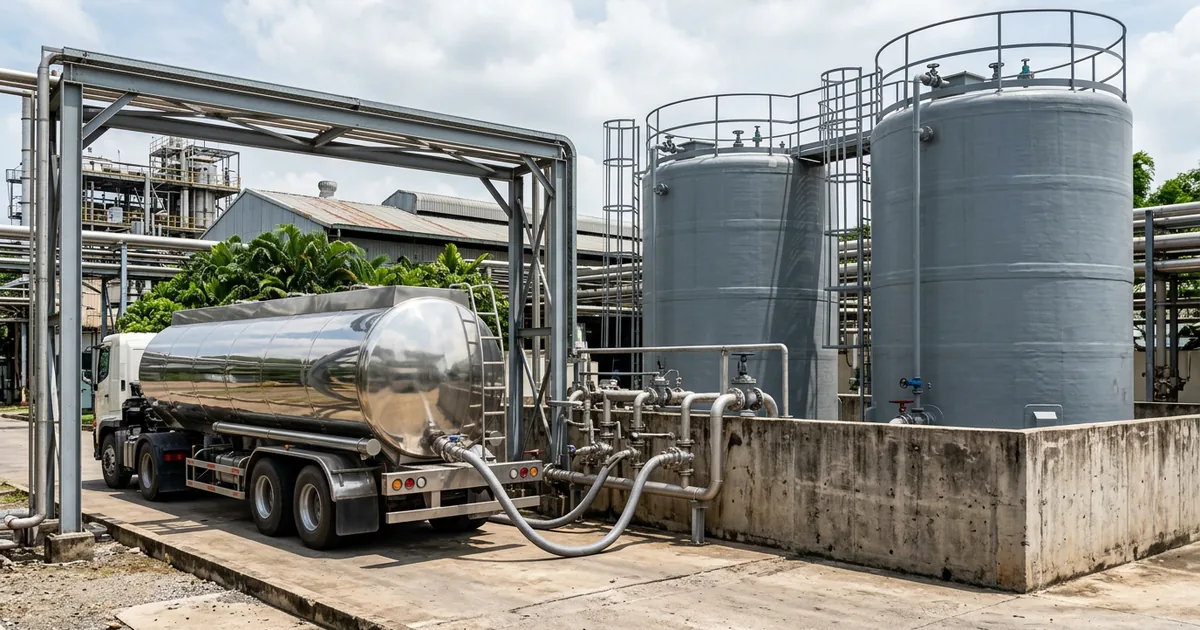
Industrial swine complexes should store Liquid NaOH 32% in vertical Vinyl Ester FRP or cross-linked HDPE tanks enclosed within a ≥ 110% secondary containment bund, automate dosing via dual diaphragm metering pumps interlocked with online glass pH electrodes (setpoint pH 7.3–7.6), and receive bulk chemicals via over-the-fence Camlock transfer from Loc Thien Chemical’s 5–30-ton tankers.
To comply with Vietnam’s Law on Chemicals No. 69/2025/QH15 (effective January 1, 2026), implementing Decrees 24/2026/ND-CP, 25/2026/ND-CP, 26/2026/ND-CP, and Circular 01/2026/TT-BCT, while enforcing strict livestock biosecurity protocols against African Swine Fever (ASF) and PRRS, bulk caustic soda installations should follow four engineering standards:
1. Why Liquid NaOH 32% Outperforms NaOH 45–50% in Automated Livestock Dosing Systems
While caustic soda is commercially traded at both 32% and 45–50% concentrations, Liquid Caustic Soda NaOH 32% is the superior engineering grade for outdoor livestock WWTPs across Vietnam:
- Immunity to Winter Crystallization and Pipe Freezing:
NaOH 50%has a high freezing/crystallization point of+12 °C to +15 °C. During winter nights and early mornings in Northern Vietnam (Bac Ninh, Hoa Binh, Thanh Hoa, Nghe An) or the Central Highlands (Lam Dong, Dak Lak, Gia Lai), ambient temperatures below15 °CcauseNaOH 50%to crystallize into solid plugs inside suction lines and pump check valves unless expensive electrical heat-tracing cables are installed. By contrast, Liquid NaOH 32% has a low crystallization point of+5 °C to +7 °C, remaining free-flowing year-round without heating. - 3x Lower Dynamic Viscosity for Precise Metering: At
20 °C, the viscosity ofNaOH 32%is only18–22 mPa·s(compared to70–80 mPa·sforNaOH 50%), preventing check-valve float lag in diaphragm metering pumps and accelerating micro-mixing inside the Aerotank.
2. Storage Tank Metallurgy, GHS Safety Block, and Incompatibility Guardrails
- Bulk Tank & Bund Wall Specification (15 m³ – 30 m³): Construct vertical flat-bottom tanks using alkali-resistant Vinyl Ester FRP (Fiberglass Reinforced Plastic) or high-density polyethylene (HDPE) rated for a specific gravity of SG = 1.35 at 20 °C. Enclose the tank inside an epoxy-lined reinforced concrete secondary containment bund wall (
≥ 110%of the largest tank volume). - Piping, Gaskets & Strictly Incompatible Metals: Use Schedule 80 uPVC, CPVC, or PN16 HDPE piping with EPDM or PTFE (Teflon) flange gaskets. NEVER allow NaOH to contact aluminum (
Al), zinc (Zn), galvanized steel, brass, or tin—caustic soda reacts violently with amphoteric metals to evolve explosive hydrogen gas (H₂) inside enclosed tanks and piping. - Segregation Against Acute Toxic Chlorine Gas (
Cl₂): Strictly segregate NaOH and alkaline storage bays from acid tanks (H₂SO₄,HCl), iron coagulants (FeCl₃), and Sodium Hypochlorite (Javel NaOCl)—never share bund walls or transfer headers where accidental mixing ofNaOClwith acidic streams could release lethal chlorine gas (Cl₂). - Automated PID Dosing Skid: Install
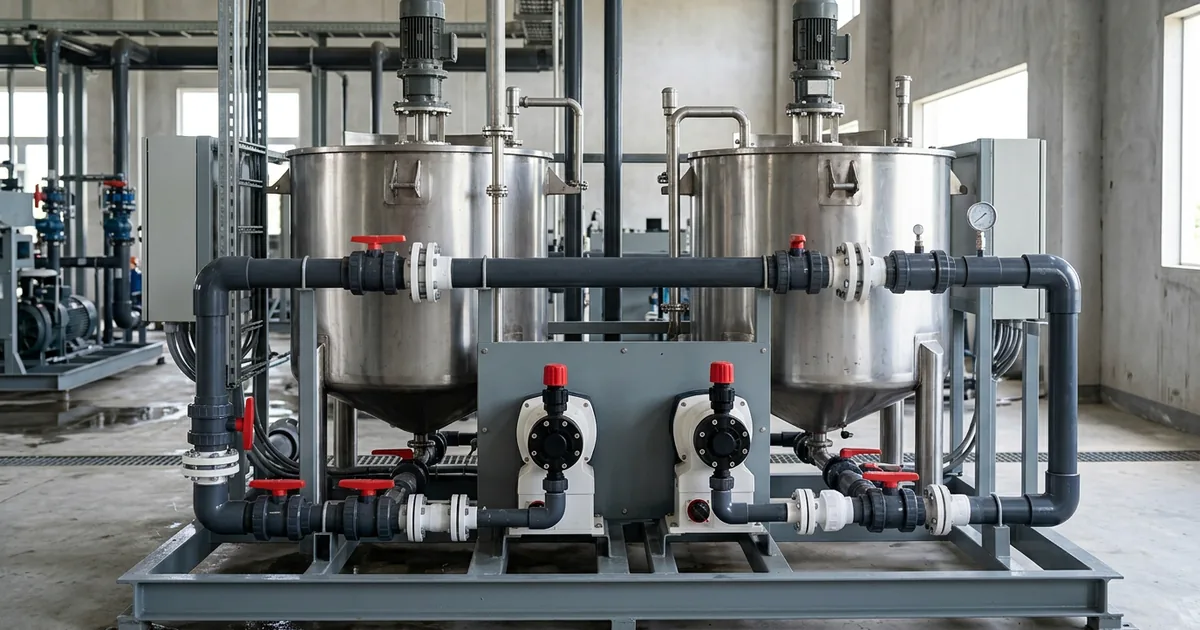
1 duty + 1 standbydiaphragm metering pumps controlled via a4–20 mAPID loop linked to a self-cleaning industrial glasspHelectrode submerged at the front third of the Aerotank (start threshold pH ≤ 7.25,stop threshold pH ≥ 7.55). - GHS Safety Block & Mandatory PPE (
Circular 01/2026/TT-BCT):- GHS Signal Word: Danger.
- GHS Hazard Statements (H-Codes): H314 (Causes severe skin burns and eye damage), H290 (May be corrosive to metals).
- Mandatory PPE: Chemical splash goggles + full-face shield, elbow-length Nitrile or Neoprene gauntlets, alkali-resistant PVC apron, and safety boots.
- Emergency Plumbed Eyewash & Safety Shower: Install within 10–15 meters unobstructed travel distance from the tanker unloading station and dosing skid; maintain the GHS 16-Section SDS for Liquid NaOH on-site.
3. Over-the-Fence Biosecure Tanker Unloading Protocol for Pig Farms
To protect livestock biosecurity zones from external vehicle traffic, Loc Thien Chemical executes a strict Over-the-Fence Delivery Protocol:
- Perimeter Camlock Fill Station: Farm engineering teams route a dedicated Schedule 80 uPVC or 304 stainless steel fill line from the top of the FRP tank to the outer perimeter biosecurity fence, terminating in a lockable 2-inch (DN50) male Camlock coupling with an isolation ball valve and drip tray.
- 30–50 Meter Pressurized Hose Transfer from 5–30-Ton Tankers: Loc Thien Chemical’s 5–30-ton dedicated chemical road tankers undergo full wheel and undercarriage disinfection at the farm’s outer quarantine checkpoint, park outside the perimeter fence, couple a 30–50 m high-pressure chemical hose to the perimeter Camlock port, and pump Liquid NaOH 32% directly into the bulk storage tank in 30–45 minutes with zero personnel or vehicle entry into the animal production zone.
Essential Information for B2B Buying Committees (For Purchasing · For Operating Engineers · For Accounting)
To streamline vendor qualification for agribusiness corporations, FDI livestock enterprises, and wastewater EPC contractors, Loc Thien Chemical structures its supply capabilities across three functional blocks:
1. For Purchasing & Supply Chain Managers
- Corporate Identity & Manufacturing/Supply Positioning: Loc Thien Investment Development Co., Ltd. (Tax ID:
0313650856). Loc Thien Chemical is the Direct Manufacturer ofFeCl₂ 30% solutionandFeCl₃ Wastewater Grade(3,000+ metric tons/monthcapacity) and a Tier-1 Industrial Chemical Supplier / Distributor of Liquid Caustic Soda NaOH 32%, Caustic Soda Flakes NaOH 99%, Hydrated Lime Ca(OH)₂ 96%, and Industrial Molasses. - 6 Standardized Nationwide Warehouses & 5–30-Ton Tanker Fleet:
- Ba Ria - Vung Tau Warehouse: Phu My 1 Industrial Park, Phu My Town, Ba Ria - Vung Tau.
- Dong Nai Warehouse: Long Thanh Industrial Park, Long Thanh District, Dong Nai (strategically positioned for the livestock hubs of Thong Nhat, Xuan Loc, Cam My, and Trang Bom).
- Binh Duong Warehouse: Tan Dong Hiep Ward, Di An City, Binh Duong (serving Binh Duong, Binh Phuoc, and Tay Ninh farms).
- Da Nang Warehouse: Hoa Khanh Industrial Park, Lien Chieu District, Da Nang.
- Can Tho Warehouse: Tra Noc Industrial Park, O Mon District, Can Tho (serving Mekong Delta livestock complexes).
- Bac Ninh Warehouse: Tien Son Industrial Park, Tien Du District, Bac Ninh (serving Northern and North-Central Vietnam).
- Legal Headquarters (Administrative Office ONLY, not a chemical storage warehouse):
452/6B Tinh Lo 10, Binh Tri Dong Ward, Binh Tan District, Ho Chi Minh City.
- Quotation & Delivery SLA: Official technical quotation issued within 15 minutes. Standard delivery SLA: 4 hours within inner Ho Chi Minh City; 24–48 hours to Southern and Mekong Delta Industrial Parks & farms; 2–3 days to Northern and Central Vietnam. Contact hotline +84 979 891 929 for detailed delivery scheduling and biosecurity coordination.
2. For Operating & EHS Engineers
- Batch-to-Batch Concentration Stability: Every tanker load and 1,000 L IBC tote (
≈ 1,350 kg net weightfor NaOH 32%) is delivered with a Batch COA certifying exact% w/w NaOH,SG at 20 °C,Na₂CO₃, andFelevels, eliminating the need to recalibrate metering pump stroke lengths after each delivery. - Complete Technical & Eco-Compliance Dossier: Full package including Batch COA, Quatest 3 verification reports, GHS 16-Section SDS (
Circular 01/2026/TT-BCT), and ZDHC MRSL v3.1 Conformance Level 1 certification for NaOH issued by TÜV SÜD (Certificate No. ZDHC1 127736 0001 Rev. 00). Bilingual English–Vietnamese vendor qualification dossiers are provided to streamline internal technical and management reviews.
3. For Accounting & Finance Departments
- Compliant 2026 Tax Documentation: Prompt issuance of legally valid Vietnamese Electronic Value-Added Tax Invoices (e-VAT Invoices) per delivery in strict compliance with Decree 70/2025/ND-CP, accompanied by certified electronic weighbridge tickets, delivery receipts, and framework supply contracts.
- Bank Transfer & Input VAT Deduction: Transparent corporate bank transfer settlement satisfying 100% of input VAT credit requirements under the 2024 Law on Value-Added Tax, with flexible contract payment terms for recurring farm deliveries.
5 Factors Determining the Unit Cost of Liquid NaOH 32% & Hydrated Lime Ca(OH)₂ 96% (Transparent TCO Optimization)
Because raw chlor-alkali energy inputs and regional freight distances vary by farm location, Loc Thien Chemical does not publish fixed unit prices online; instead, our engineering desk issues a binding quotation within 15 minutes based on 5 transparent cost-driving factors:
- Active Alkali Concentration & CaCO₃ Equivalent Basis (
% w/w): Unit economics are evaluated per kilogram of effectiveCaCO₃alkalinity neutralized (2.50 kg NaOH 32%vs.0.81 kg NaOH 99%vs.0.77 kg Ca(OH)₂ 96%per1.0 kg CaCO₃), accounting for both chemical reactivity and zero-sludge savings. - Packaging Format & Delivery Mode: Bulk delivery via 5–30-ton dedicated chemical tankers eliminates drum/IBC packaging surcharges and manual handling labor compared to 1,000 L IBC totes (
≈ 1,350 kg net), 30 kg carboys, or 25 kg woven bags. - Monthly Volume & Framework Contract Commitment: Livestock enterprises executing quarterly or annual scheduled supply contracts secure priority inventory allocation and volume-tiered pricing stability.
- Dispatch Distance from the Nearest of 6 Warehouses: Optimal routing from our nearest regional warehouse (
Phu My, Long Thanh, Di An, Hoa Khanh, Tra Noc, or Tien Son) using dangerous-goods certified vehicles under Decree 161/2024/ND-CP. - On-Site Biosecure Pumping & Compliance Documentation (All-Inclusive Scope): Every official Loc Thien Chemical quotation is all-inclusive of: dedicated tanker freight, pressurized over-the-fence pumping into your storage tank, Batch COA, GHS 16-Section SDS, and Vietnamese Electronic VAT Invoice.
Frequently Asked Questions (FAQ) on Post-Biogas Swine Nitrification Alkalinity & pH Control
1. Why do post-biogas swine wastewater aeration tanks (Aerotanks) repeatedly suffer severe pH crashes down to 4.8–5.5 even when influent pH is 7.2–7.8?
Although anaerobic biogas lagoon effluent enters at a neutral pH (7.2–7.8), biological nitrification of high ammonium loads (NH₄⁺-N = 105–785 mg/L) into nitrate releases 2 moles of H⁺ ions per mole of NH₄⁺-N oxidized, consuming exactly 7.14 g of CaCO₃ alkalinity per 1.0 g of NH₄⁺-N. Once residual bicarbonate buffering capacity drops below 70–100 mg/L as CaCO₃, mixed-liquor pH plunges rapidly to 4.8–5.5, completely halting Nitrosomonas and Nitrobacter enzymatic activity.
2. How many kilograms of liquid caustic soda NaOH 32% per cubic meter are required for post-biogas swine wastewater under QCVN 62:2025/BTNMT?
By stoichiometric mass balance, neutralizing 1.0 g of CaCO₃ alkalinity deficit requires 0.80 g of 100% pure NaOH or 2.50 g of commercial liquid NaOH 32% (w/w). Depending on influent NH₄⁺-N levels (150–700 mg/L) and anoxic alkalinity recovery, real-world dosing spans 0.05–0.80 kg of 100% NaOH/m³, corresponding to 0.16–2.50 kg of liquid NaOH 32%/m³ (specifically 1.25–2.50 kg NaOH 32%/m³ at 300–700 mg/L NH₄⁺-N, far exceeding legacy 0.05 kg/m³ design estimates).
3. Why should hydrated lime Ca(OH)₂ slurry never be dosed directly into swine wastewater Aerotank or MBR basins?
Post-biogas swine effluent contains high dissolved orthophosphate (PO₄³⁻ = 30–187 mg/L) and bicarbonate ions. Dosing Ca²⁺ directly into the aerated biological reactor precipitates insoluble calcium carbonate (CaCO₃) and calcium phosphate (Ca₃(PO₄)₂) scale directly onto fine-bubble EPDM membrane diffusers and MBR hollow fibers, spiking blower back-pressure, slashing oxygen transfer efficiency (OTE) by 30–50%, and increasing inorganic sludge volume by 25–40%.
4. How does coupling pre-anoxic denitrification with industrial molasses cut liquid NaOH 32% consumption by up to 35–45%?
Maintaining an internal mixed-liquor recirculation loop (200–400% Q) from the Aerotank to the pre-anoxic tank while dosing 0.25–0.60 kg/m³ of industrial molasses (restoring COD/TN ≥ 4.0–5.0) enables heterotrophic bacteria to reduce NO₃⁻ into N₂ gas and release 1 mole of OH⁻ per mole of NO₃⁻-N. This reaction recovers exactly 3.57 g of CaCO₃ alkalinity per 1.0 g of NO₃⁻-N denitrified (50% of the alkalinity consumed during nitrification), reducing net liquid NaOH 32% consumption by 35–45%.
5. How does Loc Thien Chemical deliver bulk liquid NaOH 32% to commercial pig farms without breaching livestock biosecurity zones?
Loc Thien Chemical operates a dedicated fleet of 5–30-ton chemical road tankers equipped with high-head chemical transfer pumps and 30–50 m alkali-resistant hoses fitted with DN50 Camlock quick couplings. The tanker remains strictly outside the farm’s perimeter biosecurity fence and pumps liquid NaOH 32% (CAS 1310-73-2, accompanied by Batch COA and TÜV SÜD ZDHC MRSL v3.1 Level 1 certification) over the fence directly into the plant’s FRP/HDPE storage tanks.
Technical Support & B2B Procurement Hotline — Loc Thien Chemical
Loc Thien Investment Development Co., Ltd. (Loc Thien Chemical — Tax ID: 0313650856) is the Direct Manufacturer of Ferrous Chloride (FeCl₂ 30% solution) & Ferric Chloride (FeCl₃ Wastewater Grade) (3,000+ metric tons/month) and a premier Industrial Chemical Supplier of bulk Liquid Caustic Soda NaOH 32%, Caustic Soda Flakes NaOH 99%, Hydrated Lime Ca(OH)₂ 96%, and Industrial Molasses for livestock WWTPs meeting QCVN 62:2025/BTNMT.
- 24/7 Hotline / WhatsApp / Vietnamese Zalo: +84 979 891 929 (Technical Quotation within 15 Minutes)
- Official Email: [email protected] | Online Bulk RFQ Form: /en/lien-he#bao-gia
- Biosecure Tanker Fleet: Dedicated 5–30-ton chemical tankers with over-the-fence transfer; dispatch within 4 hours in inner HCMC, 24–48 hours to Southern/Mekong Industrial Parks & farms, and 2–3 days to Northern/Central Vietnam.
- 6 Official Warehouses: Ba Ria - Vung Tau (Phu My 1 IP) · Dong Nai (Long Thanh IP) · Binh Duong (Di An) · Da Nang (Hoa Khanh IP) · Can Tho (Tra Noc IP) · Bac Ninh (Tien Son IP).
- Legal Headquarters: 452/6B Tinh Lo 10, Binh Tri Dong Ward, Binh Tan District, Ho Chi Minh City.
Regulatory Disclaimer: This technical article is published to provide chemical engineering guidance and updates on environmental and chemical regulations (QCVN 62:2025/BTNMT, Law on Chemicals No. 69/2025/QH15) and does not substitute for formal legal counsel or site-specific detailed engineering design drawings.