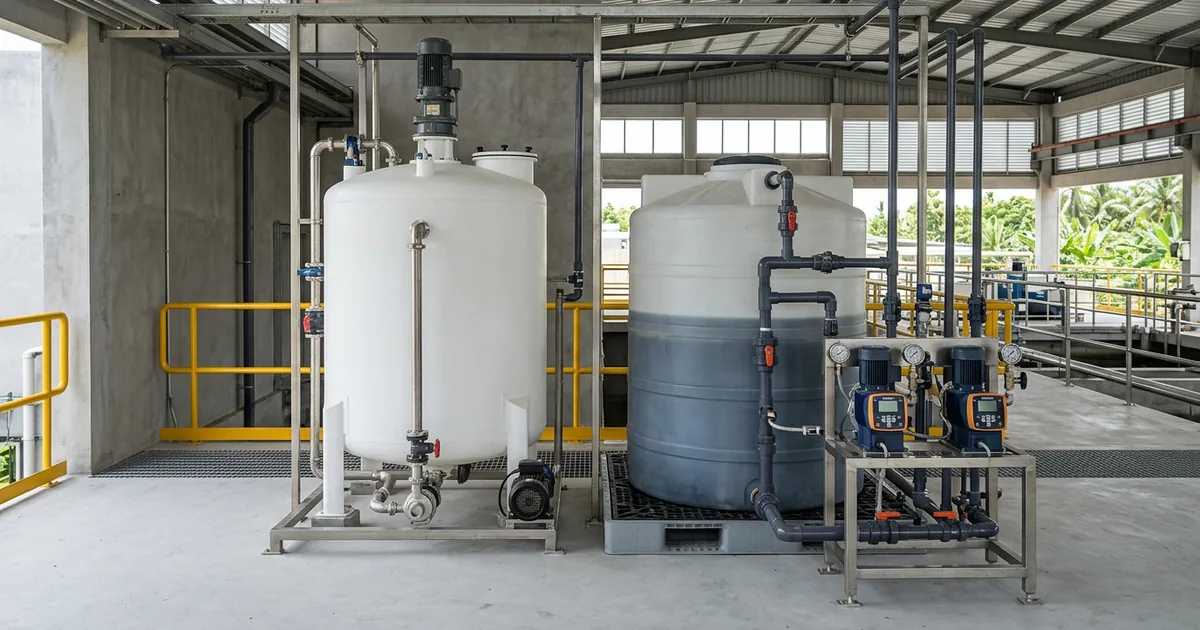
Post-Biogas Swine Wastewater Chemical Treatment Process for QCVN 62:2025/BTNMT Compliance: PAC 31% Coagulation, FeCl3 40% Total Phosphorus Removal & Chloride Control
Table of contents
To treat post-biogas swine wastewater in full compliance with Vietnam’s QCVN 62:2025/BTNMT standard, industrial livestock wastewater treatment plants (WWTPs) must deploy a four-stage chemical regimen: FeCl₂ 30% (CAS 7758-94-3) for upstream H₂S suppression, PAC 31% (Al₂O₃ ≥ 30% w/w, CAS 1327-41-9) at 0.40 kg/m³ for primary coagulation, liquid NaOH 32% (CAS 1310-73-2, 0.05–0.80 kg NaOH 100%/m³) for biological nitrification alkalinity, and FeCl₃ 40% (CAS 7705-08-0, 0.20–0.33 kg/m³ per 10 mg/L P) for secondary Total Phosphorus precipitation. Loc Thien Chemical is the direct manufacturer of FeCl₂ 30% and FeCl₃ 40% and a Tier-1 supplier of wastewater treatment chemicals, delivering via 5–30-ton tankers with batch-specific COA across 6 nationwide warehouses.
Engineering Support & 15-Minute Technical Quotation: Environmental engineers and FDI livestock procurement teams requiring mass-balance chemical dosing calculations or on-site Jar-test calibration samples can contact our technical hotline / Zalo / WhatsApp at
0979 891 929or submit effluent parameters via our 15-minute technical quotation portal.
1. How Does the Regulatory Shift from QCVN 62-MT:2016/BTNMT to QCVN 62:2025/BTNMT (Circular 04/2025/TT-BTNMT) Transform Swine WWTP Design?
Vietnam’s National Technical Regulation on Livestock Effluent QCVN 62:2025/BTNMT (promulgated under Circular 04/2025/TT-BTNMT on February 28, 2025) supersedes QCVN 62-MT:2016/BTNMT, introducing mandatory Total Phosphorus (T-P) discharge ceilings while slashing allowable Chemical Oxygen Demand (COD) and Total Nitrogen (T-N) limits by 35% to 60%. For environmental engineers operating industrial pig farms, the most consequential technical change is that passive biological oxidation ponds following HDPE anaerobic biogas lagoons can no longer meet statutory discharge thresholds without dedicated physicochemical coagulation and chemical phosphorus precipitation.
Under the legacy QCVN 62-MT:2016/BTNMT framework, Total Phosphorus was entirely unregulated, and Column B allowed up to 300 mg/L COD, 100 mg/L BOD₅, and 150 mg/L Total Nitrogen. Under QCVN 62:2025/BTNMT, two fundamental mass-balance constraints render unassisted biological lagoon systems obsolete:
- Zero Gaseous Pathway for Phosphorus Removal: Unlike organic carbon (which methanogens convert into
CH₄andCO₂) or nitrogen (which nitrifying and denitrifying bacteria convert into atmosphericN₂gas), phosphorus (P) excreted in swine manure and urine has no volatile phase under normal WWTP conditions. Orthophosphate (PO₄³⁻) can only be extracted from the liquid stream by chemical precipitation into insoluble metal phosphate salts (AlPO₄↓andFePO₄↓) removed via primary and secondary sludge wasting. - Stringent Tightening of Total Nitrogen and Recalcitrant COD: Column A
Total Ndrops by60%(from50 mg/Lto20 mg/L) and Column B drops by60%(from150 mg/Lto60 mg/L). Concurrently, Column ACODis cut from100 mg/Lto65 mg/Land Column B is halved from300 mg/Lto150 mg/L, requiring coagulant sweeps (PAC 31%andFeCl₃ 40%) to strip non-biodegradable humic and fulvic macromolecules.
Comprehensive Parameter Comparison: QCVN 62-MT:2016/BTNMT vs. QCVN 62:2025/BTNMT
The table below details the exact regulatory shifts across Column A, Column B, and Column C, alongside the required chemical engineering interventions for swine wastewater treatment plants:
| Effluent Parameter | Unit | QCVN 62-MT:2016 (Col A) | QCVN 62-MT:2016 (Col B) | QCVN 62:2025 (Col A) | QCVN 62:2025 (Col B) | QCVN 62:2025 (Col C) | Mandatory Chemical Process Impact |
|---|---|---|---|---|---|---|---|
| pH | — | 6.0 – 9.0 | 5.5 – 9.0 | 6.0 – 9.0 | 5.5 – 9.0 | 5.5 – 9.0 | Requires automated NaOH 32% dosing loops to neutralize acidic hydrolysis from PAC 31%, FeCl₃ 40%, and nitrification. |
| BOD₅ (at 20 °C) | mg/L | 40 | 100 | 40 | 60 | 100 | Column B reduced by 40% (100 to 60 mg/L); requires pre-removal of colloidal organic solids via Stage 1 coagulation. |
| COD | mg/L | 100 | 300 | 65 | 150 | 250 | Column A cut by 35%, Column B cut by 50%. Demands two-stage coagulation (PAC 31% + FeCl₃ 40%) to strip refractory humic COD. |
| Total Suspended Solids (TSS) | mg/L | 50 | 150 | 40 | 100 | 120 | Requires bridging flocculation with Anionic Polymer A1110 to prevent anaerobic pin-floc carryover. |
| Total Nitrogen (T-N) | mg/L | 50 | 150 | 20 | 60 | 120 | Reduced by 60% in Columns A & B. Requires continuous NaOH 32% alkalinity (7.14 g CaCO₃/g NH₄-N) and Molasses carbon dosing. |
| Total Phosphorus (T-P) — Discharge to Lakes/Ponds | mg/L | Unregulated | Unregulated | 2.0 | 3.0 | 4.0 | Newly introduced. Impossible to achieve without Stage 3 chemical precipitation using FeCl₃ 40% (forming insoluble FePO₄↓). |
| Total Phosphorus (T-P) — Discharge to Rivers/Streams | mg/L | Unregulated | Unregulated | 4.0 | 14.0 | 30.0 | With post-biogas PO₄³⁻ reaching 30.6–187.65 mg/L, plants must still achieve 75% to >95% chemical phosphorus removal. |
| Total Coliform | MPN or CFU/100mL | 3,000 | 5,000 | 3,000 | 5,000 | 5,000 | Requires terminal disinfection with NaOCl 10% after biological ammonia removal to avoid breakpoint chlorination waste. |
Statutory Transition Roadmap Under Articles 3 & 4 of Circular 04/2025/TT-BTNMT & Inspection Mandates
FDI livestock integrators and commercial farm owners must navigate three strict legal compliance milestones under Articles 3 and 4 of Circular 04/2025/TT-BTNMT, coupled with Decree 05/2025/ND-CP and Decree 45/2022/ND-CP:
- September 1, 2025 (
01/09/2025— Immediate Enforcement for New, Expanded, or Unpermitted Farms): All new investment projects, herd expansion projects, and existing pig farms operating without a valid Environmental Permit or approved Environmental Impact Assessment (EIA) must comply immediately withQCVN 62:2025/BTNMTstarting01/09/2025. - December 31, 2031 & January 1, 2032 (
31/12/2031to01/01/2032— Conditional Grandfathering Window): Only existing livestock facilities already in lawful operation with valid environmental permits or approved EIA decisions prior to01/09/2025are permitted to continue applyingQCVN 62-MT:2016/BTNMTuntil31/12/2031, after which full compliance withQCVN 62:2025/BTNMTbecomes mandatory on01/01/2032. Facilities operating without valid permits face immediate enforcement and mandatory operational suspension of waste-generating activities for3 to 12 monthsunder Decree45/2022/ND-CP. - Independent Power Meters, Flow Meters & 2-Year Chemical Dosing Logbooks (Decree
05/2025/ND-CP): Environmental inspection task forces now cross-audit the WWTP’s dedicated electric sub-meter, influent/effluent flow meters, and 2-year archived chemical procurement invoices, warehouse issue slips, and daily dosing logbooks (PAC 31%,FeCl₃ 40%,NaOH 32%,NaOCl 10%). If recorded effluent volume is300 m³/daybut chemical consumption records fail to match stoichiometric mass balances for phosphorus precipitation and nitrification alkalinity, the facility is cited for non-compliant WWTP operation. For a deeper diagnostic of common WWTP compliance failures, see why wastewater treatment plants fail despite using the right chemicals.
2. What Is the Chemical Nature of Post-Biogas Swine Effluent & Why Does the Water-Saving Paradox in FDI Farms Spike Pollutant Concentrations?
Post-biogas swine wastewater (Anaerobic Digester Effluent) is a high-ionic-strength, alkalinity-deficient matrix characterized by concentrated Ammonium (NH₄⁺ = 105–785 mg/L), dissolved Orthophosphate (PO₄³⁻ = 30.6–187.65 mg/L), negatively charged lignocellulosic colloids, and a low BOD₅/COD ratio (0.20–0.35) that starves downstream biological reactors. Designing an accurate chemical dosing regimen requires understanding both the biochemical limits of anaerobic digestion and the hydraulic concentration effect in modern closed-house farms.
Why Anaerobic HDPE Lagoons Remove Only 11.8% of TKN and 7.0% of Total Phosphorus
Inside covered HDPE anaerobic biogas digesters (operating at a hydraulic retention time HRT = 20–35 days), hydrolytic, acidogenic, and methanogenic consortia convert soluble carbohydrates and volatile fatty acids into biogas (60–65% CH₄, 30–35% CO₂, and 1,000–4,000 ppm H₂S). However, empirical mass-balance studies across industrial swine biogas lagoons establish two rigid biochemical boundaries:
- Average Total Kjeldahl Nitrogen (
TKN) removal across biogas lagoons is only11.8%: Anaerobic proteolysis and urea hydrolysis drive Ammonification, converting organic nitrogen in feces and urine into dissolved Ammonium ions (NH₄⁺) and free Ammonia (NH₃). Because the anaerobic lagoon contains zero dissolved oxygen (DO = 0 mg/L), autotrophic nitrifiers (Nitrosomonas and Nitrobacter) cannot oxidizeNH₄⁺, leaving88.2%of total nitrogen in the digester effluent. - Average Total Phosphorus (
T-P) retention in biogas lagoons is only7.0%: Microbial phytases cleave phytic acid and polyphosphates from undigested feed into soluble Orthophosphate species (H₂PO₄⁻,HPO₄²⁻,PO₄³⁻). Apart from minor spontaneous crystallization of Struvite (MgNH₄PO₄·6H₂O) along lagoon floors and piping,93.0%of the incoming phosphorus load exits directly into the post-biogas supernatant.
| Physicochemical Parameter | Unit | Raw Swine Manure Slurry (Pre-Biogas) | Post-Biogas Digester Effluent (WWTP Influent) | Chemical Speciation & Engineering Challenge |
|---|---|---|---|---|
| pH | — | 6.2 – 7.4 | 7.2 – 8.1 | Buffered by ammonium bicarbonate (NH₄HCO₃), yet existing alkalinity covers less than 35% of the stoichiometric demand for full nitrification. |
| Total COD | mg/L | 3,500 – 15,000 | 639 – 5,326 | Readily biodegradable VFAs are converted to CH₄; residual COD consists of fine anaerobic cell debris, lignocellulose colloids, and humic acids. |
| BOD₅ | mg/L | 1,800 – 8,500 | 210 – 1,650 | The BOD₅/COD ratio drops below 0.30, creating a severe carbon deficit for heterotrophic denitrification in the Anoxic tank. |
| Total Suspended Solids (TSS) | mg/L | 2,500 – 12,000 | 340 – 3,200 | Dominated by negatively charged anaerobic bio-colloids (Zeta potential -25 mV to -40 mV) that resist gravity settling without PAC 31%. |
| Ammonium (NH₄⁺-N) / TKN | mg/L | 120 – 890 | 105 – 785 | Biogas removes only ~11.8% TKN. High NH₄⁺ causes free-ammonia toxicity if pH spikes and consumes massive alkalinity during aeration. |
| Orthophosphate (PO₄³⁻) / T-P | mg/L | 33.0 – 202.0 | 30.6 – 187.65 | Biogas retains only ~7.0% T-P. Meeting ≤ 2–4 mg/L (Col A) or ≤ 3–14 mg/L (Col B) requires stoichiometric Al³⁺ and Fe³⁺ precipitation. |
| True & Apparent Color | Pt-Co | 1,200 – 4,500 | 850 – 3,200 | Dark brown-black coloration from melanoidins, humic/fulvic acids, and colloidal iron sulfide (FeS) that biological aeration cannot decolorize. |
The Hydraulic Dilution vs. Concentration Paradox in Modern FDI Swine Integrators
A critical engineering failure occurs when operators apply textbook volumetric chemical dosages (mg/L) without accounting for the dramatic reduction in barn washwater volume per pig across modern FDI livestock complexes:
- Traditional Open-Pen Farms (High-Volume Hose Flushing): Consume
30–40 Liters of water/pig/day. A10,000-pigfinishing farm generates300–400 m³/dayof moderately diluted wastewater (COD ~ 1,200–1,800 mg/L,NH₄⁺ ~ 200–300 mg/L,T-P ~ 45–65 mg/L). - Modern Closed-House FDI Integrators (Slatted Floors, Dry Manure Scraping & Recycled Flushing): High-tech FDI complexes minimize water consumption to cut wastewater footprint. Operational data from a large-scale
78,700-pigindustrial complex demonstrates a total wastewater discharge of only~726 m³/day, corresponding to a specific hydraulic generation rate of just~9.2 Liters/pig/day(3.5 to 4 times lowerwater volume per head than traditional farms).
Because each pig excretes the same daily mass of nitrogen (~25–35 g N/pig/day) and phosphorus (~5–8 g P/pig/day) regardless of washwater volume, reducing water usage by 75% causes pollutant concentrations (mg/L) in post-biogas effluent to skyrocket by 300% to 400% (COD reaches 3,500–5,326 mg/L, NH₄⁺ climbs to 550–785 mg/L, and PO₄³⁻ surges to 120–187.65 mg/L). Applying a standard 150 mg/L PAC dose to such concentrated effluent fails to neutralize colloidal surface charges, causing immediate floc deflocculation and phosphorus breakthroughs. Consequently, chemical dosing in swine WWTPs must always be calibrated to daily mass pollutant load (kg N/day and kg P/day) verified via on-site Jar-test trials.
3. How Is the Multi-Stage Chemical Treatment Regimen Engineered for a 10,000-Pig WWTP (200–400 m³/day)?
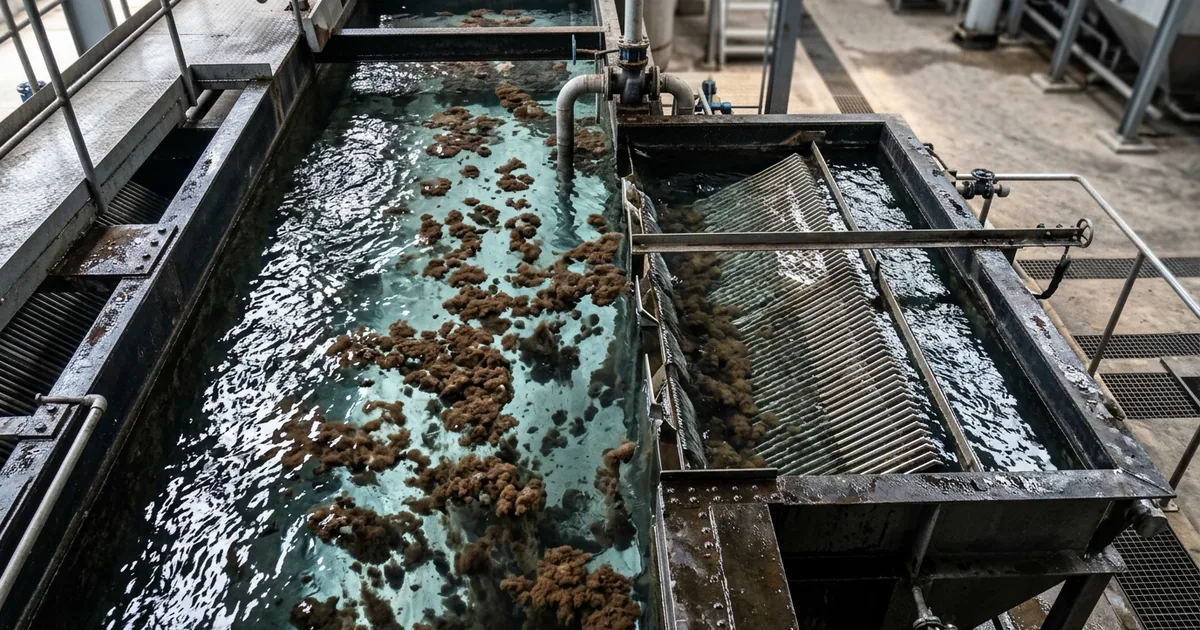
A 10,000-pig industrial wastewater treatment plant (200–400 m³/day) engineered for year-round compliance with QCVN 62:2025/BTNMT distributes chemical treatment across five coordinated unit operations: (Stage 0) Upstream H₂S fixation in the biogas pit using FeCl₂ 30%, (Stage 1) Primary physicochemical coagulation-flocculation with PAC 31% and Anionic Polymer A1110, (Stage 2) Biological nitrification-denitrification alkalinity and carbon supplementation with liquid NaOH 32% and Industrial Molasses, (Stage 3) Secondary chemical polishing for Total Phosphorus, humic color, and coliforms using FeCl₃ 40% and NaOCl 10%, and (Stage 4) Barn exhaust ammonia scrubbing (Wet Scrubber).
Comprehensive Dosing & Monthly Mass Balance Table (Illustrative Engineering Example — 10,000-Pig Farm, 200–400 m³/day)
Mandatory Engineering Note: The mass-balance schedule below represents an Illustrative Engineering Calculation Example based on typical post-biogas effluent parameters for a
10,000-headcommercial swine farm (Q = 200–400 m³/day, influentCOD = 1,800–2,500 mg/L,NH₄⁺-N = 320 mg/L,Total P = 65 mg/L). Actual plant dosing rates must be determined through on-site Jar-test protocols tailored to feed formulation and seasonal water usage.
| Treatment Stage | Chemical Reagent & Commercial Spec | Primary Reaction Mechanism & Function | Reference Dose (per 1 m³ Effluent) | Daily Consumption (200 – 400 m³/day) | Monthly Stock Requirement (30 Days) |
|---|---|---|---|---|---|
| Stage 0: Biogas Collection Pit & Digester | Ferrous Chloride FeCl₂ 30% (CAS 7758-94-3, SG ≈ 1.28–1.32 at 20 °C — Direct Manufacturer Loc Thien) |
Selectively precipitates dissolved sulfide (S²⁻) as insoluble black FeS↓, slashing biogas H₂S from 3,000 ppm to < 200 ppm to protect biogas generators while co-precipitating primary Fe₃(PO₄)₂↓. |
0.15 – 0.25 kg/m³ (calibrated to raw biogas H₂S load) |
30 – 100 kg/day | 0.9 – 3.0 tons/month |
| Stage 1A: Primary Coagulation (Post-Biogas) | Poly Aluminium Chloride PAC 31% (CAS 1327-41-9, Al₂O₃ ≥ 30–31% w/w, basicity B = 45–75%) |
Destabilizes negatively charged manure colloids via polynuclear [Al₁₃O₄(OH)₂₄]⁷⁺ complexes, removing > 90% turbidity, TSS, color, and precipitating bulk orthophosphate as AlPO₄↓ at neutral pH 7.0. |
0.40 – 0.55 kg/m³ (Optimum Jar-test benchmark at 550 mg/L at pH 7.0) |
80 – 160 kg/day (at standard 0.40 kg/m³) |
2.4 – 4.8 tons/month |
| Stage 1B: Primary Flocculation | Anionic Polymer A1110 (CAS 9003-05-8, high molecular weight polyacrylamide) |
Bridges micro-flocs of aluminum phosphate and organic solids into dense, rapid-settling macro-flocs in Clarifier #1, improving sludge dewatering cake dryness. | 0.005 kg/m³ (equivalent to 5 g/m³ or 5 ppm) |
1.0 – 2.0 kg/day | 30 – 60 kg/month (1.2 – 2.4 bags of 25kg) |
| Stage 2A: Aerotank Alkalinity Supplementation | Liquid Caustic Soda NaOH 32% (CAS 1310-73-2, 32% w/w, SG ≈ 1.35 at 20 °C) |
Replenishes alkalinity consumed during biological nitrification (7.14 g CaCO₃ per 1 g NH₄⁺-N), locking Aerotank pH = 7.2 – 7.8 with zero inorganic CaCO₃ scaling or sludge volume inflation. |
0.05 – 0.80 kg NaOH 100%/m³ (equivalent to 0.15 – 2.50 kg NaOH 32%/m³) |
30 – 500 kg/day (as liquid NaOH 32%) |
0.9 – 15.0 tons/month |
| Stage 2B: Anoxic Carbon Supplementation | Industrial Molasses (Total sugar ≥ 45–50%, Brix ≥ 75–80°) |
Supplies readily biodegradable soluble carbon to restore C:N ≥ 4:1 in the Anoxic zone, driving heterotrophic denitrification of NO₃⁻ to N₂↑ gas to achieve Total N ≤ 20–60 mg/L. |
0.25 kg/m³ (adjusted to internal NO₃⁻ recycle rate) |
50 – 100 kg/day | 1.5 – 3.0 tons/month |
| Stage 3A: Secondary Polishing (Total P & Humic Color) | Ferric Chloride FeCl₃ 40% (CAS 7705-08-0, 40% w/w, SG ≈ 1.42 at 20 °C — Direct Manufacturer Loc Thien) |
Chemically precipitates residual PO₄³⁻ exiting the biological train into ultra-insoluble FePO₄↓ (pKsp = 26.4) and sweeps dark brown humic/melanoidin complexes. |
0.20 – 0.33 kg/m³ per 10 mg/L P removed (molar ratio Fe:P = 1.5–2.5:1) |
120 – 200 kg/day | 3.6 – 6.0 tons/month |
| Stage 3B: Terminal Disinfection | Sodium Hypochlorite NaOCl 10% (Javen) (CAS 7681-52-9, 10% ± 1% w/v available Cl₂, SG ≈ 1.14–1.16 at 20 °C) |
Oxidizes pathogen cell membranes via hypochlorous acid (HOCl), controlling Total Coliform ≤ 3,000–5,000 MPN/100mL and E. coli ≤ 200 MPN/100mL. |
0.10 L/m³ (equivalent to ~0.115 kg/m³) |
20 – 40 Liters/day | 600 – 1,200 Liters/month |
Deep-Dive Engineering Analysis Across All Five Chemical Stages
Stage 0: In-Digester H₂S Suppression & Primary Phosphate Fixation with FeCl₂ 30%
Raw biogas generated from high-protein swine manure contains 1,500–4,000 ppm of Hydrogen Sulfide (H₂S) formed by sulfate-reducing bacteria (SRB) metabolizing sulfur-bearing amino acids (methionine and cysteine). Feeding unconditioned biogas into combined heat and power (CHP) generators oxidizes H₂S into corrosive SO₂ and sulfuric acid (H₂SO₄), destroying engine pistons, cylinder liners, and crankcase oil within hundreds of operating hours.
Dosing liquid Ferrous Chloride FeCl₂ 30% (manufactured directly by Loc Thien Chemical) into the manure collection sump ahead of the HDPE biogas lagoon introduces divalent Fe²⁺ ions that react instantaneously with dissolved hydrosulfide (HS⁻ / S²⁻) to precipitate insoluble black Ferrous Sulfide (FeS↓), locking sulfur in the sludge phase while simultaneously precipitating a portion of orthophosphate as Vivianite (Fe₃(PO₄)₂·8H₂O↓):
- Liquid-Phase Sulfide Fixation:
FeCl₂ + H₂S + 2HCO₃⁻ → FeS↓ (black precipitate) + 2Cl⁻ + 2CO₂ + 2H₂O - Primary Ferrous Phosphate Co-Precipitation:
3FeCl₂ + 2PO₄³⁻ → Fe₃(PO₄)₂↓ + 6Cl⁻
Detailed Stage 0 Engineering Guide: Explore stoichiometric dosing formulas based on daily biogas production and generator protection protocols in Spoke 1: Biogas H2S Removal in Pig Farms Using FeCl2 30% to Protect Power Generators.
Stage 1: Primary Physicochemical Coagulation with PAC 31% — Why FeSO₄ Fails in Post-Biogas Effluent
Effluent exiting the anaerobic lagoon carries 340–3,200 mg/L TSS and recalcitrant organic colloids. Routing this unclarified stream directly into the Anoxic–Aerotank biological train smothers nitrifying biofilm, clogs fine-bubble EPDM diffusers, and doubles blower electricity consumption.
Controlled comparative coagulation studies on post-biogas swine wastewater demonstrate a decisive performance gap between Poly Aluminium Chloride PAC 31% and Ferrous Sulfate (FeSO₄·7H₂O):
PAC 31%Performance at NeutralpH 7.0: DosingPAC 31%at550 mg/L(or within the0.40–0.55 kg/m³operational window) directly at the naturalpH 7.0–7.5of post-biogas effluent—followed by0.005 kg/m³of Anionic Polymer A1110—deploys pre-hydrolyzed polynuclear aluminum keggin cations ([Al₁₃O₄(OH)₂₄]⁷⁺) that compress the electrical double layer of manure colloids, achieving> 90%removal of color,> 90%removal of turbidity (TSS),65–75%reduction of colloidal COD, and70–80%precipitation of Total Phosphorus as insolubleAlPO₄↓.- Why
FeSO₄Fails at Stage 1: In contrast, divalentFe²⁺fromFeSO₄remains soluble atpH 7.0–7.5and fails to form sweeping hydroxide flocs unless the wastewater pH is artificially elevated topH 10.0using massive quantities of lime or caustic soda. Even atpH 10.0,FeSO₄achieves only~25%removal of color and turbidity, requiring subsequent acid dosing to bring pH back down to7.5ahead of biological treatment. Worse still, the sulfate anions (SO₄²⁻) introduced byFeSO₄are reduced by anaerobic bacteria into toxicH₂Sgas whenever primary sludge is thickened or recycled. For a broader technical comparison of aluminum and iron coagulants, consult our guide on FeCl3 vs. PAC in industrial wastewater coagulation.
Stage 2: Biological Alkalinity Supplementation with NaOH 32% & Carbon Dosing in the Anoxic–Aerotank Train
Once Clarifier #1 removes suspended solids and bulk phosphorus, clarified effluent enters the Anoxic–Aerotank biological reactor to reduce Total Nitrogen from 105–785 mg/L down to ≤ 20 mg/L (Column A) or ≤ 60 mg/L (Column B).
Biological nitrification of 1 g NH₄⁺-N to NO₃⁻-N consumes 7.14 g of alkalinity (as CaCO₃) and releases 2 moles of H⁺ protons:
- Acid-Generating Nitrification Reaction:
NH₄⁺ + 2O₂ → NO₃⁻ + 2H⁺ + H₂O
Without continuous alkali supplementation, native bicarbonate alkalinity in post-biogas swine wastewater is exhausted mid-aeration, causing Aerotank pH to crash below 5.5–6.0 and completely halting Nitrosomonas and Nitrobacter metabolism. Automated dosing of Liquid Caustic Soda NaOH 32% at 0.05–0.80 kg pure NaOH/m³ (maintaining pH = 7.2–7.8 via online pH controllers) alongside 0.25 kg/m³ of Industrial Molasses in the Anoxic zone sustains complete nitrogen removal without generating tons of abrasive inorganic calcium carbonate/phosphate scale (CaCO₃ / Ca₃(PO₄)₂) that fouls diffusers and burns out mixer motors when hydrated lime Ca(OH)₂ is used.
Detailed Stage 2 Engineering Guide: Review complete alkalinity titration tables and equipment maintenance comparisons between Liquid Caustic Soda and Hydrated Lime in Spoke 2: Alkalinity Supplementation & pH Control in Post-Biogas Swine Aerotanks: NaOH 32% vs. Ca(OH)2.
Stage 3: Secondary Physicochemical Polishing for Total Phosphorus (≤ 2–4 mg/L), Humic Color & Coliforms Using FeCl₃ 40% & NaOCl 10%
Effluent leaving the secondary biological clarifier typically retains 12–35 mg/L of residual Total Phosphorus, dark brown biologically recalcitrant humic/fulvic color (residual COD ~ 90–160 mg/L), and high fecal coliform counts. To reliably meet QCVN 62:2025/BTNMT limits for Total P (≤ 2.0–4.0 mg/L Column A; ≤ 3.0–14.0 mg/L Column B) and COD (≤ 65 mg/L Column A; ≤ 150 mg/L Column B), a secondary physicochemical polishing clarifier dosed with liquid Ferric Chloride FeCl₃ 40% (manufactured directly by Loc Thien Chemical) is essential.
Trivalent Fe³⁺ exhibits exceptional ligand affinity for both orthophosphate (PO₄³⁻) and the carboxyl (-COOH) and phenolic (-OH) functional groups of humic macromolecules across pH = 5.5–7.0:
- Ferric Phosphate Precipitation:
FeCl₃ + PO₄³⁻ → FePO₄↓ (yellowish-white precipitate, pKsp = 26.4) + 3Cl⁻ - Operational Molar Ratio (
Fe:P): While stoichiometric1:1 Fe:Prequires1.80 g Fe³⁺(5.24 g pure FeCl₃or13.1 g of 40% FeCl₃ solution) per1 g P, competing hydroxide hydrolysis (Fe(OH)₃↓) and humic complexation require an operational molar ratio ofFe:P = 1.5:1 to 2.5:1, corresponding to0.20–0.33 kg of FeCl₃ 40% solution/m³per10 mg/L of Phosphorusremoved.
Clarified supernatant then enters the contact disinfection basin, where Sodium Hypochlorite NaOCl 10% (Javen) is dosed at 0.10 L/m³ (maintaining 0.5–1.0 mg/L free residual chlorine after 30 minutes contact time) to achieve complete Coliform and E. coli inactivation.
Detailed Stage 3 Engineering Guide: Examine
FePO₄solubility curves, Fenton advanced oxidation for refractory humic COD, and chlorine gas safety interlocks in Spoke 3: Removing Total Phosphorus, Humic Color & Coliforms in Swine Wastewater Using FeCl3 40%, Fenton & NaOCl.
Stage 4: Closed-Barn Exhaust Ammonia (NH₃) & Odor Abatement via Acidified Wet Scrubbers (QCVN 05:2023/BTNMT)
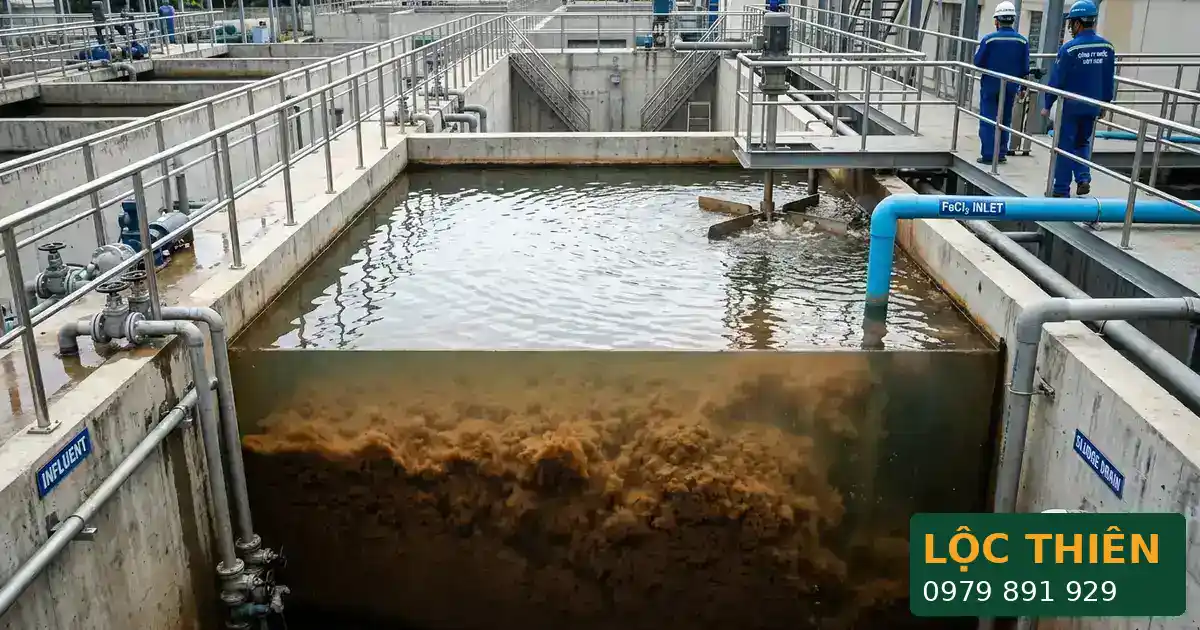
Modern tunnel-ventilated swine houses exhaust massive volumes of gaseous Ammonia (NH₃), hydrogen sulfide, and odorous organic dust regulated under QCVN 05:2023/BTNMT. By dosing FeCl₃ 40% or HCl 32% into the recirculation sump of an exhaust Wet Scrubber wall to maintain scrubbing liquor at pH = 3.5–5.0, volatile NH₃ is chemically protonated into non-volatile Ammonium Chloride (NH₄Cl) with 89–90% ammonia capture efficiency, while scrubber blowdown is routed to the central WWTP.
Detailed Stage 4 Engineering Guide: Access wet-scrubber hydraulic design and acid dosing calculations in Spoke 4: Barn Exhaust NH3 & Odor Treatment for QCVN 05:2023 Compliance Using FeCl3 & HCl Wet Scrubbers.
Quality Control Laboratory Insight (QC Lab — Loc Thien Chemical): “When testing post-biogas swine effluent samples at Loc Thien Chemical’s QC Laboratory, the single most frequent cause of chemical overconsumption and Total Phosphorus non-compliance we diagnose is colloid restabilization triggered by low-basicity PAC or diluted off-spec ferric solutions. In high-ammonia swine effluent with extreme ionic strength (
NH₄⁺ = 300–700 mg/L, conductivityEC = 3,500–6,500 µS/cm), only pairing high-basicity PAC 31% (Al₂O₃ ≥ 30%–31% w/w, basicityB = 45%–75%) in Stage 1 with direct-manufactured liquidFeCl₃ 40%(Fe³⁺ ≥ 13.8% w/w, specific gravity1.42 g/cm³ at 20 °C) in Stage 3 ensures rapidAlPO₄ – FePO₄co-precipitation within90 secondsof flash mixing while preventing residual iron carryover.” — Phan Cam Thuy, Quality Control Specialist (QC Lab), Loc Thien Investment Development Co., Ltd.
4. How Do You Prevent the Chloride Salinity Trap (Cl⁻ ≤ 600 mg/L) When Reusing Treated Effluent for Crop Irrigation Under QCVN 01-195:2022/BNNPTNT?
When livestock complexes register zero-discharge agricultural circularity by reusing treated swine wastewater for crop, orchard, or pasture irrigation under QCVN 01-195:2022/BNNPTNT, the most frequently violated chemical parameter is dissolved Chloride (Cl⁻ ≤ 600 mg/L), alongside microbiological E. coli ≤ 200 MPN/100mL. This represents a critical engineering blind spot: while aluminum (Al³⁺) and iron (Fe²⁺ / Fe³⁺) cations precipitate into the sludge phase, every Chloride anion (Cl⁻) introduced by chloride-bearing coagulants and disinfectants remains 100% dissolved in the treated water.
Stoichiometric Chloride (Cl⁻) Accumulation Across the Treatment Train
Because neither biological treatment nor chemical sedimentation removes dissolved Cl⁻, the final effluent chloride concentration ([Cl⁻]effluent) equals the sum of baseline dietary chloride in the manure plus the stoichiometric chloride released by four treatment chemicals:
- Baseline Chloride in Post-Biogas Effluent (
[Cl⁻]baseline): Commercial swine rations contain0.3–0.5%sodium chloride (NaCl) and choline chloride supplements, resulting in a baseline post-biogas effluent concentration of150 – 250 mg/L Cl⁻. - Chloride Contribution from
FeCl₂ 30%(MW = 126.75 g/mol;Fe = 55.85,2Cl = 70.90):- Every
1 kg of Fe²⁺dosed releases70.90 / 55.85 =1.27 kg of Cl⁻(1 kg pure FeCl₂contains0.559 kg Cl⁻, or1 kg of 30% FeCl₂ solutionadds0.168 kg Cl⁻). - If a plant overdoses
FeCl₂at0.20 kg elemental Fe/m³(~1.51 kg of FeCl₂ 30% solution/m³), Stage 0 alone injects~254 mg/L Cl⁻. Conversely, targeted biogasH₂Sdosing at0.20 kg FeCl₂ 30% solution/m³adds only~33.6 mg/L Cl⁻.
- Every
- Chloride Contribution from
FeCl₃ 40%(MW = 162.20 g/mol;Fe = 55.85,3Cl = 106.35):- Every
1 kg of Fe³⁺dosed releases106.35 / 55.85 =1.90 kg of Cl⁻(1 kg pure FeCl₃contains0.656 kg Cl⁻, or1 kg of 40% FeCl₃ solutionadds0.262 kg Cl⁻). - At a Stage 3 polishing dose of
0.30 kg FeCl₃ 40% solution/m³(removing10–15 mg/L P), the chloride addition is~78.6 mg/L Cl⁻.
- Every
- Chloride Contribution from
PAC 31%andNaOCl 10%:- High-basicity
PAC 31%(B = 45–75%) substitutes hydroxyl (OH⁻) ligands for chloride ions, containing~28–32% w/w Cl⁻. At the standard0.40 kg PAC 31%/m³dose, it adds~120.0 mg/L Cl⁻. - Liquid
NaOCl 10%reduces completely toCl⁻after oxidizing organic matter and pathogens (plus equimolarNaClformed during chlorine caustic absorption), adding~15.0 – 20.0 mg/L Cl⁻at0.10 L/m³.
- High-basicity
Chloride (Cl⁻) Mass-Balance Comparison: Balanced Multi-Stage Protocol vs. Iron-Salt Overdosing
| Chloride (Cl⁻) Source | Stoichiometric Cl⁻ Conversion Factor | Scenario A: Balanced Loc Thien Protocol (Compliant with QCVN 01-195:2022) | Added Cl⁻ in Scenario A (mg/L) | Scenario B: Unbalanced Iron-Salt Overdosing Without PAC (Exceeds Cl⁻ Ceiling) | Added Cl⁻ in Scenario B (mg/L) |
|---|---|---|---|---|---|
| 1. Baseline Post-Biogas Effluent | Dietary mineral salt excretion | Standard washwater management | 200.0 mg/L | Highly concentrated recycled washwater | 250.0 mg/L |
| 2. Biogas Sump (FeCl₂ 30%) | 1.27 kg Cl⁻ / kg Fe( 0.168 kg Cl⁻ / kg 30% soln) |
Targeted H₂S dose: 0.20 kg FeCl₂ 30%/m³ |
+33.6 mg/L | Excessive iron dose (0.20 kg Fe/m³ ≈ 1.50 kg 30% soln/m³) |
+252.0 mg/L |
| 3. Stage 1 Coagulation (PAC 31%) | ~0.30 kg Cl⁻ / kg PAC 31%(low chloride due to high OH⁻ basicity) |
Dosed at 0.40 kg PAC 31%/m³ at pH 7.0 |
+120.0 mg/L | PAC omitted; replaced by heavy FeCl₃ 40% at 0.80 kg/m³ |
+209.6 mg/L |
| 4. Biological Alkalinity (NaOH 32%) | 0.00 kg Cl⁻ / kg NaOH(100% Chloride-free alkali) |
Dosed at 0.50 kg NaOH 32%/m³ |
+0.0 mg/L | Dosed at 0.80 kg NaOH 32%/m³ |
+0.0 mg/L |
| 5. Stage 3 Polishing (FeCl₃ 40%) | 1.90 kg Cl⁻ / kg Fe( 0.262 kg Cl⁻ / kg 40% soln) |
Stoichiometric P polishing: 0.30 kg FeCl₃ 40%/m³ |
+78.6 mg/L | Heavy secondary dose: 0.50 kg FeCl₃ 40%/m³ |
+131.0 mg/L |
| 6. Terminal Disinfection (NaOCl 10%) | ~0.18 kg Cl⁻ / Liter NaOCl 10% |
Dosed at 0.10 L/m³ (post-nitrification) |
+18.0 mg/L | Dosed at 0.30 L/m³ (high residual NH₄⁺ demand) |
+54.0 mg/L |
| TOTAL EFFLUENT CHLORIDE (Cl⁻) | QCVN 01-195:2022 Limit: ≤ 600 mg/L | SAFE FOR CROP IRRIGATION REUSE | 450.2 mg/L (PASS) | NON-COMPLIANT — LEAF BURN & SOIL SALINIZATION | 896.6 mg/L (FAIL +49%) |
This mass balance highlights why dividing coagulation duties between high-basicity PAC 31% in Stage 1 and stoichiometric FeCl₃ 40% in Stage 3—supported by chloride-free NaOH 32% in Stage 2—is the only reliable engineering strategy to achieve both Total P ≤ 2–4 mg/L and Cl⁻ ≤ 600 mg/L. Engineers can model site-specific chloride additions using Loc Thien’s online chemical dosing calculator.
5. How Does Loc Thien Chemical Execute Over-the-Fence Biosecurity Chemical Delivery Against African Swine Fever (ASF) & Support On-Site Jar-Testing?
For commercial swine integrators and FDI livestock operations, preventing vector transmission of African Swine Fever (ASF), Porcine Reproductive and Respiratory Syndrome (PRRS), and Foot-and-Mouth Disease (FMD) across the farm perimeter is paramount; therefore, Loc Thien Chemical operates a dedicated Zero-Entry Over-the-Fence Biosecurity Transfer Protocol utilizing our 5–30-ton chemical tanker fleet dispatched from 6 strategic warehouses nationwide.
4-Step Over-the-Fence Biosecurity Transfer & GHS Chemical Safety Protocol
To guarantee that external delivery vehicles and drivers never cross into the farm’s internal “clean zone” (Clean Biosecurity Perimeter), Loc Thien Chemical executes a four-point biosecurity and GHS safety SOP:
- Mandatory
24–72 HourBiosecurity Quarantine & Dual Disinfection Certification: Prior to dispatch to any livestock facility, Loc Thien’s dedicated5–30-tontankers (or flatbed trucks carrying1,000 L IBCtotes and25 kg PAC 31%woven bags) undergo high-pressure washing and full undercarriage, wheel-well, tire, and cab spraying withNaOCl 10%or approved virucidal disinfectants. Fleet dispatchers enforce a documented24–72 hourbiosecurity downtime between pig farm deliveries in compliance with veterinary audit protocols. - Exterior “Dirty Zone” Parking Outside the Perimeter Fence: Delivery tankers halt exclusively at the exterior disinfection pad outside the farm’s perimeter boundary fence. Drivers wear disposable biosecurity coveralls and disinfected rubber boots, remaining strictly outside the farm gate.
- Over-the-Fence Hose Pumping into Perimeter Holding Tanks: For bulk liquid reagents (
FeCl₃ 40%,FeCl₂ 30%,NaOH 32%,NaOCl 10%), tankers connect15–30 metercorrosion-resistant uPVC/PTFE pressure hoses directly to quick-coupling manifold flanges mounted on the perimeter fence, pumping chemicals into HDPE/FRP storage tanks inside the WWTP compound. Note exact net weight conversions during receiving inspection:1 IBC tote (1,000 L) of liquid FeCl₃ 40%(SG ≈ 1.42 at 20 °C) weighs approximately~1.4 metric tons(1,400 kg), and1 IBC tote (1,000 L) of liquid NaOH 32%(SG ≈ 1.35 at 20 °C) weighs~1.35 metric tons—never equate1,000 Liters = 1 ton. - GHS Chemical Safety & Strict Physical Segregation of
NaOClfromFeCl₃ / FeCl₂ / HCl: At the perimeter receiving manifold and WWTP tank farm, engineers must install physically separated fill lines, valves, and secondary containment bunds forSodium Hypochlorite NaOCl 10% (Javen)away from acidicFeCl₃ 40%,FeCl₂ 30%, andHCl 32%. NEVER mix, co-store within the same bund, or share transfer hoses betweenNaOCland acidic iron salts or hydrochloric acid, as accidental contact triggers immediate evolution of acutely toxic Chlorine gas (Cl₂↑) (NaOCl + 2HCl → Cl₂↑ + NaCl + H₂O). Every shipment includes a 16-section GHS Safety Data Sheet (SDS) compliant with Circular01/2026/TT-BCTand the Law on Chemicals69/2025/QH15(Hazard statementsH290,H314,H318; mandatoryPPE: chemical splash goggles, acid-gas respirator, Nitrile/Neoprene gauntlets).
Value Proposition Across the 3 Decision-Making Roles in Livestock Enterprises
- For Procurement Directors & Purchasing Teams: Direct master supply agreements with Loc Thien Investment Development Co., Ltd. (Tax ID:
0313650856)—combining direct manufacturing ofFeCl₂ 30%andFeCl₃ 40%(3,000+ tons/monthproduction capacity) with Tier-1 commercial supply ofPAC 31%,NaOH 32%,Anionic Polymer A1110,Industrial Molasses, andNaOCl 10%. Consolidating all WWTP reagents under a single verified vendor minimizes external truck movements at the farm gate (lowering ASF biosecurity exposure) while ensuring uninterrupted supply from 6 regional warehouses. - For WWTP Operations Engineers & Environmental Veterinarians: Complimentary chemical sample kits delivered to the farm perimeter gate alongside step-by-step SOPs for on-site Jar-test calibration. Every batch arrives with a batch-specific
COAverifying active concentration (% Al₂O₃,% FeCl₃ w/w,% NaOH w/w, specific gravity at20 °C) and independent Quatest 3 analytical test reports, preventing dosing pump air-locking or nozzle clogging. - For Accounting & Compliance Auditing Teams: Full issuance of legally compliant Vietnamese VAT e-invoices under Decree
70/2025/ND-CP, bank transfer documentation meeting the 2024 VAT Law for tax deduction, certified weighbridge tickets, and boundCOA/SDS/ delivery dossier packages ready for 2-year environmental inspection archiving under Decree05/2025/ND-CP.
Nationwide 6-Warehouse Network, Delivery SLAs & 5 Cost-Driving Factors
Loc Thien Chemical operates 6 standardized chemical storage warehouses strategically positioned near Vietnam’s primary livestock production corridors (Legal Headquarters: 452/6B Tinh Lo 10, Binh Tri Dong Ward, Binh Tan District, Ho Chi Minh City — strictly an administrative headquarters, never used as a chemical warehouse):
- Ba Ria - Vung Tau Warehouse: Phu My 1 Industrial Park, Phu My Town, Ba Ria - Vung Tau Province (Core hub serving Southeastern livestock capitals).
- Dong Nai Warehouse: Long Thanh Industrial Park, Long Thanh District, Dong Nai Province (Rapid dispatch to pig farming hubs in Thong Nhat, Xuan Loc, Cam My, Dinh Quan, Trang Bom).
- Binh Duong Warehouse: Tan Dong Hiep Ward, Di An City, Binh Duong Province (Serving Binh Duong, Binh Phuoc, and Tay Ninh livestock corridors).
- Can Tho Warehouse: Tra Noc Industrial Park, O Mon District, Can Tho City (Serving the entire Mekong Delta livestock region).
- Da Nang Warehouse: Hoa Khanh Industrial Park, Lien Chieu District, Da Nang City (Serving Central Vietnam and the Central Highlands).
- Bac Ninh Warehouse: Tien Son Industrial Park, Tien Du District, Bac Ninh Province (Serving Northern and North-Central industrial livestock complexes).
SSOT Quotation & Delivery Service Level Agreements (SLAs):
- Technical Quotation SLA: Formal technical and commercial quotation delivered within
15 minutesof receiving volume and farm location specifications. - Delivery Lead-Time SLA: Inner Ho Chi Minh City within
4 hours; industrial parks and livestock zones across Southern & Southwestern Vietnam within24–48 hours; Northern & Central Vietnam within2–3 days. Contact hotline0979 891 929for detailed biosecurity delivery scheduling.
5 Core Factors Determining Swine WWTP Chemical Unit Cost (100% Transparent Policy — Zero Arbitrary Price Listing): Rather than publishing static unit prices that ignore active concentration or freight distance, Loc Thien structures every quotation around 5 verifiable engineering factors:
- Active Ingredient Concentration (
% Al₂O₃,% FeCl₃ w/w,% NaOH w/w): Evaluated on actual cost per1 kg of Phosphorus precipitatedor per1 m³ of compliant effluent. - Packaging & Biosecurity Transfer Format: Bulk
5–30-tontanker over-the-fence pumping eliminates packaging drum/tote overhead compared to1,000 L IBCs,200 L drums, or30 L cans. - Monthly & Quarterly Contract Volume: Tiered supply stability for multi-farm integrator networks.
- Freight Distance from the Nearest of 6 Warehouses to the farm’s perimeter biosecurity transfer zone and required quarantine holding time.
- All-Inclusive Deliverable Scope: Dangerous goods transport compliant with Decree
161/2024/ND-CP, over-the-fence hose pumping into storage tanks, batch-specificCOA, Circular01/2026/TT-BCTSDS, and electronic VAT invoicing.
🛠️ Loc Thien Chemical Technical Support & 5–30-Ton Tanker Quotation Gateway
- Direct Manufacturing & Livestock WWTP Chemical Portfolio: PAC 31% Coagulant · Ferric Chloride FeCl3 40% (Direct Manufacturer) · Ferrous Chloride FeCl2 30% (Direct Manufacturer) · Liquid Caustic Soda NaOH 32% · Sodium Hypochlorite NaOCl 10% (Javen) · Anionic Polymer A1110 · Industrial Molasses
- Complete 4-Part Swine Wastewater & Biogas Technical Silo:
- Biogas H2S Removal in Pig Farms Using FeCl2 30% to Protect Power Generators
- Alkalinity Supplementation & pH Control in Post-Biogas Swine Aerotanks: NaOH 32% vs. Ca(OH)2
- Removing Total Phosphorus, Humic Color & Coliforms in Swine Wastewater Using FeCl3 40%, Fenton & NaOCl
- Barn Exhaust NH3 & Odor Treatment for QCVN 05:2023 Compliance Using FeCl3 & HCl Wet Scrubbers
- Engineering Calculators & Lab Protocols: Online Wastewater Chemical Dosing Calculator · Engineer’s Guide to PAC Jar-Testing
- Request a 15-Minute Technical Quotation: Submit Bulk Tanker & IBC RFQ — Hotline / Zalo (Vietnamese & English) / WhatsApp:
0979 891 929| Official Email:[email protected]
This technical publication provides environmental engineering guidance and regulatory updates for industrial wastewater treatment and does not substitute for formal legal counsel.