NaOH Dosing Guide for Wastewater Treatment -- pH Control & Coagulation

Key Technical Summary: NaOH dilution for wastewater treatment: safe mixing, concentration calc. NaOH 10-50% supply HCMC, Dong Nai, Binh Duong. Call 0979 891 929.
Table of contents
In wastewater treatment, NaOH (caustic soda) is a strong alkaline chemical that plays an important role in pH adjustment, heavy metal removal, and supporting precipitation of pollutants. This process helps increase wastewater treatment efficiency and reduce negative impacts on the environment. Below is a detailed guide on the correct way to dose NaOH for optimal results.
Identifying NaOH Chemical
NaOH, also known as caustic soda, is a strongly alkaline chemical widely used in many industries, including wastewater treatment, paper production, soap manufacturing, and many others—particularly NaOH in wastewater treatment, where it is used to adjust pH, remove heavy metals, and support the settling process. NaOH (caustic soda, caustic flakes, liquid caustic) is an important industrial chemical with strong alkalinity, commonly applied in wastewater treatment, paper production, soap manufacturing, textile dyeing, and many other industries.
In wastewater treatment, NaOH helps neutralize acids, adjust pH, and precipitate heavy metals so they can be easily removed from the water. To identify NaOH in a laboratory or in industrial applications, here are a few basic and effective methods:
- Litmus paper test: Litmus paper turns a deep blue when it comes into contact with NaOH solution, confirming the strong basicity of NaOH.
- Phenolphthalein indicator: Phenolphthalein pH indicator turns deep pink in an alkaline environment when NaOH is present.
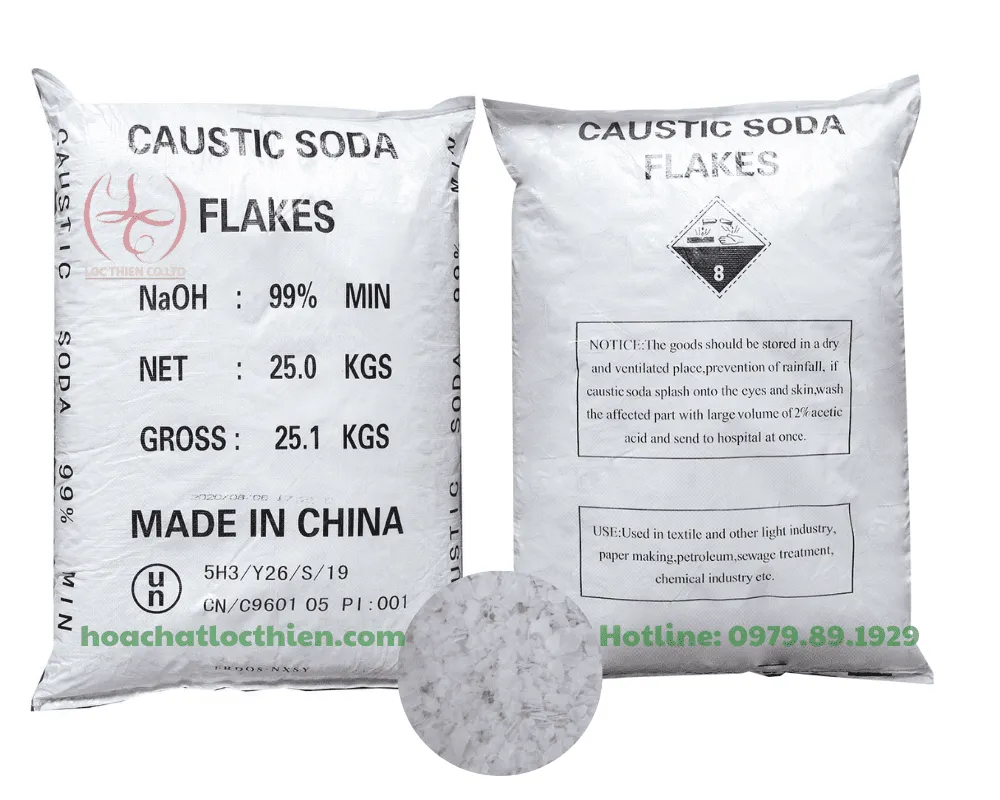
- Visual inspection: NaOH exists as a white solid (caustic flakes, caustic pearls) or a clear solution (liquid NaOH). When dissolved in water, it produces a strongly exothermic reaction that can heat up the container.
- You may also be interested in:
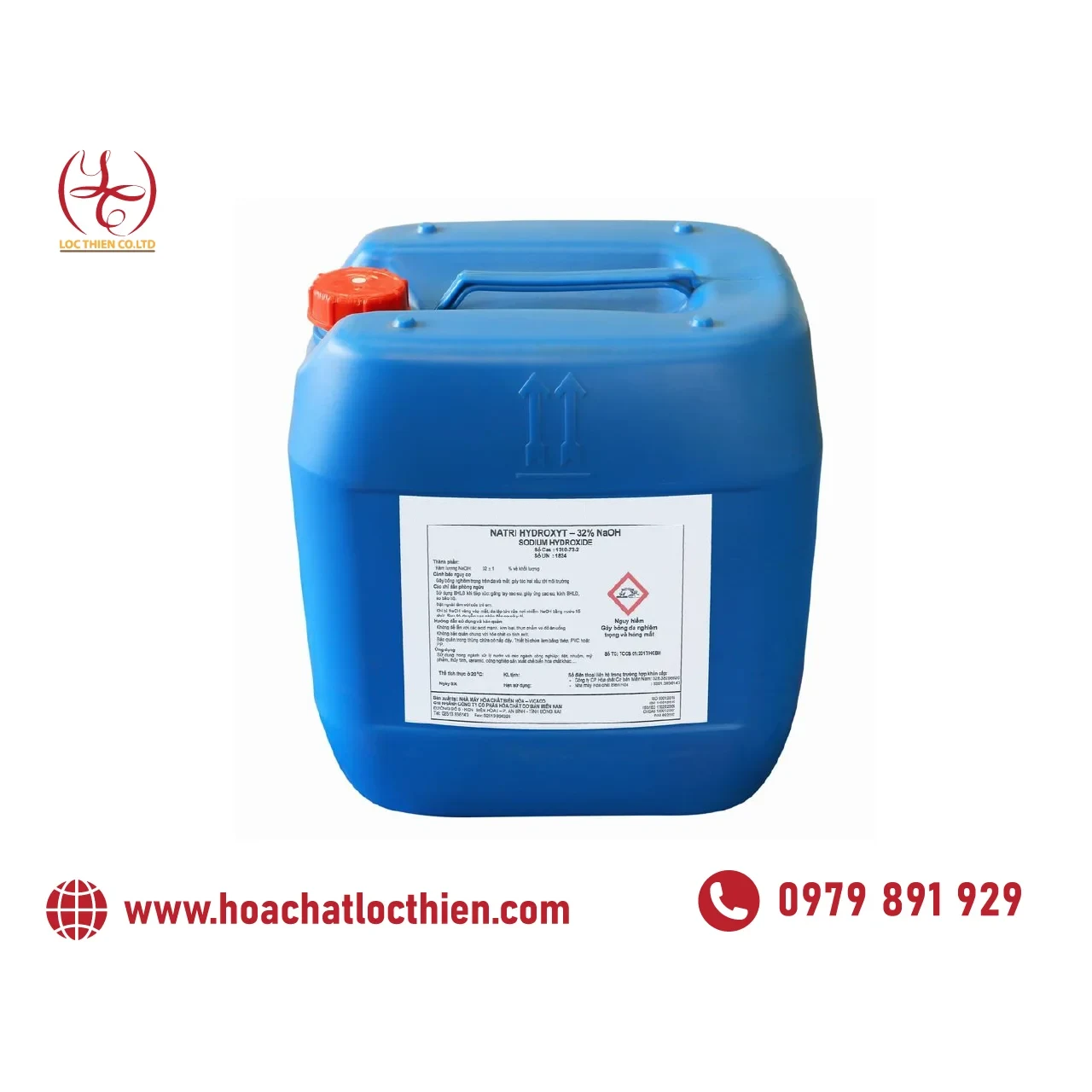
How to Dose NaOH for Wastewater Treatment
Correctly dosing NaOH ensures effective wastewater treatment and reduces the risk of chemical accidents. Follow these steps:
- Step 1: Safety Preparation
- Work in a well-ventilated space or one equipped with an extraction system to minimize inhalation of chemical vapors.
- Wear safety goggles, rubber gloves, and an air-filtering mask, and avoid direct contact with solid NaOH or liquid NaOH vapor.
- Work in a well-ventilated area with an extraction system or fans.
- Do not touch NaOH with bare hands, as it can cause severe skin burns.
- Step 2: Calculating the Required Amount of NaOH
- Determine the volume of wastewater to be treated and the desired pH level.
- Calculate the amount of NaOH to add to the wastewater based on its current pH and the target pH.
- General formula for calculating the required amount of NaOH
- Mass of NaOH (g) = (C×V×M/100
- Where:
- C: Desired NaOH solution concentration (%)
- V: Volume of solution to be prepared (ml)
- M: Molar mass of NaOH = 40 g/mol
- 100: Conversion factor from percentage (%) to the appropriate unit
- Formula for calculating the volume of solution to prepare from a given mass of NaOH
- If you already have the mass of NaOH and want to calculate the volume of solution needed:
- Volume of solution (ml) = (Mass of NaOH (g) × 100) / (C × M)
- If you already have the mass of NaOH and want to calculate the volume of solution needed:
- General formula for calculating the required amount of NaOH
- Example: To prepare 500L of 10% NaOH solution, you need: 500 L × 1.11 kg/L (density of 10% NaOH) × 0.10 ≈ 55.5 kg of NaOH (100% basis; ≈ 173 kg of 32% liquid caustic)
- Step 3: Preparing the NaOH Solution
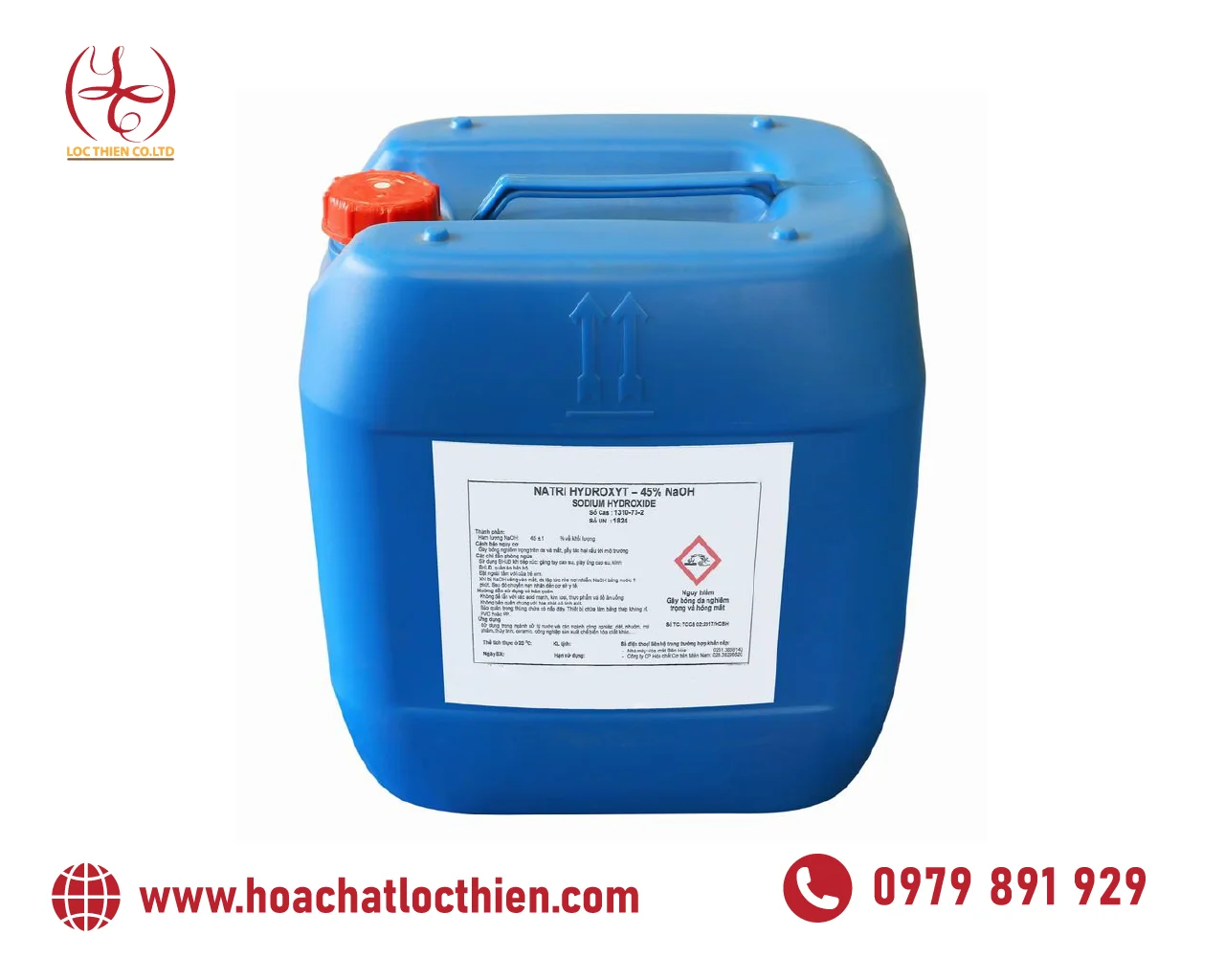
- Use NaOH solution at an appropriate concentration, typically ranging from 10% to 50%, depending on the level of alkalinity needed to adjust the wastewater's pH.
- Important rule: Always pour NaOH into water, NEVER the other way around!
- Dilute step by step: Use distilled or deionized water, adding NaOH slowly to avoid a strongly exothermic reaction.
- Stir continuously with a glass rod or mechanical stirrer until the NaOH is fully dissolved.
- Use NaOH solution at an appropriate concentration, typically ranging from 10% to 50%, depending on the level of alkalinity needed to adjust the wastewater's pH.
- Step 4: Adding NaOH to the Wastewater
- Slowly and gently add the prepared NaOH solution to the wastewater. Stir continuously to ensure even distribution of NaOH throughout the wastewater.
- Monitor the pH of the wastewater after adding NaOH and continue adjusting until the desired pH is reached.
- Step 5: Checking and Adjusting
- After adding NaOH and stirring thoroughly, re-check the pH of the wastewater. If needed, adjust the amount of NaOH or water added to achieve the desired result.
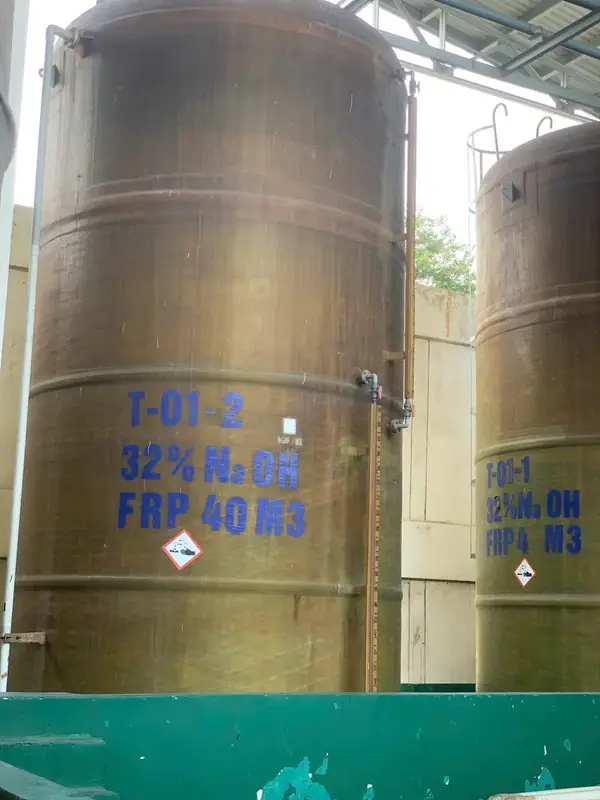
Applications of NaOH in Wastewater Treatment
- pH adjustment: Industrial wastewater often contains large amounts of acid, and NaOH is used to neutralize these acids, helping bring the pH back to neutral or slightly alkaline, creating favorable conditions for subsequent treatment steps.
- Heavy metal removal: Heavy metal precipitation—NaOH can react with heavy metals in wastewater to form insoluble or poorly soluble hydroxides. These hydroxides can then be removed through precipitation, settling, or filtration.
- Supporting precipitation and settling: Creating an alkaline environment—some precipitation or settling processes only occur effectively in an alkaline environment. NaOH helps create these conditions, enhancing the removal of solids and other pollutants from water.
Where to Buy Affordable 10% - 50% NaOH?
If you're wondering where to buy NaOH in Ho Chi Minh City, or where to buy NaOH in Binh Duong or Dong Nai, please contact Loc Thien Chemicals. We supply genuine chemical products in Vietnam that meet factory quality standards. With the advantage of a network of 6 warehouses in Ba Ria – Vung Tau, Dong Nai, Binh Duong, Da Nang, Can Tho and Bac Ninh, combined with a young, dedicated technical team, we always bring customers quality products and the most satisfying consultation.
- Reasonable prices. Abundant, high-quality supply.
- Nationwide supply — fast delivery straight to your location.
When you choose Loc Thien's products, we guarantee to bring your business and production the highest efficiency, while saving you money and the time spent sourcing chemicals. Feel free to call us anytime you need our products or would like consultation. Our hotline 0979 891 929 is always ready to listen to your needs.
How long does it take for an NaOH solution to stabilize and become usable?
+ NaOH 5-10%: The solution can be used after 5-10 minutes of stirring.
+ NaOH 20-30%: The solution needs to cool gradually for 15-30 minutes before use.
+ NaOH 50%: The solution can reach a temperature of 60-80°C and needs to cool for at least 1 hour to ensure safety.
📌 Note:
+ Always check the temperature before use to avoid damaging tanks or piping.
+ Use heat-resistant materials (PP, HDPE, PVC plastic, or 316L stainless steel) to store NaOH solution.
Which chemicals can NaOH react with in wastewater to create hazards?
+ NaOH + strong acids (H₂SO₄, HCl, HNO₃): Generates intense heat, which can cause boil-over and fire/explosion risk.
+ NaOH + aluminum (Al): Generates hydrogen gas (H₂), which can cause fire or explosion near sparks.
+ NaOH + chlorine compounds (NaClO, Cl₂): Produces highly toxic chlorine gas (Cl₂).
+ NaOH + organic solvents (acetone, methanol, glycerol): Can trigger a combustion reaction.
📌 Prevention:
+ Do not mix NaOH with other chemicals without proper safety guidance.
+ When treating wastewater containing multiple chemicals, check the pH and water composition first.
+ Work in a well-ventilated environment with an exhaust treatment system if needed.
What should you do if NaOH splashes onto your skin or eyes?
📌 If NaOH gets on the skin:
+ Rinse immediately with clean water for 15-30 minutes.
+ Do not use vinegar or acid to neutralize it, as this can cause a dangerous secondary reaction.
+ Apply moisturizing cream, and do not scratch the affected area.
+ If severe burns occur, go to a medical facility immediately.
📌 If NaOH splashes into the eyes:
+ Rinse immediately with clean water for 20-30 minutes, keeping the eyes open as wide as possible while rinsing.
+ Do not use eye drops without a doctor's instruction.
+ Take the victim to the hospital immediately for a vision check.
Can NaOH be used to remove odors from wastewater?
+ Neutralizing H₂S gas:
- NaOH reacts with hydrogen sulfide gas (H₂S) — the cause of rotten egg odor in wastewater.
- The reaction forms NaHS or Na₂S salts, reducing the amount of H₂S gas released.
+ Inhibiting anaerobic decomposition:
- NaOH helps raise the pH, slowing down organic decomposition and thereby limiting odor generation.
📌 Limitations of NaOH for odor control:
❌ It cannot remove ammonia odor (NH₃) or odors from decomposing organic matter.
❌ If overused, NaOH can make the wastewater too alkaline, harming the microbial ecosystem used for treatment.
❌ A more effective solution: use activated carbon, oxidizing chemicals (KMnO₄, O₃), or odor-reducing microorganisms.
📌 Alternative suggestions:
+ Combine NaOH with odor-reducing microorganisms for greater effectiveness.
+ Use a biological air filtration system for better odor absorption.
+ Identify the source of the odor and treat it at the root.
Technical Support & B2B Procurement Hotline
Loc Thien Chemical specializes in direct manufacturing of FeCl₂ / FeCl₃ and direct industrial supply of basic chemicals (NaOH, HCl, H₂SO₄, PAC, NaOCl, H₂O₂, FeSO₄) with direct B2B pricing and dedicated 5–30-ton tanker delivery across Vietnam.
- Hotline / Zalo: +84 979 891 929
- Official Email: [email protected]
- Direct Manufacturer: Ferrous Chloride (FeCl₂ 30%) & Ferric Chloride (FeCl₃ 38–40%)
- Primary Supplier: NaOH 32%/45%/50%/99%, HCl 32%, H₂SO₄ 98%, PAC 30–31%, NaOCl 10–12%, H₂O₂ 35%/50%
- Compliance & Quality: FeCl₂ ZDHC MRSL v3.1 test report (Smart testing, 5 substance groups, TUV Rheinland Vietnam), ISO 9001:2015, Quatest 3, Full COA & GHS SDS
Industrial Field Operation & Batch Quality Verification
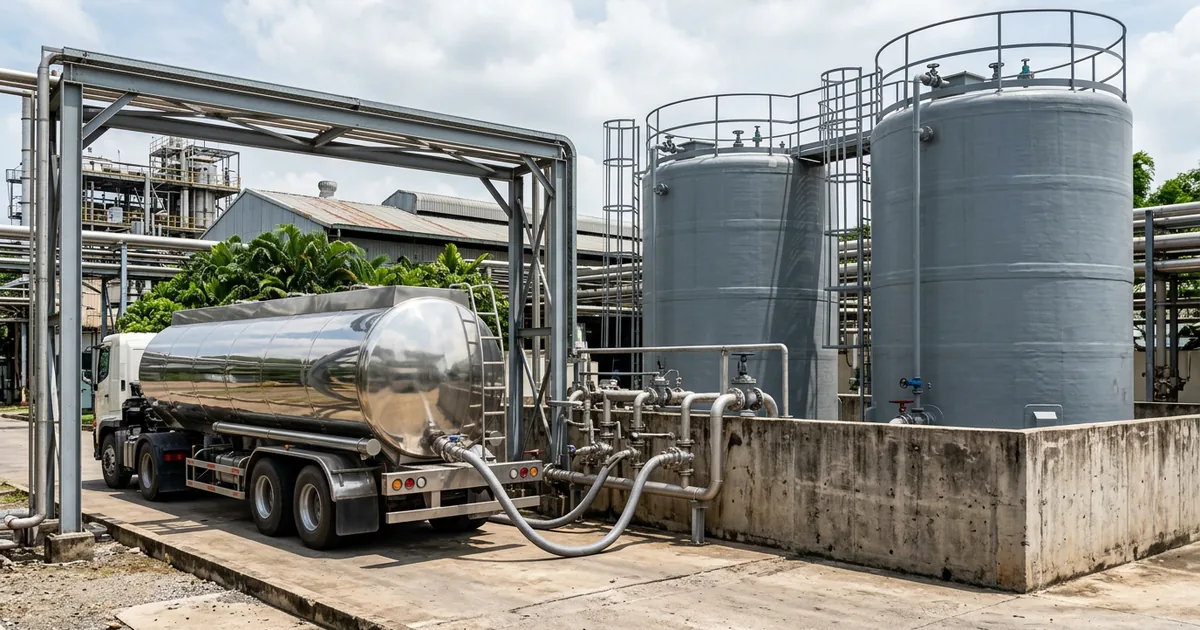
1. Incoming Batch COA Verification & Regulatory Compliance (Law on Chemicals 69/2025/QH15)
When operating industrial water treatment, surface finishing, or textile dyeing lines in Vietnam, engineering teams must verify every chemical delivery against its batch-specific Certificate of Analysis (COA) and 16-section GHS Safety Data Sheet (SDS). Under the Vietnam Law on Chemicals No. 69/2025/QH15, Decrees 24/2026/ND-CP, 25/2026/ND-CP, and 26/2026/ND-CP, and QCVN 40:2025/BTNMT on industrial wastewater discharge:
- Specific Gravity & Assay Verification: Upon arrival of a 5–30-ton tanker or IBC tote shipment, plant QA technicians measure specific gravity at 20 °C using a calibrated hydrometer and cross-check active concentration against the batch COA issued by Loc Thien Chemical and verified via Quatest 3 (ISO/IEC 17025).
- Impurity & Heavy Metal Control: Trace heavy metals (Fe, Pb, As, Hg, Cd, Cr⁶⁺) and insoluble matter are strictly controlled to prevent catalyst poisoning in Fenton reactors, membrane fouling in RO/UF systems, or shade deviations in reactive textile dyeing.
- ZDHC MRSL v3.1 Level 1 Portfolio Boundary: For export-oriented textile and footwear FDI factories, Loc Thien Chemical maintains official ZDHC MRSL v3.1 Conformance Level 1 documentation for exactly 9 core products: four products certified by TUV SUD Product Service GmbH (
NaOH,H2O2,Na2SO4,Na2CO3) and five products verified via Conformance Summary Report (CSR) and Analytical Test Report by TUV Rheinland Vietnam (H2SO4,FeCl2,HCl,Javel/NaOCl,PAC 31%).
| Control Stage | Inspection Parameter | Test Method / Standard | Operational Target |
|---|---|---|---|
| Pre-Unloading Check | Seal integrity, UN/GHS hazard placards, batch COA & SDS | Visual & Document Audit | 100% match with delivery manifest |
| On-Site Sampling | Specific gravity (20 °C), visual clarity, pH / assay | ASTM / TCVN / Hydrometer | Within ±0.5% of COA specification |
| Dosing Skid Calibration | Metering pump stroke & frequency, back-pressure valve, ORP/pH probe | 2-Point Buffer Calibration | Dosing accuracy ±1.5%, stable effluent |
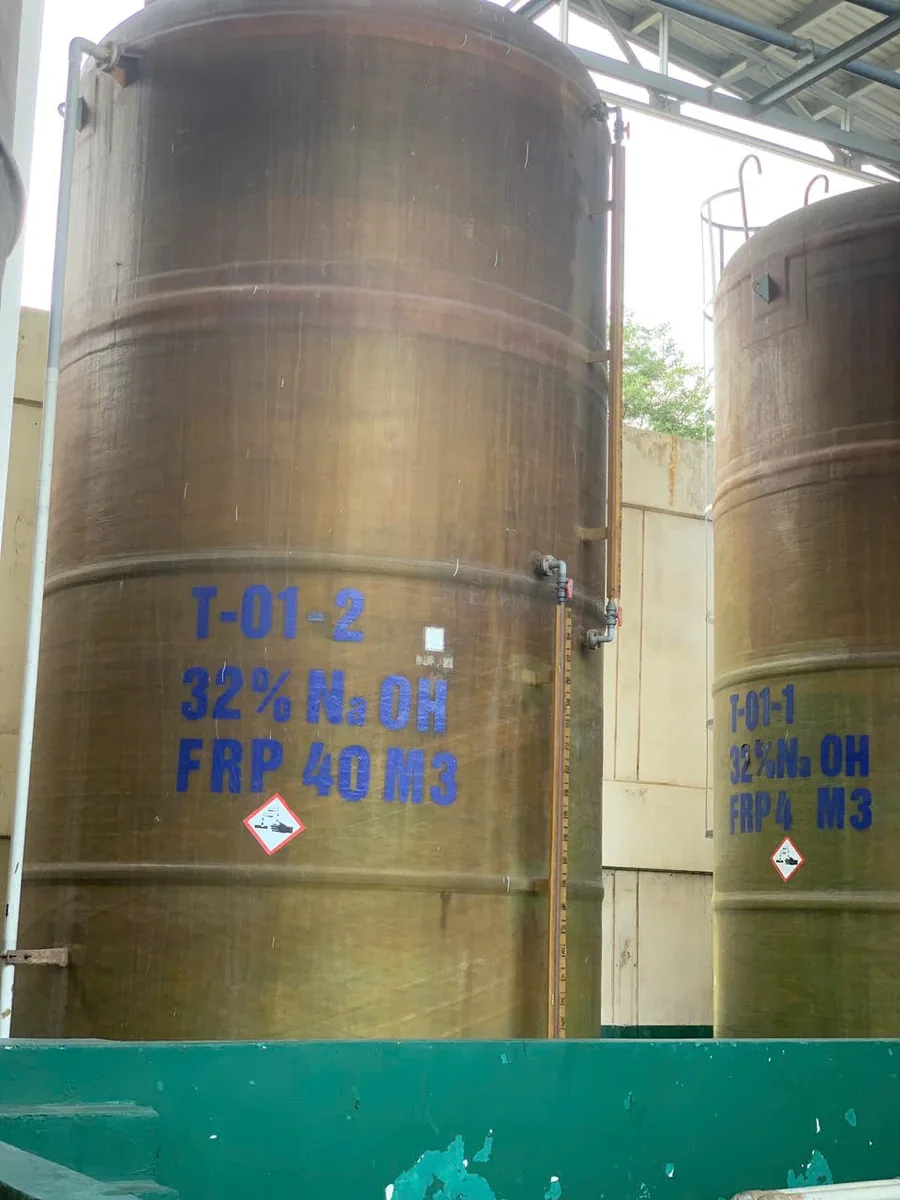
| Storage Safety Audit | HDPE/FRP tank vents, secondary containment dike (110% volume), eyewash | OSHA / Vietnam EHS | Zero vapor leak, immediate emergency readiness |
2. Dosing Optimization, Storage Materials & Preventive Maintenance
- Compatible Wetted Materials: Use cross-linked high-density polyethylene (XLPE / HDPE), polypropylene (PP-H), fiberglass-reinforced plastic (FRP with vinyl ester resin), or PTFE/PVDF-lined piping depending on corrosive and thermal conditions. Avoid unlined carbon steel or incompatible elastomers.
- Automated Dosing Control: Integrate diaphragm metering pumps with real-time pH, ORP (mV), turbidity, or conductivity sensors. Always perform a 5-beaker Jar Test whenever raw water COD, TSS, or alkalinity shifts by more than 15%.
- Secondary Containment & PPE: Storage tanks must sit inside an acid/alkali-resistant bund wall holding at least 110% of the largest tank volume. Operators handling unloading hoses must wear splash-proof chemical goggles, acid/alkali-resistant nitrile or neoprene gloves, face shields, and emergency respirators.
3. Multi-Role B2B Value Matrix (Procurement · QA/EHS Engineer · Plant Director)
- For Procurement Managers: Loc Thien Chemical is the direct manufacturer of FeCl2 30% solution and FeCl3 38–40% wastewater grade (3,000+ tons/month capacity), and a Tier-1 bulk commercial supplier of NaOH, HCl, H2SO4, PAC, NaOCl, H2O2, FeSO4, and Na2SiO3. Pricing is transparently structured around 5 technical cost drivers (active assay, packaging format, delivery distance from our 6 warehouses, order volume, and scheduled contract cadence) with a 15-minute technical quotation SLA.
- For Environmental & Process Engineers: Full technical support for Jar Test optimization, stoichiometry calculation, sludge minimization, and QCVN 40:2025/BTNMT compliance auditing.
- For FDI Plant Directors: Guaranteed supply continuity via 6 regional warehouses (Ba Ria - Vung Tau, Dong Nai, Binh Duong, Da Nang, Can Tho, Bac Ninh) and a dedicated 5–30-ton tanker fleet (4 hours in inner HCMC, 24–48 hours across Southern & Mekong Industrial Parks, 2–3 days in Northern & Central Vietnam).
4. Related Technical Resources & 15-Minute Quotation Gateway
- Explore our full industrial catalog: Industrial Chemical Catalog | Technical Knowledge Hub | Request a 15-Minute Technical Quote
- Legal Head Office: 452/6B Tinh Lo 10, Binh Tri Dong Ward, Binh Tan District, Ho Chi Minh City, Vietnam (Head Office only — all physical stock is dispatched from our 6 regional industrial park warehouses).
- 24/7 Technical Hotline: 0979 891 929 (Please contact hotline 0979 891 929 for detailed delivery procedures) | Official Email: [email protected]
In-Depth Engineering Guides in This Chemical Cluster
- Safe Dissolution of Caustic Soda Flakes & Pearls (NaOH 99%): Controlling Exothermic Heat (ΔH = -44.5 kJ/mol) Against Boil-Over
- Comparing Hydrated Lime Ca(OH)2 vs Liquid Caustic Soda NaOH 32% for Wastewater pH Neutralization & Heavy Metal Precipitation
- Designing Packed Bed Wet Scrubbers with Liquid Caustic Soda NaOH 32% for HCl, SO2, HF & Cl2 Acid Fume Abatement (QCVN 19:2024/BTNMT)
Preventive Maintenance (PM) & Corrosion Inspection Schedule for Chemical Storage & Dosing Skids
To prevent unplanned downtime, flange weeping, or sensor drift in industrial water treatment and manufacturing plants, EHS and maintenance engineering teams should enforce the following preventive maintenance (PM) schedule:
| Equipment & Subsystem | Inspection Frequency | Technical Inspection Scope & Engineering Standard | Corrective Action Upon Deviation |
|---|---|---|---|
| Bulk Storage Tanks (HDPE / XLPE / FRP) | Monthly | Inspect PTFE/EPDM flange gaskets, sight-glass level gauges, scrubber breathers, and 110%-capacity containment dike | Depressurize line, re-torque bolts, and replace aged gaskets immediately |
| Diaphragm Metering Pumps & Piping | Bi-weekly | Calibrate volumetric flow rate using a graduated calibration cylinder (target accuracy ±2%); clean Y-strainers and check valves | Flush crystallized deposits from ball checks and bleed air locks |
| Online pH / ORP / Conductivity Probes | Weekly | Perform two-point buffer calibration (pH 4.00 / 7.00 / 10.01) and clean glass bulb fouling | Regenerate sluggish electrodes in dilute HCl solution or replace probe |
| ANSI Z358.1 Emergency Shower & Eyewash | Weekly | Activate flow for 30 seconds to verify pressure, tepid water clarity, and unobstructed access | Clear nozzle blockages and log inspection in plant EHS register |