H₂O₂ vs NaOCl — Comparison of 2 Industrial Bleaching Agents for Textile & Paper
Table of contents
TL;DR: H₂O₂ (INTEROX ST 50, Solvay, CAS 7722-84-1, UN 2014) and NaOCl (Javen, CAS 7681-52-9, UN 1791) are the two main bleaching agents in the textile dyeing and paper industries. H₂O₂ density 1.196–1.198 g/cm³, pH < 1, decomposes into H₂O + O₂ — generates no AOX, no chloramines, no THMs, suitable for ECF/TCF processes. NaOCl pH ~13, active chlorine 10–12%, cost 15–25% lower but produces AOX > 1 mg/L, THMs (trihalomethanes) and chloramines — does not meet ECF, requires anti-chlor after bleaching. Industry trend: over 70% of textile mills exporting to the EU have switched to H₂O₂ for the main bleaching stage. Loc Thien supplies both chemicals with batch-specific COA/MSDS — consult on selection based on technical requirements and output standards. Hotline 0979 891 929.
Detailed Comparison Table: H₂O₂ vs NaOCl
| Criteria | H₂O₂ (INTEROX ST 50) | NaOCl (Javen) |
|---|---|---|
| CAS | 7722-84-1 | 7681-52-9 |
| UN Number | UN 2014 (5.1 + 8) | UN 1791 (Class 8) |
| Commercial concentration | 35–50% ±1% | Active chlorine 10–12% |
| Density @ 20°C | 1.196–1.198 g/cm³ | 1.16–1.20 g/mL |
| Solution pH | < 1 (strong acid) | ~13 (strong alkali) |
| Bleaching mechanism | Peroxide radical oxidation → [O] | Chlorine radical oxidation → HOCl |
| Operating temperature | 80–100°C (textile), 80–90°C (paper) | 30–40°C (room temperature) |
| Optimum bleaching pH | 10.5–11.5 | 9.2–11.0 |
| By-products | H₂O + O₂ | AOX, THMs, chloramines |
| CIE whiteness (cotton) | 85–95 | 75–85 |
| AOX in wastewater | < 0.1 mg/L | > 1 mg/L |
| Anti-chlor requirement | No (catalase can be used) | Mandatory |
| ECF/TCF compliance | ✅ Yes | ❌ No |
| Cost per kg fabric | 15–25% higher | Lower |
Source: Loc Thien MSDS 2026 per Circular 01/2026/TT-BCT.
H₂O₂ mechanism: decomposes in alkali (pH 10.5–11.5) to form HO₂⁻ and singlet oxygen — selectively oxidizes chromophores without damaging cellulose. NaOCl exists in HOCl/NaOCl equilibrium at pH 9.2–11 — HOCl oxidizes pigments but simultaneously chlorinates organic compounds, forming AOX. pH < 7 generates toxic Cl₂; pH > 11 slows bleaching.
CIE whiteness: scoured cotton fabric CIE 35–40. NaOCl 3.5 g/L achieves CIE 75–85 — increasing concentration above 5.5 g/L reduces tensile strength by 15–30% with virtually no CIE improvement. H₂O₂ 4.5 g/L, pH 10.5, 90°C × 60 min achieves CIE 85–95 — stable, no yellowing over time.
Analysis of Key Criteria
By-products and Environmental Impact
H₂O₂: 2 H₂O₂ → 2 H₂O + O₂. No AOX, no chloramines, no THMs. Wastewater COD 200–500 mg/L from inorganic stabilizers. Generates no AOX, so no special AOX treatment is needed — wastewater can be discharged directly into biological systems after pH neutralization.
NaOCl: generates AOX 1–5 mg/L — exceeds EU BAT limit (0.1 mg/L) by 10–50 times. THMs (CHCl₃) — classified as Carc 1B under EU classification, accumulates in fish fat and groundwater. AOX treatment using activated carbon or ozonation increases operating costs by 15–20%. Export textile mills must report AOX under ZDHC/brand wastewater requirements — this is the main technical barrier when using NaOCl.
Occupational Safety
H₂O₂ pH < 1, causes delayed burns (30–60 min). PPE: splash goggles, butyl gloves, PVC apron. Storage tanks: HDPE/aluminum 99.5%+/316L stainless steel, with pressure vents. Do not mix with Fe, Cu, Mn — catalytic decomposition generates heat.
NaOCl pH ~13, highly corrosive. PPE: goggles, nitrile/PVC gloves. Most dangerous: mixing with acids (HCl, H₂SO₄) generates acute Cl₂; mixing with ammonia generates chloramines. Equipment: Titanium, PVC/CPVC — 304 stainless steel corrodes above 200 ppm Cl₂.
Total Cost of Ownership
NaOCl chemical cost is 15–25% lower than H₂O₂ per ton of fabric. However, NaOCl TCO includes: anti-chlor (0.2–0.6% NaHSO₃), rinse water 16,000 L/ton (2–3 times H₂O₂), AOX treatment. H₂O₂ requires heating to 80–100°C — if the plant has waste steam available, energy costs drop by 50–60%, making TCO comparable to NaOCl.
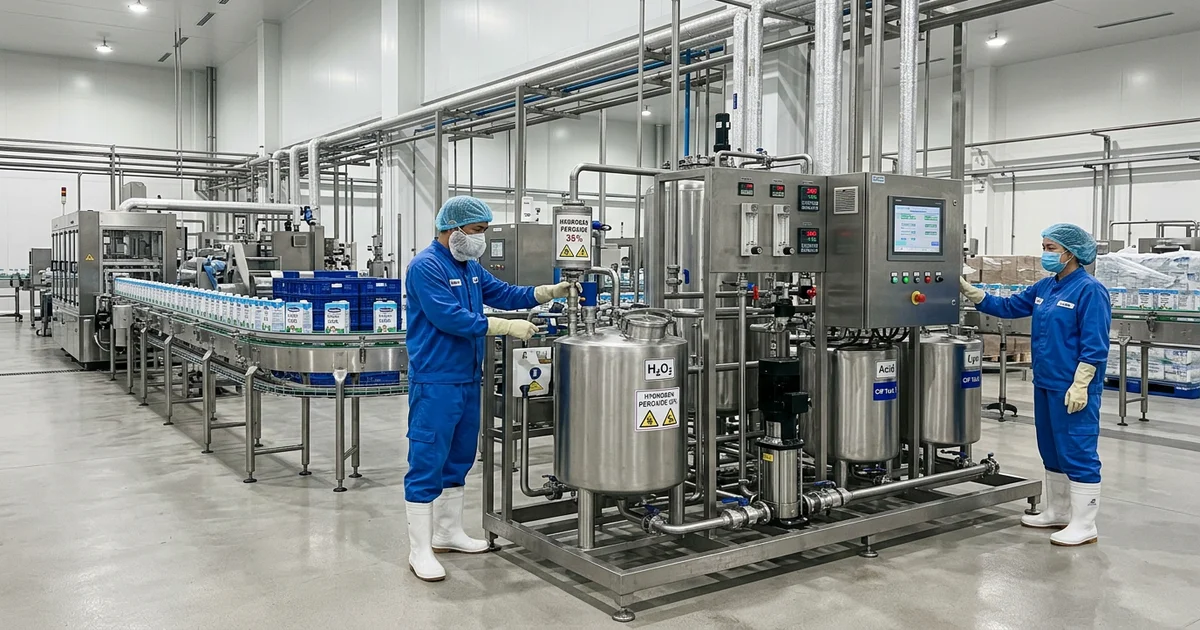
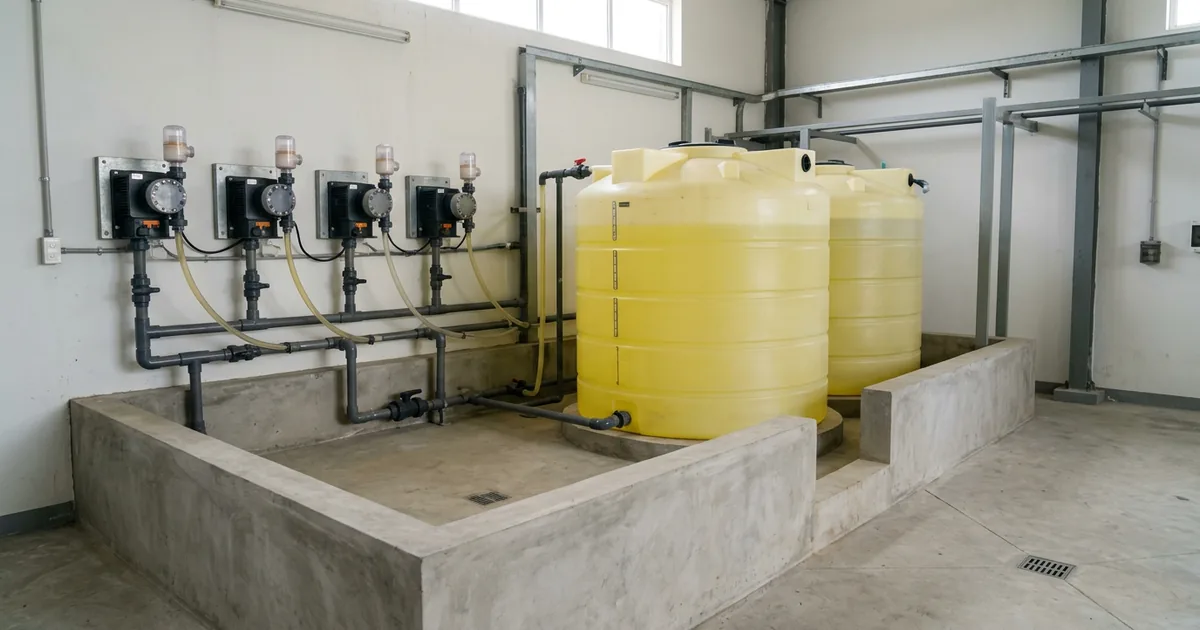 Figure: On-site chemical dosing, storage tank operation, and batch COA inspection — Source: Loc Thien Chemical.
When to Choose H₂O₂ vs NaOCl
Choose H₂O₂ when:
- Exporting to EU, Japan, USA — brands typically require AOX control under ZDHC, OEKO-TEX, GOTS. H₂O₂ is AOX-free, simplifying audits and wastewater treatment.
- Export paper production — ECF/TCF mandatory, H₂O₂ oxidizes lignin without forming dioxins.
- Fabric contains spandex/elastane — NaOCl completely destroys spandex fibers. H₂O₂ is safe.
- Plant has a boiler — waste steam for H₂O₂ bleaching, competitive TCO.
→ Textile Dyeing ZDHC | Paper ECF/TCF | Fenton COD Treatment
Choose NaOCl when:
- Domestic orders, no ZDHC requirement — chemical cost 15–25% lower, energy savings.
- Small capacity, limited infrastructure — no boiler, NaOCl operates at 30–40°C.
- Need speed — NaOCl bleaches in 30–60 min, H₂O₂ requires 60–120 min.
- Disinfecting process water/municipal wastewater — residual chlorine can be controlled.
→ Textile Bleaching with NaOCl | Process Water Disinfection
Industry Trends: ZDHC, ECF/TCF
ZDHC MRSL v3.1 (2024–2026) is becoming mandatory for export textile mills. With NaOCl, wastewater risks failing ZDHC wastewater requirements if AOX > 0.1 mg/L. Over 70% of Vietnamese textile mills serving export markets have switched from NaOCl to H₂O₂ for primary bleaching.
Paper industry: ECF (H₂O₂ + ClO₂) and TCF (H₂O₂ + O₂ + O₃) exclude NaOCl. EU export paper mills must use ECF from 2025. Domestic packaging/tissue paper without ECF requirements can still use NaOCl.
Loc Thien (Tax ID 0313650856) supplies both H₂O₂ 35–50% (INTEROX ST 50, Solvay — CAS 7722-84-1) and NaOCl 10–12% (Javen — CAS 7681-52-9). Both come with batch COA/MSDS; if a brand requires ZDHC documentation, contact us to confirm the documents currently available for each product. Delivery to industrial parks nationwide — a fleet of tanker trucks, 6 warehouses.
See also: Textile Chemical Product List | What is ZDHC? | FeCl₂ — Fenton Catalyst
Technical Support & B2B Procurement Hotline
Loc Thien Chemical specializes in direct manufacturing of FeCl₂ / FeCl₃ and direct industrial supply of basic chemicals (NaOH, HCl, H₂SO₄, PAC, NaOCl, H₂O₂, FeSO₄) with direct B2B pricing and dedicated 5–30-ton tanker delivery across Vietnam.
- Hotline / Zalo: +84 979 891 929
- Official Email: [email protected]
- Direct Manufacturer: Ferrous Chloride (FeCl₂ 30%) & Ferric Chloride (FeCl₃ 38–40%)
- Primary Supplier: NaOH 32%/45%/50%/99%, HCl 32%, H₂SO₄ 98%, PAC 30–31%, NaOCl 10–12%, H₂O₂ 35%/50%
- Compliance & Quality: FeCl₂ ZDHC MRSL v3.1 test report (Smart testing, 5 substance groups, TUV Rheinland Vietnam), ISO 9001:2015, Quatest 3, Full COA & GHS SDS
Frequently Asked Questions
What is the fundamental difference between H₂O₂ and NaOCl?
H₂O₂ (CAS 7722-84-1) oxidizes via peroxide radicals, decomposes into H₂O + O₂, non-toxic. NaOCl (CAS 7681-52-9) oxidizes via chlorine radicals forming HOCl — generates AOX, THMs, chloramines. H₂O₂ pH < 1, NaOCl pH ~13. H₂O₂ meets ECF/TCF, NaOCl does not.
Which agent is better for textile bleaching?
H₂O₂ gives CIE 85–95, no AOX, which fits the AOX requirements of export mills. NaOCl gives CIE 75–85, cost 15–25% lower — for domestic orders. Spandex fabrics require H₂O₂. See Textile Bleaching with Javen.
Why is H₂O₂ called chlorine-free bleaching?
H₂O₂ contains no chlorine. By-products H₂O + O₂ — no AOX, dioxins, THMs. ECF and TCF processes completely exclude NaOCl, mandatory for paper and textile exports to the EU.
Can NaOCl be directly replaced with H₂O₂?
Yes, but adjustments are needed: H₂O₂ requires temperature 80–100°C, pH 10.5–11.5, stabilizer Na₂SiO₃. NaOCl operates at 30–40°C. The plant needs additional heating equipment. Loc Thien provides conversion consulting and jar-test support.
Buy H₂O₂ 50% or NaOCl 10–12% from Loc Thien:
- H₂O₂ 50% Korea — 35 kg can, COA/MSDS
- H₂O₂ 50% Industrial — batch pricing
- NaOCl Javen 10% — COA/MSDS
- Complete H₂O₂ Hydrogen Peroxide Product List
Hotline 0979 891 929 — quote within 15 minutes. Tax ID: 0313650856.
📖 See also:
- Hydrogen Peroxide H₂O₂ Complete Guide — Knowledge Hub
- Javen NaOCl Complete Guide — Properties & Applications
- Javen Textile Bleaching — Process & Dosage
- NaOH 50% — pH Adjustment for Bleaching
📦 Loc Thien's 6 Official Imported Hydrogen Peroxide (H₂O₂) Product Lines
Depending on your industry compliance requirements (Food Grade FCC/FDA, ZDHC Textile Dyeing, or Fenton Wastewater Treatment), select the dedicated H₂O₂ SKU below for batch COA/SDS and a 15-minute technical quote:
- Food & Aseptic Packaging Grade (35% FCC): INTEROX FCC 35% Food Grade Solvay Thailand (30kg Sealed HDPE Drum)
- Bulk Industrial & Tanker Supply (50%): Industrial H₂O₂ 50% Multi-Origin (30–35kg Can, 1000L IBC, 5–30 Ton Tanker)
- Thailand 50% Grade (Solvay): Thailand H₂O₂ 50% INTEROX ST 50 (ZDHC Level 1 Textile & ECF Pulp Bleaching)
- Korea 50% Grade (OCI/TaeKwang): Korea H₂O₂ 50% (High-Purity Grade for FDI Electronics & Premium Textiles)
- Taiwan 50% Grade (CCP): Taiwan Hydrogen Peroxide H₂O₂ 50% 35kg Can (Paper Pulp, Wood & PCB Processing)
- Bangladesh 50% Grade (Samuda/Tasnim): Bangladesh H₂O₂ 50% 35kg Can (Cost-Effective Fenton Oxidation & Denim Washing)
- Full Category & 6-SKU Comparison Matrix: Hydrogen Peroxide (H₂O₂ 35%–50%) Category Overview
Industrial Field Operation & Batch Quality Verification
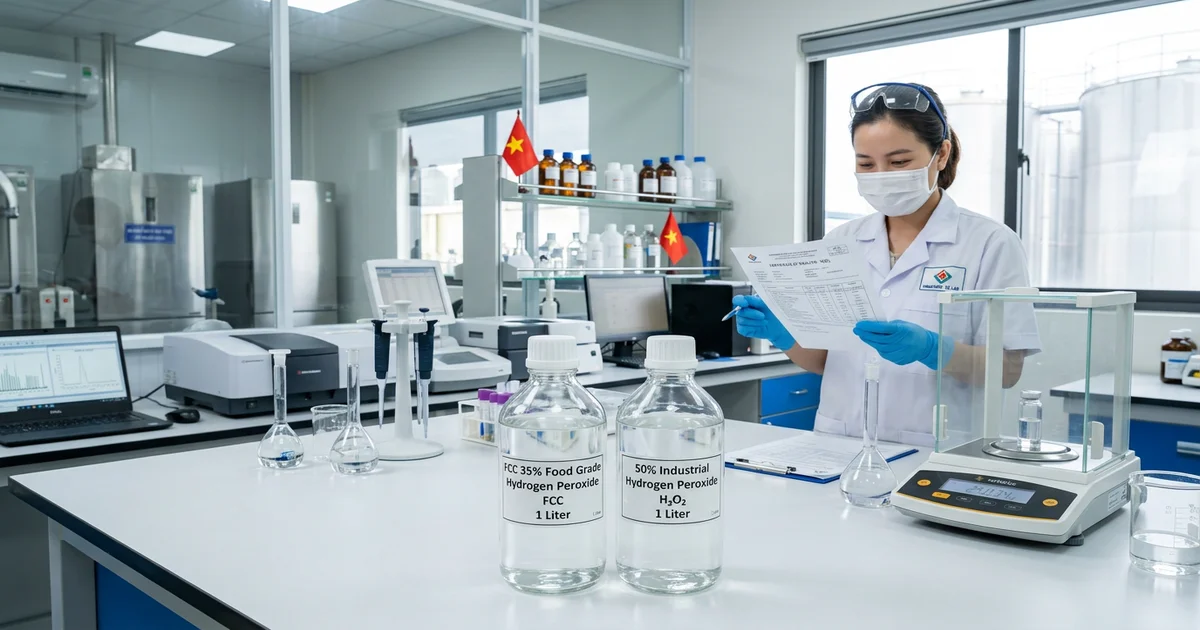
1. Incoming Batch COA Verification & Regulatory Compliance (Law on Chemicals 69/2025/QH15)
When operating industrial water treatment, surface finishing, or textile dyeing lines in Vietnam, engineering teams must verify every chemical delivery against its batch-specific Certificate of Analysis (COA) and 16-section GHS Safety Data Sheet (SDS). Under the Vietnam Law on Chemicals No. 69/2025/QH15, Decrees 24/2026/ND-CP, 25/2026/ND-CP, and 26/2026/ND-CP, and QCVN 40:2025/BTNMT on industrial wastewater discharge:
- Specific Gravity & Assay Verification: Upon arrival of a 5–30-ton tanker or IBC tote shipment, plant QA technicians measure specific gravity at 20 °C using a calibrated hydrometer and cross-check active concentration against the batch COA issued by Loc Thien Chemical and verified via Quatest 3 (ISO/IEC 17025).
- Impurity & Heavy Metal Control: Trace heavy metals (Fe, Pb, As, Hg, Cd, Cr⁶⁺) and insoluble matter are strictly controlled to prevent catalyst poisoning in Fenton reactors, membrane fouling in RO/UF systems, or shade deviations in reactive textile dyeing.
- ZDHC MRSL v3.1 Level 1 Portfolio Boundary: For export-oriented textile and footwear FDI factories, Loc Thien Chemical maintains official ZDHC MRSL v3.1 Conformance Level 1 documentation for exactly 9 core products: four products certified by TUV SUD Product Service GmbH (
NaOH,H2O2,Na2SO4,Na2CO3) and five products verified via Conformance Summary Report (CSR) and Analytical Test Report by TUV Rheinland Vietnam (H2SO4,FeCl2,HCl,Javel/NaOCl,PAC 31%).
| Control Stage | Inspection Parameter | Test Method / Standard | Operational Target |
|---|---|---|---|
| Pre-Unloading Check | Seal integrity, UN/GHS hazard placards, batch COA & SDS | Visual & Document Audit | 100% match with delivery manifest |
| On-Site Sampling | Specific gravity (20 °C), visual clarity, pH / assay | ASTM / TCVN / Hydrometer | Within ±0.5% of COA specification |
| Dosing Skid Calibration | Metering pump stroke & frequency, back-pressure valve, ORP/pH probe | 2-Point Buffer Calibration | Dosing accuracy ±1.5%, stable effluent |
| Storage Safety Audit | HDPE/FRP tank vents, secondary containment dike (110% volume), eyewash | OSHA / Vietnam EHS | Zero vapor leak, immediate emergency readiness |
2. Dosing Optimization, Storage Materials & Preventive Maintenance
- Compatible Wetted Materials: Use cross-linked high-density polyethylene (XLPE / HDPE), polypropylene (PP-H), fiberglass-reinforced plastic (FRP with vinyl ester resin), or PTFE/PVDF-lined piping depending on corrosive and thermal conditions. Avoid unlined carbon steel or incompatible elastomers.
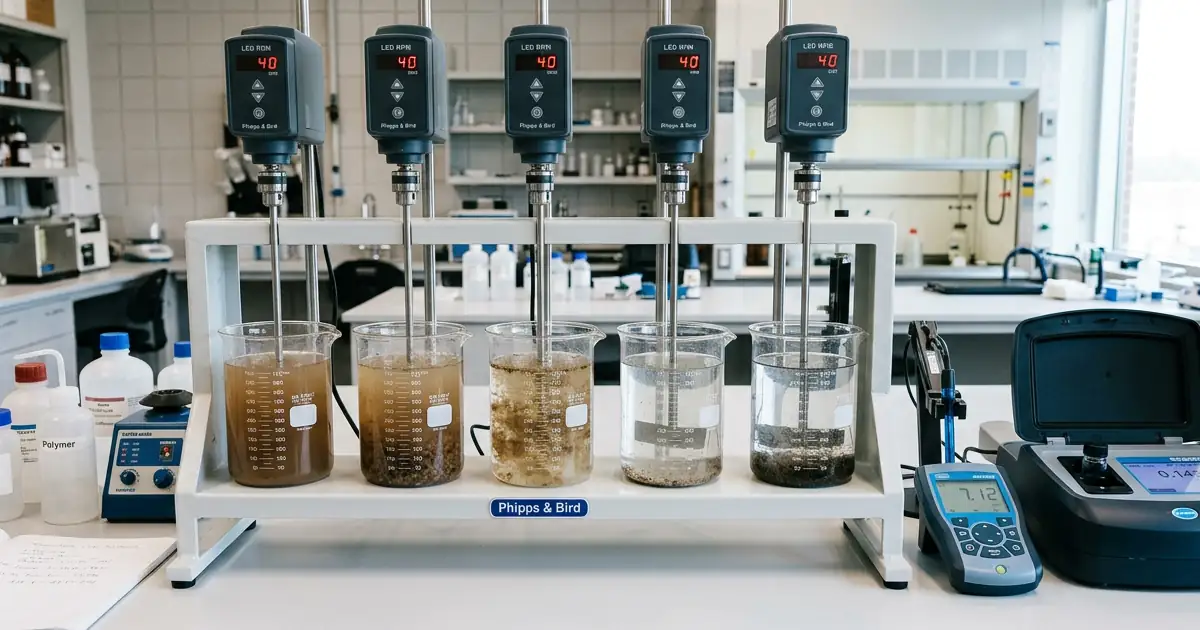
- Automated Dosing Control: Integrate diaphragm metering pumps with real-time pH, ORP (mV), turbidity, or conductivity sensors. Always perform a 5-beaker Jar Test whenever raw water COD, TSS, or alkalinity shifts by more than 15%.
- Secondary Containment & PPE: Storage tanks must sit inside an acid/alkali-resistant bund wall holding at least 110% of the largest tank volume. Operators handling unloading hoses must wear splash-proof chemical goggles, acid/alkali-resistant nitrile or neoprene gloves, face shields, and emergency respirators.
3. Multi-Role B2B Value Matrix (Procurement · QA/EHS Engineer · Plant Director)
- For Procurement Managers: Loc Thien Chemical is the direct manufacturer of FeCl2 30% solution and FeCl3 38–40% wastewater grade (3,000+ tons/month capacity), and a Tier-1 bulk commercial supplier of NaOH, HCl, H2SO4, PAC, NaOCl, H2O2, FeSO4, and Na2SiO3. Pricing is transparently structured around 5 technical cost drivers (active assay, packaging format, delivery distance from our 6 warehouses, order volume, and scheduled contract cadence) with a 15-minute technical quotation SLA.
- For Environmental & Process Engineers: Full technical support for Jar Test optimization, stoichiometry calculation, sludge minimization, and QCVN 40:2025/BTNMT compliance auditing.
- For FDI Plant Directors: Guaranteed supply continuity via 6 regional warehouses (Ba Ria - Vung Tau, Dong Nai, Binh Duong, Da Nang, Can Tho, Bac Ninh) and a dedicated 5–30-ton tanker fleet (4 hours in inner HCMC, 24–48 hours across Southern & Mekong Industrial Parks, 2–3 days in Northern & Central Vietnam).
4. Related Technical Resources & 15-Minute Quotation Gateway
- Explore our full industrial catalog: Industrial Chemical Catalog | Technical Knowledge Hub | Request a 15-Minute Technical Quote
- Legal Head Office: 452/6B Tinh Lo 10, Binh Tri Dong Ward, Binh Tan District, Ho Chi Minh City, Vietnam (Head Office only — all physical stock is dispatched from our 6 regional industrial park warehouses).
- 24/7 Technical Hotline: 0979 891 929 (Please contact hotline 0979 891 929 for detailed delivery procedures) | Official Email: [email protected]