
Electronic Industrial Chemicals: PCB, Displays, Batteries
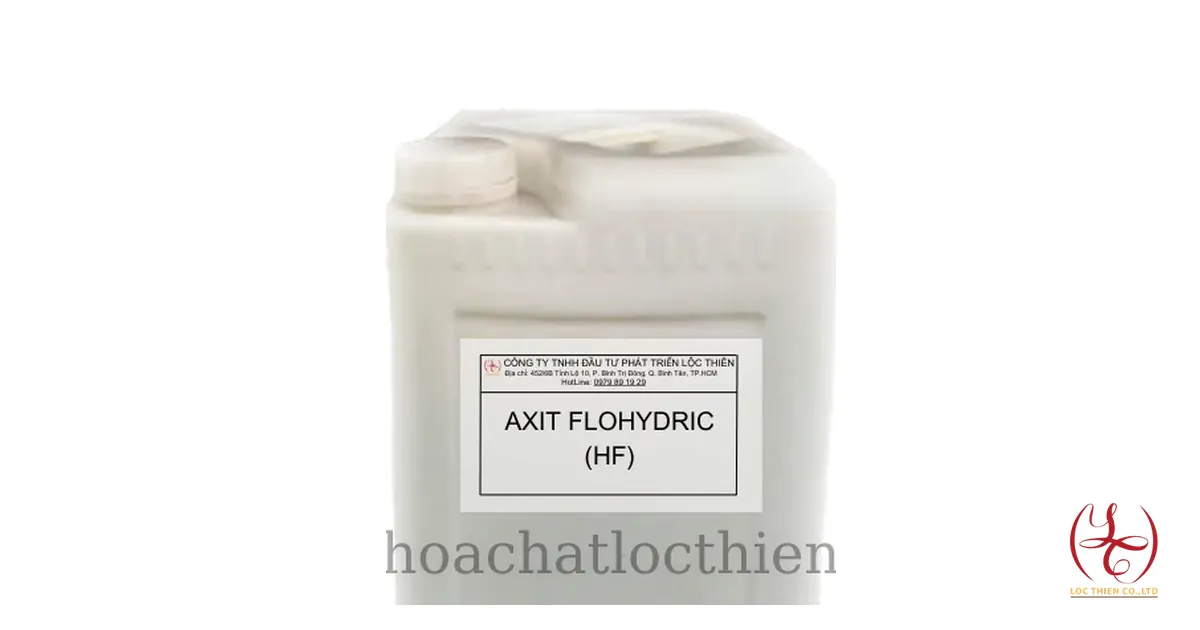
Table of contents
- How are electronic industrial chemicals different from semiconductor chemicals?
- Summary table: industry – process step – chemical group
- PCB and SMT: etching, plating, soldering, cleaning
- Displays
- Batteries and accumulators
- Telecom and components
- The wafer part: read the semiconductor article
- Standards: what ISO 9001, RoHS, REACH and SEMI mean
- Storage and safety
- What Lộc Thiên supplies to the electronics industry
- Frequently asked questions
- Quotation and related articles
Electronic industrial chemicals are the acids, alkalis, solvents, plating solutions, soldering fluxes and coating materials used to make and assemble electronic equipment: etching and plating printed circuit boards (PCB), soldering components (SMT), cleaning, and making displays, batteries and telecom parts. Each industry uses its own chemical set and cleanliness level. Chips on silicon wafers are the purest group and have a separate article on semiconductor chemicals.
How are electronic industrial chemicals different from semiconductor chemicals?
An electronic device passes through several production tiers: materials (copper, glass, silicon), components (chips, capacitors, displays, batteries), then assembly onto a circuit board and into a housing. At every tier chemicals do three jobs: shaping (etching, stripping film), building layers (plating, coating, deposition) and cleaning (removing oxide, oil, solder residue). The chemical names can be the same from tier to tier. What differs is the cleanliness level and how it is controlled.
In PCB shops and SMT assembly, the usual criteria are a stable concentration, low metal impurities and little insoluble matter so that etching and plating baths run evenly. Depending on scale, chemicals are bought by the jerrycan, drum, IBC or tanker. At the wafer, impurities are controlled at very low levels (parts per billion and below), chemicals come in dedicated packaging and follow the SEMI standard system. Display panels and batteries sit between the two ends: steps close to photolithography need higher cleanliness, while mixing and coating steps need less.
That is why this article follows industries rather than chemical names. If you are a student, the “Summary table: industry – process step – chemical group” section shows at a glance which chemical appears where. If you are an engineer or a buyer for a plant, the sections from “PCB and SMT: etching, plating, soldering, cleaning” to “Telecom and components” go into process steps; “Storage and safety” and “What Lộc Thiên supplies to the electronics industry” cover safety and ordering.
Summary table: industry – process step – chemical group
| Industry | Process step | Chemical groups commonly used |
|---|---|---|
| PCB | Copper surface preparation, oxide removal | Dilute acids, persulfate or H₂SO₄–H₂O₂ (micro-etch) |
| PCB | Developing and stripping photoresist film | Dilute alkaline solutions |
| PCB | Copper etching | FeCl₃, CuCl₂ in acid, ammoniacal copper alkaline systems, ammonium persulfate |
| PCB | Stripping the tin etch resist | Nitric-acid-based solutions or dedicated systems |
| PCB | Through-hole and panel plating | Alkaline permanganate (resin desmear), electroless copper, acid copper plating CuSO₄–H₂SO₄, tin plating, nickel–gold |
| PCB | Pad surface finish | ENIG, OSP, immersion tin, lead-free HASL |
| SMT | Soldering | Solder paste (alloy powder + flux), liquid flux for wave soldering |
| SMT | Post-solder cleaning | IPA, water-based solutions or dedicated solvents, deionized water |
| SMT | Board protection | Protective coating (acrylic, silicone, polyurethane), potting compound |
| Displays | Substrate glass cleaning | Detergents, deionized water, IPA |
| Displays | Electrodes and conductive lines | Photolithography and wet etching: H₃PO₄–HNO₃–CH₃COOH mixture for aluminum, HCl-based acids for ITO |
| Displays | Cover glass | Chemical strengthening in KNO₃ salt, anti-glare frosting with fluoride systems |
| Lead–acid batteries | Electrolyte | Dilute H₂SO₄, demineralized water |
| Lithium-ion batteries | Electrode manufacture | NMP (dissolves PVDF binder), water-based CMC/SBR |
| Lithium-ion batteries | Electrolyte | LiPF₆ salt in organic carbonate solvents |
| Lithium-ion batteries | Cathode raw materials | Nickel, cobalt, manganese sulfates; Li₂CO₃ or LiOH; H₃PO₄ for the LFP type |
| Silicon solar cells | Texturing, surface cleaning | Alkaline solution or HF–HNO₃ mixture; HCl, HF |
| Telecom | Optical fiber | SiCl₄, GeCl₄ as precursors; UV-cured acrylate coating |
| Components | Connectors, antennas, aluminum capacitors | Nickel, gold, silver, tin plating; etching and anodizing aluminum foil |
PCB and SMT: etching, plating, soldering, cleaning
PCB is one of the heaviest users of industrial chemicals in the electronics assembly chain. Two-layer and multilayer boards both start from a copper-clad base material and go through a loop: apply photoresist, expose, develop, etch copper, strip the resist, plate and finish the surface. Each step is a chemical bath with parameters set by the process supplier.
Copper etching: removing the copper you do not need
Once the photoresist protects the circuit traces, the etching solution dissolves the exposed copper. Four etchant groups are common:
- FeCl₃ (ferric chloride): Fe³⁺ oxidizes copper metal to Cu²⁺ and is itself reduced to Fe²⁺ (2Fe³⁺ + Cu → 2Fe²⁺ + Cu²⁺). The solution is dark brown and easy to track with a hydrometer. Usually used with organic photoresist in small and medium shops.
- CuCl₂ in acid: suits continuous spray-etching lines, because the bath can be regenerated with an oxidant and topped up with acid.
- Ammoniacal copper alkaline system: commonly used on outer layers when the traces are protected by a tin layer, because FeCl₃ solution can also attack that tin.
- Ammonium persulfate: a clean solution with little residue, often seen in small batches and prototypes.
Which one to pick depends on the resist used, trace width, output and whether the bath can be regenerated. The article FeCl3 for PCB — comparing 4 copper etchants goes through each criterion and the operating parameters. Final concentration, temperature and time should still follow the process supplier’s documents and be trialed on the real line.
Two terms help when reading: undercut is the copper etched sideways beneath the resist; etch factor compares etch depth with that sideways etch. An etchant that cuts fast but undercuts a lot is not suited to fine traces. Spent etching solution contains dissolved copper and must be collected separately according to hazardous-waste rules.
Plating: connecting layers, protecting copper
Multilayer boards need through-holes to be metallized to connect the layers. A typical order: remove resin smear in the holes with alkaline permanganate, lay down a thin copper layer by electroless copper (using a reducing agent such as formaldehyde or a substitute), then build thickness in an acid copper bath containing CuSO₄, H₂SO₄, chloride ions and organic additives that keep the deposit even. The base chemicals of this bath (H₂SO₄ and copper salts) are industrial grade; the additives are usually proprietary mixtures from the process vendor.
Pad surface finish is chosen by component type and storage time:
- Lead-free HASL: dip the board in molten solder alloy, then level it with hot air.
- ENIG: electroless nickel followed by immersion gold. Flat pads suit fine-pitch parts, but the bath must be controlled to avoid solder-joint defects at the nickel layer.
- OSP: a thin organic film protecting the copper; a simple process but sensitive to the number of reflow passes and storage time.
- Immersion tin or silver: intermediate options, often found on boards for high-frequency equipment.
SMT soldering and the role of flux
Solder paste is a mix of solder-alloy powder (the tin–silver–copper lead-free family is very common) and flux. Paste is printed on the pads, components are placed, and the board goes through a reflow oven. Flux does three things: dissolves the oxide on pads and component leads, prevents re-oxidation during heating, and helps the alloy flow evenly. Flux consists of activators (usually organic acids, some systems with halogens), rosin or synthetic resin, and solvent.
The J-STD-004 standard classifies flux by base (rosin, resin, organic, inorganic) and activity level. In practice engineers meet three groups: rosin, no-clean (low residue, designed not to need washing) and water-soluble (water-soluble residue that must be washed off).
Cleaning and protection after soldering
Flux residue and ions left on a board can, in humidity, cause corrosion, leakage current or dendrites (metal filaments growing between two points at different potentials, causing a short). Boards made with water-soluble flux must be washed. Whether a no-clean board is washed is a decision based on the reliability needs of the end product: automotive, medical or industrial equipment is usually stricter than consumer goods.
Common cleaning liquids are IPA (isopropyl alcohol) for light residue, water-based solutions with surfactants, and dedicated solvents for rosin residue. Deionized water is used for the final rinse. After cleaning, many boards receive a protective conformal coating (acrylic, silicone, polyurethane) or potting to resist moisture, dust and vibration.
The Lộc Thiên product directly related to this section is FeCl3 40% PCB Etching Grade, an imported line from India made for printed-circuit etching; Lộc Thiên supplies it in bulk to PCB shops.
Displays
LCD and OLED panels start from glass, so the first step is always cleaning the glass with detergents, deionized water and solvents. If the surface is not clean, the thin films applied later do not adhere evenly and the display shows defect spots.
For TFT panels, the metal layers and the transparent conductive oxide (ITO) are deposited by sputtering and then patterned by photolithography: coat photoresist, expose through a mask, develop, wet-etch the unprotected areas, strip the resist. Aluminum is usually etched with a mixture of phosphoric, nitric and acetic acids; ITO is etched with HCl-based acids. This sequence follows the same photolithography logic as wafers but at large size and with different particle requirements, so the semiconductor article is where it is described in detail.
In an LCD, the liquid crystal is a special organic compound injected into the gap between two glass sheets that carry a polyimide alignment layer; edge sealant bonds the two sheets. In OLED, the organic light-emitting layers are usually deposited in vacuum and packaged with a moisture-barrier film. These are specialty materials of the panel maker, not industrial chemicals bought by the tanker.
Cover glass has two chemical treatments worth knowing. The first is chemical strengthening: the glass is immersed in molten KNO₃ so potassium ions replace sodium ions at the surface, creating a compressive layer that makes the glass stronger. The second is anti-glare frosting with a fluoride-containing system, producing a micro-rough surface. Fluorides attack glass, so baths and pipes must be made of suitable plastics (see “Storage and safety”). Technical-grade ammonium bifluoride NH4HF2 is one raw material for formulating this type of etching solution; electronic grade under SEMI is a separate category.
LED displays use LED chips, in which the GaN layer is deposited by MOCVD from trimethylgallium and NH₃. That step belongs to semiconductor chemicals; the semiconductor chemicals article gives a general description of CVD sources.
Batteries and accumulators
Lead–acid batteries are the easiest to picture: lead plates and lead dioxide plates in dilute H₂SO₄. On discharge both plates turn into lead sulfate; on charge the reaction reverses. Two points to remember in a battery shop: the electrolyte acid must be diluted with demineralized or distilled water so metal impurities do not cause self-discharge, and the charging area needs ventilation because hydrogen gas is released.
Lithium-ion batteries are more complex and have three chemical blocks:
- Electrodes: active material, conductive additive and binder are mixed into a slurry and coated on metal foil. Cathode slurry commonly uses a PVDF binder dissolved in NMP. Graphite anode slurry often uses water-based CMC and SBR.
- Electrolyte: LiPF₆ salt dissolved in a mixture of organic carbonates such as ethylene carbonate and dimethyl carbonate. LiPF₆ produces HF on contact with water, so electrolyte filling is done in a dry room.
- Cathode raw materials: nickel, cobalt and manganese sulfates go through co-precipitation with alkali and ammonia to give hydroxide precursors, which are then fired with a lithium salt (Li₂CO₃ or LiOH). The LFP (lithium iron phosphate) type uses iron phosphate and usually needs phosphoric acid at the precursor stage.
Silicon solar cells are also electronics, but their process is closer to semiconductors. The silicon wafer surface is textured to reduce reflection: alkaline solution for monocrystalline silicon, an HF–HNO₃ mixture for multicrystalline. Then come the diffusion doping step, removal of the phosphosilicate glass layer with dilute HF, and cleaning with HCl and HF.
For a battery or accumulator plant, the two main risks are metal impurities in acid and water, and humidity in the lithium line. Both should be written into the purchase order as requirements.
Telecom and components
Telecom infrastructure uses chemicals in two main places: optical fiber, and RF components with connectors.
Optical fiber is made from ultra-pure silica glass. The precursor is SiCl₄, with GeCl₄ added to raise the refractive index of the core. They are oxidized at high temperature to SiO₂ and GeO₂, which deposit as a glass preform that is then drawn into fiber. Right at drawing, the fiber is coated with a UV-cured acrylate layer for mechanical protection. This is a closed chain run by the fiber maker, with chemicals in specialty form.
Connectors, antennas and RF components rely mostly on plating: nickel as a barrier layer, gold for contacts that resist oxidation, silver for good conductivity at high frequency, tin for solder terminals. Plating baths contain acids, metal salts and additives; the impurity level affects adhesion and contact resistance.
Aluminum capacitors use aluminum foil that is electrochemically etched in a chloride-based solution to increase surface area, then anodized to form the oxide layer that serves as the dielectric. Even a small component like this passes through many acid and salt baths before it becomes a product.
The wafer part: read the semiconductor article
Photolithography on wafers, RCA-type cleaning, SEMI-grade chemicals and doping and CVD sources are the specialist part of chip manufacturing. They are covered in a separate article, semiconductor chemicals: classification, standards and applications, so this article does not repeat them. To tell the two apart: if your requirement is expressed in ppb, ppt and SEMI grade, it is a semiconductor chemical; if it is expressed in stable concentration, impurities and packaging for industrial baths, it is an electronic industrial chemical as in the sections above.
Standards: what ISO 9001, RoHS, REACH and SEMI mean
The first four names are often mixed up, although each applies to a different object; the last row is the PCB-specific set:
| Standard | Applies to | Practical meaning |
|---|---|---|
| ISO 9001 | An organization’s quality management system | A company process standard, not a certificate of chemical purity |
| RoHS | Electrical and electronic equipment placed on the EU market | Restricts lead, mercury, cadmium, hexavalent chromium and some brominated flame retardants in the finished product. Electronics plants use it to choose materials, such as lead-free solder paste |
| REACH | Chemicals circulating in the EU | Regulation for registration, evaluation and restriction of chemical substances. Export customers often ask for substance information on purchased chemicals |
| SEMI (C series) | Liquid chemicals used in semiconductor manufacturing | Grades by limits of metal impurities and particles. The manufacturer declares compliance after testing by a suitable method |
| IPC, J-STD | PCB, soldering and electronics assembly | Board acceptance standards, flux classification, solder-joint requirements |
All five are industry reference frameworks. When a supplier says a product “meets international standards”, ask three things: which standard, whether it applies to the product or the factory, and what document proves it. The MSDS comes with the quotation; a test result sheet/COA depends on the product and is confirmed at quotation; Lộc Thiên’s electronics range has no SEMI-grade chemicals.
Storage and safety
Electronic chemicals include several different hazard groups, so one general rule is not enough. These points are often missed:
- Hydrofluoric acid (HF) and fluoride-containing chemicals: corrode glass, ceramics, cement and many metals when moisture is present. Use packaging and tanks made of HDPE, PP or PTFE, never glass bottles. HF penetrates deep through skin, causing burns and hypocalcemia. Where HF is present, keep 2.5% calcium gluconate gel, an emergency wash station and a trained procedure ready. On skin contact, rinse with running water continuously for at least 15 minutes (up to 30 minutes), do not stop rinsing to look for the gel, then go to a medical facility immediately, even if there is no pain. This is guidance only; actual handling follows the plant’s safety procedure.
- Nitric acid: a strong oxidizer. Keep it away from organic solvents such as IPA, acetone, and oils; do not use sawdust or cloth rags to absorb a spill. Use dry sand or an inert material.
- IPA and acetone solvents: flammable, with vapor heavier than air. Provide ventilation, bonding and grounding when transferring containers, and keep ignition sources away.
- Acids, alkalis and metal salts: store acids and alkalis separately, with spill-containment trays.
- Lithium electrolyte: keep dry, because LiPF₆ produces HF on contact with moisture.
- Personal protection: chemical goggles, a face shield when pouring, chemical-resistant gloves chosen for the chemical (no latex for HF), boots and chemical-resistant apron.
Every chemical received should come with an MSDS kept at the point of use. Expired bath solutions and empty packaging are collected separately under current regulations and handed to a licensed party.
Lộc Thiên Technical Department: “When a customer asks to buy ‘electronic chemicals’, the first thing we ask is which process step. Copper etching in a PCB shop needs a solution with stable concentration and little insoluble residue so the bath runs evenly. Washing wafers is a completely different requirement, by SEMI grade. Only when you can answer ‘which process step’ can you choose the right grade and packaging and avoid paying for a purity the process does not need.”
What Lộc Thiên supplies to the electronics industry
Lộc Thiên’s electronic and semiconductor chemicals category focuses on basic industrial chemicals and surface treatment, including nitric acid, sulfuric acid, phosphoric acid, hydrochloric acid, hydrofluoric acid and PCB-line FeCl₃. Lộc Thiên is a bulk supplier, delivering by tanker, IBC, drum or bag depending on the product. FeCl₃ PCB Etching Grade is an imported product from India.
- Delivery within 4 hours inside Ho Chi Minh City; 24–48 hours to industrial parks in the South and Mekong Delta; 2–3 days to the North and Central regions.
- Dedicated tankers of 5–30 tons for large orders.
- Quotation within 15 minutes. The MSDS comes with the quotation; a test result sheet/COA depends on the product and is confirmed at quotation. Quotations depend on concentration, packaging, volume and delivery point, so there is no fixed list price.
To get a quotation, send: chemical name and concentration, expected volume, the process step where it is used, delivery location and packaging requirements. Contact Lộc Thiên or call 0979 891 929, email [email protected].
Frequently asked questions
How are electronic industrial chemicals different from semiconductor chemicals?
Electronic industrial chemicals are a broad group serving PCB, SMT assembly, displays, batteries and components; the requirement is usually stable concentration and low impurities for industrial baths. Semiconductor chemicals are the narrower part for making chips on wafers, with impurities checked at very low levels under the SEMI standard system. For wafer details see the semiconductor chemicals article.
Which chemicals are used to etch PCB circuits?
The four common groups are FeCl₃, CuCl₂ in acid, ammoniacal copper alkaline systems and ammonium persulfate. FeCl₃ suits small and medium shops using organic photoresist; CuCl₂ suits continuous lines because the bath can be regenerated. The article comparing 4 copper etchants covers each criterion in detail.
What is soldering flux, and must it be washed off after soldering?
Flux is a soldering aid: it dissolves oxide on pads and component leads, prevents re-oxidation during heating and helps the solder alloy flow evenly. Water-soluble flux must be washed because its residue remains active. No-clean flux leaves little residue and may not need washing, but products that need high reliability are still often washed to avoid corrosion and leakage current.
What chemicals do lithium-ion batteries use?
Electrodes use active material mixed with a binder; the cathode commonly uses PVDF dissolved in NMP, while graphite anodes use water-based CMC and SBR. The electrolyte is LiPF₆ salt in organic carbonate solvents. Cathode raw materials come from nickel, cobalt and manganese sulfates, or iron phosphate (the LFP type), together with lithium salts.
Why are HF and fluoride solutions not kept in glass bottles?
HF and fluorides react with the SiO₂ in glass, forming SiF₄ and fluorosilicate salts that eat through the bottle and leak. Use packaging and pipes made of HDPE, PP or PTFE. HF is also toxic through the skin, so the work area must have 2.5% calcium gluconate gel and a trained first-aid procedure.
Does Lộc Thiên supply SEMI-grade chemicals?
No. Lộc Thiên’s range is basic industrial chemicals supplied in bulk for PCB and surface treatment. SEMI-grade chemicals (limits in ppb and ppt) are not in the range, and Lộc Thiên does not publish a SEMI certificate for any product.
Are ISO 9001, RoHS and REACH certificates for a chemical?
They are not the same kind of thing. ISO 9001 is a company’s management-system standard. RoHS applies to electrical and electronic equipment. REACH is a regulation on chemicals circulating in the EU. So when buying chemicals, ask for the MSDS and a test result sheet/COA where one exists, and ask exactly which standard the supplier means and what it applies to.
What should a PCB shop prepare to get a quick quotation?
Send the chemical name and concentration, monthly volume, packaging type (jerrycan, drum, IBC, tanker), delivery location and the process step where it is used. Lộc Thiên quotes within 15 minutes based on this information.
Quotation and related articles
Need a quotation for PCB-line FeCl₃ or industrial acids for an electronics plant? Send the details through the contact page or call 0979 891 929.
See also: FeCl3 for PCB — comparing 4 copper etchants, semiconductor chemicals, nitric acid HNO3, sulfuric acid H2SO4, FeCl3 40% PCB Etching Grade, electronic and semiconductor chemicals category.
CÔNG TY TNHH ĐẦU TƯ PHÁT TRIỂN LỘC THIÊN — Tax code 0313650856 · 452/6B Tỉnh Lộ 10, Bình Trị Đông Ward, Ho Chi Minh City · hoachatlocthien.com