FeCl2 15% vs 25% vs 30% Comparison: Technical & Economic Guide for Industrial Wastewater Plants
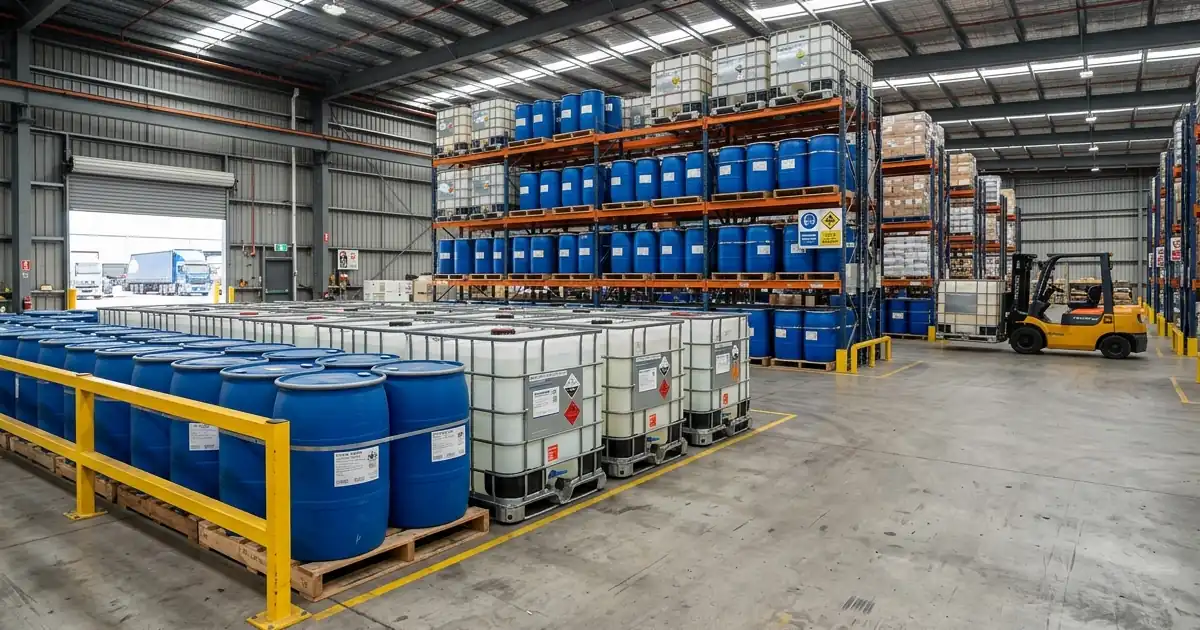
Table of contents
TL;DR: In industrial wastewater treatment (ETP/WWTP), liquid Ferrous Chloride (FeCl₂, CAS 7758-94-3, UN 3264) is commercially quoted at nominal concentrations of 15%, 25%, and 30% w/w. Strict mass-balance calculation proves that 1 metric ton (MT) of FeCl₂ 30% delivers 132.2 kg of active Fe²⁺ ions — exactly 2.0× the active reducing and coagulating payload of 15% solution (66.1 kg Fe²⁺/MT) and +20% more than 25% solution (110.1 kg Fe²⁺/MT), while remaining 100% liquid-stable across Vietnam’s tropical climate (crystallization point +4°C to +8°C). Loc Thien Chemical is a direct manufacturer of FeCl₂ 30% solution in Vietnam (capacity 3,000+ MT/month), holding ZDHC MRSL v3.1 Conformance Level 1 verified by TÜV Rheinland Vietnam (CSR No. 248162921-02, Analytical Test Report 248162921-02a), delivering via dedicated 5–30-ton bulk tankers from 6 standardized warehouses with a 15-minute technical quotation SLA via Hotline 0979 891 929.
📦 Quick Access to Ferrous Chloride (FeCl₂ 30%) Technical Dossier & RFQ:
- Direct Manufacturer Product Page: Ferrous Chloride FeCl₂ 30% Solution (Direct Manufacturer · ZDHC MRSL v3.1 Level 1) · Engineering Guide to FeCl₂ 30% in Industrial Wastewater Treatment
- Safety Documentation & Fast Quote: [Download PDF] 16-Section GHS MSDS for Ferrous Chloride FeCl₂ 30% · 5 Key Factors Determining Bulk FeCl₂ 30% Pricing · Request a 15-Minute Technical Quotation (0979 891 929)
1. Why Do 15%, 25%, and 30% FeCl₂ Concentrations Coexist in the Industrial Market?
When procurement managers or environmental engineers issue Requests for Quotations (RFQs) for Ferrous Chloride (FeCl₂) to treat textile dyeing, electroplating, or industrial park wastewater, suppliers frequently quote different concentration tiers: 15%–20%, 25%, or the factory-standard 30% w/w. Evaluating offers solely on the price per kilogram of bulk liquid (kg solution) rather than converting to the effective cost per kilogram of active ferrous ion (kg Fe²⁺) creates a costly procurement trap — paying chemical tanker freight to transport dilute water across provinces.
From an inorganic synthesis perspective, industrial high-purity liquid FeCl₂ is manufactured through the controlled exothermic reaction of high-purity metallic iron with hydrochloric acid (HCl) inside acid-resistant reactors:
Synthesis Reaction: Fe + 2HCl → FeCl₂ + H₂↑
Depending on synthesis control, evaporation/enrichment technology, and factory QA/QC discipline, commercial solutions fall into three distinct tiers:
- Low-Concentration Tier (
15% – 20% w/w): Often derived from unenriched spent steel pickling liquor or commercially diluted batches. Every 1,000 kg of 15% solution contains 850 kg of water and residual free acid, delivering only 150 kg of FeCl₂ (66.1 kgof active Fe²⁺).Furthermore, spent pickling byproducts frequently carry excessive free HCl (5%–8%) and trace heavy metals (Zn, Ni, Pb, Cr). - Intermediate Tier (
25% w/w): Supplies 250 kg of FeCl₂ per ton (110.1 kgof active Fe²⁺), leaving 750 kg of carrier water per metric ton shipped. - Direct-Manufacturing Standard Tier (
30% w/w— Loc Thien Chemical Standard): Represents the Engineering Sweet Spot for industrial liquid ferrous chloride. At 30% w/w, active solute content reaches300 kg FeCl₂/MT(132.2 kg Fe²⁺/MT) while maintaining a safe thermodynamic margin below the saturation crystallization curve (≈ 36%–38% at 25°C). This prevents FeCl₂·4H₂O salt precipitation inside storage tanks, suction headers, and diaphragm dosing check valves.
2. Technical Specification & Active-Ion Comparison Table: FeCl₂ 15% vs. 25% vs. 30%
To assist plant QC laboratories and procurement teams during incoming tanker or IBC inspection, the table below compares the core physicochemical parameters of all three concentrations at 25°C (molar mass M(FeCl₂) = 126.751 g/mol, atomic weight M(Fe) = 55.845 g/mol, conversion factor Fe²⁺/FeCl₂ = 0.4406):
| Technical & Operational Parameter | FeCl₂ 15% Solution (Dilute) | FeCl₂ 25% Solution (Medium) | FeCl₂ 30% Solution (Loc Thien Standard) | Practical Impact on Plant Operations |
|---|---|---|---|---|
| Mass Concentration (FeCl₂ % w/w) | 15.0% ± 1.0% | 25.0% ± 1.0% | 30.0% ± 1.0% | 30% grade delivers exactly 2.0× the active solute of 15% grade |
| Specific Gravity at 25°C (g/cm³) | 1.13 – 1.15 | 1.24 – 1.26 | 1.30 – 1.34 | Instant 30-second receiving verification using a glass hydrometer |
| Approximate Baumé Degree (°Bé at 25°C) | 16.5° – 19.0°Bé | 28.0° – 30.0°Bé | 33.5° – 36.8°Bé | Standard field density check for ETP operators |
| Pure FeCl₂ Mass per 1 MT Solution | 150 kg | 250 kg | 300 kg | Basis for chemical reaction mass balance |
| Active Fe²⁺ Ion Mass per 1 MT Solution | 66.1 kg | 110.1 kg | 132.2 kg | Primary driver of Cr⁶⁺ reduction, Azo decolorization & Fenton |
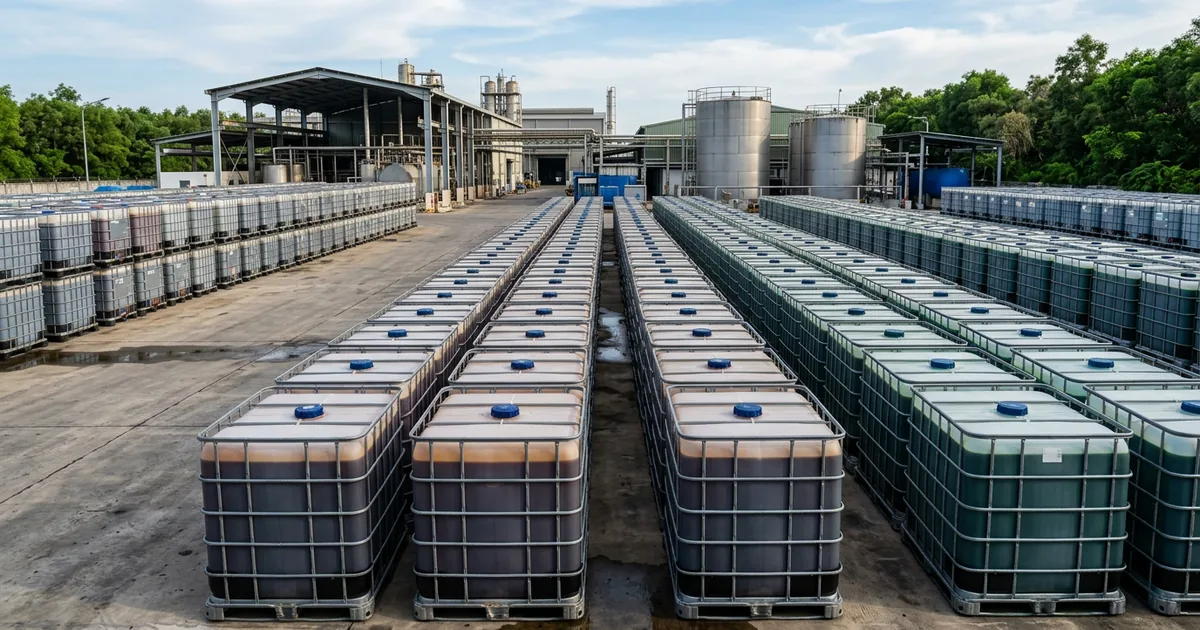
| Active Fe²⁺ Mass per 1 m³ (1,000 L) | ≈ 75.3 kg | ≈ 137.6 kg | ≈ 174.5 kg | A 15 m³ FRP tank stores 2.32× more Fe²⁺ with 30% grade vs. 15% |
| Inert Water Shipped per 1 MT Solution | 850 kg (85%) | 750 kg (75%) | 700 kg (70%) | Eliminates freight spending on non-reactive dilution water |
| Crystallization Temperature (FeCl₂·4H₂O) | < -15°C | ≈ -5°C | ≈ +4°C to +8°C | 100% liquid-stable across all regions of Vietnam (15°C–38°C) |
| FDI Supply Chain Compliance Dossier | Rarely certified | Varies by trader | ZDHC MRSL v3.1 Level 1 (CSR 248162921-02) | Directly satisfies Nike, Adidas, Zara & FDI buyer environmental audits |
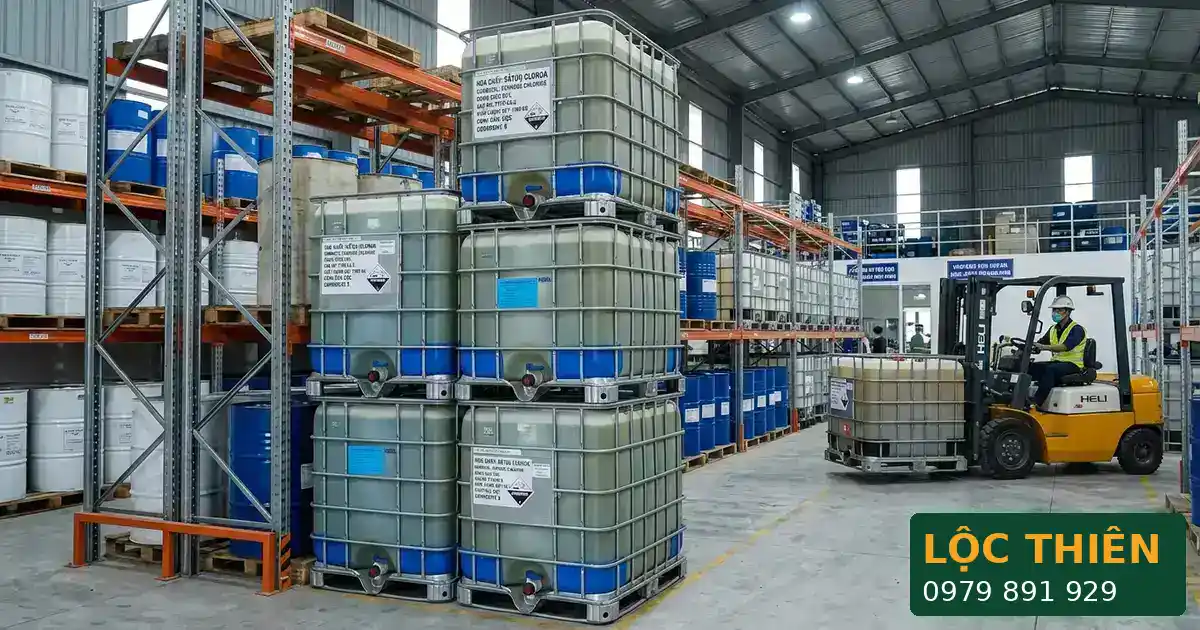
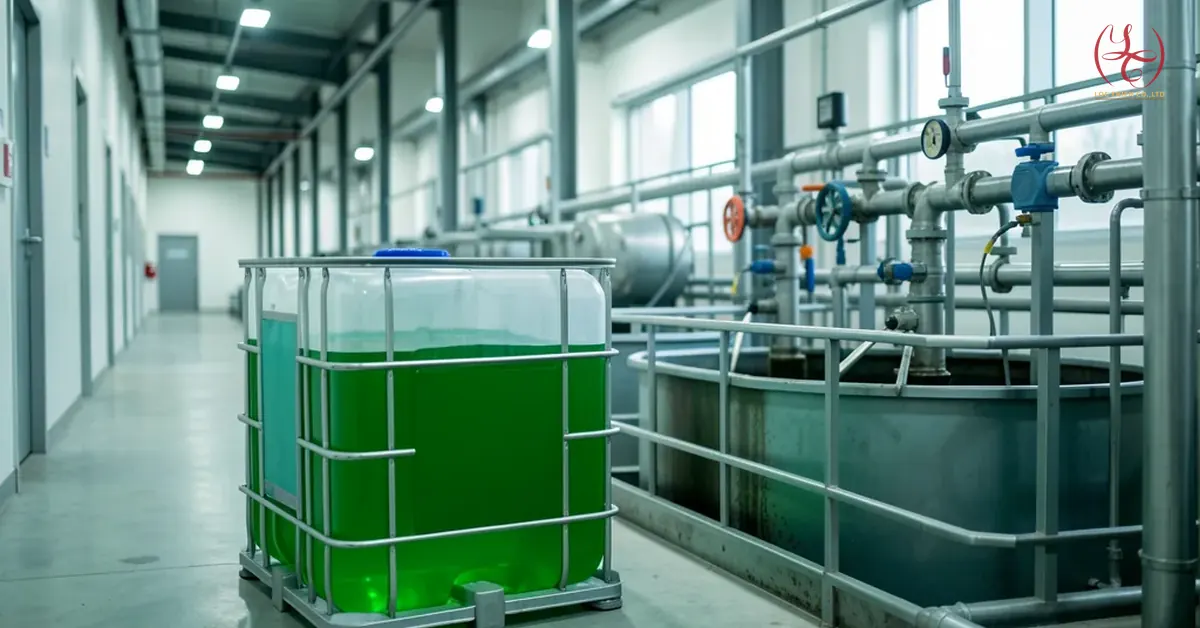
Field QC Receiving Protocol: Upon arrival of a 5–30-ton tanker or 1,000L IBC tote, QC technicians simply draw a 500 mL cylinder sample and immerse a calibrated hydrometer (1.100–1.400 g/cm³ range). A clear pale-green solution reading 1.30 – 1.34 g/cm³ at 25°C (free of reddish-brown ferric Fe³⁺ oxidation turbidity) confirms genuine FeCl₂ 30% manufactured by Loc Thien Chemical.
3. Stoichiometric Consumption Analysis Across 3 Major Industrial Wastewater Processes
Every redox and coagulation reaction utilizing ferrous chloride is governed strictly by the molar dosage of active Fe²⁺ ions, independent of carrier water volume. Below is the engineering consumption comparison across the three largest industrial applications:
3.1. Hexavalent Chromium Reduction (Cr⁶⁺
ightarrow Cr³⁺) in Electroplating & Metal Surface Finishing In dedicated chrome-reduction reactors (maintained at pH 2.0–3.0 and Oxidation-Reduction Potential ORP 250–300 mV), Fe²⁺ acts as the electron donor reducing toxic hexavalent dichromate (Cr₂O₇²⁻) into trivalent chromium (Cr³⁺) prior to alkaline hydroxide precipitation:
Redox Reaction: Cr₂O₇²⁻ + 6Fe²⁺ + 14H⁺ → 2Cr³⁺ + 6Fe³⁺ + 7H₂O
- Theoretical Stoichiometry: 3 moles of Fe²⁺ (3 × 55.845 = 167.535 g) are required per 1 mole of Cr⁶⁺ (51.996 g), equal to 3.22 kg Fe²⁺ per 1 kg Cr⁶⁺.
- Actual ETP Operating Design (accounting for dissolved oxygen DO and competing oxidants): Practical design employs a 3.5:1 to 4.0:1 molar ratio, requiring 3.75 – 4.29 kg Fe²⁺ per 1 kg Cr⁶⁺ to guarantee effluent compliance with QCVN 40:2025/BTNMT Column A (Cr⁶⁺ ≤ 0.05 mg/L).
- Commercial Solution Dosage Required per 1 kg Cr⁶⁺ Removed:
- Using FeCl₂ 15% (0.0661 kg Fe²⁺/kg): Requires
56.7 – 64.9 kgof liquid. - Using FeCl₂ 25% (0.1101 kg Fe²⁺/kg): Requires
34.1 – 39.0 kgof liquid. - Using Loc Thien FeCl₂ 30% (0.1322 kg Fe²⁺/kg): Requires only
28.4 – 32.5 kgof liquid — cutting chemical pumping volume in half compared to 15% solution!
- Using FeCl₂ 15% (0.0661 kg Fe²⁺/kg): Requires
3.2. Homogeneous Fenton Advanced Oxidation (Fe²⁺ / H₂O₂) & Textile Azo Dye Decolorization
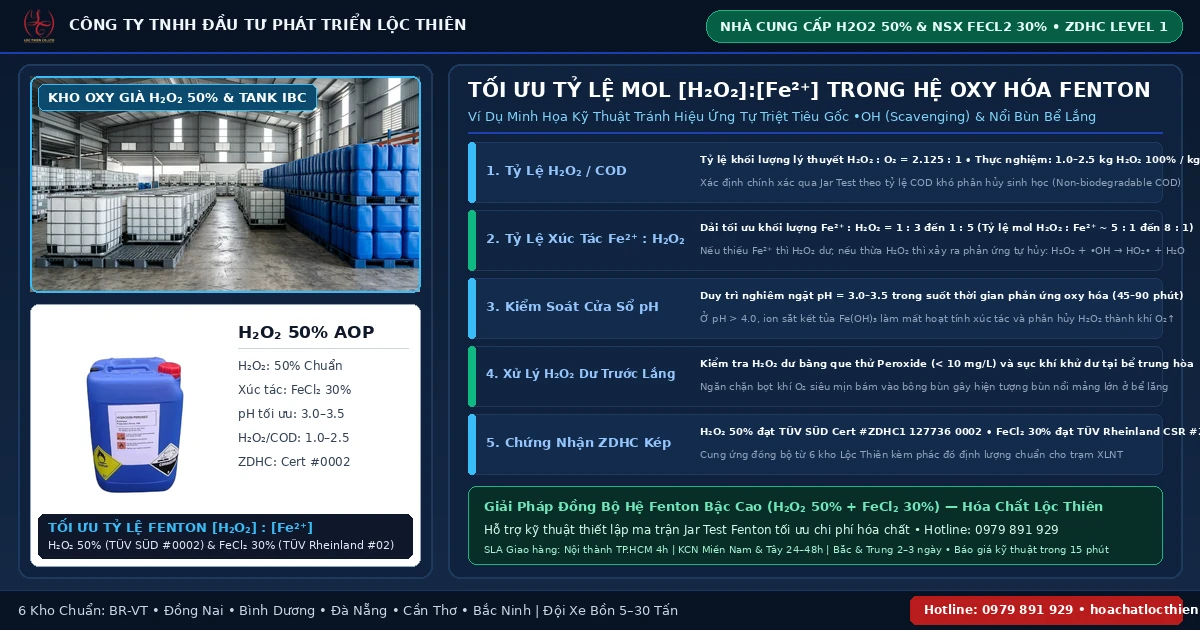
In Fenton oxidation reactors (pH 2.8–3.5), Fe²⁺ catalyzes the decomposition of Hydrogen Peroxide (H₂O₂ 50%) to generate hydroxyl radicals (•OH, standard potential E° = +2.80 V), cleaving chromophoric -N=N- Azo bonds and refractory aromatic rings:
Fenton Catalytic Reaction: Fe²⁺ + H₂O₂ → Fe³⁺ + OH⁻ + •OH
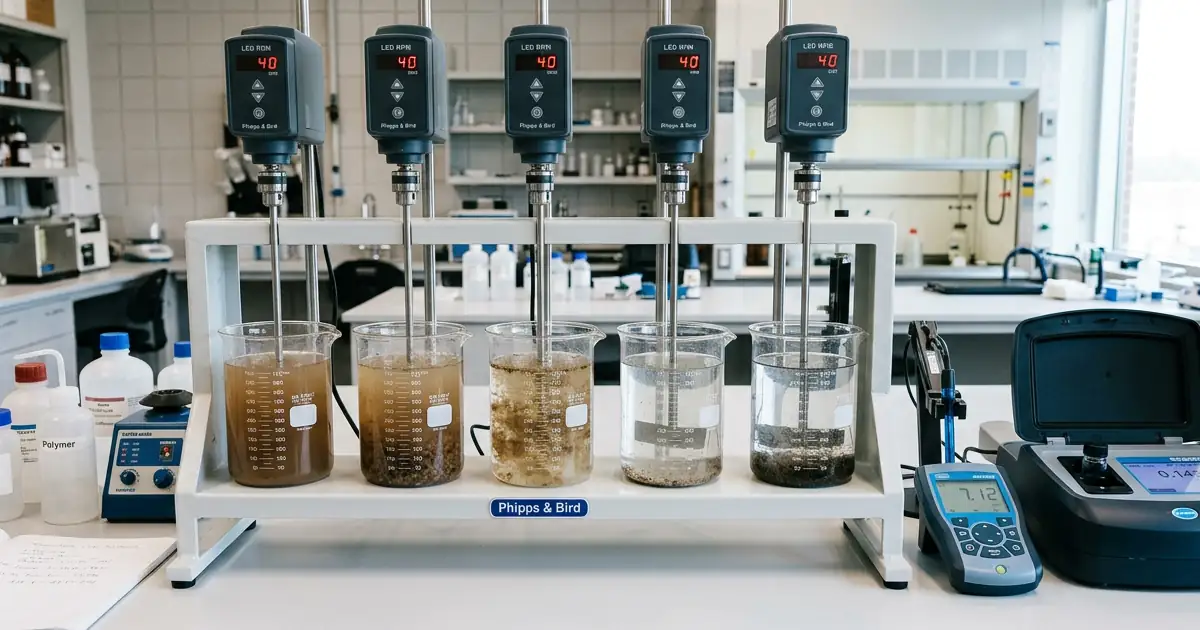
- Illustrative Engineering Calculation: Consider an FDI textile dyeing plant operating a 2,000 m³/day wastewater treatment plant requiring an average catalytic/decolorization dose of 60 mg Fe²⁺/L (120 kg Fe²⁺/day, or 3,600 kg Fe²⁺/month across 30 operating days):
- Option A (Using FeCl₂ 15%): Monthly consumption =
54.46 MT/month(≈ 47.8 m³/month). - Option B (Using FeCl₂ 25%): Monthly consumption =
32.70 MT/month(≈ 26.2 m³/month). - Option C (Using Loc Thien Direct-Manufactured FeCl₂ 30%): Monthly consumption =
27.23 MT/month(≈ 20.6 m³/month). - Operational Savings: Switching from 15% to 30% FeCl₂ eliminates
27.23 MT/monthof dead-weight liquid transport, reducing tanker deliveries by 50% (or eliminating 27 IBC tote handlings, warehouse pallet slots, and rinsing operations every single month).
- Option A (Using FeCl₂ 15%): Monthly consumption =
3.3. Phosphorus Precipitation (PO₄³⁻) & Biogas / UASB Hydrogen Sulfide (H₂S) Scavenging
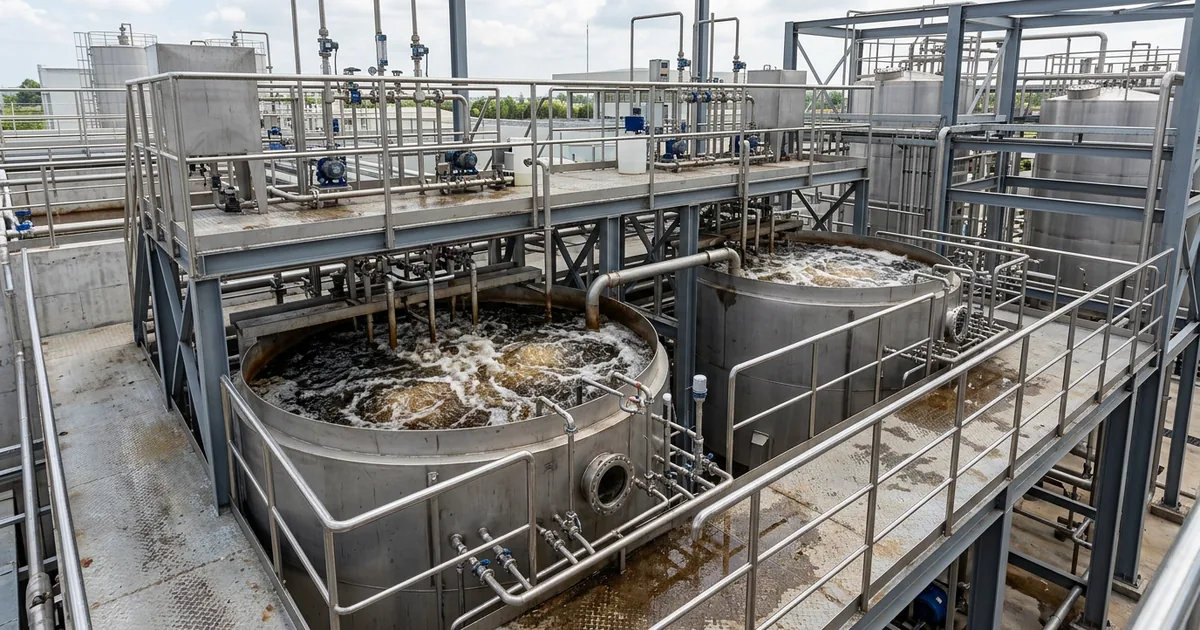
When dosed into anaerobic UASB digesters or sludge transfer lines, Fe²⁺ instantaneously binds dissolved sulfide ions (S²⁻) into insoluble black ferrous sulfide precipitate (FeS↓, Ksp = 8 × 10⁻¹⁹), preventing toxic H₂S gas corrosion of biogas generators and concrete crowns. Using concentrated 30% FeCl₂ minimizes hydraulic dilution inside anaerobic reactors and preserves granular sludge temperature.
4. Five Economic & Operational Advantages of Standardizing on Loc Thien’s 30% FeCl₂
For Plant Directors, Procurement Heads, and HSE Managers, standardizing procurement specifications on Ferrous Chloride 30% manufactured directly by Loc Thien Chemical delivers five measurable advantages:
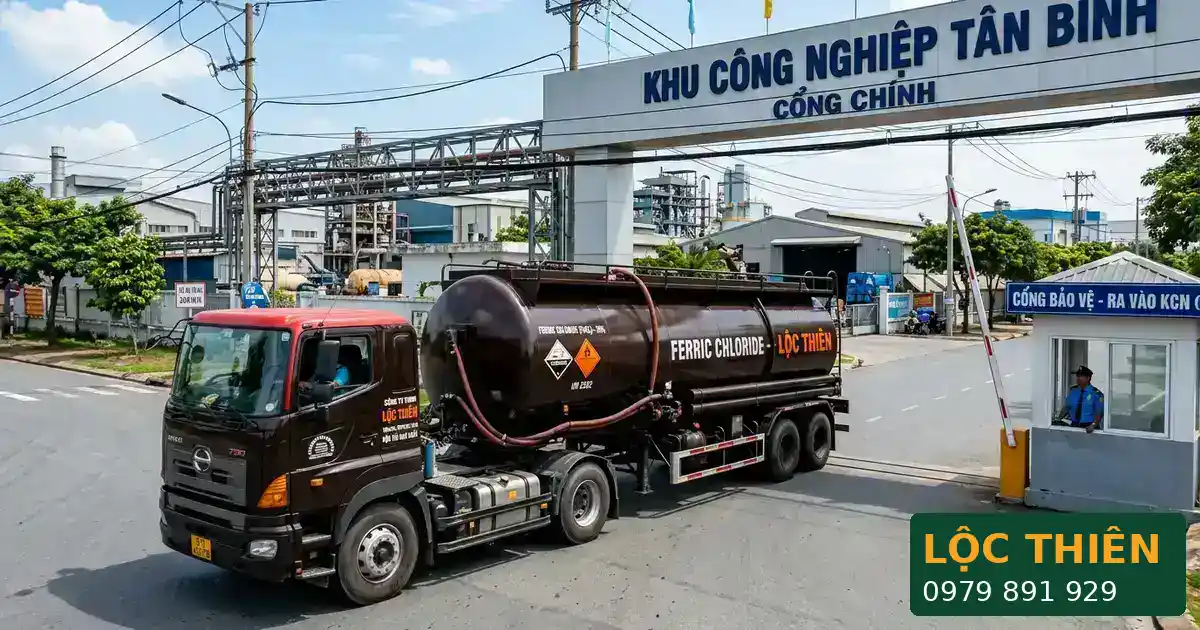
- Lowest Total Cost of Ownership (TCO) per kg of Active Fe²⁺: Direct factory synthesis at Loc Thien eliminates trading markups, while the 132.2 kg Fe²⁺/MT concentration reduces bulk freight cost per active unit by 20% to 45% via our dedicated 5–30-ton chemical tanker fleet.
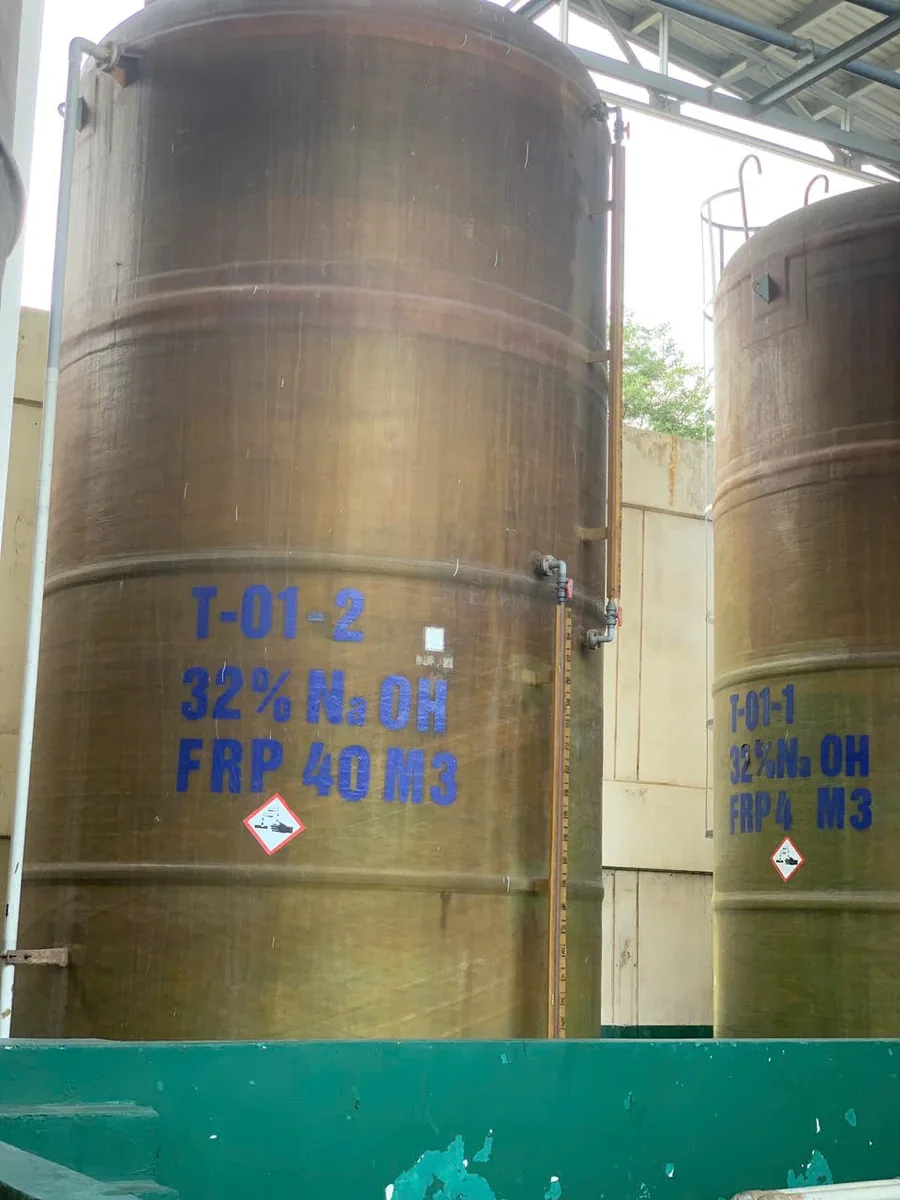
- More Than Doubles On-Site Storage Tank Autonomy: An existing 15 m³ FRP or HDPE storage tank holding FeCl₂ 30% (d ≈ 1.32 g/cm³) stores
2,617 kgof active Fe²⁺, compared to only1,130 kgwhen filled with 15% solution — increasing plant buffer inventory by 2.32× without spending capital on new tanks. - Strict Free-Acid Control (≤ 1.0%–2.0% Free HCl) Saves Neutralization Alkali: Unrefined 15%–20% spent pickling acids often contain 5%–8% residual HCl, crashing wastewater pH and forcing plants to consume tons of extra Liquid Caustic Soda NaOH 32% or Hydrated Lime Ca(OH)₂ downstream. Loc Thien’s controlled synthesis keeps free acid minimal, directly cutting alkali neutralization budgets.
- Official
ZDHC MRSL v3.1 Conformance Level 1Credential: Loc Thien’s FeCl₂ (LOC THIEN INVESTMENT DEVELOPMENT COMPANY LIMITED) is independently verified by TÜV Rheinland Vietnam under Conformance Summary Report (CSR) No.248162921-02and Analytical Test Report No.248162921-02a, guaranteeing zero restricted heavy metals (Cd, Hg, Pb, Cr⁶⁺, As) above MRSL limits for FDI textile, footwear, and garment supply chains. - 3,000+ MT/Month Capacity & 6 Standardized National Warehouses: Ready stock across Ba Ria - Vung Tau (Phu My 1 IP), Dong Nai (Long Thanh IP), Binh Duong (Di An City), Da Nang (Hoa Khanh IP), Can Tho (Tra Noc IP), and Bac Ninh (Tien Son IP). Delivery SLA: 4 hours within HCMC, 24–48 hours across Southern & Mekong Delta IPs, and 2–3 days across Northern & Central IPs (Contact hotline 0979 891 929 for detailed delivery procedures).
5. 5-Minute Engineering Guide: Recalibrating Dosing Pumps from 15% or 25% to 30% FeCl₂
ETP operators do not need to manually dilute FeCl₂ 30% on site (avoiding unnecessary handling and acid fume exposure). Simply adjust the stroke length or frequency of your diaphragm dosing pump (L/h) using the active-mass conservation formula:
Volumetric Dosing Conversion Formula: Q(30%) [L/h] = Q(old) [L/h] × (C_old × d_old) / (30 × 1.32)
| Previous Grade in Use | Typical Density (d_old) | Conversion Multiplier to FeCl₂ 30% | Example: If Old Pump Setting Was 100 L/h | Engineering Benefit on Dosing Skid |
|---|---|---|---|---|
| FeCl₂ 15% Solution | 1.14 g/cm³ | 0.432 × Q(15%) | Reduce pump setting to 43.2 L/h | Cuts pump stroke duty by 56.8%, doubling PTFE diaphragm & check-valve lifespan |
| FeCl₂ 20% Solution | 1.19 g/cm³ | 0.601 × Q(20%) | Reduce pump setting to 60.1 L/h | Reduces suction velocity and cavitation risk in viscous piping |
| FeCl₂ 25% Solution | 1.25 g/cm³ | 0.789 × Q(25%) | Reduce pump setting to 78.9 L/h | Reduces daily IBC tote changeovers by 21.1% |
6. Frequently Asked Questions (FAQ) on Ferrous Chloride (FeCl₂) Concentration Selection
What concentration of FeCl₂ does Loc Thien Chemical manufacture directly?
Loc Thien Chemical is a direct manufacturer of liquid Ferrous Chloride (FeCl₂, CAS 7758-94-3) at the industrial standard concentration of 30% w/w (d₂₅ = 1.30–1.34 g/cm³). Standardizing production at 30% maximizes active Fe²⁺ delivery (132.2 kg/MT) and minimizes freight cost while ensuring zero crystallization across Vietnam’s ambient temperatures.
Why does buying FeCl₂ 30% lower Total Cost of Ownership (TCO) compared to 15% and 25% grades?
Because Cr⁶⁺ reduction, Fenton oxidation, and decolorization coagulation depend strictly on the mass of active Fe²⁺ ions. One metric ton of FeCl₂ 30% supplies 132.2 kg of Fe²⁺ — double the 66.1 kg in 15% grade and 20% higher than the 110.1 kg in 25% grade. Switching to 30% halves tanker freight volume, doubles existing tank storage autonomy, and reduces downstream NaOH alkali consumption.
How can our receiving QC team verify FeCl₂ 30% concentration upon tanker or IBC arrival?
Measure the specific gravity at 25°C using a calibrated glass hydrometer alongside the batch COA: genuine FeCl₂ 30% exhibits a specific gravity of 1.30 – 1.34 g/cm³ (33.5°–36.8°Bé) and a clear pale-green appearance. A reading of 1.13–1.15 g/cm³ indicates dilute 15% solution, whereas 1.24–1.26 g/cm³ indicates 25% solution.
Is Loc Thien’s FeCl₂ 30% solution certified to ZDHC MRSL v3.1 Level 1 for FDI textile mills?
Yes. Ferrous Chloride (FeCl₂ 30%) manufactured by LOC THIEN INVESTMENT DEVELOPMENT COMPANY LIMITED achieves ZDHC MRSL Version 3.1 Conformance Level 1, backed by Conformance Summary Report (CSR) No. 248162921-02 and Analytical Test Report No. 248162921-02a issued by TÜV Rheinland Vietnam.
How can we request a 15-minute technical quote and free Jar-test sample from Loc Thien?
Contact our engineering desk directly via Hotline/Zalo 0979 891 929, email [email protected], or submit our Online RFQ Form to receive batch COA, 16-section GHS MSDS, TÜV Rheinland ZDHC Level 1 reports, and a tailored quotation within 15 minutes.