Sodium Sulfate Anhydrous (Na₂SO₄ 99%) vs. Pure Vacuum Salt (NaCl 99.9%) in Cotton Reactive Dyeing: Ionic Strength, SUS316L Pitting & TCO Analysis
Table of contents
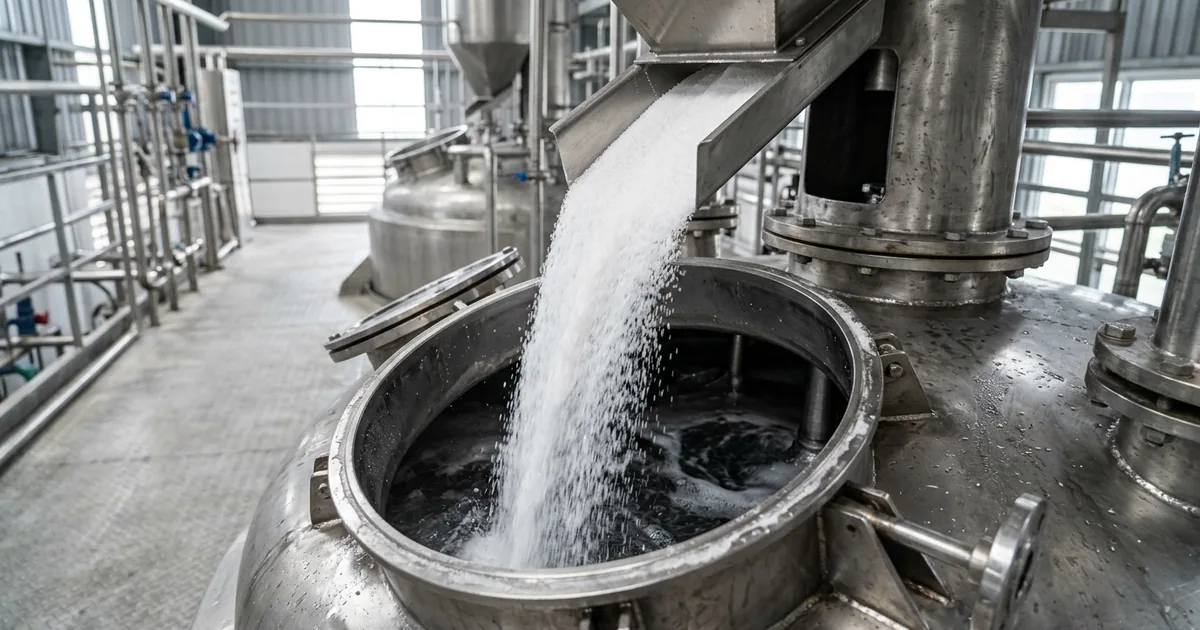
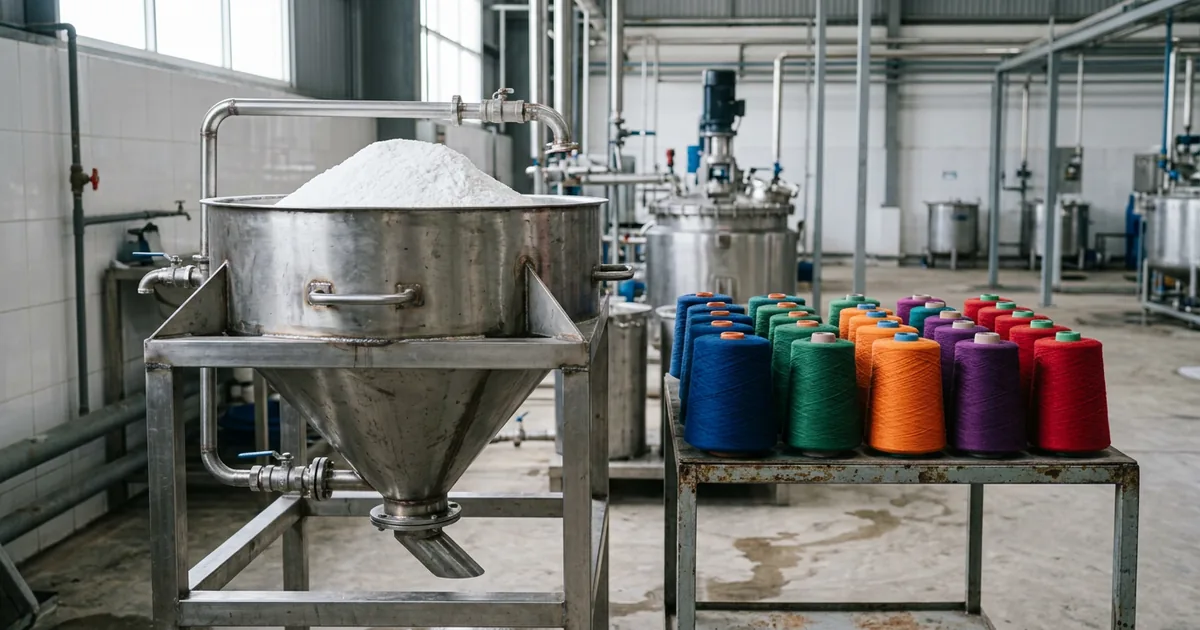
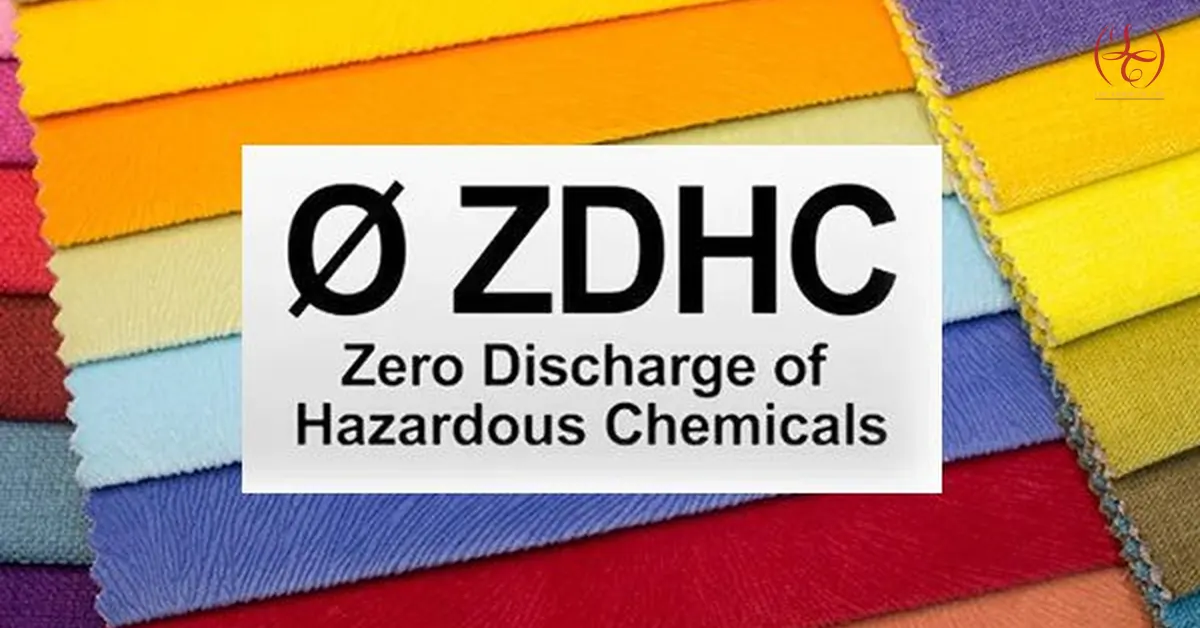
When selecting a primary electrolyte for cotton reactive and direct dyeing, Sodium Sulfate Anhydrous (Na₂SO₄ ≥ 99.0% w/w, CAS 7757-82-6) delivers superior dye leveling on sensitive shades (Phthalocyanine Turquoise, Emerald Green, Heather Grey, Pastel), zero chloride pitting corrosion on high-temperature SUS304 / SUS316L Jet dyeing vessels, and TÜV SÜD ZDHC MRSL v3.1 Level 1 certification (Cert No. ZDHC1 127736 0003 Rev. 00), whereas Pure Refined Vacuum Salt (NaCl ≥ 99.5%–99.9% w/w, CAS 7647-14-5) offers a lower per-kilogram purchase cost and higher sodium moles per unit mass for dark and black shades (Reactive Black 5) on corrosion-resistant equipment. Loc Thien Chemical supplies both industrial-grade Na₂SO₄ 99% and refined NaCl 99.9% in 50 kg PE-lined bags across 6 warehouses in Vietnam, enabling textile mills to optimize Right-First-Time (RFT ≥ 96%) performance and Total Cost of Ownership (TCO).
1. How Do Sodium Ion Activity (a(Na⁺)) and Hofmeister Salting-Out Differ Between Na₂SO₄ and NaCl?
- Molar Dissociation & Ionic Strength (
I) per100 g/Lof Dyebath:- Pure Vacuum Salt
NaCl(M = 58.44 g/mol):NaCl → Na⁺ + Cl⁻. Dissolving100 g/Lyields1.71 mol/L Na⁺and ionic strengthI = 1.71 mol/L. - Sodium Sulfate Anhydrous
Na₂SO₄(M = 142.04 g/mol):Na₂SO₄ → 2Na⁺ + SO₄²⁻. Dissolving100 g/L(0.704 mol/L) yields1.41 mol/L Na⁺, while the divalent sulfate ion (z = -2) pushes total ionic strength toI = ½ × [1.41×1² + 0.704×(-2)²] = 2.11 mol/L.
- Pure Vacuum Salt
- Why
1 kgofNa₂SO₄Replaces1.0 – 1.15 kgofNaClDespite Higher Molecular Weight:- Although
NaClcontains21%more nominalNa⁺ions per kilogram, the divalentSO₄²⁻anion sits at the top of the Hofmeister lyotropic series (SO₄²⁻ > Cl⁻), exerting a much stronger hydration shell (ΔG_hydr(SO₄²⁻) = -1,080 kJ/molvs.-340 kJ/molforCl⁻). - This reduces free water activity in the dyebath while moderating initial dye strike velocity (
v_strike), allowing dye anions to diffuse evenly into the core of high-twist cotton yarns before Soda Ash Light Na₂CO₃ 99.2% is dosed.
- Although
2. 10-Criteria Engineering Comparison Table: Na₂SO₄ 99% vs. NaCl 99.9%
| Evaluation Criterion | Sodium Sulfate Anhydrous (Na₂SO₄ ≥ 99.0%) | Pure Vacuum Salt (NaCl ≥ 99.5% – 99.9%) | Dyehouse Engineering Verdict |
|---|---|---|---|
| 1. CAS No. & Molar Mass | CAS 7757-82-6 | Na₂SO₄ (142.04 g/mol) | CAS 7647-14-5 | NaCl (58.44 g/mol) | Stoichiometric replacement ratio ~1.0 : 1.0–1.1 by weight (g/L) |
2. Leveling on Sensitive Shades (Turquoise, Pastel) | Superior (ΔE*ab ≤ 0.5) · Prevents micellar aggregation of Reactive Blue 21 | High Risk of Salt Spots · Cl⁻ triggers phthalocyanine dye precipitation | Mandatory Na₂SO₄ for Turquoise, Emerald Green, Pastel, and Mercerized Yarn |
3. Exhaustion on Deep Black (> 4% owf) | Good (60 – 80 g/L) | Very Strong (70 – 90 g/L) · High Na⁺ density drives deep black build-up | Both perform well; NaCl reduces raw material cost on standard black lots |
4. Pitting Corrosion on SUS304 / SUS316L Jets | Zero Chloride Pitting (0%) · Sulfate ions passivate stainless surfaces | High Pitting & Stress Corrosion Risk at 80–130 °C (Cl⁻ > 20,000 mg/L) | Na₂SO₄ extends stainless steel nozzle, pump, and heat-exchanger life by 3–5 years |
5. Solubility Curve (15 °C – 80 °C) | 139 g/L (15 °C) → 495 g/L (33 °C) · Keep mixing tank at 40–50 °C | Flat solubility: 358 g/L (15 °C) → 380 g/L (80 °C) | NaCl dissolves easily in cold water; Na₂SO₄ needs warm water in winter |
6. Hardness Impurity Risk (Ca²⁺ + Mg²⁺) | Controlled ≤ 0.10% (≤ 350 ppm) | Vacuum salt ≤ 0.05%; crude sea salt contains 0.3–0.8% (Strictly Prohibited) | Never use unrefined sea salt in reactive dyeing |
| 7. ZDHC MRSL v3.1 Certification | TÜV SÜD ZDHC Level 1 Certificate (ZDHC1 127736 0003 Rev. 00) | No standalone ZDHC Certificate | Choose Na₂SO₄ 99% for export orders requiring ZDHC Gateway InCheck |
8. Effluent Impact (QCVN 40:2025/BTNMT) | Elevates SO₄²⁻; aerate equalization tank & dose FeCl₂ 30% to prevent H₂S | Elevates Cl⁻ (TDS); increases osmotic pressure on RO water-recycling membranes | Pair with Loc Thien’s FeCl₂ 30% and PAC 31% wastewater treatment program |
3. Why Chloride Ions (Cl⁻) Cause Pitting Corrosion in SUS304 / SUS316L Dyeing Machines and Salt Spots on Turquoise Shades
- Electrochemical Chloride Pitting on Stainless Steel Jet Vessels:
- Stainless steels (
SUS304andSUS316L) rely on a2 – 5 nmpassive chromium oxide film (Cr₂O₃). When50 – 80 g/LofNaCl(30,000 – 48,000 mg/L Cl⁻) circulates at80 °C – 95 °C, smallCl⁻ions penetrate grain boundaries and weld heat-affected zones, forming autocatalytic acidic micro-pits (FeCl₂ + 2H₂O → Fe(OH)₂ + 2HCl). Over 18–24 months, roughened inner walls snag fine cotton/spandex knits and cause costly heat-exchanger leaks.
- Stainless steels (
- Why
Reactive Blue 21(Turquoise) Requires100% Na₂SO₄ 99%:- Copper phthalocyanine dyes form large planar aggregates in the presence of
Cl⁻, depositing insoluble blue specks on fabric surfaces. Switching toNa₂SO₄ 99%eliminates aggregation and reduces re-dyeing rates from8.5%to≤ 1.2%.
- Copper phthalocyanine dyes form large planar aggregates in the presence of
Expert Technical Note — QC Specialist Phan Cam Thuy (Loc Thien Chemical): “For mills running both sensitive export colors and high-volume black lots, our hybrid strategy—using
TÜV SÜD ZDHC Level 1 Na₂SO₄ 99%for all pastel, medium, turquoise, and brand-audited lots while reserving99.9% Pure Vacuum Salt (NaCl)for cationic water-softener resin regeneration (R-SO₃Na)—maximizesRFT%while protectingSUS316Ldyeing machinery.”
4. Illustrative TCO Calculation — 15-Ton/Day Cotton Dyehouse (RFT% & Equipment Lifespan)
Illustrative engineering comparison for a 15-ton/day cotton knitwear mill (390 tons of fabric/month):
- Re-dyeing Cost Impact: Every
1%increase in re-dyeing rate (3.9 tons of fabric/month) consumes an additional45 m³of water,12 tonsof steam, auxiliary chemicals, and6–8 hoursof machine capacity. Upgrading sensitive shades (40%of production) to Sodium Sulfate Anhydrous Na₂SO₄ 99% cuts re-dyeing defects by3.5% – 5.0%, saving3–4×more than the unit price difference betweenNa₂SO₄andNaCl.
5. GHS Safety, Procurement & 6-Warehouse Supply Network (Procurement / Engineer / Accounting)
- For Procurement Teams: Full
TÜV SÜD ZDHC MRSL v3.1 Level 1 Certificate(ZDHC1 127736 0003 Rev. 00) forNa₂SO₄ 99%plus batch COA/SDS for both Na₂SO₄ 99% and Pure Vacuum Salt NaCl 99.9%. - For Dyeing & ETP Engineers: Integrated supply of Soda Ash Light Na₂CO₃ 99.2% (
ZDHC1 127736 0004), Caustic Soda Liquid NaOH 32% (ZDHC1 127736 0001), and directly manufactured Ferrous Chloride Solution FeCl₂ 30% (TÜV Rheinland ZDHC Level 1 — CSR No. 248162921-02). - For Accounting Departments: Compliant Vietnamese VAT e-invoices (
Decree 70/2025/ND-CP), contracts, and bank transfer records. - Supply Capacity & SLA:
3,000+ metric tons/month,5–30-tontanker & truck fleet, 6 standard warehouses (Ba Ria - Vung Tau, Dong Nai, Binh Duong, Da Nang, Can Tho, Bac Ninh; legal HQ at452/6B Tinh Lo 10, Binh Tan District, HCMC— HQ only, not a warehouse). Delivery within 4 hours in HCMC, 24–48 hours in Southern/Mekong Delta IPs, 2–3 days in Northern/Central Vietnam (Contact hotline0979 891 929for detailed delivery procedures). 15-minute technical quote via0979 891 929or[email protected].
6. Frequently Asked Questions (FAQ)
What is the conversion ratio when switching a dyebath recipe from NaCl to Na₂SO₄ 99%?
In industrial cotton reactive dyeing (20 – 80 g/L), Na₂SO₄ 99% and refined NaCl 99.9% are substituted at a 1 : 1 weight ratio (g/L) for medium and dark shades, or 0.90 – 0.95 kg Na₂SO₄ per 1.0 kg NaCl for pastel shades. Always validate shade match (ΔE*ab ≤ 0.5) via laboratory Jar-test / lab-dip trials before bulk production.
Why is crude solar sea salt (NaCl ≤ 97%) strictly prohibited in reactive dyeing and ion-exchange water softeners?
Crude solar sea salt contains 3,000 – 8,000 ppm of calcium (Ca²⁺), magnesium (Mg²⁺), ferric iron (Fe³⁺), and insoluble silt, which precipitate reactive dyes into unremovable color spots and permanently foul cation-exchange resin beads (R-SO₃Na).