Soda Ash Light Na₂CO₃ 99.2% in Reactive Dye Fixation: S_N2 vs Ad_N Kinetics, pH Buffering & ZDHC Level 1 Compliance
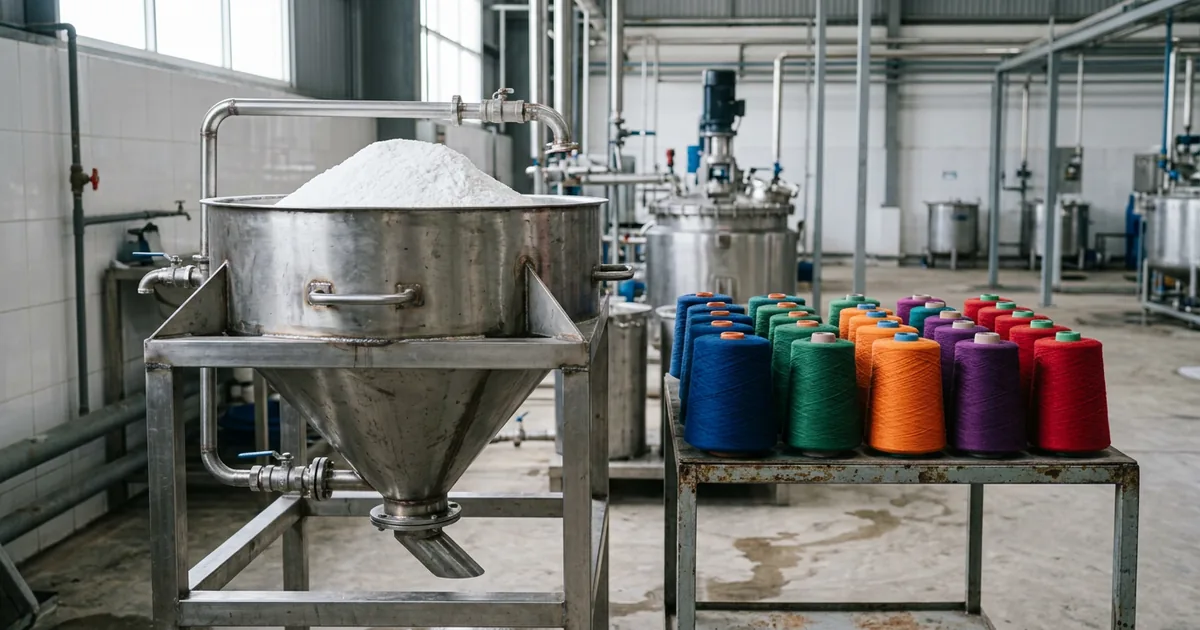
Table of contents
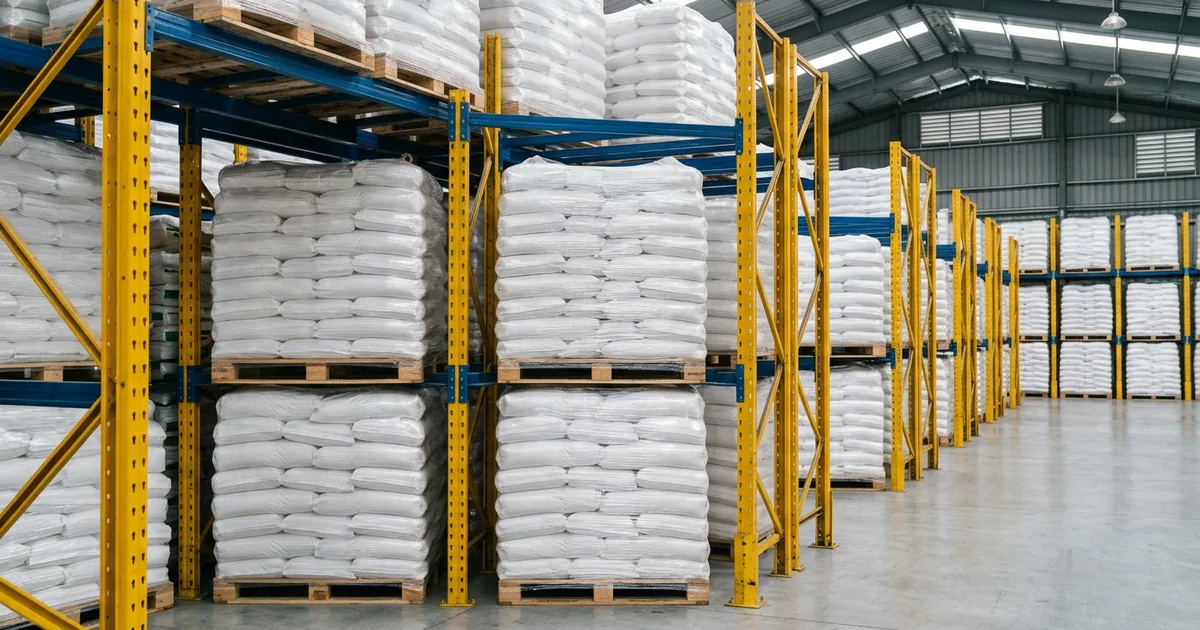
Soda Ash Light (Na₂CO₃ ≥ 99.2% w/w, Light Sodium Carbonate, CAS 497-19-8) is the standard alkaline buffering agent used in cotton reactive dyeing to deprotonate cellulose hydroxyl groups (Cell-OH) into nucleophilic cellulosate anions (Cell-O⁻) within a tightly controlled pH 10.5 – 11.2 window, driving covalent fixation (F% reaching 75% – 88%) while suppressing competitive dye hydrolysis. Loc Thien Chemical is a commercial industrial chemical supplier of Soda Ash Light Na₂CO₃ 99.2% certified to ZDHC MRSL v3.1 Conformance Level 1 by TÜV SÜD Product Service GmbH (Certificate No. ZDHC1 127736 0004 Rev. 00 | Report No. 2438023998), supplied in 50 kg PE-lined bags with batch COA and MSDS Na₂CO₃ across 6 regional warehouses in Vietnam.
1. How Does Soda Ash Light Na₂CO₃ Activate Nucleophilic Cellulosate Ions (Cell-O⁻) During Reactive Dye Fixation?
After primary exhaustion with Sodium Sulfate Anhydrous Na₂SO₄ 99%, reactive dye molecules are only physically adsorbed on cotton fibers via Van der Waals forces and hydrogen bonding. To achieve wash-fastness (ISO 105-C06 Grade 4–5), the dye’s reactive group must form a covalent bond with the C6 primary hydroxyl group of cellulose (pKₐ ≈ 12.5 at 25 °C):
Cell-OH + OH⁻ ⇌ Cell-O⁻ + H₂O
Because the nucleophilic reactivity of ionized Cell-O⁻ is roughly 10⁴ times higher than unionized Cell-OH, elevating dyebath pH to 10.5 – 11.2 via carbonate buffering (CO₃²⁻ + H₂O ⇌ HCO₃⁻ + OH⁻, pKₐ₂ = 10.33) triggers two distinct covalent fixation pathways depending on the dye anchor:
- Bimolecular Nucleophilic Substitution (
S_N2) — Monochlorotriazine (MCT) & Monofluorotriazine (MFT) Dyes:Cell-O⁻ + Dye-Triazine-Cl → Dye-Triazine-O-Cell (Ester-like covalent bond) + Cl⁻- Requires higher thermal activation (
80 °C – 85 °CforMCT) and a fixation pH of10.8 – 11.2buffered solely byNa₂CO₃.
- Nucleophilic Addition (
Ad_N) — Vinyl Sulfone (VS) & Bifunctional (MCT/VS) Dyes:- First, alkaline elimination converts the
β-sulfatoethylsulfoneprecursor into the active Vinyl Sulfone group:Dye-SO₂-CH₂-CH₂-OSO₃Na + OH⁻ → Dye-SO₂-CH=CH₂ + Na₂SO₄ + H₂O - Second,
Cell-O⁻undergoes Michael-type nucleophilic addition across the double bond at60 °CandpH 10.5 – 10.8:Dye-SO₂-CH=CH₂ + Cell-O⁻ + H₂O → Dye-SO₂-CH₂-CH₂-O-Cell (Ether covalent bond) + OH⁻
- First, alkaline elimination converts the
- Why Using Pure Caustic Soda (
NaOH) Alone Causes Catastrophic Dye Hydrolysis:- Free hydroxide ions (
OH⁻) in the dyebath simultaneously attack the reactive dye anchor (Dye-Cl + OH⁻ → Dye-OH), converting up to40%of the dye into unreactive hydrolyzed dye if local pH spikes above11.5. BecauseNa₂CO₃is a weak dibasic base (CO₃²⁻ / HCO₃⁻buffer), it releasesOH⁻gradually as fixation consumes alkali, maintaining stable pH and preventing shade loss.
- Free hydroxide ions (
2. Why Must Textile Dyehouses Specify Soda Ash Light (0.55–0.65 g/cm³) Instead of Soda Ash Dense?
Although both Light and Dense grades share the chemical formula Na₂CO₃ ≥ 99.2%, their crystal morphology and dissolution kinetics differ fundamentally:
| Technical Parameter | Soda Ash Light (Na₂CO₃ Light — Textile Grade) | Soda Ash Dense (Na₂CO₃ Dense — Glass Grade) | Operational Impact in Textile Dyeing |
|---|---|---|---|
| Pour Bulk Density | 0.55 – 0.65 g/cm³ (550 – 650 kg/m³) | 0.95 – 1.15 g/cm³ (950 – 1,150 kg/m³) | Light grade has porous acicular micro-crystals with 2.5× specific surface area |
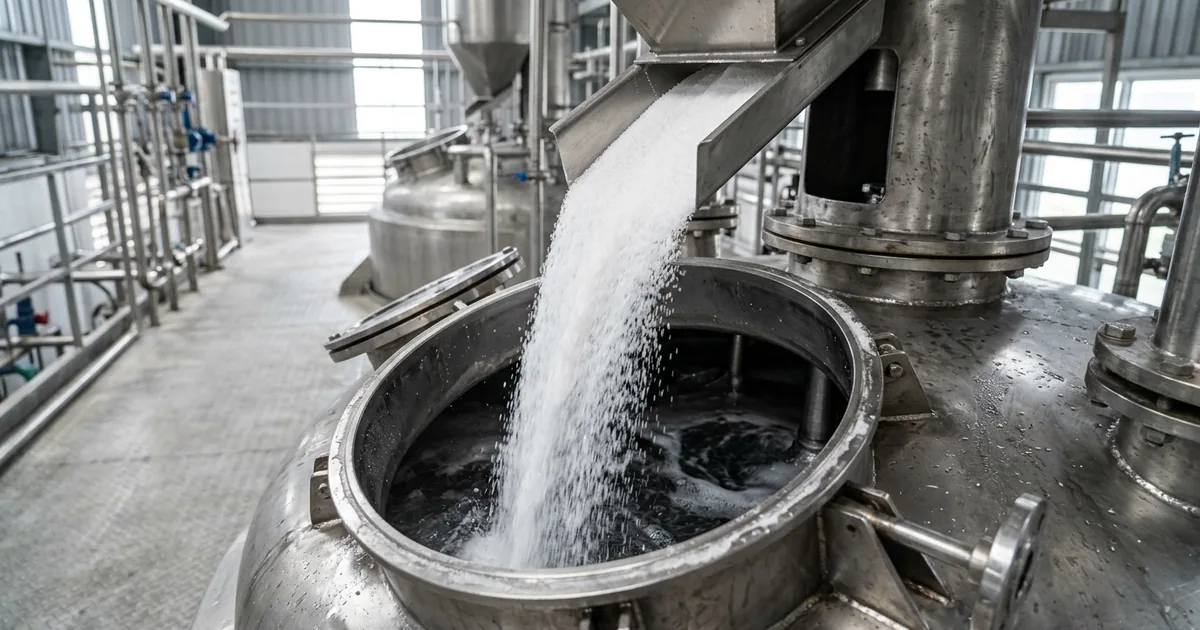
Dissolution Time (150 g/L at 30 °C) | 2.5 – 4.0 minutes (Complete dissolution) | 9.0 – 15.0 minutes (Sinks & forms hard bottom crusts) | Dense grade settles onto tank bottoms, causing undissolved alkali specks on fabric |
Total Alkalinity (as Na₂CO₃ dry basis) | ≥ 99.2% w/w | ≥ 99.2% w/w | GB/T 210.1-2022 Class II Class A · Guaranteed batch-to-batch pH reproducibility |
Chlorides (as NaCl) & Iron (as Fe) | NaCl ≤ 0.50% | Fe ≤ 0.003% (30 ppm) | NaCl ≤ 0.70% | Fe ≤ 0.004% | Prevents stainless steel corrosion and ferric iron yellowing on bleached cotton |
| ZDHC MRSL v3.1 Conformance | Level 1 Certificate | Not certified for textile wet processing | Certified by TÜV SÜD Product Service GmbH (Cert No. ZDHC1 127736 0004 Rev. 00 | Report No. 2438023998) |
Expert Technical Note — QC Specialist Phan Cam Thuy (Loc Thien Chemical): “When dissolving
Na₂CO₃in side tanks (ΔH_sol ≈ -26.7 kJ/mol), dumping Dense Soda Ash rapidly creates a hard monohydrate crust (Na₂CO₃·H₂O) at the bottom of the mixer, leaving actual dyebath pH0.3 – 0.5 unitsbelow target. SpecifyingTÜV SÜD ZDHC Level 1Soda Ash Light (0.55 – 0.65 g/cm³) ensures rapid, complete dissolution within 3 minutes.”
3. Standard Dosage Table for Soda Ash Light Na₂CO₃ 99.2% & Mixed Alkali Systems (Na₂CO₃ + NaOH)
| Reactive Dye Class & Fixation Temp | Shade Depth (% owf) | Na₂CO₃ 99.2% Dosage (g/L at L.R. 1:8–1:10) | Supplemental NaOH 32% (mL/L) | Target Fixation pH | Linear Dosing Profile (Curve 70:30) |
|---|---|---|---|---|---|
1. Bifunctional (MCT/VS) — 60 °C | ≤ 0.5% owf (Pastel) | 6 – 10 g/L | 0 mL/L | 10.5 – 10.6 | Dose 30% over first 15 min, then 70% over next 20 min |
2. Bifunctional (MCT/VS) — 60 °C | 0.5% – 2.0% owf (Medium) | 12 – 16 g/L | 0 mL/L | 10.7 – 10.9 | Dose 30% over first 15 min, then 70% over next 20 min |
3. Bifunctional (MCT/VS) — 60 °C | 2.0% – 4.5% owf (Dark) | 15 – 20 g/L | 0.8 – 1.5 mL/L (Mixed Alkali) | 10.9 – 11.1 | Dose Na₂CO₃ first (20 min), then progressive NaOH 32% (15 min) |
4. Vinyl Sulfone (VS) — 60 °C | 3.0% – 6.0% owf (Deep Black) | 15 – 18 g/L | 1.5 – 2.5 mL/L (Mixed Alkali) | 11.0 – 11.2 | Progressive dosing prevents premature VS hydrolysis |
5. Hot-Dyeing MCT — 80 °C – 85 °C | 1.0% – 4.0% owf | 15 – 22 g/L | 0 – 1.0 mL/L | 10.8 – 11.2 | Hold 45 – 60 min at 80 °C after progressive alkali addition |
Mandatory Process Rule: Actual alkali dosages must be confirmed via laboratory lab-dip and Jar-test trials on the specific substrate and incoming water alkalinity (
ppm CaCO₃).
4. Progressive Alkali Dosing (Curve 70:30) & Post-Dyeing Core Neutralization SOP
- Progressive Alkali Dosing Curve (
Curve 70:30):- Adding
100%ofNa₂CO₃at once spikes Vinyl Sulfone activation inside the first5 minutes, causing severe outer-layer ring dyeing. Dosing30%of the dissolvedNa₂CO₃over the first15 minutesand the remaining70%over the next15 – 20 minutessynchronizesCell-O⁻generation with internal fiber diffusion.
- Adding
- Core Neutralization Prior to Soaping (
95 °C – 98 °C):- After fixation at
pH 10.8 – 11.2, residualCO₃²⁻trapped inside cotton yarns must be neutralized topH 5.5 – 6.5before high-temperature boiling-off (95 °C). If boiling soaping is performed while internal fiber pH remains> 9.5, alkaline thermal cleavage will break fixed Vinyl Sulfone ether bonds (Dye-SO₂-CH₂-CH₂-O-Cell), causing bleeding and poor wash fastness.
- After fixation at
5. Illustrative Engineering Calculation — Monthly Na₂CO₃ Demand for a 15-Ton/Day Reactive Dyehouse
Illustrative technical calculation for an export cotton dyeing mill processing 15 metric tons of fabric/day at L.R. = 1:7 (daily main dyebath volume = 15 × 7 = 105 m³/day):
- Weighted Average
Na₂CO₃ 99.2%Dosage:15.5 kg/m³(g/L) across light, medium, and dark shades. - Daily & Monthly Consumption (
26 operating days/month):- Daily consumption:
105 m³/day × 15.5 kg/m³ = 1,627.5 kg/day ≈ 1.63 metric tons/day(33 bags of 50 kg/day). - Monthly consumption:
1.63 × 26 = 42.38 metric tons/month.
- Daily consumption:
- Effluent Alkalinity Neutralization & Coagulation: High-carbonate alkaline wastewater (
pH 10.2 – 11.0) is neutralized using Hydrochloric Acid HCl 32% (TÜV Rheinland ZDHC Level 1 — CSR No. 248162921-03) or Sulfuric Acid H₂SO₄ 98% (CSR No. 248162921-01), followed by decolorization using Ferrous Chloride Solution FeCl₂ 30% (CSR No. 248162921-02— directly manufactured by Loc Thien Chemical).
6. GHS Safety, Anti-Caking Storage & Multi-Role Procurement Guide (Procurement / Engineer / Accounting)
- GHS Safety & Storage (MSDS Na₂CO₃): Classified under GHS07 (
Warning) —H319: Causes serious eye irritation. Non-flammable; not a UN dangerous good. Operators must wearEN 166chemical splash goggles,N95dust respirators, and nitrile gloves. Reseal opened50 kgbags immediately to prevent moisture andCO₂absorption into sodium sesquicarbonate (Na₂CO₃·NaHCO₃·2H₂O), which lowers active alkalinity; never store adjacent to acids (HCl,H₂SO₄). - For Procurement Teams: Official
TÜV SÜD ZDHC MRSL v3.1 Level 1 Certificate(ZDHC1 127736 0004 Rev. 00|Report No. 2438023998), batch COA, and GHS SDS ready for ZDHC Gateway InCheck verification (View all 9 ZDHC Level 1 chemicals). - For Dyeing Engineers: Complete one-stop supply of
TÜV SÜD ZDHC Level 1dyeing chemicals: Sodium Sulfate Anhydrous Na₂SO₄ 99% (ZDHC1 127736 0003), Caustic Soda Liquid NaOH 32%–50% (ZDHC1 127736 0001), and Hydrogen Peroxide H₂O₂ 50% (ZDHC1 127736 0002). - For Accounting Departments: Compliant Vietnamese VAT e-invoices (
Decree 70/2025/ND-CP), commercial contracts, and bank transfer documentation for input tax deduction.
Pricing Factors & 6-Warehouse Supply Network
Unit pricing for Soda Ash Light Na₂CO₃ 99.2% is determined by 5 factors: (1) Order tonnage (5 – 100+ tons/month), (2) Grade & ZDHC documentation requirements, (3) Packaging (50 kg PE-lined bags), (4) Distance from our 6 standard warehouses (Ba Ria - Vung Tau, Dong Nai, Binh Duong, Da Nang, Can Tho, Bac Ninh; legal HQ at 452/6B Tinh Lo 10, Binh Tan District, HCMC — HQ only, not a warehouse), and (5) Contract delivery schedule.
- Capacity & Fleet:
3,000+ metric tons/monthwith a dedicated5–30-tontanker & truck fleet. - Delivery SLA: Inner HCMC within 4 hours; Southern & Mekong Delta IPs within 24–48 hours; Northern & Central Vietnam within 2–3 days (Contact hotline
0979 891 929for detailed delivery procedures). - 15-Minute Quote SLA: Contact Hotline / Zalo
0979 891 929or Email[email protected].
7. Frequently Asked Questions (FAQ)
Does Loc Thien Chemical’s Soda Ash Light Na₂CO₃ 99.2% have an official TÜV SÜD ZDHC MRSL v3.1 Level 1 Certificate?
Yes. Soda Ash Light Na₂CO₃ 99.2% supplied by Loc Thien Investment Development Co., Ltd. is certified to ZDHC MRSL Version 3.1 Conformance Level 1 by TÜV SÜD Product Service GmbH (Certificate No. ZDHC1 127736 0004 Rev. 00 | Report No. 2438023998).
Can Caustic Soda (NaOH) completely replace Soda Ash Light (Na₂CO₃) in reactive dyeing?
No. Pure NaOH lacks carbonate buffering capacity (HCO₃⁻ / CO₃²⁻), causing violent local pH spikes (> 11.8) that hydrolyze 30% – 45% of reactive dyes. NaOH 32% is only dosed in small supplemental quantities (0.8 – 2.5 mL/L) alongside 15 – 18 g/L of Na₂CO₃ for deep shades (> 3.0% owf).