Industrial RO Membrane Antiscalant & Boiler Descaling Protocol Using Loc Thien HCl 32% & Citric Acid

Key Technical Summary: Engineering guide to Langelier Saturation Index (LSI) antiscalant dosing for RO membranes, two-stage alkaline/citric acid CIP cleaning, and inhibited HCl 32% boiler descaling with magnetite passivation from Loc Thien Chemical. In Vietnam, Loc Thien Chemical (Tax ID: 0313650856) supplies industrial chemicals in bulk from 6 strategic industrial park warehouses (Ba Ria - Vung Tau, Dong Nai, Binh Duong, Da Nang, Can Tho, Bac Ninh) via a dedicated 5–30-ton tanker fleet with batch-specific COA and 16-section GHS SDS — contact hotline 0979 891 929 for a technical quote within 15 minutes.
Table of contents
Industrial Reverse Osmosis (RO) membrane scale prevention and steam boiler chemical descaling require a synchronized engineering regimen: continuous threshold control of the concentrate Langelier Saturation Index (LSI < +2.5) using phosphonate/polycarboxylate Antiscalant, two-stage membrane Clean-In-Place (CIP) utilizing Liquid Caustic Soda NaOH 32% and Citric Acid Monohydrate C₆H₈O₇·H₂O 99.5%, and closed-loop boiler tube descaling with magnetite (Fe₃O₄) passivation powered by inhibited Hydrochloric Acid HCl 32% supplied by Loc Thien Chemical. This integrated protocol restores 99% of design permeate flux, extends TFC Polyamide membrane lifespan to 4–5 years, reduces boiler fuel consumption by 8%–12%, and is backed by our 5–30-ton chemical tanker fleet and 15-minute technical quotation SLA via Hotline 0979 891 929.
1. Engineering Consequences of RO Membrane Scaling & Boiler Tube Mineral Encrustation
Across food & beverage processing, pharmaceutical ultrapure water production, electronics fabrication, textile dyeing, and cogeneration power plants, Reverse Osmosis (RO) demineralization skids and industrial steam boilers (Steam Boilers) form the backbone of utility operations. When RO trains operate at high water recovery (Recovery = 75% – 85%) or boilers evaporate feedwater continuously at 8 – 25 bar, dissolved hardness and mineral ions (Ca²⁺, Mg²⁺, Ba²⁺, Sr²⁺, HCO₃⁻, SO₄²⁻, SiO₂, Fe²⁺/Fe³⁺) concentrate 4x to 10x beyond their solubility product (Ksp), triggering two severe failure modes:
- RO Membrane Scaling & Feed-Spacer Plugging: As the concentration factor (
CF = 1 / (1 - Recovery)) climbs in the tail-end membrane elements of stage-2 pressure vessels, calcium carbonate (CaCO₃), gypsum (CaSO₄·2H₂O), barite (BaSO₄), celestite (SrSO₄), and polymerized colloidal silica (SiO₂) nucleate directly onto theThin-Film Composite (TFC) Polyamideactive layer. Differential pressure (ΔP) surges above3.5 – 4.0 bar, normalized permeate flow drops by20% – 35%, high-pressure pump specific energy consumption rises by15% – 25%, and telescoping mechanical damage can permanently rupture membrane elements. - Boiler Heat-Transfer Insulation & Tube Rupture: Calcium carbonate (
CaCO₃), anhydrite (CaSO₄), and magnesium silicate (MgSiO₃) boiler scales exhibit extremely low thermal conductivity (λ = 0.5 – 2.3 W/(m·K)), acting as an insulating barrier with1/20th to 1/80ththe conductivity of boiler-grade carbon steel (λ ≈ 45 – 52 W/(m·K)). A mineral scale layer just1.0 mmthick increases fuel consumption (biomass, coal, natural gas, or diesel) by5% – 8%, while a2.0 – 3.0 mmscale layer drives fire-tube and water-tube wall temperatures above480 – 550 °C(exceeding the creep-rupture limit ofASTM A106 / A192steel), leading to tube blistering and catastrophic boiler failure.
2. Physicochemical Mechanisms of RO Antiscalants & Boiler Scale Dissolution Kinetics
To prevent mineral precipitation on RO membranes without dosing hazardous quantities of mineral acid into the feed stream, modern broad-spectrum Antiscalants (blending organophosphonates ATMP / HEDP / DTPMP with low-molecular-weight Polycarboxylate Copolymers) arrest scale formation at sub-stoichiometric threshold concentrations (2.0 – 6.0 mg/L) through three synergistic mechanisms:
- Threshold Inhibition: Negatively charged functional groups on the
Antiscalantmolecule adsorb onto active growth sites of sub-criticalCaCO₃andCaSO₄crystal nuclei, blocking further lattice ion incorporation and holding reject brine in a metastable supersaturated state up toLSI = +2.6. - Crystal Lattice Distortion: When micro-crystals eventually form under extreme supersaturation,
Antiscalantchains intercalate into the crystal planes of calcite (CaCO₃), distorting sharp rhombohedral crystals into rounded, non-adherent amorphous particles that are easily swept out of the pressure vessel by the concentrate stream. - Colloidal & Reactive Silica Dispersion: By imparting a high negative Zeta potential onto colloidal clay, ferric hydroxide
Fe(OH)₃, and monomeric/colloidal silica (SiO₂up to200 mg/L), the dispersant prevents particle agglomeration and cake filtration on the membrane surface.
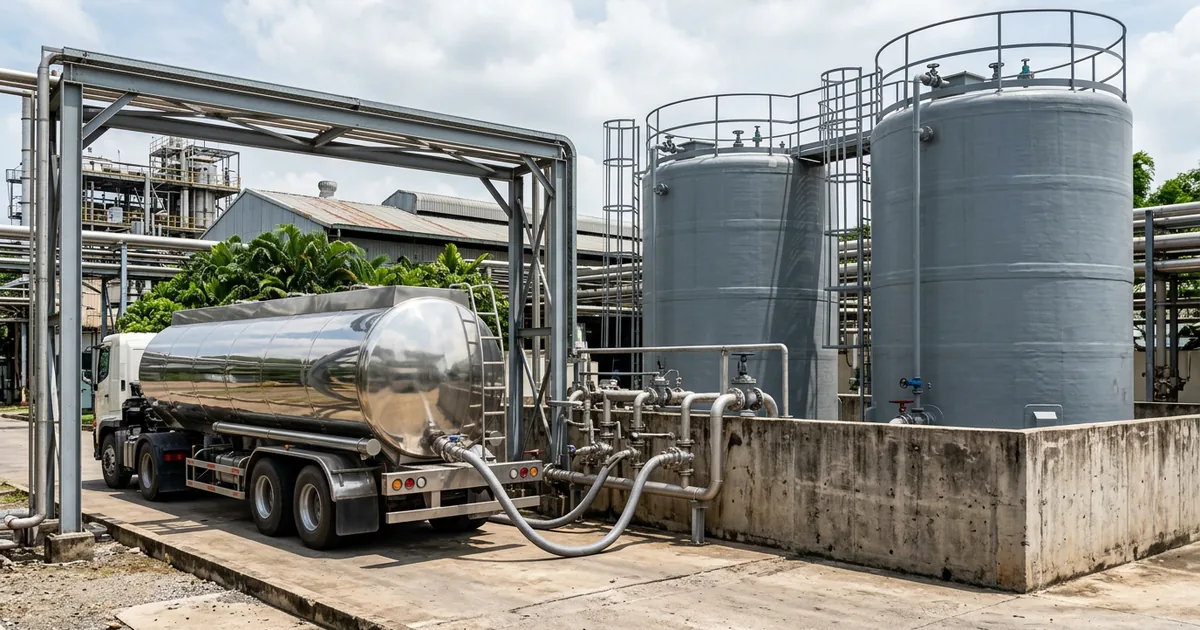 Figure 1: Automated PTFE-diaphragm dosing skid injecting broad-spectrum Antiscalant ahead of cartridge filters in an industrial RO water treatment plant.
Conversely, once adherent mineral scale has deposited on RO membranes or inside boiler tubes, chemical cleaning relies on controlled chelation, protonation, and alkaline passivation reactions:
- Reaction 1 — RO Membrane Acid CIP & Mild Chelation Using Citric Acid
C₆H₈O₇:3CaCO₃(solid) + 2C₆H₈O₇(aq) → Ca₃(C₆H₅O₇)₂(soluble citrate complex) + 3H₂O + 3CO₂↑Fe₂O₃(rust fouling) + 2C₆H₈O₇(aq) → 2Fe(C₆H₅O₇)(soluble ferric citrate) + 3H₂O - Reaction 2 — Heavy Boiler Scale Dissolution Using Inhibited Hydrochloric Acid
HCl 32%(4% – 5% w/w):CaCO₃(calcite scale) + 2HCl → CaCl₂(highly soluble) + H₂O + CO₂↑Mg(OH)₂(brucite scale) + 2HCl → MgCl₂(soluble) + 2H₂O - Reaction 3 — Post-Descaling Alkaline Passivation Forming Protective
Magnetite (Fe₃O₄):3Fe + 4H₂O (at pH 10.5 – 11.5 with Na₂CO₃ / NaNO₂ at 85 – 95 °C) → Fe₃O₄↓(adherent black magnetite film) + 4H₂
3. RO Antiscalant LSI Dosing Matrix & Technical Data Sheet (TDS) of HCl 32% and Citric Acid
To calibrate Antiscalant dosing rates for an industrial RO train, engineers calculate the Concentration Factor CF = 1 / (1 - Y) (where Y is fractional permeate recovery; at 75% recovery, CF = 4.0) and evaluate the Concentrate Langelier Saturation Index (LSI_brine = pH_brine - pHs):
Concentrate LSI Operating Zone | Reject Brine Reactive Silica SiO₂ (mg/L) | Membrane Scaling Risk Profile | Recommended Antiscalant Dosage (mg/L in RO Feed) | Operational Control & CIP Frequency |
|---|---|---|---|---|
LSI ≤ 0.0 | < 100 mg/L | Non-scaling for CaCO₃; colloidal fouling only | 1.5 – 2.0 mg/L | Operate at 75%–80% recovery; scheduled CIP every 6 months |
0.0 < LSI ≤ +1.5 | 100 – 140 mg/L | Moderate CaCO₃ and CaSO₄ saturation in tail elements | 2.5 – 3.5 mg/L | Continuous injection upstream of 5-micron guard filter |
+1.5 < LSI ≤ +2.4 (Standard) | 140 – 180 mg/L | High risk of CaCO₃, BaSO₄, and SiO₂ scaling | 3.5 – 5.0 mg/L | Cap recovery at ≤ 75%; log stage-2 ΔP every shift |
+2.4 < LSI ≤ +2.8 | 180 – 220 mg/L | Severe supersaturation; rapid feed-spacer plugging | 5.0 – 6.5 mg/L (with acid pH trim) | Trim feed pH to 6.5–6.8 and execute permeate flush every 8h |
Every batch of Hydrochloric Acid HCl 32% and Citric Acid Monohydrate 99.5% supplied by Loc Thien Chemical is cross-verified at Quatest 3 (ISO/IEC 17025); furthermore, our HCl 32% holds official ZDHC MRSL Version 3.1 Conformance Level 1 (CSR & Report No. 248162921-03) credentials issued by TÜV Rheinland Vietnam:
| Technical Specification (TDS) | Loc Thien Hydrochloric Acid HCl 32% | Citric Acid Monohydrate C₆H₈O₇·H₂O | Engineering Function in RO CIP & Boiler Descaling |
|---|---|---|---|
| Active Assay | 31.5% – 35.0% w/w (TCVN 1556:1995) | ≥ 99.5% – 100.5% w/w (BP/USP/FCC) | Rapidly dissolves CaCO₃ and iron oxides without solid residue |
| Specific Gravity / Appearance | 1.15 – 1.17 g/cm³ (Clear to pale yellow liquid) | White crystalline powder, 100% water-soluble | Enables precise volumetric dosing and clean CIP makeup |
Iron (Fe) Impurity Limit | ≤ 0.005% w/w (≤ 50 ppm) | ≤ 5.0 mg/kg (ppm) | Prevents secondary ferric fouling on RO membranes and boiler tubes |
Heavy Metals (Pb, Cd, Hg, Cr⁶⁺) | Not Detected (TÜV Rheinland #248162921-03) | ≤ 0.5 mg/kg (Food/Pharma grade) | Ensures spent CIP/descaling neutralization meets effluent standards |
| Primary Industrial Application | Boiler tube descaling, cation resin regeneration | RO membrane Acid CIP (pH 2.5–3.0), iron chelation | Protects TFC Polyamide membranes and boiler carbon steel |
| Standard Packaging (SSOT) | 30kg Can / 250kg Drum / 1,000L IBC / 5–30-ton Tanker | 25kg Bag (PE-lined moisture-proof on pallets) | Dispatched from 6 official regional warehouses nationwide |
4. 5-Step SOP for Two-Stage RO Membrane Clean-In-Place (Alkaline & Citric Acid CIP)
Whenever normalized permeate flow declines by 10% – 15% or stage differential pressure ΔP increases by 15% – 20%, plant operators execute a 5-Step Two-Stage CIP Protocol (avoiding unbuffered mineral acid on TFC Polyamide membranes and using 2.0% Citric Acid for safe inorganic scale removal):
- Step 1 — Low-Pressure Permeate Flush: Flush all pressure vessels with dechlorinated RO permeate (
free chlorine < 0.05 mg/L) at2.0 – 3.0 barfor15 minutesto displace concentrated brine and loose colloidal silt. - Step 2 — High-pH Alkaline CIP for Biofilm, Organics & Silica (
pH 11.0 – 11.5): Prepare a0.1% w/wLiquid Caustic SodaNaOHsolution blended with0.1% Na₂-EDTA(or0.025% Na-SDS) in the CIP tank at30 – 35 °C. Recirculate at low pressure (6.0 – 9.0 m³/hper8-inchvessel) for30 minutes, soak for45 minutes, recirculate for15 minutes, and flush with RO permeate back to neutralpH. - Step 3 — Low-pH Acid CIP Using
2.0% Citric Acidfor Carbonate & Iron Scale (pH 2.5 – 3.0): Dissolve Citric Acid Monohydrate99.5%at2.0% w/w(20 kgper1,000 Lof RO permeate) to achievepH 2.5 – 3.0. Recirculate through each stage for30 minutes, soak for30 – 45 minutes(adding citric acid ifpHrises by more than0.5units due toCaCO₃dissolution), and recirculate for a final20 minutes. - Step 4 — Final Permeate Rinse & Conductivity Verification: Drain spent citric solution to the wastewater neutralization tank and rinse vessels with fresh RO permeate until outlet
pHreaches6.5 – 7.5and conductivity matches normal feedwater. - Step 5 — Return to Service & Antiscalant Pump Recalibration: Restart the high-pressure RO pump, divert permeate to drain for the first
15 – 20 minutesuntil product conductivity stabilizes, and recalibrate theAntiscalantmetering pump using the Loc Thien Online Chemical Dosage Calculator.
Technical QC Insight — Specialist Vo Thi Nhu Hoa (Quality Control Lab — Loc Thien Chemical): “The most frequent operational error that permanently damages
TFC PolyamideRO membranes is reversing the CIP sequence—running acid CIP first when organic biofilm or oil is present coagulates organic foulants into an impermeable gel layer. Always execute Alkaline CIP (pH 11.0 – 11.5) first to strip biofilm, followed by Acid CIP with2.0% Citric Acid(pH 2.5 – 3.0) to chelateCaCO₃and iron. Similarly, when descaling industrial steam boilers with Loc ThienHCl 32%, operators must never circulate uninhibited acid; pairing0.3% – 0.5%organic corrosion inhibitor with an immediate alkaline magnetite passivation boil prevents pitting corrosion and flash rusting.”
5. 6-Step Closed-Loop Boiler Descaling & Magnetite Passivation SOP Using Inhibited HCl 32%
For fire-tube and water-tube steam boilers encrusted with 1.0 – 3.0 mm of carbonate/silicate scale, plant utility teams execute a 6-Step Closed-Loop Chemical Descaling & Passivation Protocol:
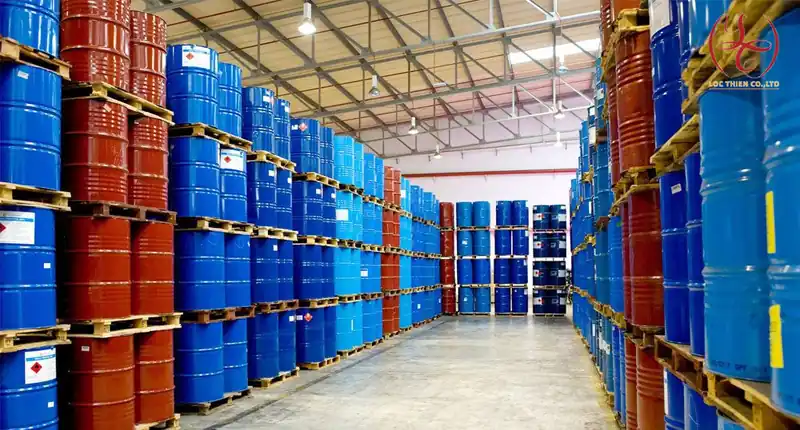 Figure 2: Closed-loop acid circulation skid with overhead CO₂/H₂ venting and corrosion coupon monitoring during industrial boiler descaling.
- Step 1 — Boiler Depressurization, Isolation & Alkaline Degreasing Boil-Out: Depressurize the boiler to
0 bar, cool boiler water below45 °C, and isolate gauge glasses, pressure transmitters, and safety valves. Circulate a0.5% NaOH + 0.5% Na₃PO₄degreasing solution for2 hoursto saponify oil films coating the mineral scale. - Step 2 — Makeup of
4% – 5% HClSolution with Organic Corrosion Inhibitor: In an externalHDPE/PPmixing tank, dilute Loc Thien Hydrochloric AcidHCl 32%at a1 : 5.5 to 1 : 6.5ratio with clean water to reach4.2% – 4.8% w/w HCl, and blend in0.3% – 0.5%organic acid corrosion inhibitor (Hexamine / Imidazoline / Rodine) to cap carbon steel corrosion below< 1.5 g/(m²·h). - Step 3 — Low-Velocity Acid Circulation & Endpoint Titration (
4 – 6 hours): Pump the inhibited acid from the boiler blowdown connection to the top steam drum return at< 45 – 50 °C(flow velocity < 0.3 – 0.5 m/s). Vent evolvedCO₂gas safely to the atmosphere outside the boiler house. Titrate free acid concentration and dissolvedCa²⁺every30 minutes; when acid strength remains constant across two consecutive30-minutereadings andCO₂evolution ceases, scale dissolution is complete. - Step 4 — Nitrogen/Water Displacement &
0.5% Citric AcidIron-Chelation Rinse: Drain spent acid to the effluent neutralization basin and immediately circulate a0.3% – 0.5% Citric Acidrinse (pH 3.5 – 4.0) for30 minutesto complex residual dissolved iron and prevent instantaneous flash rusting on bare steel. - Step 5 — Alkaline Passivation Boil Forming Protective
Magnetite (Fe₃O₄): Fill the boiler with0.5% Soda Ash Light Na₂CO₃+0.2% NaOH+0.3% NaNO₂(pH = 10.5 – 11.5) and fire gently to85 – 95 °C(0.5 – 1.0 bar) for2 – 3 hours. This neutralizes trace acid trapped in tube crevices and oxidizes bare steel into a dense, adherent blackMagnetite (Fe₃O₄)passive layer. - Step 6 — Borescope Tube Inspection & Spent Acid Neutralization: Drain the passivation solution, open mud-drum handholes to verify
> 95%bare-metal cleanliness with a uniform matte-blackFe₃O₄finish, and neutralize all spent acid in the holding tank topH 6.5 – 8.5using Liquid Caustic SodaNaOH 32%in accordance with our industrial wastewater treatment chemical catalog.
6. Illustrative Engineering Calculation Example: 50 m³/h RO Plant & 15-Ton/h Steam Boiler Optimization
The following Illustrative Engineering Calculation Example quantifies the operational recovery achieved at a food processing plant operating a 50 m³/h two-stage RO demineralization skid and a 15-ton/h saturated steam boiler (12 bar, operating 20 h/day):
- Baseline Uncontrolled Condition (Severe RO Scaling &
2.2 mmBoiler Tube Encrustation):- Tail-end RO elements suffered severe
CaCO₃andSiO₂scaling (ΔP = 3.8 bar), reducing permeate output from50 m³/hdown to36.5 m³/h(27%capacity loss) and forcing emergency CIP shutdowns every3 weeks. - The
15-ton/hboiler accumulated an average2.2 mmcarbonate/silicate scale layer on fire-tubes, elevating stack flue gas temperature from185 °Cto242 °Cand increasing fuel consumption by+11.4%.
- Tail-end RO elements suffered severe
- Integrated Loc Thien Chemical Engineering Regimen:
- Automated dosing of
3.8 mg/LAntiscalantinto the RO feed (controlling LSI_brine = +1.95at75%recovery) paired with scheduled two-stageNaOH 32%+Citric Acid 2.0%CIP. - Closed-loop boiler descaling using
4.5%inhibited Loc ThienHCl 32%(with 0.4% corrosion inhibitor),0.5% Citric Acidchelation rinse, and alkaline magnetite passivation using Soda Ash LightNa₂CO₃ 99.2%.
- Automated dosing of
| Engineering & Utility Performance Metric | Baseline Condition (2.2 mm Scale & Fouled RO) | Post-Implementation (Loc Thien Chemical Protocol) | Quantified Technical & Asset Integrity Gain |
|---|---|---|---|
Normalized RO Permeate Flow (m³/h) | 36.5 m³/h (27% flux loss) | 49.5 – 50.0 m³/h | Restores 99% of nameplate demineralized water capacity |
RO Pressure Vessel Differential (ΔP) | 3.8 bar (Element telescoping risk) | 1.4 – 1.6 bar | Reduces high-pressure RO pump power demand by 18% |
RO Chemical Cleaning (CIP) Interval | Every 3 weeks (17 CIPs/year) | Every 5 – 6 months (2 CIPs/year) | Extends TFC Polyamide membrane life from 1.8 to 4.5 years |
Boiler Flue Gas Stack Temperature (°C) | 242 °C (Severe heat-transfer loss) | 182 – 186 °C | 56 °C stack temperature drop; optimal tube heat flux |
| Specific Boiler Fuel Consumption | +11.4% fuel penalty | 10.8% net fuel reduction | Rapid energy savings and elimination of tube overheating |
| Carbon Steel Corrosion Rate During Descaling | Uncontrolled with raw acid | 0.82 g/(m²·h) (< 1.5 g/(m²·h)) | Uniform black Fe₃O₄ magnetite film; zero pitting corrosion |
7. Incoming Batch COA Verification for HCl 32% & Citric Acid, LSI Dosing Calibration & 5–30-Ton Tanker Supply
To protect high-pressure boilers and RO membrane skids while ensuring full regulatory compliance under the Vietnam Law on Chemicals No. 69/2025/QH15 (and Decrees 24/2026/ND-CP, 25/2026/ND-CP, 26/2026/ND-CP), Loc Thien Chemical enforces a strict batch verification and bulk delivery protocol:
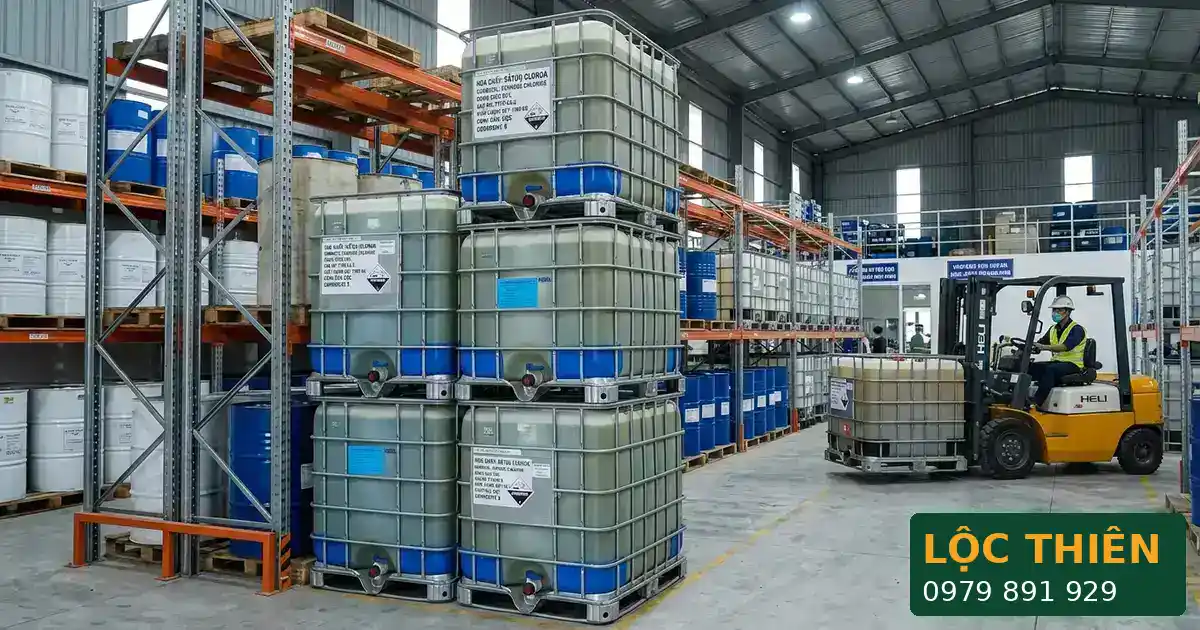
 Figure 3: Standard palletized 30kg HDPE cans of Hydrochloric Acid HCl 32% staged at Loc Thien Chemical’s regional warehouse for industrial park dispatch.
1. Incoming Batch COA Verification Protocol for HCl 32% & Citric Acid
- On-Site
HCl 32%Inspection (5–30-ton Tanker/1,000L IBC/30kg Can): Plant QC engineers verify tamper-evident security seals, weighbridge tickets, Batch Certificate of Analysis (COA), and 16-Section GHSSDS; draw a500 mLsample to verify clear to pale-yellow appearance free of organic oil sheen; and measure specific gravity at20 °Cvia calibrated hydrometer to confirmSG = 1.15 – 1.17 g/cm³(31.5% – 35.0% w/w HClperTCVN 1556:1995andQuatest 3benchmark,Fe ≤ 50 ppm). - On-Site
Citric Acid Monohydrate(25kg Bag) &AntiscalantInspection: Verify intact moisture-proof PE-lined25kgbags, batchCOAconfirming≥ 99.5%assay, crystal-clear solubility in RO permeate, and1% w/vsolutionpH = 2.1 – 2.3.
2. Transparent ZDHC MRSL v3.1 Conformance Level 1 Boundary & SSOT Supply Positioning
- Verified
ZDHC MRSL v3.1 Level 1Credentials: Within the utility and water treatment portfolio of Loc Thien Investment Development Co., Ltd. (LOC THIEN INVESTMENT DEVELOPMENT COMPANY LIMITED), products holding officialZDHC MRSL Version 3.1 Conformance Level 1certification include Hydrochloric AcidHCl 32%(TÜV Rheinland CSR & Report No. 248162921-03), Liquid Caustic SodaNaOH 32%(TÜV SÜD Cert No. ZDHC1 127736 0001), and Soda Ash LightNa₂CO₃ 99.2%(TÜV SÜD Cert No. ZDHC1 127736 0004), alongsideH₂O₂,Na₂SO₄,H₂SO₄,FeCl₂,Javel NaOCl, andPAC 31%(comprising our exact 9 ZDHC Level 1 products). (Strict SSOT Boundary Note:ZDHCcredentials are never claimed for or attached toRO AntiscalantsorCitric Acid). - Supply Chain Positioning (SSOT): Loc Thien Chemical operates as a premier Commercial Bulk Supplier of
HCl 32%,NaOH 32%,Citric Acid Monohydrate,Na₂CO₃ 99.2%, andRO Antiscalants, and is the Direct Manufacturer of Ferrous ChlorideFeCl₂ 30%and Ferric ChlorideFeCl₃ 40%wastewater grade (3,000+ tons/monthcapacity).
3. 5 Quotation Cost Drivers, 6 Regional Warehouses & 15-Minute Quotation SLA
- 5 Transparent B2B Quotation Factors: Custom quotations are structured around: (1) Purity grade and compliance documentation (
Batch COA,Quatest 3,ZDHC Level 1); (2) Packaging and delivery mode (25kg bags,30kg cans,250kg drums,1,000L IBCs, or dedicated5–30-tonroad tankers); (3) Dispatch distance from the nearest of our 6 regional warehouses; (4) Spot CIP order volume versus annual contract cadence; (5) On-siteLSIwater chemistry modeling support. - 6 Official Warehouses & Delivery SLA: Dispatched from Ba Ria - Vung Tau Warehouse (Phu My 1 IP), Dong Nai Warehouse (Long Thanh IP), Binh Duong Warehouse (Di An City), Da Nang Warehouse (Hoa Khanh IP), Can Tho Warehouse (Tra Noc IP), and Bac Ninh Warehouse (Tien Son IP). (Note:
452/6B Tinh Lo 10, Binh Tri Dong Ward, Binh Tan District, Ho Chi Minh Cityis our Legal Head Office, not a storage warehouse). Delivery SLA: Inner Ho Chi Minh City within4 hours; Southern & Mekong Delta Industrial Parks within24–48 hours; Northern & Central Vietnam within2–3 days. Contact hotline0979 891 929for detailed delivery procedures or email[email protected]to receive a technical quotation within15 minutes.
8. Frequently Asked Questions for RO & Boiler Engineers (FAQ)
1. When should an industrial RO system undergo Clean-In-Place (CIP) chemical cleaning, and why must alkaline and acid CIP stages be separated?
An industrial RO skid must undergo CIP chemical cleaning whenever normalized permeate flow drops by 10% – 15%, differential pressure (ΔP) across membrane vessels rises by 15% – 20%, or normalized salt passage increases by over 15%. Alkaline CIP (0.1% NaOH at pH 11.0 – 11.5 and 30 – 35 °C) must be executed first to strip organic biofilm and silica, followed by Acid CIP using 2.0% Citric Acid (pH 2.5 – 3.0) to chelate CaCO₃ and iron oxide scales without damaging TFC Polyamide membranes.
2. How does the Langelier Saturation Index (LSI) determine the optimal RO antiscalant dosing rate?
The Langelier Saturation Index in the reject concentrate stream is calculated as LSI = pH_brine - pHs. When LSI ≤ 0, the concentrate is non-scaling; when 0 < LSI ≤ +1.8, dosing 2.0 – 3.5 mg/L of phosphonate Antiscalant is required; and when +1.8 < LSI ≤ +2.8, plants must dose 3.5 – 6.0 mg/L of broad-spectrum Antiscalant while controlling permeate recovery at 75% – 80% to prevent CaCO₃, CaSO₄, BaSO₄, and reactive silica precipitation.
3. What corrosion inhibition and magnetite passivation SOP is required when descaling industrial steam boilers with HCl 32%?
Industrial HCl 32% must be diluted to 4% – 5% w/w and blended with 0.3% – 0.5% organic acid corrosion inhibitor at temperatures strictly < 50 °C to keep carbon steel corrosion rates below 1.5 g/(m²·h). Immediately after draining spent acid and flushing with 0.5% Citric Acid to prevent flash rusting, the boiler must undergo an alkaline passivation boil using 0.5% Na₂CO₃ + 0.3% NaNO₂ (pH 10.5 – 11.5, 85 – 95 °C) to form a protective black Magnetite (Fe₃O₄) film.
4. Which water treatment and boiler chemicals does Loc Thien Chemical supply, and what is your supply chain positioning?
Loc Thien Chemical is a premier Commercial Bulk Supplier of Industrial Hydrochloric Acid HCl 32% (meeting TCVN 1556:1995 and holding TÜV Rheinland ZDHC MRSL v3.1 Level 1 CSR No. 248162921-03), Liquid Caustic Soda NaOH 32% (TÜV SÜD ZDHC Level 1 Cert No. ZDHC1 127736 0001), Citric Acid Monohydrate 99.5%, Soda Ash Light Na₂CO₃ 99.2%, and RO Antiscalants, while operating as the Direct Manufacturer of FeCl₂ 30% and FeCl₃ 40% (3,000+ tons/month).
5. What are Loc Thien Chemical’s 5–30-ton tanker delivery SLA and technical quotation response time?
Loc Thien Chemical guarantees a complete technical quotation—accompanied by Batch COA and 16-section GHS SDS—within 15 minutes. Dispatched from 6 official regional warehouses using our dedicated 5–30-ton road tankers and palletized trucks, our delivery SLA is 4 hours in inner Ho Chi Minh City, 24–48 hours across Southern and Mekong Delta Industrial Parks, and 2–3 days in Northern and Central Vietnam (contact hotline 0979 891 929 for detailed delivery procedures).
In-Depth Engineering Guides in This Chemical Cluster
- Citric Acid Monohydrate (C₆H₈O₇·H₂O) in Food & Beverage Buffering, Stainless Steel Passivation & Industrial Descaling
- Engineering Guide to Procuring Caustic Soda NaOH (99% Flakes vs 32% Liquid): Mass Balance & Storage Safety
- Textile Dyeing Wastewater Treatment Meeting ZDHC MRSL v3.1 Using Loc Thien Directly Manufactured FeCl₂ 30%