What Is ZDHC? MRSL, Gateway Level 1–3 and Textile Dyeing Wastewater
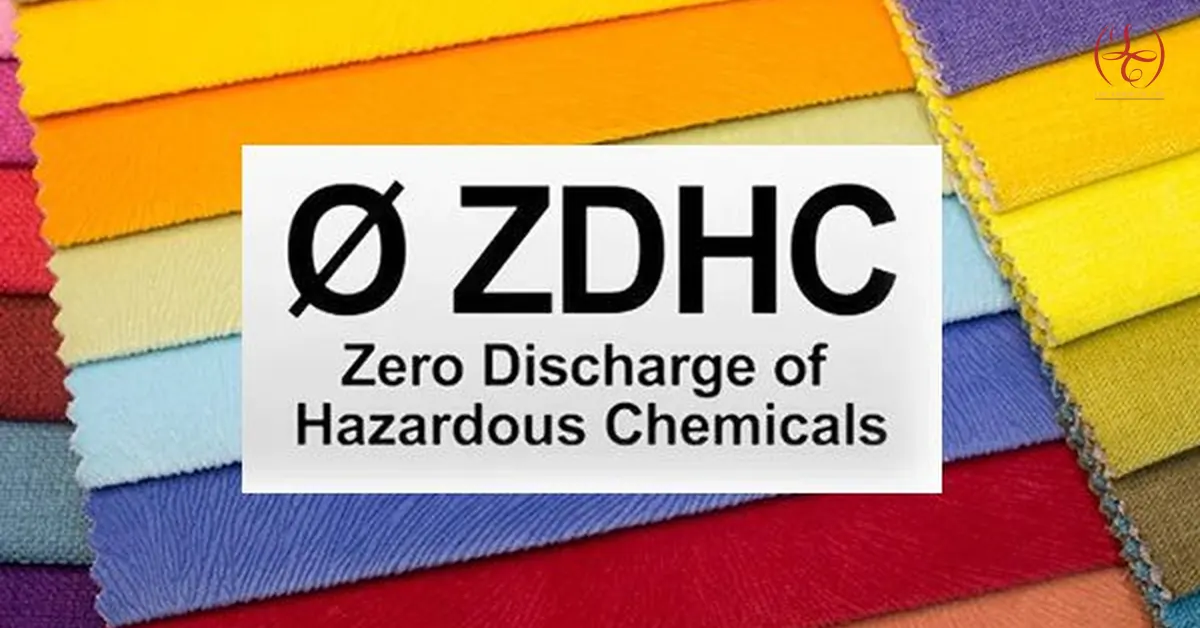
What is ZDHC? ZDHC (Zero Discharge of Hazardous Chemicals) is a programme launched by fashion brands in 2011 to remove hazardous chemical discharges from the textile, apparel and footwear supply chain; since 2015 it has been coordinated by the ZDHC Foundation (Netherlands).
The programme runs on three tools: the ZDHC MRSL (the list of substances banned from intentional use in manufacturing; current version V3.1 per the official ZDHC MRSL page, checked 5 Oct 2026), the ZDHC Gateway (the ChemCheck, InCheck and ClearStream reports) and the Wastewater Guidelines (limits and test procedures for wastewater). Sources: roadmaptozero.com · zdhc-gateway.com.
Mills that need wastewater-treatment chemicals with technical documents: see textile dyeing chemicals and FeCl2 — ferrous chloride.
3 things to remember
- MRSL ≠ RSL: the MRSL bans intentional use of hazardous substances during manufacturing (protecting workers, communities and the environment); an RSL limits residues on finished goods (consumer safety).
- Level 1–3 belongs to chemical products, not to factories: it is issued by a ZDHC-approved body for each formulation of a chemical supplier; ZDHC itself does not issue certificates.
- A textile dyeing mill does two things in parallel: inventory its incoming chemicals (InCheck, and ask suppliers for ChemCheck) and test its wastewater under the Wastewater Guidelines (ClearStream).
Contents
- What ZDHC is and how it formed
- ZDHC MRSL vs RSL
- ZDHC Gateway: ChemCheck, InCheck, ClearStream
- ZDHC Level 1, 2, 3 for chemical products
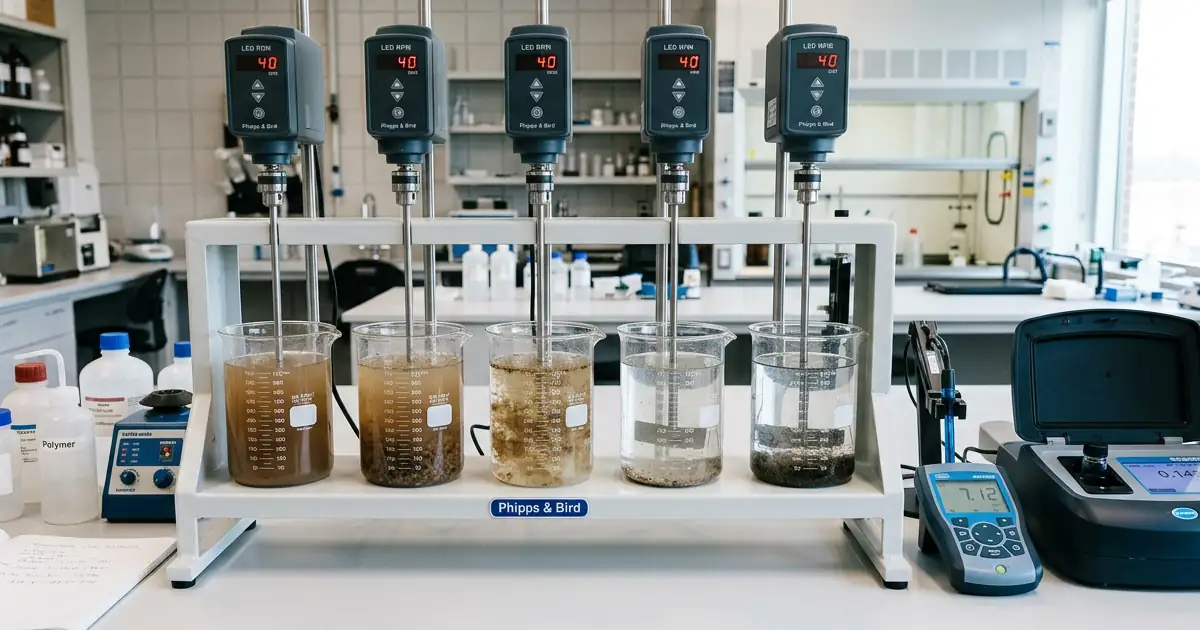
- Textile dyeing wastewater under the Wastewater Guidelines
- Why brands require ZDHC
- What a mill needs to do
- Chemicals supplied by Loc Thien and ZDHC documents
- Common ZDHC terms
- ZDHC FAQ
What ZDHC is and how it formed
ZDHC stands for Zero Discharge of Hazardous Chemicals. It applies to wet-processing facilities in the textile, apparel and footwear supply chain: weaving, dyeing, finishing, leather, rubber, foam and the adhesives used in garments and footwear.
Key milestones (per roadmaptozero.com/about):
- 2011: after Greenpeace’s Detox campaign, the first six brands published a Joint Roadmap towards zero discharge of hazardous chemicals, with a 2020 deadline. The Detox commitment is a commitment Greenpeace set for brands; it is not a ZDHC document or certificate.
- 2014: the first ZDHC MRSL was released.
- 2015: ZDHC moved into its own Dutch legal entity — the ZDHC Foundation, based in Amsterdam.
- Today: the programme is called Roadmap to Zero; its core documents are the MRSL, the Conformance Guidance (the conditions for conformance of chemical products), the Wastewater Guidelines and the Gateway platform.
Two points that are often misunderstood: (1) ZDHC does not issue certificates for chemical products — that is done by certification bodies approved by ZDHC (ZDHC Approved MRSL Certifiers); (2) ZDHC does not replace the law. According to the MRSL itself, conformance with ZDHC does not mean compliance with environmental or occupational-safety regulations.
ZDHC MRSL vs RSL
The ZDHC MRSL (Manufacturing Restricted Substances List) lists substances banned from intentional use when processing textile, leather, rubber, foam, adhesives and trims for apparel and footwear. “Intentional use” means a substance added to a chemical product to give a desired colour or function. An RSL is the traditional approach and applies only to finished goods.
| Criterion | ZDHC MRSL | RSL (Restricted Substances List) |
|---|---|---|
| Scope | Chemicals used in production (inputs) | Residues on the finished product (outputs) |
| What it sets | Substances banned from intentional use; reasonable limits for impurities | Residue limits for substances in the finished article |
| Aim | Protect workers, communities and the environment at the factory | Consumer safety; compliance with law and brand requirements |
| Typical tools | MRSL V3.1, Gateway Chemical Module, ChemCheck, InCheck | Brand RSLs, REACH, CPSIA, OEKO-TEX® Standard 100 |
| Mainly operated by | Chemical suppliers, wet-processing mills | Brands, retailers, finished-goods test labs |
A product can pass an RSL and still have been made with hazardous chemicals; the MRSL closes this gap by stopping substances at the input.
Which chemicals the MRSL covers. According to the official ZDHC MRSL page, the list covers chemical formulations such as cleaners, adhesives, paints, inks, detergents, dyes, colourants, auxiliaries, coatings and finishing agents, used in raw-material production, wet processing, equipment maintenance, wastewater treatment, sanitation and pest control. MRSL limits apply to substances in the commercial formulation, not to earlier chemical-synthesis stages. Besides the main list, the MRSL has a Candidate List (substances proposed for addition) and Archived Substances (substances once used that must not be reintroduced).
Versions. The current version is V3.1 (per the official ZDHC MRSL page, checked 5 Oct 2026). The MRSL is updated periodically; after each new version there is a transition period during which both versions are certified. According to the ZDHC Help Centre, from 1 Nov 2023 the Gateway no longer accepts products that hold only a V2.0 certification, and from 31 May 2024 mills should use only V3.1-conformant products in production. Before each audit, download the official list at mrsl.roadmaptozero.com and ask the brand which version it requires.
ZDHC Gateway: ChemCheck, InCheck, ClearStream
The ZDHC Gateway has two modules: the Chemical Module (a database of chemical formulations verified against the MRSL) and the Wastewater Module (where mills register and share wastewater test data). The three reports below are generated by the Gateway, each for a different subject:
| Report | Subject | What it shows | Prepared by |
|---|---|---|---|
| ChemCheck | One chemical product (formulation) | A product passport: organisation name, product name and code, MRSL conformance Level (1, 2 or 3), the MRSL version used as the basis, the certifier, issue date and expiry date | The chemical supplier (formulator) uploads the product to the Chemical Module and downloads the report to send to customers |
| InCheck | The mill’s chemical inventory | MRSL conformance of all chemicals the mill uses, compared against the Chemical Module database; shows which products need replacing | The mill, through a ZDHC-approved InCheck Solution Provider; the list is self-declared by the mill, and the Performance InCheck type has no third-party verification |
| ClearStream | The mill’s wastewater | Conformance with the Wastewater Guidelines after each test cycle; shared across brands to avoid repeat testing | The mill creates it on the Gateway after a ZDHC Approved Wastewater Laboratory completes the tests |
In short: ChemCheck assesses a chemical product against the MRSL, InCheck assesses the mill’s chemical inventory, and ClearStream assesses the wastewater. The first two connect: InCheck matches each chemical in the inventory against the ChemChecks available on the Chemical Module.
ZDHC Level 1, 2, 3 for chemical products
The Level (MRSL Conformance Level) applies to a supplier’s chemical product, not to the textile dyeing mill. Under the ZDHC MRSL Conformance Guidance V2.1 (April 2024), the three levels give increasing confidence that a product meets the MRSL consistently:
| Level | Basis of assessment | Note |
|---|---|---|
| Level 1 | Review of a valid SDS + formulation testing (screening and/or quantitative analysis) at a ZDHC-approved, ISO 17025-accredited laboratory | Based on lab testing; does not assess the management system of the production site |
| Level 2 | Level 1 + an on-site assessment of the formulator’s management systems (including environmental, occupational health and safety, materials, quality and chemical management) | Controls how the supplier makes the product, not just the result of one sample |
| Level 3 | Level 1 + Level 2 + an assessment of the supplier’s chemical hazard assessment (CHA) capability: GHS classification, regulatory monitoring, finding safer substitutes | Highest level; a supplier can apply directly for Level 3 without holding Level 1 or 2 first |
Who issues a Level. The conformance is issued per product by a ZDHC Approved MRSL Certifier; ZDHC only approves the certifiers and their standards (list at downloads.roadmaptozero.com). The validity period is set by the certifier. An expired product shows as “Expired” for 8 weeks on the Gateway, then goes private until it is recertified.
The self-declared level is no longer on the Gateway. According to the ZDHC Help Centre, the Gateway now holds only products with evidence of MRSL conformance, i.e. Level 1, 2 or 3; the “Registered” status (supplier self-declaration with no third-party assessment) has been removed. Older documents that describe a level below Level 1 no longer reflect the current system.
A “ZDHC-conformant” mill is not the same as a “ZDHC-conformant” chemical. A Level is a property of a chemical product. For a mill, the evidence is the InCheck report (chemical inventory) and the ClearStream report (wastewater). The list of ZDHC Approved MRSL Certifiers includes some third-party standards (for example bluesign®, OEKO-TEX® ECO PASSPORT, Chem-MAP®). Which standard a brand accepts at which Level: ask for the brand’s requirement code and check this list.
Textile dyeing wastewater under the Wastewater Guidelines
The ZDHC Wastewater Guidelines set a common baseline for sampling, testing and reporting wastewater and sludge from wet-processing facilities (weaving, dyeing, finishing, laundry, leather…). The version in use is V2.2 (September 2024). ZDHC has published a new Wastewater and Sludge Guidelines V2, effective 1 December 2026 (per the ZDHC programme page, checked 5 Oct 2026); until then the current version still applies (ZDHC renumbers the version now in use as V1).
Main requirements of V2.2:
- Test wastewater twice a year, in the October and April cycles, at a ZDHC Approved Wastewater Laboratory.
- Create a ClearStream report for each test cycle.
- MRSL parameters (tested in untreated wastewater) must be below the reporting limits in tables 1A–1T of the guidelines.
- Heavy metals must meet at least the Foundational level; conventional parameters and anions (pH, COD, BOD5…) must meet at least Foundational for direct dischargers.
- If a parameter exceeds its limit: carry out root-cause analysis (RCA) and set up a corrective action plan (CAP) in the Gateway account.
Three limit levels. Limits for heavy metals and conventional parameters are split into Foundational (the minimum to be met), Progressive (stricter) and Aspirational (strictest), so that mills can improve step by step. Examples for the textile sector (direct dischargers), mg/L, per V2.2:
| Parameter | Foundational | Progressive | Aspirational |
|---|---|---|---|
| pH | 6–9 (all three levels) | ||
| COD | 150 | 80 | 40 |
| BOD5 | 30 | 15 | 8 |
| Chromium (VI) | 0.05 | 0.005 | 0.001 |
Note when using the table. These figures are taken from V2.2; check the original before committing to a brand, because V2 takes effect on 1 December 2026 and its limits and sampling rules may be updated; see the official Guidelines. The parameters to be tested depend on the discharge type (direct, indirect with or without pre-treatment, ZLD) and the average wastewater flow (15 m³/day or more, or below 15 m³/day). A mill that discharges through a collection system to an industrial park’s central wastewater treatment plant may fall under indirect discharge, so determine the correct discharge type under the guidelines before choosing parameters.
ZDHC does not replace Vietnamese standards. Discharged wastewater must still meet QCVN 40:2025/BTNMT (Circular 06/2025/TT-BTNMT, effective 1 September 2025). For example, Cr6+ under QCVN 40:2025 is ≤ 0.1 mg/L in column A and ≤ 0.5 mg/L in columns B and C. The ZDHC Foundational level (0.05 mg/L) is stricter than column A.
Wastewater-treatment chemicals are also within the MRSL scope. Coagulants, pH adjusters, reducing agents… bought for a wastewater treatment system are chemical formulations used in “wastewater treatment”, so the mill needs MRSL documents for them just as for dyes or auxiliaries. See also FeCl2 for textile dyeing wastewater and ZDHC.
Why brands require ZDHC
- One common list: the MRSL is a harmonised list used by both brands and mills; a mill does not have to meet a separate banned-substance list for each brand.
- Less repeat testing: InCheck and ClearStream are standardised reports, and one report can be shared with many customers; ZDHC recommends that brands include ChemCheck in their requirements for mills.
- Control from the input: wastewater testing only detects the consequence, whereas the MRSL and ChemCheck stop banned substances before they enter the line.
The actual requirement (the minimum Level for chemicals, the MRSL version, Foundational or Progressive for wastewater) is set by each brand, so ask directly before choosing a chemical supplier or investing in wastewater treatment.
What a mill needs to do
- Build a chemical inventory: list every formulation in use with its SDS, supplier and process step — including wastewater-treatment and cleaning chemicals.
- Ask suppliers for ChemCheck: for each product, ask for the ChemCheck report or the Level on the Gateway; for products without one, plan a replacement or ask the supplier for its conformance roadmap.
- Prepare InCheck: send the list to a ZDHC-approved InCheck Solution Provider to match it against the Chemical Module and identify chemicals to replace; ZDHC recommends monthly reports.
- Test wastewater at a ZDHC-approved lab: twice a year, create ClearStream after each cycle; if a parameter exceeds its limit, do RCA and CAP.
- Ask the brand what level it requires: the minimum chemical Level, the MRSL version, Foundational or Progressive for wastewater, and report deadlines.
For a step-by-step list, see the ZDHC implementation checklist for textile dyeing mills. Small mills usually start with the inventory and wastewater testing, then extend to InCheck.
For chemical suppliers, getting a ChemCheck takes three steps: choose a ZDHC Approved MRSL Certifier and have the product assessed at Level 1, 2 or 3; create a formulator account on the ZDHC Gateway and upload the product with the conformance information; download the ChemCheck report to send to customers.
>>> See more: Textile dyeing chemicals
Chemicals supplied by Loc Thien and ZDHC documents
Loc Thien supplies 7 products in the ZDHC chemical group: HCl acid, NaOH solution, FeCl2, FeCl3, H2O2, H2SO4 and NaOCl (Javel water). Other products (PAC, FeSO4, colour removers, NaOH flakes or pearls…) are not in this group.
FeCl2 documents: the only document Loc Thien currently holds is a test report, not a Level certificate.
| Item | Content per the report |
|---|---|
| Issued by | TÜV Rheinland Vietnam Co., Ltd. |
| Report no. / date | 248162921-02a · 23 Oct 2024 (replaces report 248162921-02 to correct the sample colour description) |
| Sample | Ferrous Chloride (Liquid) — received 10 Oct 2024, tested 14–21 Oct 2024 |
| Reference standard | ZDHC MRSL Version 3.1 (2023) — Smart testing |
| Result | 5/5 substance groups passed: chlorobenzenes & chlorotoluenes; chlorophenols; phthalates; glycols/glycol ethers; perboric acid, sodium salt |
This report states no Level, validity period or Gateway listing status, so Loc Thien does not use it to say a product “meets ZDHC Level 1”. For the other 6 products, and when you need a ChemCheck or a Level to submit to a brand, call the hotline 0979 891 929 to receive the documents currently available for each product; quotes within 15 minutes.
Mills that need industrial chemicals with technical documents (MSDS/COA per batch), an inventory check against the MRSL and the Gateway, or textile dyeing wastewater chemicals: see the product catalogue of Loc Thien Chemicals, or request a quote.
Common ZDHC terms
| Term | Meaning |
|---|---|
| Formulator | The party that blends or makes finished chemical products (dyes, auxiliaries, water-treatment chemicals…); it applies for a Level and uploads products to the Chemical Module |
| ZDHC Approved MRSL Certifier | A third-party certification body approved by ZDHC to issue Level 1, 2, 3 for chemical products |
| ZDHC Approved Laboratory | A laboratory approved by ZDHC; a wastewater test lab is called a ZDHC Approved Wastewater Laboratory |
| Chemical Module / Wastewater Module | The two modules of the ZDHC Gateway: chemical product data and wastewater test data |
| InCheck Solution Provider | A body approved by ZDHC to submit InCheck reports on a mill’s behalf |
| Foundational / Progressive / Aspirational | The three wastewater limit levels, from the minimum to be met up to the strictest |
| RCA / CAP | Root-cause analysis / corrective action plan when a result exceeds the limit |
| “Supplier” in ZDHC documents | Usually means a brand’s production facility (a mill), as distinct from a “formulator”. This article says “mill” for a production facility and “chemical supplier” for the party selling chemicals |
ZDHC FAQ
How does the ZDHC MRSL differ from an RSL?
What are ZDHC Level 1, 2, 3 and who issues them?
How do ChemCheck, InCheck and ClearStream differ?
What must textile dyeing wastewater meet under the ZDHC Wastewater Guidelines?
Where should a small mill start with ZDHC?
How does ZDHC relate to OEKO-TEX, bluesign and Higg?
Is a mill that does not meet ZDHC penalised?
Which of Loc Thien’s chemicals are in the ZDHC group?
Technical Support & B2B Procurement Hotline
Loc Thien Chemical specializes in direct manufacturing of FeCl₂ / FeCl₃ and Tier-1 supply of basic industrial chemicals (NaOH, HCl, H₂SO₄, PAC, NaOCl, H₂O₂, FeSO₄) with direct B2B pricing and dedicated 5–30-ton tanker delivery across Vietnam.
- Hotline / Zalo: +84 979 891 929
- Official Email: [email protected]
- Direct Manufacturer: Ferrous Chloride (FeCl₂ 30%) & Ferric Chloride (FeCl₃ 38–40%)
- Primary Supplier: NaOH 32%/45%/50%/99%, HCl 32%, H₂SO₄ 98%, PAC 30–31%, NaOCl 10–12%, H₂O₂ 35%/50%
- Compliance & Quality: FeCl₂ ZDHC MRSL v3.1 test report (Smart testing, 5 substance groups, TUV Rheinland Vietnam), ISO 9001:2015, Quatest 3, Full COA & GHS SDS